I miss baseball.
WHEN CAN WE PLAY BALL?
Never before has such a prime opportunity to provide much-needed joy that would also dramatically increase one’s standing been blown in such spectacular fashion by people blinded by unimaginable greed and stubbornness.
Baseball, which has been losing ground to other major sports for a while now, was handed the perfect situation to grow fans out of nowhere. With the NFL season several months away, the NBA, NHL, and MLS had their seasons interrupted by the pandemic. MLB was also halted, but before the season even began, giving it an advantage. While the other major sports had to figure out a plan to logistically salvage the season, all baseball had to do was start up like normal (without fans and with protections, obviously). Get on the field and you’re literally the only sport on for a country starved for a distraction. Sure, you might have to play fewer games and lose game day revenue. But the unintended benefits of the pandemic would far outweigh the losses.
Instead, baseball is the only major sport without a planned return and would be the last to begin, if it even begins at all. How the freaking fuck has baseball fucked this up so badly?
Rob Manfred might be on the worst streak for a commissioner in major U.S. sports history. In just a few months, he’s pissed off baseball fans by giving the team responsible for baseball’s biggest scandal since the Black Sox a slap on the wrist, calling the MLB championship (the grand prize of his sport ironically named the Commissioner’s Trophy) a “piece of metal,” proposed the most ridiculous and unnecessary playoff reformatting you could possibly imagine, and now flip flop during negotiations to bring his sport back and torpedo any goodwill between the owners and players. I know Manfred is pretty much a mouthpiece for the owners, but if he’s not straight up taking the piss then he’s just a fucking moron. Even if this all gets resolved, Manfred has lost so much respect in the eyes of his players and peers that it’s tough to see him staying on for long.
Then there are the rich, greedy fucks he represents. For as long as anyone can remember, MLB team owners have played the “we’re actually losing money card,” despite reports of record revenues and brand new billion-dollar TV deals. The claim that they can’t financially survive half a season without game day revenue either means 30 of the richest people in America are bad at saving money or they’re fucking liars. It doesn’t help the owners’ argument that players are greedy when they furlough minor league players, whose combined salaries amount to spit in the ocean when it comes to their wealth. If one MLB player can financially support minor leaguers, so can the owners. Baseball’s financial structure is kind of fucked anyway, with no salary cap (don’t bring up the motherfucking competitive balance tax) and no requirements to open up the books. Greed and the desire to win at all costs, even if it means no baseball in 2020, is the biggest example of cutting off one’s nose to spite one’s face I’ve seen in quite a while.
To be completely fair, I don’t feel the players are completely off the hook either. I see the owners being like 90-95% responsible, but those few percentage points are important. I don’t think Tony Clark has been that spectacular of a MLBPA rep even before all this started. Even DeMaurice Smith (who has overseen two of the worst CBAs for players) might be better.
It just completely fucking befuddles me that the thought of “let’s just get this done so we can have the literal eyes of the country on us” is so consistently blown away by the desire to stick it to the other side. At this point, it’s like you’re driving a car on an almost empty tank but driving past gas stations in order to find one that’s a cent per gallon cheaper. At some point, you’re either gonna run out of gas or be forced to go to one that’s ten cents per gallon cheaper. Even if 2020 does see baseball, the future of the sport beyond 2021 is doubtful. That’s when the current CBA expires, and the players are going to be out for blood during those negotiations. Baseball may legitimately be fucked.
At least if there’s no 2020 season, I don’t have to see Mookie Betts play in another uniform!
Still, you have nothing to fear. In the face of this looming problem, I have found a solution. For those of you not satisfied by a combination of MLB highlights and current KBO games, there is another league starting up, one with which I’m actually quite familiar.
OPENING DAY IN THE EAST
You thought I was done talking about baseball in Asia, didn’t you? Bitch, I’m just getting started.
While the KBO has enjoyed being in the baseball spotlight (my NC Dinos are STILL on top of the standings), its time as the only league in play comes to an end today. South Korea’s eastern neighbor, Japan, is also jumpstarting its sports, including Nippon Professional Baseball (NPB). Opening Day is today and while it may not be coming with a fancy broadcasting deal with ESPN, it’s an upgrade from the product being they’re currently being shown (especially the utterly fucking awful commentary).
As I mentioned last month, the KBO is somewhere between AAA and AA in terms of quality, while NPB is between MLB and AAA. Other differences include there being 12 teams in Japan instead of 10, divided into two leagues (Pacific and Central) with six teams in each. The top three teams in each league make the playoffs, with teams 2 and 3 facing off in a three-game first round series. The winner faces the regular season league champion in a seven-game Climax Series. In our first encounter with weird bullshit in Japanese baseball, the top seed starts with a one-game advantage, so it’s more of a six-game series. The two Climax Series winners face off for all the marbles in the seven-game Japan Series.
At least… that’s how it used to be. The NPB just announced that the team on top of the Central League at the end of the regular season will advance to the Japan Series, while Pacific League will only have one playoff round. That means the number of playoff teams just got cut in half. It’ll only be for this season, obviously. But still.
One key similarity between the two leagues is the rapid fandom for each team and baseball in general. Hell, the two annual high school tournaments are Japan’s version of the NCAA Tournament on steroids. My time at a Japanese baseball game was unforgettable due to the chanting and singing and cheering from the crowd of hardcore fans I happened to be sitting in the middle of. It was so endearing and the ending to the game was so awesome that I became a legitimate fan of the home team. So now I feel obligated to introduce my friends to another way to bandwagon an Asian baseball team. For those wanting another overseas group of baseball players to root for, I’ve prepared some information about all 12 teams so you can pick a favorite. I’ve also offered my own predictions for (assuming everyone actually reads this and takes my offer seriously) for which team each person will end up bandwagoning. Let’s start with one we don’t have to worry about.
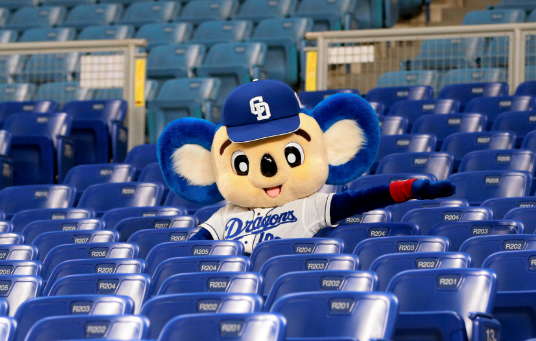
CHUNICHI DRAGONS
2019 Finish: 5th, Central League (missed playoffs)
Championships: 2 (most recent 2007)
Location: Nagoya, Aichi
Ballpark: Nagoya Dome
Mascots:Doala, Shaolon, and Paolon
Best MLB Comparison: Philadelphia Phillies
Ah yes, my team, which looks incredibly similar to the team my MLB team defeated to win the 2018 World Series. Founded in 1936, the Chunichi Dragons are styled after the Brooklyn/LA Dodgers. Although they’ve recently introduced a more dark blue and white scheme, they still look a lot like the Dodgers. However, they don’t have the successful past of their American lookalikes. Their lone championship in the 20th century came in 1954 thanks to career years from three of their most legendary players. Shigeru Sugishita earned Japan’s pitching triple crown and won both the Eiji Sawamura Award (Japan’s Cy Young Award) and Central League MVP honors. The other two players (with a combined 43 seasons with the Dragons) were slugger turned pitcher Tsuguhiro Hattori and pitcher (who once threw 311 pitches in a 28-inning complete game effort) turned slugger Michio Nishizawa.
But after that, it was a barren fucking wasteland. There were brief glimmers of hope in the 80’s and 90’s, but ultimately the title drought persisted into the new millennium. It nearly ended in 2004, but Chunichi lost a seven-game Japan Series to the Seibu Lions. After falling again in the Japan Series in 2006, the Dragons took advantage of a revamped playoff format in 2007, sweeping the Hanshin Tigers in the first round before sweeping the heavily favored Yomiuri Giants. Though the Hokkaido Nippon-Ham Fighters took Game 1, Chunichi won the next four games, including a combined perfect game from Daisuke Yamai and legendary closer Hitoki Iwase in Game 5, to end the long wait and win the Japan Series. Chunichi has made it back to the Japan Series twice since then, narrowly losing in 2010 and 2011.
As far as the current squad goes, the team has a mix of veteran fan favorites and promising youngsters. In addition to the reliable arm of Yamai, Kodai Umetsu is entering his second season after a stellar rookie year. Another second year stud is former No. 1 overall draft pick Akira Neo, who started 2019 slowly but got better as the season progressed. In addition, emerging stars Shuhei Takahashi (who was named to the NPB “Best Nine” team last year) and Takuma Kato, veterans Ryosuke Hirata and (my boy) Yohei Oshima, and former MLB player Dayan Viciedo help round out the lineup. Speaking of the majors, HOFer Larry Doby ended his career as a Dragon, while Matt Stairs (who holds the MLB records for most career pinch-hit home runs and most teams played for by a position player) spent his early days in Nagoya. In addition, Wei-Yin Chen and Kosuke Fukudome are among the former Dragons who ventured into the majors. Those here in the U.S. may also recognize Chunichi as the team Tom Selleck’s character played for in Mr. Baseball.
Prediction: While my loyalty to the Dragons is already sewn up, I think Nick will end up joining me as well. You can’t expect a team to look that much like Nick’s favorite MLB team and not have him adopt them. As an added bonus, he can root for a baseball team that’s actually won a championship in the past 30 years! Dad may also join us, considering I brought him back a Dragons hat from my trip. But he may end up liking another team better.
HANSHIN TIGERS
2019 Finish: 3rd, Central League (lost CLCS)
Championships: 1 (1985)
Location: Nishinomiya, Hyogo
Ballpark: Koshien Stadium
Mascots:To-Lucky, Lucky, and Kita
Best MLB Comparison: Boston Red Sox (pre-2004)
One of the oldest teams in Japan with some of the most prestigious history of any team, the Hanshin Tigers boast arguably the biggest and most devoted fan base in the country. Tigers fans often outnumber the home fans whenever their team has a road game, with them releasing hundreds of air-filled balloons after the seventh inning stretch (a popular tradition). The only place this doesn’t happen is at the home of their arch rivals, the Yomiuri Giants. The Tigers-Giants rivalry is considered the greatest in Japanese baseball, on par with Red Sox-yankees or Giants-Dodgers. Hanshin’s home field, Koshien Stadium, is the oldest ballpark in Japan and the most sacred of them all. Once visited by Babe Ruth during a tour of MLB stars in 1934, players traditionally bow before entering and leaving the field. It also serves as the host for the finals of the annual high school tournament, with the losing team of any high school game being allowed to scoop some infield dirt to keep.
In spite of having all this tradition, the one thing the Tigers don’t have is on-field success. Hanshin has only won one championship, tied with the Tohuko Rakuten Golden Eagles (founded in 2005) for the least in the NPB (though they did win four titles before the NPB was founded thanks to the superstitious but spectacular hitter Fumio Fujimura). After completely wasting the career of legendary pitcher Minoru Murayama, Hanshin finally won their elusive title in 1985 thanks to iconic shortstop turned manager Yoshio Yoshida. But it’s what happened afterwards that some say has led to the second-longest title drought in the NPB. During their Japan Series celebration, fans had people who looked like Tigers players jump into the Dotonbori Canal. Because no fans resembled first baseman Randy Bass, they grabbed a life-sized statue of Colonel Sanders and threw it into the river. Thus, the Curse of the Colonel began. The Tigers have only even reached the Japan Series three times since then.
After being bounced by the rival Giants in the Climax Series last year, the Tigers are looking to improve in 2020. They’ll have to do it without the services of captain Takashi Toritani, who left Hanshin after 16 seasons to sign with the Chiba Lotte Marines. Fortunately, veterans Yoshio Itoi and Kosuke Fukudome are still in the lineup. Yuta Iwasada and Shintaro Fujinami highlight a rotation that needs to perform well, although the latter is dealing with a career slump in addition to being one of three Tigers players who’ve tested positive for COVID-19. Hanshin still has a pretty good reliever in Kyuji Fujikawa (a former MLB player) as well. By the way, the list of Tigers alumni includes two World Series champions in Cecil Fielder and Ryan Vogelsong. While Mike Blowers never won a title, the former Tiger did make the greatest prediction in MLB history.
Prediction: While I can’t promise a Blowers-esque occurrence, I think the Hanshin Tigers might attract Kyle as a fan, if only because he has an addition to rooting for teams who haven’t won anything in a long time or in fact ever.
HIROSHIMA TOYO CARP
2019 Finish: 4th, Central League (missed playoffs)
Championships: 3 (most recent 1984)
Location: Hiroshima, Hiroshima
Ballpark: Mazda Stadium
Mascots:Carp Boya and P̶h̶i̶l̶l̶i̶e̶ ̶P̶h̶a̶n̶a̶t̶i̶c̶ Slyly
Best MLB Comparison: Cincinnati Reds/Los Angeles Dodgers
The story of the Hiroshima Toyo Carp is one of rags to riches back to rags and then to the upper middle class. As the city of Hiroshima was rebuilding after the atomic bombing during World War II, officials decided to establish a baseball team. Because they had no finances, the early days of the Carp were full of poverty and last place finishes. Then in 1952, the seven-team Central League decided to disband any team that finished with a winning percentage below .300 that season. Somehow, the Carp rallied to finish at .316, meaning the .288 Shochiku Robins were forced to merge with the Taiyo Whales to form the team that would become the Yokohama DeNA BayStars. But while the Carp survived, they struggled with poverty until the car company Toyo Kogyo (which was later renamed Mazda) became the team’s official sponsor in 1968. In 1973, the team’s color was changed to red and the uniforms were redesigned to match the Cincinnati Reds. Two years later, Hiroshima hired Joe Lutz (the first non-Japanese manager in NPB history), changed their caps to all red, parted ways with Lutz a month later, then won its first Central League title, paving the way for what was to come over the next decade.
Behind the powerful Akaheru (Red Helmet) lineup of Koji Yamamoto, Sachio Kinugasa, and Americans Jim Lyttle and Adrian Garrett, the Carp became the first Japanese club to hit over 200 home runs a season. That power earned them their first ever Japan Series championship in 1979, as well as more titles in 1980 and 1984. But that power was completely sapped in the early 90’s, with finances playing a big role in them becoming a minnow again, letting stars like Hiroki Kuroda and Alfonso Soriano go without much fight. But then they suddenly got their shit together in the 2010’s, reaching their first Japan Series in 25 years in 2016, followed by return trips in 2017 and 2018. Unfortunately for Hiroshima, the longest championship drought in the NPB is still ongoing, as the Carp went 0-3 in their attempts.
Going into the 2020 season, the Carp are led by Seiya Suzuki, one of the best Japanese players in the game both with the bat and the glove. Ryosuke Kikuchi, Kosuke Tanaka, Shota Dobayashi, and Jose Pirela (who’s spent the past six seasons in MLB) also round out a strong defensive lineup. Hiroshima also boasts a solid rotation with guys like Daichi Osera, Kris Johnson, and Yusuke Nomura. Pitching (which was the key to their most recent Japan Series win) has been a strength for the Carp for decades. In addition to Kuroda, former Carp include Kenta Maeda and Colby Lewis. Hiroshima also has a solid academy in the Dominican Republic, which has produced players like Soriano and Timo Perez, who was a part of the 2005 World Series Champion Chicago White Sox.
Prediction: I don’t know why, but I feel like Dad would end up being a Carp fan. Maybe it’s their long title drought that harkens him back to the days of being a Boston Red Sox fan pre-2004. I only knew that horror for about two years. If Dad thinks I’m spoiled, imagine Gabby, who has never known a world in which the Red Sox weren’t a playoff team/recent World Series winners.
TOKYO YAKULT SWALLOWS
2019 Finish: 6th, Central League (missed playoffs)
Championships: 5 (most recent 2001)
Location: Shinjuku, Tokyo
Ballpark: Meiji Jingu Stadium
Mascots:Tsubakuro, Tsubami, and Torkuya
Best MLB Comparison: Toronto Blue Jays/Baltimore Orioles
The early history of the Tokyo Yakult Swallows can be described as the entire history of the Seattle Mariners: wasting the careers of stellar players by being fucking terrible. That includes arguably the GOAT Japanese pitcher, Masaichi “The Emperor” Kandea, who earned about 90% of his 400 (!!!) career wins with the Swallows. Then in 1978, something incredible happened. The Swallows got good, with Central League MVP Tsutomu Wakamatsu powering them to their first ever Japan Series appearance. Taking on the three-time defending champion Hankyu Braves, the Swallows battled back from an early deficit and held on to win the title in a shocking upset, with Katsuo Osugi earning Japan Series MVP honors. After that, it was back to the basement. But the next time the Swallows got to the big show, they would stay there for a while.
In 1990, HOF catcher Katsuya Nomura became team manager, making a series of major changes some thought were crazy at the time. Among them, he mentored future HOF catcher Atsuya Furata (who would play a major role in a historic off-field event later) and brought in Shinya Miyamoto. All those changes resulted in them becoming the 90’s Atlanta Braves had they actually won more than one title (the 2000’s San Antonio Spurs is a closer comparison). The Swallows topped them by winning four of their five Japan Series appearances, becoming one of the two dominant powers of the 90’s. But after their 2001 championship, the Swallows fell from grace and haven’t been back. Last season, they finished with by far the worst record in NPB.
For a team with that bad of a record, their pitchers don’t appear to be the worst, particularly their bullpen. Taichi Ishiyama, Kazuki Kondohv, and Ryota Igarashi are nice options to take the ball from the likes of Hirotoshi Takanashi, Yasuhiro Ogawa, and the ageless Masanori Ishikawa. But it doesn’t matter if the offense can’t get anything going. Tetsuto Yamada is the Swallows’ lone true star, but perhaps the addition of longtime Tohoku Rakuten Golden Eagles catcher Motohiro Shima will help (though the impact on current Swallows catcher Yuhei Nakamura will wait to be seen). Tokyo will also hope Central League Rookie of the Year Munetaka Murakami will continue to blossom, while former MLB players (and teammates with the Kansas City Royals) Nori Aoki and Alcides Escobar. One more interesting note in Swallows history: former Philadelphia Phillies manager Charlie Manuel played four of the final six years of his career for the team.
Prediction: No one will choose this team to bandwagon, partially because their uniforms are trash and partially because their deep level of sucking doesn’t mix well with the name “Swallows.”
YOKOHAMA DENA BAYSTARS
2019 Finish: 2nd, Central League (lost first round)
Championships: 2 (most recent 1998)
Location: Yokohama, Kanagawa
Ballpark: Yokohama Stadium
Mascots:DB.Starman and DB.Kirara
Best MLB Comparison: New York Mets
Remember the team that had to merge with the only sub-.300 team after the 1952 season? That would be the Taiyo Whales, who took a long route to become the Yokohama DeNA BayStars. After absorbing the Shochiku Robins, they became the Taiyo-Shochiku Robins, moved from Shimonoseki to Osaka, became the Yo-Sho Robins, moved to Kawasaki, and renamed themselves the Taiyo Whales — all within a three-year span. It may not be surprising that they were pretty shit during this entire time, except for 1960, when new manager Osamu Mihara led them to their first Japan Series win out of fucking nowhere. Granted, during the 70’s they had plenty of offensive firepower (thanks to their small stadium). But shitty pitching and poor finances meant they rarely finished above .500.
The Whales moved again in 1978, this time to Yokohama. In addition, the Nippon Broadcasting System and TBS bought 45% of the team’s shares, meaning they got a lot of TV time. But increased popularity did little for on-field success. In 1992, they changed their name to the BayStars, mostly due to new restrictions on whaling in Japan. In addition, some fans believed dead whales put a curse on the team. Regardless, the 90’s saw moves (including acquiring stud pitchers Daisuke Miura and Kazuhiro Sasaki) that set them up for their latest unexpected triumph: winning the 1998 Japan Series (with another new manager in Hiroshi Gondoh). That offense was known as the “Machine Gun Offense” due to how quickly batters would get hits, like the 2015 Kansas City Royals on steroids. But just like before, the team fell back down to Earth, not being a serious contender until former player turned manager Alex Ramirez began to turn the team around in 2016. The BayStars made the 2017 Japan Series, but choked away a chance to force a Game 7 by blowing a 9th inning lead in Game 6.
Yokohama did finish second place in the Central League in the regular season last year and looks like a playoff contender again this year. Star pitcher Yasuaki Yamasaki leads a promising rotation and the offense returns two-time defending Central League home run champion Neftali Soto, top infielder Toshiro Miyazaki, RBI machine Takayuki Kajitani, veteran catcher Hikaru Ito, and slugger Jose Lopez. By the way, in addition to Sasaki, normal former players include Takashi Saito, noted racist asshole Yuli Gurriel, and former NL Manager of the Year Jim Tracy.
Prediction: I keep trying to find reasons for one of us to root for this team, but I just can’t. Maybe one of you will surprise me for once.
YOMIURI GIANTS
2019 Finish: 1st, Central League (lost Japan Series)
Championships: 22 (most recent 2012)
Location: Bunkyo, Tokyo
Ballpark: Tokyo Dome
Mascots: The Giabbits, a somehow more annoying combination of Minions and Rabbids
Best MLB Comparison: new york yankees
Although they look exactly like the San Francisco Giants, the Yomiuri Giants are without a doubt Japan’s version of the new york yankees. They’ve won the most Japan Series titles (22), are the oldest pro baseball team in Japan, have by far the widest range of fans and haters, and have had the biggest impact on Japanese baseball history. In fact, they started out as a literal all-star team organized for a matchup with a team of MLB stars including Babe Ruth, Jimmie Foxx, and Lou Gehrig in 1934. 17-year-old Eiji Sawamura, the starting pitcher of that game, went on to throw Japanese baseball’s first ever no-hitter and have a fantastic career with the team before he was killed in action in World War II (the NPB’s Cy Young Award is named in his honor). Once the NPB was formed, the Giants would win four of the first six Japan Series thanks to Wally Yonamine, who happened to be a former San Francisco 49ers RB and the first ever football player of Japanese ancestry. Yomiuri would close out the 50’s by losing four straight Japan Series, but something more incredible was about to begin.
Former player Tetsuharu Kawakami took over as manager in 1961, winning the Japan Series that year and in 1963. Then, with a lineup boasting Sadaharu Oh (the current world lifetime home run champion with 868 career dingers) and HOFers Shigeo Nagashima, Tsuneo Horiuchi, and Masaichi Kaneda, the Giants went on a run may never be topped, except by one team (more on that later). Yomiuri won nine straight Japan Series titles (1965-1973), a record that was only stopped by (of all teams) the Chunichi Dragons. The Giants would have to wait another eight years before winning their next title, and eight more for the one after that. Yomiuri got back in the winners’ circle three more times in the 90’s and early 2000’s thanks to the efforts of three-time Central League MVP Hideki Matsui (of course he would play for the fucking yankees after that). Two more Japan Series wins in 2009 and 2012 were followed with more controversies, which were not the first the team has ever seen. From literal marketing campaigns to make them “Japan’s Team” (like a more annoying version of the Dallas Cowboys) to decades-long allegations of bribery and underhanded recruiting tactics (some of which have been proven true) to Oh being a major bitch about his single-season home run record to players betting on games to extra-marital affair cover-ups by the Yakuza, controversy seems to follow the Giants.
While they might’ve gotten curb stomped in the Japan Series last year, the Giants seem to have all the pieces to make it back in 2020. Their rotation is led by Tomoyuki Sugano, the Clayton Kershaw of NPB who’s accomplished everything but a championship win. The likes of former rookie of the year Hirokazu Sawamura, Kazuto Taguchi, and former MLB player Rubby De La Rosa round it out. Yomiuri has a who’s who lineup of offensive talent, including defending Central League MVP Hayato Sakamoto, Yoshihiro Maru (who won the previous two Central League MVP awards), Climax Series MVP Kazuma Okamoto, veteran catcher Seiji Kobayashi, former Sacramento River Cat Hiroyuki Nakajima, and 2019 World Series champion Gerardo “Baby Shark” Parra. In addition, the list of former Giants greats goes on for a while, so I’ll limit further inclusions to two relief pitchers who won World Series titles as members of the Boston Red Sox: Hideki Okajima and Koji Uehara.
Prediction: If you choose to bandwagon Yomiuri, there’s a nonzero chance you have no soul. Then again, I can see Gee and Chriss jumping on board simply because of the whole Giants connection. However, unlike both sets of Giants, Gee has only won one championship.
CHIBA LOTTE MARINES
2019 Finish: 4th, Pacific League (missed playoffs)
Championships: 4 (most recent 2010)
Location: Chiba, Chiba
Ballpark: Zozo Marine Stadium
Mascots:Mar-kun, Rine-chan, and Zu-chan, as well as… OH MY GOD WHAT THE LIVING FUCK IS THAT THING?!?!?
Best MLB Comparison: Atlanta Braves
The Chiba Lotte Marines began life in 1950 as the Mainichi Orions and won the first ever Japan Series. After that, fans got to experience the joys of waiting forever for the next one. In 1958, they merged with the Daiei Unions to become the Daimai Orions, then became the Tokyo Orions in 1964 and the Lotte Orions in 1969. Those three name changes were one more than the amount of Japan Series the team made in that time, losing both in 1960 and 1970. Then, out of fucking nowhere, the Orions got good and lucky. The nine-time defending champion Yomiuri Giants had just been eliminated by the Chunichi Dragons. The Orions pounced on the Dragons for their first Japan Series win in 24 years. Then, the waiting began again.
The wait lasted long after another move to Chiba, during which the team finally became the Chiba Lotte Marines. In 2005, the Marines, managed by (of all people) Bobby fucking Valentine, reached the playoffs for the first time in over 20 years. There, they rallied back from down 2-1 in the decisive game to advance to the Japan Series, which ended up being one of the most one-sided of all time. Chiba swept the Hanshin Tigers, scoring ten runs in each of the first three games in the process, to end the 31-year drought. Fortunately, they didn’t have to wait as long for the next one. After clinching third place on the final day of the season, they became the first ever No. 3 seed to win the Climax Series, going on to win the 2010 Japan Series.
If the Marines want to return to the playoffs, it may come down to their two newest pitchers. Former Japan Series MVP Manabu Mima just signed from the Tohoku Rakuten Golden Eagles, while 18-year-old wunderkind Roki Sasaki was the club’s first round draft pick. If both do well, they’ll complete a solid staff of guys like Ayumu Ishikawa, Yuji Nishino, and Naoya Masuda. As for the offense, homegrown players Tatsuhiro Tamura and Katsuya Kakunaka share the order with former MLB players Brandon Laird and Leonys Martin. Chiba’s former MLB lineup is interesting, featuring the likes of Jose Fernandez, Benny Agbayani, and the ageless Julio Franco. By the way, one more key signing is outfielder Shuhei Fukuda. It’s his first new club in 13 years, and let’s just say he’s gotten used to winning.
Prediction: The Chiba Lotte Marines are black, white, and grey. Therefore, Arik must root for them because they look like the Las Vegas Raiders, except on the complete opposite spectrum in terms of intimidation.
FUKUOKA SOFTBANK HAWKS
2019 Finish: 2nd, Pacific League (won Japan Series)
Championships: 10 (most recent 2019)
Location: Fukuoka, Fukuoka
Ballpark: PayPay Dome
Mascots:Harry Hawk and the Hawk Family
Best MLB Comparison: 2010’s San Francisco Giants, Boston Red Sox, and Houston Astros (minus the cheating)
Remember that one team I said could threaten the Yomiuri Giants’ 60’s/70’s dynasty as the greatest ever? Welcome to the Fukuoka SoftBank Hawks. My MLB comparison is not an exaggeration. What the Hawks are doing right now stretches as long as this past decade’s San Francisco Giants and Golden State Warriors, and like those two dynasties seemingly came out of nowhere. Starting as the Nankai Hawks, the club won five of the first ten Pacific League titles, but only took home one Japan Series title (1959). They managed to get a second in 1964, which was also the year they sent a pitching prospect to San Francisco’s Single-A team in Fresno. He was later promoted to the majors, and on September 1, Masanori Murakami became the first Japanese player to play in the majors. As for the Hawks, they entered a lengthy drought that led to the sale of the team to the Daiei Corporation. Despite getting back to form and winning both the 1999 and 2003 Japan Series, the team was sold again to Softbank. But the new finances, coupled with a roster of young talent, was a hint of what was to come.
Future Pacific League MVPs Seiichi Uchikawa and Yuki Yanagita joined the Hawks in 2011, a year which saw the club win the Japan Series. By the time the two had developed to fully complement the likes of Yuichi Honda, Yuya Hasegawa, and Tadashi Settsu, the team added the current best closer in the NPB, Yuito Mori. That year was 2014, when the Hawks again won the Japan Series. That was also the year they decided that letting someone else win the title was for scrubs, retaining their crown in 2015. After suffering an unexpected setback of losing in 2016, they got back on their horse in 2017, as well as 2018 and 2019. For those keeping score at home, that’s six championships in the 2010’s (making them the unquestioned Team of the Decade), as well as five in the past six years and the last three in a row. Considering they still have plenty of talent and just swept the first place team in the Central League (the Giants) in last year’s Japan Series, they’re probably not done winning.
Uchikawa, Hasegawa, and Yanagita are still with the club, which as you can imagine is stacked with talent. On offense (and defense) Nobuhiro Matsuda, Kenta Imamiya, Alfredo Despaigne, and Takuya Kai are just some of the Golden Glove-winning Best Nine players who can fucking mash at the plate. On the mound, they’ve got a MLB veteran and proven ace (Tsuyoshi Wada), a potential MLB prospect (Kodai Senga), the reigning Pacific League Rookie of the Year (Rei Takahashi), a potential future ace (Fumimaru Taura), and the former eighth overall pick of the 2018 MLB Draft (Carter Stewart) to go with a metric fuck ton of relief pitching, including former Pacific League MVP Dennis Sarfate and Mori. Good luck everybody else! Even their former players are memorable in Goose Gossage, Wily Mo Pena, and Munenori Kawasaki. They also had the great Sadaharu Oh as their manager, although remember that home run record controversy he had with the Giants? Well, turns out he pulled the same shit again — twice — while in charge of the Hawks. Fuck Sadaharu Oh.
Prediction: I can’t tell if those who choose to bandwagon the Hawks are the ultimate bitches or playing this game correctly, considering the very act of bandwagoning involves jumping onto whoever’s winning at the moment. Either way, I can see Richard supporting Fukuoka unironically just to fuck with everyone.
HOKKAIDO NIPPON-HAM FIGHTERS
2019 Finish: 5th, Pacific League (missed playoffs)
Championships: 3 (most recent 2016)
Location: Sapporo, Hokkaido
Ballpark: Sapporo Dome
Mascots:BB, Cubby, Polly Polaris, and Frep the Fox
Best MLB Comparison: Kansas City Royals
Sporting one of the best names I’ve ever seen for a sports team, the Hokkaido Nippon-Ham Fighters aren’t actually called the Ham Fighters, as incredible as it would be. They’re actually owned by Nippon Ham company and based in Hokkaido, so their name is just the fighters. That’s still badass, but not as cool. Anyway, the Fighters started life as the Senators before becoming the Flyers for about 25 years. They also spent the first several decades of their existence in Tokyo, sharing a home stadium with the Yomiuri Giants for most of that time. A ball park wasn’t the only thing they shared. When manager Shigeru Mizuhara resigned from the Giants, Flyers owner Hiroshi Okawa went drinking with him and famous movie producer Koji Shundo. During that night, Mizuhara was convinced to join the Flyers. The following season, Mizuhara helped turn Masayuki Dobashi and Yukio Ozaki into aces, leading to the team’s first ever Japan Series win. Hooray beer! The team continued to contend with mashers like Baek In-chun and Isao Harimoto. But then a black mist descended on everyone.
In a scandal that involved multiple NPB teams, auto racing teams, and the yakuza, several players and executives were implicated in match fixing. Some of those included the Flyers, which (coupled with Okawa’s death in 1971) led to the team being sold to Nippon Ham. The company held a contest to choose a new name, and Fighters was chosen because a female high school student reasoned that first baseman Katsuo Osugi has “guts.” Ironically, Osugi would be traded shortly after. Despite fielding an era of dominant pitching followed by an era of dominant hitting (and starting the first ever organized fan club in Japanese pro baseball), they never put the two together. But then the owners decided they didn’t want to be in the Giants’ shadow anymore and moved to Sapporo (in Japan’s Northern island of Hokkaido) in 2004. That same year, they drafted a pitcher named Yu Darvish, who would become the ace of the 2006 squad that stormed to the club’s second ever Japan Series win and gave beloved outfielder Tsuyoshi Shinjo his Ray Bourque moment. Fortunately for the Fighters, they only had to wait ten years for their third Japan Series win, which was thanks in no small part to a revolutionary flamethrower/slugger named Shohei Ohtani.
The current Fighters’ strength does not lie in pitching. Apart from former Pacific League MVP Chihiro Kaneko (who may be on the decline), they really don’t have anyone notable other than former Pacific League Rookie of the Year Kohei Arihara. I guess Yuki Saito is also notable, if only for the nickname he got while a high school star: The Handkerchief Prince. But it’s only the second-best nickname on the team. That honor goes to Sho “Sho Time” Nakata, the Fighters’ best player who’s won pretty much everything with the team. It’s kind of like Wang Po-jung, who won everything with the Chinese Professional Baseball League (CPBL) before joining Hokkaido last year. Takuya Nakashima, Kensuke Kondo, Haruki Nishikawa, Taishi Ohta, and Shingo Usami round out a decent offense. Between Darvish and Ohtani (and Hideki Okajima), you could make the argument that the Fighters have the best alumni in terms of MLB players. But the Giants, Hiroshima Toyo Carp, and the next team on our list have something to say about that.
Prediction: I think this team will appeal to Ewing for two reasons. 1: This is where his beloved Shohei Ohtani came from. 2: They’re called the Fighters. Rooting for a team called the Fighters is the most Ewing thing possible other than chugging a beer while wearing Baltimore Ravens-themed medical scrubs and climbing up a rock wall in the shape of male pattern baldness.
ORIX BUFFALOES
2019 Finish: 6th, Pacific League (missed playoffs)
Championships: 4 (most recent 1996)
Location: Osaka, Osaka/Kobe, Hyogo
Ballpark: Kyocera Dome Osaka/Kobe Sports Park Baseball Stadium
Mascots:Buffalo Bull and Buffalo Bell
Best MLB Comparison: Oakland Athletics/Minnesota Twins
How the Orix Buffaloes got to where they are now has more to do with off-field drama than on-field production, of which there has been little lately. But that wasn’t the case in the early days, when they were the Hankyu Braves. They were unique in that they actively tried to recruit Negro League veterans, soon building a mini-dynasty and reaching the Japan Series five times from 1967-72. Unfortunately, they ran into the full blown dynasty of the Yomiuri Giants, losing each time. But damn it the Braves would get a real dynasty of their own eventually. Behind legends like Hisashi Yamada and Yutaka Fukumoto, they won three straight Japan Series titles from 1975-77, getting revenge on the Giants twice in the process. Though still a strong team in the 80’s, the team was sold to the Orix Group with assurances that they would stay in Nishinomiya and still be named the Braves. Three years later, the team moved to Kobe and became the Orix BlueWave. Though fans were shocked that sports team owners lied to them, it was a good move all things considered (major stadium upgrades). Plus, they ended up winning another Japan Series in 1996 thanks to a guy named Ichiro Suzuki.
Then, 2004 rolled around and gave us arguably the most monumental event in Japanese baseball since the founding of the NPB. A few clubs were struggling financially, with one (the Osaka Kintetsu Buffaloes) being pretty much unable to continue further. So, they decided to merge with the Orix BlueWave to create the current Orix Buffaloes franchise. The merger would result in two other huge changes, but not before a metric fuck ton of labor disputes that may even top the current MLB ones. We’ll get into what happened in greater detail later. But while the financial problems were fixed for the new Buffaloes club, things have still kind of been a clusterfuck. In order to appease both fan bases, Orix has two official home ball parks, splitting their schedule to play half in Kobe (BlueWave) and half in Osaka (old Buffaloes). I’m not sure how much this has played into the team’s on-field success, but there really hasn’t been. The franchise has not made the Japan Series since 1996.
So how do the Buffaloes plan to turn things around? By signing Adam Jones, of course! The biggest overall name in the NPB right now, the five-time MLB All-Star, four-time Gold Glove winner, and Baltimore Orioles legend signed with Orix in December. Let’s see if he can revive his career. Apart from Jones, there’s not much in terms of star power other than Masataka Yoshida, Ryoichi Adachi, and Takahiro Okada. Orix does have some decent pitching in Hirotoshi Masui and Yoshinobu Yamamoto, but that’s pretty much it. As for former players, the Buffaloes don’t have any really big names apart from Ichiro. But then there are the defunct OG Buffaloes, who didn’t win a Japan Series but produced some notable names like Hideo Nomo.
Prediction: Given that I mentioned the Oakland A’s in the same breath as the Orix Buffaloes, we can pretty much pencil Jimmy and Taylor in as fans. They’re already used to the whole “haven’t won a championship in decades” thing anyway.
SAITAMA SEIBU LIONS
2019 Finish: 1st, Pacific League (lost PLCS)
Championships: 13 (most recent 2008)
Location: Tokorozawa, Saitama
Ballpark: MetLife Dome
Mascots:Leo and Lina
Best MLB Comparison: St. Louis Cardinals
The Saitama Seibu Lions have been one of the streakiest teams in MLB history, yet also one of the most consistent. When they get good, they capitalize. This started back in the 1950’s, back when they were the Nishitetsu Lions. The team became the NPB’s first dynasty, winning four Japan Series titles from 1954-58. But then the team entered a lengthy dry spell, punctuated by the aforementioned Black Mist Scandal. The Lions had the most people caught up in the scandal, with two players suspended and four straight up banned for life (though one was reinstated in 2005). The team was sold to Seibu in 1979 and relocated to its current home in Tokorozawa, but finished in last place. They would barely improve to fourth in 1980 and 1981. But little did anyone know what was about to begin: a dynasty only the Yomiuri Giants and Fukuoka SoftBank Hawks can ever match.
In 1982, new manager Tatsuro Hirooka ordered his players to become vegetarians. That change (along with stellar play from Osamu Higashio and Kochi Tabuchi) led them to win the Japan Series that year and in 1983. After the 1985 season, Hirooka was let go in favor of Masaaki Mori, who brought back meat. The Lions then won six of the next seven Japan Series, doing so with a pair of three-peats (1986-88 and 1990-92). That’s a total of eight championships in 11 seasons. Fucking incredible. The “Invincible Seibu” was led by sluggers Koji Akiyama, Kazuhiro Kiyohara, and Orestes Destrade, defensive stars Hiromichi Ishiga, Romeo Calhoun, Hatsuhiko Tsuji, and Tsutomu Ito, and pitchers Kimiyasu Kudoh, Hisanobu Watanabe, Yoshitaka Katori, Tetsuya Shiozaki, and Taigen “The Oriental Express” Kaku. But then the Lions had to wait a whole 12 years before winning their next title. 2004 was also the year the Red Sox broke another notable drought. Three years later, Boston saved the Lions from a financially difficult time by dropping $51.11M for the rights to reach a deal with Daisuke Matsuzaka. Laugh all you want, but that’s 2007 World Series Champion Daisuke Matsuzaka to you. Anyway, Saitama won the Japan Series the following year as well.
The Lions have finished as regular season champions of the Pacific League for the past two seasons, but ended up on the business end of the Hawks’ buzzsaw each time. To get back to the Climax Series this year, they’ll have to keep relying on 24-year-old catcher Tomoya Mori, the reigning Pacific League MVP and batting champion. Saitama also boasts Hotaka Yamakawa (the 2018 Pacific League MVP and back-to-back Pacific League home run leader) and a solid lineup of guys like Shuta Tonosaki, Sosuke Genda, and Takumi Kuriyama. On the mound, Tatsushi Masuda leads a rotation which features former MLB players Sean Nolin, Reed Garrett, and Zach Neal. Oh yeah, and a now 39-year-old Matsuzaka is back on his old stomping grounds. Let’s hope that gyroball still has some spin on it.
Prediction: Anyone want to root for the St. Louis Cardinals of anything whose mascot happens to look like an off-brand furry porn version of the animated animal cartoon that may or may not have been ripped off by The Lion King? I didn’t think so.
TOHOKU RAKUTEN GOLDEN EAGLES
2019 Finish: 3rd, Pacific League (lost first round)
Championships: 1 (2013)
Location: Sendai, Miyagi
Ballpark: Rakuten Seimei Park Miyagi
Mascots:Clutch, Clutchina, and Switch
Best MLB Comparison: Arizona Diamondbacks
Remember that whole merger that led to a massive labor dispute? Here’s what happened. After the proposed merger between the Orix BlueWave and Osaka Kintetsu Buffaloes was announced, the Japanese Players Association (JPBPA) did everything to block it, concerned about an imbalance in the league’s system. The owners had proposed interleague play to make up for there being 11 teams, but the players said that wasn’t enough (there is no revenue sharing in the NPB). After a pair of injunctions were denied, the players decided to strike. Ongoing debates were pushed to a new boiling point after Yomiuri Giants owner Tsuneo Watanabe remarked that Atsuya Furata (the head of the JPBPA) was “a mere player,” implying players had no say in league affairs. Between those comments (which swung fan perception of the dispute immensely in favor of the players) and the effectiveness of the strike, the two sides eventually hammered out a deal. In the end, three things came from those talks. 1: The BlueWaves-Buffaloes merger (and thus the Orix Buffaloes) were allowed to remain. 2: Interleague play was approved for the first time in NPB history. 3. A new expansion franchise would be created to keep the league at an even 12 teams. That expansion team would become the Tohoku Ratuken Golden Eagles.
So while that may seem like a long walk for a short glass of water, it’s how one of the current NPB teams came to be. Founded in 2005, Golden Eagles are by far the youngest team in the league, with no lengthy history for me to write about. What they do have, however, is success. Just nine years into their existence and two years after their ball park was among the many buildings damaged by the 2011 earthquake and tsunami that left nearly 16,000 people dead, thousands more injured, and $360B in damages, Tohoku finished on top of the Pacific League standings and made it to their first Japan Series. Led by dominant pitching performances from Manabu Mina and Masahiro Tanaka, the Golden Eagles (the youngest team in the NPB) topped the Giants (the most successful team in league history) in an epic seven-game series.
The Golden Eagles may have what it takes to knock off the Giants-Lions-Hawks trio and crash the championship conversation. They certainly have the rotation to keep opposing batters at bay, with the likes of Yuki Matsui, Takayuki Kishi, Takahiro Norimoto, Hideaki Wakui, and Kazuhisa Makita. They also have arguably the best defensive infield in the NPB, filled with the Best Nine and Gold Glove awards of Ginji Akaminai, Kazuya Fujita, Hideto Asamura, and Daichi Suzuki. 2018 Pacific League Rookie of the Year Kazuki Tanaka is also doing his thing in the outfield. By the way, in addition to the Tanaka I currently hate, the 2013 Japan Series champs also included five-time MLB All-Star and ten-time Gold Glove winner Andrew Jones, while the Greek God of Walks Kevin Youkilis himself joined the team the following season.
Prediction: I don’t know why, but I think Riez jumped onto the bandwagon as soon as he saw the name “Golden Eagles.”
ONE LAST THING
Can you believe it’s been a month since the final two episodes of The Last Dance debuted? I’d never seen an entire newscast dedicated to recapping a documentary, but what’s basically what SportsCenter did for five straight Sundays. Towards the end, whenever they weren’t showing or talking about The Last Dance, ESPN aired trailers for three other 30 for 30 specials they were working on. There was Lance, a two-part look into the life, career, and controversy of Lance Armstrong. I wasn’t interested in it because fuck Lance Armstrong. There was Long Gone Summer, which chronicled the legendary home run chase between noted cheaters Sammy Sosa and Mark McGwire. I wasn’t interested in that because fuck Sammy Sosa and Mark McGwire. But there was also Be Water, which I was quite interested in.
Be Water chronicles the life and career of Bruce Lee, iconic martial artist and pioneering action film star. Lee, a student of the legendary Wing Chin master Ip Man (this is an excuse for me to link that scene from Ip Man again), founded Jeet Kune Do, a hybrid martial arts philosophy of combining multiple disciplines credited with paving the way for mixed martial arts. But while this is certainly a major part of Lee’s legacy (and the big sports link for ESPN to make the film), Be Water doesn’t really focus on this aspect of Lee’s life. In this sense, it’s not really about sports at all, making it the most unique 30 for 30 I’ve ever seen.
Instead, the film focuses on Lee’s impact on how Asians (particularly Chinese-Americans) are perceived in the U.S. One horrific thing the pandemic has created is a new wave of racism towards Asian-Americans. Sadly, it’s far from the first bit of hate they’ve unfairly received, stemming way back to how Chinese immigrants were treated when they helped build the Transcontinental Railroad and after it was completed. Woven throughout the film are examples of how unfairly and shockingly racist Asians were portrayed in media. Essentially, they were either cartoonishly slanty-eyed and buck-toothed (unable to pronounce the letter “l”), the most docile and accepting whipping boy in history, played by white guys (like John Wayne as Genghis Khan in The Conqueror), or some combination of the three. It was this stereotype that Lee fought against to make a name for himself and his people.
The son of a Cantonese opera star and a troublemaker in his youth who was sent to the U.S. to get his shit together, Lee eventually found his way onto the screen. He got the role of Kato in The Green Hornet and had to fight for every line and bit of action that didn’t portray him as a silent servant. Despite being the second-leading man, he wasn’t even the fourth-highest paid cast member. Determined to show that an Asian male could have leading role potential, Lee went back to Hong Kong and began work on five important films. The Big Boss broke box office records, which were then shattered by Fist of Fury. That film and Way of the Dragon made Lee a star, and put him in the company of Warner Bros. While making Game of Death (a posthumous release), Lee signed on for what would become arguably the greatest and most iconic martial arts movie of all time, Enter the Dragon. The film sparked a fad in martial arts and led to the popularity of martial arts films, accomplishing Lee’s goal of putting his art and people into a strong and prominent spotlight. Sadly, Lee never saw this all happen, having died from an allergic reaction to an ingredient in medicine he took for a migraine less than a week before Enter the Dragon‘s release. He was 32.
There are certainly some elements we don’t see at all in Be Water, like the true impact of Lee’s relationship with Ip Man and some of the dynamics with teaching martial arts to non-Chinese students in the Bay Area. In fact, the main criticism for the film might just be that in trying to cover everything, they didn’t cover everything enough. That’s the challenge with only having about 90-100 minutes to cover such a deep and impactful person. But as a while I thought it did a superb job of introducing people to Bruce Lee, the man and the myth, while even teaching me some things I didn’t know.
Two parts of the ending have stuck with me and remain relevant for what’s going on in life right now. The first is that, as a Hong Kong native who fought (literally) to change the status of his people in the world’s eyes, Bruce Lee has become a prominent symbol of protest in Hong Kong. For more than a year, countless demonstrators have flooded Hong Kong, fighting at first against a since-vetoed extradition bill and now for representation, their relationship with China, and universal suffrage. Many of them carry images of Lee with them as they march. As our country nears a full month of social and racial justice protests of our own, let’s look at the lessons we can learn from overseas. The second is a quote from an interview with Pierre Berton (who seems like a major asshole), the same interview which saw the famous “be water” quote. Berton asked Lee, as someone who’s spent large chunks of his life in the U.S. and Hong Kong and found success in both, whether he thinks of himself as Chinese or North American. This was his response:
“You know what I think of myself? As a human being… under the sky, under the heavens, there is but one family. It just so happens that people are different.”
Be different and be one.
Ruben Dominguez
Commissioner, Epic League of Epicness
Reigning Champion, Epic League of Epic Epicness
 Ruben's Writings
Leave a comment