It’s often said that love makes us do crazy things. I’d argue that hate makes us just as crazy — if not crazier.
While many believe love and hate to be polar opposites, I think they’re more like two sides of the same coin. Both are powerful emotions with a singular focus — a person, place, activity, object, memory, etc. Both bring up incredibly strong feelings. You think about that focus constantly, wishing for a particular future related to that focus. Your entire day or even life can be guided by your feelings on that focus. It’s the nature of those emotions, whether those feelings and thoughts are positive or negative, that makes the difference. In addition, whether you love or hate something or someone often means you have to love or hate something or someone else. That domino effect can have a profound impact on the direction of your life.
The real opposite of love (and hate) is indifference. Simply not giving a shit about someone or something means your attitude towards them or that isn’t guided by often-blinding feelings, but rather by logic. It’s how we move on from a bad breakup or come back down to earth after a big accomplishment — we act like it’s not that big of a deal and go about our day. However, the key to the love/hate/indifference dynamic is balance. You can’t love or hate everything — that’s way too much emotional investment for a healthy lifestyle. But being indifferent towards everything is no life at all. To enjoy something to the fullest extent, you have to give your all. Putting 100% of your effort and emotion into something makes the rewards all the sweeter. It can also expose you to being emotionally crushed, often in a way from which you can’t recover. But that’s the risk we take. So, you choose to be indifferent about some things and love/hate others. It’s what we choose to invest ourselves in that differentiates us as people.
To the surprise of no one reading this, I chose to make one of my biggest emotional investments in sports, something that has had a major impact on my life.
For 99% of my conversations with you people, the sports that matter are football, basketball, baseball, mixed martial arts, and even hockey to some extent. For those sports, I choose to root for the Las Vegas Raiders, the Sacramento Kings, the Boston Red Sox, Georges St-Pierre, the San Jose Sharks, and the Philadelphia Flyers (yes I have two favorite hockey teams), respectively. Doing so has shaped part of my character. I’m fiercely loyal to my hometown (Kings) and NorCal in general (Sharks/Raiders [when they were in Oakland]). I often root for the underdog (Kings, Sharks, Red Sox [pre-2004, anyway]). I also have a hidden rebellious side (Raiders, Flyers) and am not afraid to root for some teams others hate (Raiders, Flyers, Red Sox). I also like to think I embody traits like humility, discipline, and excellence that defined St-Pierre’s career, although some of my fantasy football decisions/practices/writings may suggest otherwise. But St-Pierre also legitimately had a major impact on the trajectory of my career in media (check my Instagram page if you don’t believe me), so there’s that.
With love comes hate, and hating the rivals of my favorite teams. In some instances, it’s clear that the teams I hate embrace opposite characteristics than those I love. For example, the los angeles lakers, new york yankees, and pittsburgh penguins represent the rich teams that attract players and fans based on prestige and wealth alone. I hate those teams so much I can’t even be bothered to properly capitalize their names. They also happen to win a lot more than the teams I love, which only adds to the hate. But in some instances, I hate teams that are more similar to the ones I love than I’d like to admit.
Let’s take the Raiders, whose eternal rivals are the three other teams that make up the AFC West. The Kansas City Chiefs are a relatively small market team that has a fiercely loyal fan base (regardless of record) and recently snapped a 50-year title drought. The Denver Broncos took a while to shake off their label of playoff chokers, but have since transformed into one of the more consistent, smart franchises with an equally loyal fan base. The Los Angeles Chargers have not won anything and have had everything from bad luck to bad ownership to bad uniforms go against them, yet they carry on, hopeful as ever to finally reach the promised land.
On at least one basic level, I can relate my fandom of one of my other favorite teams with that of the Raiders’ arch rivals. I might even root for one of them had I not taken a liking to the Silver and Black. But instead, I fucking hate all three of them. Unless a victory by one over another benefits the Raiders in some capacity, I can’t fathom cheering on Denver, Los Angeles, or Kansas City. I hate those teams so much, I self-impose a rule in fantasy football that I cannot draft, trade for, or pick up a member of the Chargers, Chiefs, or Broncos. I can’t ever force myself to root for an enemy. This is a different hate — rather than rooting against the opposite of everything I believe in, I hate those teams simply because they’re there and they play my favorite team more than anyone else.
For sports, hatred can come from the frequency of games against each other, regional rivalries, being on opposite sides of the political/moral spectrum, a particular;y violent/controversial incident, different philosophies, or simply because the other team is there and has been for a while. There may be even more reasons to hate than there are to love. That hatred can also often put people into more uncomfortable situations than love.
I’ve been thinking a lot about hate recently, because of football. The Kansas City Chiefs recently played the Tampa Bay Buccaneers in Super Bowl LV. Looking back on every Super Bowl there’s ever been, I can’t imagine a more nightmare matchup for Raiders fans. While the Buccaneers did defeat the Raiders in a previous Super Bowl, I ordinarily wouldn’t think twice about rooting for any team playing the Chiefs/Chargers/Broncos in the big game (I bear no ill will towards the Green Bay Packers, who beat the Raiders in Super Bowl II). But this Tampa Bay team was different. This team featured Tom Brady as QB, the same Brady who carried the momentum from a controversial play that saw the Raiders robbed of a playoff victory (look up the “Tuck Rule” Game for more information) into creating the single greatest individual career in NFL history. It doesn’t help that Brady’s insane success (thrusting him into my “fuck the guys who always win” club) parallels the Raiders’ descent and current stay in the world of mediocrity. In addition, the way Tampa Bay was assembled (a bunch of guys simply chasing a ring) doesn’t sit well with me. That’s primarily because one of those players was Antonio Brown, a petulant, genuinely insane, morally bankrupt WR who screwed the Raiders over in his own creative way and represents one of my least favorite aspects of sports (rewarding and enabling asshole, law-breaking athletes simply because they’re talented).
If it were most other opponents playing the Buccaneers in the Super Bowl, I would without question be rooting for them to annihilate Tampa Bay. Instead, I found myself preferring that a team which once beat my favorite team in the Super Bowl, was assembled in a way I think ruins the game, and features both an insufferable, always-winning QB who was at the center of my team’s controversial demise and the biggest locker room cancer of my generation to win the game, to be forever immortalized as champions. That’s how much I hate the Chiefs. Yet, that decision was incredibly painful. I hate both teams — I just hate Kansas City slightly more. It’s not just because they just won themselves or had gotten way too smug since their victory (Travis Kelce) or featured their own players of questionable character (Tyreek Hill) or haved a QB (Pat Mahomes) who is featured in seemingly every advertisement and lovingly sucked off by every TV announcer for making the most basic plays. It’s because they’re the Chiefs.
This case was the biggest example of “the lesser of two evils” I’ve ever had to deal with. I knew there would be no way I would enjoy preferring the Buccaneers or even watching the game in general. So, remember how I said hate can make you do crazy things? Well, I — a diehard football fan who writes weekly newsletters for his fucking fantasy football league — skipped watching the game altogether. For the first time since before I became a football fan, I did not watch a single second of the Super Bowl. That decision honestly sucked, but I felt it was the best for my overall mental health. Plus, it’s not like I could’ve gone to a Super Bowl party and hung out with friends or anything; COVID-19 is still a thing. But while I chose indifference for the Super Bowl, it was a decision based on hate. Yet as my thoughts dwelled on that hate, they also began to drift in another direction.
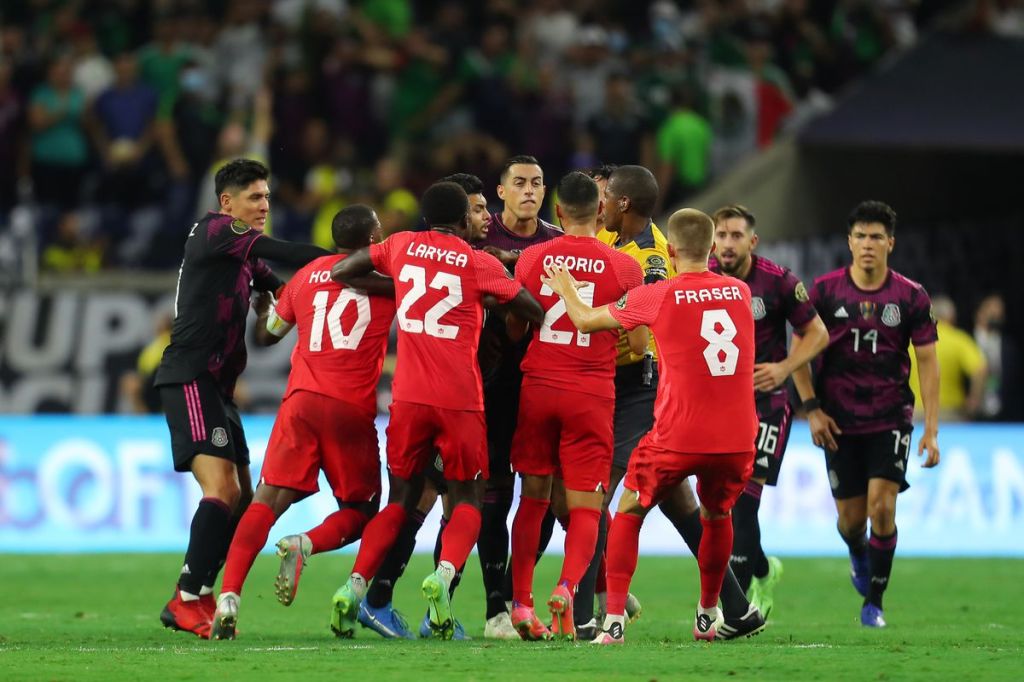
You see, there’s another aspect to sports besides watching them — playing them yourself. When I said sports have been a huge part of my life, I also meant in terms of my playing days. While I was far from a world class athlete, I had modest success in swimming, track and field, baseball, basketball, and my own martial arts lessons. I even tried football, which didn’t go well. But by far the sport I played the most, was best at, and received the biggest impact from was soccer. From the age of five, soccer has been something I’ve obsessed over. I played recreationally for several years as a kid, before playing for several more competitively as a teenager. I went to tournaments across the state, as well as states beyond that. I suffered the worst injuries of my life either during a soccer game or at practice. I met countless friends and coaches from all over the world (it’s the reason I know the main chorus of a random Scottish folk song). It’s one of five sports (baseball, Australian rules football, rugby, sumo wrestling) I’ve seen overseas and the only one I’ve watched on three different continents. The FIFA World Cup Final is one of my Top 2 dream sporting events to attend (other than the final of the men’s 100M in the Olympics). It’s also one of my biggest motivations to finally get back in shape — I want to play indoor soccer again.
Since my playing days ended some… holy shit it’s been more than a decade since my last competitive soccer game… soccer has somewhat faded in my heart, with sports like football keen to take up whatever space soccer once occupied. But recently, many of my thoughts have returned to my favorite sport, for a number of reasons. Really, it was three things happening at the same time. The first was the pandemic, which has restricted travel domestically and essentially killed travel internationally. It’s also put a great big dent in my “step foot on all continents before I turn 30” plan, which is now officially dead. Because I love soccer, I’ve made it a point to see a match almost everywhere I go. The atmosphere of games in England, France, Germany, Spain, Italy, and even Canada, New Zealand, and Japan is something I’ll never forget. The second was, in a New Year’s resolution to read more, picking up a copy of Who Ate all the Squid?, a book which follows the adventures of a South Korean soccer team. Not only do I want to visit South Korea someday, but also take in a match there. Reading about what’s happening is just whetting my appetite.
The third and perhaps most significant reason, both for the subject of the previous paragraph and these writings as a whole, was my discovery of COPA90, a soccer media company that began as a YouTube channel in 2012. Since then, they’ve produced some incredible soccer-related content both from a sporting standpoint and a journalistic one. Not content with covering only the biggest names and clubs in the world, COPA90 goes off the beaten path, often profiling players, stories, and clubs who don’t often garner much worldwide support. They also have a big focus on fan culture, taking a look at some of the biggest aspects of the soccer world through the eyes of the average person. Their COPA90 Stories channel shares compelling soccer tales that are written and shot amazingly well. They’ve taken a look at what you can do in a particular city for the price of a major match ticket. They’ve profiled non-league teams and the major fan groups (called “ultras”) of certain clubs. They’ve even gotten Adam Richman (of Man v. Food fame) to host a series showcasing some of the best places to eat before, during, and after a match.
But my favorite thing COPA90 has created is definitely “Derby Days.” Hosted by Eli Mengem, Derby Days profiles the biggest, best, fiercest soccer rivalries in the world. But rather than focus on the players and the game itself, Mengem speaks with the fans and takes a look at the history, culture, and social aspects that make each rivalry great. It’s a fascinating look at soccer cities around the world, along with one of the biggest aspects of sport: hatred. While Mengem has certainly profiled some of the biggest, most popular rivalries, he’s also gone below the first division, showcasing derbies that in some cases haven’t been played in years between teams I had never even heard of. No matter where these matches take place, there is hatred in some way, shape or form. It’s also almost always greater than anything I’ve seen in any other spot.
One thing about sports in the United States is that there’s no real dominant sport. Sure, football is often seen as the biggest sport, with baseball as “America’s Pastime” and basketball as another incredibly popular sport. But I wouldn’t call football the “dominant” sport. Take Canada for example. While they have football, basketball, baseball, and even soccer, ask any Canadian what the dominant sport is and they’d answer hockey. In New Zealand, it’s rugby. In Japan, it’s sumo. That’s where the majority of the love (and hatred) for sports in those countries goes. Remember all of that hatred I have for all of those sports teams mentioned above? Imagine having one sport — just one — to concentrate on and pour all of that emotion into? For the vast majority of the world, that’s the case with soccer. Soccer is the most popular sport in the world, with most other countries sharing a passion that many sports fans in the U.S. simply can’t begin to comprehend.
This isn’t necessarily a slight — the passion Americans have for their favorite sports teams is nothing to sneeze at. I should know — I’m one of them. But consider this: when two opposing players, teams, or fans get into a fight at an NFL game, it becomes a news story or at the very least a viral meme on Twitter. In most countries, having opposing fans fight is not only expected, but the basic minimum requirements for a rivalry. I remember one match I went to — an average Bundesliga (Germany’s top flight league) game between VfB Stuttgart and FC Augsburg (two clubs with no history of hatred). As I was approaching the stadium, a man emerged from a crowd, running past me with a hand covering part of his face, which was bleeding. Believe me when I say, soccer fans are fucking crazy. Derbies have resulted in mass brawls, pitch invasions, match cancellations, vandalism, and even death. Honestly, I like the level of hatred seen in U.S. sports — it doesn’t go too far. More often than not, soccer derbies cross the line.
But the Chiefs and Buccaneers have turned me into a salty little bitch, so let’s roll with it.
I want to get you guys more into soccer, a cause which I think can be helped by showing off some of the best rivalries in the world. But given that we have literally the entire world to go through, you guys probably only want to hear about the best, fiercest ones. This will inevitably lead to one discussion: which is the best rivalry in all of soccer, and thus the best rivalry in all of sports? Don’t worry, I’ve thought of a way to accomplish all of the above.
Over the course of however many chapters it takes, I’m taking you guys on a Player Haters tour of the world of soccer, going through the best, fiercest, most prestigious rivalries the sport has to offer. Each will be judged on a variety of factors, including the history of each rivalry, why exactly they hate each other, the overall success of each team (both against each other and in general), the notable events and figures in each matchup, the level of violence/pettiness between the fanbases, how often they play each other, the recent matches between each side, and when each rivalry arguably hit its peak. Our journey will take place across six regions, home of the six confederations of FIFA (the governing body of world soccer) — AFC (Asia), CAF (Africa), CONCACAF (North/Central America), CONMEBOL (South America), Oceana (the Pacific Ocean Islands), and UEFA (Europe). We will choose a certain amount of derbies per region (based on the amount of countries from each confederation that qualify for the World Cup) for our own World Cup of Hatred. From there, things will proceed like a typical World Cup — 32 rivalries will be sorted into eight groups of four, with two from each group advancing to a knockout stage, which will determine an overall champion of hatred.
Here’s how this breaks down: typically for a World Cup, Europe gets 13 guaranteed spots, while Africa gets five. South America and Asia get four, while North/Central America gets three. Two more teams qualify from intercontinental playoffs involving South America, Asia, North/Central America, and Oceana. The 32nd and final spot goes to the host country. For the World Cup of Hate, Europe (13) and Africa (five) keep their respective slots. I’m also guaranteeing a spot for Oceana by reversing a stupid decision that I’ll explain later. They can have the host’s spot. That means one of the intercontinental playoff matches is no longer needed. We’ll give that playoff spot to South America, because of the remaining countries I feel they have the strongest overall set of teams and rivalries. South America will get five spots, while Asia (four) and North/Central America (three) keep their guaranteed spots and their intercontinental playoff matchup for the 32nd and final spot.
There are some additional rules for how those spots are given per region. Some countries have plenty of fierce, dynamic, hate-fueled rivalries. But some of those countries also have one major, definitive rivalry that for whatever reason is more prestigious than the rest. If that’s the case, we’re only taking that one rivalry, no matter how intense and amazing those other rivalries are. The logic: if you can’t be the biggest rivalry in your own country, you can’t be the biggest rivalry in the world. I will still try my best to profile some of the other derbies in those countries. To further encourage diversity, a maximum of two rivalries per country can qualify for the final tournament. In addition to forcing me to showcase rivalries from smaller countries, it also helps out the bigger countries who have multiple genuinely amazing rivalries, rather than one major, all-encompassing derby. No matter what, I’m going to have to make some painful cuts.
(Disclaimer: I began this project in February 2021 and finished it in September 2023. I’ve tried my best to go back and update any statistics, add more notable events, and fix any other mistakes I’ve missed since I began. But there still may be some inconsistencies, so if you see something that doesn’t quite make sense, keep in for mind it was likely written from a 2021 perspective. I’ve also gotten a lot of this information from sources that are not only written in different languages, but even have different results and statistics based on what language you choose. To the best of my ability, all numbers are accurate through August 2023. But I’m not perfect. Still, even if there’s a mistake or two, I feel like I’ve generally captured the overall vibe and sense of the rivalry. When it comes to that, I get better and more in-depth as these go on. So my apologies to anyone who’s a fan of a team in these early rivalries, especially the first one.)
To kick things off, let’s take a look at our region: North/Central America. While the U.S. isn’t exactly a soccer powerhouse, there are still a couple rivalries potentially worthy of facing off with the best in the world. But to find a derby that can potentially compete for the championship of hatred, we have to look to our south.
NORTH/CENTRAL AMERICA (3)
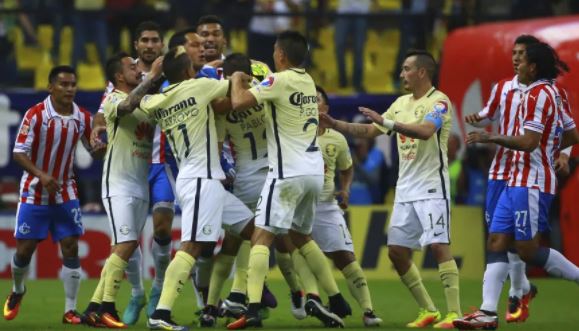
El Super Clasico/Clasico Nacional (Mexico)
C.D. Guadalajara vs. Club America
“It’s a football war in which losing is banned.” — Miguel Sabah, former Guadalajara striker
One of the biggest soccer rivalries in the world — and the biggest in all of Mexico — can best be summed up as: Mexico vs the world.
Everything you want in a rivalry — bad blood, opposing core philosophies, mutual success and competitiveness, unpredictability, popularity, high stakes, plenty of history — can be found every time C.D. Guadalajara and Club America face off on the pitch.
Mexico’s two biggest teams bring a metric shit ton of everything wherever they go. The lengthy history of passion, trophies, and talent from both squads have brought them tremendous popularity. According to a recent study, 44.2% of Mexicans identify as Guadalajara fans, the highest percent for any club in their respective country in the world. America was close behind in that poll, but is ahead when it comes to domestic success. America has won 13 Liga MX (the top league in Mexico) titles, more than any other team. Guadalajara is second with 12. Guadalajara and America are also the only two clubs to have never been relegated from Mexico’s top division. But each of these rivals’ success was rooted in ideals put in place more than a century ago, decades before the first official match between the two.
HISTORY:
Club Deportivo Guadalajara S.A. de C.V. was founded in the city of Guadalajara 1906 by Edgar Everaert, a Belgian immigrant who was greatly inspired by his home. Because the team was made up of players of different nationalities, Everaert decided to name them Union. But a couple of years later, Everaert made some massive changes. The first was made after a tour of Europe, where Everaert noticed teams named after their respective towns generated more support. So, Union was promptly renamed Club Deportivo Guadalajara, which has stuck ever since. The club’s iconic striped kit was also born, modeled on that of Club Brugge, Everaert’s favorite team. While the red, white, and blue color scheme was always present, it’s unclear if those came from the flag of Brugge or the flag of France, where some of the club’s first players were from. Also in 1908, it was decided that the team would only field Mexican-born players, due to the growing sense of oppression Mexican nationals felt towards foreigners. This policy has remained in place, with Guadalajara being the only club in Mexico to only have domestic-born players. Guadalajara spent the next few decades winning 13 amateur titles and getting into it with Atlas, with whom they share the Clasico Tapatio, Mexico’s oldest rivalry. We’ll come back to that derby in a little bit, but not before mentioning that it was Atlas fans who first gave Guadalajara the name “Chivas Locas” (Crazy Goats). The insult has since become the club’s official nickname, with Guadalajara and Chivas being used interchangeably.
The same year the first Clasico Tapatio was played saw the birth of Chivas’ greatest rivals. Club de Futbol America was founded in 1916, but not all at once. Students from Colegio Mascarones and Colegio Marista de la Perpetua in Mexico City had formed two teams — Record and Colin. But the two squads soon realized it was better to join forces in order to form a more competitive team. Player Pedro Quintanilla suggested the name America, since the merger was taking place on October 12 — Columbus Day. Another player, Rafael Garza Gutierrez, got a pair of his father’s navy blue trousers and a yellow shirt (part of the school uniform). It was decided those would be the club’s colors, with the team also designing the iconic crest featuring the entire Americas. But the job wasn’t done — to compete in the top league in Mexico City, America had to do well in three games. They won two of them and drew the third, with the results being good enough for acceptance. During the 1920’s (during which the club briefly also adopted the name Union), America not only won several titles but helped make history. In 1926, they became the first Mexican club to play outside of the country. Two years later, the Mexican Football Federation was formed, with Gutierrez becoming the manager of the national team. Several members of the squad that participated in both the 1928 Summer Olympics squad and first ever World Cup in 1930 were from America. Although their league in Mexico City was considered the best in the country, most of the top teams in Mexico were largely limited to playing other clubs from their respective region or town.
That changed in 1943, when the first ever national league (Liga Mayor) was founded. Both Chivas and America were among the founding members. Before the league began, the Copa Mexico was held, with the two sides facing off early in the competition. Chivas won 1-0 in a relatively uneventful match. Guadalajara also won the first ever league match between the two, 3-1. But it was the next match — the first in Mexico City — that first planted the seeds for a fiercely competitive rivalry. A hard tackle by an America defender on a Chivas player sparked a massive brawl that saw each side lose two players due to red cards. Adding fuel to the fire, America went on to win 7-2, a scoreline that remains their largest ever margin of victory against their rivals. The next day, the newspaper headlines read: “America beat Guadalajara in a game of football and boxing.”
But despite the fireworks that were happening when the two teams met, neither had much success in the first few years in the league. Chivas had come close to a championship, but had yet to actually win it all. America was a bottom feeder club, yet still managed to win the first trophy for either side, defeating Guadalajara on penalties to win the 1954 Copa MX. Things began to change in 1956, as Chivas — led by players like Salvador Reyes, Jaime Gomez, Isidoro Lopex, and Jose Villegas — formed one of the finest teams in Mexican history. The club’s golden era saw them win eight league titles and two Copa MX crowns in a 15-year span. “El Campeonisimo” won four of those titles in a row, the only time that’s happened in Mexican soccer history. But it was also during that time something happened that gave their rivals a boost they’re enjoying to this day. In 1959, America was bought by Emilio Azcarrago Milmo, the owner of Telesistema Mexicano. That has since become Televisa, the largest mass media company in the Spanish-speaking world. The funds that their new owner could provide would allow America to be able to buy some of the best foreign talent and create their reputation as a club of the rich, one that was always on TV. A few years later, America would move into their current home — Estadio Azteca, the one of the biggest stadiums in the world and arguably the most famous sporting venue in North America.
As Chivas entered a decline period, America picked up its first three league titles in the 1960’s and 70’s. But it was the 80’s that saw America enter its own golden age. Led by the likes of Alfredo Tena, Carlos Reinoso, Cristobal Ortega, and Enrique Borja, America won five league crowns during the decade and experienced success in domestic and international tournaments. Interestingly, Chivas rebounded during the mid-80’s, producing several playoff matchups between the two clubs that saw the rivalry arguably hit its peak (we’ll go over those in a minute). That era also saw America introduce its new nickname, Aguilas (Eagles). The mutual success continued into the 90’s, but as the new millennium began the overall rivalry would take a massive hit thanks to one side in particular.
While America continued to earn trophies, Chivas entered perhaps their darkest period towards the middle of the 2000’s. Due to financial struggles, many of their promising young stars — including Javier “Chicharito” Hernandez — were sold to bigger clubs overseas. As a result, the club saw terrible results domestically, almost getting relegated on multiple occasions. Chivas were also on the receiving end of the most lopsided year in the rivalry’s history, with America winning four times in 2007 alone. In addition, Chivas USA — Guadalajara’s feeder club in Major League Soccer — folded in 2014. But as America won a record amount of CONCACAF Champions League titles, Chivas made some decisions that finally began to reverse their fortunes. First, they hired Matias Almeyda as manager, bringing in an exciting, attacking style of play. They then declined to renew their contract with Televisa (yes, the owners of their arch rivals), creating Chivas TV instead. After a rough start, the channel has become quite popular, helping with the revenue problem. It also helped that Guadalajara won Liga MX, Copa MX, Supercopa MX, and CONCACAF Champions League titles within a three-year stretch. Chivas has also moved into their new home — Estadio Akron. With both clubs finally playing at a high level again, there’s hope we’ve reached a second golden era of the biggest rivalry in Mexico.
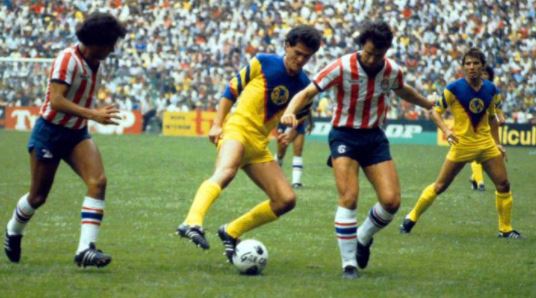
MAJOR ON-FIELD MOMENTS:
20-20-20
During the 1959 season, America had to play three straight road matches against teams from Guadalajara. After defeating Oro and Atlas by scores of 2-0, America finished the sweep with a 2-0 win over Chivas. After the game, manager Fernando Marcos said, “America does not come to Guadalajara to win, that is routine. We are here to change your long distance phone number. So my friends already know: every time they want to call Guadalajara, dial two-zero, two-zero, two-zero — or 20-20-20. Courtesy of America.” The quote is credited with causing the hatred between the two teams to rise to the next level. Incredibly, Chivas won the next matchup by a score of 2-0 and won the league, with Oro and Atlas finishing second and third, respectively.
LA BRONCA DEL ’83
Chivas and America squared off in the semi-finals of the 1982-83 season. After America won the first leg 2-1, Guadalajara fought back to earn a 3-0 victory in Mexico City. But what everyone remembers is the brawl that broke out on the field. Several hard tackles and overall poor game management by the referee led to massive fights by both teams, as well fans who had rushed in from the stands. Known as “La Bronca del ’83“, the melee saw a total of 16 players across both lineups suspended for future league competitions. Unfortunately for Chivas, that included each of the two legs of the final against Puebla. Despite being so short-handed… Guadalajara managed to reach penalties, only to lose in heartbreaking fashion — a theme for that era.
LA FINAL DE SIGLO
Fans of both squads would only wait a year for the rematch, which would have even higher stakes. For the first and only time, Chivas and America faced off in the league finals. Dubbed the “Final de Siglo” (Final of the Century), both games would live up to the hype. America took a 2-0 lead to start the first leg, but Chivas fought back to earn a 2-2 draw at home. It was the Mexico City team’s turn to fight through adversity, as Armando Manzo was issued a red card in the 26th minute, sending America down to ten men. Then, Chivas were given a penalty kick in the 40th minute. But Hector Zelada stopped the shot and Daniel Brailovsky scored two goals. America won the second leg 3-1 to get their revenge and claim the 1984 championship.
EVERYONE GETS A RED CARD
Incredibly, it only took three years for the famous violence of 1983 to be topped. In 1986, the two sides faced off in the regular season and for 72 minutes didn’t get into a bench-clearing brawl. But then tensions boiled over, resulting in another massive melee. Unlike the last fight though, this one couldn’t continue. For what might be the only time in recorded professional soccer history, all 22 players on the field received red cards, which meant neither side had enough people to keep going. The match, along with the two dozen players, was suspended, resuming a month and a half later behind closed doors in a 1-0 America win. It would be the last game between Chivas and America to take place without fans until November of last year.
FIVE GOLDEN GOALS
What’s such a sure way of getting fired that even the Houston Texans wouldn’t hesitate to pull the trigger? How about suffering the largest defeat to your arch rival in the modern era? That was the case for Ricardo La Volpe, who was sacked following America’s 5-0 humiliation against Chivas. On that day, Guadalajara seemingly scored at will, with four different players finding the back of the net. It was the second-biggest ever win for Chivas over America, trailing only a 7-0 trouncing way back in 1956. It’s also the most lopsided score by any side in the rivalry in over 60 years. It was the perfect storm for a Chivas team that would win Liga MX the following year taking advantage of their rivals during a rare point of mediocrity, that would soon be reversed.
NO WINNER, BUT EVERYONE WINS
As you’ll come to find throughout these rivalries, matches as tense as these can often fail to provide a lot of goals, with players being tentative and afraid to make a mistake. That was not the case in 2005, the last time a meeting between America and Chivas resulted in more than five goals. America was dominant in the first half, jumping out to a 2-0 lead. But Guadalajara got on the board just before halftime and even things up just before the hour mark. Claudio Lopez put America back on top in the 79th minute, only for Francisco Palencia to answer in the 88th, with the match ending in a 3-3 draw. Incredibly, both goalkeepers — Oswaldo Sanchez and Guillermo Ochoa — received praise for their play, despite both letting three goals in their net.
AGAIN AND AGAIN AND AGAIN
Some say familiarity brings contempt. Well, an already contentious rivalry got a whole lot of new material in 2016. During that calendar year, America and Guadalajara faced off a record seven times — twice during league play, twice during each playoff round, and one more time during the semi-finals of the Copa MX. Both sides held firm at home during the regular season, though things were different when it came to the playoffs. In the Clausura 2016, America earned a 0-0 draw on the road before eliminating Chivas at home. It was the opposite in the Apertura, with America winning on the road following a draw at home. Although Guadalajara did get some revenge in the Copa MX, America won the overall 2016 competition with a 3-2-2 record.
STATISTICS:
HEAD-TO-HEAD RECORD
America: 90
Guadalajara: 78
Draw: 79
LEAGUE CHAMPIONSHIPS
America: 13 (record)
Guadalajara: 12
COPA MX
America: 6 (record)
Guadalajara: 4
CAMPEON DE CAMPEONES
America: 6
Guadalajara: 7 (record)
CONCACAF CHAMPIONS LEAGUE
America: 7 (record)
Guadalajara: 2
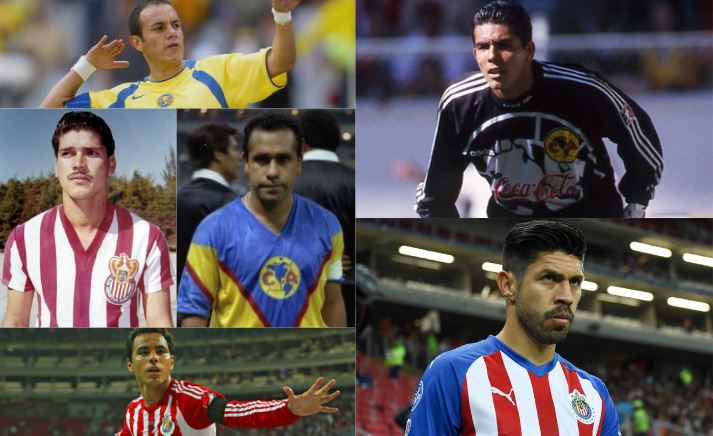
NOTABLE FIGURES:
SALVADOR REYES
The all-time goalscorer in Clasico Nacional history, Salvador Reyes put 13 balls in the net against America during his legendary career with Chivas. Putting on the red and white from 1953-67, Reyes scored 122 times in 282 games, helping lead Guadalajara to seven Liga MX titles. Reyes also appeared in three World Cups and was the last Guadalajara player to win the Liga MX scoring title for 45 years. In 2008, a 71-year-old Reyes incredibly started a match for Chivas as part of a tribute, staying on the field for 50 seconds before being subbed off the field.
CRISTOBAL ORTEGA
To comfortably hold a record for a team with a lengthy history like America is incredible. Such is the legacy of Cristobal Ortega, who made an astounding 711 appearances for Las Aguilas from 1974-1992, over 100 more than anyone else. He also played in 75 playoff games, also a club record. So it’s no surprise that Ortega also has the record for most appearances in the Super Clasico, with 50 — including the two brawls in 1983 and 1986, as well as the famous league final in 1984. During his time in Mexico City, Ortega was part of six Liga MX championship sides.
CUAUHTEMOC BLANCO
Cuauhtemoc Blanco was named after the last Aztec emperor, whose name means “one who has descended like an eagle.” So I guess it’s fitting that Blanco, one of the greatest strikers in Mexican soccer history, spent the majority of his legendary career with America. Blanco had five different stints with the club, appearing in more than 330 games and scoring 125 goals. Blanco also brought his brash, aggressive style wherever he went, meaning anytime America played Chivas there was a non-zero chance Blanco was going to achieve a Gordie Howe hat trick.
OMAR BRAVO
For several decades, Salvador Reyes was the last Guadalajara player to win the Golden Boot and held the club scoring record. Then, Omar Bravo came along, snapping multiple top scorer honors and setting a new Chivas record with 132 goals. Six of those came against America, with Bravo bringing his famous passion to every match. While Bravo was able to power Chivas against their rival even in down seasons, it was his last match against America — the 2-1 playoff defeat during 2016’s record stretch — where he was unable to find the back of the net again.
OSWALDO SANCHEZ
One of the greatest goalkeepers in Mexican soccer history, Oswaldo Sanchez is one of the few players to suit up for both Chivas and America — and one of the rarer ones to play several years for each club. After a stellar start to his career with Atlas, Sanchez was transferred to America in 1996. But Sanchez struggled to find a place in the team and in 1999 left for rivals Guadalajara. With Chivas, Sanchez flourished, becoming a team captain, winning a league championship, several Golden Glove awards, and even multiple Balon de Oro (MVP) awards, rare for a goalie.
FRANCISCO RODRIGUEZ
Few players have played for both Chivas and America. Only one has been immortalized as a champion in both red and white and blue and yellow. Francisco Rodriguez, a solid, reliable central defender, is that player. “Maza” began his career with Guadalajara, playing a pivotal role in the club’s 11th (and at the time record) Liga MX title in 2006. Rodriguez then went abroad, playing in the Netherlands and Germany for the next five years. He returned to Mexico in 2013, this time with America, winning a Liga MX title — helping them tie Chivas’ record in the process.
ORIBE PERALTA
By far the biggest name to switch sides in recent years, Oribe Peralta actually briefly played for Guadalajara on a loan in 2005. But by 2015 — with Peralta established as one of the top players in the league, he had joined America for $10M — the most expensive transfer in Mexican soccer history. But after four successful years, Peralta shockingly signed a deal with Chivas in 2019, a move which actually upset both sets of supporters. America fans call him a traitor, while Chivas fans are critical of Peralta’s age and recent rash of injuries, as well as tarnishing the rivalry.
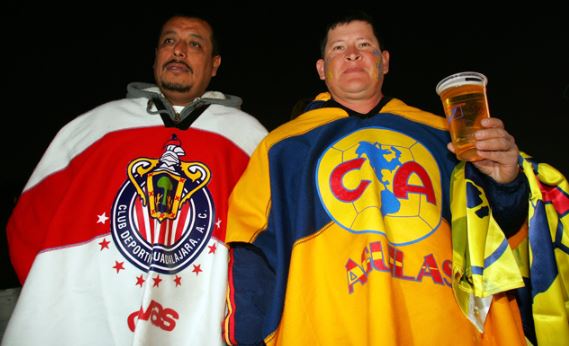
FAN INVOLVEMENT:
Much like the violence on the field, fighting among fans of both Chivas and America has remained through the decades. Remember the infamous brawls in 1983 and 1986? There were a lot more than 22 people on the field during those instances, many of them fans who had stormed the field. Of course, tensions were incredibly high due to the stakes at the time. Naturally, for a match several decades later, the animosity wouldn’t be as bad, right? Especially for an exhibition game that doesn’t count? Not a chance.
In 2013, Guadalajara and America took their rivalry to Las Vegas for an exhibition match. Even though there was literally nothing at stake and neither team was playing at full force — not to mention that the match was happening in an entirely different country — fists flew early, before the game even. A group of America fans threw rocks and bottles at a Chivas bus, then got into it with a group of Guadalajara fans. At least six people were injured and thousands of fans were trapped outside the stadium as police attempted to restore order. The game had to start on time due to TV scheduling, with those fans missing the start. During the game, the players mirrored the fans, getting into a massive brawl. Things then erupted when Chivas scored the winning goal in the closing minutes. Fans on both sides stormed the field, with fists and several other objects flying at opposing groups and even police. Several bloodied and injured fans had to be carried off the field and the rest of the match was abandoned. So much for a “friendly.”
Even when the match doesn’t involve current players, the passion remains. In 2018, the Grape Bowl in Lodi of all places played host to a match between Chivas legends and America legends. Before the game, Hilario Cruz — an America fan — says he was trying to enter the stadium with his family and inadvertently redirected by security towards a group of Chivas fans. He says that group — armed with metal pipes — attacked him for being an America fan, beating him within an inch of his life. That violence led to a massive brawl featuring more than 100 people. For a “friendly match.” Between former players. Insane. Like with the Las Vegas incident, fans blamed the security in Lodi for not being ready to handle fans of such a rivalry (side note: I contributed to that story, hooking our reporter up with Sacramento Gold FC’s announcer, who does work for Chivas). But honestly it’s tough for them anything like the hatred this rivalry can bring.
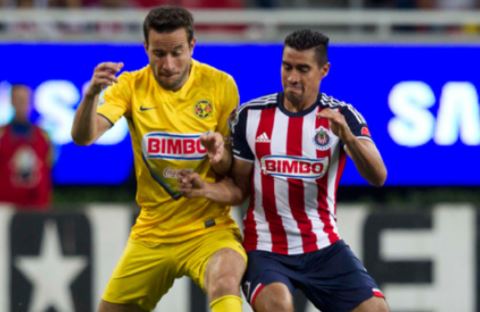
SUMMARY:
Every time Mexico’s two biggest and most successful clubs — from the country’s two largest cities — face off, it’s also a historic clash of ideologies. Club America represents Mexico City — the country’s enormous, glamorous, cosmopolitan capital — with its wealth, ability to sign players from all over the world, and winning. C.D. Guadalajara is a symbol of the state of Jalisco — arguably the most Mexican of states (it’s the home of mariachi and tequila) — and proof that Mexicans can succeed at the highest level (with its only-national player policy). The biggest sporting rivalry in North and Central American soccer is filled with everything you could want — records, drama, prestige, hatred, violence, success — and more.
While the Clasico Nacional has stood out as the definitive rivalry in Mexico, it’s far from the only one in the country — or even involving the two most popular teams. In addition to the Super Clasico, America has major rivalries with the two other clubs that call Mexico City home. The “Clasico Capitalino” sees America square off with Club Universidad Nacional, better known by their nickname “Pumas.” America had already been in Liga MX for two decades before Pumas was promoted to the top division. From there, the close proximity of the clubs led to immediate hostility, especially when America bought UNAM idol Enrique Borja. It plays into the dynamic of America being a club of the elite, with Pumas representing the middle class. Some even argue the Capitalino is the most violent derby in all of Mexico. Things escalated further in the 1980’s, when America won two league finals over Pumas thanks to controversial calls. But for all of the animosity, it’s largely Pumas fans who consider this to be the main rivalry, while America has its eyes on Chivas. It’s like the dynamic between the Kings and lakers.
America’s other big rivalry can be compared to that of the lakers and Clippers. Las Aguilas aren’t the only team to call Estadio Azteca their home — fellow Mexico City club Cruz Azul also plays there, setting up the perfect atmosphere for the “Clasico Joven.” Like Pumas, Cruz Azul first faced America upon gaining promotion to the first division in the 1960’s. After early America dominance, Cruz Azul’s famous “La Maquina Celeste” destroyed Liga MX in the following decade, a stretch that included Cruz Azul topping America in the league finals and eliminating them in the Copa MX. But while Cruz Azul is fourth in the Liga MX title list with eight, they haven’t won anything since 1997 — even that is the club’s only league title since 1980. Thus in the modern era, the Joven’s trophy case is largely filled with America silverware.
But if you think that’s old, let’s finally go back to the Clasico Tapatio — Chivas’ other major rivalry and the oldest derby in Mexican soccer. Chivas and Atlas first faced off in 1916, with bad blood flying from some of the first matches between the Guadalajara clubs. Chivas complained of bad officiating during a tournament, which wouldn’t be the first time things would be controversial. The first match between the clubs allegedly ended 18-0 in favor of Atlas, although there is no data to confirm the lopsided score. One of the most famous moments of the rivalry came during a lopsided game in favor of Chivas. Up 5-0 during a contest in 1955, Chivas goalkeeper Jaime Gomez — who had been insulted throughout the game by Atlas fans — got a magazine from the stands and proceeded to sit and read it while leaning against the goal post. Much like the Clasico Nacional, the Tapatio is seen as a contest between the rich (Atlas) and the average joe (Chivas)… or jose I guess. But in this case, Atlas is in poverty when it comes to trophies. Atlas has exactly one league championship — which came in 1951. Still, the club has some of the fiercest support in all of Mexico, a credit to its devoted fans.
However, there exists another rivalry that is slowly catching up to the Super Clasico as the fiercest, high-quality derby in Mexico. The city of Monterrey hosts the Clasico Regiomontano — the derby between C.F. Monterrey and Tigres UANL. Even though this is an inter-city rivalry and doesn’t encompass a bigger region, and neither club has the hardware and success of Chivas or America, the Regiomontano generates more income than the Clasico Nacional. That’s because the passion the fans bring to these games is simply incredible. Fans often wait outside the stadium for days to get tickets, which can cost two or three times as much as the actual game. But over the past decade, that money is beginning to show itself more and more on the field. Monterrey and Tigres have the most expensive squads in Liga MX, with the talent bringing in trophies. Since 2009, the two sides have combined for eight league titles, four Copa MX wins, and five CONCACAF Champions League crowns. With the talent and silverware generated by these two squads finally matching the intensity the matchup has always produced, the Regiomontano is a legitimate challenger to the Clasico Nacional’s throne.
With all of that said, it’s still the Clasico Nacional for a reason. White the Regiomontano may have been the hotter rivalry over the past decade or so (especially with Chivas’ decline), pound for pound it can’t match the history and legacy of the Super Clasico — at least right now. Check back in a decade or two. Plus, it’s not like either America or Guadalajara have exactly faded into obscurity. Both are playing at a high level right now. Even though the Regiomontano will probably be better than a good chunk of the rivalries that end up qualifying for the World Cup of Hate, it just has bad luck with its qualifying group — it can’t be the best in the world if it can’t be the best in its country. That title clearly belongs to the Super Clasico, which easily becomes the first qualifier and the only one from Mexico.
So given that I spent a good portion of this newsletter saying the U.S. can’t match the passion seen in other countries when it comes to soccer and celebrating the biggest rivalry in Mexico (and one of the best in the world), what can the states possibly put together to compete in this prestigious contest of hatred? As it turns out, the answer is a lot — the U.S. isn’t going down without a fight.
COMING UP IN PART 2: Goonies, bonfires, betrayal, and a shit ton of amazing tifos.
 Ruben's Writings
Leave a comment