SOUTH AMERICA (5)
At long last, we have reached South America, arguably the spiritual home of soccer. Home of the first ever FIFA World Cup in 1930 (won by Uruguay) and the winningest country in World Cup history (Brazil), South America has birthed tremendous success and legends of not just soccer, but sport in general. Pele, Diego Maradona, Lionel Messi, Neymar, Ronaldinho, Ronaldo, Garrincha, Carlos Valderrama, Alfredo Di Stefano, Zico, Romario, and more are from South America, which is also home to the Beautiful Game. No continent better embraces the stylistic, artful, beautiful version of soccer than South America, with passion and love pouring out from everywhere. But with that intense passion comes incredible hatred and legendary rivalries, including some of the best in the world. I expect no fewer than two of these five rivalries (South America deserves more spots) to seriously contend for the championship.
At the beginning of every continent’s section, I’ve started with the rivalry that (going into this competition) I believed to be the most popular. Mexico’s Super Clasico (Chivas-Club America), Spain’s El Clasico (Barcelona-Real Madrid), Egypt’s Cairo Derby (Al Ahly-Zamalek), and India’s Kolkata Derby (Mohun Bagan-East Bengal). South America is no exception, but before I get into that I must first mention the Avellaneda Derby between Independiente and Racing. Taking place since 1907 and indisputably one of the fiercest rivalries in all of South America and the world, the derby features two of the biggest five teams in Argentinian soccer and a haul of heated moments and silverware. The two clubs have won a combined 34 league championships, 22 national cups, and eight Copa Libertadores titles (Independiente has won seven, more than any other club). There has been a match with 11 goals, a match where each side finished with seven players, and a fan riot that forced a match to be abandoned. The rivalry also features a unique aspect — the club’s stadiums are located just a few hundred meters apart.
Here’s the thing — the Avellaneda Derby will not be qualifying for the World Cup of Hate, even though it’s probably better than half of the rivalries that will. As I’ve mentioned, only rivalries that can be considered the biggest in their country can qualify. As great as the Avellaneda Derby is, it’s only the second-best in Argentina, and the second-best in Buenos Aires. Argentina’s capital city also contains a rivalry that can only be described as “epic” and “legendary.” It’s a rivalry that doesn’t just bring Argentina to a halt, but also all of South America. Its long, roller coaster history features everything that makes sporting hatred great.

Superclasico (Argentina)
Club Atletico River Plate vs. Club Atletico Boca Juniors
“Derby day in Buenos Aires makes the Old Firm game look like a primary school kick-about.” — Gavin Hamilton, editor, World Soccer magazine
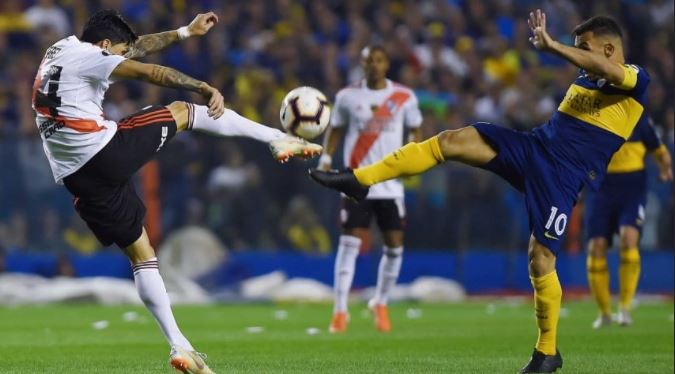
The Superclascio is everything you look for in a great rivalry — hatred, passion, drama, prestige, tragedy, fandom, legendary moments, and batshit insanity — turned up to 11. When River Plate and Boca Juniors collide, it goes far beyond the realm of fantastic sport and into everyday life, with fans sometimes literally living and dying with each derby.
Boca and River aren’t just soccer clubs — they’re two of the biggest institutions in all of Argentina. Superclasico matches bring the country (and all of South America) to a complete stop. But even when they’re not playing, the two clubs and their fans are constantly at war. The two sides could not appear to be more different, from their colors and neighborhoods to the very way each approaches the game. River is seen as a club of the rich who aren’t satisfied with winning unless it’s done with style and flair (the Beautiful Game). Boca is known as the people’s club and as a club that will win by whatever means necessary, with a style known as “La Garra” (“The Claw”). But what makes this rivalry truly great is just how similar River and Boca are. Both grew from humble beginnings and became the two most successful clubs in Argentine history, each producing legends of the game and some of the best squads ever seen in South America. They each play in legendary stadiums (Boca’s La Bombonera and River’s El Monumental) that have become iconic for different reasons. Those venues are packed with tens of thousands of rabid fans who provide every derby with an incredible atmosphere. It also helps that Argentinians give the likes of Turkish and Serbian fans a run for their money in terms of the craziest fans in sports. Pack all of this into one rivalry and you have something special.
I’m far from the only soccer derby ranker who’s fallen in love with the Superclasico. In 2016, both FourFourTwo and The Daily Telegraph ranked it as the best derby/club rivalry in soccer. The Daily Mirror placed it atop its list of Top 50 derbies in the world. In 2004, The Observer put the Superclasico on top of its “50 sporting things you must do before you die” list. While I’d like to think I’m going more in-depth with my reasoning and comparisons for each of these rivalries, there’s a good chance I reach the same conclusion as them. There are plenty of reasons why.
HISTORY:
This rivalry of massive proportions began shortly after the start of the 20th century in the barrio of La Boca — one of the poorest in Buenos Aires and one filled with Italian immigrants. Its name comes from its location near the mouth of the Matanza River (known as the Riachuelo). But it was a different body of water — the Rio de la Plata near Buenos Aires — that inspired a group of soccer fans in 1901. They were arguing over which of their clubs — Santa Rosa and La Rosales — was better. They came to a surprising conclusion and decided to merge the two clubs. Looking for a name, they observed a group of dock workers playing a soccer match while on break. The boxes they were working with were inscribed with the English translation for the Rio de la Plata: River Plate. With that, Club Atletico River Plate was formed. Four years later, a group of Greek and Italian boys decided to found a club of their own. Originally wanting to honor their ancestry, they instead decided to pay homage to their neighborhood. Adding a touch of English themselves to the name (British railway workers originally introduced soccer to Argentina), they created Club Atletico Boca Juniors.
The first years of each club’s history saw them gain footing in the local leagues while creating their iconic images. River originally wore a plain white shirt with black shorts, but added their iconic red sash before the end of their first decade, allegedly due to distinguish themselves from others who wore white shirts. Legend has it that in 1906, Boca (who wore white shirts with thin black stripes) played against another club (Nottingham de Almagro) with a similar look. Boca lost and decided to adopt the colors of the flag of the first boat to sail into the port of La Boca. That ship turned out to be Swedish, with the yellow and blue of the flag being the new team colors. River advanced to Argentina’s Primera Division in 1908, with Boca joining them five years later. That set up the first ever Superclasico in 1913, which River won 2-1. Although who was the victim and who was the perpetrator has since been lost to time, it was reported that a fan of one club burned the flag of a fan of the other club during the match, even though these clubs had never played competitively before (they had met for two friendlies). But the hatred (driven by the desire to be the best team in La Boca) had arrived on literally Day 1.
It took a few years, but both clubs would soon start bringing home silverware. River won both its first domestic and international tournaments in 1914, while bringing home a first league title in 1920. Boca established itself as one of the dominant clubs of that era, winning five league crowns from 1919-26. But perhaps the biggest event of that era (and arguably the biggest in the history of the Superclasico) happened off the field. In 1925, River decided to move out of La Boca in favor of the much more affluent district of Nunez. That immediately created more dividing lines between the two rivals. River was now seen as a club for the wealthy and elite, while Boca became known as the club of the working class — the people’s club. This distinction was affirmed in the 1930’s with the transfers of Carlos Peucelle and Bernabe Ferreyra to River (who had a much better financial backing) for a combined $45,000 — an insane amount of money at the time. That earned River the nickname “Los Milionarios” (“The Millionaires”). Both clubs won multiple league titles towards the end of the decade and — in 1938 — opened each of their iconic stadiums. La Bombera was limited by space in La Boca, with its flat stands and close space leading to greater intimacy and atmosphere. El Monumental is the largest stadium in Argentina (currently over 70,000 total capacity) and home to the national team.
The 1940’s were defined by “The Machine” — one of River Plate’s greatest ever squads. From 1941-47, “La Maquina” won four league crowns, three cups, and several other titles thanks to the core group of Angel Labruna, Juan Carlos Munoz, Jose Manuel Moreno, Adolfo Pedernera, and Felix Loustau. La Maquina’s dynamic attack and rotating positions are often seen as precursors to the legendary Total Football Netherlands/Ajax squads of the 1970’s. During this time, River scored its biggest win over Boca — a 5-1 victory in 1941 (revenge for the record 6-0 thrashing Boca gave River in 1928). As if that couldn’t get better, that era also saw the emergence of a young Alfredo Di Stefano to add to their stacked offense. However, the iconic squad would meet its end towards the end of the decade, during the Argentina footballers’ strike. Many of River’s best players — including Di Stefano — transferred to Colombian clubs. Boca also had a decent run of success in the decade, winning a handful of league titles, including multiple at El Monumental (La Bombonera had been closed due to hooliganism incidents). However, the end of the decade not only saw Boca suffer due to the footballers’ strike, but nearly be relegated, with only a last day win over Lanus keeping them up in 1949.
River’s success continued into the 1950’s, winning a handful of titles — including three straight league crowns from 1955-57. However, Boca began to rebound, winning their first league title in nine years in 1954. The end of the decade also saw them avenge the 5-1 defeat to River in 1941 with a flipped scoreline in a 1959 Superclasico. That game symbolized the swing that was to come, with River taking a dip in the 1960’s. That was a decade when Boca thrived, winning four league titles and reaching the final of the 1963 Copa Libertadores (losing to a Santos squad led by a young man named Pele). Two of those titles came at the expense of their rivals. In 1962, Boca needed to win a late-season Superclasico but conceded a penalty with just a few minutes left while up 1-0. However, in what became an iconic moment, goalkeeper Antonio Roma stopped Delem’s penalty to preserve Boca’s win, with the club winning the title the next week. In 1969, River needed to win at home on the last day to prevent a Boca title. The home squad did come back from down 0-2, but could only manage a 2-2 draw, with Boca winning the league. Perhaps the biggest on-field heartbreak for River came in the 1966 Copa Libertadores, which saw them advance to the final over Boca. But while they led 2-0 late in the decisive match, Penarol scored four goals to win 4-2 in extra time. The choke job by River gave the club an unfortunate nickname — “Gallinas” (“Chickens”) — that is still used by rivals to taunt them.
Unfortunately for both teams, none of those moments were the most heartbreaking incident to happen during a Superclasico match. In 1968, Boca and River met at El Monumental for a relatively unexciting encounter, which finished 0-0. However, after the final whistle, 71 Boca fans were killed and 150 more injured during a crush at Gate 12 of the stadium. The average age of the victims was 19. To this day, it remains the worst sporting disaster in Argentine history. It also remains unclear exactly what happened. Gate 12 was either locked or would not open, with the reason for the crowd rushing towards the closed gate being blamed on Boca fans (for allegedly throwing burning River flags from the upper tiers), River fans (for allegedly arriving in the Boca fans’ section), and police (for allegedly repressing Boca fans after they had thrown urine at them). After three years of investigating, a government inquiry found no one guilty for what became known as the Puerta 12 Tragedy. At the end of the season, the 68 clubs in the Argentine FA collected 100,000 pesos for the families of the deceased. In addition, the gates of El Monumental have since been identified by letters instead of numbers.
After a few more years of mediocre play, River finally began to rebound towards the back half of the 1970’s. Under returning great Angel Labruna (now manager), River broke an 18-year title drought in 1975 and the following year reached the Copa Libertadores Final, losing on another late goal to Cruzeiro. River also took home five more league titles over the next six years and established themselves as one of the best squads in the country (a lot of Argentina’s FIFA World Cup-winning roster in 1978 played for River, with the final held in El Monumental). Unfortunately for River, Boca happened to be fielding one of the greatest squads in South American history at the time. In 1976 (the same year River nearly won the Libertadores), Boca and River met to decide the winner of the Nacional — the first ever final between the rivals. The game’s only goal came from a free kick from Ruben Sune, handing Boca the 1-0 win. The following year, it was Boca who reached the Copa Libertadores Final, where they beat defending champion Cruzeiro to win their first South American championship. Boca wasted no time in adding a second, crushing Deportivo Cali in 1978 to win back-to-back continental crowns. While Olimpia denied Boca a three-peat in 1979, the squad that reached three straight finals (winning two, as well as the 1977 Intercontinental Cup) remains iconic in Argentine soccer history.

The Superclasico got even spicier in 1981 when River offered a promising youngster from Argentinos Juniors a deal to make him their highest paid player. Instead, he decided to play for Boca, the club he had always wanted to play for. That player was Diego Maradona, future global icon and member of the soccer GOAT discussion. Although Maradona only played one year with Boca before moving to Barcelona, he left Boca with a memorable Superclasico goal and another league title. Boca also earned another 5-1 win over River in 1982 — this one at the Monumental. But shortly after, Boca faced a major financial crisis that required more than 150 lawsuits be settled and more than a million dollars change hands to solve. River wasn’t exactly in a good position themselves, finishing 18th out of 19 clubs in 1983 and nearly being relegated. But just three years later, River picked themselves up and made history of their own. After losing the Copa Libertadores Final in both 1966 and 1976, River finally got it done on their third try in 20 years and took home the trophy in 1986, defeating America de Cali in the final. Two more international trophies — the Intercontinental Cup and Copa Interamericana — would follow that year, which went down as one of the best in club history.
But just when River was getting comfy on top, Boca managed to rally and win the 1989 Supercopa Libertadores. Boca came out swinging in the 1990’s, winning multiple international trophies and bringing home their first league title in 11 years in 1992. But the real violence broke out in 1994, when River won a 2-0 victory in the league. After the match, two River fans were shot and killed. As a result, the scoreline “2-2” was seen painted across Buenos Aires and mentioned by Boca fans as the actual result. Perhaps motivated by the tragedy, River made more international history in a year ending in “6” by winning the 1996 Copa Libertadores (once again at the expense of America de Cali). While River would take home a few more titles before the end of the millennium, Boca began to get an edge in the rivalry. Including a 4-1 win shortly after River won the Libertadores, the late 1990’s and early 2000’s would see a streak of 14 straight matches between the two sides without a River victory. But things were about to get even worse for River. Despite winning one more title in 1999, River was about to encounter an upgraded rival whose squad would be so legendary, they would challenge the famous La Maquina squad as arguably the best in South American club soccer history.
In 1998, Carlos Bianchi became manager of Boca and proceeded to curbstomp on Argentina and the rest of South America. Led by the likes of legendary striker Martin Palermo, Boca won five league titles in the 2000’s, tied for the most in the decade, with a stretch of seven crowns in nine years. However, their real prestige came internationally. After winning the league in 1999, Boca took home its first Copa Libertadores championship in 2000 (taking out River in the process), with Oscar Cordoba killing it in the final against Palmeiras. That earned them a spot in the 2000 Intercontinental Cup, where against all odds they defeated a Real Madrid squad featuring Luis Figo, Roberto Carlos, Raul, and Iker Casillas 2-1. It was more of the same in 2001, with Boca winning a second straight Libertadores title — this one over Cruz Azul. After Bianchi briefly left the club in 2002, Boca rehired him in time to lead them to a third Libertadores win in four years (a rout of Santos in 2003). That year saw another Intercontinental Cup win — a penalty victory over Kaka, Paolo Maldini, and AC Milan. Bianci left Boca again after coming up short in another Libertadores final in 2004, but the talent still had more trophies to win. In 2007, the club capped off an incredible decade by winning its sixth Libertadores title, taking out Gremio. As for River, while they still won league titles in the early 2000’s, they had to watch their rivals storm through South America. But things would soon get unfathomably worse.
While River won another league title in 2008, things would come crashing down in the years that followed. Facing an institutional and sporting crisis (including $75M+ in debt), River recorded the worst season in history in 2011, which saw them forced into a two-legged playoff to stay in the top division. To the shock of South American soccer, River lost, being relegated for the first time in their history. After their fate was sealed, River fans rioted across Buenos Aires, with one supporter taking his own life by jumping in front of a train. While River immediately earned promotion the following year, the relegation remains a constant point of mockery for Boca fans, who often dress up as or create signs of ghosts with a red “B” on them. However, the relegation may have been exactly what River needed. River won the league title in 2014 and has since gone on a rampage internationally under current manager and former player Marcelo Gallardo. River won the 2014 Copa Sudamericana, 2015 Copa Libertadores, and 2017 Supercopa Argentina, eliminating Boca in the process each time. The 2015 Libertadores stands out as one of the more infamous moments in Superclasico history — during the second leg of the Round of 16 clash between River and Boca, a Boca fan used pepper spray on River players. River couldn’t continue and were given a forfeit victory as a result. While that was controversial, it was nothing compared to the chaos that happened three years later.
The 2018 Copa Libertadores Finals will go down as arguably the craziest set of derbies in soccer history. It almost didn’t happen as it did — River needed two goals (including a last minute penalty) in the final ten minutes of the semi-finals to beat Gremio. Even then, it was unclear whether their win would stand, after Gallardo (who was suspended for the game) allegedly snuck into the locker room at halftime to give notes. But the victory counted and River advanced to the final, where their arch rivals, Boca, were waiting. For the first time ever, the Superclasico would decide the champion of South America. It was universally decreed to be the most important Superclasico ever, and perhaps River’s only chance to get bragging rights back after relegation. In addition, this would be the last Copa Libertadores Final to be decided over two legs, with a single match deciding the title from 2019-onward. Fittingly for a match of such epic proportions, the first leg — at La Bombonera — was suspended less than two hours before kickoff due to biblical, torrential rain rendering the field unplayable. Things were fixed the following day, with Boca and River finally able to take the field and end a back-and-forth affair with a 2-2 draw. The match now shifted to El Monumental, the site of the most anticipated Superclasico ever. Even with all of the hype and hoopla surrounding the match, no one could’ve possibly predicted what happened next.
As Boca’s team bus pulled into El Monumental, a crowd of River fans threw objects at the bus, breaking multiple windows. That allowed military-grade tear gas — set off by police at the River fans — to enter the bus, with multiple players injured due to the spray and broken glass. The match was delayed several times amid the chaos of developing news and player safety. Media in Argentina and South America referred to what happened as the biggest disgrace in the country’s sporting history. The second leg was eventually postponed until the following day. However, the match was further suspended at Boca’s request, with officials deciding that for safety reasons it couldn’t be played in Argentina. Despite several countries (including the U.S.) offering to host the match, it was decided that the second leg would be played at the Santiago Bernabeu — home of Real Madrid. Not only was this controversial because the South American championship would be played across the Atlantic Ocean, but also because the tournament named after the leaders of the South American wars for independence would be held in Spain, a country that had ruled over several South American countries. Despite protests by fans and both clubs, the match went on in Madrid after all. On the fifth matchday in the third stadium in the second country of the final, River scored two goals in extra time to prevail 3-1 and claim the 2018 Copa Libertadores — getting their bragging rights back in the process.
So after the craziest derby of all time — a wild, violent, chaotic spectacle that spanned two continents while commanding the attention of the sporting world — what could possibly follow that epic encounter? How about another meeting in almost the exact same scenario? In 2019, River and Boca met in the Copa Libertadores once again — this time in the semi-finals. This time, there was no pepper spray or European matches. Instead, River won the first leg 2-0 then held off a late Boca comeback in the second leg to advance to their second straight final 2-1 on aggregate. Unfortunately for River, the “Gallinas” curse struck again — leading 1-0 against Flamengo in the final, River let in two goals in the final minutes of the game (both to Gabriel Barbosa) and lost 2-1. In 2020, River led Boca by one point going into the final week of the league campaign. With their fate in their hands, River couldn’t clinch the title, drawing 1-1 with Atletico Tucuman. Boca defeated Gimnasia y Esgrima LP and leapfrogged their rivals to win the league — their fourth title since River last won the league. This has allowed Boca to narrow the gap in league victories, while River is focusing on evening the all-time Superclasico win total.
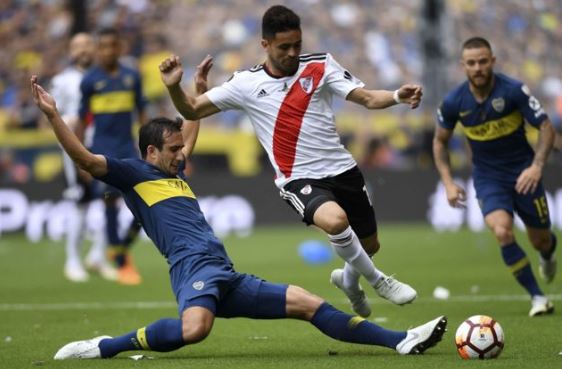
MAJOR ON-FIELD MOMENTS:
ROMA SAYS NO
The 1960’s was one of Boca’s greatest eras. Twice during that time, Boca held on against River in order to win a league title. In 1969, a 2-2 draw at the Monumental on the last day proclaimed Boca as champions. But the more memorable event came seven years earlier, thanks to a Boca legend who in 1974 didn’t concede a goal for 742 minutes. Going into the penultimate match of the 1962 season, Boca was hot on River’s tail and needed to win to leapfrog them for first place. Boca was leading 1-0 when River was awarded a penalty with six minutes to play. Delem stepped up to take the kick, but Antonio Roma made the clutch save, causing fans to invade the pitch in celebration, delaying the end. Boca held on for the 1-0 win and later claimed the title.
THE WILD COMEBACK
Nearly 50 years ago, arguably the wildest Superclasico from a pure on-field perspective took place. River jumped out early, with Ernesto Mastrangelo opening the scoring in the first minute and Oscar Mas making it 2-0 just eight minutes later. Boca however fought back with a 24th minute goal, then added two more just before halftime. A 51st minute goal increased the Boca lead to 4-2 and seemingly put the game out of reach. But just under ten minutes later, Mas had added another goal and Carlos Morete had tied the game at 4-4. That’s how things stood until the final minute of the game, when Morete’s second goal of the match clinched a wild 5-4 win for River. With nine goals, the 1972 match remains the highest-scoring Superclasico in history.
FOUR CAMBON GOALS
How do you make a good impression on your new team? Scoring more goals against your arch rival than anyone has in a single game is a smart choice. Carlos Garcia Cambon transferred to Boca from Chacarita Juniors in 1974, with his debut just happening to fall on a Superclasico. Apparently Cambon wasn’t nervous in the slightest, as he opened the scoring just two minutes into the game. River equalized in the 16th minute, but Cambon found the net again shortly before halftime. After both clubs converted penalties in the second half, Cambon gave Boca some breathing room in the 66th minute, then added a fourth five minutes later to secure a 5-2 win for Boca. Cambon’s four goals are the most by any player in a single Superclasico game.
THE FIRST FINAL
For all of the great success both Boca and River have achieved and all of the times the two rivals have faced off in domestic and international competition, it’s incredible that there have only been three times where a Superclasico decided who won a piece of silverware. The first such occurrence came in 1976, when River and Boca advanced to the Nacional Final, with the winner being league champion. It’s fitting that a match of such magnitude was decided by an iconic moment from a legendary figure. In the 72nd minute, Ruben Sune — one of the best midfielders in Boca history and a club idol — blasted a free kick straight into River’s net. That proved to be the only goal of the game, as Boca’s 1-0 victory made them Argentina’s champs.
DECISIVE DUELS
It doesn’t happen often, but there are multiple results where one side of the Superclasico just beat the living shit out of the other. The biggest ever Superclasico win came in 1928, when Boca rolled over River 6-0 thanks to braces from Domingo Tarasconi, Roberto Cherro, and Esteban Kuko. River got their revenge in 1941 with a 5-1 win (followed by a 4-0 victory in 1942). Boca would also record a 4-0 and 5-1 win in 1955 and 1959, respectively. But perhaps the most dominating win came in 1982, when River scored four minutes in and then got hit by a freight train. Boca scored five straight goals — four of them coming in the second half — to record a 5-1 slaughter. This game was at El Monumental, making it the biggest road win in rivalry history.
ORANGE YOU GLAD TO SEE ME?
There are some iconic colors in the Superclasico, such as River’s red and while and Boca’s blue and yellow. But for one match in 1986, orange got the spotlight. That year, River clinched the league title early, with the very next match being at La Bombonera. Despite requests from then-Argentine President Raul Alfonsin (of all people) not to do so, River players did a traditional lap of honor before kickoff. That incensed Boca fans, who threw a massive amount of white paper onto the field in protest. In fact, so much white paper littered the field that the officials decided to use an orange ball in order to make sure they could see the ball. River piled on the celebrations by winning 2-0, with the unique road victory adding a cherry to the top of the winning season.
CANIGGIA CLAPS THE CHAMPS
In 1996, River was back on top of the South American soccer world. They had just won their second Copa Libertadores, coming back to defeat America de Cali thanks to a brace from Hernan Crespo. But none of that mattered, especially when it comes to the Superclasico. Just Barely a month after winning the Libertadores, River went into La Bombonera and got smacked, falling to their rivals 4-1. Their biggest nemesis that day — Claudio Caniggia, who began his playing career with River. However, after seven years overseas, Caniggia returned to Buenos Aires as a member of Boca. The 1996 clash was one of Caniggia’s first against his old club and he showed no remorse, recording a rare Superclasico hat trick to carry Boca to a huge win.
THE DYNASTY BEGINS
The great Boca squads of the 2000’s won four Copa Libertadores titles, including three from 2000-03. But that run was nearly stopped before it began, thanks to River. In the 2000 edition of the tournament, the two sides were drawn together in the quarter-finals. River took a surprise advantage early, winning the first leg 2-1 at El Monumental. The second leg was also going well, with both sides scoreless at halftime. But Boca eventually found that extra gear, beginning with Marcelo Delgado getting Boca on the board in the 59th minute. Things stayed level until the 84th minute, when Juan Riquelme snagged Boca’s second goal. River’s hopes were dashed by a stoppage time goal from Martin Palermo, as Boca won 3-0 and advanced to the final.
A CHICKEN DANCE FOR THE CHICKENS
Before Carlos Tevez became infamous for switching sides in the Manchester Derby (fuck you, Carlos Tevez), he made his mark on another major rivalry — the Superclasico. In 2004, Tevez was a young upstart with Boca when they met in the Copa Libertadores semi-final. Boca won the first leg 1-0 at La Bombonera, but River were ahead 1-0 late in the second leg. With just a few minutes left and the aggregate score at 1-1, Tevez scored Boca’s second goal, then did a chicken dance (mocking the “gallinas” nickname) in front of the River fans at El Monumental. Tevez was given a red card for inciting violence and River scored in stoppage time to send the match to penalties. Boca would prevail from the spot, but lost the final on penalties later.
RAIN RAIN GO AWAY
The first Superclasico of 2010 saw something that had never happened before — or since. A massive amount of rain had been falling on the field, with many wondering how either team could do anything with the ball. Nonetheless, the match began, with both sides struggling to maintain possession, with the ball repeatedly becoming bogged down. After just ten minutes, the referee brought the two captains together and agreed that they couldn’t continue. The match was suspended — the first time it had happened in Superclasico history. The match was later restarted and finished four days later, with two 41-minute halves being played to account for the time already played in the first match. Boca won 2-0 thanks to a brace from Gary Medel.
A FRIENDLY ASS-WHOOPING
What no one thought would be more than a friendly (well, as friendly as a match between River and Boca can be) turned out to be a result of historic proportions. In 2015, the two rivals met in one of the Torneos de Verano — a small summer tournament competition. But right from the start, Boca built a huge lead. Three goals within a 15-minute span put Boca up 3-0 right at the half hour mark. The score stayed that way throughout the next 50 minutes, during which time River began to get frustrated and pick up more fouls In total, three River players would be sent off, with Boca taking advantage to add two late goals and collect a 5-0 win. The score line is the most lopsided in the professional era of the Superclasico and the biggest in nearly 90 years.
THE BAKER’S PEPPER SPRAY
Less than four months after the historic friendly beatdown, Boca and River played a much closer result with a lot more on the line. The two rivals were drawn in the Round of 16 for the Copa Libertadores, with only a penalty goal separating the two sides in a 1-0 River win in the first leg at El Monumental. The second leg at La Bombonera was scoreless at halftime, but as the players returned to the field it appeared River’s squad was in pain. As it turned out, a Boca hooligan known as “The Baker” had shot pepper spray directly at the River players in the tunnel going back onto the field. The match was suspended as a result, with Boca being disqualified. River would go on to win the Copa Libertadores, while The Baker got a poetic punishment.
A MONUMENTAL COMEBACK
Boca ended up winning the 2016-17 Primera Division by a small but comfortable margin. That league victory was thrived by a memorable early season Superclasico. Boca opened the scoring early, but River added two goals in six minutes to take a 2-1 lead into halftime. The score remained the same until just past the hour mark, when Carlos Tevez — who had recently returned to Argentina — tied the game. Tevez then gave Boca the lead in the 81st minute before Ricardo Centurion clinched the 4-2 comeback win with a goal in stoppage time. River would get some revenge by winning the 2017 Supercopa Argentina against the league champs — just the second ever final between the two rivals. Of course, a third would happen a few months later.
THE DERBY TO END ALL DERBIES
In 2018, the Superclasico damn near burned Argentina to the ground, as Boca and River met for the first time in the Copa Libertadores Final. It was also the last final to be held across two legs. After being delayed due to torrential rain, the first leg at La Bombonera saw a back-and-forth contest end in a 2-2 draw. Two weeks later, the Boca bus was attacked by River fans while entering El Monumental for the second leg — police tear gas leaked into the bus through broken windows. The match was suspended for a few days, until for some reason CONMEBOL agreed to hold the second leg at the Santiago Bernabeu in Madrid. The match entered extra time tied at 1-1, before River scored two late goals to finally claim the most important derby win in history.
THE SPIRIT OF DIEGO
To cap off the already shitty year of 2020, Argentina went into mourning when Diego Maradona passed away last November. Tributes came from across the country, especially La Bombonera, where Maradona first jumped onto the scene. A few months later, Boca hosted River in one of the first Superclasicos since Maradona’s death, jumping out to a 1-0 lead before River leveled the count and both clubs went down to ten men. In the 89th minute, River looked certain to score when Julian Alvarez’s header beat Esteban Andrada and went towards goal. However, the ball somehow bounced away from the line, allowing Boca to clear it and hold on for the 1-1 draw. Immediately, people blamed the “Spirit of Maradona” for stopping the ball from going in.
SEVEN SENT OFF
The most recent Superclasico proved the rivalry is as strong as ever. Back in May, there was little to separate Boca and River, with the two failing to score in the first 90 minutes. But in stoppage time, Augustin Sandez was whistled for a foul on Pablo Solari in the box, giving River a penalty. Miguel Borja sent the ball past Sergio Romero to give River the 1-0 win. However, the game was far from over. Augustin Palavecino appeared to taunt Romero after the kick, sparking a shoving match that evolved into a brawl involving pretty much everyone on both clubs. It took 15 minutes to sort everything out, with seven total players (four from River, three from Boca) given red cards. The final whistle didn’t come until the 21st minute of stoppage time.
STATISTICS:
HEAD-TO-HEAD RECORD
River: 85
Boca: 91
Draw: 83
LEAGUE CHAMPIONSHIPS
River: 38 (record)
Boca: 35
NATIONAL CUPS
River: 14
Boca: 17 (record)
COPA LIBERTADORES
River: 4
Boca: 6
COPA SUDAMERICANA
River: 1
Boca: 2 (record)
RECOPA SUDAMERICANA
River: 3
Boca: 4 (record)
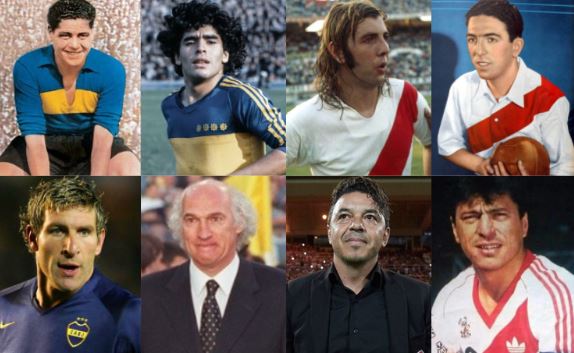
NOTABLE FIGURES:
ROBERTO CHERRO
Boca’s best player during the early era of Argentine soccer, Roberto Cerro (nicknamed “Cherro”) remains the second-most prolific scorer in club history with 221 goals. With Cherro’s striking prowess, Boca won five league titles, with Cherro being the club’s top scorer in five different years (and the top scorer in all of Argentina in three). Cherro was also a star for the Argentine national team — he famously scored four goals in a 4-1 win over Uruguay in 1933, sort of revenge for the 1930 FIFA World Cup Final, a game in which Cherro did not play.
ANGEL LABRUNA
Of all the prolific members of River’s famous “La Maquina” squad, no one was better at putting the ball in the back of the net than Angel Labruna. In fact, his 317 career goals remain the all-time record for River and are exactly 100 more than second place. It helps that Labruna is also slightly second in terms of appearances for River (515) and one of just three players to cross the 500-mark for the club. During Labruna’s 20-year career with the club, River won nine league titles. Six more domestic titles were won by Labruna after he took over as River’s manager.
AMADEO CARRIZO
The only player with more appearances for River than Angel Labruna, Amadeo Carrizo guarded River’s goal for 520 matches over an astounding 23-year stretch. Carrizo was a pioneer at the goalkeeper position, being the first Argentine goalkeeper to wear gloves, leave the penalty area to defend his goal, and use goal kicks to start counterattacks. His style of play inspired several notable keepers over the years. In 1999, the International Federation of Football History and Statistics (IFFHS) ranked Carrizo as the best South American goalkeeper of the 20th century.
ANTONIO ROMA
The most memorable moment of Antonio Roma’s career was certainly his late penalty save against River that helped Boca win the 1962 league title. But to say nothing else about him would be a disservice to soccer history. Roma — who was nicknamed “Tarzan” for the way he threw himself at the ball, Roma joined Boca in 1960 and remained there for the final 12 years of his career. During that time, Boca won several domestic titles thanks in large part to Roma’s efforts. During one stretch, Roma went 783 minutes (more than 13 hours) without conceding.
OSCAR MAS
Apart from Angel Labruna, no one has found the back of the net in a River jersey more than Oscar Mas. One of only three players to score more than 200 goals for the club (217 to be specific), Mas is also just out of the Top 5 when it comes to player appearances (with 382). Mas was a prolific striker during his two tenures with River (broken up by a brief spell with Real Madrid). Even after several decades of retirement, Mas still ranks in the Top 10 for goals scored in the history of Argentine domestic soccer — at least since the professional era began in 1931.
REINALDO MERLO
Reinaldo Merlo isn’t just one of three players to make at least 500 appearances for River — he has also played in more Superclasico matches (42) than anyone in history. Nicknamed “Mostaza” (“Mustard”) for his off-blond hair, Merlo spent the entirety of his 15-year career with River. While Merlo was known as a great defender, he was a liability on offense, which likely kept him down on River’s overall appearances list. Merlo also made an appearance as River’s manager shortly after retirement, helping transition into a new era that won the championship.
NORBERTO ALONSO
Even during the great South American era that was the 1970’s, Norberto Alonso was considered to be among the best in the world in his heyday. Fifth all-time on River’s scoring list (158 goals) and appearances list (374), Alonso won pretty much everything during his time with the club. That includes the Copa Libertadores, won during Alonso’s third and final tenure with River. Alonso was also a part of Argentina’s squad that won the 1978 FIFA World Cup (the final being at El Monumental), as well as one of five River players to make up the world champion roster.
ROBERTO MOUZO
Aside from brief stints elsewhere during the last year of his career, Roberto Mouzo spent his whole playing tenure with Boca, becoming a legendary figure within the club. During his 13 years with Boca, Mouzo played in 426 matches — more than any other player ever. A rock solid defender who helped catapult Boca to back-to-back Copa Libertadores wins in the 1970’s, Mouzo was also a gentleman. As a teen, he lent a cleat to another teen with only one, who was trying out for Boca at the time. Mouzo didn’t find out until the 2000’s who exactly he had helped.
DANIEL PASSARELLA
Even with a spare cleat borrowed from Roberto Mouzo, Daniel Passarella didn’t pass his test with Boca. A few years later, Passarella signed with River and became arguably the greatest South American defender who ever lived. Passarella backstopped River for about a decade, leading the club to several league titles. He also captained Argentina to its 1978 World Cup win and was part of the 1986 title-winning squad as well. At one point, Passarella was the highest-scoring defender in soccer history. He later served as president of River for a few years.
JUAN JOSE LOPEZ
Juan Jose “J.J.” Lopez is the most tragic figure one can be in the Superclasico. Lopez spent the first 11 years of his career with River, becoming a club icon and recording 466 appearances (fourth all-time). However, all of that goodwill was undone in 1983 when — after spending a year in Cordoba — Lopez returned to Buenos Aires as a member of Boca. The stunning move pissed off both River and Boca fans, the former most aggressively. Lopez had a chance to redeem himself as River manager, only to be known as the skipper in charge when River was relegated.
HUGO GATTI
The spiritual predecessor of Rene Higuita, Hugo Gatti was fucking crazy, but effective. Gatti played in more than 800 games during his career, which included four early years spent with River. However, after several years elsewhere, Gatti returned to Buenos Aires and joined Boca, where he truly became a legend. His 417 appearances for Boca are second only to Roberto Mouzo all-time. Nicknamed “El Loco,” Gatti relied on positional play to make saves and made use of his feet to join his team in defense and attack. Gatti also had a rival during his prime.
UBALDO FILLOL
Arguably the greatest goalkeeper in Argentine history, Ubaldo Fillol was everything Hugo Gatti wasn’t. Where Gatti looked eccentric, wild, and unorthodox, Fillol maintained an image of professionalism and seriousness while relying on his incredibly athletic ability. Even Fillol’s nickname of “El Pato” (“The Duck”) contrasted with Gatti’s “El Loco.” Naturally, Fillol played a large part of his career with River, battling his counterpart during many Superclasicos. Fillol was often the first choice national goalkeeper, guarding the pipes during Argentina’s triumph in 1978.
OSCAR RUGGERI
Known for his rough style of play and aerial ability, Oscar Ruggeri is considered one of the best defenders in Argentine history. He’s also one of the most controversial figures in the history of the Superclasico. Ruggeri spent the first five years of his career with Boca, memorably winning the 1981 championship. But in 1985, Ruggeri shocked Argentina by moving to River, becoming arguably the biggest name ever to directly switch sides in the rivalry. Ruggeri’s help was needed at River, who won three international titles (including the Copa Libertadores) with him in 1986.
DIEGO MARADONA
The only Boca player who River fans don’t hate, the late Diego Maradona is basically God in Argentina, and for good reason. One of the greatest, most talented, and inspirational players to ever live, Maradona led Argentina to two World Cups and is their country’s answer to Pele in the soccer GOAT debate. Maradona only spent one year with Boca (he later returned at the end of his career) before leaving for Europe, but he made his mark. Maradona’s tenure includes the 1981 league title and one of the most famous goals in Superclasico history in a 3-0 Boca win.
JUAN RIQUELME
One of the biggest reasons Boca was so dominant in the early 2000’s was Juan Riquelme. One of the greatest Argentine midfielders ever, Riquelme was highly regarded for his playmaking and intelligence. Riquelme spent time overseas with Barcelona and Villareal, although he didn’t leave before winning two Copa Libertadores titles with Boca. He also returned in time to win another Libertadores in 2007. Ranking just outside the Top 5 for all-time appearances with Boca (with 388), Riquelme currently serves in the club’s front office and handles youth development.
MARTIN PALERMO
If anyone has a winning argument for being “Mr. Boca,” it might just be Martin Palermo. The club’s all-time leader in goals (236) and fourth place in terms of games played (404), Palermo was one of the most important players from Boca’s dominant era of the 2000’s. Palermo — nicknamed “Loco” and “Titan” — loved scoring against River, such as during the 2000 Copa Libertadores. While his club career is stellar, his national team tenure is best known for one infamous match where he missed a world record three penalties in one game against Colombia.
CARLOS BIANCHI
In his playing days, Carlos Bianchi was known as a prolific striker with a long career in Europe. But that is surpassed by what Bianchi did as a coach. Bianchi first achieved greatness with his old club Velez Sarsfield, taking them to the 1994 Copa Libertadores title. After a brief stint with Roma, Bianchi arrived at Boca and led one of the greatest South American sides ever. Boca won several league titles and three Libertadores crowns under Bianchi’s leadership. In total, Bianchi won four Libertadores titles as manager — more than anyone else in South America.
MARCELO GALLARDO
While Marcelo Gallardo was a strong midfielder for River for about a decade, his real legacy with the club will be his managerial skills. Gallardo took over at River in 2014 and led the club to the most international championships in any era. That includes the 2015 and 2018 Copa Libertadores, the latter coming at Boca’s expense. In fact, under Gallardo River eliminated Boca in five international tournaments, nearly all of which were won by River. He may have only been in charge of the club for eight years, but Gallardo has a case to be River’s best manager ever.
FAN INVOLVEMENT:
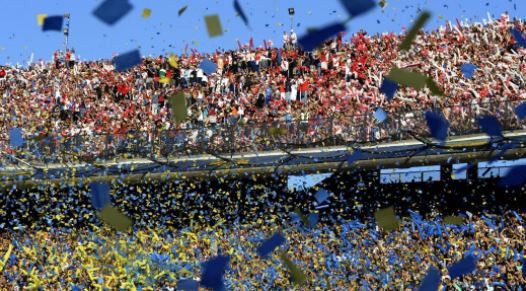
Every Superclasico — no matter what’s at stake — is a cavalcade of chaos in a stadium of spectacle. Fans jump, scream, and sing all match long. Signs and banners and streamers are unfurled and thrown across the stands. Cages are erected to keep fans off the field, but many of them climb up to the top anyway. River fans pack El Monumental — the largest stadium in Argentina — and bring the noise. The intimacy and architecture of La Bombonera make it seem like there are twice as many Boca fans there as they actually are (the stadium also literally shakes when the crowd moves). If that were it — just nothing but screaming batshit crazy fans — this would already be among the Top 5 fan atmospheres in the world. But like everything else in the Superclasico, there’s much more to it than that.
Both fan bases have their own esteemed identity. Boca fans are known for their mix of Argentine and Italian culture, collectively called “Xeneizes” (“Genoese”) after the Italian city of Genoa. River fans have embraced the “Los Millonarios” moniker. Boca’s official club motto is “la mitad mas uno” (“half plus one”) while River goes by “el pais menos algunos” (“the country with the exception of a few”). But there are some more famous nicknames thought of by the rival side. River is often mockingly referred to as “Gallinas” (“Chickens”) due to their history of blowing leads, while Boca is called “Bosteros” (a play on “bosta,” meaning “manure”) and “Chanchitos” (“Pigs”) because River fans claim La Bombonera smells like shit (there is a factory that uses horse manure nearby). All of this is driven by “cargadas,” an Argentine insult culture that makes Boston and New York seem like Canada. That, combined with a “Porteno” state of mind of superiority that comes with living in Buenos Aires, creates an atmosphere where winning isn’t the most important thing — it’s getting to make fun of your rival for losing.
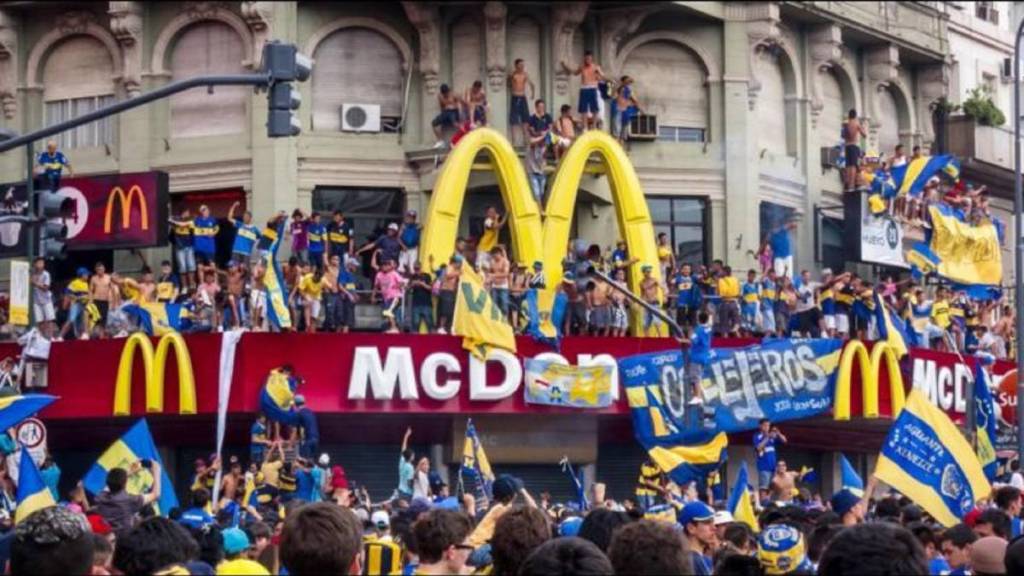
Of course, this has led to plenty of instances of fan violence and even death, such as the Puerta 12 Tragedy and the “2-2” shootings. During the 2018 Copa Libertadores, two friends (one Boca fan and one River fan) got into such a big argument that one burned the other’s house down. In addition, a massive brawl broke out inside a McDonald’s over who would win the match. While this is all obviously vad, it doesn’t cover all of the sinister side of the rivalry. In South America, the main supporters’ groups of each club are called “Barras Bravas,” and are like hooligans crossed with the mafia. While they’re in charge of the choreography and chants during the games, they’ve also taken the reins of things like tourism, ticketing, and merchandise sales. As such, they hold a power no other supporters’ group elsewhere truly does, with kind of a Godfather feel to their operations. Nowhere are the Barras Bravas more popular than Argentina, where the groups are often asked for autographs and get televised arriving to the game. River’s group is known as “Los Borrachos del Tablon” (“The Drunkards of the Terraces”), while Boca’s main group is known as “La Doce” (“The 12th Man”).
All of this has led to a situation where away fans are no longer allowed to attend Superclasico matches. Much like some of the more violent rivalries in Eastern Europe, it’s difficult for rival fans to sit next to each other, let alone be cordial to each other. In fact, each set of fans are not only careful to never wear the colors of the rival team, but sometimes have their coffins painted in their favorite team’s colors. In fact, the only time fans will ever touch the jersey of the rival club is when putting it on the meat they’re preparing for the match — pork or chicken, depending on who you support. La Bombonera is also the only place where you’ll find Coca-Cola (one of Boca’s sponsors) with a purely black logo, as to not display the red of River. Not only are colors taken seriously by these fans, but numbers are as well. 12 is so important to Boca fans’ identity as the 12th man that on December 12, 2012 (12/12/12), a massive crowd of Boca fans held a celebration. 14, meanwhile, is symbolic to River fans because — according to Argentina’s lottery — 14 is the symbol of the drunkard (a reference to the Barras Bravas). There is probably only one thing that could unite these two sides — Diego Maradona. After his death, rival fans famously hugged and cried together in mourning.
SUMMARY:
Argentina’s fiercest rivalry is perhaps the fiercest, craziest, most dramatic, and intense in the entire world of sports. The decades of hate between River Plate and Boca Juniors have brought all of South America to a fever pitch, nearly burning it to the ground in the derby to end all derbies. Not only is the Superclasico a surefire contender to win the World Cup of Hate, it just may be the favorite going into the final tournament.
However, just because the Superclasico is so legendary, it doesn’t mean that all other South American rivalries are swept under the rug. There is far too much passion, performance, and history to ignore across the continent. In fact, we don’t have to go far to find our next World Cup of Hate finalist. On the other side of the Rio de La Plata — just a three hours’ ferry ride from Buenos Aires — lies the Uruguayan capital of Montevideo. Inside that city lies an ancient derby, one whose hatred has festered longer than nearly every other rivalry in sports.
Uruguayan Clasico (Uruguay)
Club Nacional de Football vs. Club Atletico Penarol
“The Superclásico of Uruguay may not receive the coverage of some of football’s other illustrious rivalries, but it is undoubtedly deserving of its place in the pantheon of the biggest derbies.” — Matt Gault, writer for These Football Times
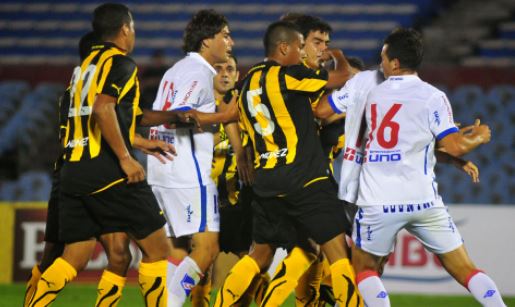
The Uruguayan Clasico is the oldest soccer rivalry outside of the United Kingdom. In the more than 120 years since their first meeting, Nacional and Penarol have fueled an absolutely iconic rivalry, one that has engulfed a huge swath of South America into their battle for success — both for silverware and for the honor of kicking the other’s ass.
It’s rare for sports clubs to have not only lasted this long, but remained relevant and incredibly successful as well. Penarol and Nacional are easily the most successful Uruguayan soccer clubs of all time. Both have won a combined 98 of the 117 total Uruguayan Primera Division titles and have each won at least three Copa Libertadores crowns. In fact, the Nacional-Penarol matchup is the most played in the history of the Libertadores. Altogether, the only two soccer clubs that have won more trophies than Nacional (114) and Penarol (108) are Al Ahly and Rangers. Iron sharpens iron, with each side being the other’s main obstacle when it comes to achieving progress. With each side pretty much the only thing standing between their rivals and glory, matches between these two clubs have been intense and hate-filled throughout the more than a century of competition. Throw in the fact that both Penarol and Nacional call Montevideo home and you have a truly special rivalry, one that can compete with the best of the best.
HISTORY:
When I say this rivalry is ancient, I mean that its origins date back to nearly a decade before the start of the 20th century. In 1891, employees of the Central Uruguay Railway Company established the Central Uruguay Railway Cricket Club (CURCC), so they could play cricket, rugby, soccer, and other sports. During that first year, they decided to honor the railway by making their uniforms the color of the Stephenson’s Rocket locomotive — black and yellow. By 1892, the focus had almost entirely shifted to soccer, with the club steadily improving by the end of the decade. At the same time, two clubs in the capital city — Montevideo Football Club and Uruguay Athletic Club — decided to join forces. The 1899 union resulted in the creation of Club Nacional de Football, whose colors of red, blue, and white were chosen to honor Jose Gervasio Artigas — a Uruguayan national hero. In 1900, both clubs faced each other for the first time, with CURCC coming out on top 2-0. Little did anyone know, the turn of the century had seen the start of an iconic rivalry, as well as the first of several controversies involving the two clubs.
1900 was also the year of the creation of the Uruguayan Football Association, along with its top flight league: the Primera Division. CURCC was one of four clubs — along with Albion, Uruguay A.C., and Deutscher — to be invited to compete. Even though they were already a strong club, Nacional was not included in the original list on the thought that the club was too “criollo” (South/Central American — AKA not white). This immediately drew dividing lines between Nacional and CURCC — the former seemed to represent the people and university students, while the latter seemed to represent British immigrants and rail workers. After CURCC won the inaugural league title, Nacional was admitted to the league after being invited to join the Argentine league. The next four years would be split between the two clubs, each winning two league titles while finishing runner-up twice (these standings would become a recurring theme across Uruguayan soccer). As both clubs continued to win league titles and domestic cups, they also established themselves as the country’s top clubs by their national team representation.
More controversy ensued in 1908, when CURCC left the Primera Division after the league rejected their request to replay a match in which they claimed had been lost due to referee mistakes caused by pressure from the opposing fans. As a sign of good faith, Nacional actually resigned as well. However, after both clubs were readmitted the following year, things began to sour between Nacional and CURCC, after a train car that was used to carry rival teams was burned by angry fans. It was also around this time that the Central Uruguay Railway Company began to consider retiring its soccer club, which they claimed had long since left its original purpose of being a recreational place for employees behind. While it’s unclear exactly what happened, at the end of 1913 either a group of members took over the soccer section or they separated entirely and established a new soccer club. Either way, the new CURCC was folded two years later, with its trophies being donated to the British Hospital of Montevideo — not the new club. That club had taken on another name, inspired by the neighborhood it was based in — Penarol. The events of 1913 another source in the rivalry, as depending on what happened either Penarol or Nacional is the older club, something each side takes pride in.
The newly reformed Penarol took a bit of time to get going — only two league titles were won in the next ten years. But part of that was due to a dispute with the FA over a friendly match against Racing that got Penarol kicked out of the league. Penarol helped establish a new league, which they won in 1924. Two years later, Penarol was back after the two leagues agreed to merge. During this time, Nacional emerged as the most dominant Uruguayan club, winning the league all but twice from 1915-24 (they finished second to Penarol during those other two years). That was reflected in a large amount of the Uruguayan national team that won gold at the 1924 Summer Olympics being from Nacional. The tournament win kicked off the first truly competitive era of international soccer, one where Uruguay was the best in the world. Four years later, Uruguay repeated as gold medal winners, although more of the roster was from Penarol. That’s because the club had finally gotten its shit together after winning two more league titles. The return of good Penarol further bolstered Uruguay in 1930, the year it hosted the first ever FIFA World Cup (due to its performance in the last Olympics). Uruguay defeated Argentina in the final in Montevideo’s Estadio Centenario, where both Nacional and Penarol play their big matches. Both clubs were prominently featured in the world champs’ roster.
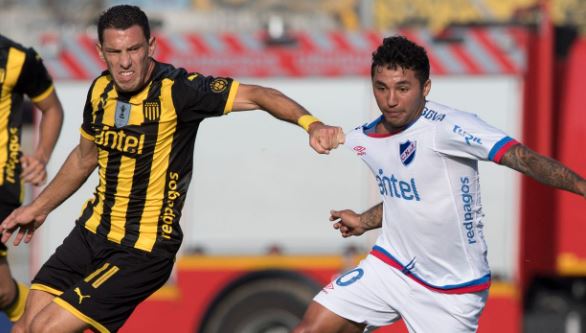
In 1931, the Montevideo Wanderers won the Primera Division. That would be the last time until 1976 that anyone other than Nacional or Penarol won Uruguay’s top division. During that time, only four other clubs would even finish second — Penarol and Nacional finished 1-2 30 times in 34 years. This was a wealth of opportunity for the rivalry to flourish, with each club standing in the way of the other in the fight for silverware. Nacional had the edge in the 1940’s, although that decade ended with perhaps the most infamous moment in the history of the rivalry. In 1949, Penarol was up 2-0 on Nacional at halftime, with Nacional down to nine men. Seeing no way towards victory, Nacional escaped through the locker room window, with the match being called a forfeit. That display was rightfully lambasted across the Uruguayan media, who called what Nactional did a disgrace. It also signaled a transfer of power — by the time the end of the 1950’s was upon us, Penarol was the top dog. After three straight Nacional title-winning teams, Penarol won five straight championships from 1958-62. Those league crowns would prove to be important, especially since there was a new international tournament that would finally give the Montevideo rivals a chance to fight someone else for some silverware.
Ever since 1913, the league champions of Argentina and Uruguay had met in the Copa Aldao. But that was the extent of the international competition until 1948, when Chile’s Colo-Colo organized the South American Championship of Champions between the winners of each country’s league. The success of this competition actually led to the creation of the UEFA Champions League in 1955. A few years later, thanks in large part due to Penarol officials, South America got its own such competition in the Copa Libertadores. Originally only including the league champions (Penarol’s title run came just in time), the inaugural Copa Libertadores in 1960 was full of drama. Penarol and San Lorenzo were even over two legs in the semi-finals, with the third leg being held in Chile. However, an earthquake forced the relocation of the game to Paraguay. Penarol objected, so San Lorenzo said the Uruguayan club could host the match for $100,000. Penarol accepted and won the third leg. In the final, Penarol and Olimpia were tied 1-1 in aggregate late in the second leg when Luis Cubilla scored a now-iconic goal. That gave Penarol the 2-1 edge, which they would hold to win the first ever Copa Libertadores. It also allowed Penarol to qualify for the first ever Intercontinental Cup (European vs. South American champs), which they lost to Real Madrid.
Penarol was far from done. The following year, they became the first club to repeat as Copa Libertadores champs, beating Palmeiras in the final. Their second shot at the Intercontinental Cup went much better as well, as they topped Benfica. Two more finals appearances came in 1962 and 1965. In 1966, the Libertadores expanded to include more than just the league winners, with Nacional claiming Uruguay’s first wild card. Both clubs advanced to the semi-final group, with Penarol sweeping both legs against Nacional to advance to the final, where they would beat River Plate for their third crown in the infamous “Gallinas” match. Nacional tried to get their first trophy, but were stopped three times in the decade. Penarol would also begin the 1970’s the same way they did the 60’s — by making the Libertadores final (a loss to Estudiantes). The following year, a Uruguayan club was once again in the final, but this time it was Nacional going for their first continental title. Unlike their rival the previous year, Nacional was able to beat Estudiantes (and get revenge for 1969’s final loss) to get on the Libertadores board. After a decade-long breather, the Uruguayan clubs once again dominated the 1980’s. Nacional got their second Libertadores title in 1980, only for Penarol to get their next one two years later. Penarol added a fifth in 1987 (thanks to one of the most dramatic finishes in Libertadores history), with Nacional responding by winning the next year.
No one knew it then, but those last two Libertadores titles would mark the end of Uruguay’s great club era. To this day, no Uruguayan club has won another Libertadores, with only one even reaching the final (Penarol in 2011). But even though the Uruguayan Clasico clubs (who are the only ones from their country to reach a Libertadores final) haven’t been able to extend their international trophy cabinet, the lack of continental titles just means the domestic matchups are that much more important. That mindset has apparently carried over to their fans, who have become even more violent in the past few decades. In 1990, 20 red cards were issued in a single match. Just a decade later, a massive brawl caused players from both sides to not only be suspended, but arrested as well. While that was largely the last major act of violence on the field, things have gotten worse off it. In 2009, a Penarol fan shot a Nacional fan six times, with the victim miraculously surviving. Uruguay’s president once forbade police from being at Nacional-Penarol matches for their own safety (officers have since returned). In 2017, the derby was suspended due to fan unrest, while two years later a Nacional fan was shot and killed during the club’s title celebrations.
MAJOR ON-FIELD MOMENTS:
COPA URUGUAYA CHAOS
It’s been nearly 90 years since the final of the 1934 Copa Uruguaya and you can make the case that the on-field chaos between Nacional and Penarol hasn’t been matched since. About ten minutes into the match, a shot by Penarol seemingly heading wide of the post was put back into play by a medical bag. A few seconds later, Penarol scored, leading to protests by Nacional. The goal was eventually disallowed, but Nacional had two players sent off for showing their anger. Down to nine men for 80 minutes, Nacional somehow held on until bad lighting caused the match to be called off and postponed. When the makeup match eventually came around, a now fully-stacked Nacional kept their momentum going and prevailed over Penarol 3-2.
GRAF SPREE > THE GAME
On December 17, 1939, Nacional beat Penarol 1-0 and fans rushed out of the stadium as soon as the final whistle blew. That’s because for once, the Uruguayan Clasico was not the most exciting thing happening in Montevideo at the time. A few days earlier, the Nazi battleship Admiral Graf Spree been critically damaged by British forces during the Battle of River Plate in World War II. The Graf Spree was able to make it to Montevideo, but the captain was given just 72 hours to leave. After determining the ship couldn’t repaired in time, the captain ordered the Graf Spree to be scuttled (AKA destroyed). So, shortly after the conclusion of the match, the Graf Spree left the port of Montevideo and — minutes later — blew up and sank in the water.
EL DIA DEL 10-0
In the 120+ years of the Uruguayan Clasico, there has never been an ass whooping like what happened in 1941. Going into the match, Nacional had won the previous seven matchups, outscoring Penarol 20-8 in that time. Things would not improve in the next match, which you could’ve seen coming by looking at the reserve team match beforehand — a 4-0 Nacional win. As for the senior teams, Nacional opened the scoring in the 16th minute, with two more goals making it 3-0 at halftime. That score stayed the same until 20 minutes left, during which time Nacional added three more goals. The 6-0 result remains the most lopsided between the two clubs and (combined with the reserve result) is known to Nacional fans as “El Dia del 10-0.”
EL CLASICO DE LA FUGA
The most infamous moment in Uruguayan Clasico history took place at halftime of a now-classic 1949 encounter. At the time, Penarol was winning 2-0 and Nacional had been reduced to nine men (one of those red carded players was allegedly sent off for throwing mud at the referee). At that point, it was clear that Nacional couldn’t come back. Nacional especially knew that, so they did the only thing they could — climb out of the dressing room window and sneak out. After Nacional failed to take the field for the second half, the match — now known as “El Clasico de la Fuga” (“of the Escape”) — was forfeited to Penarol. The press slammed Nacional afterwards, with one publication writing, “You have to know how to lose and fight to the end.”
8 AGAINST 11
When it comes to such a rivalry as the Uruguayan Clasico, can there ever be a true “friendly” match? Not really, with proof lying in what happened in 1987. Penarol and Nacional were tied 1-1 with just 22 minutes remaining when three Penarol players — Jose Perdomo, Jose Herrera, and Ricardo Viera — were sent off for a foul and subsequent protests. Now down to eight men, Penarol somehow managed to hang around and keep Nacional out of goal. Then, with about eight minutes left, Diego Aguirre found Jorge Cabrera, who put the ball in the back of the net to put Penarol up 2-1. Incredibly, the eight-man Penarol was able to keep the 11-man Nacional from finding an equalizer, holding on for the 2-1 win in the now-famous “8 vs. 11” derby.
20 RED CARDS
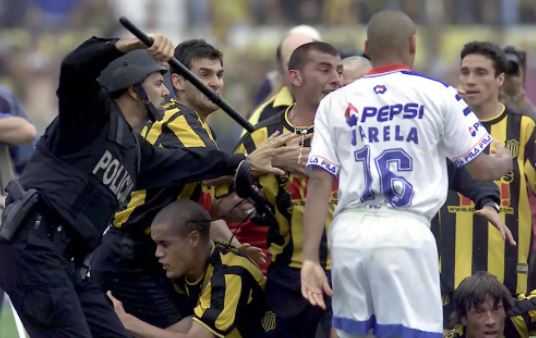
One week before a 1990 match between the two sides, Nacional captain Enrique Pena claimed his side would beat Penarol because, “our players our men.” Penarol’s Obdulio Trasante fired back, saying, “We’ll see if he can back up his words outside.” In the match, Pena was sent off with ten minutes to play. As he headed for the locker room, Trasante said something to Pena, setting him off and sparking an all-out brawl between the rivals. Once the dust had finally settled, the referee had issued 20 red cards, with all 11 of Penarol’s players, seven Nacional players, and two Nacional subs being sent off. Because neither club could field at least seven players, the match was called 0-0. Several players had to speak in court about what happened.
THE ONE WITH THE CHAIN
In 1992, the defining object of the Uruguayan Clasico wasn’t a ball or a cleat or a jersey or even a card. Rather, it was a chain. In the middle of what would be a 0-0 result, a brawl led to five players being sent off. In the middle of the scuffle, Penarol’s Carlos Sanchez tore a chain from Nacional’s Julio Cesar Dely Valdes’ neck. Valdes asked for it back, but Sanchez refused. After the final whistle, Penarol’s Jorge Barrios promised Nacional’s Jorge Sere that the chain would be returned. However, it wasn’t. So, Valdes decided to file a complaint in Uruguayan court, with everyone involved having to testify. Valdes was then finally given back his chain, with Sanchez being processed without having to go to prison for what the judge referred to as “clever theft.”
A COSTLY BRAWL
Ten years after a match that saw 20 players sent off, the Uruguayan Clasico experienced perhaps an even greater incident of violence. The match itself finished 1-1, but all that anyone remembers was the massive melee that took place on the field. Players (including substitutes) and staff from both sides were involved in the brawl, which was so violent that nine players — six from Penarol and three from Nacional — along with a Penarol coach were taken into custody. In the end, a total of 17 people — including all those arrested — were suspended by the Uruguayan FA. As a result, both clubs had to play for the Uruguayan championship without several players. Nacional (not hit as bad by the suspensions) would win the league title 2-1 on aggregate.
OVERSEAS BRAGGING RIGHTS
When it comes to the Uruguayan Clasico, clubs will take any chance they can to get some form of bragging rights. In the 120+ year history of the rivalry, only three matches between Penarol and Nacional have been played outside of Uruguay. The first — in 1960 — was won by Nacional 4-0 in nearby Argentina. But true history was made in 2005, when both clubs were invited to compete for the Teresa Herrera Trophy by Deportivo de la Coruna. In the first ever match played between the rivals outside of South America, Nacional emerged victorious 3-1. Even more history was made in 2019, as the two sides took part in the Giants of America Cup in Florida. The first ever match in a non-predominantly Hispanic country was won by Penarol 2-1.
A SEISMIC SLAPDOWN
While Nacional has recorded the largest win ever in Uruguayan history — the 6-0 shellacking that was part of El Dia del 10-0 — Penarol have twice come close to equaling the massive margin of victory. The first was in 1953, when Penarol ran Nacional off the field (though not quite like the 1949 incident) to the tune of 5-0. Then in 2014 — seemingly out of nowhere — Penarol did it again. Penarol jumped on top of Nacional in the 11th minute, then added another goal before the end of the first half. A third goal early in the second half put things out of reach before a late brace by Luis Aguilar gave Penarol the 5-0 result. Penarol may have finished the league well behind Nacional that year, but Penarol supporters will trade that for a massive win.
PRESEASON PUNCH
Before that 2014 thrashing, Nacional and Penarol proved there is no Uruguayan Clasico without intensity. The two rivals met for a preseason friendly and everything seemed to be going smoothly enough. With Nacional up 1-0 late in the match, Carlos Nunez caught Andres Scotti with a kick to the chest. The two sides scuffled and appeared to be breaking apart when Fabian Estoyanoff punched Pablo Alvarez in the face, cranking things up to 11 and sparking a huge brawl. Four players were sent off, but the chaos continued after the match. Nine players in total spent the night behind bars, being detained for their involvement. Those nine would be suspended, though none would face any more jail time for the fight.
LATE, LATE DRAMA
For the first time in quite a while, Nacional and Penarol met in South American competition — specifically, the Round of 16 of the 2021 Copa Sudamericana. As you’d expect from this rivalry, there was plenty of drama — all four goals scored in this tie came in stoppage time. The first leg ended 2-1 in favor of Penarol, even though the score at the 90th minute mark was just 1-0. Needing two goals in the second leg, Nacional battled all match, with tempers flaring during the game. Things boiled over in stoppage time, with Nacional and Penarol being sent down to ten men within minutes of each other. That became nine for Nacional a few minutes later, though they would score to make it 2-2 on aggregate. However, Penarol would advance on away goals.
STATISTICS:
HEAD-TO-HEAD RECORD
Nacional: 143
Penarol: 159
Draw: 147
LEAGUE CHAMPIONSHIPS
Nacional: 49
Penarol: 51 (record)
COPA LIBERTADORES
Nacional: 3
Penarol: 5
INTERCONTINENTAL CUP
Nacional: 3 (record)
Penarol: 3 (record)
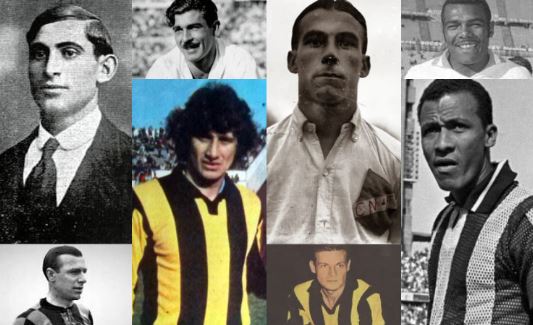
NOTABLE FIGURES:
JOSE PIENDIBENE
Jose Piendibene retired nearly 100 years ago and still remains one of the best Uruguayan players of all time. Renowned for his tremendous dribbling, passing, and scoring ability, Piendibene spent his entire 20-year career with Penarol, for which he appeared in 506 matches and scored 253 goals. Piendibene also holds the record for most appearances in Uruguayan Clasico history, with 62 (scoring 21 goals during that time). When Penarol celebrated its 50th anniversary in 1941, it was Piendibene who was chosen to be the flag-bearer for the club.
ABDON PORTE
One of Nacional’s early stars, Abdon Porte helped lead the club to 19 titles during the 1910’s. Once a club captain, Porte was replaced as a starter by Nacional’s committee after a match in 1918. Unable to take the demotion, Porte committed suicide in the middle of Nacional’s field in the early morning. Porte’s death sent shockwaves throughout Uruguay, with him becoming a symbol of utter devotion to the club and how passion can cause people to take things too far. One of the four stands at Nacional’s stadium (the place of his death) is named in Porte’s honor.
HECTOR SCARONE
Another one of the stands at Nacional’s stadium is named after a man called “El Mago” (“The Wizard”). Hector Scarone had a long playing career, which stretched from 1917-39. The vast majority of those years were spent with Nacional (he also spent time with Barcelona and Inter Milan). Scarone is one of the rare members of Nacional’s 300-300 club, with 301 goals in 306 appearances for the club. Scarone was also a prolific member of Uruguay’s national team, winning four Copa America titles, two Olympic gold medals, and the 1930 FIFA World Cup.
JOSE MARIA DELGADO
The third stand at Nacional’s stadium is the only one not named after a former player. Jose Maria Delgado was one of the club’s earliest presidents, presiding not only over a successful era (double digit titles and memorable overseas tours), but one of its most important. In 1911, a schism had formed in Nacional’s leadership, with some wanting the club to become elitist, only allowing players from that social circle to play. But the group who wanted the club to be one of the common people won out, with one of its leaders — Delgado — becoming the club’s president.
ATILIO GARCIA
The final — and largest — stand at Nacional’s Estadio Gran Parque Central is named after the club’s all-time leading goal scorer and more importantly a man with an amazing mustache. Atilio Garcia started his career in Argentina, joining Nacional from Boca Juniors. Over the next 13 years, he would set all sorts of records, including most goals in Nacional history (465), which is also the most ever scored in official Uruguayan matches. 35 of those came in the Uruguayan Clasico — the most ever. His 208 goals are also the second-most in the Uruguayan league.
NESTOR GONCALVES
One of the best South American midfielders of his era, Nestor Goncalves wore Penarol’s shirt more than any other player — a record 571 times between 1957 and 1970. During those 13 years, Goncalves helped Penarol collect 15 major trophies, including the club’s three Copa Libertadores titles and two Intercontinental Cups (as well as the Intercontinental Champions’ Supercup) during the 1960’s. Penarol also won nine league championships with Goncalves on the roster — five in a row from 1958-62 and back-to-back crowns in 1964-65 and 1967-68.
ALBERTO SPENCER
Alberto Spencer made his debut for Penarol in 1960, scoring a hat trick against Argentine club Atlanta. That kind of set the tone for the next decade, as Spencer — considered the best player from Ecuador of all-time — scored a lot of goals. In fact, Spencer scored 54 goals in all Copa Libertadores matches, the most by any single player. He was particularly good at heading the ball, being nicknamed “Cabeza Magica” (“Magic Head”). With Spencer on the roster, Penarol was the most dominant South American club of the 1960’s, winning three Libertadores titles.
EMILIO ALVAREZ
While he wouldn’t be part of the Nacional squad that finally won the Copa Libertadores, Emilio Alvarez was one of the main reasons fans of the club could have pride during Penarol’s glory years of the 1960’s. While he was a part of Nacional, Alvarez was one of the best defenders in all of South America, being a key part of the Nacional back line for over a decade. During that time, Alvarez suited up in 511 matches — more than any other player in club history. Alvarez was also part of the Uruguayan national team squads that reached the 1962 and 1966 World Cups.
FERNANDO MORENA
Nicknamed “Nando” and “Potrillo” (“The Colt/Stallion”), Fernando Morena was one of the best South American players of his era. His 230 goals — the majority coming with Penarol — are the most by any single player in Uruguay’s Primera Division. Morena went on a six-year streak of being the top scorer in the league, during which he was also the top Copa Libertadores scorer twice. During his tenure with the club, Penarol won six league titles and a continental crown. Morena remains only behind Alberto Spencer on Penarol’s international goal scorer’s list.
DIEGO AGUIRRE
Although he only played for Penarol for a few years, Diego Aguirre gets his spot on this list for scoring arguably the greatest goal in Copa Libertadores history (along with one other moment we’ll get to in our next section). Just a year after joining Penarol from Liverpool Montevideo, Aguirre scored a crucial goal to keep his club alive in the 1987 Copa Libertadores Final. Then, with the decisive leg scoreless and penalties looming, Aguirre found the ball and scored in the final minute of stoppage time, securing the continental title for Penarol in the most dramatic way.
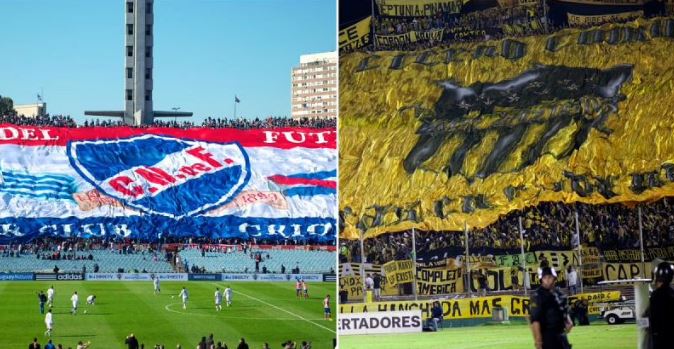
FAN INVOLVEMENT:
One of Montevideo’s main newspapers once called Nacional and Penarol, “the irreconcilable adversaries of all times, of all years, always in struggle with each other.” That was written in 1908. Nearly 115 years later, those words still ring true, in large part due to the fans continuing to fuel this incredible rivalry. The hatred between these two sides has been festering for well over a century, with train cars being set on fire, fights breaking out between sets of rival supporters, and groups literally waiting to rip the jerseys off the opposing fans. The violence has increased over the past few decades, with multiple fans being shot/stabbed, even killed. Uruguayan soccer and its fans often slip under the radar, but their passion and hatred can compete with any other country/rivalry’s fans.
These two fan bases compete in seemingly every avenue, from trophies to even how old their clubs are. Nacional fans claim they invented the word “hincha,” which means “soccer fan” in Spanish. One unique competition in recent years has been flags, specifically flag size. In 2011, Penarol fans unveiled a 1,014-foot long, 151-foot wide flag that covered a large part of Estadio Centenario. The flag — which cost $35,000 to make — set a new record for largest flag ever at a soccer match. Not wanting to let their rivals have nice things, Nacional fans got to work. Two years and $50,000 later, they unveiled their answer — a 1,968-foot long, 164-foot wide behemoth that weighed over 11,000 pounds and required 400 people to move. That flag supplanted Penarol’s flag as the world record holder for largest at a soccer match.
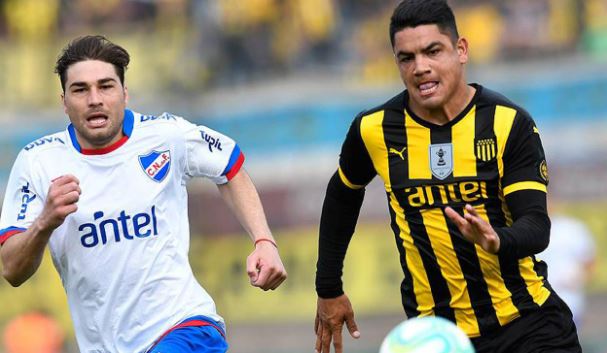
SUMMARY:
While some of its continental counterparts may get the headlines, the Uruguayan Clasico stands among the best in the world. Penarol and Nacional have hated each other for more than 120 years, producing plenty of legendary moments that ensure this ancient rivalry stands the test of time and easily qualifies for the World Cup of Hate.
Two of South America’s spots in the final tournament have seen two iconic rivalries clinch their rightful appearances. But we still have three to go and haven’t even visited the most celebrated soccer country in the world. Next up, we visit Brazil and its underrated club soccer scene, filled with plenty of hatred to produce many true contenders.
COMING UP IN PART 11: Brazilian giants battle, some great (and not-so-great) names, and the toughest cut in this entire experiment.
 Ruben's Writings
Leave a comment