OCEANIA (1)
It only took a dozen chapters, but we’re finally reaching the end of our journey across the globe to fill out our roster for the World Cup of Hate. With 30 spots taken, we have just two more to award. The first of those final spots takes us to perhaps the least-recognized, least-appreciated, and to be honest least-talented confederation in FIFA: Oceania.
Covering the vast Southern Pacific Ocean and the islands that call it home, Oceania has just 13 official members — two of which aren’t affiliated with FIFA. Despite being surrounded by water, with very little money and population, Oceania countries don’t really make waves in the soccer world, be it the individual, club, or country level. Because of this, Oceania is only granted one qualifier for the World Cup — even then, the confederation winner has to play another country in an intercontinental playoff and win to qualify for the final tournament. While I’m sure these countries have strong soccer fan bases, there’s only one country I would even consider looking into for rivalries worthy of the final tournament.
New Zealand is probably the only country from Oceania you’ve even heard of. While they are clearly the best country in the confederation, New Zealand have only made the World Cup twice, with the most recent being 2010. Despite there being a clear soccer fandom in the country (just look at the reception the 2023 Women’s World Cup got), the club scene is not good. Put it this way, the best and most successful club in New Zealand soccer history, Wellington Phoenix, currently play in Australia’s A-League. When your best doesn’t even play in your country, you’ve got problems. So I can’t in good conscience place a New Zealand-based rivalry in the World Cup of Hate. But given that we need a representative from Oceania, what are we to do? Well, for the second time in this experiment, we’re going to manipulate the current confederations a little bit and rewind the clock back to 2005.
Despite being right next to New Zealand on the map, Australia is not a member of Oceania, although it once was. In fact, Australia was an original member of Oceania, though it had difficulty qualifying for World Cups as well. However, in 2006, Australia was allowed to move to the Asian confederation, something it had wanted to do since 1960. While it doesn’t make geographic sense, it allows them to face better competition and have more spots open to them for qualification. Indeed, Australia has not missed a World Cup since switching over. That being said, for the purposes of this experiment, we’re going to undo that move and have Australia represent Oceania once again. While the quality of Australian club soccer may not be exactly Premier League level, those teams do compete with some of the best in Asia, which were among consideration for World Cup of Hate qualification.
Now, some of you may be familiar with the A-League and wonder how the hell it can produce a rivalry worthy of final qualification. After all, the A-League isn’t old enough to legally drink alcohol (in the U.S., anyway) and there are only 12 teams involved. Surely, those few teams couldn’t have sparked that kind of fury in that short amount of time. That’s where you’re wrong. In fact, I had several options to choose from. But in the end, there was a clear winner down under.
Sydney Derby (Australia)
Sydney Football Club vs. Western Sydney Wanderers Football Club
“We hate every single one of them.” — Alex Brosque, former Sydney FC captain ahead of a 2016 derby match
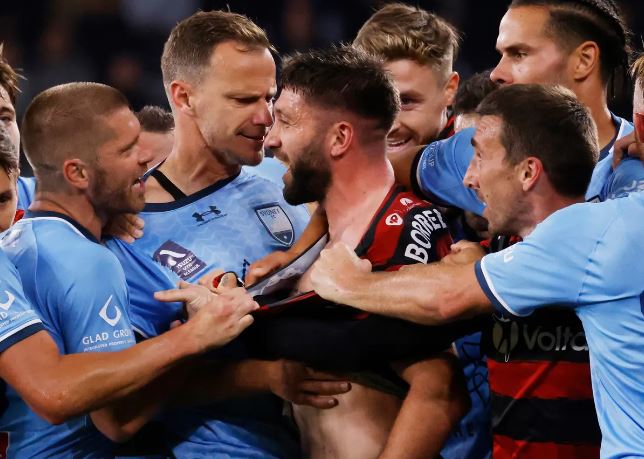
Although the Sydney Derby has existed for just over a decade, it’s already become one of the biggest and most anticipated sporting events in all of Australia, with clashes between Sydney FC and the Western Sydney Wanderers providing the kind of violence, atmosphere, hatred, and drama seen in Europe’s top matches.
Australia has a deep rooted sports history, with plenty of passion for athletic competition across the country. However, Australia is also among the vast minority of countries in the world where soccer is not the most popular sport. Depending on who you ask, either cricket or rugby is the most prominent sport, with the former producing the greatest Australian sports icon (Don Bradman, who’s like Babe Ruth combined with Michael Jordan in Australia) and the latter likely being the first you’d think of when pondering Australian sports (as well as that of nearby New Zealand). Then you have Australian rules football, as well as tennis (the Australian Open is one of the four major tennis tournaments), horse racing (Melbourne Cup), and even yacht racing (America’s Cup). Historically, soccer doesn’t really have much of a history in Australia, at least prominently. Like pretty much everything in Australia, soccer was introduced by the British, with the now-defunct Wanderers FC in Sydney becoming the first ever soccer club in the country in 1880. But the sport remained stuck in state leagues at the amateur level for nearly a century, with the lack of top competition hampering the national team, which finally managed to qualify for the FIFA World Cup in 1974 (they would proceed to get their asses kicked in the group stage). Three years later, Australia’s first ever pro soccer league — the National Soccer League — was formed, though the sport failed to skyrocket up the popularity charts.
Things began to change at the turn of the century, as Australia kept getting closer and closer to qualifying for another World Cup. After coming up short in 2002, a major inquiry known as the Crawford Report found gross mismanagement within Australia’s soccer federation, forcing a large restructuring of the sport and its governing body. At the national level, the changes would help Australia finally qualify for the World Cup in 2006, beating Uruguay in a dramatic play-off penalty shootout and creating the country’s first truly iconic soccer moment. Australia would later move from Oceania to the Asian confederation and has not missed a World Cup since. But the other factor that has dramatically raised the sport’s popularity (and helped keep the national team keep pace with the world) was the creation of the A-League. Having replaced the aging, unpopular, and financially lacking NSL in 2004, the A-League was effectively a reset button for club soccer in Australia, with the new teams becoming instantly popular within their respective cities and eventually ranking among the top clubs in all of Asia. The league has since expanded and will continue to grow, with that growth feeding on rivalries sparked by these new teams. Some of those rivalries have played on historic regional grudges across the country, including one that divides Australia’s most populous and popular city.
HISTORY:
When the A-League launched in 2004, it had eight teams. Organizers wanted to spread those teams throughout the country, hitting up as many markets as they could. Naturally, one of those markets would have to be Sydney, but the question of where exactly in Sydney the club would play. There is a historical, cultural, and geographical divide between the Greater Western Sydney region and the eastern, northern, and southern parts of Sydney, with the former being more working class and the latter being more richer, glamourous, and tourist-filled. The original bid for what would eventually become Sydney FC had the club’s home ground being Parramatta Stadium in Western Sydney. However, Frank Lowy (head of Football Federation Australia) forced several changes to the bid after its acceptance. One of those changes was changing the club’s home ground to Sydney Football Stadium, which is in the eastern part of the city. The decision left many people in Western Sydney feeling alienated from the new club, and thus they refused to support it. Nevertheless, Sydney FC — rocking sky blue to represent the state color of New South Wales — was ready to go for the inaugural A-League season of 2005-06, with a roster filled with the likes of former Manchester United striker Dwight Yorke.
Sydney FC hit the ground running, qualifying for the 2005 Oceania Club Championship, then rolling through the competition to win the tournament, achieving a rare feat of bringing home an international trophy before a domestic one. Though another trophy wouldn’t come in the 2005 FIFA Club World Cup (narrowly losing to CONCACAF Champions League winner Saprissa), Sydney would begin filling its domestic cabinet shortly after. A second place finish in the regular season ultimately led to a 1-0 victory over the Central Coast Mariners to win the inaugural A-League Grand Final. That success would not last long, as Yorke and manager Pierre Littbarski left for greater pastures. The next few seasons saw little success for Sydney, which missed the playoffs in 2009. New manager Vitezslav Lavicka would oversee a major turnaround, with Sydney winning its first premiership (regular season champs) before topping the Melbourne Victory (the two having formed their own ferocious rivalry) in a dramatic penalty shootout to win its second A-League title and claim a domestic double. After two mediocre years following the title and several key players leaving, Lavicka was fired and replaced with Ian Crook. But Sydney wasn’t only rocking a new coach to start the 2012-13 season. The club had also acquired the services of Juventus legend Alessandro Del Piero, one of the greatest players of his generation and a World Cup champion with Italy. Del Piero’s signing was sort of the A-League’s equivalent of the Los Angeles Galaxy signing David Beckham — it brought an even larger spotlight on the league. But that’s not the only reason why all eyes were on Sydney to start the season.
While Sydney FC was having this early success, the overall population in the greater Sydney area and the lack of support from Greater Western Sydney made the region a prime candidate for A-League expansion. The first attempt began in 2008, when the Western Sydney-based Sydney Rovers were first proposed to join the A-League. However, financial instability led to the club folding before they could even technically exist. But another opportunity came in 2012, after A-League club Gold Coast United’s financial and structural collapse led to it losing its license. Needing another team to meet requirements for its upcoming TV rights negotiations, the FFA decided to create a “New Sydney Club” based in the western part of the city, even though no principal owner had been identified to run the club (the FFA decided to take on the ownership role itself). Though this sort of backing could lead to a terrible start, two factors helped out the club. The first was that several notable Australian soccer players — including all-time national team goal scorer Tim Cahill — threw their support behind having a team in the area. The second was the FFA’s strategy in building support for the club, holding several supporter forums in the community to discuss things like club values, culture, and design. Fan votes would lead to the finalization of the team name (Western Sydney Wanderers FC) and colors (red, black, and white), with the new club playing in Parramatta Stadium. For the first time, Sydney now had two clubs, each representing a major area of the city. It wouldn’t take long to prove that the FFA’s gamble to install the Wanderers was a smart one.
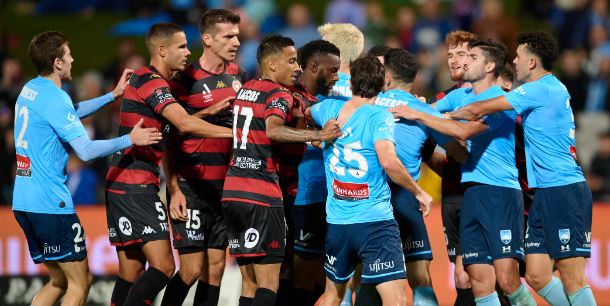
On October 12, 2012, the most anticipated match of the A-League season — the inaugural Sydney Derby — took place in front of a sold out Parramatta Stadium crowd. Despite a frenzied home atmosphere, it would be the visitors who walked out 1-0 victors, with Del Piero scoring the game’s only goal. Two months (and a Sydney FC manager change), the rematch was held in Sydney FC’s stadium. With Del Piero nursing an injury, it was Western Sydney who emerged victorious 2-0, giving the rivalry a rare note in the visitors winning the first two matches. This victory was part of a resurgence for the Wanderers, who ended up becoming A-League premiers despite starting the season winless in three games (Sydney would miss the playoffs). While Western Sydney would reach the Grand Final, they would lose to Central Coast 2-0 to fall just short of a rookie year championship. The first derby of the following season (the first of back-to-back Wanderers wins) would be attended by over 40,000 people, including rugby league journalist Phil Rothfield, who commented that soccer had become bigger than rugby union and was closing in on the AFL and NRL (the top Australian rules football and rugby league competitions). That process would be helped by Western Sydney, whose premiership gave them a spot in the 2014 AFC Champions League. In perhaps the most unexpected run in international club soccer history, the second-year Wanderers would top their group (which included former champs Ulsan Hyundai), before knocking off the likes of FC Seoul and defending champs Guangzhou Evergrande to reach the final against Al-Hilal. After a 1-0 home win in the first leg, Western Sydney survived a scoreless draw in the second leg in Riyadh to become the first (and so far only) Australian club to win the AFC Champions League.
Back in Australia, Sydney would finally get its first home victory of the derby later that year, coming back from down 1-0 to win 3-1. The last goal came from Ali Abbas, who would also accuse Western Sydney’s Brendon Santalab of culturally abusing him (charges against Santalab were somewhat controversially dropped). The following derby saw another Sydney comeback, this time from 2-0 down. After the match, over a hundred Sydney fans ran onto the pitch and celebrated with captain Alex Brosque, who had scored the winning goal. Those two results were part of a nearly three-year unbeaten run for Sydney against their rivals, a stretch that included nine matches. Western Sydney would finally break the drought in February of 2017, but by then Sydney had not just caught up in the rivalry, but in the league as well. The FFA had introduced the Australian Cup in 2014, with Sydney FC making three straight finals from 2016-17, winning the trophy in 2017. That would be nothing compared to its run in the A-League, with Sydney FC winning three championships in four years from 2017-20, with two of those seasons being domestic doubles when Sydney’s premierships are included (a third premiership was also won in 2018). This stretch of dominance was also reflected in the Sydney Derby, with Western Sydney having come down from its incredibly strong start. Another drought for the Wanderers lasted for another two-ish years, a stretch that included a 5-0 victory for Sydney in 2017 — that match remains the most lopsided in derby history.
It took a brand new stadium for Western Sydney to snap the drought — the first ever Sydney Derby at Western Sydney Stadium saw a 1-0 win for the Wanderers (the first victory for the hosts in 980 days against their rivals). The following derby had to be postponed due to rain, with the match being played at the Jubilee Oval. Mitchell Duke, who scored Western Sydney’s lone goal in the previous derby, once again provided the game’s only goal in a 1-0 win for his side. A 1-1 draw in March of 2020 (played behind closed doors due to the COVID-19 Pandemic) ensured the 2019-20 season would be the first ever where Sydney failed to record a win against their rivals. The Jubilee Oval would also host a 3-2 Sydney victory in April of 2022 — across the past four matches, this remains the most recent derby victory by a home team. The derby has also recently seen perhaps the most high-profile switching of sides in its history. Five years after Sydney goalkeeper Verdan Janjetovic signed with Western Sydney (and got a bunch of plastic snakes thrown at his goal), Sydney legend Milos Ninkovic signed with the Wanderers. His move sparked fury among Sydney fans, who brought a tifo reading “LEGENDS ARE CHERISHED. TRAITORS’ LEGACIES WILL PERISH” to his first derby as a Wanderer. Ninkovic would have the last laugh that night, providing an assist for the game’s only goal in a 1-0 Western Sydney win. The very next match between the two would mark history — the first Sydney Derby to take place in the Elimination-Finals. Sydney would come back from down 1-0 to win 2-1 and eliminate their rivals. After the game, Ninkovic went into the opposing locker room to congratulate his former team. However, Sydney coach Steve Corica basically threw him out of the locker room, even though the players appreciated the gesture. But by tossing out a gesture of goodwill, Corica also showed that this rivalry is heating up — and just getting started.
MAJOR ON-FIELD MOMENTS:
A MUCH-HYPED BEGINNING
The inaugural Sydney derby was incredibly hyped up, with resentment towards Sydney FC building in Western Sydney fans since the club’s original A-League bid. On October 12, Sydney and Western Sydney faced off on the soccer field for the first time, with a sold out crowd of 19,126 packing Parramatta Stadium (the very stadium that was removed from the Sydney FC bid). In the end, it was Sydney’s legendary signee — Alessandro Del Piero — who proved to be the difference. An early second half penalty kick was saved, but Del Piero pounced on the rebound to find the only goal in a 1-0 Sydney win. Though their team lost, the electric Western Sydney crowd proved that the FFA were right to award their region an expansion franchise.
A HAPPY INVASION
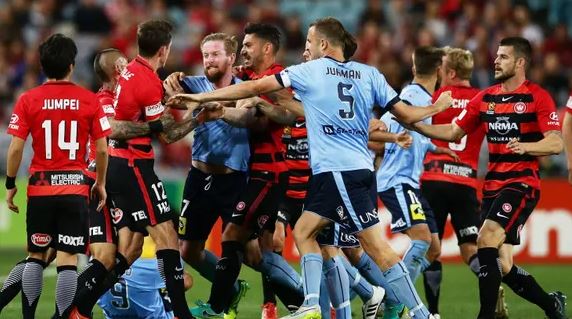
Just six matches into the Sydney Derby, it was clear the passion was there to stay. In front of a then-record 41,213 fans at Sydney’s stadium, Western Sydney jumped out to a 2-0 lead thanks in part to an error by Vedran Janjetovic. However, Corey Gameiro cut the lead in half just before halftime. After several close chances in the second half, Romeo Castelen got Janjetovic off the hook thanks to an own goal, tying the game. Tempers began to flare after that, with Terry Antonis being sent off with a red card. The home team took advantage of being up a man, with captain Alex Brosque scoring with just over ten minutes left. Sydney would hold on for the 3-2 win, as over a hundred happy Sydney fans ran onto the field to celebrate with Brosque.
COMEBACK COMPLETED, THEN RUINED
Incredibly, the above match was not the most insane Sydney Derby of the 2014-15 season. Four months after the 3-2 Sydney comeback win, it was Sydney jumping out to the lead this time, thanks to an own goal by Ante Covic less than ten minutes into the game. Two goals from Marc Janko five minutes apart would give Sydney a 3-0 lead with just 23 minutes gone by. But then Western Sydney finally woke up — Iacopo La Rocca put the Wanderers on the board just after the half-hour mark before Kerem Bulut cut the deficit to one just before halftime. Bulut got rid of the deficit completely shortly into the second half, tying the score at 3-3. But as Western Sydney searched for a winner, Terry Antonis scored for Sydney, who wound up winning 4-3.
BACK-TO-BACK LATE WINNERS
Over nine straight Sydney Derbies from 2014-17, Western Sydney could not pick up a win over their rivals. Things might have felt a little bit better had two draws not narrowly evolved into losses. The next derby after the above seven-goal thriller, both teams were scoreless in the late stages of the match. However, Milos Ninkovic found the back of the net in the 88th minute to give Sydney a dramatic 1-0 win. In the very next derby, Sydney only needed 22 minutes to take the lead. But Western Sydney fought back, tying the score just before the hour mark. But just when it seemed like things would end in a draw, a Shane Smeltz screamer in the 90th minute gave Sydney a 2-1 win. That’s three straight heartbreakers and back-to-back late results.
THE DEMOLITION DERBY
On October 8, 2016, a crowd of 61,800 people (a Sydney Derby record to this day) showed up to see the first clash of the rivals for that season. For the first half of the match, there wasn’t much to cheer about, with both teams failing to find the back of the net. But then the second half began and there was a lot to cheer about — for the away fans, anyway. Filip Holosko put Sydney on top in the 51st minute, then set Bobo up for the equalizer just four minutes later. Artiz Borda was later sent off, with Western Sydney valiantly hanging on with just ten men. But Sydney broke through in the 85th minute thanks to Brandon O’Neill, before Alex Brosque added a fourth and final goal four minutes later. The 4-0 result has become known as the “Demolition Derby.”
SLYTHERIN’S FAVORITE DERBY
The final match in that Western Sydney winless streak obviously didn’t leave Wanderers fans happy. But Sydney fans weren’t exactly feeling peachy after, either. That’s because of who was in the Western Sydney net. Since the last Sydney Derby, Sydney goalkeeper Vedran Janjetovic had signed with Western Sydney, thanks to falling down the pecking order and the Wanderers employing his former goalkeeping coach, Zeljko Kalac. Sydney fans weren’t really happy about seeing their goalkeeper play for their rivals and showered Janjetovic with boos. With the game about an hour into its eventual scoreless draw and realizing they wouldn’t see Janjetovic let in a goal, Sydney fans took matters into their own hands, throwing plastic snakes at him in goal.
STREAKS SNAPPED
Finally, on February 18, 2017, Western Sydney fans finally got to be happy after watching a Sydney Derby. For the first time in 1,135 days, the Wanderers secured a win over their rivals. In front of a crowd of 44,843 mostly home fans, Brendon Santalab put Western Sydney on the board in the 26th minute, then helped the Wanderers withstand waves of Sydney offense to hold the visitors scoreless and secure a much-anticipated 1-0 victory. As a whole, the win didn’t change much — another drought would soon start and Sydney would go on to win the domestic double. However, this defeat would be the only one Sydney would suffer during the season, with Western Sydney stopping their rivals from becoming Australia’s first unbeaten champions.
A SYDNEY SLAP
By the time the second Sydney Derby of the 2017-18 season arrived, Sydney found itself in an unusual position: the receiving end of a three-game winless streak against Western Sydney. This seemed to be too much to bear, because Sydney went into the Wanderers’ home ground and beat the absolute shit out of them. Things got started in the 14th minute thanks to Adrian Mierzijewski’s goal, but the score threatened to stay at 1-0 until halftime. But goals from Alex Brosque and Mierzijewski five minutes before the break tripled Sydney’s lead. An own goal by Lachlan Scott made it 4-0 shortly into the second half. Then, a 76th minute goal by Brandon O’Neill made history, with the 5-0 Sydney win remaining the most lopsided Sydney Derby ever.
DOUBLE DUKE
Going into the first Sydney Derby of the 2019-20 season, Western Sydney had gone more than two years with a win over its rivals. But that would change, with a 19th minute goal by Mitchell Duke being enough to allow the Wanderers to hold on for a 1-0 win and snap the streak. The very next derby was (on paper) a carbon copy of the previous one, except for a change in venue. This time in front of a Sydney home crowd, it took Duke until the 81st minute to find the back of the net, though it was still enough for a second straight 1-0 Western Sydney win. Also, shoutout to Kwame Yeboah for scoring Western Sydney’s lone goal in a 1-1 draw in the third matchup, making 2019-20 the only season where Sydney failed to defeat the Wanderers.
ANOTHER TEAM FOR MILOS
Seven years after arriving at Sydney FC, Milos Ninkovic had become a club legend and one of the most beloved players in A-League history. However, Ninkovic was released after the 2022 season over a dispute over him getting Australian citizenship so the club could bring in new foreign signings. So Ninkovic pressed the nuclear option and signed with Western Sydney, igniting a firestorm in the rivalry, with former teammate Alex Brosque calling the move a, “slap in the face.” In Ninkovic’s first Sydney Derby with his new club, the Wanderers scored a 1-0 win, their first road victory over Sydney FC in 3,304 days (in front of the biggest derby crowd since 2017 no less). To add insult to injury, Ninkovic provided the assist for the only goal in the game.
ROAD WARRIOR WANDERERS
Another unique fact about the Sydney Derby is that the two most lopsided matches were won by the visitors. There was Sydney’s 4-0 road win in 2016 and its 5-0 away victory a year later. Then, this past March, Western Sydney decided to add its name to the ass-whooping party with a 4-0 win of its own. Kusini Yengi (the same player who scored the lone goal in Milos Ninkovic’s return to Sydney four months earlier) got things going in the 13th minute, with Amor Layouni doubling the Wanderers’ lead eight minutes later. Calem Nieuwenhof added another goal in the 62nd minute and Layouni added his second goal of the night in the 75th minute. The 4-0 victory helped Western Sydney get home field advantage for the next, historic Sydney Derby.
ELIMINATION ON THE LINE
The most recent Sydney Derby was also the first time Sydney and Western Sydney had ever met in the A-League Finals, with the two rivals meeting in the Elimination-finals. No. 4 seed Western Sydney played host to No. 5 seed Sydney, with a crowd of 27,288 (the largest in Elimination-finals history) creating an incredible atmosphere. Near the end of the first half, the Wanderers took the lead thanks to a successful penalty kick by Morgan Schneiderlin. But the visitors were able to turn things around within an 11-minute span, with second half goals by Robert Mak and Adam Le Fondre enough to give Sydney a 2-1 comeback win. Old friend Milos Ninkovic went to congratulate his old team afterwards, only to be thrown out of the locker room.
STATISTICS:
HEAD-TO-HEAD RECORD
Sydney: 16
Wanderers: 10
Draw: 9
LEAGUE CHAMPIONSHIPS
Sydney: 5 (record)
Wanderers: 0
LEAGUE PREMIERS
Sydney: 4 (record)
Wanderers: 1
AUSTRALIA CUP
Sydney: 1
Wanderers: 0
AFC CHAMPIONS LEAGUE
Sydney: 0
Wanderers: 1
OFC CHAMPIONS LEAGUE
Sydney: 1
Wanderers: 0
NOTABLE FIGURES:
STEVE CORICA
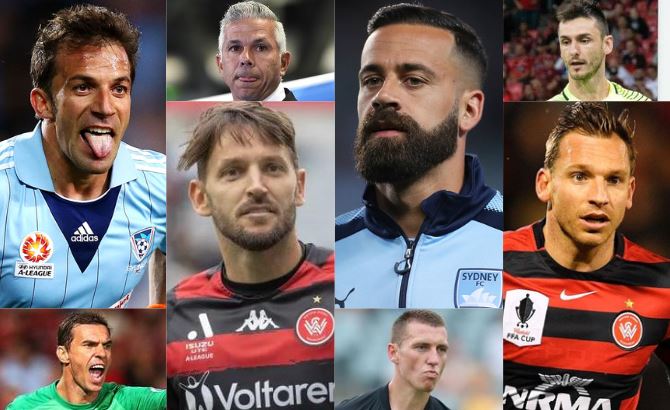
As a player, Steve Corica went from England to Japan back to his home of Australia and Sydney FC, where he scored the winning goal in the inaugural A-League Grand Final. After an injury ended his career, Corica became a manager, taking charge of Sydney’s youth team before being given control of the senior team in 2018. While Croica has won a premiership and two championships with Sydney, poor results lately (including a 4-0 loss to Western Sydney) have fans calling for his firing. Maybe that’s why he tossed Milos Ninkovic from the locker room.
ALEX BROSQUE
One of Sydney FC’s greatest and most beloved players ever, Alex Brosque joined the club in 2006 and spent a productive five years there, winning two A-League titles. Brosque left in 2011 but returned in 2014, only to find a new rival to destroy. Brosque is not only the all-time leading scorer for Sydney (83 goals) and the club’s second-most capped player (267 appearances), but he’s also the top scorer in Sydney Derby history (six goals). Several of those goals have been crucial and/or match-winning, with Brosque proudly representing Sydney against its rival.
RHYAN GRANT
Rhyan Grant is known for two things — his iconicmullet and being arguably the most beloved player in Sydney FC history. Grant debuted for Sydney in 2008 and has remained there for the past 15 years, appearing in a club-record 307 games and establishing himself as one of the few A-League players to have only played for one club in his career. One more note about Grant’s mullet — he had to seek approval from the Asian Football Confederation to play in the 2019 Asian Cup because of the United Arab Emirates FA prohibiting “unusual or offensive” haircuts.
ALESSANDRO DEL PIERO
Although he only played for Sydney FC (and the A-League as a whole) for two seasons, Italian soccer great Alessandro Del Piero is the greatest and most important signing in Australian soccer history. The FIFA World Cup winner and legendary striker’s presence alone was enough to bring a lot more attention to Australian soccer, which was handy given that his first season was also the first for Western Sydney. In fact, Del Piero has the distinction of scoring the first ever Sydney Derby goal, which ended up being the only one in a 1-0 victory for Sydney.
VEDRAN JANJETOVIC
In 2012, Vedren Jenjetovic had a choice to sign with either Sydney-based club, but ended up with Sydney FC, where he would play for the next four-plus years. But in 2016, Janjetovic found himself dropping in the depth chart, so he chose to sign with Western Sydney, saying that the Wanderers’ hiring of goalkeeping coach Zelkjo Kalac played a big factor. Sydney fans were pissed at Janjetovic, who they called a traitor. In fact, in Janjetovic’s first game at his old club’s stadium, Sydney fans threw plastic snakes at his net (of course he had a cheeky response).
MARK BRIDGE
One of the few players to earn trophies on both sides of the Sydney Derby, Mark Bridge began his time in the city with Sydney FC, appearing 80 times and winning the 2010 A-League Grand Final. However, his contract was mutually terminated in 2012, leaving him to sign for Western Sydney. It was in his six seasons with the Wanderers where he truly excelled, scoring the club’s first goal in A-League play on the way to setting the Western Sydney record for appearances (141) and goals (38), although the latter record has since been surpassed by the man below.
BRENDON SANTALAB
Another former Sydney player who would become much more well-known with their rivals, Brendon Santalab joined Western Sydney in 2013 and only left after he broke the club’s all-time goal scoring record (41) and broke into the Top 3 in appearances (114). One of Santalab’s most famous goals was the one that broke the first great Sydney Derby winless drought in 2017. That wasn’t Santalab’s first major note in the rivalry — in 2014, he was accused of culturally abusing Sydney’s Ali Abbas during a match, although Santalab would later be cleared of all charges.
ANTE COVIC
In 2006, Ante Covic was part of Australia’s squad for the 2006 FIFA World Cup. Six years later, Covic appeared to be at the end of his career. However, Covic then signed with expansion club Western Sydney and balled the fuck out, helping the Wanderers win the premiership in their first season (and being named to the inaugural A-League All-Star team). Covic would then find his final form in the following year, as Western Sydney unexpectedly won the 2014 AFC Champions League. Covic kept eight clean sheets in 12 matches, being named tournament MVP.
MITCHELL DUKE
Although Mitchell Duke only spent just over 50 games with Western Sydney, he still made a big impact on the club. Duke ranks fourth on the Wanderers’ all-time goal-scoring list (24 goals) and is tied for the most goals scored in the Sydney Derby by a Western Sydney player. Two of those goals came in back-to-back matches, which both happened to be 1-0 victories for Western Sydney. In addition, that first victory broke a more than two-year winless streak against Sydney. Duke also has the most goals for Wanderers who only appeared in A-League matches.
MILOS NINKOVIC
For seven years and 21 derbies, Milos Ninkovic proudly represented Sydney FC, becoming both a club legend and one of the greatest A-League players of all time. But at the end of the 2022 season, Ninkovic was released, with Sydney citing Ninkovic’s refusal to obtain Australian citizenship. Feeling disrespected, Ninkovic decided to stay in Sydney anyway, signing with Western Sydney and causing a firestorm among players and fans of his old club. Ninkovic’s first derby as a Wanderer saw him assist the winning goal in a 1-0 victory at Sydney’s stadium.
FAN INVOLVEMENT:
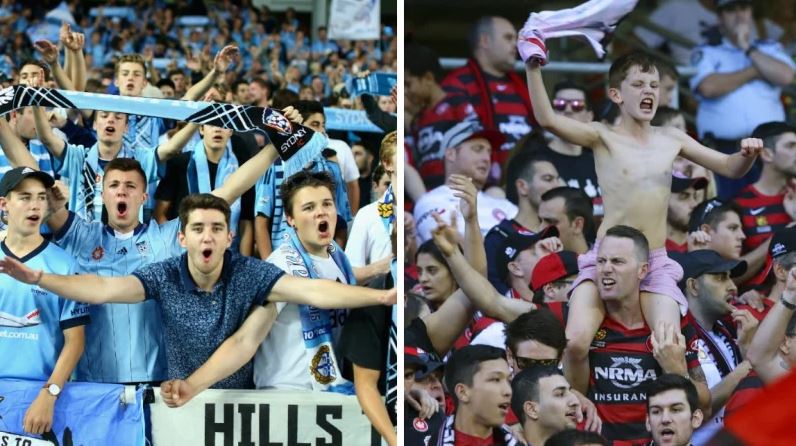
While the rivalry between the two clubs is rooted in the regional dislike between Western Sydney and the rest of the city (and has been helped by the feverish clashes between the rivals), the Sydney Derby is truly fueled by the passion of both fan bases. In fact, each fan group has played a role in the current form of their club. The very name and colors of the Wanderers were chosen through fan votes and forums, while Sydney’s main supporter group (The Cove) was directly involved in the creation of their club’s current badge. When they get truly invested in their clubs and sports, Australians can go absolutely fucking mental, which is why Sydney Derbies are often played in atmospheres similar to top European clashes. But with that passion comes similar problems felt in other, more traditional soccer markets, such as fires, rioting, tifo shenanigans, and some hooliganism. Interestingly, fans most recently made news by not being at the derby. The Cove purposely did not show up to support Sydney at Western Sydney’s stadium due to the A-League’s decision to sell Grand Final hosting rights to the New South Wales government. Though Sydney won anyway, players and staff felt the fans’ absence.
SUMMARY:
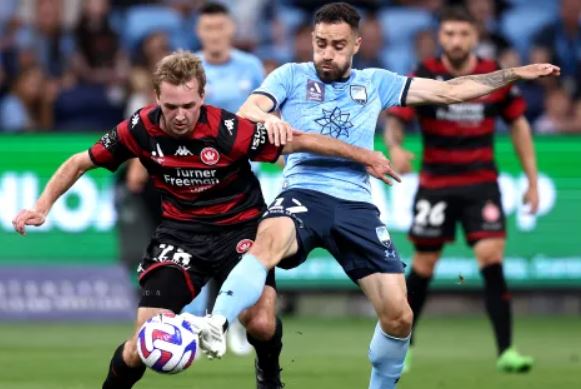
The Sydney Derby is just over a decade old and is contested in a city and country where soccer has historically taken a backseat to several other sports. However, through sheer passion and fiery fandom, along with some gripping on-field action and juicy drama off it, Sydney FC and the Western Sydney Wanderers have created a spectacle that has already claimed a spot among the most anticipated sporting events in Australia and produces an atmosphere comparable to some of the best rivalries in the world (just ask Alessandro Del Piero).
Some may consider the selection of the Sydney Derby somewhat controversial, claiming that it isn’t the biggest in Australia, let alone the biggest involving Sydney FC. The club — along with fellow A-League original Melbourne Victory — take part in the Big Blue (named as such due to blue being the main color of both clubs), a derby that pits Australia’s two largest cities and two of the league’s most successful and supported clubs. Then there’s the Melbourne Derby, which sees the Victory and Melbourne City face off in a rivalry that sparks real hatred — last year, an extremely controversial derby was called after just 22 minutes due to a pitch invasion. Other notable rivalries include the Original Derby (Melbourne Victory vs. Adelaide United), the F3 Derby (Central Coast Mariners vs. Newcastle Jets), and the Distance Derby (Perth Glory vs. Wellington Phoenix). But at the end of the day, the fact that the Sydney Derby has largely passed the rest among Australian soccer fans despite being so young puts it in a class of its own and establishes it as the country’s premier soccer rivalry — as well as the best in Oceania.
INTER-CONTINENTAL PLAY-OFF(1)
We’re down to one — one more spot available in the World Cup of Hate. In order to fill that spot, we have to resort to the way the FIFA World Cup determines its final places — the inter-continental play-offs. One team from each of four confederations (North/Central America, South America, Asia, and Oceania) enters the play-off port. The four nations are divided up into two matchups, with the winners advancing to the World Cup. But if we’re supposed to have two winners, why do we have just one spot left in the World Cup of Hate? That’s because the first World Cup qualifying spot is reserved for the host, which is not necessary in this experiment (unless the Devices that Waste Ruben’s Time Derby between my laptop and my cellphone deserves a spot on the list). By wanting to make sure Oceania is represented in the World Cup of Hate, I guess I technically gave that rivalry the host spot. That means one of the three other confederations gets an automatic extra spot — that spot went to South America because I felt as a whole it had the stronger overall soccer (and soccer rivalry) history. Thus, we have North/Central America and Asia battling it out to have one more entry in the hate fiesta.
So let’s see each continent’s nominations, starting with North/Central America. In case you can’t remember what happened ten parts earlier, the three automatic spots went to Mexico’s El Super Clasico (Club America vs. Chivas Guadalajara), and the United States’ Cascadia Cup (Portland Timbers vs. Seattle Sounders) and California Clasico (San Jose Earthquakes vs. Los Angeles Galaxy). For traditional soccer prestige outside those countries, we typically head south to Central America. That’s where the national rivalries (most called Clasico Nacional) of Costa Rica (Alajuelense vs. Deportivo Saprissa), El Salvador (Club Deportivo FAS vs. Aguila), Guatemala (Comunicaciones vs. Municipal), Honduras (Real C.D. Espana vs. C.D. Olimpia), and Nicaragua (Real Esteli vs. Diriangen) stand out. However, we’re actually going to look north, where two soccer teams play their part in a major cultural rivalry, one that feeds a tense and fiery affair often hidden between piles of snow and hockey pucks.

Canadian Classique (Canada)
CF Montreal vs. Toronto Football Club
“Let’s be honest; the rivalry between Toronto and Montreal is one of the best in MLS, no questions asked. Whether on opposite sides of the standings, or just nine points apart, supporters on both sides know they’ll be in for an intense game once both teams hit the field, no matter the circumstances.” — Georges Menexis, Marketing Manager for CF Montreal
In a country known as the nicest in the world and a league that’s one of the youngest in major soccer competition lurks the Canadian Classique (also known as the 401 Derby and the Two Solitudes Derby), one of the fiercest soccer rivalries in the North American continent. Though CF Montreal and Toronto FC have only been competing for about 15 years, they have produced some of the most incredible moments, legendary atmospheres, and intense battles Canada has ever seen, taking their place in a greater hatred that’s become rooted in Canadian culture.
When you think of soccer, most people would probably name about 100 countries before finally thinking of Canada. Hockey (specifically, ice hockey) is by far the most popular sport in the country, with it being to Canada what soccer is to most other countries (even though a Canadian-based team hasn’t won the Stanley Cup in 30 years). Lacrosse is also a major sport in Canada, with the likes of baseball, basketball, canadian football, rugby, and even curling being more historically successful and popular than soccer. In fact, when the U.S. has a much richer soccer history than you, it says a lot.
But all of this doesn’t accurately convey how popular soccer is in Canada. A recent study found that soccer is the second-most played sport in Canada, only being beaten by hockey. It’s been played in the country since 1976, with the Canadian Soccer Association being founded in 1912 (and joining FIFA later that same year). Several soccer leagues have existed over the past century (most notably the Canadian National Soccer League and Canadian Professional Soccer League), but in the end the top Canadian teams would eventually compete in United States-based leagues. Although Canada finally has a legitimate and growing professional soccer league (the Canadian Premier League), the country’s three biggest and best clubs play in Major League Soccer. One of those clubs, the Vancouver Whitecaps, are kind of the third wheel in another rivalry (the Cascadia Cup) and honestly are the least-thought-of member of the Canadian MLS trio. But it’s those other two clubs that are the subject of this rivalry, one that sits among the ancient grudge between Canada’s two biggest and most popular cities.
Much like Northern California and Southern California, Boston and New York, Texas and Oklahoma, and Michigan and Ohio, Toronto and Montreal have been historic rivals in every facet of life, from sports to the economy, culture, and overall society, with both cities fighting to be the true cultural center of Canada. The two cities have been considered economic rivals since the mid-19th century and cultural rivals not too far after that. The two also represent both halves of Canadian society. The two national languages of Canada are English and French. Montreal is the largest city in Quebec (the largest province by area, largely French-speaking, and fiercely independent, to the point where secession from Canada is a frequent topic of conversation), while Toronto is the largest city in Ontario (the largest province by population, largely English-speaking, and the home of Canada’s capital city, Ottawa). This rivalry has extended to sports, most notably the legendary hockey rivalry between the Montreal Canadiens and Toronto Maple Leafs (which began in 1917). It took a little bit longer for the soccer rivalry to develop between Toronto and Montreal, but once it did, it proved to have plenty of fire.
HISTORY:
Professional soccer in both Toronto and Montreal began in 1971, when the Toronto Metros and Montreal Olympique joined the North American Soccer League. Due to the generally chaotic nature of the NASL — plenty of relocation/expansion/contraction/other changes — both cities infrequently had a chance to face off. When they did, it was rare for them to play each other with the same clubs or even club names involved in several games in a row. In fact, it took until 1992 for either city to get a permanent club (and club name), which ironically happened after the collapse of the Canadian Soccer League in 1992. One team in that league — the Montreal Supra — wanted to join the U.S.-based American Professional Soccer League, but didn’t meet the financial requirements. So the owners called up one of their main sponsors, Canadian dairy giant Saputo Inc., and the Saputo family agreed to purchase the club. Supra was dissolved, replaced with the Montreal Impact. Over the next 20 years (which saw the club nearly die before coming back to life during the early 2000’s), Montreal would call the league (which would eventually become the United Soccer League) home, winning the championship three times and taking home the Commissioner’s Cup five times. The Impact would also win the first seven Voyageurs Cups (a tournament organized by Canadian supporters) and come within a whisker of the 2008-09 CONCACAF Champions League semi-finals, falling to Santos Laguna after giving up two stoppage time goals to Carlos Quintero in the second leg. During this time, one of Montreal’s biggest rivals was the Toronto Lynx, who kept falling down the soccer pyramid until folding in 2017 (but not before leaving us with memories of this crest). But Montreal had one ultimate goal, which it was beaten to by another Toronto club.
Four years after the Impact joined the future USL, Major League Soccer (which would become the premier American/Canadian pro soccer league) began play, with just ten clubs across the U.S. Montreal had been considered for MLS’ inaugural lineup, but was passed over. The league would eventually come calling to break into Canada, though despite discussions with Montreal and the Saputos, bigger money and markets talked. In 2005, MLS awarded an expansion franchise to Maple Leaf Sports & Entertainment, the owners of the Toronto Maple Leafs and Toronto Raptors. That spot also came with a three-year Canadian exclusivity deal, meaning another Canadian franchise couldn’t enter the league until 2009. The new club, Toronto FC, began its MLS tenure in 2007, winning the wooden spoon as the worst team in the league with a 6-17-7 record (which is kind of typical for an expansion franchise). Even more eyes would be on Toronto in 2008, which would see the club host that year’s MLS All-Star Game. In addition, the first edition of the Canadian Championship — an all-Canada tournament — was held, with the Voyageurs Cup being awarded to the winner (along with a spot in the CONCACAF Champions League). Despite being two years old, Toronto was expected to win the tournament (being an MLS club and all). Toronto’s first match would be at the home of the six-time defending champion Montreal Impact, with the sophomores winning the first ever Canadian Classique 1-0 thanks to Marco Velez. However, Montreal would storm back to unexpectedly win the tournament, clinching the crown with a 1-1 draw on Toronto’s BMO Field (a fact which would further plant the seeds of the rivalry).
With the two clubs playing in different leagues, Toronto would have to wait until the following Canadian Championship to get their revenge. Toronto beat Montreal 1-0 at home and wound up in a tough battle with the Vancouver Whitecaps to claim the crown. Toronto’s final match would be at Montreal, needing to win by at least four goals to surpass Vancouver in the standings. Montreal, meanwhile, had no chance to win the tournament, so head coach Marc Dos Santos decided to rest several key players in order to save them for league play. What unfolded was the greatest loss in Montreal’s history at the time, as Toronto absolutely whalloped the home squad 6-1, with Dwayne De Rosario scoring a hat trick. The “Miracle in Montreal” not only gave Toronto its first ever spot in the CONCACAF Champions League (they didn’t go far), but actually might’ve worked in Montreal’s favor, with the extra rest possibly letting the Impact get home field advantage over an increasingly pissed off Whitecaps squad in the USL First Division championship (which Montreal won). But that happiness disappeared in 2010, which saw Montreal once again go winless against Toronto in the Canadian Championship and fall to a combined 0-5-1 record in the ever-growing rivalry. Although the two would not meet in the 2011 edition, all eyes were on a different kind of contest. Montreal was in deep talks with MLS over being awarded one of two expansion slots for that year. However (in a small manner of revenge), Vancouver — along with the Portland Timbers — got the nod instead. But the Impact wouldn’t have to wait much longer — it was announced in 2010 that Montreal would finally become a MLS city, with the new and improved Impact set to debut in 2012, finally creating a regular schedule of matches against Toronto.
The Impact’s inaugural MLS season did not start well, with the club going 0-4-1 in its first five matches (including a 2-0 loss in the first MLS clash between Montreal and Vancouver). But then, Toronto came to town. The first ever MLS Canadian Classique would also be Montreal’s first league (and rivalry) victory, with Andrew Wenger (who the Impact selected with the top overall pick in the 2012 MLS SuperDraft) providing the deciding goal in a 2-1 win. Although Toronto would finish at the bottom of the league table again, they would also take solace in not allowing Montreal to beat them again for the rest of the year, claiming a fourth straight Canadian Championship in the process. Montreal would strike back with a vengeance in 2013, taking back the Canadian Championship (and winning it for the first time as an MLS squad). The two rivals faced off in the tournament’s semi-finals, with Toronto winning the first leg 2-0. But then the Impact went absolutely gangbusters in the second leg, avenging the Miracle in Montreal by demolishing Toronto 6-0, recording the most lopsided victory in Canadian Classique history to this day. Montreal would also make its first playoff appearance, losing to the Houston Dynamo in the first round. Although the Impact would successfully defend their Canadian title in 2014, both Montreal and Toronto would take a step back, finishing along the bottom of the standings. But things were about to change, as both clubs were set to make a series of additions that would help boost them to levels never before seen — or seen since.
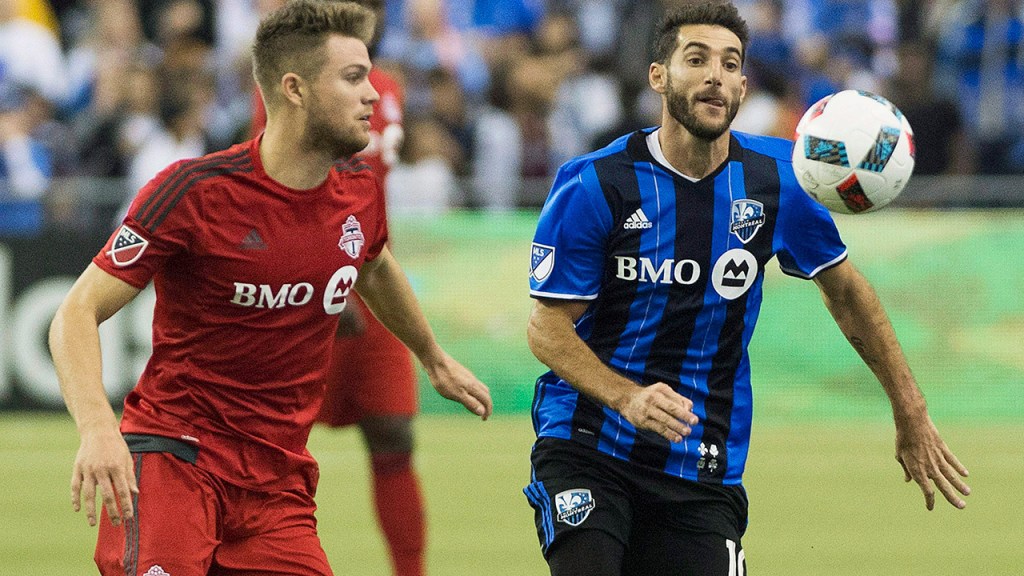
Heading into 2015, Canadian club soccer had grown drastically, but still had yet to make an impact (no pun intended) on the North/Central American soccer scene. But that would soon change, thanks to both Toronto and Montreal. Although the latter had finished last in MLS in 2014, two good things had happened. Midway through the season, the Impact signed Ignacio Piatti, with the winger instantly contributing to the squad. In addition, the club’s Canadian Championship win had given them a spot in the 2014-15 CONCACAF Champions League. Though Montreal won its group, things looked grim in the quarter-finals, as the Impact trailed Pachuca by one goal on aggregate deep into stoppage time in the second leg. But then Cameron Porter scored his first (and only) goal for Montreal, sending the home crowd into a joyous uproar and sending the Impact to the semi-finals on away goals. Montreal would then survive a nervy pair of legs with Alajuelense to become the first ever Canadian club to reach the CONCACAF Champions League Final. Taking on Club America, Montreal gutted out a 1-1 draw in Mexico City and had a chance to win the championship at home. But a 1-0 second leg lead turned into a 4-2 loss for the Impact, who fell just short of history. Despite the loss, Montreal used the momentum from its continental voyage to record its best ever season domestically, finishing third in the MLS Eastern Conference standings. But as it turns out, the Impact wasn’t alone — Toronto had suddenly gotten good as well.
Toronto followed up its own great 2014 signing of future U.S. national team captain Michael Bradley with a pair of game-changing additions in 2015. First, Bradley’s team USA teammate Jozy Altidore returned to the MLS after a spell with Sunderland. Then, Toronto would make the best signing in club history by bringing in Juventus winger Sebastian Giovinco, who would win both the MLS Golden Boot and MVP award en route to dragging Toronto to its first ever MLS playoff spot. Waiting for Toronto would be Montreal, who had found their answer to Giovinco in Chelsea and African soccer legend Didier Drogba, whose two goals in a late season 2-1 win over Toronto gave Montreal home field advantage in the first ever playoff clash between the two rivals. Both Piatti and Drogba would find the back of the net as the Impact scored an emphatic 3-0 win to eliminate Toronto in front of a raucous Montreal crowd (though they would fall in the next round). But the first postseason Canadian Classique was just an appetizer for what would come in 2016. Toronto’s stars had begun to gel, helping the club finish third in the Eastern Conference. Montreal was also still operating at a high level, finishing fifth. After getting past the Philadelphia Union and D.C. United, respectively, Toronto and Montreal would collectively piss off all of the Empire State by eliminating New York City and the New York Red Bulls (respectively), setting up an all-Canadian Eastern Conference Finals. The fight to be the first Canadian team to reach an MLS Cup (and possibly be the first to win it) would produce arguably the peak of the rivalry so far, with two batshit crazy legs of action. Montreal would jump out to a 3-0 lead in the first leg at home, only for a late Toronto rally to make it a 3-2 final. A back-and-forth second leg in Toronto saw the home squad win 3-2, sending the match to extra time tied 5-5 on aggregate. The deafening home crowd got even louder, as Toronto scored twice more to win the game 5-2 and the tie 7-5, advancing to its first MLS Cup.
Unfortunately for Toronto, hosting the MLS Cup did not yield the desired results. Despite not allowing a shot on goal, Toronto would fall on penalties to the Seattle Sounders, who got carried by a superhuman performance from Stefan Frei. However, that heartbreaking loss proved to be all the fuel Toronto needed to absolutely destroy the MLS in 2017. Toronto would win its first ever Supporters Shield that year, setting a then-record with 69 points in a season. Although Montreal gave them a fight in the Canadian Championship Final, a stoppage time goal by Giovinco saw Toronto claim another trophy (though the Impact would gain a small measure of revenge with a 5-3 win in Toronto later that season). While the playoffs were nervier than expected, Toronto made it back to the MLS Cup, where Seattle was waiting for a rematch. This time, Toronto was able to figure out Frei, clinching the first (and so far only) domestic treble in Canadian soccer history with a 2-0 win over the Sounders at BMO Field. Even more success would come in the 2018 CONCACAF Champions League, as Toronto eliminated the Colorado Rapids, Tigres, and Club America en route to becoming the second ever Canadian club to reach the CONCACAF Champions League Final. Toronto’s attempt to do what Montreal couldn’t didn’t get off to a good start, as they lost the first leg 2-1 at BMO Field (a match I saw in person, freezing my ass in the process). But a 2-1 win in the second leg in Guadalajara gave Toronto new life. Still, penalties would prove painful for the second time in three years, as Toronto fell 4-2 and (just like Montreal) narrowly missed out on making history.
Things wouldn’t get better immediately for Toronto, as later that year they would fall 3-1 to Tigres in the inaugural Campeones Cup. However, despite the departure of Giovinco, Toronto would once again reach the MLS Cup in 2019, with the Sounders once again waiting to settle the score. With the rubber match in Seattle, Toronto would not get past the home squad, falling 3-1 in their second straight international match with a trophy on the line. It was also their third loss in a major final in just over a year, as Toronto fell to Montreal on penalties in the Canadian Championship, as their rivals snapped their three-year title streak. Both clubs would be a bit more upset in 2020, although that was largely because of the COVID-19 Pandemic. When competition resumed with the MLS is Back Tournament at the ESPN Wide World of Sports Complex in Florida, Toronto and Montreal were drawn into the same group, with Toronto prevailing in a wild 4-3 match. Both clubs would advance to the knockout stage, but would lose in the Round of 16. The pandemic would have an even more unusual impact on the Canadian Championship, which for 2020 would see the winners of an MLS group and Canadian Premier League group face off in the final. Toronto and Forge FC would advance to the final, but partially due to a COVID-19 infection in Toronto could not be played in time for the start of the 2021 CONCACAF Champions League. Toronto would be awarded the qualification spot and Forge would get to host the final. However, the 2020 Canadian Championship Final (which Toronto would win on penalties) wouldn’t take place until June 4, 2022 — after the entire 2021 tournament (which saw Montreal beat Toronto in the final) was played and just over a month before Toronto would lose on penalties to Vancouver in the 2022 final. To get to the 2022 final, Toronto defeated Montreal 4-0. This remains the most recent victory for Toronto in the Canadian Classique, with Montreal (now going by CF Montreal after the disastrous rebranding to Club de Foot Montreal in 2021) winning the last five games and going unbeaten in nine of the past ten. Still, you never know what shenanigans may come the next time these rivals face off.
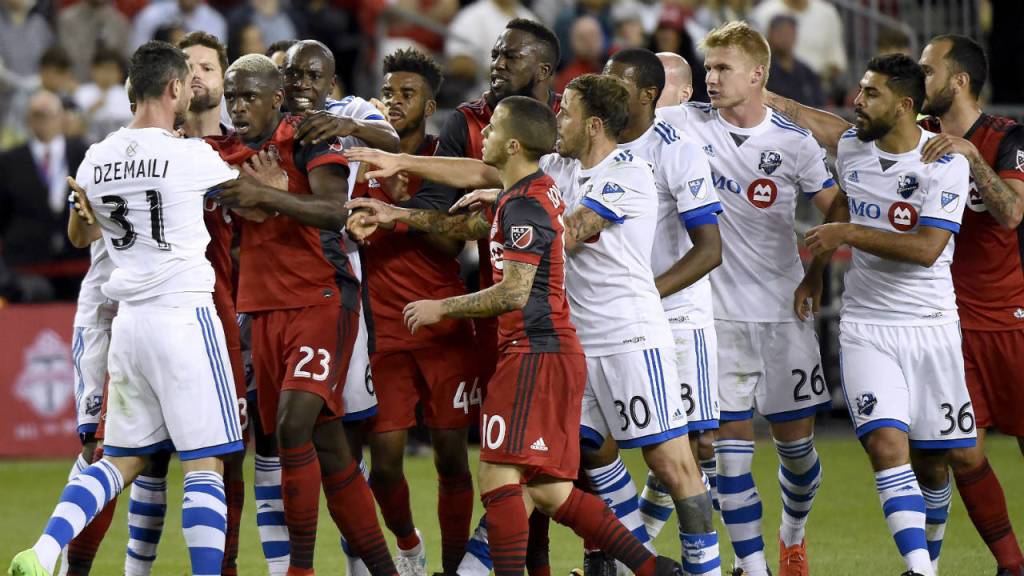
MAJOR ON-FIELD MOMENTS:
CHAMPIONSHIP BEGINNINGS
Going into the 2008 Canadian Championship, Toronto was expected to take home the trophy, despite being just two years old (and having sucked in Year 1). Their first match was against Montreal, with the Impact hosting the first ever Canadian Classique. Montreal scored the first red card of the rivalry, with Marco Velez giving Toronto the first goal of the rivalry and a 1-0 win. But Montreal would come roaring back in the standings, twice beating the Vancouver Whitecaps (who gave up just one point to Toronto in two matches). Montreal needed just a draw in its final game to secure the championship, which is what happened in Toronto. A 1-1 result saw the Impact win their seventh straight Voyageurs Cup and plant seeds for the growing rivalry.
MIRACLE IN MONTREAL
One year later, Toronto and Montreal would once again decide the Canadian Championship. Going into the showdown in Montreal, Toronto needed to win by at least four goals to snatch the title from the Vancouver Whitecaps. Montreal, meanwhile, had been eliminated. So Impact head coach Marc Dos Santos controversially decided to rest his best players against Toronto, saving them for MLS play. Needing to score a lot and facing a weakened team, Toronto absolutely went off, thrashing Montreal 6-1, with a hat trick from Dwayne De Rosario. The “Miracle in Montreal” gave Toronto its first championship, much to the chagrin of Vancouver. To make matters worse, a rested Montreal later beat Vancouver to earn home field advantage in the 2009 MLS playoffs.
MLS IMPACT
For the early years of the Canadian Classique, Toronto dominated Montreal, winning five of the first six matches (and drawing the other). This can largely be blamed on Toronto being an MLS club and Montreal not being that. However, things changed in 2012, when Montreal was given an expansion franchise. The new-look Impact did not get off to a hot start, losing four of their first five matches (and drawing the other one). But then Toronto paid a visit to Montreal for the first ever MLS Canadian Classique. Sinisa Upibaripovic put Montreal up 1-0 in the 18th minute, then (with Toronto down to ten men) James Menger doubled the lead in the 81st minute. Danny Koevermans got a goal back for Toronto, but Montreal held on to win 2-1 — the first MLS victory.
SIX IN THE CITY OF SAINTS
While Montreal won the first seven Voyageurs Cups (including the first involving Toronto), their rivals were their own streak of four straight titles going into the 2013 Canadian Championship. The two rivals were matched up in the semi-finals, where things looked like they would bounce Toronto’s way again after a 2-0 first leg win at BMO Field. But at halftime of the second leg in Montreal, things were looking a lot different. Justin Mapp and Daniele Paponi gave the hosts a 2-0 lead, before Marco Di Vaio put Montreal up 3-0 just before halftime. The Impact offense would keep firing in the second half, with three more goals propelling Montreal to the final 6-2 on aggregate. The 6-0 win remains the largest margin of victory in Canadian Classique history.
DROGBA TURNS HEEL
From 2014-15, Toronto and Montreal made a series of signings that elevated both clubs to the top of MLS (and the continent). The last of those came halfway through 2015, when Montreal brought in Chelsea legend Didier Drogba. While Drogba missed the first Canadian Classique after his arrival, he would take part in the next one, which was the regular season finale for both clubs. Though Toronto went up 1-0 just before halftime, the Impact would strike back in the second half. In the 54th minute, Drogba got on the end of a cross and flicked the ball into the net with his heel, tying the game at 1-1. Just a minute later, Drogba did it again, scoring in almost the exact same way. Drogba’s two backheel goals were enough for Montreal to win 2-1.
THE FIRST PLAYOFF BATTLE
That win in the last game of the season wasn’t only sweet for Montreal — it saw the Impact leap Toronto in the standings and take home field advantage in the postseason. To make things even juicier, the first round of the 2015 MLS playoffs would see Montreal and Toronto square off in the postseason for the first time ever. In front of a ravenous Montreal crowd, the Impact’s top stars would show up in full force. In the 18th minute, Patrice Bernier got on the end of a through ball from Ignacio Piatti, finishing it off to put Montreal in front early. Piatti would get his own goal off a defensive error by Toronto in the 33rd minute, followed by Didier Drogba getting on the end of a cross six minutes later. Montreal held on from there to win the inaugural playoff duel 3-0.
TWO LEGS OF INSANITY
Just a year after their first playoff duel, Montreal and Toronto met once again in the postseason, this time with a spot in MLS Cup 2016 on the line. What followed was two legs of absolutely brilliant, exciting, dramatic soccer. The first leg in Montreal saw the home team jump out to a 2-0 lead in just 12 minutes, later adding a third in the second half. But a late rally by Toronto made it just a 3-2 Impact win. Montreal once again went ahead first in the second leg in Toronto, though the home side would rally to hold a 2-1 lead at halftime. The two sides traded goals, with the 3-2 result meaning extra time would be needed, with aggregate being even at 5-5. Toronto scored twice in extra time to seal the 5-2 victory (7-5 on aggregate) and advance to its first MLS Cup.
CANADIAN CHAMPIONSHIP DRAMA
Toronto and Montreal have met in the Canadian Championship Final four times, with Montreal coming out on top on three occasions. Two of those deserve special mention. In 2017, things were just about as even as they could get be. After a 1-1 draw in the first leg in Montreal, the two were again tied 1-1 late in the second leg. But with extra time looming, Sebastian Giovinco got on the end of a cross, converting deep into stoppage time to give Toronto the title. Things were even closer two years later, with each of the two legs finishing 1-0 in favor of the home clubs. Not even extra time could provide a difference, with the match heading to penalties. Toronto saw two shots hit the post another saved, as Montreal stayed cool to win the title
A GREAT EIGHT
The 2017 season did not end well for Montreal. Any postseason hopes were dashed by the Impact losing nine of its last ten matches. Oddly, the one victory in that stretch was an absolute banger against a Toronto squad that would break the all-time MLS points record and win the club’s first MLS Cup. Marching into BMO Field, Montreal jumped out to a big lead early, with Ignacio Piatti scoring twice in the first 24 minutes and Marco Donadel added another in the 12th minute. A Montreal player would score again (an own goal), but the Impact would add two more intentional goals early in the second half. Tosaint Ricketts would get two back for Toronto, but Montreal hung on to win 5-3. The eight combined goals remain a Canadian Classique record.
BACK WITH A VENGEANCE
The 2020 MLS season was interrupted early on by the COVID-19 Pandemi, with no matches being held for four months. When games did return, it was during the MLS is Back Tournament, with teams being kept in a bubble at the ESPN Wide World of Sports Complex in Florida. Of course, Toronto and Montreal were drawn against each other in the group stage. More than a thousand miles from home and in front of no fans, the two rivals nonetheless went at it hard. Both teams scored in the first 12 minutes, with Toronto getting another in the 25th minute. The Impact tied the score on a penalty on the 37th minute, only for Toronto to score on the ensuing kickoff. Ayomide Akinola tallied a hat trick to power Toronto to a wild 4-3 victory over Montreal.
STUCK IN THE SUNSHINE STATE
Although things were getting better in 2021, border restrictions were being imposed by the Canadian government, meaning Canadian teams had to play what would end up being the first half of the season in the U.S. Toronto set up shop in Orlando City’s venue, while Montreal made camp in Fort Lauderdale (home of Inter Miami). Montreal would open the season at “home” in Florida against Toronto, with Mason Toye putting the “home” squad up just three minutes after kickoff. Montreal would add a second about 20 minutes later, though a successful penalty by Toronto cut the lead to 2-1 at halftime. Two second half goals by Montreal put the game out of reach, with a late Toronto goal making it a 4-2 final. Once again, no fans were allowed to attend.
STATISTICS:
HEAD-TO-HEAD RECORD
Montreal: 22
Toronto: 27
Draw: 11
LEAGUE CHAMPIONSHIPS
Montreal: 0
Toronto: 1
SUPPORTERS’ SHIELD
Montreal: 0
Toronto: 1
VOYAGEURS CUP
Montreal: 11 (record)
Toronto: 8
CANADIAN CHAMPIONSHIP
Montreal: 5
Toronto: 8 (record)

NOTABLE FIGURES:
MAURO BIELLO
While the majority of Montreal’s success in the Canadian Classique has come during the MLS era, we can’t forget the 20 years the Impact spent elsewhere. By far the greatest player of Montreal’s pre-MLS existence was Mauro Biello, who actually began his tenure with the Montreal Supra. With a record 344 appearances and 72 goals, Biello also had an impact (heh) against Toronto by being a part of the 2008 Voyageurs Cup-winning Montreal squad and later coached the MLS team from 2015-17. The Montreal native’s number 20 is retired by the club.
DWAYNE DE ROSARIO
Although Dwayne De Rosario spent a lot of his formative years elsewhere (including the San Jose Earthquakes), his heart was always back home. The Toronto native began his career at the age of 18 with the Toronto Lynx and returned to the city as a member of Toronto FC in 2009. Although De Rosario only spent a total of three seasons with the club, he still made his mark on Toronto’s history by scoring a hat trick in the “Miracle in Montreal” that saw Toronto defeat the Impact 6-1 and win the 2009 Canadian Championship. He also scored the 8,000th MLS goal.
PATRICE BERNIER
Although he spent ten years playing across Northern Europe, Patrice Bernier began and ended his career in Montreal. The Quebec native was with the Impact for two years during the A-League days, then came home once Montreal got an MLS spot in 2012. Beriner would appear in more than 150 games (second-most in the MLS era) and captained the club during its best era, including their incredible run through the 2014-14 CONCACAF Champions League. In fact, Bernier scored the first MLS playoff goal in Montreal history, when the Impact beat Toronto.
JONATHAN OSORIO
Although he may not have gotten the headlines his more famous trio of teammates received, Jonathan Osorio has nonetheless been arguably the greatest player in Toronto history. After a year with SC Toronto, Osorio jumped to Toronto’s MLS club in 2013 and has remained there ever since. During this time, Osorio has appeared in 329 matches for Toronto (the most all-time) and scored 59 goals (third-most all-time). Osorio has been a crucial part of Toronto’s biggest successes, winning the Golden Boot during the 2018 CONCACAF Champions League.
IGNACIO PIATTI
Ignacio Piatti arrived in Montreal in 2014; upon his departure five years later, he had become arguably the greatest player in the Impact’s MLS incarnation. Piatti started all six games during Montreal’s 2014-15 CONCACAF Champions League run and was a crucial member of the 2016 MLS Eastern Conference runners-up. Piatti is the all-time goal scorer for Montreal (in any era) with 78 goals and scored Montreal’s second-ever MLS playoff goal, which came against Toronto and was one of Piatti’s 11 total in the Canadian Classique (the second-most by one player).
MICHAEL BRADLEY
From 2014-15, Toronto made three signings that changed the club’s fortunes forever. The first of those was Michael Bradley, future captain of the U.S. national team and scorer of a golazo against Mexico. Bradley was named Toronto’s captain in 2015 and has held that role ever since — during his captaincy, Toronto has made three MLS Cups (winning one), made a CONCACAF Champions League Final, and claimed a Supporter’s Shield and four Canadian Championships. Bradley has the second-most appearances in Toronto history and will soon cross the 300 mark.
JOZY ALTIDORE
The second of those signings was Jozy Altidore, an American phenom who was struggling at Sunderland. After arriving in Toronto in 2015, Altidore transformed into a beast, tallying 79 goals (the second-most in club history) over a six-year span. Altidore has the third-most goals in U.S. national team history (42), but he also owns a record north of the border — the most goals scored by one player in Canadian Classique history (13). Altidore was famously denied by Stefan Frei in MLS Cup 2016, but did end up beating him a year later to win the title for Toronto.
SEBASTIAN GIOVINCO
While Michael Bradley has been the longest mainstay and Jozy Altidore scored way more and stayed almost as long, Sebastian Giovinco (the last of those signings) at his peak is probably the best and most impactful player Toronto has ever seen. In Giovinco’s first season, he won the Golden Boot and was named MLS MVP (he also scored Toronto’s first ever MLS hat trick). By the time Giovinco left Toronto three years later, Toronto had won an MLS Cup as part of a domestic treble. Giovinco’s 83 goals still rank as the most of any player in Toronto history.
DIDIER DROGBA
The most accomplished player in Montreal history is Didier Drogba, who came over in 2015 after a legendary tenure with Chelsea. Although he left in 2016 (after Montreal’s epic Eastern Conference Final duel with Toronto), Drogba still made waves for the Impact. Drogba was the first player in MLS history to score a hat trick in his first start (a perfect hat trick no less). His two goals in two minutes on the last day of the 2015 season gave Montreal a win over Toronto, as well as home field over their rivals in the playoffs (Drogba scored Montreal’s third goal).
EVAN BUSH
Evan Bush was a part of Montreal’s inaugural MLS squad in 2011 and remained with the Impact until he was somewhat controversially traded to the Vancouver Whitecaps in 2020. During this time, Bush became Montreal’s mainstay, appearing in more matches than anyone in the club’s MLS era. Bush was a key factor during Montreal’s run through the 2014-15 CONCACAF Champions League, winning the Golden Glove award, though he missed the second leg of the final (which the Impact lost) due to an extremely controversial yellow card in the first leg.
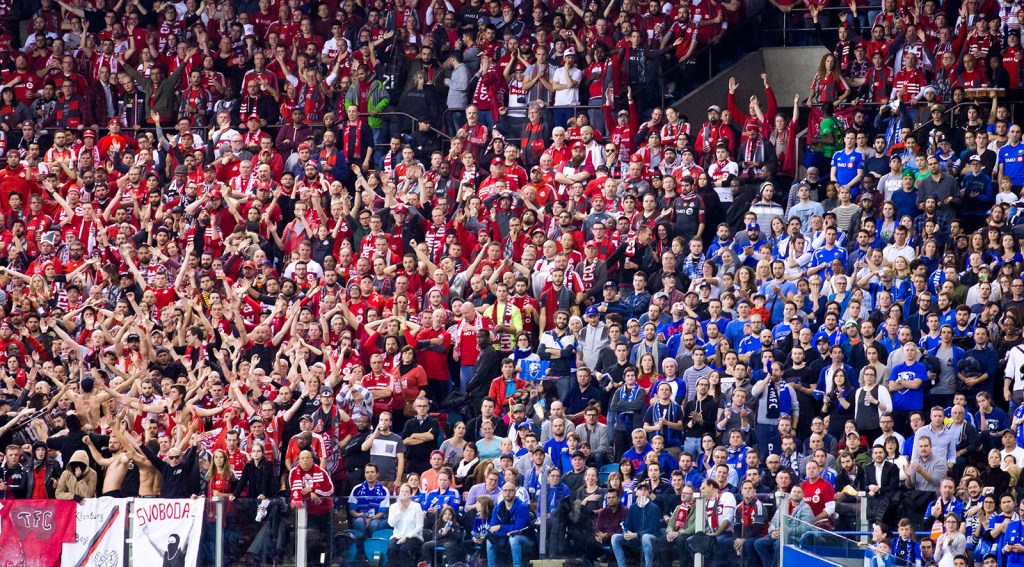
FAN INVOLVEMENT:
Although the Canadian stereotype is niceness, there have been a few controversies when Toronto and Montreal have gotten together. In 2016, Toronto supporters (and later the club itself) came under fire for this sign that was brought to a Canadian Classique. Earlier this year, Toronto permanently banned four fans after fights broke out in the stands during a match with Montreal. Although Montreal wasn’t involved in a 2018 Canadian Championship incident, Toronto’s largest fan group had its supporter status temporarily terminated for starting a fire during a match against the Ottawa Fury. But while these incidents have happened, the majority of matches between Montreal and Toronto have been more known for fans being plentiful and having plenty of passion. In 2013, Toronto fans set an MLS record for traveling support when 3,200 fans traveled to Montreal for a match. The first leg of the 2016 Eastern Conference Final in Montreal’s Olympic Stadium holds the record for largest attendance for a match between Canadian soccer clubs, with 61,004 fans packing the house. Even Montreal’s famous “North Star” bell was inaugurated during a 2015 victory against Toronto. One interesting note: while the rivalry is fueled in part by the historic hatred between Montreal and Toronto in Canada’s favorite sport (hockey), it has always seemed weird to me that Toronto’s soccer club is red (the main color of the Montreal Canadiens) and Montreal’s soccer club is blue (the main color of the Toronto Maple Leafs). I guess the colors don’t matter — the city does.
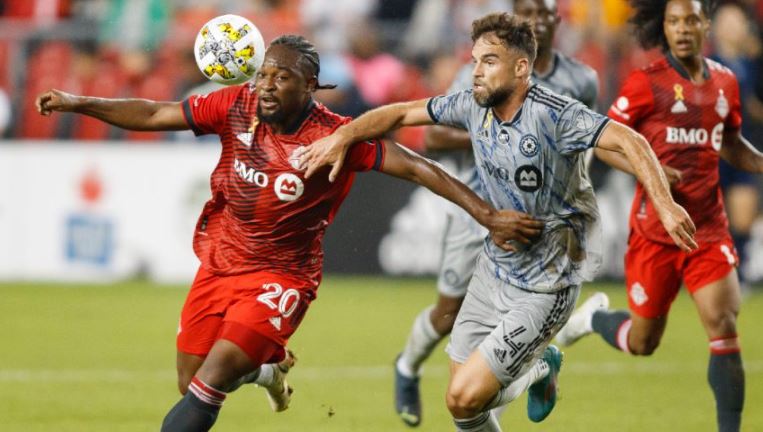
SUMMARY:
Although the rivalry between CF Montreal and Toronto FC is relatively young, the hatred between their cities is ancient, deep, and plentiful. It’s this long-rooted animosity that has propelled the Canadian Classique to the upper echelon of MLS rivalries and brought it to the brink of making the World Cup of Hate.
So, we have North/Central America’s playoff representative. What about Asia? Well, there are plenty of options to choose from. But incredibly, this rivalry won’t come from arguably the two biggest countries remaining: China and Japan. China has several rivalries to choose from, between clubs based in Beijing, clubs based in Shanghai, and of course the National Derby between Beijing Guoan and Shanghai Shenhua. But as a whole, none of them truly stand out and Chinese soccer is kind of terrible in general. As for Japan, those clubs rank among the best in Asia and take part in several big rivalries (most notably the Osaka Derby between Gamba Osaka and Cerezo Osaka). However, the overall youth of Japanese club soccer — compared to the rest of Asia — hurts Japan too much. The lack of consistent play between rivals (due to frequent promotion and relegation) doesn’t help, nor does the fact that the overall level of hatred and fan animosity would probably be the weakest in the tournament. Lebanon’s Beirut Derby (Nejmeh vs. Ansar), Jordan’s Amman Derby (Al-Faisalyy vs. Al-Wehdat), and Iraq’s various Baghdad Derbies were some of the top contenders for the playoff spot. But in the end, I had to go with the top rivalry from another country, one that’s made plenty of unexpected (and as a whole unwelcome) noise in soccer recently.
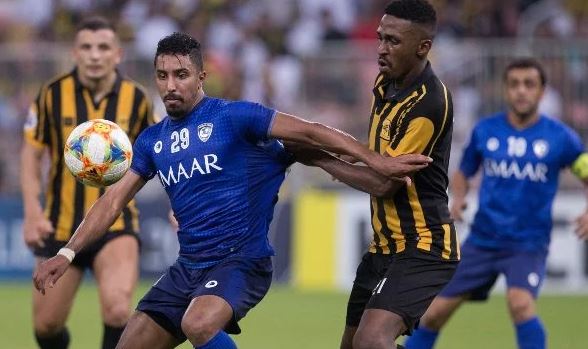
Saudi Clasico (Saudi Clasico)
Al-Hilal Saudi Football Club vs. Al-Ittihad Saudi Arabian Club
“Few fixtures in Arab football are as big as the Saudi Classico.” — John Duerden, international soccer reporter
While there are several great rivalries in soccer-mad Saudi Arabia, only one bears the same name as one of the biggest in the world. Every Saudi Clasico sees Al-Hilal SFC and All-Ittihad Club add another chapter to their heated rivalry.
Largely hidden from the world due to various socioeconomic and political issues (and basically everything controversial the country does), Saudi Arabia’s soccer scene is one of the best in all of Asia. Several clubs have achieved international success, with the country being a popular place to transfer to for aspiring Asian and African players. This breeds competition, resulting in a country with three truly great rivalries. The Riyadh Derby brings the two best capital city clubs — Al-Hilal and Al-Nassr — into conflict, while the Jeddah Derby (also known as the Derby of the Mermaid) between Al-Ittihad and Al-Ahli is the longest top flight derby in all of Saudi Arabia. But I went with the one that takes one club from each of those rivalries to form a hatred that calls upon the rivalry between Riyadh and Jeddah and pairs that animosity with a battle for success.
One note that must be made before we get into this rivalry. In recent years, the Saudi Arabian government has been actively spending billions of dollars to improve its image worldwide and draw in tourists. This has largely been seen in sports, most notably with its deal with World Wrestling Entertainment to host several major events in Saudi Arabia, as well as LIV Golf and what can essentially be called its takeover of the PGA Tour. All of this has been branded by a lot of the world as “sportswashing” — an attempt to distract the public from Saudi Arabia’s historic corruption and human rights abuses (most notably the assassination of journalist Jamal Khashoggi) by spending a metric fuck ton of money. Soccer has not been excluded from this practice, with Saudi clubs spending absurd amounts of money to sign top stars, such as Al Nassr signing Cristiano Ronaldo for 200M Euros per year. Recently, Jordan Henderson (who has famously championed gay rights — homosexuality is illegal in Saudi Arabia) has gotten heaping amounts of shit for leaving Liverpool to sign with Al-Ettifaq (who just hired Liverpool great Steven Gerrard as manager) for nearly 700K Euros a week. The two clubs in this rivalry have also made their cash grabs for international stars — Al-Hilal recently signed Kalidou Koulibaly and Ruben Neves (and also goddamn Neymar), while Al-Ittihad has added Karim Benzema and N’Golo Kante. While the debate over the morality and legality of these kinds of moves (both for the clubs making them and the players agreeing to them) continues, this has not impacted the decision to have the Saudi Clasico in this spot nor will it impact its chances of making the World Cup of Hate. For one, these years represent a vast minority of the total length of the rivalry and in fact have not really had an impact at all. Also, it would be a shame to negate the impact of the players that have come before all of this controversy and the everyday passionate fans in Saudi Arabia who make this rivalry special.
HISTORY:
Saudi Arabia as we know it — the third Saudi state — was declared in 1932. Five years before that, a group of notable soccer enthusiasts in Jeddah met in a radio broadcasting company office to form a soccer club to compete with visiting teams, provide entertainment, and be an outlet for the youth to practice the sport. Hoping to unite the city, they decided to call their club Ittihad Jeddah, with the first word meaning “union”/”united.” Given the fact that they were the first club in Jeddah and all of Saudi Arabia’s soccer competition was regional at the time, it took a while before the club — which was soon renamed Al-Ittihad — could find some regular games. Even then, it would be even longer before the first national tournament — the King’s Cup — was formed in 1957. Al-Ittihad quickly established itself as one of the best clubs in the entire county by winning three King’s Cups in a row from 1958-60. Their streak was suddenly interrupted by another club in 1961 — that club would provide a source of contention for decades to come.
The same year Saudi Arabia’s first ever national soccer competition was founded, so was the club that would go on to be the most successful in the country’s history. Founded by Abdul Rahman bin Saad ben Saeed, Olympic Club was formed as a way to get in on the soccer scene in the capital city of Riyadh. Just a year later, the club took part in a local tournament, with King Saud (the ruler of the country) in attendance. Impressed by their play, he suggested the club rename itself Al-Hilal, the name for the crescent moon that marks the beginning of a new month in the Islamic calendar. The change (and endorsement) established Al-Hilal with a support group from the upper class/elite, in contrast with Al-Ittihad. In just a few years, Al-Hilal would claim its first piece of silverware — the 1961 King’s Cup — redeeming itself from the previous tournament. That edition saw the first ever Saudi Clasico — a 3-0 Al-Ittihad win.
From there, the rivalry of success began. Al-Hilal was back in the King’s Cup Final in 1963, though it would be Al-Ittihad who would claim the crown. Just a year later, the two clubs met for a rematch, with Al-Hilal coming out on top this time on penalties. Al-Ittihad would claim a fifth King’s Cup in 1967 before both clubs experienced a bit of a drought (largely due to another Jeddah club, Al-Ahli, going apeshit in the tournament for years). Apart from this tournament and the Crown Prince Cup (which Al-Ittihad won three times, compared to one for Al-Hilal), the two clubs largely didn’t have anything to show in terms of competition or hardware for years. That changed in 1976, with the creation of the Saudi Professional League, which didn’t come without difficulty. Four times before it had been attempted, with only once (in 1969) seeing it actually be completed, albeit on not as grand a scale. In 1974-75, the Categorization League was held to determine who would play in the top division and who would be in the second division (Al-Hilal lost the final to Al-Nassr, who just edged out Al-Ittihad). The league was supposed to begin in 1975, but the assassination of King Faisal canceled all sports for the year. But in 1976, things were finally ready, with Al-Ittihad and Al-Hilal among the inaugural league members.
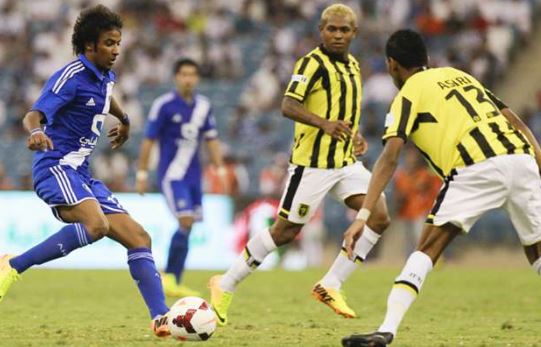
While Al-Ittihad managed to take the first ever league Saudi Clasico, it was Al-Hilal who claimed the first ever Saudi Professional League title. Both sides managed to hold their own at home, with the first nine league derbies ending in a 3-3-3 record. But Al-Hilal was pretty much the only one snagging trophies. A second league title arrived in 1979, followed by the end of Al-Hilal’s King’s Cup drought in 1980. Al-Ittihad managed to get its first league title in 1982, but it would be a while before the next piece of silverware. As for Al-Hilal, more trophies would continue to follow — four league titles from 1985-90 and three King’s Cup crowns from 1982-90. By that point, there was another competition to win. After a 13-year hiatus, the AFC Champions League had returned, with Al-Hilal’s league titles earning them shots at continental glory. But instead of glory, the 1980’s Al-Hilal squads became the 1990’s Buffalo Bills of Asian soccer. Three straight trips to the final resulted in — in order — a 3-1 defeat to the Daewoo Royals, a second place final group finish to Furukawa Electric, and a forced withdrawal against Yomiuri FC due to not having enough players for the first leg (due to national team commitments).
To make matters worse, Al-Ittihad actually had won a trophy, breaking their King’s Cup drought in 1988. But then everyone went on a lengthy King’s Cup drought — the tournament was straight up canceled from 1991-2008. Fortunately, the Crown Prince Cup had returned from a 16-year absence of its own, with Al-Ittihad claiming the first edition of the renewed tournament in 1991. Unfortunately for Al-Ittihad, Al-Hilal had won something a bit more important that same year. Al-Hilal had finally gotten over the Champions League hump, taking out defending champ Esteghlal in the other 1991 final. Between the league titles (two more in 1996 and 1998) and domestic tournaments (two Crown Prince Cups in 1995 and 2000), Al-Hilal had established itself as the winningest soccer club in Saudi Arabia. That was punctuated with two Asian Cup Winners’ Cups in 1997 and 2002, as well as a second Champions League triumph (thanks to Sergio Ricardo’s legendary hat trick) in 2000. But just when it seemed like Al-Hilal was running away with rivalry bragging rights, Al-Ittihad entered its golden age.
From 1997-2003, Al-Ittihad wreaked havoc on the Saudi Professional League, winning five titles and closing the gap with Al-Hilal. They also closed the continental gap thanks to a legendary performance in the 2004 Champions League Final against Seongnam Ilhwa Chunma. After losing the first leg 1-3 in Jeddah, Al-Ittihad incredibly won the second leg in South Korea by a whopping 5-0, the largest deficit ever overturned in the AFC Champions League. Al-Ittihad carried that momentum the following year all the way through a 5-3 aggregate win over Al Ain in the 2005 Final, becoming one of the few clubs to win consecutive champions leagues. Al-Ittihad even made it to the 2009 Final, taking out Al-Hilal on the way. The past decade has seen Al-Hilal reassert itself as the premier Saudi club, with Al-Ittihad going from 2010-22 without a league title and Al-Hilal winning a few more during that span. Al-Hilal has also made history as the only club to win four AFC Champions League titles, adding a third crown in 2019 (while taking out Al-Ittihad along the way) and a fourth in 2021. In addition, Al-Hilal played (but lost) two finals in 2022 — the AFC Champions League (losing to the Urawa Red Diamonds) and FIFA Club World Cup (losing to Real Madrid). But the huge leap forward All-Ittihad made at the turn of the century established itself as one of the premier clubs, always standing in the way of their rivals’ quest for trophies, even if their financial troubles threaten their future.
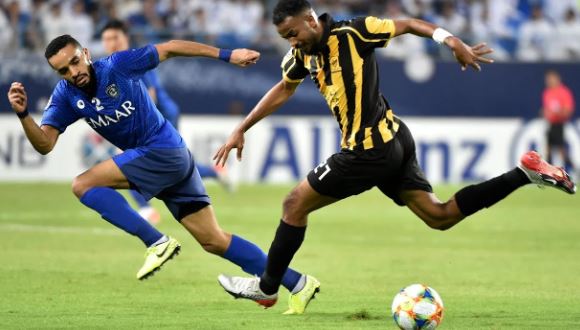
MAJOR ON-FIELD MOMENTS:
ALL OF THE GODDAMN PENALTIES
Penalties have been no stranger to the Saudi Clasico, especially considering one of the first tournament matches between Al-Hilal and Al-Ittihad (a 1979 King’s Cup Round of 16 clash) ended with nearly 20 penalties converted after a 2-2 draw. From 1991-2001, the two rivals met six times in the Crown Prince Cup semi-finals. Only twice did the match not go to penalties (interestingly all were Al-Hilal wins). While a 4-1 Al-Ittihad penalty win in 1997 and a 4-1 Al-Ittihad win in 1993 (both after scoreless draws) were notable on their own, that ten-year period was sandwiched by two encounters were Al-Ittihad emerged victorious by a penalty shootout count of 8-7, which is insane. Bet on penalties if these two meet in a domestic tournament.
BATTLE FOR THE LEAGUE TITLE
The mid 1990’s and 2000’s were basically Al-Hilal and Al-Ittihad fighting each other for the Saudi Professional League title. From 1996-2011, all but two league crowns were won by the rivals, including stretches of eight consecutive years and five consecutive years. It was in the middle of that second stretch that saw the closest battle yet. Defending champion Al-Hilal was trailing Al-Ittihad by just two points going into the final match of the season, which just happened to be the Saudi Clasico. But instead it was Al-Ittihad who jumped out to an early lead thanks to Naif Hazazi. Al-Hilal managed to strike back, but shortly after another goal gave Al-Ittihad a bit of a cushion. Al-Ittihad would survive a late Al-Hilal rally to earn a 2-1 victory and get the title back.
WHAT DID THE FIVE FINGERS SAY TO THE FACE?
Considering the relatively small amount of goals scored when these two clubs get together, especially in recent years, it’s shocking that the most lopsided result in Saudi Clasico history came in 2009. The very next derby after Al-Ittihad won the league over Al-Hilal on the final day, Al-Hilal got their revenge — and then some. Christian Wilhelmsson opened the scoring just seven minutes into the match before Thiago Neves made it 2-0 37 minutes in. The match went from a nice Al-Hilal advantage to a rout within three minutes, as Neves capped off a rare derby hat trick with goals in the 55th and 58th minutes. Wilhelmsson added a final goal in the 84th minute and Al-Hilal walked out with a whopping 5-0 win, much to the delight of the home crowd.
FIGHTING TO END THE CUP DROUGHT
From 1991-2007, the King’s Cup was not held for some reason, with focus turning to the Crown Prince Cup instead. But in 2008, the competition was revived, giving each team a chance to end long years without adding to their collection. Al-Hilal and Al-Ittihad, two of the last three winners before its hiatus, were eager to get it back in 2010. Al-Hilal scored 14 goals across four quarter-final and semi-final matches, while Al-Ittihad put four by both Al-Hazm and two-time defending champ Al-Shabab. But in the final, both teams forgot how to score, with the game finishing scoreless after extra time. Both were perfect through their first four penalties before Mohammed Noor finished his chance, while Ahmed Al-Fraidi didn’t, to give Al-Ittihad the win.
CHAMPIONS LEAGUE CLASHES
Twice in the past decade, Al-Hilal and Al-Ittihad have stood in each other’s way of making deep runs in the AFC Champions League. In 2011, the two met in the Round of 16, with Al-Ittihad as the higher seed. Taking advantage of playing in front of the Jeddah faithful, Al-Ittihad scored twice in the first 20 minutes and held on for a 3-1 win — before bowing out in the semi-finals. Eight years later, the two rivals met in the quarter-finals, which was this time a two-legged affair. After a scoreless first leg in Jeddah, Al-Hilal turned it up in Riyadh to the tune of a 3-1 victory. This, despite Al-Ittihda taking a 1-0 lead just ten minutes into the match. Al-Hilal would ride the momentum gained from the win and break their nearly 20-year Champions League drought.
A SUPER TRIP TO LONDON
In 2018, the Saudi Clasico added a unique chapter to its history, one written thousands of miles from Saudi Arabia. That year, for the first time in the small life span of the Saudi Super Cup, Al-Ittihad and Al-Hilal had qualified to face each other, with the former winning the King’s Cup and the latter winning the Saudi Professional League. Interestingly, this matchup should’ve been played the year before, although Saudi Arabia’s national team coach requested it be canceled to help the squad prepare for the 2018 FIFA World Cup. But this time it did happen, albeit in London of all places (trying to grow Saudi Arabia’s presence, I guess?). Anyway, Al-Hilal came out on top, surviving a late comeback attempt by Al-Ittihad to hold on for a close 2-1 victory.
STATISTICS:
HEAD-TO-HEAD RECORD
Hilal: 69
Ittihad: 47
Draw: 50
LEAGUE CHAMPIONSHIPS
Hilal: 18 (record)
Ittihad: 9
KING’S CUP
Hilal: 10 (record)
Ittihad: 9
CROWN PRINCE CUP
Hilal: 13 (record)
Ittihad: 8
SUPER CUP
Hilal: 3 (record)
Ittihad: 1
AFC CHAMPIONS LEAGUE
Hilal: 4 (record)
Ittihad: 2
ASIAN SUPER CUP
Hilal: 2 (record)
Ittihad: 0
ASIAN CUP WINNERS’ CUP
Hilal: 2 (record)
Ittihad: 1
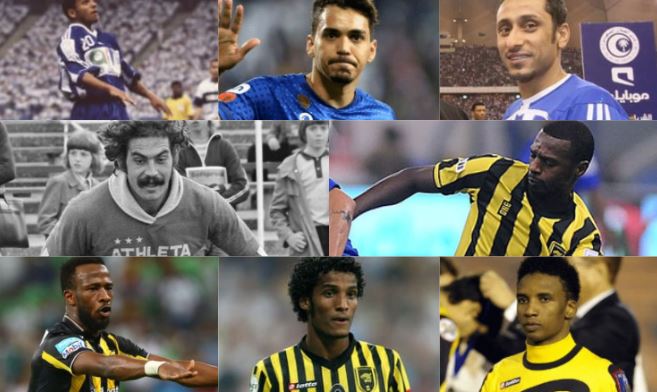
NOTABLE FIGURES:
RIVELLINO
Although he only spent three years with Al-Hilal, Rivellino’s mere presence on the roster was enough to etch his name in history. Rivellino burst into stardom during Brazil’s 1970 FIFA World Cup win, with his fabulous moves (most importantly the Flip Flap/Elastico), long hair and huge mustache making him a huge figure. So when he decided to spent the last few years of his career in Saudi Arabia, Rivellino brought a huge amount of legitimacy to the league. Rather, he was attracted by the huge amounts of Saudi money — but let’s stick with the nice narrative.
SERGIO RICARDO
Sergio Ricardo Messias Nevas joined Al-Hilal in 1999 and immediately made an impact. In the 2000 AFC Champions League Final, Sergio got Al-Hilal on the board just three minutes in and — with his club down 2-1 — tied the game with two minutes remaining. Than in the 102nd minute, Sergio won the tournament with a golden goal, completing a legendary hat trick. But while that performance earned him a lot of love within Al-Hilal, he soon shocked the fans and moved to Al-Ittihad, helping their arch rivals win back-to-back Champions League titles in 2004 and 2005.
SAMI AL-JABER
Widely regarded as one of the greatest Saudi players ever, Sami Al-Jaber is probably the most iconic player in Al-Hilal’s history. Aside from two brief loans — including one to Wolverhampton Wanderers — Al-Jaber spent his entire 18-year career with Al-Hilal, finishing as the club’s all-time leader in appearances (448) and goals (214). Al-Jaber also has the second-most goals (46) and third-most appearances (156) for Saudi Arabia’s national team. After retirement, Al-Jaber began his managerial career as an Al-Hilal assistant, taking the lead from 2013-14.
MOHAMMED NOOR
Al-Ittihad’s answer to Sami Al-Jaber, Mohammed Noor is considered one of the best Asian soccer players ever due to his ball distribution, speed, and dribbling. Joining All-Ittihad in 1993, Noor spent more than 20 years in Jeddah, finishing as the club’s all-time leader in goals (124) and games played (355). After two decades playing for Al-Ittihad, Noor briefly went to Al-Nassr due to financial problems at his old club. But Noor quickly returned to finish out his last years in Jeddah. Noor also had a lengthy — if not successful — tenure with the Saudi national team.
SAUD KARIRI
One of the great 2000’s Al-Ittihad players who also achieved stardom with the Saudi Arabia national team, Saud Kariri ranks in the Top 10 regarding caps among his fellow countrymen. After breaking out with Al-Qadisiyah, Kariri moved to Al-Ittihad, where he spent the next ten years patrolling the defensive midfield and anchoring a club that won back-to-back AFC Champions League titles. It was therefore fairly shocking to see Kariri move from Al-Ittihad to Al-Hilal in 2013, a move that definitely caused some resentment in Jeddah that still hasn’t left.
NAIF HAZAZI
Nicknamed “Al Saqr” (“The Falcon”), Naif Hazazi helped Al-Ittihad fly high during his time with the club. Al-Ittihad recognized the Jeddah native’s speed and skill early on during his time on their youth team, moving up to the senior team and proving to be even more dangerous with his head than with his legs. One of Hazazi’s most famous goals came at the very end of the 2009 season, when he helped Al-Ittihad top Al-Hilal to clinch the league title. Along with Mohammed Noor and Saud Kariri, Hazazi left Al-Ittihad after the 2013 season due to financial difficulties.
CARLOS EDUARDO
Carlos Eduardo de Oliveira Alves may have only spent five years with Al-Hilal, but he made the most of them. While he didn’t play in the final, Eduardo was a key contributor during Al-Hilal’s run to the 2019 Champions League title — the club’s first in 19 years. But for the purposes of this rivalry, what really earns Eduardo his spot is his eight goals scored against Al-Ittihad. Not only is that the most by someone from Al-Hilal, but also the most by anyone in the history of the Saudi Clasico. While the number isn’t that high, the fact it was reached in five years is nice.
FAHAD AL-MUWALLAD
Fahad Al-Muwallad made his debut for Al-Ittihad at the ripe young age of 16, and in the ten years since has become one of the club’s best, most iconic players. Just a year after his debut, Al-Muwallad scored a late goal against Guangzhou Evergrande to secure Al-Ittihad a spot in the Champions League semi-finals, proving his clutchness early. Perhaps more importantly, Al-Muwallad scored the goal that sent Saudi Arabia to the 2018 FIFA World Cup. Still with a few years before he turns to, the lightning quick Al-Muwallad has plenty of time to finish his legacy.
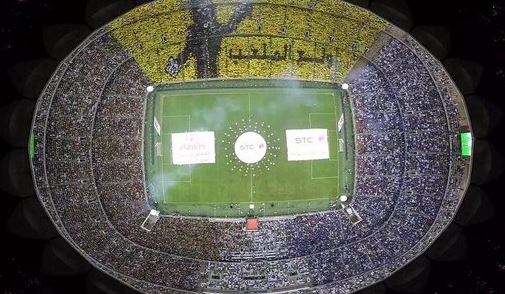
FAN INVOLVEMENT:
Every time Al-Hilal and Al-Ittihad take the field, tens of thousands of fans pack the stadium to cheer on their clubs. Take a look at the picture above. Look at how the crowds are separated by color, particularly the blue and yellow chunks. If you take a close look, there’s a clear separation on the top right — that’s the space Al-Ittihad and Al-Hilal fans have to be given between each other so they won’t fuck each other up at the first chance they get. Also, if you’re doubting the passion of these fans just because they’re in Saudi Arabia, take another look at the yellow chunk at the top. That’s a massive, extremely well-done tifo put together by the Al-Ittihad fans — that’s just one example (here’s another) of that fan base’s particular cleverness.

SUMMARY:
The Saudi Clasico stands out among a class of derbies in Saudi Arabia — one of the low key soccer fan hotbeds in the entire world. The fierce rivalry between Al-Hilal and Al-Ittihad is a battle for bragging rights, silverware, and pride.
With 33 club soccer rivalries now thoroughly highlighted and examined, it’s time to narrow that total to the final 32. From now on, it’s all about comparing these historic, hate-filled sporting contests. The rivalries will be compared based on eleven categories deemed relevant to define just how great they are. Each rivalry will receive a point for each category they win, with both rivalries getting points in the event of a tie. At the end, the rivalry with the most points will move on. If there’s a tie, I will ultimately make a judgement call to determine a winner (hey, it’s my list and my project, after all).
The first two to face off: the Great White North and the Desert.
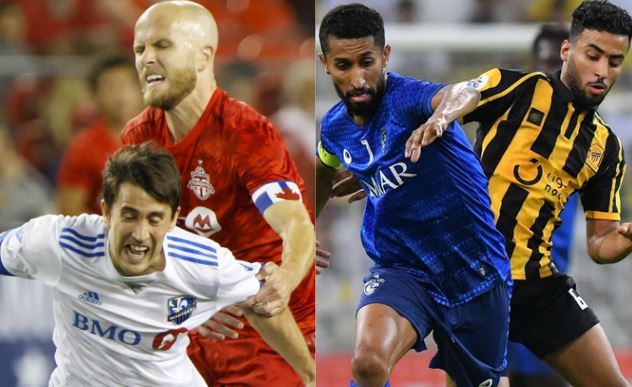
CANADIAN CLASSIQUE (CANADA) VS. SAUDI CLASICO (SAUDI ARABIA)
LENGTH
Although age isn’t the biggest factor in the importance of a rivalry by any means, it’s still impressive the longer two teams have hated each other. Although the two cities have not liked each other for centuries, when it comes to Toronto FC and CF Montreal, they specifically have only faced off since 2008 (though the argument can be made that things started a bit earlier during MLS expansion talks). Regardless, Al-Hilal and Al-Ittihad have been playing for much longer than that, first facing off in 1962 and having regular league competitions against each other when pro clubs in Montreal and Toronto were just starting to play in general.
WINNER: SAUDI CLASICO
ROOTS OF THE RIVALRY
Both rivalries stem from rivalries between two cities, meaning any sporting matchup between those areas is already heated. Despite being Canada’s two biggest and most popular cities, Toronto and Montreal could not be more diametrically opposed, in terms of culture, politics, values, and even the language people speak. Riyadh and Jeddah are the two largest cities in Saudi Arabia, with the former being the country’s financial and political center and the latter being a more ancient city connected to religion. The classic dueling city derby formula always works and both rivalries have excellent cases to claim this section. However, the edge goes to Canada for (in my opinion) having a slightly more drastic difference, as well as a secret weapon: the foundation of hatred laid by the Montreal Canadiens-Toronto Maple Leafs rivalry.
WINNER: CANADIAN CLASSIQUE
COMPETITIVENESS
Statistically speaking, the best way to show just how competitive a rivalry can be is to look at the all-time win/loss record in matches against each other. If one team has fewer wins than draws, that’s not a good indicator of competitiveness. That’s the case for Al-Ittihad, who (at this time of writing) has 47 wins against Al-Hilal, compared to 50 draws. Al-Hilal, meanwhile, has 69 wins against Al-Ittihad. Most of that disparity comes in league play, where Al-Hilal has a nearly 20-win lead. In fact, when Al-Ittihad hosts Al-Hilal, Al-Hilal is more likely to win. The same is even more true if the hosts are reversed. As for Toronto and Montreal, the two clubs are much closer in total wins (27 to 21, respectively) and have only drawn 11 times. In addition, both clubs are actually even in wins in MLS matches, with Toronto only scoring three more goals. Toronto’s win disparity can almost entirely be explained by the Canadian Championship and Montreal not being in MLS for the first six matchups of the rivalry. There are a lot more unknowns with each Canadian matchup than the ones in Saudi Arabia.
WINNER: CANADIAN CLASSIQUE
MEMORABLE MOMENTS
Both Al-Ittihad and Al-Hilal and Toronto and Montreal have faced each other in tournament finals, dramatic penalty shootouts, and other memorable league moments. But when I think of the most memorable moment in either of these two rivalries, every time I go to the incredible 2016 MLS Eastern Conference Finals. Those two legs might be the most entertaining soccer I’ve ever seen. Throwing a 6-1 win to clinch a trophy and a 6-0 result just to say “fuck you” and Toronto and Montreal have also seen higher goal differences in these memorable moments. Al-Hilal and Al-Ittihad have combined to create an incredibly solid body of work, with plenty of big moments between them. But there’s not a huge, iconic moment you can whip out to win an argument. That’s what the 2016 two-legged duel does.
WINNER: CANADIAN CLASSIQUE
SHITHOUSERY
To make a rivalry truly great, there’s gotta be a little bullshit thrown in — something over the top, violent, obtuse, or otherwise petty that you only put out there just to say “fuck you.” To be honest, Canada and Saudi Arabia don’t really seem like the kind of countries to embrace this, unless it’s unintentionally (the former) or ironically (the latter). We will get to some truly insane moments, just not in this matchup.
WINNER: EVEN
COMBINED SUCCESS
Although Toronto and Montreal have been around for a lot less time than Al-Hilal and Al-Ittihad, they’ve still had their shots at taking home some silverware (besides the Voyageurs Cup, which is basically a three-way coin toss between both clubs and Vancouver). Each club has come up short almost each time. Both Montreal and Toronto have made it to just one CONCACAF Champions League (losing those contests) and have won just one MLS Cup and Supporters Shield each combined. Hell, Toronto and Montreal have only three MLS playoff matchups in their history. Meanwhile, Al-Itt-had and Al-Hilal have faced off three times in the AFC Champions League during that same span — just about a third of their total matchups. The two have also dominated their league, actually won some competitive domestic tournaments, and claimed their continental crown a combined 16 times. This one is no contest.
WINNER: SAUDI CLASICO
STAR POWER
Timing is everything for this one. Although Al-Hilal and Al-Ittihad have seen their fair share of star talent — most notably Rivellino — most of those players did their thing before the true modern era of soccer. In addition, the Saudi club’s newest signees (Karim Benzema, N’Golo Kante, Ruben Neves, Kalidou Koulibaly) haven’t yet made an impact on the rivalry. Conversely, the Canadian clubs’ biggest stars not only came just a few years ago, but also directly helped propel the rivalry to new heights. While the likes of Michael Bradley, Ignacio Piatti, and Sebastian Giovinco maybe can’t quite measure up to Rivellino, Didier Drogba certainly can. Throw in Thierry Henry’s tenure as Montreal’s manager and the star power — combined with the overall significance for them and Toronto — outshine the others.
WINNER: CANADIAN CLASSIQUE
FAN SHENANIGANS
Whichever rivalry wins this matchup will have a hell of a time struggling to compete with the other rivalries in this category. While none of these rivalries lack any fan power and passion, those two factors alone are the basic level of support. A fantastic atmosphere is a minimum requirement for these kinds of matches. Whether it be a lack of overall media coverage on fan violence or fans simply not being stupid, the incidents are few and far between. While most of these shenanigans have been done by Montreal and Toronto fans, they’re not nearly enough to decisively win these contests. While Al-Hilal and (in particular) Al-Ittihad fans have impressed more when it comes to atmosphere and creativity (and fucking amazing tifos), that’s not enough to steal the category. I simply don’t feel strongly one way or the other here.
WINNER: EVEN
THE PEAK
When it comes to finding the best ever point in the rivalry, which matters most — how long that stretch lasts or how high the peak gets? For Toronto and Montreal, length is not their strength, but height definitely is. From 2015-18, both Toronto and Montreal could make an argument of being not just among the Top 5 clubs in MLS, but in all of North/Central America. That two-year stretch (which saw the arrivals of Jozy Altidore, Sebastian Giovinco, and Didier Drogba to add great star power) included CONCACAF Champions League Final appearance from both clubs, three MLS Cup Finals (and one victory), all three playoff matchups between Montreal and Toronto, and arguably the best two-legged playoff series in MLS history. While they arguably may not have had as high of a high point, Al-Hilal and Al-Ittihad had a combined stretch of dominance five times as long. From 1995-2005, the two rivals met six times in the Crown Prince Cup semi-finals, twice going to penalties. There was only one AFC Champions League matchup in that time, but when it comes to the overall competition, Al-Hilal and Al-Ittihad each won it twice (to go with nine Saudi League titles — including eight in a row). During most of those years, whoever didn’t win the league finished second, with league matches in general being extremely compettiive. That kind of evenness combined with length and silverware more than makes up for perhaps not hitting the exact rivalry height during a shorter stretch.
WINNER: SAUDI CLASICO
CURRENT STATUS
After years of either Toronto dominance or even play, Montreal is in the middle of its first stretch of being the clear favorite, having won four matches in a row against Toronto (and seven of the past nine). When it comes to overall quality, Montreal has followed up a regular season Eastern Conference runner-up finish last year with a campaign that has them fighting for a playoff spot this year. However, Toronto is straight up ass and has been trash for the past three seasons. Meanwhile, although many argue that blood money and a lack of morals are the reason behind new interest in Saudi Arabian soccer, there is nonetheless a buzz going into the season. Al-Ittihad actually won the most recent league championship and Al-Hilal is competing for AFC Champions League titles. Both clubs have also spent and spent to upgrade their rosters, with the next season seeing a re-tooled and re-worked lineups. Although league play has been in favor of Al-Hilal lately, Al-Ittihad is still at least good. More wins = more hype.
WINNER: SAUDI CLASICO
LEVEL OF HATRED
Although each of the four clubs in these two rivalries have other opponents they hate as well (Vancouver, Seattle, Al-Nassr, Al-Ahli), their hatred is mainly reserved for their “classic” opponents. As mentioned earlier, both rivalries have roots in the overall hatred between the cities involved (Riyadh/Jeddah and Montreal/Toronto), so any competition between representatives of those regions will automatically be heated. However, one of these rivalries has an X-Factor, another rivalry where that previous point has been thoroughly proven. That, of course, is the rivalry between the Toronto Maple Leafs and Montreal Canadiens. Those two have been facing off for more than a century and fans of each have immense hatred of the rival team and fan base. Despite existing for nearly 100 years less than the hockey rivalry, the soccer rivalry between Montreal and Toronto has already been positively compared to Canadiens-Leafs in terms of intensity and hatred. It’s another reason for people in one city to despise the other. That’s enough to decide this category.
WINNER: CANADIAN CLASSIQUE
TOTAL: CANADIAN CLASSIQUE WINS 7-6
The first battle was also the first banger of a competition, with the Canadian Classique sneaking out a win over the Saudi Clasico to secure the final spot in the World Cup of Hate. With that, the field is finally set. Here are the 32 contenders
NORTH/CENTRAL AMERICA (4):
America-Guadalajara (El Super Clasico)
Portland-Seattle (Cascadia Cup)
San Jose-LA Galaxy (California Clasico)
Toronto-Montreal (Canadian Classique)
EUROPE (13):
Barcelona-Real Madrid (El Clasico)
Celtic-Rangers (The Old Firm)
Inter Milan-AC Milan (Derby della Madonnina)
Roma-Lazio (Derby della Capitale)
Manchester United-Liverpool (North West Derby)
Olympiakos-Panathinaikos (Derby of the Eternal Enemies)
Borussia Dortmund-Schalke (Revierderby)
Galatasaray-Fenerbahce (The Intercontinental Derby)
Red Star-Partizan (Eternal Derby)
Arsenal-Tottenham (North London Derby)
Marseille-PSG (Le Classique)
Benfica-Sporting (Derby de Lisboa)
Ajax-Feyenoord (De Klassieker)
AFRICA (5):
Al Ahly-Zamalek (Cairo Derby)
Raja-Wydad (Casablanca Derby)
Pirates-Chiefs (Soweto Derby)
Yanga-Simba (Dar es Salaam Derby)
Esperance-Africain (Tunis Derby)
ASIA (4):
Bagan-Bengal (Kolkata Derby)
Esteghal-Persepolis (Tehran Derby)
Persib-Persija (Old Indonesia Derby)
Seoul-Suwon (Super Match)
SOUTH AMERICA (5):
River Plate-Boca Juniors (Superclasico)
Nacional-Penarol (Uruguayan Clasico)
Corinthians-Palmeiras (Paulista Derby)
Alianza-Universitario (Peruvian Clasico)
Internacional-Gremio (Grenal)
OCEANA (1):
Sydney-Western Sydney (Sydney Derby)
Now, it’s time to divide these 32 rivalries apart. Just like the FIFA World Cup, the group stage will consist of eight groups of four, with the top two advancing to the knockout stage. Looking at the way the World Cup of Hate field is distributed, the actual World Cup field that’s most similar is the 2014 edition, with nearly the same exact distribution. The only difference is that South America had six spots in real life and Oceania missed out. This means I just have to give the Sydney Derby the A1 spot reserved for the host and we can simulate the draw as normal. Each rivalry will take the place of a country from the same federation that made it in 2014, with the designations made at random. Let’s see what the groups are — in the next chapter.
This is gonna be a fun one to break down.
COMING UP IN PART 13: The group stage gets underway.
 Ruben's Writings
Leave a comment