Last time, we went into detail on the biggest rivalry in Mexico, the biggest soccer nation in North/Central America. The Clasico Nacional set a hell of a bar — a rivalry so fierce it unquestionably tops others that would probably make the final tournament had they been in most other countries. So what can the United States provide that justifiably deserves to be up there with Chivas-America in terms of classic rivalries.
Despite the overall lack of prestige (especially internationally) when it comes to the sport, the U.S. is still the second-best soccer-playing country in the region by a country mile. Thus, anything that takes place in the country and its top league — Major League Soccer — carries big weight in the region, just like in Mexico and Liga MX. While the Super Clasico will have the edge on history, it’s not by much — soccer in the U.S. began way before the inaugural MLS season in 1996. In addition to success, any aspiring rivalry will also need something unique to set it apart. When it comes to American soccer, one such rivalry immediately comes to mind.
Cascadia Cup (United States)
Portland Timbers vs. Seattle Sounders FC
“It’s everything you can dream of as a kid. I didn’t realize how big it was until today. I played in Europe for the past three years and played in some big stadiums there, but this is as big as it gets here.” — Eddie Johnson, former Sounders striker
Arguably Major League Soccer’s best rivalry is not only full of color, passion, trophies, and a deeply-rooted local animosity, but it also predates the league itself by more than two decades.
Disclaimer: I am fully aware that the Cascadia Cup is technically a three-team competition, with a trophy being awarded to the best MLS team in the Pacific Northwest (Portland, Seattle, Vancouver). However, I am choosing to omit the Vancouver Whitecaps from this discussion for one simple reason: no one gives a shit about the Whitecaps. When compared to its two regional rivals, Vancouver is far behind when it comes to success, prestige, relevance, and quite frankly hatred. The real rivalry within this rivalry exists between the other two clubs.
Before we tell the full story of the rivalry between Portland Timbers and Seattle Sounders FC, let’s take a field trip through American soccer history. Believe it or not, the U.S. was home to one of the oldest pro soccer leagues in the world — the American League of Professional Football, created by baseball’s National League in 1894 (its only year in existence) to fill empty baseball stadiums in winter months. There have been three leagues called the American Soccer League, with the second one lasting the longest (1933-1983). However, it was mostly played in the Northeast until 1972, when it went national. One member of the ASL was — I shit you not — the Sacramento Gold, who won the league championship in 1979 and went on to inspire the naming of Sacramento Gold FC, the NPSL club I work for. But the ASL was largely seen as second-tier, with their national push meant to catch up with another league.
Following the surprisingly large audience in North America that watched the 1966 World Cup, two professional soccer leagues began — the United Soccer Association and the National Professional Soccer League. The USA, which was sanctioned by FIFA, was one of the weirdest, dumbest ways to conceive a league I’ve ever seen. Entire teams from Europe and South America were brought to the U.S. and rebranded (for example, current Premier League team Wolverhampton Wanderers was renamed the Los Angeles Wolves, while Stoke City and Sunderland [who play one level below in the Championship] were rebranded as the Cleveland Stokers and Vancouver Royal Canadians). This was an actual thing that happened. Meanwhile, the NPSL (no relation to the current NPSL), which was not sanctioned by FIFA, borrowed the old idea of filling baseball/football stadiums in the offseason and introduced teams like the Atlanta Chiefs (remember that name for later), Chicago Spurs (who were owned by the producer of the Broadway musical Hair), and Oakland Clippers (who won the league title). Both leagues began and ended play in 1967, deciding to merge ahead of 1968. The combined product was called the North American Soccer League. It ended up lasting more than 15 years and causing a mini soccer revolution.
To describe the NASL as a “fucking whirlwind” is fairly accurate. But it did something incredibly important: bring soccer to the U.S./Canadian sports scene on a large scale. The league did this through two methods. First, it overpaid for huge names from overseas who… let’s just say were a year or more past their prime. Soccer legends like Franz Beckenbauer, Carlos Alberto, Johan Cruyff, Gerd Muller, and George Best took the field for several years. But by far the biggest star was Pele, AKA the greatest player in the history of soccer. Pele signed with the New York Cosmos in 1975, instantly bringing the media exposure the league desperstely needed. What also helped was the second thing: changing rules to help the dumb, hyperactive American audience not get bored during a soccer game. Those changes included a clock that counted down to zero instead of up to 90 minutes, a line 35 yards away from goal that determined offsides, a penalty shootout (similar to that in hockey) to decide matches that ended in a draw, and a point system that awarded six for a win, three each for a draw, and one for each goal scored (three goals max). These rules often had the league at odds with FIFA, who threatened to expel the U.S. Soccer Federation. But the weird rules got results. At its height, the NASL was a genuine, prime time sports league, the first for soccer in the country’s history. But it couldn’t last — a wave of financial problems created by over-expansion, lavish player salaries, and the downturn of the U.S. economy in the 1980’s eventually doomed the league.
Despite the weirdness and eventual failure of the NASL, it did do some crucial favors for soccer in America. The first was, as mentioned above, putting non-World Cup soccer in the American popular culture. It proved the U.S. was a potential sleeping giant in the game and led to the country being awarded the 1994 World Cup. The impact would also be felt in the American youth, who would be inspired to go pro themselves. The NASL’s financial missteps provided a blueprint for what not to do for its successor, MLS, which seems to be financially secure for a long while. But there was one other thing the NASL did for the MLS: plant roots for a rivalry that wouldn’t fully bloom until four decades later.
HISTORY:
After the 1973 season, the NASL decided to undergo a major West Coast expansion. Among the cities joining the league in 1974 was Seattle, who held a contest to decide its name. Out of the six finalists — Cascades, Evergreens, Mariners, Schooners, Sockeyes, Sounders — Sounders won with 32% of the vote. A year later, Portland was given a NASL team, with the owners also hosting a naming contest. Timbers was chosen from more than 3,000 entries, with the team beginning play at Civic Stadium (now named Providence Park), one of the most legendary soccer venues in the entire country and the permanent home of Portland soccer. On May 2, 1975, the Timbers hosted the Sounders in the club’s first ever match. But even though these were two new teams, the animosity was already brewing.
The cities of Seattle and Portland have hated each other for a long time. It began during the 1800’s, when thanks to the transcontinental railroad the two cities were able to hold their own in terms of maritime trade compared to the Bay Area. Portland merchants believed their Seattle counterparts were stepping in their territory. The animosity wasn’t helped when the Portland Oregonian gave Seattle shit during anti-Chinese riots in the 1880’s, calling the city brash and rambunctious compared to Portland’s “model of civility and culture.” From there, the rivalry was set, with everything from paved streets and electricity to food, drugs, and hipster culture being developed in competition with each other. This bad blood naturally translated into sports, including the rivalry between the Portland Buckaroos and Seattle Totems of the Western Hockey League (now home to the Portland Winterhawks and Seattle Thunderbirds). At the time of the NASL expansion, the Portland Trail Blazers and Seattle SuperSonics were enjoying a nice, passionate rivalry of their own — both were also a few years from winning their only NBA championships to date. So even though there was little history for either team ahead of kickoff, the Timbers and Sounders became vessels for people in their cities to channel their hatred.
While the Sounders drew first blood with a 1-0 win, the Timbers got revenge with a 2-1 win in Seattle before knocking their rivals out of the playoffs a month later en route to their only Soccer Bowl (the NASL championship match) appearance. The following year, the Sounders moved into their new home: the Kingdome. Fun fact: the first ever sporting event at the Kingdome was a game between the Sounders and New York Cosmos. 1976 also saw the Kingdome host the Soccer Bowl, with Civic Stadium following in 1977. The Sounders actually reached the title game that year, but missed a chance to win a title on their rivals’ turf in a close loss to the Cosmos in what would be the final competitive match of Pele’s career. Seattle would also reach the Soccer Bowl in 1982, losing to New York once again. That was also the final year of the NASL’s Timbers, who folded due to financial issues. Seattle followed a year later. But even though these Timbers and Sounders were no more, the names would last a lot longer.
After the fall of the NASL, the Western Alliance Challenge Series was formed, with two new teams — F.C. Portland and F.C. Seattle — allowing for a soccer rivalry in Cascadia to continue. Both teams continued to play in the Western Soccer Alliance, with Portland eventually adopting the Timbers name. But in 1990, the second Timbers folded, with Seattle closing shop a few years later. However, another Seattle franchise — taking up the Sounders name — debuted with the American Professional Soccer League (the premier second-tier soccer league in the U.S.) around the same time. The second coming of the Sounders did amazingly well in the A-League, winning four championships. But the first two came without a Pacnfic Northwest partner to beat up. That changed in 2001, when an expansion franchise was granted to Portland, resurrecting the Timbers name once again. It was during these days in the A-League, which eventually became the United Soccer League (which Sacramento Republic FC currently plays in) that the modern version of the rivalry was truly born, with contentious contests leading to the first bit of drama that came in MLS. This time also saw the debut of the Cascadia Cup, created by fans of the Timbers, Sounders, and Whitecaps (who had gotten a USL team of their own) and awarded to the team with the most points from matches against the three.
Eventually, with the potential soccer hotbed brewing in the Pacific Northwest and expansion on its mind, MLS came calling. As was tradition at that point, the Emerald City got the nod first, being awarded a spot in 2007. The third and (as of right now) incarnation of the Sounders began play at Qwest Field (now Lumen Field) in 2009, setting attendance records and bringing home silverware. Seattle won the first of its four U.S. Open Cup titles, taking out the rival Timbers in the process in a memorable match I’ll go into detail on later. However, Portland knew their time for revenge would come. 2009 was also the year Rose City (along with Vancouver) was given an expansion spot as well, with Portland letting their rivals know it by buying a billboard that read “Portland, Oregon Soccer City USA” about a mile from Qwest Field. The Timbers and Whitecaps entered MLS in 2011, the year the Sounders won their third consecutive Open Cup. The first MLS match between the two was a rain-soaked 0-0 draw in Seattle, though the Sounders would get the first win with a 3-2 result in Portland. Both clubs would continue to improve, with Portland finishing first in the Western Conference in 2013 and Seattle claiming a Supporters’ Shield in 2014. Still, it was impossible to predict that we were on the verge of the rivalry’s golden era: a Cascadia dynasty.
2015 was the greatest year in Timbers history. Although they finished last in the Cascadia Cup standings, Portland ousted Seattle in the single most batshit Open Cup game there will ever be between the two sides. After surviving arguably the greatest penalty shootout in MLS history against Sporting Kansas City, they knocked out their other Cascadia Rivals with a 2-0 win in Vancouver in the second leg of the conference semi-finals. After dispatching FC Dallas to win its first ever Western Conference title, Portland defeated the Columbus Crew 2-1 to win the MLS Cup, the first top flight league championship for either side. The Timbers’ undisputed bragging rights lasted for exactly one year. During a season that saw longtime head coach Sigi Schmid leave the club on mutual terms, the Sounders took out Kansas City, Dallas, and the Colorado Rapids to reach MLS Cup 2016. Despite not getting a shot on goal all match, Seattle made it to penalties thanks to an incredible save by Stefan Frei and topped Toronto FC 5-4 to even the MLS Cup score. Both Seattle and Portland had chances to double their MLS Cup collection, though the Sounders lost to a pissed off Toronto squad in a rematch in 2017 and Portland ran into the buzzsaw that was 2018 Atlanta United in that year’s final. But the stalemate was indeed broken in 2019, when Seattle trounced Toronto in their MLS Cup rubber match and earned its second star. The Sounders incredibly made it back in 2020, although they lost to Columbus. In 2021, it was the Timbers who reached the MLS Cup for the third time, only to choke away their first ever home championship match against New York City FC.
For those keeping score, this means either the Timbers or Sounders have represented the Western Conference in the seven of the past eight MLS Cups (and seven in a row). That’s some Warriors/Cavaliers bullshit. Seattle has both one more appearance and one more win, although 2020 also gave Portland a way to make up for one fewer league title. When MLS finally resumed play after the COVID-19 pandemic put a pause on all sports, it was at a special one-off tournament played behind closed doors at Walt Disney World Resort in Orlando. Dubbed the “MLS is Back Tournament,” the competition was won by a Cascadia team, with the Timbers defeating Orlando City to win a trophy that (hopefully) will never be played for again. One more note before we move on: pay attention to the head-to-head statistics. One part about soccer that can drive casual sports fans away is the fact that draws, which also happen a lot in tense games, are a thing. Well, only 15 all-time Seattle-Portland matches have ended all square. That’s just over 10% of matches, which is absolutely insane, especially for a derby. There have been more incredible matches than there have been draws. Here are some examples.
MAJOR ON-FIELD MOMENTS:
48 SECONDS
How long does it take for someone to become a mortal enemy of a soccer fan base? Read the line in bold above. To be fair, Roger Levesque had been a blight to the Timbers and their fans for several years before the two clubs met in Portland for a clash in the 2009 U.S. Open Cup. But Levesque became a Sounders legend for scoring just 48 seconds into the match, along with what happened next. Levesque ran to the top of Portland’s penalty area (right in front of the Timbers Army) and stood still, while teammate Nate Jaqua pretended to chop him down like a tree. Seattle ended up winning 2-1, cementing Levesque in rivalry lore. The goal and celebration have been used by the Sounders and their fans to taunt the Timbers ever since.
MORE OPEN CUP HEARTBREAK
One year later, the Sounders and Timbers had an Open Cup rematch, held once again at PGE Park. Like before, Seattle got off to an early lead thanks to 2009’s tree chopper, Nate Jaqua. Portland managed to equalize through Chinedu Dike, with the game not seeing another goal for the remaining 52 minutes. In extra time, Taylor Graham was given his second yellow card, sending the Sounders down to ten men. However, the Timbers could not take advantage, with the match going to a penalty shootout. It was there that Seattle’s Kasey Keller — a former U.S. National Team goalkeeper who made his pro debut with the Timbers of the Western Soccer Alliance — stood tall, stopping two Portland shots and sending the Sounders to the next round.
RAISING THE STAKES
In 2013, the Timbers and Sounders met in the MLS playoffs for the first time, with the winner advancing to the Western Conference Finals. Portland had finished as the West’s top seed, but still had to get over its nemesis: Seattle, as in the city. The Timbers had found getting a road win in this rivalry a seemingly impossible task, while the reverse happened much more frequently. However, that dynamic changed in the first leg, which saw Ryan Johnson put Portland ahead in the first 15 minutes. Darlington Nagbe scored the eventual winner in a 2-1 Timbers win. Back at home, things proved to be no contest, as Portland went up 3-0 before halftime. Despite a late Seattle surge, the Timbers won 3-2, eliminated their rivals, and got the monkey off their back.
DEUCE’S HAT TRICK DESERVES A DRAW
Arguably the greatest game in the rivalry’s history is one the Timbers would like to forget, even if they earned a point from it. Kenny Cooper scored in just the third minute of the game to give the visiting Sounders an early lead. However, Portland’s two Diegos — Chara and Valeri — found the back of the net to put Portland up 2-1. A goal by Clint Dempsey leveled things for a bit, before another Chara goal and one by Max Urruti gave the Timbers a 4-2 advantage. That was the score with five minutes remaining, when Dempsey scored once more to bring Seattle within a goal. Two minutes later, DeAndre Yedlin was fouled in the box. Dempsey calmly converted the ensuing penalty, completing his hat trick and snatching a wild 4-4 draw from the jaws of defeat.
EXTRA TIME TRIUMPH
Three months after the dramatic draw in Portland, the two clubs faced off in the U.S. Open Cup at Starfire Sports Complex in Washington. The Sounders had yet to lose an Open Cup game at the venue, although the Timbers certainly put forth an effort to break the streak in 2014. After a scoreless first half, Osvaldo Alonso netted a goal to put the home side ahead. Just when it seemed like things were wrapped up, Darlington Nagbe evened the score in stoppage time and tacked on an extra 30 minutes to the contest. But in the extra frame, Diego Chara picked up a red card, putting Portland at a major disadvantage. Seattle would jump on the opportunity, with quick goals each from Kenny Cooper and Marco Pappa resulting in a 3-1 Sounders victory.
THE RED CARD WEDDING
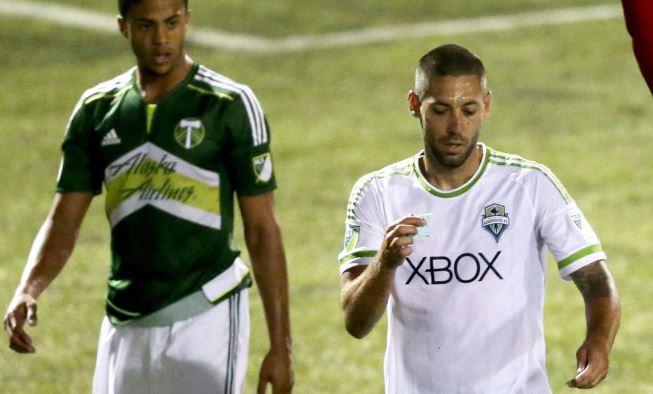
One year later, the Starfire unbeaten streak was snapped in one of the most bizarre games in Open Cup history. After evening the score at 1-1, Seattle’s Obafemi Martins had to leave with an injury. Seattle had used all of its subs and lost Brad Evans to a second yellow card earlier, so they were forced to play with nine men. In extra time, Portland took the lead thanks to Rodney Wallace, then watched the Sounders implode. Michael Azira was given a straight red card after elbowing Gaston Fernandez in the face. This caused Clint Dempsey’s temper to boil over, as he snatched the referee’s notebook and ripped it in half. Dempsey was not surprisingly ejected, meaning Seattle ended the match with seven players on the field. The Timbers won 3-1.
ADI AND THE SAW
Less than two weeks after the Red Card Wedding, the Timbers and Sounders met in MLS play — this time at Providence Park. Somehow, the clubs managed to provide even more fireworks, although these were largely kept to the run of play. Darlington Nagbe got things going with a wonderful strike, though Lamar Neagle evened things up just before halftime. With just over 15 minutes remaining, Fanendo Adi put the hosts back on top. Two minutes later, Adi found the back of the net again to make it 3-1. While celebrating, Adi grabbed Timber Joey’s chainsaw (did I mention Portland’s whole sawing off log slabs for every goal thing?) and held it in the air. The Timbers’ 4-1 win was the game COPA90 attended for this rivalry’s Derby Days feature.
WILD PLAYOFF PENALTY FINISH
Five years after their first MLS playoff clash, the Timbers and Sounders met again in the Western Conference Semi-finals in 2018. After a 2-1 Portland win in the first leg, the second leg in Seattle had an amazing ending. With the match knotted at 1-1 and the Timbers just minutes away from advancing, Raul Ruidiaz scored in stoppage time to even the aggregate score and sent the tie to extra time. Dairon Asprilla put Portland ahead just a few minutes into the extra frame, but Nicolas Lodeiro converted a penalty a few minutes later. The match would end in penalties, where Will Bruin missed his kick and Osvaldo Alonso had his saved by Jeff Attinella, who redeemed himself from a previous mistake. The Timbers held on to win the shootout.
WORTH THE WAIT
2020 was a bizarre year for everyone, especially with pandemic restrictions meaning no fans could watch Portland and Seattle clash that year. Portland comfortably won the first two matchups that season and looked primed to take the third, up 1-0 in stoppage time. However, a corner kick by the Sounders ended in a goal by Will Bruin (his first in over a year) tied the score, which ended in a 1-1 draw. The result ended up playing a big impact on the standings, as the Timbers would’ve been the top seed in the Western Conference had they won. Instead, they finished even with the Sounders (and Sporting Kansas City) at 39 points. Portland would end up as the No. 3 seed in the West, losing to FC Dallas in the first round. Seattle, meanwhile, was the No. 2 seed and beat Dallas en route to reaching the MLS cup for the second year in a row.
EIGHT GOALS APLENTY
Seattle scored just five goals in its six MLS matches in July of 2021. Once the calendar flipped to August, those scoring woes were wiped away. Facing a hostile Portland crowd, the Sounders jumped out to a 2-0 lead in the first 30 minutes thanks to a brace from Fredy Montero. But the hosts fought back, with Sebastian Blanco getting one back immediately and George Fochive evening the count in the 53rd minute. Then Seattle absolutely unloaded on the Timbers, with a pair of goals from Raul Ruidiaz restoring the Sounders’ two-goal lead. Jimmy Medranda added another goal shortly after and Nicolas Benezet tacked on one more in stoppage time. That last goal was the history maker, with the 6-2 result being the highest-scoring match in the rivalry.
STATISTICS:
HEAD-TO-HEAD RECORD
Seattle: 65
Portland: 56
Draw: 17
LEAGUE CHAMPIONSHIPS
Seattle: 2
Portland: 1
SUPPORTERS’ SHIELD
Seattle: 1
Portland: 0
WESTERN CONF. TITLES (REG. SEASON)
Seattle: 1
Portland: 2
WESTERN CONF. TITLES (POSTSEASON)
Seattle: 4
Portland: 3
U.S. OPEN CUP
Seattle: 4
Portland: 0
MLS IS BACK TOURNAMENT
Seattle: 0
Portland: 1
NOTABLE FIGURES:
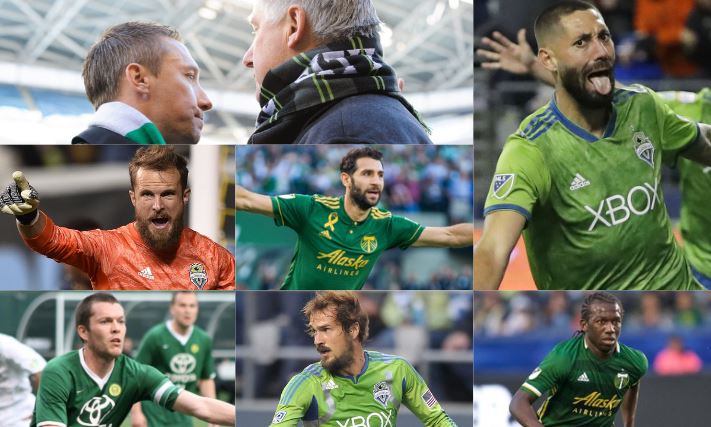
ROGER LEVESQUE
The all-time instigator in the modern day rivalry, Roger Levesque is beloved by Sounders fans and loathed by Timbers fans. Levesque first became a hated figure when he stepped on a Portland player’s ankle during an A-League game. While Levesque’s play time largely declined after Seattle joined MLS, Levesque still made a name for himself as a reserve player and in non-league play, as evident by his 48 seconds of fame. He had one other famous celebration — a “scuba dive” off a pitch-side advertising board after a goal against the New York Red Bulls.
SCOT THOMPSON
Often lost in the story of Roger Levesque is the player whose leg was stepped on in the first place. That was Scot Thompson, a solid defender who was a Timbers mainstay before the move to MLS. Perhaps the Levesque-Thompson feud started in college, when Thompson led UCLA to a NCAA National Championship in 2002, defeating Levesque’s Stanford in the title game. Thompson had a great career, being named among the Top 25 best and most influential players in the USL during the 2000’s. Thompson served as a club ambassador after retiring.
ANDREW GREGOR/HUGO ALCARAZ-CUELLAR
Not too many players have played for both Portland and Seattle, with some exceptions. In 2007, the Timbers’ all-time assists leader at the time, Hugo Alcaraz-Cuellar, signed with the Sounders, with whom he won both the USL First Division title and Commissioner’s Cup. Andrew Gregor went one step further, being one of the rare players to play for Portland, Seattle, and Vancouver. Gregor was a fan favorite with the Sounders, but would go on to be a captain with the Timbers. Gregor currently resides in Portland, where he serves as the assistant coach for Timbers 2.
CLINT DEMPSEY
One of the greatest American soccer players of all time, Clint Dempsey had success in the Premier League with Fulham and Tottenham. So when he suddenly moved to Seattle in 2013, it was a big fucking deal. Deuce catapulted the Sounders to even greater heights, playing a big role in their run to the MLS Cup in 2016. Dempsey’s gritty, fiery personality also led to some of the rivalry’s greatest moments, such as the 4-4 draw and 2015 U.S. Open Cup red card chaos. While he only played in Seattle for six seasons, he remains the best ever to wear rave green.
DIEGO VALERI
Diego Valeri came to Portland on what was supposed to be a temporary loan from Argentinian club Lanus. Not only is he still there today, but he’s inarguably the greatest player in Timbers history. Valeri’s arrival helped Portland top the Western Conference in 2013, with things only getting greater over time. Scoring a goal 27 seconds into MLS Cup 2015 and winning MLS MVP in 2017 highlight Valeri’s incredibly successful tenure in Portland, where he has the most goals (87) and assists (89) in MLS franchise history, while playing in the second-most games (243).
DIEGO CHARA
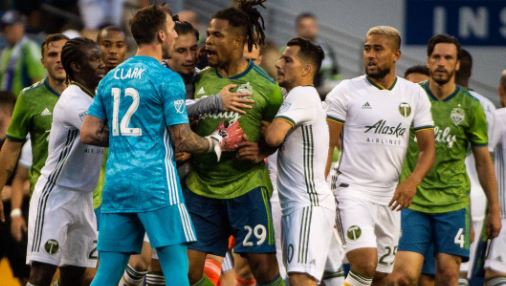
The only player to appear in more Timbers games than Diego Valeri is of the same name. Diego Chara has a chance this year to become the first Portland player in the MLS era to take part in 300 games with the club. A fiesty and speedy defensive midfielder, Chara has remained a key part of the Timbers lineup due to his quick, physical play and ability to piss off opponents. No where else is this evident than in games against the Sounders, although sometimes Chara can take things too far — as evidenced by the red card he was given in the 2014 U.S. Open Cup.
STEFAN FREI
A native of Switzerland, Stefan Frei came to California as a kid and went to both De La Salle High School and UC Berkeley. But after a few years with Toronto FC, it was in Seattle where Frei found fame and success. Frei has been part of two Sounders MLS titles, with his amazing save helping keep Seattle alive in 2016. Frei also was involved in a postgame fracas after a fiery 2-1 Timbers victory in 2019. Trying to play peacemaker between Roman Torres and Steve Clark, Frei became the target of his fellow goalkeeper’s insults, which sparked more tensions.
SIGI SCHMID/CALEB PORTER
On the sidelines, no two coaches signified the rivalry quite like Sigi Schmid and Caleb Porter. Schmid holds the all-time MLS record for wins as a coach and spent eight seasons at the helm in Seattle. Porter took over in Portland in 2013 and oversaw the Timbers’ rise to the MLS Cup. During rivalry games, Schmid and Porter were barely able to hide their discontent towards each other (although Porter had nice things to say after Schmid died in 2018). Last year, Porter beat Seattle in the MLS Cup with the Columbus Crew, who also won a title under Schmid.
FAN INVOLVEMENT:
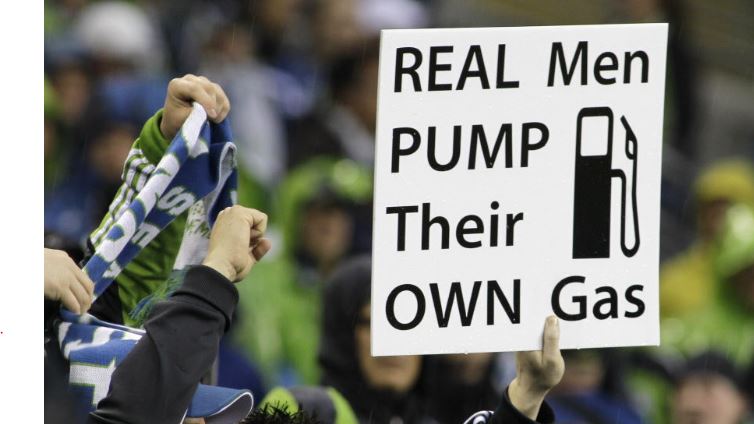
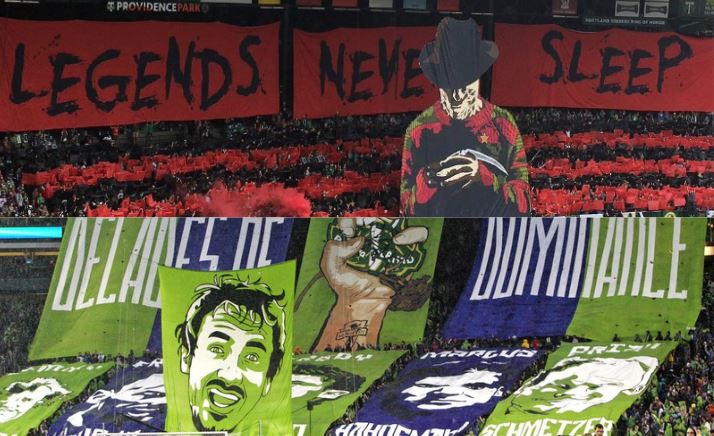
Arguably the two biggest supporters groups in American soccer play a crucial war in this rivalry. The Timbers Army and Emerald City Supporters take center stage with their passion and devotion to the clubs they cheer for, which started before the MLS era and partially influenced their clubs’ promotion to the first division. While, like a lot of American sports, the rivalry has largely been free of insane levels of fan violence, what sets these two fan groups apart is what they do in the stands. Both Seattle and Portland claim to have the best tifo game in the country, and rightfully so. The tifos made by the TA and ECS rival that of any soccer supporter group in the world, bar none. Seriously, I cannot overstate how creative and amazing these groups get with their artwork. Here’s a bunch of amazing tifo examples from both sides in no particular order. Naturally, things turn up a notch during the derby, with notable tifos including the “Decades of Dominance,” “There’s No Place Like Home,” “Build a Bonfire,” and “Legends Never Sleep” designs. Google “Timbers Sounders tifos” for more.
Both the ECS and TA are also closely rooted in their communities, engaging in several charities and similar activities. Emerald City is also the reason the Sounders’ USL squad, the Tacoma Defiance, exists today — the supporters own a 20% stake in the minor league club. I mentioned the whole log slab thing earlier, but one of the biggest examples of Timbers Army support came when the daughter of Timber Jim, the original lumberjack, died in a car crash. At Jim’s request, the group established a trust fund for his granddaughter and sang “You Are My Sunshine during the 80th minute, a tradition that continues today.
Portland being Portland, the Timbers Army has also been involved in some political controversies. The first came when MLS banned the use of the Iron Front symbol (an anti-fascist symbol) on TA signs, along with far-fight regalia. After a lengthy public battle and meeting with the Army, MLS reversed its policy. Last year, Portland became the site of mass protests following the death of George Floyd. The “No Pity Van,” which has been used by the TA since 2010, had been providing water and medical supplies to protesters. During a protest on August 13, police officers slashed all four tires on the van despite the driver complying with orders to vacate the area. This came after a federal officer fired munitions at the van a month earlier. The TA released a statement — which received backing from the Emerald City Supporters — doubling down on their efforts to support the protests.
SUMMARY:
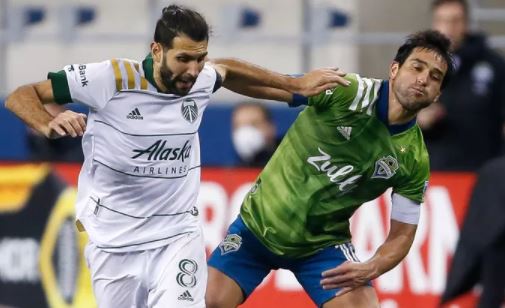
Across multiple generations and iterations, the Portland Timbers and Seattle Sounders have come to represent their respective cities in a historic and fierce regional rivalry. The two sides rarely underwhelm when they meet on the field, and have produced some of the most iconic moments in MLS and U.S. Open Cup history. Due to their recent dominance over the Western Conference, these two Cascadia clubs have come to embody the best of MLS, both when it comes to on-field success and rivalry intensity. The Sounders and Timbers are America’s best example in proving that the often-ridiculed soccer country has proper support and culture, along with one of the best derbies in the world.
MLS is in a unique position when it comes to rivalries. The league is still young, not even reaching its 30th birthday yet (this statement is supported by the “Anything under 30 years old is still young” gang). While the size and scope of the U.S. mean there are quite a few derbies, Portland-Seattle is one of the few fully fleshed out ones. But that doesn’t mean the potential isn’t there, especially thanks to recent expansions. The New York Red Bulls (formerly the MetroStars), have a lengthy hatred with D.C. United. But their new object of animosity is New York City FC, founded in 2013 as an experiment to create a perfect soccer team for me to hate. Owned by Manchester City and the new york yankees, NYCFC entered MLS in 2015 and instantly brought the Hudson River Derby into existence. After early dominance by the Red Bulls, the score has slightly evened. But while this rivalry has potential to be one of the league’s best, it’s still only six years old. Call me back in a decade or three.
The Southeast has potential for some soccer animosity. New sides Orlando City and Atlanta United have gotten into it in their brief time in MLS. But it’s unclear whether this will be the premier rivalry of the two teams, especially with Inter Miami and Nashville SC joining the league. Another potential mega derby is brewing in Ohio. Spurred on partially by an incredible 2017 U.S. Open Cup showing, FC Cincinnati became part of MLS in 2019 and formed the Hell is Real Derby with the Columbus Crew. Minnesota United could form something with Sporting Kansas City, which already has a low key rivalry with Real Salt Lake (who also competes in the Rocky Mountain Cup with the Colorado Rapids) and Houston Dynamo (who have the Texas Derby with FC Dallas). Perhaps the biggest potential rivalry is happening in Los Angeles, where the LA Galaxy and 2018 MLS newsomers LAFC contest El Trafico, which might be the best name for a rivalry in all of soccer. So far, El Trafico has seen twice as many matches with at least six goals as matches with two or fewer goals, which is absolutely fucking insane.
But there exists another rivalry, one that began as soon as MLS was born. It’s part of another larger regional rivalry, one of the most famous in all of American sports and one quite close to our hearts. While it may no longer get all of the headlines thanks to the success of the Cascadia Cup clubs, it was unquestionably the premier rivalry in the early days of the league. Some even say it’s never been surpassed.
California Clasico (United States)
San Jose Earthquakes vs. Los Angeles Galaxy
“I think it’s the best rivalry in MLS. I think it’s got the most history. It’s got the most meaningful big games.” — Todd Dunivant, former Earthquakes/Galaxy defender
Soccer’s version of one of the fiercest regional rivalries in the U.S. has produced many of the greatest matches, moments, champions, betrayals, storylines, records, and of course hatred in Major League Soccer history — since Day 1.
I’m not sure if you guys are aware, but people from Northern California and people from Southern California generally don’t like each other (the exception of course being Ewing after he moved there for college). More liberal, activism-based politics from the Bay Area clash with the conservative, rich beliefs of the greater Los Angeles area. Big Tech and Hollywood are often at odds. Having tons of water vs. having no water. NorCal and SoCal are seemingly two different states trapped together, with everything from regional dialect to food to art to music not only coming to represent each half, but also everything the other half isn’t.
Nowhere is the contrast and regional rivalry more apparent than in sports. Perhaps the most famous example is the rivalry between the San Francisco Giants and Los Angeles Dodgers, which has increased even higher with the success both MLB teams have had over the past decade. The Oakland Athletics and Los Angeles Angels of Anaheim of Los Angeles in Anaheim by Los Angeles Angels also share heated baseball battles. Of course, we all know about the bad blood and referee bullshit that’s been seen between the Sacramento Kings and los angeles lakers, while the Golden State Warriors and Los Angeles Clippers have their own thing going in the NBA. The NHL showcases a hate triangle between the San Jose Sharks, Los Angeles Kings, and Anaheim Ducks, although the more famous rivalry is between the Sharks and Kings. With their recent relocation to Los Angeles, the hatred between the Rams and San Francisco 49ers has also become a competitive fixture in the NFL.
But what if I told you there was another NorCal-SoCal sports rivalry that can hold its own with the others? What if I also said that the San Jose Earthquakes and Los Angeles Galaxy have produced success and incredible, memorable, batshit crazy moments — on and off the field — that may just surpass their counterparts.
HISTORY:
While the NASL was expanding westward and planting the seeds for what the Portland Timbers and Seattle Sounders would produce, there was another team lurking on the West Coast. The league awarded a franchise to the Bay Area, with the Earthquakes set to begin play in 1974 in San Francisco. However, season ticket sales proved to be poor. So shortly before the season began, a switch was made and the franchise was moved to San Jose. With no other top level sports team (the San Jose Sharks wouldn’t enter the NHL until 1991) in the city, sports fans flocked to the Earthquakes in droves, making the move an immediate success. During their inaugural season, the Earthquakes averaged 15,000 per game (double the league average), which led to Spartan Stadium being picked to host the first Soccer Bowl in 1975. Unfortunately for the Earthquakes, they never made it there and for the majority of their existence never came close (although they did manage to claim the NASL Indoor championship that same year. After the NASL folded in 1984, San Jose jumped to the Western Alliance Challenge Series/Western Soccer Alliance for a few years, before folding in 1988.
Seven years later, Major League Soccer was formed with ten teams. One of those teams would play in San Jose, with Daniel Van Voorhis as the owner and Peter Bridgewater as the general manager. Van Voorhis had been the owner of another pro team — the San Jose Hawks — and wouldn’t be owner of this MLS team for long. Outside concerns led to him accepting a buyout (largely due to the same reasons he was the “former” owner of the Hawks) and the franchise becoming league-owned for several years (this will become relevant soon). Meanwhile, despite Bridgewater (who worked for the NASL team) owning the rights to the Earthquakes name, the new MLS team would be known as the Clash, thanks to Nike (a major league investor). But along with the Clash came another team, one that San Jose would clash with often.
Despite being known for several other sports, Los Angeles is one of American soccer’s oldest meccas. The city has been home to many historic soccer clubs, including Maccabi Los Angeles (tied for the most ever U.S. Open Cup wins with five), the Los Angeles Kickers (another Open Cup champion), Orange County Soccer Club (a two-time Open Cup finalist that somehow hosted Bayern fucking Munich for a friendly), the Los Angeles Wolves/Wolverhampton Wanderers, and the Los Angeles Aztecs (the inaugural NASL champions). So when it came time to pick franchise locations for MLS, Los Angeles was a natural choice (on top of it being the entertainment capital of the world). Unlike their NorCal counterparts, the Galaxy was founded by and is currently owned by Philip Anschutz (and the Anschutz Entertainment Group (this will also become relevant later).
The California Clasico proved to be an instant hit, with the first game in San Jose setting an all-time attendance record for a sporting event in the city. Unfortunately for the Clash, the Galaxy won that game (as well as the first game at the Rose Bowl) 2-1 and the season series 3-0-1. Over the first five seasons of MLS, the Galaxy finished atop the Western Conference three times and made it to the MLS Cup twice. Meanwhile, the Clash had only made the playoffs once, being eliminated by the Galaxy in 1996. In addition, the Galaxy had managed to win the 2000 CONCACAF Champions Cup and were set to compete in the 2001 FIFA Club World Cup against the likes of Real Madrid, Galatasaray, Zamalek, and Boca Juniors (remember all of those names) until the tournament was canceled. But in 2001, things changed for San Jose, who in 1999 officially became the Earthquakes, thanks to a young player from SoCal.
Before he became the greatest American soccer player ever (at least until Christian Pulisic finishes his career), Landon Donovan was a promising young product for Bayer Leverkusen. But Donovan had trouble adapting to life overseas and began to yearn for home. So, Bayer agreed to loan him to San Jose. Donovan found instant success, leading the Earthquakes to the playoffs for just the second time in franchise history. While San Jose still finished behind Los Angeles in the standings, the weird MLS format (three conferences with four teams) at the time led to both California teams being put on the opposite sides of the playoff bracket. Both made a run, ending with the Earthquakes and Galaxy meeting in MLS Cup 2001. The match would go into overtime, where Dwayne De Rosario scored the golden goal to give San Jose its first championship. The Earthquakes had one season of bragging rights before a pissed off Galaxy team won both the Supporters’ Shield and their first MLS Cup in 2002. That set the stage for what happened in 2003 — San Jose making an improbable playoff comeback against the Galaxy in arguably the greatest game in MLS history (more on this later). The Earthquakes would go on to win MLS Cup 2003, with Donovan being named MVP. But while San Jose was riding high, a series of events was about to play out and change the rivalry (along with soccer in the city altogether) forever.
Since their founding, the Earthquakes had been on shaky ground financially. With other teams beginning to struggle as well, MLS was looking for a buyer. One potential owner was Club America, which was rumored to want to change the team name to San Jose America. Although the sale fell through, the affair caused San Jose general manager Johnny Moore to resign. Anschutz Entertainment Group (who also owned the Galaxy) eventually took control of the team, with former Galaxy star and American soccer icon Alexei Lalas being named GM of the Earthquakes. With discussions on a soccer-specific stadium going nowhere with the city of San Jose, the club began plans to move to Houston. As part of that process, Lalas traded away Donovan’s rights to FC Dallas. When Donovan demanded a move to MLS full-time, the Galaxy traded league-leading goal scorer Carlos Ruiz to Dallas in exchange for Donovan’s rights. Thus, Los Angeles was able to sign San Jose’s golden boy to a lengthy deal. By signing with the Galaxy, Donovan became a villain to Earthquakes fans, who from then on gave him a hostile reception and referred to him as the “American Luis Figo” (that reference will make sense in the next newsletter). It didn’t help when San Jose, who had won the Supporters’ Shield, was eliminated by Donovan and the Galaxy in the 2005 playoffs en route to LA’s second league title.
Then, things went from bad to code red. Ownership and stadium issues forced the Earthquakes to take a two-year hiatus from the league. During that time, all players and coaches were relocated to Houston. To rub salt in the wound, the new team — now called the Houston Dynamo — won the next two MLS Cups, two trophies Earthquakes fans to this day argue should be in San Jose instead. Things were going in the opposite direction for the Galaxy. In 2007, Los Angeles reached a deal with Real Madrid to sign David Beckman, an international soccer megastar. The move brought unprecedented media coverage to both the Galaxy and MLS. This in turn made Los Angeles the most attractive destination for international players to MLS. But the big news wasn’t over — that year, MLS reached a deal with Lewis Wolff and John Fischer (the owners of the Oakland A’s) to bring an expansion franchise to the Bay Area. San Jose was chosen as the city and in 2008, the Earthquakes were reborn. So too was the rivalry, in ways neither team could see coming.
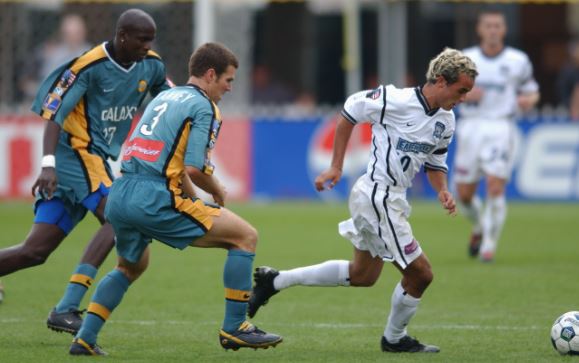
Over the past decade, the California Clasico has been dominated by the Galaxy in terms of silverware. Donovan and Beckham — coupled with Robbie Keane — helped Los Angeles win three additional MLS Cups. San Jose has been volatile in the standings, winning the Supporters’ Shield in 2012 then tumbling all the way to a last place finish in 2018. Last year though, it was Los Angeles who missed the playoffs and San Jose who snuck in, nearly upsetting the top seeded Sporting Kansas City. But whenever the two teams have met on the field, there have always been fireworks. The original animosity has only been fueled by Donovan’s betrayal and the Galaxy’s success. No matter where these teams are in the table, no one knows who’s going to win when they square off — even with most of the time gone in the game. Matches between the Earthquakes and Galaxy have provided some of the wildest endings in league history. Combining the success of the early years with the incredible drama the recent years have provided, this rivalry remains one of the best in MLS.
MAJOR ON-FIELD MOMENTS:
MLS CUP 2001
The only MLS Cup between clubs from the same state was the California Classico with the greatest stakes. Although the Earthquakes had taken both regular season matches in 2001, it was the Galaxy who scored first, with Luis Hernandez finishing off a pass from Greg Vanney. Cobi Jones nearly made it 2-0, but Joe Cannon made a fantastic save. San Jose would soon even things up with a volley from Landon Donovan. Despite the Earthquakes outshooting the Galaxy 12-3 in the second half, Los Angeles would hold on to force overtime, with a golden goal to decide the Golden State duel. That goal came from recent sub Dwayne De Rosario, who beat Kevin Hartman from 17 yards out six minutes into OT to give San Jose its first ever MLS title.
THE GREATEST COMEBACK IN MLS HISTORY
Two years after their MLS Cup clash, the Earthquakes and Galaxy met in 2003 in what would be one of the best playoff series in league history. Los Angeles defended home turf with a 2-0 win in the first leg, then took a 2-0 lead just 13 minutes into the second leg. Down 4-0 in the aggregate count, San Jose needed a miracle, which is exactly what happened. Jeff Agoos and Landon Donovan scored to make it 2-2 going into halftime, then Jamil Walker made it 3-2 five minutes into the second half. Needing just one more goal to tie it up, the Earthquakes needed until the 90th minute for Chris Roner to send the tie to OT. Once again it came down to a golden goal in the 96th minute, with Rodrigo Faria completing the 5-2 win and unbelievable comeback.
ET TU, BRUTE?
Remember when LeBron James went to the Miami Heat and caused Cleveland Cavaliers fans to burn jerseys and everything? Similar scenes played out in San Jose a decade earlier when Landon Donovan signed with Los Angeles. Fans changed their Donovan jerseys to things like “Donowho” and brandishing signs calling him “Judas,” a traitor, and scum in his first game back in 2005. While the Earthquakes rallied to win the Supporters’ Shield, it was Donovan who had the last laugh, scoring twice in the first leg of their playoff series, a 3-1 Los Angeles win. There would not be a comeback like two years prior, as the Galaxy drew the second leg 1-1, advanced 4-2 on aggregate goals, and won MLS Cup 2005, evening up the title count with their rivals.
MANIAC MAGEE
Three straight years of batshit crazy results began in 2011 with an extremely rare occurrence. Just over 20 minutes into the first half, Los Angeles goalkeeper Donovan Ricketts was injured in a collision. His substitute, Josh Saunders, would be ejected in the 43rd minute after elbowing Steven Lenhart. With no other goalkeepers on the bench, the Galaxy were forced to turn to striker Mike Magee in net. Incredibly, the ten-man visitors were able to keep the Earthquakes offense at bay. Magee — all 5’9″ of him — was called upon to make a few decent saves. In the end, San Jose couldn’t take advantage as both squads drew 0-0. Incredibly, this became one of just five matches in the history of the California Classico to finish without a single goal scored.
GOONIES NEVER SAY DIE
2012 was a fucking wild year for this rivalry, as evidenced by the first match of the year between the two teams. Hector Jimenez scored just three minutes into the game to give the Galaxy an early lead. The count would remain the same until the 73rd minute, when Mike Magee (not in net this time) doubled Los Angeles’ lead to 2-0. But Steven Lenhart and Khari Stephenson each found the back of the net to tie the game at 2-2. Things seemed destined for a draw until the last minute of stoppage time, when former Galaxy player Alan Gordon headed in the winning goal for San Jose. Afterwards, Lenhart declared “Goonies never say die!” (a reference to the classic movie The Goonies), which has remained a rallying cry in Earthquakes lore ever since.
THE MASCOT GETS INVOLVED
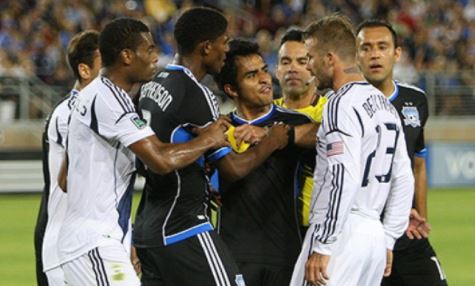
Just over a month after that comeback, another rally took place. After San Jose took a 1-0 lead in the seventh minute, both teams combined for four goals in the last 15 minutes of the first half, which saw Los Angeles leading 3-2. But goals by Sam Cronin and Chris Wondolowski put the Earthquakes ahead 4-3, which would remain the final score. However, this match is notable for what happened in stoppage time. With Cronin lying on the ground during a stop in play, a frustrated David Beckham kicked the ball at Cronin, sparking a lengthy scuffle that somehow got the Earthquakes’ mascot, Q (who was holding a “SportsCenter is next” sign) involved. Beckham would be suspended for one game for the fracas. No word on any potential discipline for Q.
THE ONE DEFEAT
By far the best season for the second coming of the MLS Earthquakes was 2012, which saw the club win its second ever Supporters’ Shield. Buck Shaw Stadium was a fortress, as San Jose lost just one game at home all season. Unfortunately for them, that loss came against their rival at the worst possible time. The Earthquakes won the first leg of their playoff series with the Galaxy 1-0 in Los Angeles, seemingly booking a spot in the Western Conference Finals. But the Galaxy had other plans. Robbie Keane scored two goals and Mike Magee also found the back of the next to put Los Angeles up 3-0 at halftime. Despite a late Alan Gordon goal, there would be no improbable comeback this time, as the Galaxy moved on en route to another MLS Cup.
TWO IN STOPPAGE TIME
Just when you thought the crazy comebacks couldn’t be topped, the first Earthquakes-Galaxy clash of 2013 saw a reversal of fortune for the ages. In typical fashion, Los Angeles took a lead thanks to Marcelo Sarvas and Hector Jimenez, followed by an Alan Gordon goal sparking ideas of a rally. But even given the recent history between these two clubs, a comeback appeared unlikely with the Galaxy still holding a 2-1 lead in stoppage time and the Earthquakes playing with just ten men. However, Goonies never say die. A wild deflection off a stoppage time throw-in was tapped in by Shea Salinas, tying the game. But San Jose wasn’t done, with Alan Gordon playing the hero again, heading in a cross to give the Earthquakes an amazing 3-2 victory.
SALINAS DOES IT AGAIN
Stop me if you’ve heard this before: the Earthquakes rallied from a deficit against the Galaxy late in the second half and won the match in stoppage time. It just keeps happening! In 2017, the script played out exactly as it has in previous years, with different characters. This time, it was Jelle van Damme getting the opening goal for Los Angeles in the 11th minute. This time, it was Chris Wondolowski putting in the equalizer — with goalkeeper David Bingham earning the assists — in the 75th minute. This time, it was Shea Salinas scoring another stoppage time goal against the Galaxy, winning the game 3-2. Imagine having a rivalry so crazy that a stoppage time winner in front of 50,000 people in a derby barely qualifies as a memorable moment.
NO HOME FIELD ADVANTAGE
It’s a testament to the competitive and unpredictable nature of this rivalry that neither San Jose or Los Angeles won a game against each other by more than four goals until 2020. That’s when the Earthquakes went into SoCal and shockingly beat down the Galaxy 4-0. San Jose was dominant throughout the game, although only led 1-0 thanks to a goal from Nicholas Lima. But then things finally began clicking in the second half. Andy Rios doubled the Earthquakes’ lead in the 52nd minute and Tommy Thompson (a former Sacramento Republic FC player) added a third in the 76th minute. Lima’s second goal (in stoppage time) cemented the historic margin of victory. The victory helped San Jose reach the playoffs for just the second time since 2012.
STATISTICS:
HEAD-TO-HEAD RECORD
Los Angeles: 46
San Jose: 33
Draw: 18
LEAGUE CHAMPIONSHIPS
Los Angeles: 5 (record)
San Jose: 2
SUPPORTERS’ SHIELD
Los Angeles: 4 (tied for record)
San Jose: 2
WESTERN CONF. TITLES (REG. SEASON)
Los Angeles: 8 (record)
San Jose: 3
U.S. OPEN CUP
Los Angeles: 2
San Jose: 0
CONCACAF CHAMPIONS LEAGUE
Los Angeles: 1
San Jose: 0
NOTABLE FIGURES:
LANDON DONOVAN
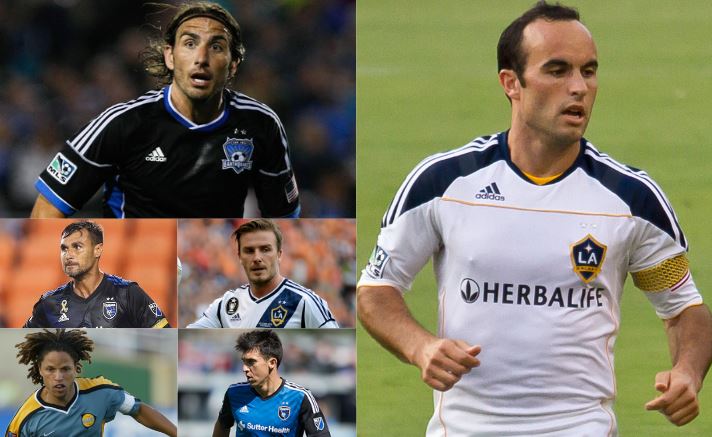
The greatest men’s soccer player in U.S. history — most assists ever, tied for the most goals, second-most appearances for the national team — and the icon of MLS (and namesake of the league MVP award) could’ve been a San Jose lifer. But whether it was simply a product of the Earthquakes’ front office problems or him wanting to go back home to SoCal (despite “adopting” the Bay Area as his home), Landon Donovan is more well known for his success with the Galaxy than anything that happened in NorCal. Los Angeles somehow gets everything nice.
ALAN GORDON
If Landon Donovan is the Michael Jordan of the California Clasico, Alan Gordon is at the very least Bill Russell. While Gordon also spent several years with both clubs, he’s somehow beloved by both sets of fans. That’s primarily because that success has come in different forms. While Gordon won two MLS Cups with the Galaxy, he’s best known for his memorable stoppage time goals. The two most famous of those goals have come as a member of the Earthquakes against Los Angeles. So in terms of the actual rivalry, San Jose has a better claim to Gordon.
COBI JONES
The only player to have more USMNT appearances than Landon Donovan, Cobi Jones is an American soccer icon whose presence drew viewers and fans during the early MLS years. After doing well for Premier League side Coventry City and Brazilian club Vasco da Gama, Jones signed with the Galaxy and was a part of the first squad in 1996. Jones stayed in Los Angeles until his retirement in 2007, so his tenure in MLS outlasted the original Earthquakes franchise. Every major moment in the early stage of the rivalry featured Jones in some shape or form.
CHRIS WONDOLOWSKI
If Landon Donovan was the face of the first version of the Earthquakes, Chris Wondolowski is indisputably the icon of the modern day San Jose franchise. Wondolowski was actually part of the squad that was moved to Houston, but moved back to the Bay Area in 2009. Since then, Wondolowski has become not only the captain of the Earthquakes and the heart and soul of San Jose soccer, but also the all-time goalscorer in MLS history, surpassing Donovan himself to do so. This might be the last year of Wondolowski’s storied career, which makes me big sad.
DAVID BECKHAM
Without a doubt the single most important transaction in MLS history, the transfer of David Beckham from Real Madrid to the Galaxy took the league to a whole new level. The England national team star, Manchester United legend, and pop culture icon was a perfect fit for Los Angeles. Thanks to his fiery personality, he also seamlessly fit into the rivalry. Beckham was part of the chaos that took place during the early 2010’s, especially the scuffle that got Q involved. Beckham only stayed in Los Angeles for six seasons, but every one was memorable.
DWAYNE DE ROSARIO
The forgotten piece of the early Earthquakes’ future, Dwayne De Rosario was another young star who exploded early. De Rosario was a late sub in MLS Cup 2001, writing himself into history with his title-clinching golden goal. Two years later, De Rosario returned from a torn ACL to help San Jose to another MLS Cup. When Landon Donovan left for Los Angele, De Rosario moved to midfield and promptly led the league in assists. Unfortunately, De Rosario would pack up and leave for Houston — along with every other member of the Earthquakes — in 2005.
MIKE MAGEE
Mike Magee represents the core of role players — along with Robbie Keane, Omar Gonazlez, Todd Dunivant (who also played for the Earthquakes), and A.J. DeLaGarza — who were part of the Galaxy’s mini-dynasty of the early 2010’s. But Magee gets the individual nod because of multiple reasons. The first was his memorable cameo in net against San Jose. The second was earning the “Mr. November” reputation by scoring several clutch goals for Los Angeles during playoff runs — as well as some crucial ones in multiple matches against the Earthquakes.
SHEA SALINAS
Shea Salinas seems to be meant to be a member of the Earthquakes forever. Drafted by San Jose in 2008, Salinas made his debut in the franchise’s first MLS match in three years — against the Galaxy no less. Despite being taken in two consecutive expansion drafts, Salinas found his way back to San Jose in 2011 and has remained a club fixture, becoming the Earthquakes’ all-time leader in assists. Salinas has also been part of some memorable moments in the rivalry, tying the game in stoppage time in 2013 and getting the winner (also in stoppage time) in 2017.
FAN INVOLVEMENT:
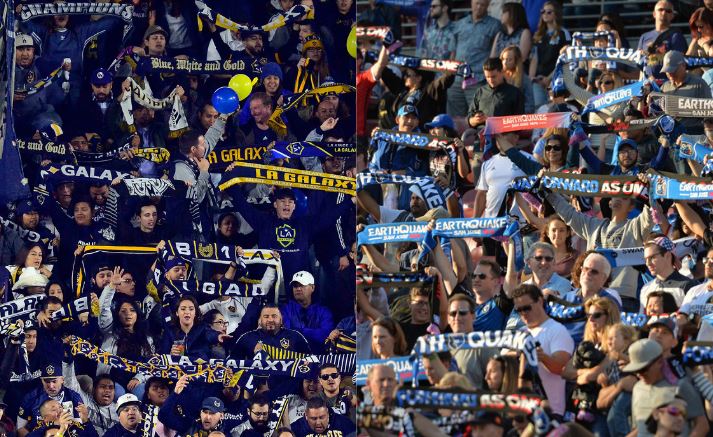
Just like their teams on the field, the California Clasico’s main supporters groups — the San Jose Ultras and the Angel City Brigade — have their own rivalry. While they do tifos and chant like every proper fan squad, the main aspect these supporters bring to the rivalry is noise. When anything fun happens during these games, the volume gets cranked to 11. Overall, the larger venues in NorCal (like Stanford Stadium) lead to Earthquakes fans being able to create a deafening atmosphere. However, though many Galaxy fans often look and sound like Lonnie from I Love You, Man, they still managed to exist everywhere and are always a presence both on the road and at home.
While there has been an overall lack of fan violence (mostly because the last thing people feel like doing after traveling between NorCal and SoCal is fighting someone), there have been some incidents of note. During a game at Buck Shaw Stadium in 2012, several Galaxy fans were arrested after setting off smoke bombs and causing fights in the stands. In response, police — some dressed in riot gear — cleared out the visiting stands completely during the game. Four years later, it was Earthquakes fans who got into trouble — for an entirely different reason. Every time Los Angeles goalkeeper Brian Rowe made a goal kick, the home Earthquakes fans made the infamous “eeehhh, puto!” chant, which is not entirely LGBT-friendly (yet is often used by Mexican National Team fans). The incident forced an apology from San Jose and caused a minor controversy for MLS.
SUMMARY:
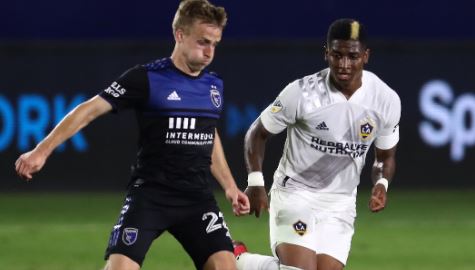
The oldest and arguably fiercest rivalry in MLS lives up to the billing of the over famous NorCal-SoCal sports rivalries. The passion, success, and memorable moments that have gathered between the San Jose Earthquakes and Los Angeles Galaxy stands above any derby in American Soccer. Although newer rivalries have sprung up, the California Classico still shows the attributes of its two clubs — the trophies of the Galaxy and the “never say die” attitude of the Earthquakes. This rivalry is as alive as ever.
All of that being said, there have been some temptations by other teams, offering greener pastures of hatred. In 2005, Chivas USA was introduced to Los Angeles as an intended rival for the Galaxy, backed by Mexico’s most popular soccer franchise. However, the SuperClasico was both extremely one-sided (the all-time record was 22-4-8 in favor of the Galaxy) and short-lived (Chivas USA folded in 2014). Four years later, LAFC entered the fold, with much more secure front office management and financial backing. El Trafico has proven to be an incredible rivalry so far, emerging as a potential threat to the California Clasico. Another threat could come if the MLS stops breaking hearts here in the Capitol City and finally allows Sacramento Republic FC to enter MLS and create a proper NorCal derby (already dubbed the Hella Cup). Still, you never forget your first.
With that, we complete the full eligibility for U.S. rivalries and reach the full three spots for North/Central America in the World Cup of Hate. There is the potential for one more rivalry from the region to make the final tournament, but we’ll save that reveal for when the playoff with a rivalry from Asia takes place. For now, we head overseas for the first time in our journey of soccer hatred. Europe is by far the biggest region with the most spots in the final tournament, so let’s get that out of the way next. In store for us are some of the greatest rivalries in all of sports (including some you should already be able to name), filled with some of the most popular teams and best players in the history of soccer. I’ll be stunned if a team from Europe doesn’t end up making the finals, especially given the batshit craziness we’re about to see. If you thought anything you saw in Mexico, Cascadia, and California was shocking, get ready. We’re about to see some serious shit.
COMING UP IN PART 3: A pig’s head, twice the Judas, success for the working class, and a bunch of angry Scotsmen.
 Ruben's Writings
Leave a comment