EUROPE (13)
Our journey of hatred has taken us overseas for the first time. With this move comes a bit of a shift with these presentations. We’re taking a huge step up, taking a look at hatred that’s much deeper and older than anything we’re used to in our sports. These rivalries don’t involve just soccer or simply “they were just there.” There’s political history, war, religion, industry, and key economic factors at play every time these enemies take the field. This is real shit. What’s more, many of the greatest players to ever kick a soccer ball are written into the history of this hatred.
That’s why Europe gets 13 spots (in addition to having the overall best national teams in the world). We’re going to be making good use of every single one of these spots. But in order to prevent Europe from being like an eight-part series, I’m going to have to pack a lot into these write-ups. I’m dividing Europe into four sections, starting with four rivalries that even you non-soccer fans should’ve heard of at some point. Where better to begin with the definitive soccer rivalry, the one that many perceive to be the greatest in the world?
El Clasico (Spain)
FC Barcelona vs. Real Madrid CF
“When Madrid plays Barcelona, the world stops.” — Jose Mourinho, former Madrid manager
The rivalry between FC Barcelona and Real Madrid surpasses sport, despite featuring many of the game’s greatest players and moments. Two great institutions represent diametrically opposing sides of life, with their conflict being influenced by war, political unrest, and various socioeconomic factors. Trophies and goals are matched by betrayal and animosity between these two rivals, the two biggest soccer clubs in the world, who are much more than that.
Both Barcelona and Madrid are consistently among the Top 3 most-supported and most valuable clubs in the world. They have also seen many soccer legends put on their colors and have massive piles of silverware in their trophy cases. But what sets El Clasico — the definitive rivalry in all of Spain — apart from the other “two best teams in their country” rivalries is the intense animosity fueled by off-field history and other factors that would’ve made this derby fierce without the immense success and popularity of each club.
Before we dive in, I need to explain the deal with Catalonia. You know how Quebec is different from most of the rest of Canada, with the social and political differences so great some say Quebec should become its own country? It’s like that with Spain and Catalonia, which is the northeast territory of the whole country. Catalonia (whose biggest city by far is Barcelona) is the most distinct region in all of Spain — they have a slightly different language, spelling system, and autonomous government. Part of the reason people in Catalonia want independence from Spain is because it’s one of the richest areas of the country, and that they don’t believe the government is fairly compensating them for their funds going to poorer areas and raising the wealth of the country as a whole. All of this means tensions with Spain’s capital city, which happens to be Madrid, have never been pleasant. I could go on with the purely political dynamic of the two areas, although the soccer portion will do plenty in that regard.
HISTORY:
In October 1899, a Swiss soccer executive named Hans Max Gamper-Haessig — who had founded FC Zurich three years earlier — placed an advertisement in Los Deportes declaring his desire to form a soccer club. After a positive response, a meeting was held on November 29 that included 11 players, who that day founded Foot-Ball Club Barcelona. Despite finding success with its first trophy — the Copa Macaya — in 1902, the club began to struggle financially. Determined to keep his team afloat, Gamper — who was now known by the Catalan name of Joan Camper — became club president, spending 25 years in charge. His biggest success was getting Barcelona a stadium in 1909, allowing the club to have a stable way to generate income. To celebrate, they held a logo contest, with the winning design by Carles Comamala still being used to this day (with minor changes). FC Barcelona grew from there, dominating regional and national competitions and becoming a symbol of the Catalonia region, a shift which was helped by Catalan becoming the club’s official language. Further funds led to the club moving to Les Cortes in 1922, which would eventually have a capacity of 60,000. In 1925, a crowd at a Barcelona match jeered the Royal March, in protest of Miguel Primo de Rivera’s dictatorship. The Spanish government responded by shutting Les Cortes down for six months and removing Gamper as Barcelona’s president. This coincided with Barcelona becoming a professional club in 1926. Three years later, Barcelona would join Spain’s first ever national professional soccer league, where they would meet some clubs they still face today, including Athletic Bilbao, Real Sociedad, Atletico Madrid, and Espanyol. There was one other notable team as well.
Although Real Madrid was founded in 1902, its roots go back to 1897. That’s when some Cambridge and Oxford graduates who were studying at Institucion Libre de Ensenanza introduced soccer to the locals. They founded Sky Football, which remained the only club in Madrid until 1900. That’s when inner turmoil caused some of the members to leave and form a new club, Nueva Sociedad de Football. That club was renamed Madrid Football Club and officially founded on March 6, 1902 (Sky Football would dissolve a year later). Just two months later, Barcelona and Madrid met for the first time — a 3-1 Barca win in the semi-finals of the Copa de la Coronacion, held in honor of the coronation of Alfonso XIII. Like Barcelona, Madrid found a lot of success early, defeating Bilbao in the 1905 Spanish Cup final and moving to their own stadium in 1912. In 1920, King Alfonso XIII granted the royal title of Real to the club, which was officially renamed Real Madrid FC. However, that title went away in 1931, with the coming of the Second Spanish Republic. Two years earlier, Madrid also joined in the first ever top flight Spanish league. On February 17, 1929, Madrid traveled to Barcelona for the first league match in what would become a world-shifting rivalry, although at the time it was just a 2-1 win for the visitors. But Barcelona would have the last laugh, winning the second match in Madrid 1-0 and the league as a whole, taking advantage of a Madrid loss to Bilbao to jump in front on the final day of competition. Over the next few years, the two sides competed as nothing more than fellow top flight clubs. Then 1936 happened, changing the futures of both clubs forever.
Turns out, a lot of people didn’t like the founding of the Second Spanish Republic. Thus, the Spanish Civil War broke out in 1936. The left-leaning Popular Front government fought against a revolt by the right-wing Nationalists, who wanted to restore monarchy, among other things (I’m incredibly generalizing the many conflicts surrounding the war). Catalonia became a major target of the capital, especially as the war pressed on. Barcelona’s president, Josep Sunyol, was murdered in 1936 and the club’s facilities were hit during a bombing by Italian forces. As the war drew to a close and the government was overthrown (with General Francisco Franco becoming the country’s ruler and dictator), any symbol of regional nationalism — flags, language, etc. — were banned, including at Barcelona. The club itself was forced to change its name to Club de Futbol Barcelona and remove the Catalan flag from its crest. While the war crippled Barcelona both on the field and culturally, it ended up doing wonders for Madrid, who reinstalled the Real part of its name. As the defining soccer club of the capital city, Real Madrid was used as a propaganda tool by the Franco regime, with the General becoming its most notable fan. Thus, the club never had to worry financially.
Despite all of this, the on-field competition never crossed the line. That is, until the semi-finals of the 1943 Copa Generalisimo (the Copa del Rey was renamed after Franco). The first leg, played in Barcelona, ended 3-0 in favor of the home squad. Madrid complained about all three goals, while the home fans relentlessly gave the visitors shit. Before the second leg, Madrid media began a campaign that Barcelona players insisted was filled with lies, with the sole purpose of winding up fans. The crowd at the second leg, which was entirely one-sided (Barcelona fans were banned from traveling to Madrid), were given whistles. Before the match, Barcelona’s players were allegedly threatened by police, although the accusations have never been proven. Madrid used the crowd and their hard style of play to take an early 2-0 lead. A third goal also saw Barcelona’s Benito Garcia be issued a red card. From there, Barcelona was done. The first half ended 8-0 and, after Barcelona refused to take the field for the second half (then did so after Madrid’s Superior Chief of Police ordered them to), the final score was a bizarre 11-1. Both clubs were fined by the Royal Spanish Football Federation for the result, which above all else painted the image of Madrid as the team of the dictatorship and Barcelona as its victims. It also proved to be the spark of what would become El Clasico.
Despite the annihilation, Barcelona would have success over the next decade. They won La Liga (the renamed first division) in 1945, 1948, and 1949 — that year also saw them win the first Copa Latina. The following year, Barcelona signed prolific forward Laszlo Kubala, who would go on to become a club icon. With Kubala’s help, Barcelona won four trophies in 1952 and two straight La Liga and Copa del Generalisimo crowns from 1952-53. But Madrid had something brewing, thanks to new president Santiago Bernabeu, who took over in 1945. Under Bernabeu, the club constructed and opened Estadio Real Madrid Club de Football (now named after Bernabeu), a 81,000-capacity stadium the club still calls home today. In addition, Madrid’s youth academy (considered one of the best in the world) was founded. In 1953, Bernabeu began a strategy used throughout Madrid’s history: sign top world-class players, no matter what the cost. He began with a man who would become the defining player in Madrid’s entire history.
During the early 1950’s, scouts from both Barcelona and Madrid were impressed by a young Argentinian striker from Colombian club Millonarios named Alfredo Di Stefano. Both clubs pressed to sign him, with River Plate (Di Stefano’s old club) also claiming his rights due the controversial nature of the original transfer. Barcelona was leading in negotiations with both South American clubs until they brought in a Catalan man named Joan Busquets, who happened to be a director of Santa Fe, Millonarios’ local rivals. Millonarios balked at Barcelona, who proceeded to reach a deal with River Plate. Meanwhile, Real Madrid reached a deal with Millonarios. The growing confusion caused both FIFA and the Spanish FA to get involved. The end result was that Barcelona and Madrid had to share Di Stefano in alternate seasons, which sounds insane (there were rumors Franco himself became involved in discussions). Humiliated, Barcelona president Marti Carreto was forced to resign, with the interim board ripping up the contract. Thus, Di Stefano was free to join Real for a fee. A couple of years later, soccer leaders from across Europe decided to form an invitational continental tournament that would become known as the UEFA Champions League. Powered by Di Stefano and Ferenc Puskas (a striker regarded as the first international soccer star and namesake of FIFA’s Goal of the Year award), who joined the club in 1958, Madrid won the first five tournaments, establishing itself as the premier team in the continent.
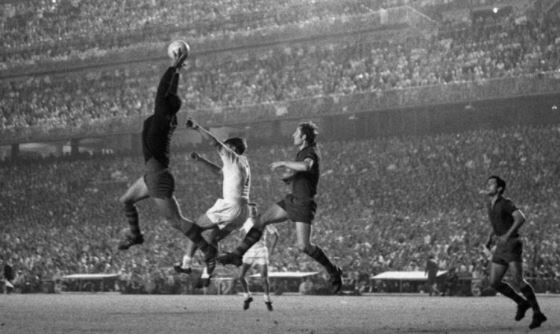
Although it was Barcelona who stopped Madrid from winning six in a row in 1961, the decade would be dominated by Real, who won eight La Liga titles in nine years and eventually claimed that sixth Champions League crown in 1966. That wide margin was partially because of the completion of the Camp Nou, Barcelona’s current home and (with a capacity of over 99,000) the largest stadium in Europe and the fourth-largest soccer stadium in the world. But it was the mid 1970’s when Barcelona truly struck back at Madrid. First, Barcelona made their own monster signing in 1973 by bringing in Dutch superstar Johan Cruyff from Ajax on a world record fee. Cruyff quickly won over Barcelona fans by claiming he chose the club over Madrid because he couldn’t play for a team associated with General Franco. He then named his son Jordi (after the local Catalan Saint George), helped Barcelona beat Madrid 5-0 on the road, and led the club to its first La Liga title since 1960. Then in 1974, something even more momentous happened — General Franco died. His successor, King Juan Carlos, ended the dictatorship and the rules banning regional nationalism. Thus, Catalonia began a comeback, with its club going by Futbol Club Barcelona and its old crest once again. The 1970’s also saw Barcelona buy an old country home and renovate it to be their headquarters. That home would eventually be converted into a dormitory for young players. That academy, known as La Masia, is arguably the best in the entire soccer world today.
But while those seeds would bear fruit eventually, the flash of brilliance Barcelona got was just that — a flash. While neither Madrid nor Barcelona achieved success in Europe, Real took back its La Liga throne and kept it for several years. The 1980’s would look bizarre compared to today, with Barcelona relying on massive transfers and Madrid being supported by its academy. Part of the reason for Barcelona’s lack of success was that its president, Josep Lluis Nunez, couldn’t keep those big names around for long, with players like Diego Maradona, Romario, Gary Lineker, and Ronaldo leaving after just a few years. This culminated with an open revolt by the players against Nunez, but hope was on the horizon. In 1988, Cruyff returned to Barcelona, this time as manager. With the help of international stars like Ronald Koeman, Michael Laudrup, and Hristo Stoichkob and La Masia graduates like Pep Guardiola, Barcelona would finally achieve European success, winning the Champions League in 1992. While 1992 would be the pinnacle of Cruyff’s silverware success, he also left behind a philosophy and style of play that would roar its head in years to come. But that wouldn’t happen before Madrid — who ended its own Champions League drought with wins in 1998 and 2000 — caused the most infamous moment in the modern era of the rivalry.
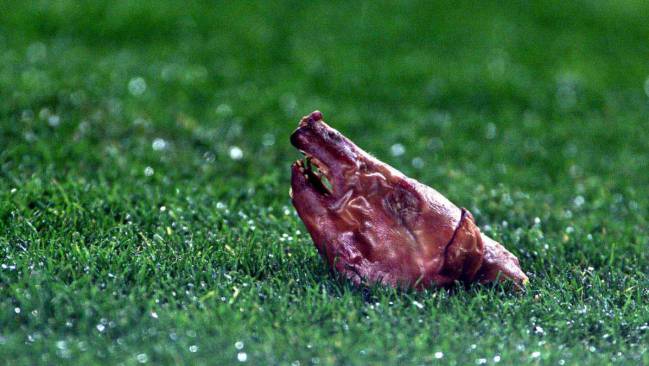
In 2000, Florentino Perez was running for president of Real Madrid. One of his campaign promises was to sign Luis Figo (told you to remember that name), Barcelona’s vice-captain and a club icon. Allegedly, Figo agreed to a contract with Perez that would bind him to Madrid if he won the election. But Figo told teammates Guardiola and Luis Enrique that he wasn’t leaving, even running an interview with Sport in which he told fans he was staying. Guess what happened? Perez won the election and the contract went forward, with the only way Barcelona could prevent the deal being to pay a $30M penalty cause (which would be the fifth-highest transfer fee of all time). Barcelona declined and Figo was handed his new Madrid uniform by none other than Alfredo Di Stefano. Barcelona fans were, to put it mildly, pissed at Figo about this. Fans branded him a traitor and a “Judas,” with the atmosphere in his first game back at the Camp Nou making LeBron James’ return to Cleveland after The Decision seem tame in comparison. Figo was jeered and targeted with missiles throughout the match, refusing to take corners (even though he was the normal corner-taker) out of fear of getting too close to the crowd. In his second game back at Barcelona in 2002, Figo decided to take corners again. Fans threw so much stuff onto the field that it took him two minutes to take it. Another corner took so long the referee suspended play for almost 20 minutes. The defining image was a pig’s head, which was among the debris thrown at Figo.
As it turns out, Figo was just the beginning for Perez, who sought to assemble a team of superstars. Dubbed the Galacticos, these once-a-year signings targeted the best players in the world at exuberant prices. Zinedine Zedana, Ronaldo, David Beckham, and Fabio Cannavaro were among those signed by Perez. However, while it brought another Champions League crown in 2002, Madrid went on a three-year stretch without a major trophy. Further personnel and staff issues led to Perez’s resignation. Meanwhile, Barcelona brought in a number of stars from overseas like Ronaldinho, Samuel Eto’o, Rafael Marquez, and Rivaldo, who I mention just so I can talk about the hat trick he scored against Valencia in 2001 (the greatest hat trick of all time) to give Barcelona a spot in the Champions League. Barcelona would get their second Champions League title in 2006 thanks to those stars, but the next few years would prove even more beneficial. A young crop of academy players, including Carles Puyol, Andres Iniesta, Xavi, and Victor Valdes, slowly became the faces of the club and elevated it to greater heights. Leading the pack of academy grads was a diminutive Argentinian forward named Lionel Messi, who we will mention again in this section a few more times.
But it was another Barcelona figure who would provide much more success. In 2008, Pep Guardiola was named as manager, bringing with him a style of play influenced by his time under Cruyff. Dubbed “tiki-taka,” this pass-heavy style would dominate the next several years of soccer both at the club level and internationally (with Spain winning every major trophy from 2008-12). Barcelona beat Manchester United in 2009 to win the Champions League and become the first Spanish club to win the treble, then again in 2011 for another European crown. In between, Messi, Xavi, and Iniesta became the first trio of Ballon d’Or (Player of the Year) finalists to have been from the same academy. However, Real Madrid would not take all of this laying down. Perez returned as Real president in 2009, bringing with him a second Galacticos era. He started by targeting the star player of the team Barcelona beat in 2009, signing Portuguese superstar Cristiano Ronaldo from Manchester United. This move brought the rivalry to astounding heights, with the two clubs each employing one of the two best players in the world and of their generation. Fans of either player instantly became fans of their team, meaning El Clasico grew even greater. It also meant for the first time, both Barcelona and Madrid could have sustained domestic and continental success at the same time.
In the following years, major names such as Neymar and Luis Suarez (Barcelona) and Gareth Bale and Luka Modric (Madrid) joined Messi and Ronaldo to form superstar lineups, which helped the two clubs play late into top competitions — including against each other. In 2011, something unprecedented happened — Barcelona and Madrid played each other four times in 18 days. A league fixture (a 1-1 draw), a Copa del Rey final (a 1-0 Madrid win), and a Champions League semi-final matchup (a 3-1 aggregate Barcelona win) resulted in a war of words and four red cards. In 2014, Madrid became the first club to win ten UEFA Champions League titles, taking out its other deep rival, Atletico Madrid, in the process. While Barcelona answered with a Champions League title in 2015, Madrid followed that up by winning three more in a row, all under former player and returning manager Zinedine Zidane. That’s five years in a row and six in eight years that Europe’s top soccer club resided in Spain.
But 2018 also proved to be a watershed year for the rivalry. After the Champions League Final, Zidane retired (he would later return as manager in 2019). Ronaldo also left for Juventus, ending the dominance El Clasico had on the Messi-Ronaldo rivalry. What’s more, a lack of European success (including a 8-2 loss to Bayern Munich in the Champions League) and chaos involving president Josep Maria Bartomeu led to Messi announcing his desire to leave the only club he’d ever played for. While Bartomeu eventually resigned, a financial fuck-up of legendary status would lead to Messi leaving Barcelona in 2021 and signing with Paris Saint-Germain. Although Barcelona managed to somewhat recover and even defeat their rivals 4-0, it was Madrid (in their first season without Sergio Ramos since 2005) who won La Liga and went on a legendary run to secure its 14th Champions League crown. Now in a new era, El Clasico may never reach the highs it did during the past decade (and what rivalry could possibly match that height?). Still, the success of both clubs will likely continue on, as will the hatred between the two.

MAJOR ON-FIELD MOMENTS:
11-1
It speaks volumes of what happened on the field and the circumstances off it that a ten-goal margin of victory between arch rivals isn’t happily discussed by either side. The atmosphere from the crowd and an intimidated referee led to conditions for Barcelona that Madrid’s Jose Llopis Corona described as “humanly impossible to play.” Six of Madrid’s first eight goals came in the final 15 minutes of the first half, with two more being ruled offside. Looking back, the on and off-field factors of the match are largely swept under the rug by Madrid. But Barcelona is more willing to discuss the result that, while painful and humiliating, serves as the perfect example for the identity Barcelona cultivated for decades, before stepping out of its shadow.
RUBBING SALT IN THE WOUND
The disputed transfer of Alfredo Di Stefano — involving four different teams from three different countries and two different continents — led to one of the most (if not the most)… let’s just say notable moments in the rivalry between Barcelona and Real Madrid. But as bad as it ended for Barcelona, things soon became worse. A few weeks after arriving in Madrid and seven months after his last competitive game, Di Stefano made his Real debut against, I shit you not, Barca. If the Barcelona faithful were regretting not securing the Argentinian’s services, they definitely were afterwards. Madrid thumped Barcelona 5-0, with Di Stefano scoring four himself. It was a preview of the dominance Di Stefano was about to bring to Madrid during his career in white.
FIVE IN A ROW, BUT NOT SIX
Going into the 1960 season, Madrid were the four-time defending European champions. But they had yet to go through their rivals, who hadn’t qualified for the Champions League before. That changed with the start of the decade, with the two sides meeting in the semi-finals. While Barcelona was eager to stop their rivals’ reign, it was Real who reminded everyone why they were kings of Europe. Madrid won both legs 3-1 before beating Eintracht Frankfurt in the final. While they had failed to prevent a fifth straight Champions League title for Madrid, Barca did stop them from getting a sixth. The following year, Barcelona became the first team to eliminate Madrid from Europe, winning in the Round of 16. They did lose the final to Benfica, though.
LA FINAL DE LAS BOTELLAS
Tensions were high for the final of the 1968 Copa de Generalisimo, and not just because the Generalisimo himself was present to watch his beloved Madrid face Barcelona. Despite Real being the favorites going into the match, the home squad went down early thanks to an own goal by Fernando Zunzunegui. As Barcelona continued to hold onto the lead, the home fans kept getting more and more frustrated. Things boiled over when two different penalty calls by Madrid were ignored by the referee. The crowd began throwing bottles at the referee, as well as Barcelona players, causing a brief stop in play. In the end, Barcelona managed to edge out the 1-0 win, forcing General Franco to hand the trophy renamed after him to his most hated team.
ENTER CRUYFF
Johan Cruyff was a revolution for Barcelona and his first El Clasico was the game that moved the Catalan club out of Madrid’s shadow. Cruyff — who had chosen Barcelona as a middle finger to General Franco and named his son Jordi — somehow found another way to endear himself to the fans. Playing amid the hostile Madrid crowd, Cruyff opened his Clasico scoring account in a 5-0 Barcelona win. The thrashing stunned the world of Spanish soccer and signaled the arrival of Barcelona as the dominant team. Fans were so ecstatic about the win that they poured onto the streets of Barcelona to celebrate. A New York Times reporter wrote that Cruyff had done more for the spirit of the Catalan people in 90 minutes than many politicians in years of struggle.
BARCELONA 5, MADRID 5, LAUDRUP 10
A member of Barcelona’s “Dream Team” that won the 1992 UEFA Champions League, Michael Laudrup was a beloved figure who won several trophies with the club. He was also part of a 5-0 win by Barcelona over Madrid in 1994. But Laudrup could sense that Barcelona was about to decline and Real was about to rise. That, coupled with a falling out with manager Johan Cruyff, led to Laudrup leaving the defending La Liga champs for Real. Almost exactly one year after the 5-0 thrashing, Laudrup helped Madrid return the favor with a 5-0 win of their own. Being on both sides of 5-0 El Clasico wins (and back-to-back La Liga champs for each club) is rare enough. But perhaps even more impressive is that Laudrup is still loved by both sets of fans to this day.
PORK & WHISKEY
Luis Figo must’ve known he wouldn’t get a warm reception upon his return trip to the Camp Nou after his move to Real Madrid. But — judging by how he put his fingers in his ears — not even he could’ve expected such a loud and harsh response from fans, who screamed, made countless signs, and threw fake bank notes at him. Figo, who normally took corners, didn’t do so out of fear of being too close to fans, who had their outrage answered with a 2-0 Barcelona win. Two years later, Figo decided to take corners once again, a decision that didn’t work out well. Coins, cans, bottles, lighters, golf balls, a knife, a bottle of whiskey, and a pig’s head were among the various items thrown at Figo throughout the match, which anticlimactically ended in a 0-0 draw.
FIGO’S REVENGE
In between the two memorable Luis Figo-centered Camp Nou encounters, there was another clash between the two rivals in Barcelona that the home fans would like to forget. In 2002, Madrid and Barcelona met in the UEFA Champions League for the first time since Barca halted Real’s European unbeaten streak in 1961. The first leg of their semi-final clash 41 years later took place in Barcelona, where the fans had given Figo and Madrid an earful in 2000. But this time Real was undaunted, goals from Zinedine Zedane and Steve McManaman giving Madrid a crucial 2-0 road win. Madrid actually scored all the goals in the two legs, with an own goal being Barcelona’s only bright spot in a 1-1 second leg draw. Real would go on to win the tournament.
A RARE ROUND OF APPLAUSE
Given the animosity between the two clubs, it seems impossible to imagine a scenario where a player gets a round of applause from the visiting crowd. It’s happened three times for a player from Barcelona. The first to do it was one of the Top 3 players to ever lace up cleats, Diego Maradona, who did this for his first ever El Clasico goal in 1983. The last came in 2015, with Andres Iniesta — one of the best Spanish soccer players ever — being respected even by Real fans. But the most memorable happened in 2005, when Ronaldinho — arguably the best in the world at the time and a generally lovable player — put on such a clinic against Madrid that the Santiago Bernabeu crowd broke out into applause after his second goal in a 3-0 Barcelona win.
MESSI MAKES HIS MARK
In 2007, Real Madrid got their first taste of the force that would haunt them for the next decade and a half of El Clasicos. Lionel Messi — then just 19 years old — answered a fifth minute goal from Ruud van Nistelrooy with his first goal against Madrid just six minutes later. Real took a 2-1 lead shortly after, but Messi helped Barcelona equalize just before the half hour mark. Sergio Ramos gave the visiting squad the advantage late. But just when it looked like Madrid would win, Messi hammered home a goal in stoppage time to make it a 3-3 draw. It was the first El Clasico hat trick in 12 years and it came from a teenager. It was this match (and an insane goal against Getafe a month later) that established Messi as one of the best players in the world.
BARCA’S BEST ERA BEGINS
Before Barcelona won the first of its three UEFA Champions League titles from 2009-15, they let the rest of Europe know a new team was about to dominate the continent. They did so at the expense of their rivals, humiliating Real 6-2 in Madrid. While Gonzalo Higuain got the home team on the board first, goals by Thierry Henry and Carles Puyol (who celebrated by kissing his Catalan flag-themed captain’s armband afterwards) put the visitors on top by the 20th minute. Two goals from Lionel Messi, along with another by Henry and one by Gerard Pique, completed the eradication. It was the most goals Barcelona had ever put up at the Santiago Bernabeu and their biggest road El Clasico victory since the golden days of Johan Cruyff 55 years earlier.
LEND ME YOUR EAR
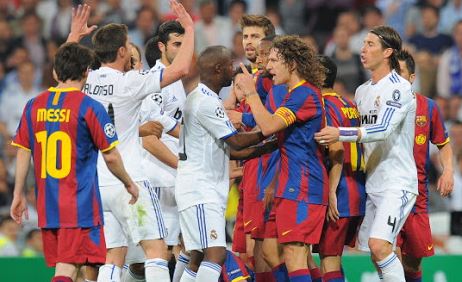
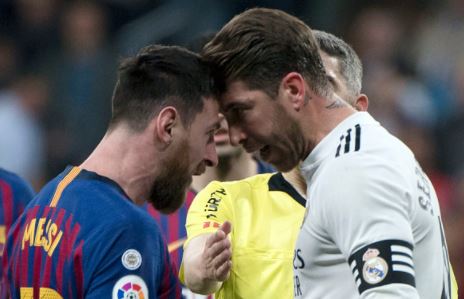
2011 was a wild year for El Classico, with four matches played in less than three weeks. There was the 2011 Copa del Rey Final (after which Madrid dropped the trophy from their bus), a La Liga draw, and Barcelona’s UEFA Champions League semi-final triumph over two legs. But there were actually two more notable matches that actually began the 2011-12 season. The two-legged Supercopa de Espana saw Barcelona prevail 5-4 on aggregate. Rough play was rampant throughout both legs, particularly at the end of the second match. Marcelo drew a red card for his tackle on Cesc Fabregas, which ignited a brawl that saw two more red cards and Madrid manager Jose Mourinho get into a scuffle with Barcelona assistant Tito Vilanova.
HAVING A BALE OF A TIME
The 2014 Copa del Rey Final was the seventh and most recent to feature El Clasico, with Real Madrid and Barcelona each winning three of the previous six. No. 7 was another memorable encounter, with the two sides even at 1-1 going into the final few minutes of the match. Madrid was able to clear the ball away from goal, with the ball finding Gareth Bale on the left side of the field. Bale poked the ball into the Barcelona half, but was nudged several feet out of bounds by Marc Bartra. Seemingly out of the play, Bale instead sprinted back onto the field, got the ball before Bartra, sped towards goal, and fired the ball into the net. Bale’s goal — one of the best and most important in El Clasico history — proved to be the difference in a 2-1 Madrid victory.
GETTING 500 IN STYLE
Heading into the first El Clasico of 2017, Lionel Messi was chasing history, two goals away from becoming the first player to score 500 times for Barcelona. He got halfway there in the 33rd minute, but was being held in check throughout the match. With the score at 2-2 and Madrid in Barcelona’s half in stoppage time, it seemed another goal was unlikely. But then Sergi Roberto made a lengthy run up the middle of the field and into Real territory. A few passes later, Jordi Alba sent the ball to the top of the box, where Messi swung it into the net to stun the Madrid crowd, give Barcelona the 3-2 win, and tally goal No. 500 for the blaugrana. The striking image of Messi holding up his jersey — along with Ray Hudson’s insane commentary — are legendary.
END OF AN ERA
2018 was the beginning of the end for the greatest era in El Clasico’s lengthy history. That summer, Cristiano Ronaldo left Madrid for Juventus. While Lionel Messi (who had just been named captain) was still a few years from his Barcelona exit, an arm fracture suffered in October forced him to miss a few weeks. That stretch would include the first Clasico of the season, which had suddenly become one for the history books. It was the first Barcelona-Real Madrid match to not feature either Messi or Ronaldo since 2007. Dubbed the “end of an era,” the match may have been missing the two best players on the planet, but it still had plenty of stars. That included Luis Suarez, who took his own bite out of history and scored a hat trick to power Barcelona to a 5-1 win.
STATISTICS:
HEAD-TO-HEAD RECORD
Barcelona: 124
Madrid: 108
Draw: 64
LEAGUE CHAMPIONSHIPS
Barcelona: 27
Madrid: 35 (record)
COPA DEL REY
Barcelona: 31 (record)
Madrid: 20
SUPERCOPA DE ESPANA
Barcelona: 14 (record)
Madrid: 12
UEFA CHAMPIONS LEAGUE
Barcelona: 5
Madrid: 14 (record)
UEFA EUROPA LEAGUE
Barcelona: 0
Madrid: 2
UEFA CUP WINNERS’ CUP
Barcelona: 4 (record)
Madrid: 0
UEFA SUPER CUP
Barcelona: 5 (tied for record)
Madrid: 5 (tied for record)
FIFA CLUB WORLD CUP
Barcelona: 3
Madrid: 5 (record)
NOTABLE FIGURES:
CESAR RODRIGUEZ
The first truly great player in Barcelona history, Cesar Rodriguez (best known as Cesar) played for the Catalan club for over 15 years. During that time, he led Barcelona to five La Liga titles in the 1940’s and 1950’s, three Copa del Generalisimo triumphs, and 13 trophies overall. Cesar also tallied 232 goals, a club record that stood for nearly 50 years until it was broken by Lionel Messi. Cesar also represented Spain at the 1950 World Cup (the previous two tournaments were canceled due to World War II) and actually managed Barcelona for two seasons as well.
ALFREDO DI STEFANO
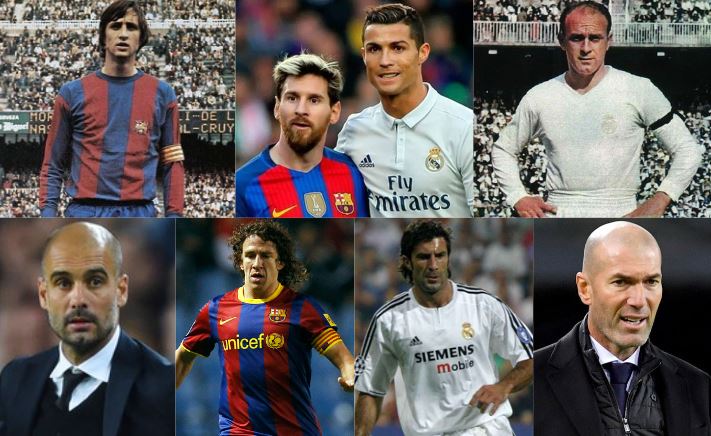
He’s the player who completely changed the game for Real Madrid. After the batshit crazy way he ended up in Madrid, Alfredo Di Stefano proved to be worth much more than the trouble of his contract negotiations. Nicknamed “Saeta Rubia” (“Blonde Arrow”), Di Stefano was a massive part of Real’s victories in the first five UEFA Champions League tournaments. The last of those titles came after a 7-3 victory over Eintracht Frankfurt that saw Di Stefano tally a hat trick. Di Stefano played with Espanyol for a couple of years, perhaps to continue torturing Barcelona.
JOHAN CRUYFF
One of the greatest, most prolific players in the history of soccer, Johan Cruyff changed the game itself. From being a proponent of “Total Football” and the inventor of the Cruyff Turn, the Dutch legend had an equally great impact on Barcelona as well. From rejuvenating the club with his skills on the field to leading Barcelona to its first UEFA Champions League crown as the manager to leaving behind a philosophy that greatly influenced the La Masia academy, the Catalan club (and Spanish soccer as a whole) owe a great deal of their successes to Cruyff.
RAUL
One of the best and most important players in Real Madrid history actually started with their other big rivals. But when Atletico Madrid stupidly removed its academy to cut costs, Raul Gonzalez Blanco (better known as Raul) went to Real. All he did was spend 16 years with the senior team, setting the club record for most goals (later broken by Cristiano Ronaldo) and games played (still has it). The legendary striker and current second team coach also played a key role in Madrid’s three UEFA Champions League titles in the late 1990’s and early 2000’s.
PEP GUARDIOLA
Josep “Pep” Guardiola Sala had a playing career that already endeared him to the Barcelona faithful, with him being a former captain and member of the 1992 UEFA Champions League-winning squad. Turns out, Guardiola is also arguably the greatest manager of this generation. Guardiola took over Barcelona in 2008 and promptly guided the club to two Champions League titles, three La Liga crowns, two Copa del Rey triumphs, and several domestic and continental records in four years, with his “tiki-taka” style leaving an everlasting mark on Spanish soccer.
LUIS FIGO
More than two decades after his move between the two El Classico clubs, Luis Figo probably remains the most hated person in all of Barcelona. His incredible success with the Catalan club made his stunning signing with Madrid all the more painful. Not only did Figo go on to have even greater success with Real, but his very presence on the team was a symbol of the current Madrid Galactico philosophy that has brought them European success. His skill and ball control led to him setting many records that were broken by either Lionel Messi or Cristiano Ronaldo.
LUIS ENRIQUE/MICHAEL LAUDRUP
While Luis Figo was the most infamous transfer in El Clasico history, he was far from the first. In 1994, Michael Laudrup — a part of Barcelona’s 1992 “Dream Team” — left for Madrid and won La Liga shortly after. Incredibly, Laudrup was on the winning side of two straight 5-0 results between the two clubs, but with different victors. Another member of Madrid’s 5-0 win was Luis Enrique, who left for Barcelona two years later. Enrique would have successful playing careers with both clubs, before managing Barcelona to a UEFA Champions League crown in 2015.
RONALDINHO
Ronaldinho would normally be grouped in with the other stars like Samuel Eto’o, Rivaldo, Ronaldo, and Rafael Marquez who spent a few years with Barcelona and then split. But apart from being arguably the greatest ball-handler in the history of soccer, what sets Ronaldinho apart is that not only did he win a UEFA Champions League with Barcelona, but also put on such an incredible performance against Madrid in 2005 that the fans applauded. He was just the second Barca player (after Diego Maradona) honored by the Santiago Bernabeu crowd.
ZINEDINE ZEDANE
Much like Pep Guardiola for Barcelona, Zinedine Zedane would’ve been a Madrid legend just for his playing career. One of the best to ever put on cleats, the whole “headbutting a guy in the World Cup Final” thing overshadows an outstandingly creative talent that saw him become one of the Galacticos and score the UEFA Champions League-winning goal in 2002. Then Zidane suddenly became Real’s manager in 2016. All he did was lead the club to three European titles in a row before riding off into the sunset (only to return to his same position about a year later).
CARLES PUYOL
A Barcelona lifer, Carles Puyol is one of the most beloved figures in club history. Known for his trademark long, curly hair, Puyol graduated from La Masia, debuted with the senior team in 1999, became captain and one of the best defenders in all of soccer, and retired in 2014 — all without ever leaving the club. But even without his accomplishments and trophies, Puyol would’ve been loved for just his goal in a 6-2 win over Madrid on the road in 2009. Facing the crowd of opposing Puyol kissed his captain’s band, which was styled after the Catalan flag.
SERGIO RAMOS
Madrid’s legendary, hard-nosed defender, Sergio Ramos has become an icon among Real fans during his lengthy career. A rough and sometimes (read: a lot of the time) dirty player, Ramos is the perfect instigator. Not only has he appeared in more El Clasicos than anyone, he also has the most red cards in the history of the rivalry, and La Liga as a whole. Ramos has also proven to be clutch, coming up with a stoppage time header that kept Real alive against rivals Atletico Madrid in the 2014 UEFA Champions League Final, which Real won in extra time.
LIONEL MESSI
Lionel Messi is not human. The greatest player of his generation and one of the best all-time, Messi has completely rewritten Barcelona’s record book. Messi broke Cesar Rodriguez’s goal scoring record at age 24 and has now nearly tripled his total (651 goals to 232). He’s also set to break the club’s all-time appearances record this season. He’s also made his mark on the rivalry several times over. The most memorable moment was his game-winning goal against Madrid in 2017 (also his 500th club goal), followed by him holding up his jersey in front of the Real crowd.
CRISTIANO RONALDO
The second-greatest player of his generation, Cristiano Ronaldo helped catapult El Clasico to unprecedented heights thanks to his rivalry with Lionel Messi. When he wasn’t focused on his abs or reacting to a phantom foul like he’d been shot, Ronaldo helped Madrid bring in other star power as the first of the second Galactico generation. He also ravaged the Madrid record book, becoming the club’s all-time leading goal scorer and the main driving force behind Real winning four UEFA Champions Leagues in a five-year span (ending with three in a row) in the 2010’s.
FAN INVOLVEMENT:
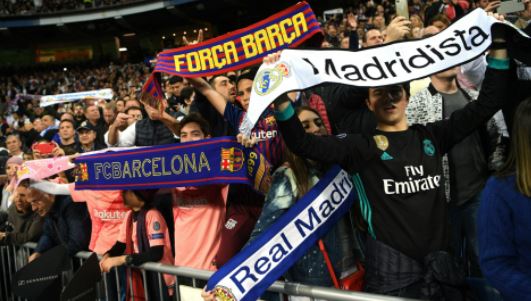
From the feverishly hostile atmosphere in Madrid for the 1943 Copa de Generalisimo to the animosity-fueled Camp Nou for the Luis Figo-centered matches, crowds in both stadiums of El Clasico have provided memorable backdrops to this legendary rivalry for more than 100 years. That should not come as a surprise given how each club is so closely entwined with regional pride, which is incredibly important to Spanish people. This naturally creates some hostile match day atmosphere, with fans barred from wearing rival colors in certain areas. About ten years ago, I went with some friends to a Cal-Stanford football game in Berkeley. One friend — a Stanford fan — wore a red shirt. As soon as we stepped into the student section, the fans started chanting “take off that red shirt!” in unison. He did, though the shirt was later ripped from his grasp and tossed into the crowd, never to be seen again. Going back to El Clasico, imagine that scenario, only instead of forcing you to take off your shirt they beat the shit out of you. Quite simply put, both of these clubs are more than that — one of them a bit more, literally.
Barcelona’s famous slogan is “Mes que un club” (“More than a club”), and for good reason. The Barca supporters own and operate the club, therefore it constantly evokes the Catalan culture and identity. Matches at the Camp Nou — especially major ones like El Clasico — have become perfect opportunities to reflect that nationalism, with fans chanting for independence and displaying Catalonia flags as often as the team colors. During the pro-independence protests in recent years, concerns grew regarding the safety at Barcelona matches. One such match in 2017 against Las Palmas was requested by Barcelona to be postponed, as it was the same day the independence referendum would be voted on. However, La Liga denied the request and threatened to deduct six points from Barca should they refuse to play. So for the first and only time (until the COVID-19 pandemic anyway), a match was played at the Camp Nou without any fans in attendance. Barcelona won 3-0 and the empty stadium became almost as big of a symbol of the movement as it would’ve been with a full house.
SUMMARY:
The best teams — fueled by a regional rivalry with a lengthy history or politics and war. The best players — generations of legendary names from overseas and homegrown icons. The biggest stakes — national and continental championship implications are at stake during every match. There are plenty of reasons El Clasico is commonly considered one of the best — if not the best — rivalry in all of sports, and seen as the bar every soccer rivalry is measured against. The quote at the beginning is true: when Real Madrid plays FC Barcelona, the world stops.
So given that these are the two biggest teams in the country and claim most of the trophies and national attention, there was no competition at all, right? There’s no other notable or fierce rivalry in the rest of Spain, correct? Well…
First off, we start with the second-most famous and ferocious rivalry in Spain, one that some say is even a level above El Clasico. Real Madrid’s other eternal enemy resides in their own home, with Atletico Madrid being the other half of the Madrid Derby. While Atleti was the most successful side early on, the addition of Alfredo Di Stefano changed things in favor of Real. As a result, Atletico Madrid was often seen as the inferior little brother. But that also led to Atleti being the one likeable Madrid team to people from other regions, with most hating Real. While Atletico were extremely successful in the 1970’s, a choke job against Bayern Munich in the 1974 UEFA Champions League Final began a trend where they were seen as lovable losers, whose fans often embraced that losing aspect. Atleti were dormant for decades, until manager Diego Simeone revived the club and brought them back to being national and continental contenders. But unfortunately for Atletico, they lost the 2014 and 2016 Champions League Finals in heartbreaking fashion against… Real. While the ferocity is there, there’s no question Real owns the rivalry. The same can be said for the Derbi Barceloni between Barcelona and Espanyol. While the battle for Catalonia is often fought fiercely, it’s Barca that more often than not comes out on top. Espanyol, who apart from a pair of Copa del Rey titles haven’t done shit since the 1940’s, are the forgotten team of Barcelona.
The fierce regional pride across Spain has led to some great rivalries across the country. The Seville Derby between Sevilla and Real Betis is arguably the fiercest inner-city rivalry in Spain, with the history between the two being largely competitive. While Sevilla’s recent European success (six UEFA Europa League titles since 2005) has taken them slightly ahead, Betis can always point to a much bigger attendance record. Valencia has largely been a consistent La Liga contender (despite being run by a fucking asshole moron), playing a part in the Derby del Turia with Levante and the Derbi de la Comunitat with Villarreal. There are famous and fierce rivalries that exist despite the clubs not playing often (the Mallorca Derby between Real Mallorca and Atletico Baleares) and despite neither club winning literally anything (the Asturian Derby between Real Oviedo and Sporting Gijon). The regional pride is sometimes so fierce that it takes pride over the rivalry on the field (the Basque Derby between Athletic Bilbao and Real Sociedad) or results in both sets of fans singing together before the kickoff (the Galician Derby between Celta Vigo and Deportivo La Coruna). The fact that despite these colorful and shockingly fierce rivalries litter the country, the clash between Barcelona and Real Madrid still clearly shines through as the national rivalry of Spain means even more.
From the country with the most well-known rivalry to even the most casual of soccer fans, we shift to the country with the most recognizable soccer teams in the world — England. But while like Spain it’s dotted with amazing and historic rivalries, choosing a dominant one is impossible. In fact, narrowing it down to the limit of two per country was one of the three hardest decisions I made during this entire project. There are several rivalries that fell short and major clubs that won’t even get mentioned. In addition, many of these successful clubs have rivalries with each other, with the hatred between the two sides being great enough to be the best in many other countries. So before I get to the ones that did make the cut, let’s talk about some that didn’t.
To do that, we need to start with the most successful clubs in all of England — Manchester United and Liverpool. Both take part in inner-city rivalries that are world famous and can stand against any rivalry in soccer (and join in the timeless “red vs. blue” theme). The Manchester Derby between Manchester United and Manchester City is probably the one non-El Clasico rivalry you’ve heard about the most, and for good reason. The two Manchester clubs have a lengthy history of battles, with the two fighting for Premier League glory over the past decade. While United has largely always been the top dog, City have been able to be thorns in their sides. But even with some rivalry success, City has historically been terrible and non-competitive. Then in 2008 City was bought by Abu Dhabi United Group, allowing for shitloads of oil money to be poured into the club, which could buy the best players and managers. Thus, it’s no surprise that we’re living through City’s most successful era by far. Meanwhile, Liverpool contests the Merseyside Derby with Everton. The close proximity between the two (their home grounds are less than a mile apart) has led to fierce competition, even in business. Everton opened its second official store in the famous shopping center of Liverpool One. They called it Everton Two, so the official name reads: Everton Two, Liverpool One. This rivalry is also unique in that both sets of fans often get along famously and rarely fight. But it’s also extremely one-sided historically in Liverpool’s favor.
Unquestionably, the Manchester Derby and Merseyside Derby are two of the biggest rivalries in English soccer and all over the world. So it may come as a shock that neither make the cut for the World Cup of Hate. The reason is simple: there’s a bigger fish, both inside and outside each rivalry. Inside, the majority of the wins and silverware lean towards one side (Manchester United and Liverpool). Even when Manchester City and Everton have been at their best, their rivals have still been able to win titles and have success. When they’re at their worst, they get dominated. Manchester City did not record a single derby win during the entire 1990’s and Everton have largely been pushovers for most of their derby. Even when these derbies have been their most competitive, there has always been one other rivalry that has overshadowed both of them. We don’t have to look far to find the two teams involved.
The North West Derby (England)
Manchester United F.C. vs. Liverpool F.C.
“My greatest challenge was knocking Liverpool right off their fucking perch. And you can print that.” — Sir Alex Ferguson, former Manchester United manager
(Full disclosure: I am a Manchester United fan, and thus hate Liverpool. My friend Richard is a Liverpool fan, and thus hates Manchester United. So when you see me taking what seems like unnecessary pot shots and Richard and his scouse team, that’s why. In addition, Liverpool is owned by Fenway Sports Group, which owns my beloved Boston Red Sox. If you think this would help Liverpool gain favor with me, consider that Fenway Sports Group decided to trade one of the greatest baseball players alive in his prime because they wanted to get under the Luxury Tax, despite being one of the richest and most profitable baseball teams in the world. I miss you, Mookie.)
The two most successful clubs in England — Manchester United and Liverpool — contest arguably the biggest and most ferocious rivalry in the country (and the world), one that symbolizes the historic bad blood between the two cities.
Historically, there has been a major divide between the North and South of England — as well as the United Kingdom as a whole. The Industrial Revolution in England largely benefited the North, with heavy industry becoming the greatest factor on the northern economy. As time went on and the world shifted away from heavy industry, the North has suffered financially, with the South — home to the capital city and stock market/tech megahub of London — going in the opposite direction. The South as a whole is richer, has a longer life expectancy, and is more conservative/right-leaning (not to mention it has a closer proximity to the rest of Europe). Meanwhile, the North — full of laborers and unions — is more left-leaning. The North vs. South divide (remind anyone of NorCal vs. SoCal?) is so great that they can essentially be two different countries, were they not all in England. But even among the general northern pride, there exists a deep rivalry between two cities in particular.
Manchester and Liverpool have always been the two main cities in the North of England and are often considered part of the same greater metropolitan area. The two often worked in tandem during the 1800’s, especially after the construction of the Liverpool and Manchester Railway. The world’s first inter-city railway and the first to rely solely on steam power, it proved vital in getting raw goods and materials from the port of Liverpool to the factories of Manchester. However, part of that process meant that merchants from Manchester had to pay extra to send and receive goods, having to have them go through the coastal city of Liverpool first. So in 1895 construction began on the Manchester Ship Canal, which finally opened in 1894 as the world’s largest ship canal at the time. The canal — which begins at the River Mersey in Liverpool — gave large, ocean-going vessels direct access to Manchester, avoiding the cost of going through Liverpool altogether. This in turn pissed off merchants in Liverpool, creating a bitterness that formed the basis of the regional rivalry that exists to this day.
Naturally, the Manchester-Liverpool rivalry extends to anything related to the two cities, especially soccer. As it turns out, the best teams from the region happen to be pretty good.
HISTORY:
The first member of the North West Derby began its existence, fittingly, with the railroad. In 1874, members of the Carriage and Wagon department of the Lancashire and Yorkshire Railway depot at Newton Heath decided to form a soccer team, called Newton Heath LYR Football Club. They initially competed against other departments and railway companies, but soon moved onto playing against real teams. In 1880, green and gold-colored Newton Heath played their first recorded match. Eight years later, Newton Heath joined The Combination, a regional football league. After it folded, they joined the Football Alliance, which in 1892 merged with the Football League to form the First Division, which would remain England’s top flight soccer division for more than a century. But in 1894, Newton Heath finished in last place and would have to win a playoff test match in order to stay in the First Division. Their opponent had only been in existence for two years. You’ll never guess which club it was.
In 1892, Everton made its biggest mistake of all time. A dispute between the Everton committee and club president John Houlding, who owned the land the club’s home stadium, Anfield, was built on led to Everton relocating to their current home of Goodison Park. Needing a team to play at Anfield, Houlding started another club, which he called Everton F.C. and Athletic Grounds Ltd (Everton Athletic for short). However, the Football Association (the governing body of soccer in England) refused to recognize the club as Everton. So, Everton Athletic was renamed Liverpool Football Club. Composed of almost entirely Scottish players, Liverpool began play a few months later and in 1893 were invited to join the Football League Second Division. They won it and, as a result, got to face the lowest finishing First Division club for promotion. Those were the factors going into the first ever North West Derby, in which Liverpool defeated Newton Heath 2-0, with the two clubs swapping leagues as a result. That wasn’t the only big switch of that year. Also in 1894, Liverpool changed its blue and white color scheme (modeled after Everton) in favor of red — the city of Liverpool’s main color.
At the start of the 20th century, the two clubs were headed in opposite directions. Liverpool claimed its first First Division title in 1901. The following January, Newton Heath found itself with a sizable amount of debt and went into liquidation. Club captain Harry Stafford found four local businessmen who would invest money in return for directly running the club. As part of the reorganization, the club changed its colors to red, white, and black and its name to Manchester United Football Club. In 1906 — the year Liverpool won its second First Division title, Manchester was promoted back to the top flight, winning its first First Division title two years later. The following year, United won its first ever Charity Shield and FA Cup. Another league title and Charity Shield came in 1911 (the year after moving into their current home of Old Trafford), but that would be its last national trophy for a few decades. World War I brought a halt to English soccer for several years, but Liverpool quickly got back up to speed, winning the First Division in 1922 and 1923. But then they too went on a decline. For the next two and a half decades, Manchester and Liverpool didn’t win anything other than small regional competitions, with United spending a handful of seasons in the Second Division. Because of this, the rivalry didn’t really grow into anything notable. But things began to change after World War II.
In 1945, United appointed a former midfielder who played for both Liverpool and Manchester City — the club’s two greatest rivals — to be its manager. But it was with United that Sir Matt Busby became a soccer legend. Part of Busby’s deal was that he got unprecedented control of team selection, player transfers, and training sessions. Fortunately for Manchester, Busby knew what he was doing. United won the FA Cup in 1948 and three First Division titles in the 1950’s, all with one of the youngest rosters in the history of English soccer. The back-to-back champions from 1956-57 had an average age of 22 and included several teenagers. Duncan Edwards, Mark Jones, Jamie Blanchflower, David Pegg, Billy Whelan, Geoff Bent, Johnny Berry, Tommy Taylor, Eddie Colman, and Roger Byrne were part of the future golden generation for United — along with England. That squad — known as the Busby Babes” — was also the first English team to compete in the UEFA Champions League, recording a club record 10-0 victory over Anderlecht before losing in the semi-finals to eventual champion Real Madrid (who had offered Busby the manager’s job the year before). Unfortunately, the following European campaign ended on a much different, tragic note.
At the time, the Football League didn’t want their teams to compete in Europe (United said fuck you and went anyway). So as a result, they refused to move league competitions to help Manchester out with its schedule. So air travel — which was risky — was the only option. After a lengthy trip to Yugolsavia for an away leg match against Red Star Belgrade (which United won to advance to the semi-finals), their private plane landed in Munich to refuel. Despite mechanical and weather-related problems with earlier takeoff attempts, the team — desperate to make it back in time for their league fixture — still wanted to try again. Unfortunately, the plane never got airborne, crashing off the end of the runway. 23 people — including eight United players — were killed. Of the players I listed in the above paragraph, only Edwards, Berry, and Blanchflower survived the initial crash. Edwards (one of the best English players of his era) died in the hospital two weeks later. Berry and Blanchflower never played soccer again. Busby himself was injured so badly he twice received the last rites, but managed to recover.
In the aftermath of the Munich air disaster, there were rumors that United were going to fold (Liverpool of all teams offered five players on loan). But somehow, the club — managed for a bit by assistant Jimmy Murphy — managed to reach the FA Cup Final only three months later. Despite losing so many players from the Busby Babes, the namesake manager rebuilt United using crash survivors Sir Bobby Charlton and Bill Foulkes, signing Denis Law (a former Manchester City player) and Pat Creland, and elevating youth players like George Best. Charlton, Law, and Best each went on to win European Player of the Year, with Charlton in particular basically becoming Manchester’s most iconic player ever. Five years after the disaster, United won the FA Cup, followed by league titles in 1965 and 1967. In 1968 — ten years after the tragedy in Munich — Manchester United became the first English club to win the UEFA Champions League, beating Benfica 4-1 in the final. In spite of everything they had lost, United had become the most successful English club in Europe. But as the 1960’s came to an end (Busby would soon retire), that title would be taken by another team in emphatic fashion. After years of being among the Second Division, Liverpool was sadly about to win a lot.
While Liverpool did win the First Division in 1947, they would not have real success for another 15+ years. Liverpool was relegated in 1954 and would spend eight seasons in the Second Division. Unbeknownst to anyone at the time, the club made arguably its best ever decision during that time. When chairman Tom Williams approached Huddersfield Town manager Bill Shankly about taking the Liverpool job, he asked him, “How would you like to manage the best club in the country?” Shankly replied, “Why? Is Matt Busby packing it in?” Shankly still took the job, guiding Liverpool back to the First Division in 1962. Under Shankly, everything about Liverpool — from the training method to the way it embraced its fans — changed, starting with the creation of the Boot Room, a cleat storage room the coaches converted into a meeting room. That coaching staff included future managers Bob Paisley and Joe Fagan. From 1972 to 1992 (which also included a stretch where Kenny Dalglish was player/manager), Liverpool won 11 league titles, 19 domestic cups, and seven European competitions — including four UEFA Champions League crowns. In 1984, Liverpool also became the first English squad to achieve a treble, winning the First Division, League Cup, and European Cup.
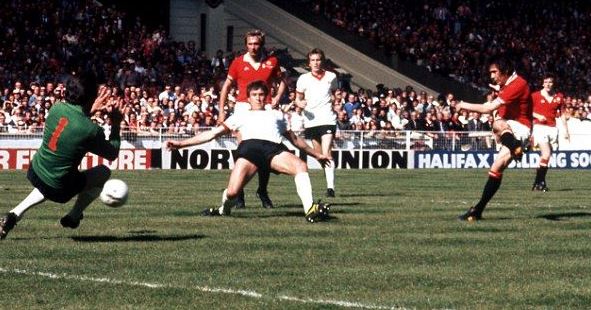
So what was United doing during this period? For the most part, diddly squat. The golden generation was gone and Manchester never really challenged Liverpool for the title. However, they still garnered media attention over most clubs, including Liverpool, who believed their successful “workmanlike” teams were being ignored by the “glamor” of United. This feeling truly started to heat up the rivalry, especially because United was surprisingly good at winning FA Cups, as Liverpool found out in 1977. A club that had just won the league and was about to win the Champions League was defeated by Manchester 2-1 in the FA Cup Final. More FA Cups followed in 1983 and 1985, although success in the league was a much different story.
In November 1986, United was in danger of being relegated and dismissed manager Ron Atkinson. To replace him, the club signed the manager of Scottish club Aberdeen, a man who was reportedly being looked at to replace Fagan at Liverpool before Daglish took the job. His name was Alex Ferguson and without spoiling too much he’s the reason Sir Matt Busby isn’t considered the greatest manager in Manchester United history. However, Ferguson was almost fired due to a lack of success in 1990. But a victory in that year’s FA Cup Final saved his job, which he would keep for the next 23 years. In 1991, United won its first ever UEFA Cup Winners’ Cup and UEFA Super Cup. The fact that Manchester could even compete in those competitions was somewhat of a surprise, given what had happened with their rivals.
During the 1980’s two tragedies happened that exposed the two worst aspects of English soccer at the time — hooliganism and shitty, outdated stadiums. Before kickoff of the 1985 Champions League Final against Juventus, a large group of Liverpool fans breached a fence separating the two groups of supporters and charged Juventus fans. The resulting weight of people caused a wall to collapse, killing 39 fans (mostly Italians). Despite this and the protests of both managers, the match happened anyway, with Liverpool losing 1-0. The Heysel Stadium disaster led to 14 Liverpool fans being convicted of manslaughter and all English clubs being banned from European competition for five years (this was far from the only violent incident involving English soccer fans). Liverpool itself got a ten-year ban, although it was reduced to six. In 1989, Liverpool was set to play Nottingham Forest in the FA Cup semi-final at Hillsborough Stadium. Due to an over-capacity attendance, poor stadium layout, and terrible crowd management by police, hundreds of fans were crushed. 96 people were killed and nearly 800 more were injured. The match was abandoned but later played at (of all places) Old Trafford, with Liverpool winning and going on to claim the FA Cup. The Hillsborough disaster led to the Taylor Report, which recommended major soccer stadiums make massive changes. This unintentionally contributed to one of the biggest events in soccer history.
As the 1990’s began, several major English soccer clubs (including Manchester United and Liverpool) had begun to think less about the league and more about themselves. Specifically, they were envious of the money clubs in Italy and Spain were making. Due to the structure of the First Division, things like TV rights and advertising weren’t entirely available for the teams to share. They wanted a new deal to raise the funds to not only help themselves but upgrade their stadiums to comply with the Taylor Report’s recommendations. Led by Manchester United, Liverpool, Everton, Arsenal, and Tottenham, a proposal was created and sent to the governing body of English soccer, which had a bad relationship with the Football League. With the FA’s approval, 22 clubs broke away from the Football League in 1992 and formed the Premier League, which became the new top flight division for English soccer. The Premier League and the next top three divisions (renamed the Championship, League One, and League Two) would also maintain their top-tier “Football League” status. Although most Premier League clubs have been able to reap the benefits of what’s become the biggest, most financially successful soccer league in the world (with some notable exceptions), no club has thrived during the Premier League era like Manchester United.
1992 was not only the first year of the Premier League (and more importantly the year of my birth), but it also saw a group of six youth players make their first team debuts for United. Dubbed the “Class of ’92,” Ryan Giggs, David Beckham, Paul Scholes, Gary Neville, Phil Neville, and Nicky Butt would all go on to have lengthy, silverware-heavy careers with the Red Devils. Powered by this group of youngsters and signees like Roy Keane, Dwight Yorke, and Eric Cantona, United won the Premier League in 1993 & 1994, 1996 & 1997, and three straight from 1999-2001. They also collected three FA Cup titles and reached the club’s greatest achievement. In 1999, Manchester won the Premier League and FA Cup, then had the chance to win the first ever Premier League-era treble in the UEFA Champions League Final against Bayern Munich. In one of the most iconic finishes in soccer history, United went from trailing 1-0 to winning 2-1 thanks to stoppage time goals from Teddy Sheringham and Ole Gunnar Solskjaer. United’s second ever European crown also brought about the sought-after treble.
This remarkable success had another impact for Manchester United. Because of the way the Premier League was structured, the revenue shares from TV rights and sponsorships were based on where clubs finished, with the winners getting the most. When Manchester kept winning, they kept getting more and more money. That allowed them to sign more players and put more money into their incredibly successful youth academy. The exposure as winners allowed them to reach markets around Europe and the world. Early on, United subscribed to the idea that if it existed, a product could be sponsored. While this paved the way for some (not entirely unwarranted) criticism, it did establish a revenue stream that’s kept United among the Top 3 highest-earning clubs in the world — even to this day. All of this meant United was able to keep winning, especially with the signings of Cristiano Ronaldo and Wayne Rooney, (along with notable names like Rio Ferdinand, Robin van Persie, Nani, Edwin van der Sar, Nemanja Vidic, Michael Carrick, and Patrice Evra). Premier League titles in 2003, 2007, 2008, 2009, 2011, and 2013 (the last two breaking Liverpool’s English top flight record and then setting the current record of 20) along with another FA Cup and a third Champions League crown in 2008 (I will never not laugh at John Terry falling down) completed Manchester’s dominance of the first two decades of the Premier League era.
It was during this time that Liverpool surpassed a different Manchester United record — most years without a first division title. While Liverpool would find some good moments in the rivalry and win a few trophies (like one more Champions League win), club legends like Steven Gerrard would go their whole careers with the Premier League title slipping through their fingers. Unfortunately, all good things must come to an end. Ferguson (who after 1999 became Sir Alex Ferguson) retired at the end of the 2012-13 season, bringing forth a period of manager instability not seen in decades. Although United has won another FA Cup and its first ever UEFA Europa League since then, it’s been several years since a league crown (don’t fucking talk to me about this season). As is tradition with this rivalry, the two sides can’t be good at the same time. The hiring of manager Jurgen Klopp (and pillaging Southampton for all of their good players) finally saw Liverpool break its 30-year top flight title drought in 2020 (after winning a sixth Champions League the year before). But no matter who is good and who is mediocre, clashes between these two sides have always been colorful, particularly featuring red (in terms of team uniforms, cards, and blood).
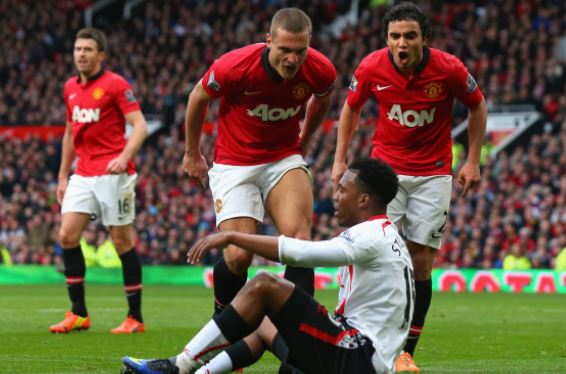
MAJOR ON-FIELD MOMENTS:
FIRST MATCH, TEST MATCH
You’d be hard pressed to find a rivalry which has a first match with as much at stake as the North West Derby. For Manchester United and Liverpool, that was the case in 1894. The first ever match saw Liverpool — just two years old — taking on Newton Heath for a spot in the First Division. While the exact name of who scored the first goal in derby history has been lost to time, the end result was a 2-0 victory and promotion for Liverpool, along with a relegation for Newton Heath. Liverpool’s time in the First Division lasted exactly one year before they too were relegated. It was during the following season in the Second Division that saw the most lopsided margin of victory in the rivalry — 7-1 Liverpool over Newton Heath. But that’s ancient history.
TREBLE DENIED
It’s a testament to the up and down nature of both clubs (even with them splitting four straight First Division titles from 1964-67) that it took until 1977 for United and Liverpool to face off in a cup final. Liverpool were on the verge of the first ever treble for an English side, having won the league and being days away from winning the UEFA Champions League. But Manchester had other plans, defeating their rivals 2-1 to claim a rare spot of glory during that decade. Every goal took place within a five minute span. Stuart Pearson got the scoring started in the 51st minute. Two minutes later, James Case equalized for Liverpool. But two minutes after that, a shot by Lou Macari deflected off James Greenhoff’s chest and into the net, putting United up for good.
ONE MORE FOR PAISLEY
Six years later, the next cup final between the two sides took place, with United and Liverpool squaring off for the Football League Cup. The scoreline for this match was also 2-1, but this time in favor of the Scousers. Norman Whiteside put Manchester up 1-0 in the 12th minute, with that score holding for a lot of the match. But then Alan Kennedy brought Liverpool even with 15 minutes remaining. The match would head to extra time, where Ronald whelan put Liverpool up for good. 1983 was also the final year in charge for Liverpool manager Bob Paisley, who had guided the club to unprecedented heights for an English club over the past nine seasons. So the Liverpool players made the old man climb up 39 stairs to collect the League Cup trophy.
COMEBACK AT ANFIELD
1988 was another year of Liverpool dominance, albeit one of the last ones. The club was 11 points clear of first place going into a clash with Manchester at Anfield. Just a few minutes into the second half, Liverpool took a 3-1 lead, with everyone thinking the match is over. But what Liverpool was about to find out was that under Sir Alex Ferguson (this was his first year in charge), comebacks were a strength for United, so much so that stoppage time was commonly referred to as “Fergie time” whenever the Red Devils were playing. While this comeback didn’t happen in stoppage time, it was still nice. Bryan Robson (who scored United’s first goal) got another one, before Gordon Strachan scored with 12 minutes left to force an unlikely 3-3 draw.
THE OTHER COMEBACK AT ANFIELD
Six years later, there would be another memorable 3-3 result at Anfield. Like the other time I began a paragraph with “six years later,” the result was the opposite of the year before. In just the second season of the Premier League, defending champion United (who were about to win their second straight crown) went into Anfield and took a 3-0 lead in the first 25 minutes thanks to goals from Steve Bruce, Ryan Giggs, and Denis Irwin. Unfortunately, the lead would not last. Nigel Clough scored twice and Neil Ruddock added another, as Liverpool managed to force a 3-3 draw. This would wind up being one of the last few games in charge of Liverpool for manager Graeme Souness. Remember that name, by the way. It’s going to come up again in Europe.
CANTONA KICKS IT UP A NOTCH
Eric Cantona is one of the greatest players in Manchester United history. He is also one of the weirdest and most controversial in all of soccer. In 1995, he kung-fu kicked a fan during a match at Crystal Palace. He was suspended for eight months, eventually making his return against (of course) Liverpool. United went up 1-0 early, but were trailing 2-1 with 20 minutes left. Then, Manchester was awarded a penalty, with Cantona converting the kick, as the match ended 2-2. At the end of the season, the two clubs met in the FA Cup Final. Cantona (who filled in as club captain) scored the game’s only goal, volleying a failed clearance of a David Beckham corner kick into the net. Cantona became the first FA Cup-winning captain not from the British Isles.
TREBLE ALMOST DENIED
1999 saw Manchester United win the league and UEFA Champions League title as part of the first treble of the Premier League era. But the third and final part — the FA Cup — almost didn’t happen. United and Liverpool met in the Fourth Round, with Liverpool looking to get revenge over the 1977 FA Cup Final. It almost happened, as Liverpool held a 1-0 lead with just a few minutes to play. But like they would against Bayern Munich, Manchester made a miracle rally. Dwight York evened it up in the 88th minute before Ole Gunnar Solskjaer won it two minutes later. United would go on to lift the FA Cup. This year — 22 years to the day after this match — the two clubs met again in the Fourth Round. United, now managed by Solskjaer, won 3-2.
RIO’S LATE WINNER
One of the most decorated players in Manchester United and England history, Rio Ferdinand was not known for scoring goals. That’s mainly because he was a defender, so his job was to stop others from scoring. But when he did score (seven goals in 312 games for United), it was always a treat. Perhaps the most memorable goal from Ferdinand came in 2006, when United and Liverpool were deadlocked in a scoreless match at Old Trafford. In stoppage time, Ryan Giggs sent a free kick into the box, where Ferdinand headed it home to give Manchester the win. During the goal celebration, Gary Neville (Manchester’s recently appointed captain) ran towards the opposing fans and mocked them, resulting in him receiving a fine from the FA.
THESE GAMES SUCKED
There were two more North West Derbies in the 2000’s I’d like to forget. In 2003, both clubs met again in the final of the EFL Cup, with Liverpool winning 2-0. The match was honestly average apart from the fact that it was United vs. Liverpool. Then in 2009, Manchester (leading the Premier League at the time) hosted one of the few teams hoping to catch them in the standings. While United went up early, Liverpool took a 2-1 lead before halftime. Nemanja Vidic was sent off in the 76th minute, with Liverpool putting two more past a ten-man United squad. The 4-1 loss was the worst for United at Old Trafford in 17 years. But in the end, Manchester won the Premier League to equal Liverpool’s then-record 18 top flight league titles for English soccer.
RACIST BITERS DON’T WIN
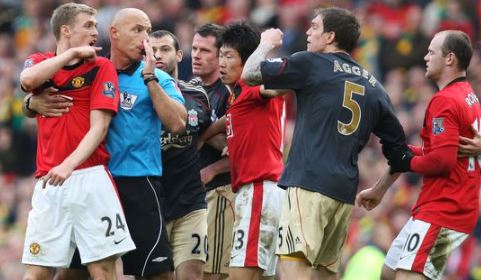
The 2011-12 season saw two of the North West Derby’s most controversial matches. After a 1-1 draw, United’s Patrice Evra accused Liverpool’s Luis Suarez (who has bitten opposing players more than once) of racially abusing him during the match. An investigation led to Suarez being suspended for eight matches. Before the next match, Suarez refused to shake Evra’s hand, which resulted in multiple United players refusing to do the same to Suarez. The match ended 2-1 in favor of Manchester, thanks to two goals from Wayne Rooney. After the match, Evra ran up to Suarez and celebrated in front of him, causing a huge scrum as Liverpool players tried to push him away from Suarez. This paragrah serves as your daily reminder: fuck Luis Suarez.
38-SECOND GOODBYE
Club legends are often remembered for how they end their careers. For Liverpool’s greatest Premier League era player, Steven Gerrard, his last North West Derby was the quickest of his career. 2015 was the last year of Gerrard’s league championship-less time with the club, with him mostly coming off the bench at the time. That was the case when Gerrard was a halftime substitute against United, the last time he’d square off with his old rivals. Just 38 seconds later, Gerrard stepped on Ander Herrera’s ankle, resulting in a red card. What a way to make your last mark on a historic rivalry. The heat map alone is legendary. Gerrard would soon move to the U.S., where he continued to not win a league championship with the Los Angeles Galaxy.
FUCKED UP FANS ON BOTH SIDES
Manchester and Liverpool met in the Round of 16 of the 2016 UEFA Europa League, with Liverpool advancing 3-1 on aggregate. But the tie was best remembered for some fucked up actions by both sets of fans. Before the first leg at Anfield, Liverpool fans hung a banner that read “Manc Bastards” on the M62 motorway. Before the second leg at Old Trafford, Manchester fans hung a banner that read “murderers” and reference the Hillsborough disaster on the same motorway. During the game, a Liverpool fan snuck a banner into the United section, causing a chain reaction of anger. Liverpool fans ripped out seats and set off flares and fireworks. Both sets of supporters threw objects at each other, with each club being fined for “illicit chants.”
STATISTICS:
HEAD-TO-HEAD RECORD
Manchester: 82
Liverpool: 71
Draw: 58
LEAGUE CHAMPIONSHIPS
Manchester: 20 (13 in the Premier League [both records])
Liverpool: 19 (1 in Premier League)
FA CUP
Manchester: 12
Liverpool: 8
EFL CUP
Manchester: 6
Liverpool: 9 (record)
FA COMMUNITY SHIELD
Manchester: 21 (record)
Liverpool: 16
UEFA CHAMPIONS LEAGUE
Manchester: 3
Liverpool: 6
UEFA EUROPA LEAGUE
Manchester: 1
Liverpool: 3
EUROPEAN CUP WINNERS’ CUP
Manchester: 1
Liverpool: 0
UEFA SUPER CUP
Manchester: 1
Liverpool: 4
FIFA CLUB WORLD CUP
Manchester: 1
Liverpool: 1
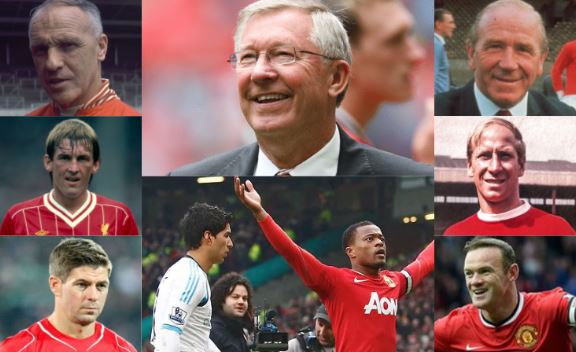
NOTABLE FIGURES:
MATT BUSBY
How does a man who played for both of Manchester United’s biggest rivals become a club legend? Well if you’re Sir Matt Busby, you establish a dominating young group named after yourself, rebuild the squad after one of the most devastating tragedies in the history of soccer, and guide United to becoming the first English UEFA Champions League winner. Fun fact: Busby was offered the assistant coach job at Liverpool, but didn’t get the level of club control he wanted. Liverpool’s loss was United’s gain, winning 13 trophies in 25 years with Manchester.
BOBBY CHARLTON
Arguably the best player in Manchester United and English soccer history, Bobby Charlton was famous for his attacking instincts, passing ability, and long-range shooting. A survivor of the Munich air disaster, Chalrton would go on to become a UEFA Champions League and FIFA World Cup champion. For the vast majority of his post-playing career, Chalrton held both the record for most matches played and goals scored for any United player. Amazingly, in more than 750 matches for both club and country, Charlton was only given a yellow card twice.
BILL SHANKLY
While the club had some decent success beforehand, it was only after Bill Shankly took over that Liverpool became Liverpool. In addition to leading the club to domestic and continental dominance, Shankly introduced many traditions to Liverpool, including the Boot Room, the club anthem “You’ll Never Walk Alone,” and even all-red uniforms. But perhaps Shankly’s biggest contribution was truly stirring up the fanbase, emphasising the importance of making the supporters feel like participants, not just followers. The Shankly Gates are named after him.
BOB PAISLEY
When Bill Shankly left Liverpool, his assistant Bob Paisley reluctantly took the manager’s job. What followed in the following nine years was one of the most dominant runs in English soccer history. Building upon the foundations Shankly left behind, Paisley won 20 trophies with the club, including three UEFA Champions League titles, six league championships, three FA Cups, and a UEFA Cup. Only Pep Guardiola has a higher honors won per season rate than Paisley. He also played for Liverpool, a former captain and a part of the First Division winners in 1947.
KENNY DALGLISH
In 1977, Bob Paisley paid a British record transfer fee to bring Celtic superstar striker Kenny Dalglish to Liverpool. It was money well spent. Dalglish was a key member of Liverpool’s most successful squads in the 1970’s and 80’s. As a player, he scored goals at an amazing rate and became a major fan favorite. He also took over as player-manager in 1985, leading Liverpool to nine more trophies. Dalglish also did something no Liverpool player did for nearly 30 years: win a Premier League title. He did so as the manager of Blackburn Rovers, who won it in 1995.
ALEX FERGUSON
The greatest manager in the history of soccer, Sir Alex Ferguson defined the Premier League during its first two decades. It was under Ferguson that United won 13 league titles (surpassing Liverpool’s record) and many more trophies (including two UEFA Champions League crowns). Ferguson oversaw the rise of the Class of ’92 (and many other notable academy players) and brought in names like Roy Keane, Dwight Yorke, Eric Cantona, Cristiano Ronaldo, Wayne Rooney, to Manchester. Ferguson has also won more trophies than any other manager ever.
OLE GUNNAR SOLSKJAER
Another one of Sir Alex Ferguson’s best ever signings, Ole Gunnar Solskjaer has as many clutch moments with United as screw-ups I made in spelling his name while writing about the North West Derby. Regarded as the ultimate “super sub,” Solskjaer’s two most famous goals came during the 1999 FA Cup Fourth Round tie with Liverpool and during the UEFA Champions League Final a few months later. What gets Solskjaer the nod for being on this list is the fact that he was recently the manager of Manchester, overseeing another FA Cup win over Liverpool.
GARY NEVILLE
A member of the glorious Class of ’92, Gary Neville was a Red from the day he was born. He grew up in Greater Manchester and was a member of United for the entirety of his professional career. An incredibly solid right back and former club captain, Neville’s time with United saw him become one of the most decorated European soccer players ever. Given his Manchester roots, Neville also bears a deep hatred of all things Liverpool. The feeling was mutual — Neville would taunt the Liverpool fans, who in turn would constantly chant and swear at him during games.
MICHAEL OWEN
A controversial figure on both sides of the North West Derby, Michael Owen is both loved and hated by United and Liverpool fans. Owen began his decorated career with Liverpool, winning several trophies with the Scousers. He left the club in 2004 and — after spells with Real Madrid and Newcastle United — returned to the Premier League in 2009, this time with Manchester. That pissed off Liverpool fans, especially as he then did what many Liverpool players couldn’t: win the Premier League. Owen then became a Liverpool ambassador, pissing off United fans.
STEVEN GERRARD
Unquestionably the greatest Liverpool player of the Premier League era, Steven Gerrard led his club to several trophies both in England and Europe. His performances in both the 2005 UEFA Champions League Final and 2006 FA Cup Final cemented his place as a Liverpool legend. In fact, Gerrard loved red so much he only needed 38 seconds to see a card of that color in his final North West Derby at Anfield. Gerrard is now part of another major rivalry (one we’ll get to next time) as Rangers manager, still seeking his first league championship at any level.
WAYNE ROONEY
It is absolutely hilarious that Manchester United’s all-time leading goalscorer is from Liverpool. Wayne Rooney got his soccer start in that city, but for Liverpool’s other rival — Everton. Rooney joined United in 2004 and became a club icon. During his 13 years in Manchester, Rooney won 16 trophies and became one of two English players (along with Michael Carrick) to win the Premier League, FA Cup, UEFA Champions League, UEFA Europa League, and FIFA Club World Cup. Rooney is also England’s top scorer and did this cool shit while with D.C. United.
PATRICE EVRA/LUIS SUAREZ
Both Patrice Evra and Luis Suarez wrote themselves into North West Derby lore with their incident during the 2011-12 season. While Liverpool fans booed Evra for his celebration in front of Suarez, let’s not forget that the reason Evra — a future United captain and model citizen — was pissed at Suarez in the first place. Let’s also not forget that although the racist, cheating Suarez sadly went on to win many important trophies with Barcelona, he only won one (a measly EFL Cup) with Liverpool. Evra won quite a few more during his time with Manchester.
MOHAMED SALAH
Mohamed Salah has only been at Liverpool for five years, yet has already re-written a large chunk of the club’s record books. Arguably the best Egyptian soccer player of all time, Salah has received numerous individual accolades and helped Liverpool snap its first division title drought and win its most recent Champions League crown. Perhaps more remarkable though, in just a few years Salah has already snagged the record for most North West Derby goals. That may be in part due to Manchester United’s shambolic defending over the past few years.
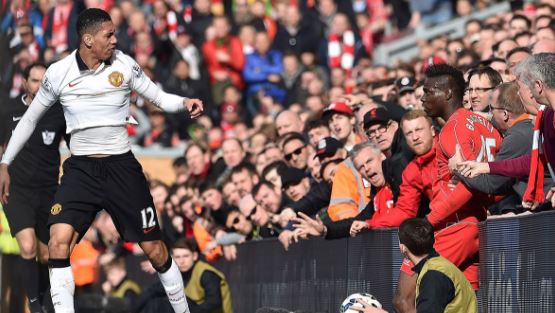
FAN INVOLVEMENT:
Between being the two most successful clubs in England and two of the biggest around the world, Manchester United and Liverpool have a shit ton of fans. Both clubs have hundreds of supporters groups across the globe, although the biggest crowds and most hostile incidents have always taken place in England. Unfortunately, both clubs have their share of history in dealing with hooliganism, with matches between the two creating some major incidents. There is also Liverpool’s tragic history involving fans in major tournaments during the 1980’s. Fans have tastelessly taunted each other over both the Munich air disaster and Hillsborough disaster. Even though things have gotten better during the Premier League era, they’re far from clean.
After the famous 1996 FA Cup Final, a Liverpool fan spat at Eric Cantona (who scored the winning goal) and threw a punch at Sir Alex Ferguson as United walked up the steps at Wembley Stadium. During the club’s 2006 FA Cup run, Liverpool fans threw several objects at Manchester fans and sprayed graffiti about serial killer Harold Shipman on Old Trafford (which hosted the match between Liverpool and Chelsea). In 2011, an FA Youth Cup match between the two clubs saw Manchester fans chant about the Hillsborough and Heysel disasters. There were also the incidents that took place during the 2016 UEFA Europa League. Fans even got directly involved during a 2015 match at Anfield, literally holding Liverpool’s Mario Balotelli back during a confrontation with United’s Chris Smalling. That however was hilarious, as one fan admitted he did so out of fear of Balotelli being given a red card (and United won 2-1).
Fans of both clubs have also gotten involved off the field in a different way. In 2005, the controversial takeover of United by the Glazer family (which also owns the Tampa Bay Buccaneers) created a schism among Manchester fans. To this day, fans of the “Love United Hate Glazer” movement wear the green and yellow of the club’s old name, Newton Heath. The Glazer ownership also led to the creation of F.C. United of Manchester, a semi-pro club for United fans who hate the current owner. Two years after Glazer took control of United, Liverpool went through its own controversial takeover when chairman David Moores sold the club to George Gillett and Tom Hicks. A lack of support from fans — along with disagreements between Gillett and Hicks — resulted in another sale, this time to Fenway Sports Group.

SUMMARY:
The two most successful soccer clubs in England combine to form arguably the country’s greatest rivalry, one surrounded by animosity, filled with icons and history, and more often than not dealing with more than just bragging rights at stake. No matter where Manchester United and Liverpool are in the Premier League and in Europe, the North West Derby always kicks things up a notch (please ignore the 0-0 draw in January of 2021).
Now, one rivalry I didn’t mention earlier was that between Manchester United and Arsenal. While the “Big Six” Premier League clubs (United, Arsenal, Manchester City, Liverpool, Chelsea, Tottenham) have their own rivalries with each other based on success and fights for league supremacy, United-Arsenal has been a step above most of the rest. What Sir Alex Ferguson means to Manchester is basically what Arsene Wenger means to Arsenal. During their time in charge, the two clubs faced off in several heated, memorable, and important matches, including the Battle of Old Trafford and the Battle of the Buffet (not to mention their 1990 brawl before Wenger took over Arsenal). But while that rivalry is certainly great, the major part of the competition took place during the Premier League era. A lack of history hurts it.
But don’t worry Kyle, I’m not done talking about Arsenal, not by a long shot. I said that the United-Arsenal rivalry is above most of the rest between the Big Six. The two exceptions are the two rivalries that make the World Cup of Hate. The first was the North West Derby. As for the second? Well… let’s get into it.
The North London Derby
(England)Arsenal F.C. vs. Tottenham Hotspur F.C.
“I remember my first North London Derby. Tony Adams literally had me up against the wall by the throat and said, ‘You don’t understand, we can’t lose this game.’” — Lee Dixon, former Arsenal defender
In one of the most important cities in the world — and capital of the birthplace of modern soccer — one rivalry stands above the rest, one that showcases two clubs (Arsenal and Tottenham Hotspur) that quite simply hate every single thing about the other.
While the South of England is seen as more posh, soft, and fancy in comparison to the rougher, tougher, working class North, the concept of hating certain soccer teams is just as deeply rooted there as it is anywhere in the world. Moreover, the South has one thing the North simply can’t compete with: London. England’s capital city is one of the largest financial centers in the world, home to a wealth of diverse people and culture, an immensely important part of human history, and the source of considerable influence over things like education, art, business, science, transportation, tourism, architecture, media, and society as a whole. That list also includes sports, with London being the only city to host three modern Summer Olympics (1908, 1948, 2012). Naturally, any sports club in London is going to carry significant weight, with soccer being the biggest and heaviest of the bunch.
Because London is such a large, rich, and diverse place, it’s impossible to have just one big soccer team cover the entire city. Of the 20 teams currently in the Premier League, six — Arsenal, Chelsea, Crystal Palace, Fulham, Tottenham, and West Ham — are based in the Greater London area. To thrive in London, you have to be rich — and good. This high-stakes competition naturally creates animosity, with each of the London clubs having some sort of rivalry with another Premier League club (or one of the other local clubs in the whole Football League system). In addition to their iconic feud with Brighton & Hove Albion, Crystal Palace have heated rivalries with Charlton Athletic and Millwall, the latter having an especially fierce derby with West Ham. Fulham (which by the way is owned by Jacksonville Jaguars owner Shahid Khan) doesn’t particularly like Queens Park Rangers. Everyone hates Chelsea.
But out of all of these fierce rivalries, one manages to stand above the rest. The North London derby between Arsenal and Tottenham has everything a great rivalry contains — memorable matches, betrayal, rabid fans, controversy, and genuine and deep-rooted hatred. That hatred began with a highly disputed move that shaped the history of soccer in England.
HISTORY:
Nearly 140 years ago, on September 5, 1882 (AKA my friend Ewing’s -110th birthday), a group of members of the Hotspur Cricket Club led by Bobby Buckle founded Hotspur Football Club in order to play sports during the winter. Two years later, they added Tottenham to the front of their name to avoid confusion with another London-based club called Hotspur, whose mail had been mistakenly delivered to Tottenham. A year after that, they entered their first ever competition apart from friendlies, losing 2-0 to a club called the Radicals. But they soon began to turn their fortunes around and attract a local following. Spurs turned professional that year, joining the Southern League. In 1901, Tottenham added a unique feather in their cap by becoming the first ever (and so far still the only) non-League team to win the FA Cup. It still took a whole other seven years for Tottenham to eventually make the leap, joining the Second Division in 1908. A year after that, Spurs won promotion to the First Division, where they would remain for another decade. It could’ve been longer, if not for another club.
In 1886, David Danskin and 15 other munitions workers founded Dial Square Football Club, named after a workshop at the British armed forces’ Royal Arsenal complex. The club changed its name to Royal Arsenal a month later. After winning a couple of trophies in the late 1880’s and early 1890’s, Royal Arsenal became the first London-based soccer club to turn professional in 1891. After another name change — this time to Woolwich Arsenal — the club joined the Football League in 1894, debuting in the Second Division before earning promotion to the First Division in 1904. However, Woolwich Arsenal then began to experience attendance and financial struggles, thanks to other London clubs turning pro and attracting customers, as well as overall lower salaries for munitions workers. The club was dangerously close to bankruptcy at the start of the 1910’s and it was only thanks to businessmen Henry Norris and William Hall that they survived. In order to find a better audience, find a better venue, and make more money, the club decided to look outside of South London, where they had operated since their founding nearly three decades earlier. They eventually found such a place, sparking one of the biggest soccer rivalries in the world in the process.
Shortly after being relegated to the Second Division in 1913, Woolwich Arsenal did two things: change their name again (to The Arsenal) and move to a new stadium in Highbury, located in North London. The move was highly resented and opposed by Tottenham, which considered Highbury their territory. It also made The Arsenal the closest team to Tottenham, and thus their new regional rival. Now, these two clubs had known each other for a while. Their first match — played in 1887 — was abandoned due to darkness with Spurs up 2-1. The first completed match saw Royal Arsenal win 6-2, with Tottenham only able to field nine players. It was also during a match against Woolwich Arsenal that a record crowd of 15,000 attended and a refreshment stand collapsed due to people wanting to stand on it to watch the action. This prompted Tottenham to look for a new venue, settling on its iconic, longtime home of White Hart Lane. Now, the new Arsenal Stadium had been built at Highbury — just four miles away from White Hart Lane. If this didn’t add enough juice to the rivalry, then another event did.
The first Arsenal-Tottenham match held as a North London Derby saw Second Division The Arsenal beat First Division Tottenham 5-1. It was also part of a relief fundraiser for the British effort during World War I, which among other things led to the suspension of the Football League for several years. When the war ended in 1919, the league came back, with the First Division expanding from 20 to 22 teams. The 18 teams who had survived relegation during the last season before the war and the two clubs who had earned promotion from the Second Division would be the first 20. League officials held a meeting to determine which clubs would take the final two spots. Chelsea, who had finished 19th in the last season and would’ve been relegated, were allowed to stay. It then makes sense that Tottenham, who finished 20th, or Barnsley, who had finished third in the Second Division, would’ve gotten the final spot. However, Arsenal put a bid in for promotion, despite finishing multiple spots behind Barnsley. Thanks to an endorsement by Football League president and Liverpool chairman John McKenna (underhanded dealings by The Arsenal president Henry Norris allegedly were involved as well), Arsenal was voted in as the 22nd First Division member, enraging Tottenham, which was relegated. In fact, Spurs nearly didn’t even get into the Second Division, only doing so after Stoke City resigned due to financial reasons. One other thing happened in 1919: The Arsenal made a final name change, simply becoming Arsenal. Once Tottenham earned back their First Division spot a year later, the North London Derby as it’s known today truly began.
Early First Division matches between the two clubs still had plenty of bitterness. In fact, after a particularly violent match in 1922, both clubs were censured by the FA and threatened with being forced to play behind closed doors. Although Spurs had some initial success by winning another FA Cup in 1921, a run of subpar seasons culminated with relegation in 1928 after manager Peter McWilliam left. With the exception of a brief spell from 1933-1935 (during which Arsenal recorded a 6-0 win over Tottenham, the largest margin of victory in the North London Derby to date), Spurs remained stuck in the Second Division. During this time, the move to North London truly began to pay off for Arsenal. A rapidly growing budget allowed them to lure Huddersfield Town manager (and former Spurs player) Herbert Chapman to take over in 1925.
To call Chapman’s influence on Arsenal great would be an understatement. The WM formation, white sleeves and numbers on the jersey, and floodlights at Arsenal Stadium were among the things Chapman brought to the club. He also brought a hell of a lot of winning, thanks in large part to young players like Cliff Bastin and Eddie Hapgood and a large spending spree on stars like David Jack and Alex James (the latter two earning Arsenal the nickname the Bank of England club). Arsenal won the 1930 FA Cup and two league championships before Chapman suddenly died of pneumonia in 1934. His successors — Joe Shaw and George Allison — won three more league titles and another FA Cup titles before World War II. Two additional league titles and one more FA Cup followed in the decade after the war ended, but bad news for Arsenal loomed. An aging squad failed to attract new talent and — after the 1953 championship, Arsenal would not win another piece of silverware for 18 years. During this time, Tottenham (who had let Arsenal use White Hart Lane after Highbury was used as an ARP station and bombed during the war) began its comeback.
In 1949, Arthur Rowe became Tottenham’s manager, developing a “push and run” style of play that led Spurs to a Second Division title in 1950 and a First Division title the following year (the first time a team had won both divisions in consecutive years). Rowe left in 1955 due to stress-induced illness, but not before signing Danny Blanchflower, who would become one of the club’s most celebrated players. Rowe’s replacement, Bill Nicholson, built upon these foundations to produce a powerhouse. Nicholson signed fellow club legends Dave Mackay and John White in 1959, then two years later added Jimmy Greaves, who only remains the most prolific goal-scorer in the history of top flight English soccer. All of that led to a double in 1961 (the first in English soccer in the 20th Century), another FA Cup in 1962, and the 1963 European Cup Winners’ Cup (the first European trophy won by a British club). A brief rebuild led to Tottenham also becoming the first British club to win multiple European trophies with the 1972 UEFA Cup (following another FA Cup and in between EFL Cups in 1971 and 1973). But not everything lasts forever — Nicholson resigned after a poor start to the 1974-75 season and Spurs were one again relegated two years later.
Tottenham’s comeback ended just as Arsenal finally snapped its drought. In 1970, the Gunners earned their first ever European trophy with the Inter-Cities Fairs Cup. The following year, Arsenal got its own double, winning the league and FA Cup. But then Arsenal went on a run where they made several cup finals and finished in the Top 2 in the league, yet only brought home one piece of silverware (the 1979 FA Cup Final). That stretch finally ended in 1987, when the EFL Cup finally came to Highbury. Another First Division title came in 1989 on a last-minute goal to deny Liverpool the crown. Arsenal lost only one match in the 1990-91 season (a preview of what was to come around 15 years later), then won the FA Cup, another EFL Cup, and the European Cup Winners’ Cup over the next few years. Tottenham wasn’t lacking for trophies during this time. Keith Birkinshaw led Spurs back to the First Division in 1978 then signed the likes of Glenn Hoddle, Osvaldo Ardiles, and Ricardo Villa (more on the latter two soon). FA Cup titles in 1981 and 1982 and the UEFA Europa League in 1984 soon followed. Things between the two clubs reached arguably their highest stakes when they met in the 1991 FA Cup semi-finals. Paul Gascoigne’s wonder goal gave Spurs a 3-1 win en route to the title.
As the Premier League era got underway (Arsenal and Tottenham were two of the big five clubs pushing for its existence), the Gunners would take a firm grasp of control of the North London Derby. But that didn’t seem likely just two years into the Premier League era. Manager George Graham was found to have taken kickbacks from an agent for signing certain players, leading to his dismissal in 1995. His replacement, Bruce Rioch, only lasted one season. Trying to find stability, Arsenal hired the manager of Japanese club Nagoya Grampus Eight, shocking pretty much everyone involved. But as it turns out, Arsenal had truly found a diamond in the rough. His name was Arsene Wenger and he would be the most successful, longest-lasting manager in English soccer this side of Sir Alex Ferguson. Wenger brought in a new brand of attacking soccer, along with new diet and fitness practices and a philosophy of fiscal efficiency. He also brought along two players from his home of France — Patrick Vieira and Thierry Henry — who would become club legends. Wenger also made one other notable signing, one that caused quite a response from Spurs.
Sol Campbell had been one of the few bright spots for Tottenham during their struggles of the 1990’s. In fact, the former Spurs youth player had captained the club to the 1999 EFL Cup — the club’s first piece of silverware since the 1991 FA Cup. However, while he was beloved by Spurs fans, Campbell had become soured with club management. Campbell had feuded with multiple managers (who didn’t last long at the club) and was falsely accused of breaking a steward’s arm during a game at Derby County. Tottenham’s lawyers told him to have the case bound over (meaning he would not be convicted but would have to admit some wrongdoing) and, when he told them he didn’t want to do that, advised him to field his own legal defense. All of that coupled with Tottenham’s lack of league success led to Campbell letting his contract expire in 2001. Spurs offered Campbell a contract that wouldn’t made him the highest paid player in club history. But despite months of negotiations and several public assurances he would stay at Spurs, Campbell then stated he would leave for a club playing in the UEFA Champions League. Shockingly, Campbell joined Arsenal — on a free transfer no less — despite previously saying he would never play for them in an interview with Spurs Monthly. The signing was so surprising that there were no rumors of an Arsenal move leading up to it. The move had a Luis Figo-esque effect on Tottenham fans, who labeled Campbell as “Judas.” Campbell’s return to White Hart Lane (a 1-1 draw) was filled with jeers and boos, including those shouted at Campbell by his own older brother, Tony.
To the chagrin of Tottenham fans, Campbell’s decision proved to be a smart one. From 1997-2006, Arsenal won three Premier League titles, four FA Cups, and four FA Community Shields. That run also included the 2003-2004 season, during which Arsenal became the only unbeaten club in the history of English soccer over a 38-game schedule (and were nicknamed the “Invincibles” as a result). That was part of a 49-match unbeaten run (another national record) from May 2003 to October 2004 (broken by Manchester United in the previously mentioned Battle of the Buffet). In 2006, Arsenal became the first London-based side to reach the UEFA Champions League Final, doing so without conceding a goal in the knockout stage. While Arsenal was ahead with 15 minutes two play, two goals by Barcelona in a four-minute span dealt the Gunners a 2-1 defeat. 2006 was a major year for Arsenal for another big reason. After 93 years at Highbury, the club moved to the Emirates Stadium, its current home. Wenger himself was involved in the stradium construction process, believing it to be a way to attract players in the future. However, the cost (around $545 million) left the club financially strapped when it came to on-field activities. Thus, Arsenal couldn’t make major signings and — while still good — have only captured three trophies (all FA Cup titles) since 2005. Wenger himself left the club in 2018, around the time Arsenal finally lost control of the North London Derby.
For the vast majority of the Premier League era, Tottenham have lived in their rival’s shadow. For more than 10 years, Spurs did not record a single league win against Arsenal. But once that drought was finally snapped in 2010 (a year where Spurs swept Arsenal), water flowed through at great speed. Tottenham rose back to Top 5 status thanks to players like Gareth Bale and Luka Modric in the early 2010’s. Even after losing both to Real Madrid, a crop of signings like Hugo Lloris, Danny Rose, Son Heung-min, Dele Alli, and Jan Vertonghen boosted Spurs even higher. Leading them all was the sudden emergency of Harry Kane as one of the best strikers in all of soccer. In 2017, Tottenham beat Arsenal in the final derby at White Hart Lane to secure their first finish above the Gunners in the Premier League table in 22 years. In 2019, the same year the club moved into its current home of Tottenham Hotspur Stadium, Spurs made its first ever UEFA Champions League Final (which it lost). But all of that improvement has failed to yield new silverware, which Tottenham has not seen since 2008. In addition, the club has gone through a subpar run of form, joining Arsenal as two “middle of the road” clubs and even losing Kane to Bayern Munich this past August. Still, that hasn’t changed the fiery atmosphere that arrives any time these two get together.

MAJOR ON-FIELD MOMENTS:
THE 1971 TITLE DECIDER
Going into the final match of the 1970-71 season, Arsenal needed to either beat Tottenham or secure a scoreless draw. Any other result (even a 1-1 draw or higher) would give Leeds United the title. A tight match that saw few chances remained scoreless until the 88th minute. That’s when John Rashford’s shot on goal was saved by Pat Jennings. But George Armstrong got the rebound and lofted the ball across goal, where Ray Kennedy headed it home to make it 1-0 Arsenal. Tottenham spent the last few minutes desperately trying to get a goal back, but to no avail. Arsenal held on to win the First Division (and later secure the double). Meanwhile, Spurs had to endure the agony of their greatest rival clinching the league title in their own stadium.
A PAIR OF 5-0S
While Arsenal’s 6-0 win in 1935 remains the widest margin of victory, three times there has been a 5-0 result. All three matches took place at White Hart Lane. The first was in 1911 and many of the details have been lost to time (although Tottenham won). In 1978, Arsenal came into enemy territory and destroyed Spurs. Led by a magical performance by Liam Brady and a hat trick by Alan Sunderland, the Gunners thrashed Tottenham 5-0. Five years later, Spurs finally got revenge. Chris Hughton and Mark Falco each scored a brace as Tottenham pulled away for a 5-0 domination. While Spurs got the win in major fashion, Arsenal wound up having the last laugh — finishing higher than Tottenham in the following First Division standings.
270 MINUTES OF DRAMA
In 1987, Arsenal and Tottenham met in the EFL Cup semi-finals… a lot. The first leg — played at Highbury — saw Spurs eke out a 1-0 and seemingly take a major advantage. However, Arsenal managed to fight back and secure a 2-1 win on the road in the second led. The aggregate was 2-2, but because there was no away goals rule in place a third match was needed. Based on a coin flip, White Hart Lane was chosen as the host venue. Tottenham seemed to have taken advantage of the home match, going up 1-0 through a Clive Allen goal. But once again, Arsenal rallied thanks to goals from Ian Allinson and David Rocastle. For the second time in four days, the Gunners won 2-1 at White Hart Lane. Arsenal would go on to beat Liverpool to win the title.
GAZZA’S GOLAZO
Paul Gascoigne was one of the best and most bizarre players of his era. Arguably the most naturally talented English soccer player ever, Gazza struggled with mental health issues and other presonal problems throughout his career and retirement. But before all of that, Gascoigne was Tottenham’s star player ahead of their first ever FA Cup semi-final against Arsenal in 1991. Just five minutes into the match, Spurs earned a free kick 30 yards out from goal. Gascoigne stepped up and smashed it into the right corner of the net for a goal which remains one of the best in the competition’s history. Gary Lineker added two more goals and Tottenham won 3-1, lifting the Cup a month later. The date of this match is significant to Spurs fans (I’ll explain later).
BUILD A STATUE OF IT
Thierry Henry remains arguably Arsenal’s best ever player. A prolific goal scorer and wizard with the ball, Henry had plenty of memorable scores during his career. But only one of them has been immortalized in bronze. Early during a derby match at Highbury, Henry received the ball near Arsenal’s box. He then sprinted up the field, deftly dodging defenders and making his way towards the Tottenham goal. One more feint gave him room on the left side of box, where Henry launched a strike that found its way home. It was one of the best goals in Arsenal history and followed by a celebration that saw Henry run back across the field and slide on his knees. A statue of Henry at the end of the slide has since been built up outside Emirates Stadium.
ANOTHER CROWN ON THE ROAD
The 2003-04 season could not have been better for Arsenal, who became the first club to go unbeaten in England’s top flight division in more than a century. The Premier League title was an afterthought, but the official championship clincher had to be at White Hart Lane. Any hopes for a historic upset were put away after the Gunners went up 2-0 with only 35 minutes gone by. However, Tottenham would show its pride and fight back. Jamie Redknapp hammered home a long range effort and Robbie Keane converted a 90th minute penalty to earn a 2-2 draw. Still, Arsenal only needed a point to clinch the title, and so were able to celebrate winning England’s top flight league at their rival’s home ground for the second time in history, 33 years later.
NINE-GOAL FIRESTORM
The very next North London Derby also made history, this time for both teams. Once again being held at White Hart Lane, this contest was just 1-1 at halftime thanks to goals from Noureddine Naybet and Thierry Henry. But then the second half began, igniting a firestorm of goals. Lauren converted a penalty to put Arsenal up 2-1 before Patrick Vieira doubled the lead five minutes later. One minute after that, Jermain Defoe brought Spurs to within 3-2. Karl Ljunberg restored Arsenal’s two-goal lead, though Ledley King got another back four minutes later. Robert Pires gave the Gunners their fifth goal, although Frederic Kanoute got one back. Arsenal held on for a 5-4 win, which remains the highest-scoring match in derby history.
EXTRA TIME DECIDER
In 2007, Arsenal and Tottenham met to decide who would advance to the EFL Cup Final. The first led at White Hart Lane saw Spurs take a 2-0 lead in the first half, only to blow that lead and settle for a 2-2 draw. The return leg at Emirates Stadium was goalless until the 77th minute, when Emmanuel Adebayor gave Arsenal the lead. Five minutes from the final whistle, Mido evened the count to send the match into extra time. It took until the 105th minute for the eventual winning goal from Jeremie Aliadiere, with an own goal by Pascal Chimbonda finishing Spurs off. Arsenal won the two-legged tie 5-3 on aggregate and earned a chance to get to their first EFL Cup since 1993. But, perhaps tired out by that match, the Gunners fell to Chelsea.
FINALLY, A VICTORY
One year after their extra time encounter, Spurs would get their revenge and a long-awaited win. After years of Arsenal domination, Tottenham finally began to turn the tide in 2008. Once again meeting in the EFL Cup semi-final, the first leg finished with a 1-1 draw at Emirates Stadium. Not wanting to repeat the same fate as the year before, Tottenham came out swinging. Once again taking a 2-0 lead at halftime, Spurs finished the job this time, adding three more goals to win 5-1 and 6-2 on aggregate. This win was much more than simply booking a spot in the EFL Cup Final (which Tottenham won for their most recent trophy to date). It was also the first win for Spurs in the North London Derby in any kind of competition since November 1999.
SHOWING THEIR HEART
The next match between the two clubs saw a different draw at Emirates Stadium, one that was much more exciting. The scoring began thanks to former Arsenal player David Bentley, who lofted in a spectacular strike from 43 yards out. But Arsenal seemingly took control from there, scoring three in a row to go up 3-1 with less than a half hour to play. While Spurs scored again immediately to make it 3-2, another Arsenal goal a few minutes later made the count 4-2. That was the score with just two minutes remaining and a point seemingly out of reach. But Jermaine Jenas found the back of the net and — deep into stoppage time — Aaron Lennon added another to complete a remarkable rally, ending in a 4-4 draw and a hard-fought result on the road.
A ROSE AND A ROAD WIN
2010 was the year Tottenham had been waiting for — a stunning calendar year sweep of their rivals. It started with a match at White Hart Lane, where 20-year-old Danny Rose was making his Premier League debut. It took Rose ten minutes to leave his mark on the North London derby, smashing home a thunderous volley that would win Goal of the Season. It also propelled Spurs to a 2-1 win over Arsenal. Seven months later, Tottenham did something it had only done once before in the Premier League era (way back in 1993) and hasn’t done since: defeat the Gunners on the road. Despite going down 2-0 within the first half hour, Spurs roared back in the second half, with Younes Kaboul scoring in the 86th minute to give Tottenham the 3-2 victory.
ONE STEP FORWARD, FIVE STEPS BACK
While Emmanuel Adebayor didn’t exactly get the Sol Campbell treatment when the former Arsenal player signed with Tottenham, his impact on the North London Derby in 2012 was will never be forgotten. Adebayor put Spurs on top early with a goal, but was sent off seven minutes later for a challenge on Santi Cazorla. Down to ten men, Tottenham stood no chance. Arsenal evened up via Per Mertesacker before goals by Lukas Podolski and Olivier Giroud put the Gunners up 3-1 at halftime. Cazorla himself got on the board in the second half and Gareth Bale’s attempt at a comeback starter was answered by Theo Walcott. The 5-2 Arsenal victory was the most recent time any squad tallied at least five goals in a single North London Derby.
CHECK THE SCOREBOARD
Theo Walcott has unfortunately been known to pick up injuries during games. Such was the case in 2014 during Arsenal’s FA Cup third round tie with Tottenham. Walcott hurt his knee so badly in the 83rd minute that he had to be stretchered off. However, the home fans believed he was faking, so they sent a hail of coins and plastic bottles at him. Undeterred and still on the stretcher, Walcott sat up and held up two fingers on one hand and none on the other, which referenced the 2-0 Arsenal scoreline at the time. After the match, the FA investigated the incident and looked into exactly who threw the items at Walcott. The unfortunate part of this was that the attendants who carried Walcott off (and got hit by the same items) were Spurs fans.
THE END OF TWO ERAS
In 2017, two major parts of Tottenham history came to an end, one good and one bad. That year saw the last matches ever played at White Hart Lane, which was demolished and turned into the current Tottenham Hotspur Stadium. The final North London Derby at the historic site was scoreless until the 55th minute, when Dele Alli broke the deadlock. Harry Kane converted a penalty just three minutes later and Spurs held on for a 2-0 win, protecting their beloved home from their rivals one last time. The three points also meant Arsenal could no longer catch Tottenham in the Premier League standings and Spurs would finish above their rivals in league play for the first time in 22 years. Tottenham now enjoys such a standings streak of its own.
BAD REACTIONS TO CELEBRATIONS
The final North London Derby of 2018 had everything — controversy, fights, and a lot of goals. Pierre-Emerick Aubameyang (who is black) converted a penalty to put the home squad in front, then ran to the away end to celebrate. A few pieces of debris were thrown at him, including a banana skin (the fan who threw it was later arrested). Eric Dier scored the equalizer 20 minutes later, putting his finger to his lips to hush the home crowd. He did so right where Arsenal reserves were warming up — one of them got into it with Dier, sparking a massive brawl on the sidelines. After all was said and done, it was Arsenal who used a second half flurry to secure a 4-2 win. Both clubs were subsequently charged by the FA for their role in what happened.
THE ONE I WENT TO
Back in 2021, I decided to take a trip to Italy, although I spent a few days in London before then. I just happened to be in town for the North London Derby, so I bought a ticket, made my way to Emirates Stadium, and took in the incredibly atmosphere. This match had an interesting setup — Tottenham had started the season 3-0 and Arsenal began 0-3. However, they were somehow within striking distance of each other by the time I arrived, with Arsenal jumping all over their rivals with three goals in the first half. Although Tottenham got one back towards the end, Arsenal had completed their early season rally with a 3-1 win, leapfrogging Tottenham in the standings. However, Tottenham would end up with two more points than Arsenal at the end.
STATISTICS:
HEAD-TO-HEAD RECORD
Arsenal: 80
Tottenham: 61
Draw: 51
LEAGUE CHAMPIONSHIPS
Arsenal: 13
Tottenham: 2
FA CUP
Arsenal: 14 (record)
Tottenham: 8
EFL CUP
Arsenal: 2
Tottenham: 4
FA COMMUNITY SHIELD
Arsenal: 17
Tottenham: 7
UEFA EUROPA LEAGUE
Arsenal: 0
Tottenham: 2
EUROPEAN CUP WINNERS’ CUP
Arsenal: 1
Tottenham: 1
NOTABLE FIGURES:
HERBERT CHAPMAN
Herbert Chapman had an unremarkable playing career, which included 42 appearances as a member of Tottenham. But it was what he did with Arsenal that thrust him into soccer history. New revolutionary tactics and traning techniques — along with a number of cosmetic changes — were among the things Chapman brought to the Gunners that brought them major success (as well as their first ever silverware). Unfortunately, Chapman unexpectedly passed away at just 55 years old, so he was unable to see Arsenal fully transform into the English team of the 1930’s.
BILL NICHOLSON
Before he became a legendary Tottenham manager, Bill Nicholson was already a Spurs legend as a player, appearing in 314 games and playing a big part in the “push and run” system. Three years after retiring, Nicholson returned to the club in management capacity and surpassed what he’d done as a player. Under Nicholson, Tottenham won one First Division title, three FA Cups, two EFL Cups, a UEFA Cup, and a European Cup Winners’ Cup. In total, Nicholson spent 36 years in key positions with Spurs, transforming the club from an afterthought into a contender.
JIMMY GREAVES
One of the biggest keys to Tottenham’s success of the 1960’s, Jimmy Greaves and scoring goals had the same relationship as Cris Carter and catching TDs. In his more than two-decade playing career, Greaves tallied more goals (357) than any other player in the history of English top flight soccer. The majority of those goals (266) came with Spurs, making him the club’s all-time highest goal scorer. Greaves also ranks fourth (44 goals) on England national team’s scoring list and first in hat tricks (six). No doubt about it — Greaves is an English soccer legend.
PAT JENNINGS
16 years before Sol Campbell’s imfamous move from Tottenham to Arsenal, Pat Jennings gave him a road map. Jennings guarded Spurs’ net nearly 600 times, winning several pieces of silverware and becoming one of two players to ever win the PFA player of the year award, even scoring a goal in the 1967 Charity Shield match. But in 1977, Tottenham thought Jennings was at the end of his career, so they let him leave. He chose to sign with Arsenal, where he played for eight more years and became the first English player to make 1,000 top flight appearances.
OSSIE ARDILES/RICARDO VILLA
I mentioned I’d talk about Ossie Ardiles and Ricardo Villa again — for good reason. Both were signed by Tottenham after starring for Argentina in the 1978 FIFA World Cup. It was rare for English clubs to sign anyone outside the British Isles, let alone South America. But both were welcomed and became club icons. Then the Falklands War broke out between England and Argentina, leaving Ardiles and Villa caught between two worlds. There is a fascinating 30 for 30 put together about all of this called White, Blue and White. I highly recommend it to you all.
DAVID SEAMAN
If you didn’t know he was a goalkeeper, you’d think that based upon his looks and name David Seaman would be a porn star. But not only was he an athlete, he was one of the best keepers in the history of English soccer. Seaman spent the majority of his playing career with Arsenal, winning several trophies for his individual effort and team success, of which he played a vital role. In the semi-finals of the 2003 FA Cup, Seaman made one of the best saves anyone has ever seen against Sheffield United. Seaman then captained the Gunners to a win in the Final.
ARSENE WENGER
The greatest figure in the history of Arsenal, Arsene Wenger is the club’s longest-serving and most successful manager ever. But beyond the 17 trophies, unbeaten Premier League season, and almost unmatched list of talent signed to the club, Wenger’s contributions to soccer go far past his impact on the Gunners. It was via Arsenal’s success under Wenger that changes to scouting, training, and dieting swept through English soccer. But without a doubt Wenger’s biggest contribution to soccer was the many hilarious and awkward gifs of him in puffy coats.
SOL CAMPBELL
Sol Campbell is the only reason Luis Figo isn’t unanimously considered the biggest traitor in soccer history. Even given the trouble that had built between him and Spurs management, it was still shocking to see Campbell leave Tottenham. It was simply staggering to then see him sign with Arsenal — on a free transfer and with no prior rumors (which is insane given the state of sports media in England). Yet as much as it makes sense that Spurs fans were outraged at Campbell, it’s clear the decision was a good one, as Campbell had way more success after.
THIERRY HENRY
Arsene Wenger first saw Thierry Henry’s potential while both were at Monaco. So when Wenger took over at Arsenal, it was no surprise he brought Henry over a few years later. But he came at a steep price, bringing doubt as to whether the money was well spent. All Henry did at Arsenal was become one of the best players of his generation and score more goals (228) than any other Gunners player ever. Henry won the Premier League Golden Boot a record four times and a shit ton of other silverware, earning a bronze statue at Emirates Stadium in the process.
GARETH BALE
For most of the late 2000’s and early 2010’s, Gareth Bale was pretty much the only reason to watch Tottenham. Originally playing defense, Bale was converted to an attacker upon joining Spurs in 2007. He thrived in his new position, eventually becoming one of the most esteemed goal scoreres in Europe. Sadly for Tottenham, Bale would achieve incredible success… as a member of Real Madrid. But partially using the insane transfer fee Madrid paid for Bale, Spurs were able to rebuild their roster and achieve heights beyond anything during Bale’s era.
EMMANUEL ADEBAYOR
One of the better Arsenal strikers during the late 2000’s, Emmanuel Adebayor first pissed off Gunners fans by moving to Manchester City in 2009. Two years later, Adebayor signed with Tottenham in one of the rare isntances of crossing the North London Derby line, but not immediately. He then pretty much either scored against his former club or tackled Arsenal players so hard he got red carded. Always turning it on during the derby, Abedayor is one of two players to ever score ten goals in the North London Derby during the Premier League era.
HARRY KANE
Harry Kane is the other player to score double-digit goals in the North London Derby and has the record with 14. Having been loaned out four different times by Spurs during his early career, Kane came out of nowhere to take the Premier League by storm in 2014. He’s since become not only the best English striker in the world right now, but one of the best from anywhere on the planet after winning the Golden Boot at the 2018 FIFA World Cup. Fun fact: Kane has two dogs, named Brady and Wilson — after Tom Brady and Russell Wilson.

FAN INVOLVEMENT:
Make no mistake, wherever Tottenham and Arsenal are in the standings, the hate runs deep through the fans, who drive the rivalry forward. There of course have been some violent scenes before games, like those before a contest in 2016. There are also the moments where fans have made themselves part of the atmosphere, such as the reception Tottenham fans gave Sol Campbell upon his return to White Hart Lane and the coins and bottles tossed at an injured Theo Walcott in 2014. The rivalry also extends between the fan groups in the way only English fans can. Arsenal fans have a tradition called St. Totteringham’s Day, the day of the season when Spurs can no longer mathematically finish above the Gunners in the Premier League standings. To counter that, Tottenham fans have refered to April 14 (the date of the 1991 FA Cup semi-final) as St. Hotspur Day. Fun fact: Spurs fans are often refered to as “yids,” a reference to the historically large Jewish following Tottenham has received.
Now before we conclude this rivalry, I need to talk about Arsenal fans. Where the hell do I begin…
Arsenal fans have a bit of a reputation not just in English soccer, but around the world. Known as Gooners, Arsenal fans have been known to bitch and moan about literally every single thing. No matter how good or bad the form of the current team, Arsenal fans have been known to jump on whatever angle the media (and given it’s the London media the angle is often negative) is driving at the moment. Put it this way, Piers Morgan (objectively one of the biggest pieces of shit currently in mainstream media) is a huge Arsenal fan. Perhaps the best way to show the stereotype of Arsenal fans is via the famous Arsenal Fan TV account, which interviews fans immediately after games. From the mouth of babes comes memes that drive every Arsenal fan stereotype forward. But even when their club isn’t involved, Arsenal fans on social media always seem to find a way to make the conversation about the Gunners.
Now one of our own, Kyle, is himself an Arsenal fan and probably the only one who breaks the stereotype by not being a pompous wanker. However, I had a different encounter with another Arsenal fan in 2011. After Manchester United won the Premier League, I was walking with my then-girlfriend on our college campus (yeah I know this was a while ago) while wearing a United jersey. Out of nowhere, this guy starts talking shit about United (who again had just won the goddamn league) and insulting me in front of my girlfriend. I tried to laugh it off and end it with a simple “we’re the champs” remark, but the self-proclaimed fan of Arsenal (who shockingly finished 4th that season) kept at to the point where we were legitimately getting into a heated argument. Fortunately, cooler heads (AKA me) prevailed and my girlfriend and I walked away while the stranger was still spouting nonsense. I honestly didn’t mind Arsenal before that day, but they crept right beneath Liverpool and Manchester City on my shit list because of that guy. Fuck Arsenal and their fans (besides Kyle).
SUMMARY:
One of the most iconic cities in the world houses one of the fiercest rivalries in sports. Every time Tottenham and Arsenal take the pitch, a hatred born from forced proximity and stolen prestige reignites, adding to a rich history full of incredibly goals, shocking betrayal, and local pride. The North London Derby can compete with any other in Europe and beyond.
Before we completely leave England, I want to mention one other rivalry whose hatred compares to the best dervies in the world. The South Coast Derby between Portsmouth and Southampton is probably the best known South England rivalry this side of the North London Derby. The two cities share a lengthy and complicated history filled with war and toughness, one that’s become more fascinating and a little muddled over time. One interesting part of the derby — the fact that these clubs are often in different divisions — sort of works against it for the purposes of this competition. An overall lack of success (just five trophies between the two sides) also brings it down. But goddamn can this rivalry stack up with any other in England when it comes to ferocity and pure hatred.
With that, Part 1 of our four-part European adventure comes to a conclusion. But even though we’ve been through the rivalries and clubs you’ve already heard of, we’re about to ramp up the passion and hatred even more. We’ll be checking out four rivalries known to all proper soccer fans, but probably not to the casual viewer. However, all four are special and more than worthy of their place in the World Cup of Hate.
COMING UP IN PART 4: The best atmosphere in Europe, one of the greatest sports pictures ever, a capital split in two, and a bunch of angry Scotsmen.
 Ruben's Writings
Leave a comment