Welcome back — prepare for batshit insanity.
We continue our trip across Europe’s landscape of soccer hatred by heading east, to three countries who happen to be really close together. They also contain three of the biggest, most intense, utterly crazy rivalries in all of sports. Each of these rivalries are contested between the two biggest clubs in the country — as well as the most successful. But all of that success doesn’t make these rivalries boring in the slightest. Each one contains plenty of line-crossing — both on and off the field — with incredible finishes, incidents of chaos, spectacular match day atmospheres, and stories that seem unbelievable everywhere else.
One other part about these three rivalries is that none of them are contained to soccer. Basketball, volleyball, handball, and water polo games between both sides of these rivalries often contain similar images of passion, intensity, and hatred. But soccer reigns supreme, with those matches becoming the definitive competitions between the greater sporting clubs. While I doubt the casual sports fan (along with a surprising amount of soccer fans) has ever heard of any of these rivalries — let alone the clubs that take part in them — I would not be surprised if all three of these made at least the quarter-finals (or even semi-finals) of the World Cup of Hate.
The Intercontinental Derby (Turkey)
Fenerbahce S.K. vs. Galatasaray S.K.
“That derby match is not like Arsenal vs. Tottenham. Turkish fans for Galatasaray and Fenerbahce, they are mad. For them, they don’t care if you lose against other teams — but not against [the rival team].” — Emmanuel Eboue, former Galatasaray defender
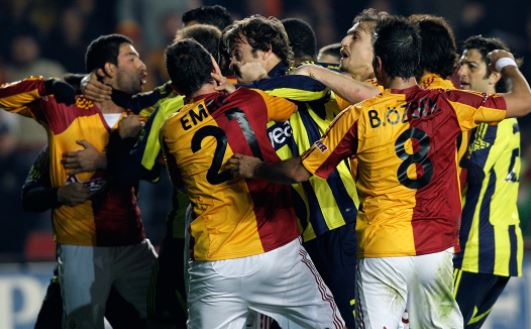
Everything that makes a rivalry legendary — passion, hatred, success, history, atmosphere, violence, craziness, and incredible moments — gets turned up to 11 during the Intercontinental Derby, which fittingly needs two continents to separate its two combatants.
Turkey may just be the most passionate country in the world when it comes to sports (and pretty much everything). Part of that comes from the region they’re in, which has a lengthy history of fighting and turmoil. Another part is due to the… (trying to not get too political here)… particular way the Turkish government rules. Whenever they get the chance to release their frustrations, Turkish sports fans do so in full force. It just so happens that the two soccer clubs with the biggest sets of fans — Fenerbahce S.K. and Galatasaray S.K. — also happen to be the two most successful — and can’t stand each other.
Before we dive in, there are two items I must make note of. First, as you might’ve noticed by its name, this is one of the few sporting rivalries to be based in two different continents. Both Galatasaray and Fenerbahce are located in Istanbul, which itself is split in two by the Bosporus straight (which connects the Black Sea to the Mediterranean Sea, and therefore the rest of the world). Galatasaray is on the European side of Istanbul, while Fenerbahce is on the Asian side. Because of this, you can make the argument that the rivalry is better suited in the Asia region of the World Cup of Hate qualifiers. Given that 97% of Turkey is technically located in Asia, it would be a good argument. However, Turkish clubs compete in the UEFA Champions League and Europa League and Turkey’s national team plays for the European Championship and goes through Europe’s FIFA World Cup qualification (not to mention that Turkey itself is a member of the European Union Customs Union and a candidate for future European Union expansion). Therefore, we’re counting Turkey’s biggest rivalry for Europe. This will be one of two major geographical decisions I will make during this experiment.
The second item is the matter of a soccer club called Besiktas. There are several clubs in Turkey’s top flight division (Super Lig) based in Istanbul. But three of them are considered the “Big Three,” the clubs that have won by far the most championships (combining for 56 of the 64 ever Turkish title winners) and more often than not represent Turkey in European competition. Fenerbahce and Galatasaray are two of them, along with Besiktas, which has plenty of success and history to match the other two. In fact, Besiktas is the oldest of the Big Three. With all of that history and passion, you can bet Besiktas has rivalries with both Galatasaray and Fenerbahce that are fierce and full of hatred. The fact that one of Besiktas’ rivalries is not included on this list shouldn’t be an indictment on the club or those rivalries. Instead, it’s a testament to the power and passion of the Intercontinental Derby that it clearly rises to the top as the best in the country — and arguably in the world.
HISTORY:
The roots of the rivalry date back to the early 1900’s, when the Ottoman Empire was still around. Although the Istanbul Football League had been established in the capital city (which was technically still called Constantinople at the time), it was made up entirely of Greek and English clubs, as strict Ottoman rule forbade Turkish youth to play soccer or establish a soccer club. But that didn’t mean there wasn’t any love for the game in the capital. In 1905, Ali Sami Yen and other students at Galatasaray High School (located on the European side of the city) secretly founded their own club, which in honor of their school they named Galatasaray Spor Kulubu (sports club). Originally red and white, the club’s colors were changed to yellow and black in 1906 and (after a 5-0 loss in a friendly) changed again in 1908 to its current scheme of red and yellow (which looks more like burgundy and orange but still). In 1907, in the Kadikoy district on the Asian side of the city, Ziya Songulen, Ayetullah Bey, and Necip Okaner decided to form a club the community could call their own. Taking its name from the Fenerbahce neighborhood and colors from the daffodils around the area’s famous lighthouse (the navy blue was also taken from the sea), Fenerbahce Spor Kulubu was born.
Both clubs’ birth established Galatasaray as a club for the elite/educated and Fenerbahce as one for the working class. Their early success also established them as contenders for trophies. Perhaps it’s no coincidence that around the time the Ottoman Empire relaxed its rule on sports clubs, both Galatasaray and Fenerbahce got really good. Galatasaray won the Istanbul League in 1909, the same year as the first Intercontinental Derby (a 2-0 Galatasaray win). Two more league titles would follow, with Galatasaray’s streak broken by Fenerbahce getting their first Istanbul crown. It was also during this time that, on February 12, 1911, Galatasaray smacked Fenerbahce 7-0 — allegedly. The match was only ever mentioned by Galatasaray and due to the lack of a neutral third party, the lineups and details aren’t completely verifiable. So this 7-0 result is unofficial to pretty much everyone but Galatasaray.
One other important thing that almost happened was a merger between these two eventual rivals. Because of a desire for a strong, unified Turkish team to compete against foreign clubs, the presidents of Fenerbahce and Galatasaray agreed to unite into one super club (which would’ve been called Turkkulubu). The proposal was presented to the Ottoman Empire’s International Olympic Committee and was being discussed when peace ended for about ten years. The Balkan Wars of 1912 and 1913 prevented any serious sporting moves, with the merger agreement between the two clubs eventually breaking down. Then all hell broke loose in 1914 with the start of World War I, which saw the Ottoman Empire and the other Central Powers defeated. The Ottoman Empire was partitioned, meaning Allied Powers occupied parts of the country, including Istanbul. That led to the Turkish War of Independence, which was eventually won by the national movement. After all was said and done in 1923, Turkey became its own country, abolished the sultanate in favor of democracy, and moved its capital from Constantinople (renamed Istanbul in 1930) to Ankara. But while the fighting on the battlefields had finally ended (for now), the battle on the soccer fields was just beginning.
The Istanbul League largely continued during the war, with Fenerbahce and Galatasaray establishing themselves (along with fellow Istanbul club Besiktas Jimnastik Kulubu) as the major players in Turkish soccer. By the time 1934 rolled around, Galatasaray had won 11 league titles to Fenerbahce’s seven (although Fenerbahce had also won its first Turkish national championship), with the two clubs largely finishing both first and second over the past decade. This naturally increased the level of animosity whenever the two clubs met, with things eventually boiling over during a friendly in February of that year. The match had to be stopped several times because of hard fouls, which also led to fights in the stands. Eventually, both clubs engaged in a massive brawl, leading to the referee abandoning the match. The top level competition continued through the end of the Istanbul League, which folded in 1959. Galatasaray and Fenerbahce occupied the top two spots in each of the league’s final four seasons. Fenerbahce went unbeaten in the last campaign to win its 16th Istanbul League title, surpassing Galatasaray’s total of 15.
The Istanbul League was dissolved because in 1959, Turkey finally formed its first ever national soccer league: the Super Lig. Galatasaray and Fenerbahce both qualified and (along with Besiktas) are the only clubs to have never been relegated from Turkey’s top flight league. Naturally, the first ever Super Lig would come down to a showdown between the two rivals, with the league format dividing the 16 clubs into two groups. Galatasaray won one group and Fenerbahce won the other, meeting in a two-legged final. Legendary Turkish striker Metin Okay scored the only goal in the first leg, a 1-0 Galatasaray win. But Fenerbahce clapped back big time with a 4-0 win in the second leg to claim the crown. That kind of set the tone for the following decade, which saw Fenerbahce win four league titles and finish as runners-up three times. The club also made some nice strides in Europe, reaching the quarter-final of the 1964 European Cup Winners’ Cup and eliminating Manchester City in the 1969 UEFA Champions League. While Galatasaray fell short with only three league titles, they made up for it by winning the first four Turkish Cups and two of the first four Turkish Super Cups.

Although Fenerbahce took the first Super Lig title of the 1970’s, Galatasaray made history at the start of the decade, winning the league from 1971-73. It was the first time any club had won three straight Super Lig titles, so naturally Galatasaray wouldn’t win another league championship for 14 years. During that time, it was another club — Trabzonspor — that would be Fenerbahce’s main title rivals during that decade and a half (the final count was Trabzonspor 6, Fenerbahce 5, Besiktas 2). But right before Fenerbahce was about to win its 11th total Super Lig crown, Galatasaray shocked everyone by hiring highly-regarded Jupp Derwall (the manager of the West German national team). Derwall’s efforts not only broke Galatasaray’s title drought in 1987, but also revolutionized the tactics and training techniques of Turkish soccer. The seeds were also sown with two of Derwall’s assistants — current Galatasaray manager and former Turkish national team boss Fatih Terim and Mustafa Denizli, the only manager to win the Super Lig with Galatasaray, Fenerbahce, and Besiktas. Even after Derwall left after 1987, Denizli helped continue Galatasaray’s resurgence, with the club reaching the 1989 Champions League semi-finals (the first Turkish club to advance that far).
While the 1970’s and 80’s were dominated by Fenerbahce and Trabzonspor, the 1990’s were dominated by Galatasaray and Besiktas (though more so by the former). Galatasaray won five league titles during the decade to Fenerbahce’s one, although Fenerbahce’s one triumph came during a year that saw the most famous moment in the history of the Intercontinental Derby and domestic Turkish soccer. Fenerbahce dominated most of the competition, losing just twice and holding off Trabzonspor to win the league title. Galatasaray finished 16 points back and could only save face by doing well in the Turkish Cup. As luck would have it, Galatasaray and Fenerbahce met up in the two-legged final. Galatasaray narrowly won the first leg 1-0 at home but went down 1-0 in the second leg, which went deep into extra time. With the match seemingly headed to penalties, Dean Saunders found the back of the net for Galatasaray, producing a shocking win for his club. But what everyone remembers is what happened after the final whistle, when Galatasaray manager Graeme Souness (HE’S BACK, BABY!!!) took a giant Galatasaray flag and planted it at the center of Fenerbahce’s field, just to piss off the home fans. The team had to be surrounded by armed guards when receiving the trophy.
From there, Galatasaray would go on to have its most successful period. Terim took over as manager after Souness left and proceeded to lead Galatasaray to an unprecedented four straight Super Lig titles, along with two Turkish Cups and a Turkish Super Cup. That final season — 1999-2000 — would be the history maker. Led by legendary Turkish players Hakan Sukur, Bulent Korkmaz, and Arif Erdem, Galatasaray made a run through Europe, taking out the likes of Borussia Dortmund and Leeds United (that matchup was marred by the controversial violence in Istanbul that saw two Leeds fans stabbed to death by Galatasaray fans) en route to the 2000 UEFA Europa League Final (which had its own riots). Facing the eventual Premier League runners-up Arsenal — boasting the likes of Thierry Henry, Patrick Viera, Dennis Bergkamp, and David Seaman — Galatasaray managed to take the game to penalties, where Arsenal faltered and Galatasaray became the first (and as of now only) Turkish side to win a major European competition.
This isn’t to say Fenerbahce didn’t have some success during this era. While they didn’t advance far in the Champions League, in 1996 they became the first team in 40 years to defeat Manchester United at Old Trafford in European competition. In 2001, it was naturally Fenerbahce who denied Galatasaray a fifth straight Super Lig title. While Galatasaray won the title back in 2002, something happened that year that Fenerbahce fans would take over any domestic title. On November 6, 2002, Fenerbahce scored three goals in the final 15 minutes to double their lead over Galatasaray and curb stomp their rivals 6-0, which remains the largest verified margin of victory in the history of the Intercontinental Derby. Fenerbahce would retake the league crown in 2004 and retain it in 2005. Their hopes for a three-peat in 2006 came down to the final match day, when all Fenerbahce needed was a win to secure the title. However, they could only manage a 1-1 draw with Denizlispor, while a 3-0 win over Kayserispor allowed Galatasaray to snatch the title away.
Over the past decade and a half, the rivalry has seen its more notable moments happen off the field, and not just because of the lengthy and interesting list of major names to suit up for either club (among them Didier Drogba, Robin van Persie, Wesley Sneijder, Nani, Franck Ribery, Nicolas Anelka, Radamel Falcao, and Roberto Carlos). In 2006, Fenerbahce fans were attacked after protesting a racist banner made Galatasaray fans and directed towards Mehmet Aurelio (a Turkish national team player no less). This incident was one of several darker, more violent happenings during the rivalry that led to it getting a reputation around the world as one on the level of danger as the Derby della Capitale. Things came to a head in 2013, when a 19-year-old Fenerbahce fan was stabbed to death by Galatasaray fans. For several years after, away fans were banned from all derby matches in Istanbul. Even when violence isn’t involved, the clubs haven’t been able to stay away from negative headlines, such as Fenerbahce’s involvement in the 2011 Turkish Sports corruption scandal. Still, while both sides haven’t been as competitive for the title in recent years (Fenerbahce hasn’t won the Super Lig since 2014, while Galatasaray has since won it three times), the action is always close on the pitch. In 2020, Galatasaray beat Fenerbahce 3-1 on the road, marking their first win at Sukru Saracoglu Stadium in more than 20 years. 2021marked the tenth anniversary of the opening of Galatasaray’s current home — Turk Telekom Stadium. Fenerbahce hadn’t won there in years, but recently broke that streak as well. At this point, it’s clear — anything can happen in Istanbul.
MAJOR ON-FIELD MOMENTS:
THE ALLEGED ASS WHOOPING
No one knows for sure what exactly happened when Galatasaray and Fenerbahce met on February 12, 1911. But according to Galatasaray, it was an all-time ass whooping. The club says they started the match with just six players due to a storm preventing the rest from going across the Bosphorus strait. They say Fenerbahce’s goalkeeper got injured, meaning their rivals couldn’t properly defend their goal. As a result, Celal Ibrahim allegedly scored four goals to lead Galatasaray to a 7-0 win, which would be a record margin of victory in the Intercontinental Derby. But no one other than Galatasaray (not even Fenerbahce) has produced details of that match, meaning nothing can be impartially confirmed and that the result is officially unofficial.
FIGHTING IN A FRIENDLY
The first ever soccer stadium in Istanbul — Taksim Stadium — was home to all of the city’s major clubs. It also saw perhaps the least friendly friendly in the history of soccer. In the years before the February 1934 Intercontinental Derby, matches between Fenerbahce and Galatasaray had become increasingly intense. Things didn’t get better during the match, with both sides fouling each other incredibly hard, forcing the referee to stop play several times. The physical play also fed the heated atmosphere, which in turn motivated the players even more. In the end, a mass brawl broke out on the field, forcing the referee to completely abandon the game. That match was one of the last friendlies ever played between the two rivals, and for pretty good reason.
EAT YOUR HEART OUT, BAKER MAYFIELD
Going into the 1996 Turkish Cup Final, eventual Super Lig winners Fenerbahce were without a doubt the better team, with Galatasaray needing a win to salvage any pride from an otherwise dismal campaign. An unexpected 1-0 Galatasaray win at home in the first leg gave way to a 1-0 Fenerbahce home result, with the tie seemingly headed to penalties. But Dean Saunders got a late winner to give Galatasaray the title. Afterwards, Galatasaray manager Graeme Souness found a giant flag, ran to the middle of Fenerbahce’s field, and planted it in the ground. The flag has become an iconic symbol for Galatasaray, remembered in tifos and chants. According to one Fenerbahce fan, if Souness did that today, he would’ve been sent home “in a wooden box.”
ALL FOUR ONE & ONE FOUR ALL
Although Fenerbahce and Galatasaray have met in the Turkish Cup Final five times (including the memorable 1996 edition), perhaps the objectively best game between the two took place in the semi-finals of the 2001 edition of the tournament. Galatasaray got the scoring started in the sixth minute, but Fenerbahce scored twice before the half hour mark and once more before halftime to go up 3-1. Two goals and 40 minutes later, Fenerbahce appeared headed for a 4-2 win. The final five minutes though saw Galatasaray score two goals (including one in stoppage time) to force a 4-4 draw. However, this was a tournament, meaning a winner was needed. Fenerbahce would prevail 3-2 in penalties in the highest-scoring game between the two sides.
THE CONFIRMED ASS WHOOPING
While Galatasaray’s alleged 7-0 win over Fenerbahce in 1911 remains unofficial, there was nothing in doubt for the 2002 encounter that saw the scoreline nearly reversed. Tuncay got Fenerbahce started in the eighth minute. Ariel Ortega added another before halftime to make it 2-0. Things stayed that way until the 68th minute, when Fenerbahce decided to step on their rivals’ throat. Serhat Akin scored twice to make the count 4-0 with 15 minutes remaining. Ceyhun Eris added another a few minutes later and Umit Ozat completed the domination just before the final whistle. The final score was 6-0 in favor of Fenerbahce, which incredibly still doesn’t tell the whole story. Fenerbahce finished with nine players, and Galatasaray with ten.
WILD END TO A WILD SEASON
In 2012, the Super Lig introduced a new format (which was thrown out the following year) where a mini group stage was held after the regular season to determine who would claim the UEFA Champions League spot. Naturally, it came down to Galatasaray and Fenerbache in the last match, with a win giving either side the title (Galatasaray would win with a draw). The match was utter chaos, with two red cards, a disallowed goal, goal line clearances, and several moments of fighting. In the end, the match finished 0-0, giving Galatasaray the crown. The home Fenerbahce fans invaded the pitch and riot police were called in. To top if off, Fenerbahce turned off the lights inside their stadium to avoid their visiting rivals being able to celebrate.
SNEIJDER THE SNIPER
Sometimes, despite both teams’ best efforts, the ball just won’t go in the back of the damn net. That appeared to be the case in 2014, when a feisty, shot-filled Intercontinental Derby seemed destined to finish scoreless. But in the 88th minute, Wesley Sneijder pulled Lola Bunny from his hat and unleashed a fantastic long-range strike that found the left corner of the Fenerbahce net. While it took nearly 90 minutes for Galatasaray to score, they only needed two more to get a second. Once again, Sneijder unleashed hell from deep, this time hitting the top right corner of the net. Things couldn’t just end with that — Alper Potuk got one goal back for Fenerbahce deep into stoppage time. Still, Sneijder’s strikes were enough to give Galatasaray a wild 2-1 win.
LEAVING IT LATE
Three years after Wesley Sneijder’s late heroics, things once again seemed to be destined to finish scoreless despite countless chances for both Fenerbahce and Galatasaray. But instead of one of the headline-grabbing players becoming the hero, it was a midfielder whose best results came as a member of Porto’s 2011 UEFA Europe League-winning side. Josef de Souza got on the end of a late Sener Ozbayrakli cross, heading the ball past Fernando Muslera in the 90th minute to give Fenerbahce an unexpected 1-0 road victory over their rivals. Amazingly, the home squad somehow nearly pulled a draw out of their asses with a last gasp chip shot attempt. However, the ball bounced up off the crossbar, out of bounds, and out of danger.
FIGHT AFTER FINAL WHISTLE
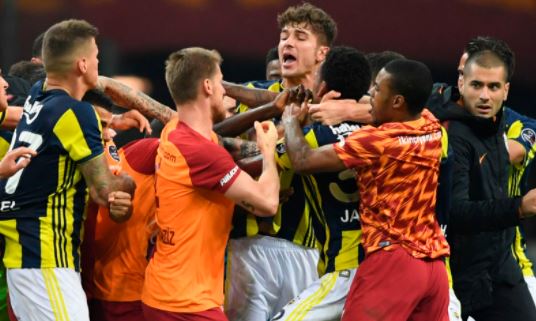
The last Intercontinental Derby of 2018 would’ve been memorable enough based on what happened. Hosts Galatasaray went up 2-0 quickly into the scone half. But Fenerbahce fought back, with a sensational goal from Jailson completing the rally and sealing a 2-2 draw. Then the final whistle blew and the real story began. Jailson had allegedly taunted Galatasaray fans after his goal, so after the game Galatasaray players went after him. That sparked a massive brawl that involved no fewer than 30 people, including coaches and staff members. The two sets of fans also got into it in the stands. Three players — Jailson, Roberto Soldado, and Badou Ndiaye were each given red cards and multiple people received suspensions for their involvement.
FIRST ROAD WIN OF THE CENTURY
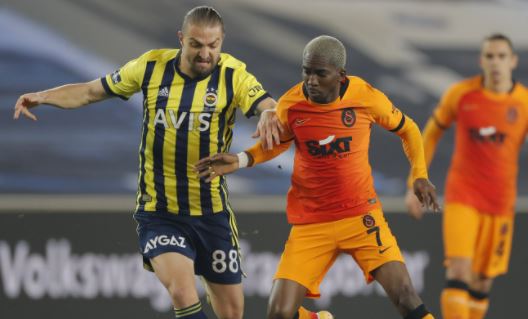
Somehow the headline “Galatasaray records first road win over Fenerbahce in over 20 years” doesn’t do the first Intercontinental Derby of 2020 justice. Even given the history of the rivalry, things were batshit insane. In 90 minutes, Galatasaray and Fenerbahce combined for four red cards, 12 yellow cards, and countless other dangerous plays and tackles. They also combined for four goals, with three of them going to Galatasaray. But things didn’t look like they’d go that way with the game tied 1-1 with ten minutes left. But then Radamel Falcao converted a penalty and Henry Onyekuru sealed the victory with a goal eight minutes into stoppage time (no really). The 3-1 win was Galatasaray’s first at Sukru Saracoglu Stadium since December of 1999.
STATISTICS:
HEAD-TO-HEAD RECORD
Fenerbahce: 148
Galatasaray: 127
Draw: 122
LEAGUE CHAMPIONSHIPS (SUPER LIG)
Fenerbahce: 19
Galatasaray: 23
LEAGUE CHAMPIONSHIPS (NATIONAL DIVISION)
Fenerbahce: 6
Galatasaray: 1
LEAGUE CHAMPIONSHIPS (TURKISH CHAMPIONSHIP)
Fenerbahce: 3
Galatasaray: 0
LEAGUE CHAMPIONSHIPS (TOTAL)
Fenerbahce: 28
Galatasaray: 24
TURKISH CUP
Fenerbahce: 7
Galatasaray: 18
TURKISH SUPER CUP
Fenerbahce: 9
Galatasaray: 16
PRIME MINISTER’S CUP
Fenerbahce: 8
Galatasaray: 5
BALKANS CUP
Fenerbahce: 1
Galatasaray: 0
UEFA EUROPA LEAGUE
Fenerbahce: 0
Galatasaray: 1
UEFA CUP WINNERS’ CUP
Fenerbahce: 0
Galatasaray: 1
NOTABLE FIGURES:
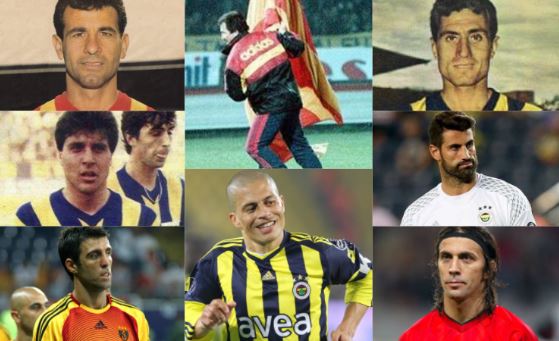
ZEKI RIZA SPOREL
Perhaps the first truly great Turkish soccer player ever, Zeki Riza Sporel has the distinction of scoring the first ever goal for Turkey’s national team. He also has another record — highest goal scorer in Fenerbahce history. Zeki spent the entirety of his 19-year career with Fenerbahce, finding the back of the net 470 times during that span. Eight of those came during one match in 1931 that Fenerbahce won by an incredible 16-0. He also holds the record for fastest goal scored in club history. Zeki’s scoring prowess led to him being dubbed “Ustad” (The Master).
LEFTER KUCUKANDONYADIS
Although he was of Greek descent (you can tell by his last name), Lefter Kucukandonyadis was a Turkish citizen and a Turk at heart, endearing himself particularly to Istanbul. Finding success in his early years with Fenerbahce, Kucukandonyadis became one of the first Turkish players abroad, suiting up for clubs in France and Italy. But his heart was with Fenerbahce, where he returned to and scored many goals for. Kucukandonyadis is so beloved by the club, a statue of him exists near Sukru Saracoglu Stadium and his name is included in the official club anthem.
TURGAY SEREN
Of all the players who have defended Galatasaray’s goal, none have done so better, longer, or more effectively than Turgay Seren. Spending all 20 years of his career with Galatasaray, Seren is the record holder for most appearances (631) in club history and most seasons as the club’s starting goalkeeper (15). He also has appeared in more Intercontinental Derbies (54) than anyone else. Seren was also known for his terrific performance in Turkey’s 2-1 win over West Germany in Berlin in 1951, which earned him the nickname “Berlin Panteri” (Panther of Berlin).
METIN OKTAY
When he was just 19 years old, Metin Oktay signed a five-year contract with Galatasaray for a Chevrolet. He then went on to be the top scorer in the league that year, as well as become the club’s all-time goal scorer (349 goals). Oktay was a particularly major threat to Fenerbahce, the recipient of 18 of those goals. After scoring four goals in a 5-0 Intercontinental Derby win, Oktay played himself in a movie about his life during his career. Oktay seemingly broke every record in Turkish soccer during his playing days. Galatasaray’s training ground is named after him.
MUJDAT YETKINER
To become the all-time appearances leader for a club like Fenerbahce, you’ve got to have something special. For Mujdat Yetkiner, that special aspect was versatility. During his 763 games for Fenerbahce, Yetkiner played as a sweeper, stopper, outside defender, defensive midfielder, midfielder, attacking midfielder, and winger. All of those unique roles led to him being a fan favorite throughout his 15 years with the club. It also helped that he was the key defensive cog during Fenerbahce’s domestic success during the 1980’s and a future youth team coach.
AYKUT KOCAMAN
Aykut Kocaman was going to succeed in sports — the question was which one. A youth national runner-up gymnast with 40 medals to his name, Kocaman eventually chose soccer for his career, which went pretty well. He’s one of only five players to score 200 goals in Super Lig history, the vast majority of those goals coming for Fenerbahce. One of those goals clinched the league title for Fenerbahce in 1996. Kocaman was famous for a move where he easily trapped the ball on his chest and turned to score, with some fans naming the move “Aykut” after him.
GRAEME SOUNESS
I am officially declaring Graeme Souness the MVP of the World Cup of Hate. He may only have been in charge of Galatasaray for one year, but his impact on the Intercontinental Derby was immense. Souness (who had open heart surgery a few years earlier) said a Fenerbahce VP referred to him as a cripple. So when he saw that VP after the 1996 Turkish Cup Final, Souness thought “I’ll show you who’s a cripple” and then planted the flag. That gesture earned him the nickname “Ulubatli Souness,” after the Turkish hero who was killed planting the Ottoman flag.
FATIH TERIM
A key disciple and assistant of Jupp Derwall, Fatih Terim succeeded Graeme Souness as Galatasaray manager. All he did was lead the club to four straight Super Lig titles (the longest streak in league history) and the first ever major European tournament crown (the 2000 UEFA Europa League) for a Turkish squad. Terim has since been fired and rehired by Galatasaray three different times (he’s the club’s current manager). The gaps in between the last three spells were filled by time managing Turkey’s national team, leading them to the Euro 2008 semi-finals.
MUSTAFA DENIZLI
Another notable Jupp Derwall assistant, Mustafa Denizli was Derwall’s immediate successor at Galatasaray. Denizli quickly won the Super Lig with Galatasaray, with whom he spent two different spells from 1987-1992. Buf after four years with the Turkish national team, Denizli returned to league action with of all clubs Fenerbahce, winning the Super Lig in his one season in charge. But Denizli’s Istanbul tenure wasn’t complete — in 2009, he won the Super Lig with Besiktas, becoming the only manager to win the Super Lig with each of the “Big Three” clubs.
BULENT KORKMAZ
If you’ve got nicknames like “Buyuk Kaptan” (Great Captain) and “Cengaver” (Warrior), you’re probably a club legend and a badass. That pretty accurately describes Bulent Korkmaz, the all-time leader in appearances (593) for Galatasaray. Korkmaz was an incredibly solid center back throughout his 21-year career (all with Galatasaray), during which time the club won eight Super Lig titles, six Turkish Cups, five Turkish Super Cups, and the 2000 Europa League and UEFA Super Cup. Korkmaz also made more than 100 appearances for the Turkish national team.
HAKAN SUKUR
Behind only Metin Oktay in goals and Bulent Korkmaz in appearances in Galatasaray history, Hakan Sukur is unquestionably the club’s greatest player of the modern era. Racking up 289 goals in 539 games, Sukur was the critical piece for Galatasaray’s success in the late 1990’s and early 2000’s. Sukur also owns the record for most goals in Turkish national team history (51) and fastest goal in FIFA World Cup history (11 seconds). Unfortunately, Sukur is now stuck living in the U.S. due to political exile over a dispute with Turkey’s current d̶i̶c̶t̶a̶t̶o̶r̶ president.
VOLKAN DEMIREL
Trailing just Mujdat Yetkiner for most appearances in Fenerbahce history, Volkan Demirel was the club’s modern day iron man until his retirement in 2019, playing in 525 matches and picking up 47 yellow cards and five red cards during his 17-year career. Given that Demirel was a goalkeeper, those card totals are quite frankly astounding. The most memorable of those red cards came in Euro 2008 and cost him two matches. Despite making several mistakes, Demirel was damn good when he had his A game — he was especially adept at making penalty saves.
ALEX
Alex (given name Alexsandro de Souza) is by far the most revered foreign player in Fenerbahce history. Joining Fenerbahce in 2004, Alex remained with the club until 2012, racking up the fourth-most goals and eighth-most appearances in club history during that stretch. Memorable moments include producing a five-goal game in 2011, being the 2012 Turkish Cup Man of the Match, and scoring Fenerbahce’s 3,000th Super Lig goal (his uniform and shoes are in the club’s museum). Before he left Fenerbahce, Alex was surprised with a fan-funded statue.

FAN INVOLVEMENT:
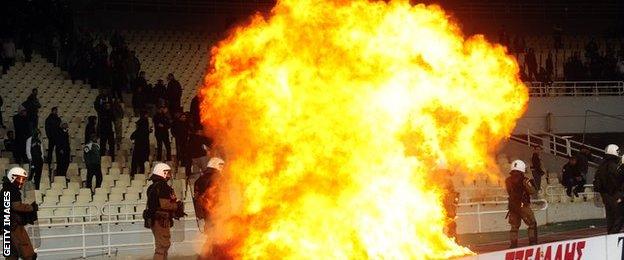
Take a look at the scene above, the shit ton of flares and smoke creating an apocalyptic atmosphere. That was for a Galatasaray TRAINING SESSION. If the fans can get that crazy for practice, imagine what it’s like during an actual match, let alone an Intercontinental Derby.
Remember at the beginning when I said Turkish sports fans possibly being the most passionate in the world? That passion is on full display when Fenerbahce and Galatasaray square off. Constant chanting and yelling, incredibletifos, and massive flare displays are part of every derby match, as is an undercurrent of worry of things boiling over. That has happened more than a few times, such as a 2007 derby (a 2-1 Fenerbahce win) that saw Galatasaray fans rip chairs out of the stadium and throw them (along with cups and bottles) onto the field). Fenerbahce fans by the way aren’t exactly innocent of chair-throwing. All of this leads to an incredibly intimidating place to play for opponents. Galatasaray’s home ground was referred to simply as “Hell” during the late 1990’s and early 2000’s, while Fenerbahce’s 20-year unbeaten home streak against their rivals was only broken recently.
As you might’ve guessed, with such passion on display and the level of animosity between the two clubs, things can often boil over into violence. Multiple on-field fan riots have taken place. Stabbings, beatings, and other violence between opposite sets of fans is not uncommon. Scenes are often more violent off the field than off it. In fact, the violence got so bad that away fans were banned from all derby matches in Istanbul for several years. Although things have calmed down a bit in recent years, there’s still an unquestioned sense of danger, although not quite at Derby della Capitale levels. Plus, even in a pandemic Turkish fans will be Turkish fans. In the first Intercontinental Derby after the COVID-19 lockdowns (which had no fans in attendance), the game was still stopped due to a flare being shot into the field. Someone managed to fire it in from outside the stadium.
Statistics also reveal a lot about why this rivalry is the biggest and most heated in Turkey. In a 2011 poll involving 1.4 million Turkish people, 35% of respondents said they supported Galatasaray and 34% supported Fenerbahce (that nice combined number is nearly 70% of all of Turkey). Naturally, Fenerbahce complained about the accuracy of the result. As the most successful club on the European side of Istanbul, Galatasaray has more European support than any other Turkish club. On the Asian side of the city, Fenerbahce is the most successful and therefore the most popular among Muslim-majority countries in Asia and Africa. There’s also some political history at play. Mustafa Ataturk, known as the founding father of the Republic of Turkey and its first president, was a Fenerbahce supporter, as was the fifth Prime Minister, Sukru Saracoglu. If that name sounds familiar, it’s because Fenerbahce’s stadium is named after him. Saracoglu was the club’s chairman for 16 years, including his four years in office.
SUMMARY:
Although their ideals and interests may be separated by the Bosphorus strait, there’s enough animosity, history, passion, drama, violence, and incredible results that take place when Fenerbahce S.K. and Galatasaray S.K. share the field that such an explosive rivalry must be kept apart, on two different continents. Even considering both clubs’ rivalries with Besiktas and the many other fiery rivalries in the country, there’s no question the Intercontinental Derby is the biggest, baddest, and best in Turkey and a genuine contender to win the World Cup of Hate.
However, it’s far from the only fierce derby and hatred title contender in the area. We don’t have to go far at all to find our next great rivalry. In fact, the country that houses it was mentioned early in the Intercontinental Derby section and played a not-small role in establishing Turkish soccer. But this country created a whole lot more, including an iconic rivalry of its own.
The Derby of the Eternal Enemies (Greece)
Olympiakos F.C. vs. Panathinaikos F.C.
“The intensity would still be present if these two teams were picked to play ping-pong.” — Dimitrios Eleftheropoulos, former Olympiakos goalkeeper
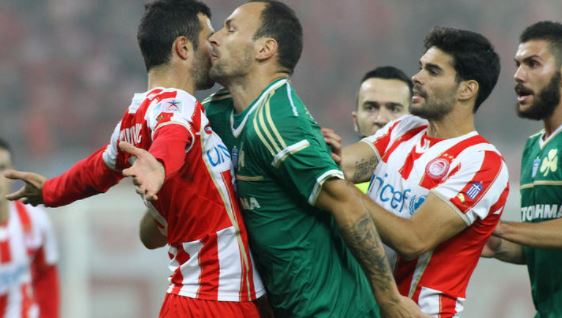
Violence, chaos, betrayal, high stakes, on-field drama, championship clashes, class warfare, passion, and pure, unadulterated hatred — it all comes to a head when Olympiakos F.C. and Panathinaikos F.C. lock horns. There are plenty of reasons for these two clubs (by far the most successful in their country’s history) to hate each other, with their rivalry appropriately titled the Derby of the Eternal Enemies.
Greece is often considered the cradle of Western civilization, with it being the birthplace of democracy, Western philosophy and literature, political science, many major science and math principles, Western drama, and the Olympic Games. It has also given the world one of the fiercest, craziest rivalries in all of sports, one that often decides the country’s top flight winner. However, this rivalry is somehow underrated and not as talked about, even among the more informed soccer fan base. Part of this is due to the recent of history of Greece and its soccer league (more on that later). Another part is the lack of success for either Panathinaikos or Olympiakos in European competition (they’ve won no trophies and made a combined one major final). But even without the continental success or recent star power, this rivalry is still up there with the best of the best around the world because the drama, hatred, violence, and batshit insane results on the field can somehow be matched by what happens off the field. That’s saying something especially considering the Wikipedia page for the rivalry has a section dedicated to red cards in matches since 1960. It’s extensive, as is the amount of people with long names you’re about to learn about.
HISTORY:
The tent poles for the Derby of the Eternal Enemies can be traced back to each club’s founding. In 1908, a group of around 40 athletes broke away from Panellinios Gymnastikos Syllogos — a multi-sport athletic club in Athens — after the club decided to discontinue its soccer team. One of those athletes, Giorgos Kalafatis, decided to create a new club, calling it Podosferikos Omilos Athinon (Football Club of Athens) with the aim of uniting everyone in the elite capital of Athens with this growing sport. Within the next 15 years, the club made a number of key changes, including adopting the trifolium (shamrock) as its emblem and green and white as its colors. The club also won the first post-World War II titles in the region. Its success and popularity led the club to build what is currently the oldest active soccer stadium in Greece: Leoforos Alexandras Stadium (later named after club icon Apostolos Nikolaidis). The new venue also led to a name change: Panathinaikos Athlitikos Omilos (PAO), which was adopted in 1924.
One year later, in 1925, the city of Piraeus decided to get in on this whole soccer thing. While it’s in the greater Athens region, the port city has always had a historic rivalry with the capital. The result of a meeting to further athletic development and spreading the Olympic ideal only added to that fire. Taking inspiration from that mindset, Piraikos Podosfairikos Omilos FC and Piraeus Fan Club FC merged into one mega club: Olympiakos Club of Fans of Piraeus. The club soon became regional champions and attracted a big following, and not just because of their success. Where Athens was seen as the home of the elite and old traditions, Piraeus was the port town full of working class supporters. Even beyond the Athens area, Olympiakos has been able to attract working class fans simply in opposition to Panathinaikos’ location.
Interestingly, the first major dispute over the next few years would see the future rivals on the same side of the issue. The Hellenic Football Federation (the governing body of soccer in Greece) was formed in 1926, along with the first national league — the Panhellenic Championship — a year later. But in just the second season, Olympiakos and the HFF got into an argument over pay distribution between various clubs. The end result saw Olympiakos, along with Panathinaikos and AEK Athens, break away from the league and play friendlies against each other in an alliance that became known as P.O.K. While the dispute was resolved a couple of years later, the group would stay together for several decades.
Competitively, it would be Panathinaikos that would draw first blood, winning their first national title in the 1929-30 season. Not only did they remain unbeaten all season, but one of their wins was an 8-2 thrashing of Olympiakos, which to this day remains the largest margin of victory in the Derby of the Eternal Enemies. So how did Olympiakos respond? With a vengeance. The first of the club’s golden eras saw six championships won in the 1930’s including five straight from 1932-38 (the 1934-35 season was not finished). In addition, the final two titles were won during unbeaten seasons. Sadly, both Olympiakos and Panathinaikos would see the first half of the 1940’s filled with tragedy — many players served in the Hellenic Army during World War II and both clubs saw fatalities.
After the war, Olympiakos had to deal with the retirement of several key players from the pre-war era. But they managed to keep captain Giannis Vazos and bring in new players such as future club legend Andreas Mouratis. They then proceeded to go gangbusters on the rest of Greece, winning nine of 11 national championships held between 1946-59 (along with eight Greek Cups). Panathinaikos did have some success during this era, winning the Athens Championship eight times during that same window and breaking its national title drought in 1949 (winning another one in 1953 as well). This era also saw the first major on-field boiling over of tensions between the two rivals. During a 1949 match, an Olympiakos player was knocked unconscious and accidentally trampled over by Panathinaikos players. Outraged that the referee did nothing, Olympiakos fans stormed the field and injured two Panathinaikos players — they had to be hospitalized.
1959 would prove to be a major year for Greek soccer. First, the competition format was changed to simply a straight up national league, Super League Greece (which remains in place today). Second, Olympiakos became the first Greek club to play in European competition, bowing out to A.C. Milan in the first round of the UEFA Champions League. Finally, the tide of the rivalry finally began to turn, with Panathinaikos becoming the top dog. Led by the likes of Mimis Domazos and Antonis Antoniadis, the club won the first three Super League titles and four of the following seven more. They also won a pair of Greek Cups, although this was the one area Olympiakos dominated, winning five in a row and six of seven. That stretch could’ve been seven in a row had it not been for the 1962 Greek Cup Final, against Panthinaikos no less. The first half lasted 66 minutes to to red cards and crowd interruptions. Fans then hurled objects onto the field, believing the clubs to have arranged for the match to end in a draw. Extra time would be abandoned due to darkness and the HFF (fearful of reactions) declined to arrange a replay, meaning there would be no Greek Cup winner.
Perhaps it’s not surprising that the even higher-rising tensions led to the P.O.K. agreement officially ending in 1963. But that was far from the only fighting that decade. In 1967, a military coup overthrew the Greek government, with the new regime implementing changes across the country. That included soccer, with both Panthinaikos and Olympiakos losing key club officials and potential transfers as a result. Still, Panthinaikos had enough talent to continue to thrive and win league titles. This success ultimately culminated into a Cinderella run to the 1971 Champions League Final, the first and (as of this writing) only time a Greek club has ever made it to the final of a European competition. While the club fell 2-0 to Ajax, they still got to compete in the Intercontinental Cup due to Ajax’s refusal to participate (Panthinaikos lost 3-2 on aggregate to Nacional). Panthinaikos would win two more Super League titles in the 1970’s, with Antoniadis scoring a record 39 goals during the 1971-72 campaign.
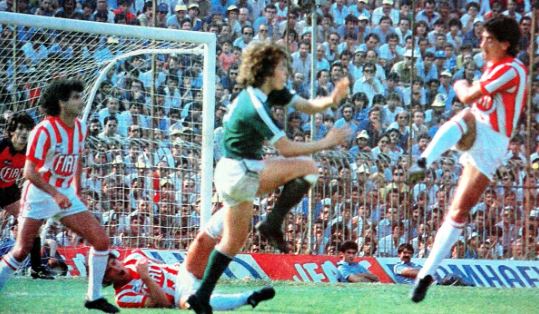
As the military regime ran its course (and was eventually overthrown in 1974), Olympiakos gained the upper hand again, winning three Super League titles in a row from 1972-75 and thoroughly dominating the competition in the process. In continental competition, they also recorded the first ever wins for Greek clubs on Italian and English soil. the 1974-75 Champions League campaign was Olympiakos’ best chance to make a run, with the club upsetting Celtic (becoming the first away club to win at Celtic Park in European competition) in the first round. After losing the first leg of the second round 5-1 to Anderlecht, Olympiakos won the second leg 3-0, coming just short of an incredible comeback win. However, four additional Olympiakos goals were called back and multiple penalty chances were not given by referee Karoly Palotai. Olympiakos fans claim to this day they were robbed of advancing.
While things were relatively tame for the rest of the 1970’s, they kicked right back up at the start of the next decade. Powered by the likes of Nikos Anastopoulos, Olympiakos won four straight league titles from 1980-83, with the 1982 crown coming after being tied with Panathinaikos (who didn’t get rewarded for having the edge in goal difference) on points and winning a playoff match. But Panathinaikos, led by future club legend Dimitris Saravakos, won the title back in 1984 and made it all the way to the Champions League semi-finals. Future European success would loom in 1988, when they eliminated Juventus on their way to the Europa League quarter-finals. During this time, Olympiakos came into the ownership of George Koskotas, who would be convicted of embezzlement, as a result, the club was in deep debt and would spend several years in administrative turbulence. Their uncertainty allowed Panthinaikos to continue to dominate, winning five more league titles and seven Greek titles in the late 80’s and early 90’s. They also made a pair of deep runs in the Champions League, reaching the semi-finals again in 1996, where they were eliminated by their 1971 hearbreakers Ajax.
Then Olympiakos decided to take things up to 11. After getting its shit together, Olympiakos suddenly found itself with financial stability and a talented roster. So they won seven Super League titles in a row, thoroughly taking back control of the rivalry. Their dominance also led to some good chances in Europe, no better than the 1998-99 Champions League. That season saw them top their group and come within five minutes of reaching the semi-finals (although they would’ve gotten their shit kicked in by the treble-winning Manchester United squad). That years-long run of success culminated in the second-to-last game of the 2002-03 season against Panathinaikos, who had a three-point lead and a two-goal advantage. Olympiakos won the game 3-0 to grab the lead, which it held onto during the final weekend. Panathinaikos would have their revenge the following season, winning the title to end their rivals’ streak. However, a monumental series of events was about to play out for Greek soccer.
Perhaps the biggest factor of Panathinaikos’ title run was Antonious Nikopolidis, arguably the best Greek goalkeeper ever. For 15 years, Nikopolidis had worn the club’s green colors and established himself as a Panathinaikos legend. But his contract was up at the end of the 2003-04 season and he couldn’t come to an agreement with the club, who decided to bench him during the process. Towards the end of the season, it was revealed that Nikopolidis had signed a three-year deal with rival Olympiakos. The stunning decision caused Nikopolidis to be booed by Panathinaikos fans during the club’s championship celebration. Those fans then had to watch as Nikopolidis backstopped the national team to arguably the most shocking international result in soccer history — Greece’s UEFA Euro 2004 triumph. When domestic soccer returned, Nikopolidis kept a clean sheet in his first match against his old club and Olympiakos (whose roster included the likes of Rivaldo) won the championship.
That marked the first of five consecutive titles for Olympiakos, a run that was eventually broken up by Panathinaikos in 2010. However, apart from the 2014 Greek Cup, that remains the last major accomplishment for Panathinaikos, who have been dealing with everything from subpar performances to financial problems to locker room drama for the past decade. As a result, Olympiakos has utterly dominated the competition, winning all but three league titles since 2010. But this hasn’t stopped the rivalry from becoming any less intense. On the contrary, the derby has become even more heated in recent years, with violence on and off the field seemingly surpassing the actual play. The most notable occurrence came in 2015, four years after a match-fixing scandal known as Koriopolis came to light. Olympiakos owner Evangelos Marinakis was implicated, although he was acquitted in 2015. But then another scandal emerged, with Marinakis again involved. Although he would eventually be found innocent again (the case was decided this past January), Panathinaikos filed an appeal to the original decision and the first derby of the 2015-16 season was pure chaos. The game itself was eventually abandoned after an Olympiakos player was hit with a flare. Apart from that, there have been incidents which have injured police and killed at least one fan, and caused general chaos.
MAJOR ON-FIELD MOMENTS:
EIGHT GOALS AND INVINCIBLE
Have you ever beaten your rival so badly they produce a golden era just to get their revenge? Before Olympiakos had won any major national titles, Panathinaikos was the team to beat in all of Greece. Four matches away from an unbeaten season, Panathinaikos take the first step by nuking their rivals, scoring four goals in the first half hour of game time en route to a 8-2 victory. It’s kind of incredible given the highs Olympiakos have reached and the lows Panathinaikos have fallen to in the nine decades since that this remains the most lopsided game betweeh the two squads. These two played just two weeks later, with Panathinaikos winning again, but only by a 2-1 score line. Panathinaikos hold on to this aberration of a result as much as they can.
THE 66-MINUTE HALF
Given the hatred between these two clubs, things go absolutely mental whenever they meet in a final. There’s no perfect example than the 1962 Greek Cup Final, made even more significant than the fact that Olympiakos had won the previous five in a row (including one over their rivals). The first half was absolutely insane, with three red cards and frequent crowd issues leading to 45 minutes turning into 66. It didn’t get better when halftime lasted more than a half hour, leading fans to throw stuff onto the field. The score remained tied after regulation time but due to darkness, the match was abandoned seven minutes into extra time. Rather than risk the wrath of the crazy fans, the HFF declined to schedule a replay, with no champion declared.
BURN IT DOWN
Just two years later, the two clubs and sets of fans were back at it, somehow outdoing their previous madness. This time, Olympiakos and Panathinaikos met up in the Greek Cup semi-final — each actually scoring a goal. The match was in the 116th minute and seemingly headed for a replay when fans once again thought the two clubs were conspiring to make more money. So they got pissed and destroyed everything. That’s not hyperbole. Fans stormed the field, smashed damn near everything, pulled down the goals, and set parts of the stadium on fire. Understandably, the match was abandoned. This time, the HFF kicked both clubs out of the tournament and awarded AEK Athens (who won the other semi-final) the 1964 Greek Cup.
PUNCHES AND RED CARDS
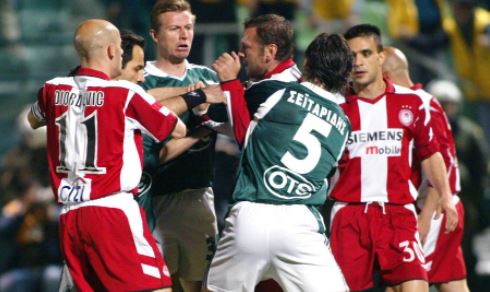
After several incidents of fans stealing the show, the players decided to take the lead on the violence in 1973. Panathinaikos went up 1-0 early, but Yves Triantafyllos equalized in the 18th minute. But a dispute over whether or not led to players arguing with the referee for ten whole minutes. When play resumed, a Panathinaikos defender punched Triantafyllos in the face, starting a fight that saw both players ejected. In the 80th minute, with Olympiakos leading 3-2, another dispute led to a scuffle. Another red card was issued — this time to a Panathinaikos player who was allegedly trying to break things up. Outraged, Panathinaikos walked off the field in protest. The match never finished, but officials awarded Olympiakos a 2-0 victory as a result.
THE PLAYOFF DECIDER
Things were as close as they could get between the two clubs during the 1981-82 season. The campaign ended with Panathinaikos and Olympiakos tied atop the standings with 50 points each. Common tiebreakers like goal differential, goals scored, and wins weren’t being used at the time, which if they had would’ve given Panathinaikos the title. Head-to-head results were useless, as both league games between the two finished 1-1. So it was decided that a special one-game playoff would be held to determine the champion. Held at a neutral ground in Volos, the match saw Olympiakos score just seven minutes in, add one more around the 70-minute mark, and survive a late Panathinaikos rally to win 2-1 and claim another Super League crown.
NOT THE CARS
The late 1980’s saw an interesting reversal of normal rivalry trends, with Panathinaikos kicking ass and Olympiakos fans doing stupid shit. Look no further than the 1986 Greek Cup Final. The match featured both rivals for the first time in 11 years, although it seemed like Olympiakos had completely forgotten how to play. Panathinaikos dominated from start to finish, scoring three second half goals en route to a 4-0 rout. So thoroughly outraged at their team’s performance were Olympiakos fans that they decided to get revenge by destroying something the players love: their cars. Several cars were heavily damaged in the attack. Given that Olympiakos won the Super League the following season, maybe the insane tactics motivated them through fear.
SEVEN GOALS, ONE HALF
Rarely is a game between these two sides that features a lot of goals not a one-sided ass whooping. Such a treat came in 1990, with the game being so insane that all seven goals came during the second half. Two of those came shortly after the whistle, with the second leading to a lengthy stoppage in play due to flares and other items being thrown onto the field. The next goal was controversial as well, leading to more stuff being thrown onto the field. Somehow, play was able to resume, with both clubs trading sides until it was 3-3 with just two minutes remaining. But there would eventually be a winner — in the final minute of regulation, Giannis Samaras was able to slide home the decisive goal, securing an absolutely wild 4-3 victory for Panthinaikos.
BATTLE FOR THE LEAGUE
When a league title race goes down to the wire, rarely is it decided by a clash between the two clubs competing. That was the case for the 2002-03 Super League season. Going into the second to last match of the campaign, Olympiakos were trailing their rivals by three points, with a 3-2 Panthinaikos victory serving as a potential tiebreaker. Basically, Olympiakos needed a decisive win to take hold of the title race. That’s exactly what happened. Olympiakos jumped on top in just the third minute, adding a second before the first 15 minutes were over. A third goal in the second half cemented the turnaround, as Olympiakos put forth a 3-0 win. The result (along with a win the following week) gave Olympiakos an unprecedented seventh straight league title.
FANS VS. POLICE
This was not the first time angry fans led to a match between these two sides being abandoned and it wasn’t be the last. In 2012, Panathinaikos fans got way to angry and intense during the match, lighting flares and causing general mayhem. A goalless first half was followed by nearly an hour’s wait during halftime, caused by crowd disturbances. Things weren’t helped when Olympiakos scored in the 51st minute. Things got so out of control that Panathinaikos fans lit fires across the stadium and threw everything but the kitchen sink at police, injuring multiple officers. In the 81st minute, the referee called off the rest of match after hearing explosions. Olympiakos — who were winning at the time — were eventually awarded an official 3-0 victory.
THE STREAK IS OVER
The 2013-14 season was arguably the most lopsided in the modern era of the Super League. Olympiakos won yet another crown, finishing 17 points ahead of second place — a Greek record. But the accomplishment could’ve been even greater. Olympiakos began the season with a 26-game unbeaten streak, one that included just two draws and a 1-0 win over Panathinaikos in Athens. However, if you give your rivals enough shots, they will wreck your shit. That’s exactly what happened in Game 27, when Panathinaikos went into Piraeus and took home a stunning 3-0 win. Daniel Pranjic scored just before halftime and Panathinaikos added two more goals that, while they didn’t help win the league, nonetheless found a way to break their rivals’ hearts.
BOILING OVER
In the wake of the whole Koriopolis thing, perhaps it would’ve been best for Olympiakos owner Evangelos Marinakis not to attend the first derby of 2015. But attend he did, being attacked by Panathinaikos fans with flares and I think a chair before the game. The intense fan attitude carried on throughout the match, with multiple Olympiakos players being hit by projectiles. Somehow, the referee let the match go on, which would lead to other issues. But as for the match itself, Panathinaikos would rally behind their fans to score a 2-1 upset win. Afterwards, Marinakis called the violence an “atrocity,” adding, “We did not come for war, we came to play football.” This time, there would be some consequences for the fans’ unruly derby display.
ALL HELL BREAKS LOOSE
A few days after the chaos, Greece’s deputy sports minister announced the Super League would be suspended indefinitely to address the issue. He changed his mind a few days later, deciding to deduct three points from Panathinaikos, the three they had won during the match in question. As fate would have it, the very next derby would be right back in Athens. Only this time, there wouldn’t even be a kickoff. Fans allegedly tried to storm the field hours before kickoff, throwing flares at Olympiakos players. The start of the game was delayed by half an hour until the referee deemed the conditions too unsafe to continue. Violent scenes continued for about an hour after the announcement. Olympiakos would be awarded a 3-0 win as a result.
TOO MUCH CHAOS
Panathinaikos fans once again proved just how goddamn insane they are in 2019, making themselves the story of the game. The action was first interrupted in the fifth minute, when Panathinaikos fans got onto the field and attacked the Olympiakos bench. While no serious injuries were reported and the game began again, Olympiakos’ 53rd minute goal led to fans attacking police. Those clashes led to police using tear gas to try to get the crowd under control. But that had the unintended effect of the referee pausing the game as players and staff rushed into the locker room to avoid the tear gas. Things were still out of control a half hour later, so the referee decided to abandon the rest of the match altogether and award Olympiakos the win.
STATISTICS:
HEAD-TO-HEAD RECORD
Olympiakos: 87
Panathinaikos: 54
Draw: 74
LEAGUE CHAMPIONSHIPS
Olympiakos: 47
Panathinaikos: 20
GREEK CUP
Olympiakos: 28
Panathinaikos: 19
GREEK SUPER CUP
Olympiakos: 4
Panathinaikos: 4
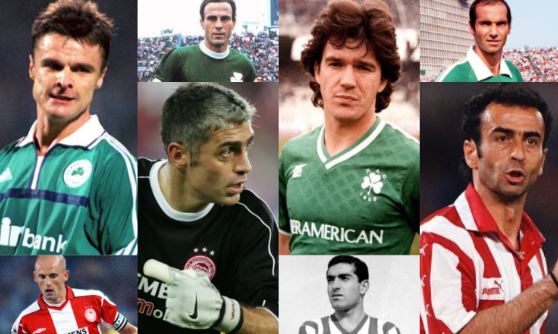
NOTABLE FIGURES:
ANDREAS MOURATIS
The face of Olympiakos during the post-World War II era, Andreas Mouratis looked like a goddamn lion and played like a gazelle. Nicknamed “Missouri,” Mouratis was the offensice force that led Olympakos to no fewer than 20 pieces of silverware. He also starred for the Greek national team, earning the nickname “Mourat Aslan” (“Mouratis the Lion”) for his aggressive play in a friendly match against Turkey. Wait a minute… holy shit “aslan” means “lion” in Turkish. The character from The Chronicles of Narnia‘s name translates to “Lion the lion.” Fantastic.
GIORGOS SIDERIS
Giorgos Sideris burst onto the scene by scoring 28 goals in 30 games for Atromitos Piraeus in 1958-59. All set for a big move, Sideris had his eyes set on Panathinaikos. However a good friend convinced him to sign with Olympiakos. All Sideris did was score 225 goals (the most in club history) in 283 goals during 12 seasons with Olympiakos. 13 of those goals came against Panathinaikos, the most of any Olympiakos player and the second-most in derby history. If Panathinaikos had a time machine, they would probably use it to murder Sideris’ friend.
DIMITRIS DOMAZOS
A Panathinaikos and Greek soccer icon, Domitris “Mimis” Domazos played in Greece for more than 21 years, the longest stretch in history. The vast majority of those were spent in Athens, with Domazos serving as Panathinaikos captain for an atounding 15 years. Nicknamed “the general,” Domazos roamed the Panathinaikos midfield for nearly 500 games, leading the club to their greatest achievement in reaching the 1971 UEFA Champions League final. Domazos was one of the final torchbearers for the 2004 Summer Olympics opening ceremony in Athens.
ANTONIS ANTONAIDIS
When Antonis Antoniadis began his career, he was a goalkeeper due to his height. But he later transitioned to being a striker, which was a good choice. In 1972, Antonaidis scored 39 goals in league competition, a Greek record to this day and the second-most in all of Europe that year. In his first decade with Panathinaikos, Antoniadis scored 177 goals, using his neight to generate strong headers. Antoniadis would shockingly play for Olympiakos for a season, but would return and make amends with Panathinaikos, serving as vice-president of the club during the 2000’s.
NIKOS ANASTOPOULOS
Nikos Anastopoulos has maybe the best nickname in Greek soccer history: “Moustakias” (“the mustachioed one”). But perhaps even better than that was the honor of being one of the most prolific strikers ever to play in Greece. In 291 games for Olympiakos, Anastopoulos scored 159 goals, finishing with the Bronze Boot as the third-highest scorer in all of Europe during the 1982-83 season. He also remains the all-time scorer for the Greek national team, with 29 goals. Anastopoulos has since become a manager, taking charge of around 20 clubs in 25 years.
DIMITRIS SARAVAKOS
Arguably the best player and biggest icon in Panathinaikos history, Dimitris Saravakos did so well at a young age, he earned the permanent nickname of “the kid.” But he always played beyond his years, nearly averaging a goal every other game across his 11-year career with the club (a span that included 252 games). A big part of Panathinaikos fans’ love for Saravakos is that he holds the honor of being the highest scorer of anyone to play in the Derby of the Eternal Enemies, with 16 goals total (nearly twice as many as any other player in his club’s history).
KYRIAKOS KARATAIDIS
Often forgotten are the rock solid defenders that laid the foundation for success. Such is the case with Kyriakos Karataidis, who appeared in 363 games for Olympiakos during his 13 years with the club. The majority of his tenure was during the club’s financially unstable time during the late 1980’s and early 1990’s, but his persistence paid off. Karataidis ended his club career with five consecutive Super League titles. In addition, Karataidis was also a member of the first ever Greek squad to qualify for the FIFA World Cup, making his way here to the U.S. in 1994.
KRZYSZTOF WARZYCHA
The most prolific non-Greek player in the history of the Super League, Krzysztof Warzycha played every match like he only knew how to score goals and chew bubble gum (and he was always out of bubble gum). In 390 games for Panathinaikos, he scored a whopping 244 goals, not only the most in club history but the second-most by anyone in top flight Greek soccer. Three times he was the league’s top scorer as well. His appearances are also the most by any foreign player in league history. There has been no better scorer for the club before or since.
ANTONIOS NIKOPOLIDIS
Imagine if a pissed off Aaron Rodgers signed with the Chicago Bears and won a Super Bowl. That’s essentially what happened with Antonios Nikopolidis, Greece’s version of Luis Figo/Sol Campbell. A member of Panathinaikos for 15 years (winning 12 pieces of hardware), Nikopolidis rejected a lowball offer from the club (made due to his age) and did the unthinkable, signing with arch rival Olympiakos. He then nearly won as many trophies (11) in half the time (seven years). One of the best Greek goalkeepers ever, Nikopolidis is a devisive figure for both sets of fans.
PEDRAG DORDEVIC
If not for Krzysztof Warzycha’s existence (and Rivaldo), Pedrag Dordevic may be considered the best non-Greek soccer player to ever play in Greece’s top division. The Serbia native was an extremely dependable midfielder for Olympiakos, appearing in 343 games and scoring 126 goals over a 13-year span. He was one of the main icons for the club during its golden age, winning the Super League in all but one of his seaons with the club (along with five Greek Cups). Dordevic eventually married a woman of Greek descent and obtained Greek citizenship.
GIOVANNI
Giovanni (given name Giovanni Silva de Oliveira) played for no fewer than a dozen clubs across several countries during his 30-year acreer. But he spend the overall most time with Olympiakos, becoming a club legend in just six seasons. A conflict with then-manager Luis van Gaal at Barcelona sent him to Greece, where his exceptional flair and creativity were on full display, earning him the nickname “magos” (“wizard”). Giovanni netted a total of 84 goals for Olympiakos and was the leading scorer in the whole Super League during the 2003-04 season.
GIORGOS KARAGOUNIS
Although his time with Panathinaikos coincided with the rise of the modern era Olympiakos dominance, Giorgos Karagounis nonetheless made himself a legend for club in country. Known for his tremendous free kick ability, Karagounis appeared in more than 250 games across 12 seasons (in two different spells) with the club, serving as captain for several years. Karagounis was also star for the Greek national team (which he also captained), playing a huge role in Greece’s incredible Euro 2004 triumph and being the focus of one of my favorite gifs of all time.
FAN INVOLVEMENT:
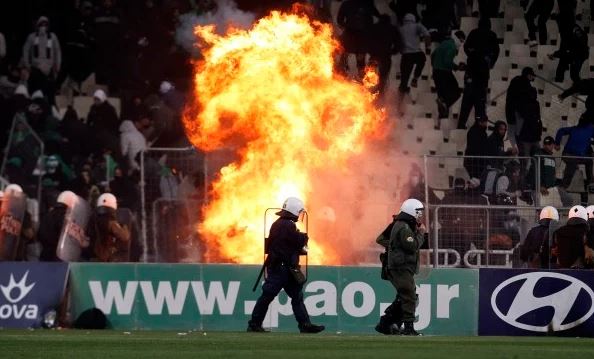
Greek soccer fans are fucking crazy, with the Derby of the Eternal Enemies being the pinnacle of their insanity. Hell, Olympiakos wasn’t even a decade old when in 1933, after a game against Panathinaikos had been abandoned due to weather, both sets of fans engaged in a massive brawl. The famous 8-2 Panathinaikos win? Olympiakos fans had arrived at that game with green-painted coffins. Those coffins were destroyed and used to beat up Olympiakos fans. There are the several instances of fan riots and crowd disruptions mentioned during those on-field moments, most of which overshadowed the result on the field. While the majority of those were the result of Panathinaikos fans going over the edge I didn’t even mention the time Olympiakos fans beat up their players’ cars after a 4-0 loss to Panathinaikos in the 1986 Greek Cup Final, or the alleged racist remarks hurled at Djibril Cisse in 2011, or Panathinaikos manager Yannis Anastasiou being hit with a flair in 2014. There was simply too much else to talk about. Shit that would lead most other rivalries gets relegated to a different section here.
These fans don’t even have to be at a game to go insane. Both sets of supporters agreed to engage in a brawl ahead of a 2007 women’s volleyball game between the two clubs. The incident resulted in a Panathinaikos fan, 22-year-old Mihalis Filopoulos, being stabbed to death and all team sports events in Greece being suspended for two weeks. Panathinaikos fans often refer to their rivals as “gavros” (“anchovies”) and sing songs about Olympiakos fans’ mothers being whores who had sex with sailors. On the other hand, Olympiakos fans call Panathinaikos fans “vazeli,” a reference to hair gel used by the higher classes (the word also has something to do with lubricants). Even though the class disparity that started the roots of the rivalry has all but disappeared in modern times, the regional feud is still in full force. Both sets of fans take part in stealing scarves and signs of rivals, then lighting them on fire. Most of the time it’s the scarves or signs — sometimes it’s the fans themselves.
This is the classic example of the dark side of soccer fandom — and the temptation to love the chaos it brings. Don’t get me wrong, the passion on display creates unparalleled atmospheres on match day, filled with chants and fire and intensity fit for a World Cup Final. But as we’ve seen, so many times have things gone to far. Fans, players, coaches, staff members, police — so many people have been hurt or put in harm’s way during games. We can blame the fans, but the teams don’t exactly set a good example. As I mentioned earlier, this rivalry has a section dedicated to red cards on its Wikipedia page. Remember that 2015 derby that nearly led to the entire Super League being suspended? During a leaguewide meeting to reach peace, officials for Olympiakos and Panathinaikos got into a fight. There is little to no self control on either side historically. So take all of this how you will — as a sign of things going too far or the peak of soccer passion (although this rivalry extends to other sports, particularly basketball). While I personally lean towards the former, this is a World Cup of Hate after all…
SUMMARY:
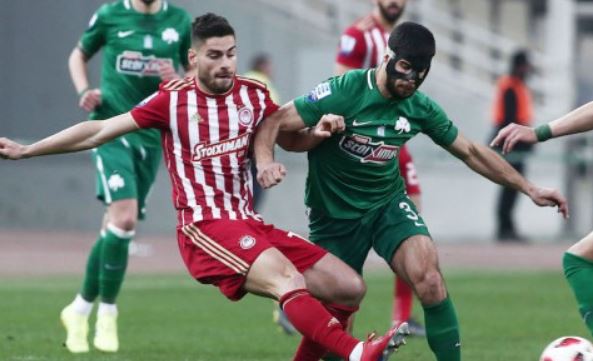
Fire, blood, red cards, riots, punches, and utter chaos — all of these are typical occurrences during the Derby of the Eternal Enemies. Perhaps because of a lack of European silverware or simply due to playing in perhaps the least sexy soccer country in Europe, this incredibly passionate, historic, insane rivalry between Olympiakos and Panathinaikos has flown under the radar. Yet, it’s a true contender for the World Cup of Hate title.
So far we’ve gone through two of the best rivalries we’ve ever heard of, full of simply insane results both on and off the field. But we’re not done yet. We’ve got one more rivalry, which like Turkey and Greece takes place in a country you might not think of right away when it comes to soccer. Even considering the history on and off the field of the previous two rivalries, this next one might just overshadow everything that’s come before.
The Eternal Derby (Serbia)
Red Star Belgrade vs. FK Partizan
“When it comes to the Belgrade rivalry, Serbia has two states of mind. You are either a Red Star or Partizan fan. It’s not strange that the first gift to a baby is something with the Red Star or Partizan emblem on it.” — Darko Nikolic, Serbian sports journalist
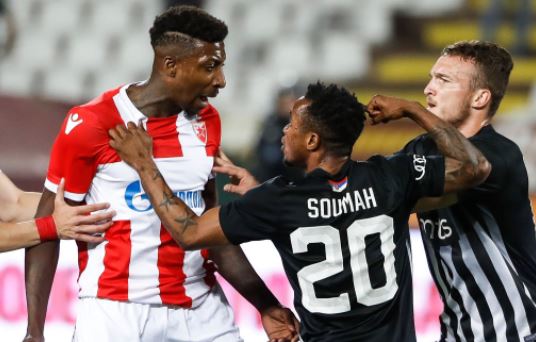
There is war, there is sport, and somewhere in between we find the Eternal Derby — a legendary, extraordinary, terrifying rivalry where the violence and competition in the stands has somehow overshadowed what happens on the field.
For better or worse, soccer in Serbia has mirrored the history of the country as a whole, which is complicated and full of violence. This rivalry is technically one of the youngest on this whole list, beginning after World War II and the foundation of Yugoslavia as a socialist republic. After decades of rule under communist parties, tensions eventually boiled over to the point where emerging nationalism in the various republics that made up Yugoslavia was in direct contrast with the disintegrating authoritarian regime trying to keep control. Things came to a head during the Yugoslav Wars of the 1990’s, the bloodiest European conflict since World War II. In the end, what was once Yugoslavia has become Serbia, Montenegro (the two spent time as Serbia and Montenegro), Croatia, Slovenia, North Macedonia, Kosovo, and Bosnia and Herzegovina. But even with independence sorted out, tensions remain high between each country (particularly Serbia and Croatia), with old wounds being reopened every time they face off on the field.
Belgrade — Serbia’s capital city and the former capital of Yugoslavia — has been smack dab in the middle of this violent and complicated history. Having suffered through multiple wars, communist regimes, and other daily troubles (their government still isn’t exactly popular), the people of Serbia (and Belgrade in particular) need an outlet to channel their anger and feelings towards. It just so happens that Belgrade is home to the country’s two most popular soccer clubs — Red Star Belgrade (also known as FK Crvena Zvezda) and FK Partizan. They are also by far the two most successful clubs in the region, historically and currently. You’ll have to go back to 1998, when Yugoslavia still existed, to find the last league champion that wasn’t either Partizan or Red Star. With the league so thoroughly dominated (similar to the Old Firm), the main focus each season has become beating their rival.
Combine the passion and anger the people of Belgrade need to release and two teams so dominant against everyone else that their main goal is to simply beat each other, and you have a perfect recipe for a rivalry that borders on the very kinds of war these people have known for most of their history. Each match between Red Star and Partizan explodes into an array of fire, noise, flares, and bloodshed — and that’s just in the stands. The scenes are so chaotic that any match that ends with a few arrests and some seats set on fire is a tame affair. For better or worse, the scenes surrounding the field have become much more notable than what happens on it. That can be blamed on the insanity of the fans and an overall decline of soccer skill in the country. While both Partizan and Red Star have had some success in Europe, that is several decades old, with Serbian soccer as a whole falling behind a lot of the rest of the continent. But that hasn’t stopped fans from being quite literally willing to die for their favorite club.
HISTORY:
Towards the end of World War II, all sporting clubs in Serbia that existed before the war were dissolved, in part to avoid all association with the German occupation of the territory during the war. Knowing this would happen and that sports would return soon, a officials from one former club — SK Jugoslavija — and members of the Yugoslav Communists (with ties to the police) decided to form a new club in March of 1945. Taking inspiration from the centerpiece of the Yugoslav flag, they named the club Red Star Belgrade. Seven months later, high-ranking members of the Yugoslav People’s Army decided to form their own club, naming it FK Partizan in honor of the Partisans, the communist military unit that fought against fascist forces during World War II. Both clubs would eventually grow to become just part of a larger sports club, with Red Star and Partizan competing against each other in basketball, volleyball, handball, water polo, hockey, and other activities. But soccer remains the most important club.
After playing friendlies (and doing pretty well) for the first year of their existence, both Red Star and Partizan were selected for the 1946-47 season of Yugoslav First League, the reformed top flight league in the country. In what would be a fitting first edition of the rivalry, Partizan and Red Star met for the first time on January 5, 1947, with a back-and-forth emotional contest ending 4-3 in favor of Red Star. However, Partizan would win the rematch 1-0 (thanks to a Red Star own goal) and go on to win both the league and Yugoslav Cup. While Partizan won another league title two years later, Red Star got on the board thanks to three straight Yugoslav Cup wins, one of them coming against their rivals. Red Star finally earned its first championship in 1951, making a memorable comeback from five points down with three matches left to do so. One of those matches was against Partizan, which turned out to be a 2-0 Red Star win.
That turned on a switch for Red Star, which would go on to win five more league titles in the next ten years, with Partizan not winning any. That gave Red Star the ability to be the first Belgrade club to compete in Europe, reaching the semi-finals of the 1957 UEFA Champoins League. The following year, Red Star were memorably eliminated in the quarter-finals by Manchester United, with the following flight home to England by the visitors resulting in the Munich air disaster. But while Red Star would do better in terms of league (and continental) success, Partizan got the better of the Yugoslav Cup (four wins to Red Star’s two) and in the rivalry in general. Red Star’s 2-0 win in 1951 was shocking because Partizan had beaten them 6-1 a few months earlier. One of Partizan’s Yugoslav Cup wins came in 1952, stomping Red Star 6-0 in the final. Then in 1951, Partizan absolutely smacked Red Star 7-1, the highest-scoring and most lopsided (along with the 6-0 win the year before) result in the history of the Eternal Derby. The result earned Parizan the nickname “The Steamroller” from the press.
The Steamroller eventually reached its first great form in the 1960’s, following a change from a blue/red color scheme to its current black/white one and the emergence of the first crop of youth players. Called “Partizan’s babies,” the group would transform the club’s lineup and turn it into a dynasty. Five of the next six league titles went to Partizan, who also began to grow its European successes. That run culminated with a spot in the 1966 Champions League Final against Real Madrid, with Partizan being the first Eastern European squad to reach the final. Although Partizan was leading with two minutes to play, two Madrid goals put the Belgrade club down for good, with Real winning 2-1. Back home, something else was brewing — Partizan’s rivalry with Red Star. Despite the great difference in success between the clubs, Red Star went on a five-year unbeaten streak against Partizan from 1962-67. This only fueled the rivalry further.
Fortunes soon flipped again, with organizational and financial issues causing Partizan to send its best players overseas, resulting in a ten-year title drought. Red Star took advantage, winning four more league titles and three more Yugoslav Cups. While Partizan eventually got its shit together enough to win the 1976 title with a last-second goal and another title in 1978, the club was nearly relegated in 1979, with a final week win being the only thing keeping them up. That same year, Red Star reached its first ever European Final, falling to Borussia Monchenglabach in the UEFA Europe League Final. This era was particularly notable for a record 108,000 spectators in attendance for a 1976 Eternal Derby, which wasn’t even Red Star’s most attended game of the decade. An estimated 110,000 people attended the second leg of Red Star’s semi-final clash with Ferencvaros in the 1974-75 European Cup Winners’ Cup.
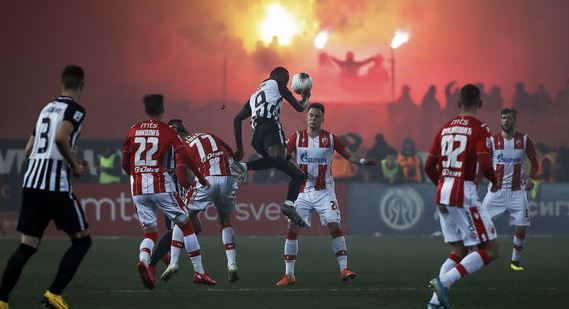
As for as league and cup titles go, the 1980’s (most of them, anyway) were relatively even for both clubs. But for Partizan, there were two major events that kept them from a potential great period. In 1985, rising club star Dragan Mance was killed in a car crash at the age of 22 — he had already meant to much to the club that in 2011, the street next to Partizan Stadium was named in his honor. Then, the 1985-86 Yugoslav First League came down to the wire, with Partizan edging Red Star for the title on goal differential. However, league-wide match-fixing allegations led to the Yugoslav FA ordering a replay of the final week of the season. Every club agreed — except Partizan, who were dealt a 3-0 loss as punishment. Red Star was awarded the title after that, getting to compete in Europe as a result. A series of appeals and lawsuits hung over the following season, which saw 12 clubs (including Partizan) start with -6 points. FK Vadar won the championship, but then the court ruled that there was no evidence of wrongdoing in the final week of the previous season. Thus, the original results were brought back, giving Partizan the title again. Furthermore, those same 12 clubs were given six points back. Partizan now stood on top of the league and were named champions. However, Vadar still got to represent Yugoslavia in Europe. After all that craziness, it would seem insane that the next decade would be much more controversial and monumental.
During the late 80’s, Red Star began to see the fruits of their rebuilding labor pay off, winning two of three league titles to head into the 90’s. That set the stage for the 1990-91 season, which would prove to be historic. With a “greater than the sum of its parts” kind of squad that had plenty of hidden talent, Red Star made an incredible run through Europe. Taking out the likes of Rangers and Bayern Munich, Red Star went unbeaten to become the second Yugoslav club (after Partizan in 1966) to reach the UEFA Champions League Final. Taking on Marseille in what remains the last final to be played between teams playing in their first final, Red Star trudged through a scoreless match but managed to win out on penalties, becoming the first (and as of this writing only) Yugoslav-area club and second-ever Eastern European club (after Romania’s Steaua Bucuresti) to win the Champions League. After winning a third straight league title and coming up just short of a second straight Champions League Final appearance the following season, it seemed Red Star was in the midst of a golden era. Sadly, all good feelings in Yugoslavia were about to end.
That’s because the country was falling apart. The late 80’s and beginning of the 90’s had seen a growing push for independence in Yugoslavia’s various republics, particularly in Croatia. Serbia and Croatia had been the two most dominant regions in Yugoslavia, particularly when it comes to sports. While Red Star and Partizan had been the top two clubs in the country, a close third and fourth were Hajduk Split and Dinamo Zagreb, with the two Croatian clubs sharing their own Eternal Derby with each other. As national tensions mounted, so did the bad feelings between the Serbian and Croatian clubs. In fact, some argue that a 1990 match between Red Star and Dinamo — where a riot by fans was highlighted by Dinamo’s captain, Zvonimir Boban, kicking a police officer to defend a Dinamo fan — was the true start of the Croatian War of Independence. In total, the Yugoslav wars lasted from 1991-2001 (Yugoslavia officially disolved in 1992), saw more than 130,000 lives lost and another four million people displaced, and resulted in the formation of Croatia, North Macedonia, Slovenia, and Bosnia and Herzegovina. A new Yugoslavia (later renamed Serbia and Montenegro) was established in the aftermath, although the territory of Kosovo would also fight for and eventually gain independence (although the nature of that independence is disputed by Serbia).
When it comes to soccer and sports in general, the impact of the Yugoslav wars was devastating. A lot of talent from both Partizan and Red Star (Red Star in particular) left to escape the conflict and both clubs were hit with sanctions forcing them to play European competition outside their country. As far as the domestic league went, the removal of many clubs (especially those from Croatia) led to a reformation of the league. But it also meant a lot of competition had left, leaving Red Star and Partizan to dominate the rest of the league (even though both squads had overall declined in talent). Of the 14 years the new Yugoslavia/Serbia and Montenegro was around, Partizan (eight) and Red Star (five) won all but one title, with Obilic breaking up the party in 1998.
The last remnants of Yugoslavia were officially erased in 2006, following the approval of an independence referendum by Montnegrins. Serbia and Montenegro soon became Serbia and Montenegro (as two different countries), meaning another reform of Serbia’s domestic soccer competition. Ever since its inception, the Serbian SuperLiga has either been won by Red Star or Partizan, with the latter turning the tide in the rivalry. The last 15 years or so have largely been dominated by Partizan, which has won more SuperLiga titles and much more Serbian Cups (seven to three) than its rival. In addition, Partizan posted its own four-year unbeaten mark in the Eternal Derby. However, Red Star are in the mist of a resurgence, having taken the past four SuperLiga crowns to narrow the gap to just one. When it comes to European competition, neither club has recouped the lost talent and both have been hit by some kind of sanctions by UEFA due to administration issues or bad fan behavior. It’s that same fan behavior that has now become the main attraction of the Eternal Derby, rather than the play. However, there have still been several moments where the on-field activity showcases the biggest drama.
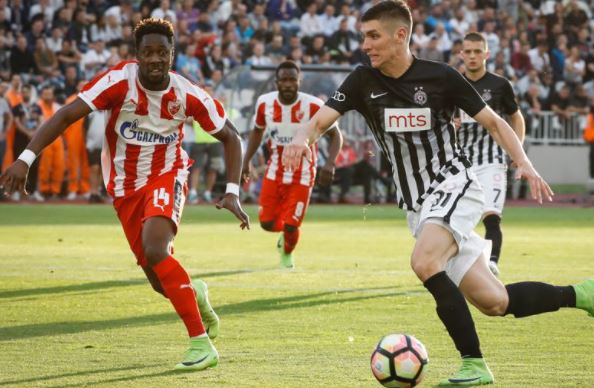
MAJOR ON-FIELD MOMENTS:
DRAMATIC FIRST TITLE WIN
Red Star may have the most titles of any club from the Yugoslavia era, but it took a miracle to get its first league crown. With three games left in the 1951 season, Red Star were trailing Dinamo Zagreb by five points — this was a time when winners only got two points a match. But incredibly, Dinamo lost their next game, meaning Red Star was still alive with another win. The following week, Red Star beat Dinamo the to close the gap to one point. Fellow Belgrade club BSK Belgrade drew with Dinamo on the last day, though Red Star still needed to beat Partizan, who had dominated them 6-1 just months earlier. Somehow, Red Star was able to produce a 2-0 victory, which drew them level with Dinamo and gave them the title on goal difference.
THE OUTLIER
Given Red Star’s dominance at the time and their overall success in the rivalry, the fact that it’s Partizan who holds the most dominant wins of the derby really stands out. The biggest ass-whooping in Eternal Derby history took place in 1953 and incredibly was only 1-0 in favor of Partizan at the time. In fact, Red Star equalized shortly after the second half to make it 1-1. But then Partizan turned into the steamroller they would become known as, scoring six unanswered goals to close out of the game. Branislav Zebec, Prvoslav Mihajilovic, and Antun Herceg each found the back of the net twice, as Partizan emerged with a dominating 7-1 victory. Even so, Partizan would not win the league and would remain without another league crown until 1961.
WINNER IN PENALTIES
While they had met several times in the Yugoslav Cup Final, with the formation of a new Yugoslavia came a name change. The domestic cup would be named the FR Yugoslavia Cup and as luck would have it, Partizan and Red Star would meet in the final. At that time, the final was conducted over two legs. Partizan won the first leg 1-0 at home, while Red Star countered with their own 1-0 win at home. Thus, the second leg went to extra time, and then to penalties. Each squad’s first four penalty takers made their kicks, meaning the game would be decided by the next miss. That came up next, when Milan Simeunovic saved Pedrog Mijatovic’s attempt. Simeunovic himself then stepped up to convert the winning penalty and give Red Star the cup.
THE 100TH DERBY
With all of the uncertainty, violence, tension, and political atmosphere surrounding Yugoslavia in the 1990’s, fans still had a few things to look forward to. That was the case in 1995, when Red Star and Partizan met for the 100th time in their history. The buildup to the legendary match was worthy of such a rivalry, which actually somehow met those lofty expectations. Nenad Bjekovic put Partizan up 1-0, but Red Star continued to attack throughout the game. That pressure paid off in the second half when Darko Kovacevic converted a penalty. Then, late in the game, Partizan goalkeeper Goran Pandurovic saved a long range shot, but failed to corral the rebound. Mitko Stojkovski jumped on the rebound and put in to give Red Star the 2-1 win.
BACK-AND-FORTH FINAL
While their league matches are usually low-scoring, more often than not club matches between Red Star and Partizan have produced plenty of goals. Three times have both clubs combined for more than five goals in cup play. The first was in Partizan’s 6-0 ass-whooping of Red Star in the 1952 Yugoslav Cup Final. The second came just give years later, as Partizan knocked out Red Star with a 4-2 quarter-final victory. But Red Star would finally have their high-scoring revenge in 1999. Two goals in a two-minute span gave the hosts an early lead, but Partizan managed to equalize just before the half. However, the home fans would leave happy, as Red Star scored twice in the second half to come out on top 4-2 in an unusual back-and-forth affair.
BIG WIN, BUT NOT ENOUGH
The vast majority of matches between Partizan and Red Stat have been close, low-scoring affairs. Then there are clashes like the 2008 encounter at Red Star Stadium. Dejan Milovanovic and Segundo Castillo gave the hosts an early lead, which would’ve been larger had Dorde Lazic not put the visitors on the board. But another Castillo goal and one by Nenad Milijas made the final count 4-1 in favor of Red Star, a result that was the highest scoring lopsided Eternal Derby win in a decade. However, the scoreline only tells half the story. Red Star would finish the 2007-08 season unbeaten in the league. However, they drew 12 times, with those lost points putting them five points behind Partizan (who lost only that match all year) at the top of the standings.
THE INSANITY OF 2013
Even given everything that came befofre it, 2013 has a good argument to being the craziest year in the history of the Eternal Derby. Things began with a violent start at Partizan Stadium, where police were busy before, during, and after the match. In total, police made 104 arrests that day. But the drama didn’t stop there — Milos Jojic scored a last-minute free kick for Partizan, who used the 1-0 win to get clear of its rivals and earn its sixth straight SuperLiga crown. What could possibly top that? Well, just a few months later, multiple Red Star fans dropped down into the stadium via parachute before the game. Red Star ended up winning 1-0 thanks to a Partizan own goal, while Partizan fans decided to set part of the stadium on fire.
TWO HEROES
COPA90 saw the chaos that happed in 2013 and decided to make the first Eternal Derby of 2014 the focus of their video on the rivalry. They could not have picked a better game, one where the drama on the field finally came back into focus. The home squad struck first, with Nikola Drincic putting Partizan in the lead. Twice Red Star got the chance to equalize through the penalty spot, but twice Partizan goalkeeper Milan Lukac rose to the occasion to make the save. Lukac couldn’t save everything though, with Red Star eventually making things even at 1-1 through Dragan Mrda. Just when it seemed like the match was headed for a draw, Nemanja Kojic found scored in the final minute of regulation, giving Partizan a dramatic 2-1 victory.
WHO THROWS A CHAIR, HONESTLY?
In 2015, the Eternal Derby finished scoreless for the first time in nine years. But perhaps more than any other instance before or since, the off-field shenanigans vastly overshadowed the results on the field. Given what had happened over the past few years, tensions remained understandably high. Before the game, Red Star fans begin clashing with police. The conflict greatly escalated, to the point where large swaths of fans began throwing flares and chairs — yes literally ripping seats from the stadium — at riot police. So great was the disturbance that the start of the game was delayed by 45 minutes. When the whistle finally blew, flares and stun grenades littered the track around the field. Suddenly, a 0-0 scoreline seems explainable.
FIRST TIME IN A LONG TIME
Given the two clubs’ domination of domestic competition, it’s incredible that there was a 16-year stretch where Red Star and Partizan didn’t meet in the cup final. That changed in 2017, when for the first time since 2001 and the first time in Serbia as a country the two rivals made it to the final. Just before halftime, Nikola Milenkovic put Partizan up 1-0 to the delight of the home fans. Partizan had several chances to increase their lead, but Leandro misses some opportunities. Red Star also had a pair of chances to even things up towards the end, if not for the heroics of Partizan goalkeeper Nemanja Stevanovic, who produced a pair of stunning last-minute saves. Partizan held on for a 1-0 win, claiming the second of what would be four straight Serbian Cups.
STATISTICS:
HEAD-TO-HEAD RECORD
Red Star: 113
Partizan: 81
Draw: 70
LEAGUE CHAMPIONSHIPS (YUGOSLAVIA)
Red Star: 19 (record)
Partizan: 11
LEAGUE CHAMPIONSHIPS (SERBIA AND MONTENEGRO)
Red Star: 5
Partizan: 8 (record)
LEAGUE CHAMPIONSHIPS (SERBIA)
Red Star: 9 (record)
Partizan: 8
LEAGUE CHAMPIONSHIPS (TOTAL)
Red Star: 33 (record)
Partizan: 27
NATIONAL CUPS (TOTAL)
Red Star: 27 (record)
Partizan: 16
YUGOSLAV CUP
Red Star: 12 (record)
Partizan: 6
SERBIA AND MONTENEGRO CUP
Red Star: 9 (record)
Partizan: 3
SERBIAN CUP
Red Star: 6
Partizan: 7 (record)
UEFA CHAMPIONS LEAGUE
Red Star: 1
Partizan: 0
INTERCONTINENTAL CUP
Red Star: 1
Partizan: 0
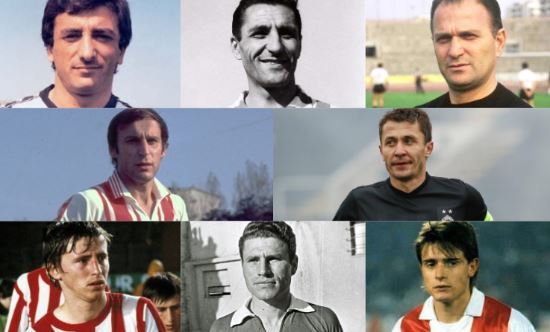
NOTABLE FIGURES:
STJEPAN BOBEK
It’s been more than 60 years since Stjepan Bobek retired and no one has caught up with him in Partizan’s all-time goal scorer list. In his 14 years with the club, Bobek found the back of the net 425 times. One of those goals was actually the first Partizan ever scored in the Eternal Derby (the previous two were own goals). Eight of those goals came during one Yugoslav First League game, which Partizan won 10-1, while eight more came in a 15-0 Yogslavian Cup win. While no one has broken his goal record, Bobek’s biggest competition came from within his own team.
MARKO VALOK
Just below Stjepan Bobek on Partizan’s scoring list is Marko Valok, Bobek’s teammate for 14 years. The two are the only Partizan players to break the 400-goal mark (411 to be specific). But Valok has a claim that separates him from the man voted the club’s greatest player in 1995 — Valok’s 13 goals are the most by any player in Eternal Derby history. Before he started playing for Partizan, Valok played for FK Napredak Krusevac, scoring the club’s first ever goal. That club’s nickname (Carapani) translates to “the sock men” in English, which is fan-friggin-tastic.
RAJKO MITIC
The first great player in Red Star history, Rajko Mitic was the first ever (and one of only five) individual player to have been awarded the “Zvezdina zvezda” (“Star of Red Star”). That honor was given for a good reason — at the time of his retirement, Mitic was the all-time Red Star leader in appearances and goals scored. He was also the first ever captain, one whose star power and sportsmanship let to him becoming incredibly popular across Yugoslavia. So great was his prestige that in 2014, Red Star Stadium (the club’s home) was renamed in his honor.
BORA KOSTIC
The perfect follow up to Rajko Mitic both list-wise and in actual real life, Bora Kostic one-upped his fellow Red Star legend by becoming the club’s top all-time goal scorer and the second-most capped player ever. Known for his powerful shot and free kick ability, Kostic simply destroyed most defenses he played during his 14 years with Red Star. Kostic was also a star for the Yugoslavia national team, a key factor his country’s gold medal victory at the 1960 Summer Olympics and runner-up finish at the first ever European Championship (also held that year).
DRAGOSLAV SEKULARAC
The second “Star of Red Star,” Dragoslav Sekularac wasn’t just one of the most popular soccer players in the country, but one of the most recognizable people in all of Yugoslavis during his time. Sekularac joined Red Star at just 17 years old, but soon made an impact. In fact, so great was his talent and prestige that Juventus tried to break the bank to get him at age 21. But his transfer was apparently stopped by the highest officials in the Yugoslav government. Sekularac is also known for assaulting referee Pavle Tumbas, earning a year and a half suspension.
MILAN GALIC
Milan Galic played for Partizan for eight years, which while seemingly little compared to other legends was still enough time to make him one. Galic was a terror to all defenses tasked with stopping him, often scoring goals in bunches (he has plenty of hat tricks to his name) and in crucial situations. He was also a menace to Red Star, scoring a lot against Parizan’s eternal rival. Galic also ranks just behind Stjepan Bobek in Yugoslavia’s scoring book. His last game for Partizan was fittingly on the club’s greatest stage: the 1966 UEFA Champions League Final.
DRAGAN DZAJIC
Often considered one of the most underrated soccer players all time (because he played in Yugoslavia), Dragan Dzajic was part of Goal.com’s greatest European Championship XI of all time in 2011. His most well-known matches were for Yugoslavia’s national team, although it showed off his skill to the world. Pele, the socer GOAT, said he’d “never seen such a natural footballer.” This isn’t to say Dzajic never showed up for his club. In fact, quite the opposite. Dzajic remains the most-capped player in Red Star history and is the third “Star of Red Star.”
VLADIMIR PETROVIC
Nicknamed “Pizon” (“pigeon”), Vladimir Petrovic flew to great heights with Red Star, becoming the fourth “Star of Red Star.” Debuting at the age of 16, Petrovic made a name for himself quickly, helping Red Star win several trophies and reach the 1979 UEFA Europa League Final. Two years after being named Yugoslav Footballer of the Year, Petrovic made a highly-publicized but overall short move to Arsenal, one of the first big Balkan transfers to England. Since retiring, Petrovic has managed all over, including two different stints with Red Star 12 years apart.
MOMCILO VUKOTIC
Before another player to be named later came along, Momcilo Vukotic was Partizan’s ultimate iron man. Vukotic is one of just two players to appear in 600 games for Partizan, as well as 700 games (he was just nine games shy of 800). Vukotic also ranks fourth in club history for goals scored. Vukotic’s appearances go further back than even that — he began with Partizan’s youth system as a 12-year-old. If not for a one-year stint with Bordeaux, he would’ve been a one-club man. Vukotic’s managerial career also began at Partizan, four years after he last took the field.
NIKICA KLINCARSKI
Outside the two seemingly indestructible human beings, Nikica Klincarski ranks chief among games played for Partizan. Klincarski spent all but two years from 1976-1989 with Partizan, a spell that was broken up by, of all things, a stint in the Major Indoor Soccer League of the United States. He played for the Pittsburgh Spirit, Chicago Sting, and Las Vegas Americans before returning to Belgrade. Fun fact: the MISL’s most dominant team was the San Diego Sockers, who won eight league titles and the award for most embarrassing soccer team name in history.
DRAGAN MANCE
Dragan Mance is a Partizan legend, even though he would’ve achieved such a distinction under far less tragic circumstances. A prodigy for the club, Mance quickly made himself a star in the mid 1980’s, leading the team in goals twice and scoring a particularly insane goal against Queens Park Rangers. However, just a few weeks before his 23rd birthday and shortly after signing a new four-year deal with Partizan, Mance was killed in a car accident on his way to a training session. His funeral was attended by 30,000 people and his grave has Partizan colors.
DRAGAN STOJKOVIC
The fifth and final individual “Star of Red Star,” Dragan Stojkovic may seem like an odd pick for the honor if you look at his stats alone. Stojkovic only played for Red Star for four years and was even on the opposing side during the 1991 UEFA Champions League Final. But ask anyone who saw him play and they’ll tell you he was one of the best players they’ve ever seen. So what’s the reason for a good but not great career? Injuries, shitloads of them. Stojkovic is basically the Yugoslavian Grant Hill/Sterling Sharpe — still impressive despite being hurt a lot.
DARKO PANCEV
In case you were wondering, there is a sixth “Star of Red Star” — awarded collectively to the 1991 UEFA Champions League-winning squad. While that squad was truly a “sum of its parts” kind of squad, Darko Pancev stands out as the exception. Pancev scored 45 times during the 1990-91 season, more than double anyone else on the squad. It was also more than anyone else in Europe, a feat that earned Pancev the European Golden Boot. Even though he only played for Red Star for four years, Pancev remains a beloved figure for his European heroics.
SASA ILIC
By far the most iconic player for Partizan in the 21st century, Sasa Ilic has appeared in the club’s shirt more times than anyone else. Playing 861 games for the club in two different nine-ish-year spells, the midfielder helped lead Partizan to 18 trophies. Among Ilic’s other records are the most European competition appearances for Partizan (113) and oldest goal scorer in the history of the SuperLiga (40). The last goal was crucial in taking Partizan to the 2018 Serbian Cup Final Ilic’s last appearance was in Partizan’s 2019 Serbian Cup win over, fittingly, Red Star.
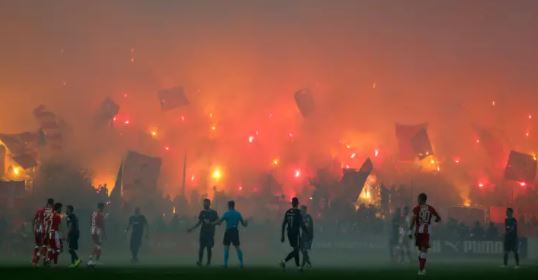
FAN INVOLVEMENT:
Scenes like this are the norm at Eternal Derby matches, which are literally surrounded by a sea of fire, smoke, and flags. Flares and other projectiles constantly rain fown from the stands onto the areas surrounding the field, and sometimes the field itself. Delays due to smoke or other security reasons are common. It’s the perfect example of controlled chaos, although considering everything I’ve mentioned so far the last thing you might think is that everything is in control. While you’d certainly have a good argument, consider the previous two rivalries we’ve discussed. There have also been fan riots, displays of fire, and the not-so-infrequent instances of things getting out of hand. Now realize that away fans are not allowed at matches, so all of that chaos just goes on with the home squad. But in Belgrade, away fans can attend.
The main set of ultras for Red Star are called the Delije (roughly translated as Heroes), while the ultras for Partiza are known as the Grobari (Gravediggers/Undertakers). Both sets of fans have some pretty big power and a surprisingly good relationship with the clubs they support. In fact, Red Star allowed the word Delije to be written across the stadium’s north stand. They each have also taken nicknames given by the opposing side and turned it into something to sing about. The Grobari often refer to the Delije as Cigani (Gypsies), which the Dilije sometimes use as part of a song. Meanwhile, the Grobari’s name came from the Delije mocking Partizan’s mostly black colors as being similar to cemetery undertaker uniforms. In addition, Red Star Stadium and Partizan Stadium are located less than a kilometer away from each other, meaning easy access for both sets of supporters. But don’t be fooled that every big fan duel is between opposite sets of supporters. Tensions run so high in the stadium that fights are almost as likely to break out among fans of the same squad.
All of this has given the Eternal Derby a reputation many wound find unbecoming of clubs with more prestige than you’d think. I mean, police have to dress up in so much armor it’s like they’re going to war during every derby, which is ironically fitting due to the war-torn history of Serbia. But although things can certainly go to the extreme, seemingly every piece I’ve read about first time attendees and their experience can be summarized thusly: “It’s batshit insane and unlike anything I’ve ever seen in sport. It was terrifying but I’m so glad I went.” The main thing it seems like you should do is avoid the ultras or other insane fan groups, which is a pretty common piece of advice for neutral supporters. Those same reviewers also go out of their way to mention how kind and helpful the people of Belgrade generally act. So I guess while the crazy atmosphere and everything that comes together to create it is what it is for better or worse, not everything you’ve read about the rivalry or where it’s played is true below the surface.
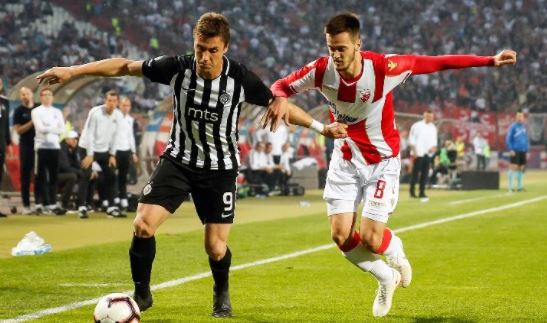
SUMMARY:
The Eternal Derby — played between two rivals whose feelings toward each other can best be described by the dictionary definition of hate — is the epitome of things getting turned up to 11. Whenever Red Star and Partizan face off on the field, they’re surrounded by a sea of fire, smoke, and noise, fueled by decades of war and unrest and driven by fans who need a release from their often painful past.
While we’re not done with Europe just yet, we are done with Eastern Europe. This also means that several other fierce, fascinating rivalries don’t quite make the cut. I mentioned earlier the other Eternal Derby between Dinamo Zagreb and Hadjuk Split. It’s another incredible rivalry, equally full of tension and war. But like it was when Yugoslavia still existed, it’s often seen as the little brother to Serbia’s Eternal Derby. “Eternal Derby” is basically the Eastern European equivalent of “Classico” with notable clashes between FCSB and Dinamo Bucuresti (Romania) and CSKA Sofia and Levski Sofia (Bulgaria) sharing that name. Going back to Yugoslavia, another war-torn country, Bosnia and Herzegovina, has an underrated yet incredibly powerful rivalry in the Sarajavo Derby between FK Zeljeznicar and FK Sarajevo. In Poland, The Holy War between Wisla Krakow and KS Cracovia is perhaps the most batshit insane of all the rivalries I’ve mentioned, but the overall lack of on-field quality and overly violent (even compared to what I’ve discussed) and more than occasionally racist fan behavior kept it from the final list. Ukrain’e Klasychne Derby between Dynamo Kyiv and Shakhtar Donetsk and Hungary’s Budapest Derby between Ferencvarosi and Ujpest were also strong contenders, while we can’t forget the biggest and most notable Eastern European country, Russia, and the Main Moscow Derby between Spartak Moskva and CSKA Moskva. But ultimately while all of these rivalries are worth exploring, they just didn’t have the extra juice to make it to the final World Cup of Hate.
So who does? Europe has only three more spots to give, which will all happen in the next installment. The biggest and longest continental section ends next time.
COMING UP IN PART 6: City rivalries, alleged player thefts, and an unclaimed league crown.
 Ruben's Writings
Leave a comment