
Alright I’m tired of writing about Europe, although these last few rivalries are filled with enough history and hate to keep me going for one more part.
Now, you might’ve noticed (or maybe didn’t give a shit about) the fact that my previous walks through European rivalries neglected to mention some important soccer countries, including the current world champions. Well don’t worry, these final three rivalries come from traditional soccer powers and are full of players even the casual fan would recognize. But there’s a reason these three haven’t been mentioned yet. While their national teams have done well historically, these countries don’t exactly have the biggest, sexiest domestic leagues. They also lack the headline-catching batshit crazy fan insanity (well, for the most part) of the previous three I’ve discussed. With the exception of the devoted fans of these squads, these last three rivalries are arguably the most underrated in all of Europe by most soccer observers. It’s time to shine a deserving spotlight on them, starting with the aforementioned world champions.
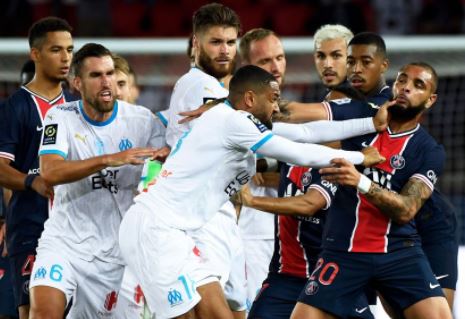
Le Classique (France)
Olympique de Marseille vs. Paris Saint-Germain F.C.
“It’s a special match, distinct from the rest of the season. It may only be worth three points, but it’s also worth more than that. We all know it. When you sign for Paris, people always talk to you about the Classique. It’s a special match.” — Blaise Matuidi, former PSG midfielder
Le Classique may be one of the youngest rivalries in all of France (and on this list), but in just under five decades it’s delivered enough drama, bad blood, violence, and controversy to rightfully compare to the rest of the world.
Olympique de Marseille and Paris Saint-Germain could not be more different in terms of history, support, and recent success. While these contrasts may set up a perfect case for a great duel, there are some detractors. The age gap between the two sides is longer than the length of time they have been playing, meaning it has much less history (and some say legitimacy) to fall back on than other major rivalries, including others in France. The rivalry had been much more even (even perhaps in favor of Marseille a little) until about ten years ago, when PSG became one of the best clubs in the world thanks to an influx of cash that makes Manchester City seem cheap by comparison. Even so, there’s been a shocking amount of juicy history between Marseille and PSG in their short history as rivals, while a recent string of events has provided a bit of hope that the on-field competition could become more even once again.
HISTORY:
Olympique de Marseille was founded in 1892 by Rene Dufaure de Montmirail, a French sports official. The club went by several different names until adopting its current one in 1899, paying homage to the Greeks who founded the city (doing so by referencing the Olympic Games). Although rugby was originally the most important sport for the club, soccer began to take its foothold at the start of the 20th century. In the 1920’s, Marseille became one of the better squads in the country, winning three Coupe de France titles in a four-year span as well as the French championship in 1929 (although no professional soccer existed in France at the time). That soon changed, with Marseille being part of the first French Division 1 season in 1932. Marseille would claim its first league title in 1938, grabbing two more Coupe de France wins during the decade as well. Although the club salvaged a war-torn 1940’s with another league crown and a Coupe de France, those would be Marseille’s last two major trophies for about two decades (a time that included two spells in the second division). That lull was broken with a Coupe de France in 1969, although Marseille would soon have a lot more to worry about.
If you’ve noticed that I’ve skimmed through about 80 years of a club’s history without mentioning their arch rivals, that’s because they didn’t exist. Much like Germany and Berlin, France had never had a truly successful club in Paris until that point. Sure, RC Paris had won four Coupe de France titles and even a top flight crown, but that had been in the 1930’s. For some reason, soccer just didn’t seem to be catching on in the capital city, at least domestically. In 1969, Paris Football Club was formed with the purpose of playing in the first division in 1970. To build up its resources, the club hosted a fundraising campaign (an idea suggested by Santiago Bernabeu of all people) and merged with Stade Saint-Germain, based in the nearby area of Saint-Germain-en-Laye (like what Citrus Heights is to Sacramento). The result was the creation of Paris Saint-Germain Football Club, which immediately won the French Division 2 to move up into the top flight in 1971. As luck would have it, Marseille had finally snapped its league title drought and claimed the Division 1 crown that same year.
Marseille took the first lead in the rivalry, winning the inaugural duel on December 12, 1971 4-2. Taking the second match as well would help Marseille win a second straight league title, while PSG held on to avoid relegation. But then both clubs wouldn’t meet again for another two years. That’s because the mayor of Paris at the time refused to support a club that wasn’t purely based in Paris. This led to a bitter divide within PSG, causing the Paris FC half to split from the club. Eventually, Paris FC got to keep the club’s spot in the first division and the right to play in the newly redesigned Parc des Princes, while PSG were sent down to the third division but got to keep the club’s amateur players. Meanwhile, although they should’ve been worried about European competition, Marseille instead was dealing with its own crisis. Their president, Marcel Leclerc, threatened to withdraw his team from the first division over the French Football Federation’s refusal to allow more than two foreign players per team. Instead, Leclerc was fired, although this sent the club into a downward spiral management-wise. Two years later, PSG were back in the top flight and (after Paris FC was relegated) new tenants of Parc des Princes.
It was under these circumstances that the clubs had their first truly memorable encounters. Marseille and PSG were drawn together for the quarter-finals of the 1974-75 Coupe de France. Marseille jumped out to a 2-0 lead with two quick goals just after halftime of the first leg. But with the game seemingly in hand, PSG struck back with two goals of their own from Francois M’Pele. The 2-2 result angered fans at the Stade Velodrome, with Marseille supporters attacking the PSG team bus after the game. The second leg then saw PSG’s first ever win over Marseille, with a 2-0 result advancing them to the semi-finals. After the match, Marseille’s Brazilian stars Jairzinho and Caju physically attacked the referee, resulting in suspensions (both would never play another game for Marseille). While many say the true rivalry between PSG and Marseille wouldn’t begin for another 15 or so years, M’Pele himself believes these cup matches were the true origin of the animosity between the two clubs.
The next several years saw the competitive rivalry turn in PSG’s favor, recording a 5-1 win (tied for the largest margin of victory between the two sides) in 1978 and coming out on top 4-3 (the highest-scoring Le Classique of all time) the following year. Although Marseille would claim another Coupe de France in 1976, relegation would eventually befall the club in 1980. PSG meanwhile finally saw their progress rewarded with silverware, winning the Coupe de France in 1982 and 1983. PSG’s initial voyage into European soccer saw them blow a 2-0 lead in the European Cup Winners’ Cup, losing the second leg 3-0 to Waterschei (I’ll give you $100 if you can tell me what country that club is from without looking it up) in the first of what would become a trend for PSG in Europe. A few years later, PSG claimed their first league championship, taking the first division in 1986. By that time, Marseille had made its way back into the first division, with a loaded roster that was constructed thanks to someone who would help take the rivalry to the next level.
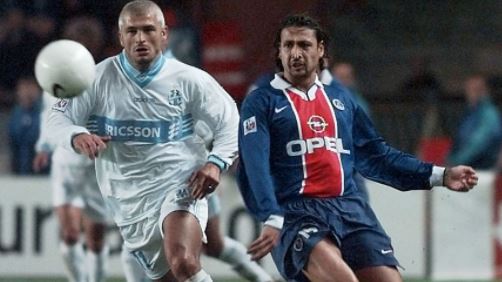
In 1986, Bernard Tapie became president of Marseille and immediately began transforming the club into a continental contender. Over the next few years, Tapie signed the likes of Didier Deschamps, Jean-Pierre Papin, Chris Waddle, Basile Boli, Rudi Voller, Fabien Barthez, and Eric Cantona to Marseille. The results were immediate — Marseille won the very next match against PSG 4-0 and slowly became the best club in France. PSG meanwhile had to survive a brush with relegation, thanks in part to a feisty win over Marseille (more on that later). But just know the tensions were high when PSG and Marseille met late in the 1988-89 season for what would be the title decider. Before the match, PSG president Francis Borelli accused Tapie and Marseille, who were trailing PSG in the standings, of fixing matches. Borelli looked like his club would get the title with the score at 0-0 with just a few seconds remaining. But Franck Sauzee’s goal at the death gave Marseille a dramatic win and the league crown.
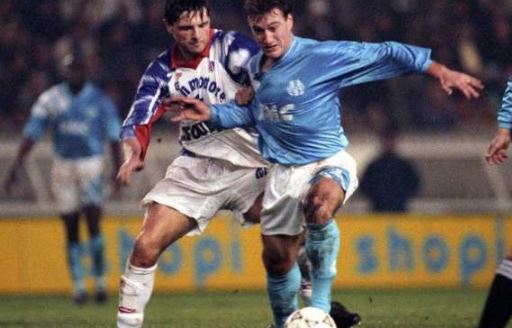
That began an era of Marseille dominance in the early 1990’s. The 1989 title would prove to be the first of four in a row and was also followed by another Coupe de France (Marseille’s last to date). PSG would fight to keep their rivals at bay thanks to the money supplied by their new owner, Canal+ (which ironically was convinced by Tapie to buy the club). But even with the likes of George Weah and David Ginola, Marseille were just a bit better. This was no more apparent than a fateful meeting known as the “Butchery of 1992.” More than 50 fouls were called, six yellow cards were issued, and several scuffles (including one that saw a PSG player punched) highlighted a 1-0 Marseille win. During this era, Marseille’s biggest competition was elsewhere in Europe. In 1991, Marseille became the third French club to reach the UEFA Champions Final, losing in a heartbreaker to Red Star on penalties. But two years later, Marseille got redemption and made history, topping heavy favorites A.C. Milan 1-0 in the 1993 Champions League Final (the first time it was called the Champions League instead of the European Cup) to become the first French team to be champions of Europe. Just a few days later, Marseille beat PSG 3-1 to effectively clinch its fifth straight league title.
But just when Marseille’s golden era hit its peak, it was over. Six days before the Champions League Final, Marseille had a league match against Valenciennes. Tapie and Marseille general manager Jean-Pierre Bernes asked midfielder Jean-Jacques Eydelie to ask Valenciennes players Jorge Burruchaga, Jacques Glassman, and Christophe Robert to underperform so Marseille could stay fresher for the final. Only Glassman refused, telling his manager about what happened during halftime of the match, which Marseille won 1-0. Robert confessed his role two weeks after the match and the French football bribery scandal was underway. In the end, Marseille was stripped of the league title and denied a spot in the 1993-94 Champions League and other continental tournaments. Tapie and Bernes were issued bans for life by the FFF and forced to resign (Bernes’ ban was overturned in 1996), while Eydelie, Robert, and Burruchaga were suspended. Interestingly, PSG (which finished second) was offered the 1992-93 league title, but declined (the title remains unawarded). After the following season (which PSG won), Marseille was forcibly relegated due to the scandal and financial instability.
Marseille would eventually return to the top flight in 1996, thanks to its new owner — Adidas CEO Robert Louis-Dreyfus (who, yes, is related to Julia Louis-Dreyfus). But even though Marseille didn’t get back to its astonishing heights (winning just one more Ligue 1 title in 2010), PSG couldn’t take advantage when it came to silverware — one notable exception being the 1996 UEFA Cup Winners’ Cup. Despite employing the likes of Ronaldinho and Pauleta, PSG seemed to always fail for one reason or another. In fact, they themselves were seemingly always dealing with some crisis or financial issue during that time. Success in the Coupe de France (including a 2-1 title win over Marseille in 2006) was the only thing keeping this from being a dark era for PSG (although an eight-match unbeaten streak against Marseille didn’t hurt, either). But then in 2011, that financial instability was forever cured with the purchase of PSG by the group Qatar Sports Investments. Unbeknownst to anyone, this acquisition would drastically change PSG, Le Classique, and French soccer as a whole.
Like Roman Abramovich with Chelsea and the Abu Dhabi Group with Manchester City, QSI has turned PSG into one of the most competitive clubs in the world by pumping in container ships filled with money. This has allowed PSG to sign the likes of Zlatan Ibrahimovic, Thiago Silva, Edinson Cavani, and more recently Neymar, Kylian Mbappe, Sergio Ramos, Gianluigi Donnaruma, and Lionel fucking Messi, transforming PSG into the most dominant team in France. Eight of the past ten Ligue 1 crowns have been won by PSG, drawing them ahead of Marseille and into a tie for most all-time. Their main focus over the past decade has been trying to catch Marseille in Champions League wins. But while PSG has reached the knockout stage frequently, they’ve instead become soccer’s version of the pre-2020 Los Angeles Dodgers — a wealthy and talented squad that constantly chokes deep into the competition. Notable collapses include blowing a 4-0 aggregate lead to Barcelona in 2017 and a 2-0 lead to Manchester United in 2019 (fuck you, Angel Di Maria). PSG did end up making the final in 2020, only to fall 1-0 to Bayern Munich. At least PSG had a nearly nine-year unbeaten mark against Marseille over the past decade. But two of the most recent editions of Le Classique (including Marseille’s first win since 2011) have given hope of reigniting this fierce battle.
MAJOR ON-FIELD MOMENTS:
A RIVALRY BORN IN FIVE DAYS
As Francois M’Pele once said, the 1975 Coupe de France quarter-final tie between PSG and Marseille was the true origin of Le Classique. Marseille were leading 2-0 before M’Pele’s brace made the final score 2-2. After the match, the home fans attacked PSG’s team bus, the first violent incident involving fans during the matchup. Four days later, the second leg saw PSG emerge with a 2-0 win, their first ever victory against Marseille. But the violence didn’t stop after the final whistle. Brazilian Marseille stars Jairzinho and Caju physically assaulted the referee on their way to the locker room. Both would eventually be suspended for pretty much the rest of the season, although as it turned out neither would ever play another game for Marseille.
QUITE THE SEND OFF
It would take more than two years later for PSG to score their first league win against Marseille, but when they did they made it count. Marseille went up first, but then PSG struck back with five unanswered goals (including a Francois M’Pele brace and an owl goal). The 5-1 result was the first four-goal margin of victory between the two sides and remains tied for the most lopsided result in Le Classique history (matched three other times). The PSG players dedicated the win to Daniel Hatcher, the team president who had been instrumental in the early years of the club and was being forced to resign due to a corruption scandal regarding tickets at the Parc des Princes. PSG captain Mustapha Dahleb went into the stands to give Hatcher the match ball.
BACK-AND-FORTH FETE
The highest-scoring match in Le Classique history took place in 1979 and was absolutely bananas. Marc Berdoll opened the scoring just two minutes after the opening whistle, though Bernard Bureau brought the hosts level just one minute later. Despite the early goal action, the next strike wouldn’t come until the second half. Mustapha Dahleb made it 2-1 PSG in the 55th minute and Armando Bianchi doubled the lead by converting a penalty a minute later. But Marseille fought back, with a goal from Robert Buigues and a second from Berdoll evening the score at 3-3 with just ten minutes remaining. Carlos Bianchi would provide the decider, with his 86th minute screamer sealing a 4-3 win for PSG, with the seven-goal total yet to be matched.
THE TAPIE ERA BEGINS
Of the four Le Classique matches to be decided by four goals, Marseille has only won one. But that win could not have happened at a more opportune time. In 1986, PSG were defending league champs and Marseille had just returned from the second division. They also had a new president, Bernard Tapie, in tow. Thierry Laurey opened up the scoring in the 11th minute, while Patrick Cubaynes added a brace and future French soccer icon Jean-Pierre Papin capped the scoring to secure a 4-0 Marseille win. One big reason the game got out of hand was because PSG’s goalkeeper, Joel Bats, got injured. Because clubs could only have two substitutes on the bench back then, defender Philippe Jeannol replaced Bats in net, conceding the last two goals.
THE FAKE WHISTLE
In 1988, Marseille were fighting for a spot in Europe while PSG were fighting to stay in the first division. So it was a surprise when a late goal from Gabriel Calderon gave PSG a stunning 2-1 win at the Stade Velodrome. But the match is best remembered for a goal that could’ve been. During the game, Jean-Pierre Papin broke free and headed for the goal. But PSG defender Michel Bibard imitated the referee’s whistle, with the playground tactic actually working — Papin assumed he’d been whistled for offsides and gave the ball to the goalkeeper. When he realized what happened, Papin squared off with Bibard and nearly ignited a brawl. Afterwards, Bernard Tapie threatened the referee, claiming he couldn’t ensure his safety when leaving the stadium.
SAUZEE AT THE DEATH
The 1988-89 first division title came down to PSG-Marseille at the Stade Velodrome, in a game that would set the tone for the peak of the rivalry. Before the game, PSG president Vrancis Borelli accused Bernard Tapie of fixing matches (he was a few years off). Both teams went back and forth in an electric atmosphere, although the match remained scoreless (which would give PSG the edge for the title) until the final seconds. But just when Marseille seemed cooked, Franck Sauzee caught Joel Bats by surprise to stun the visitors and send the home crowd into a pandemonium. The last-second goal would be the only score of the whole match, with the 1-0 victory meaning Marseille would finally earn its first top division championship in 17 years.
THE BUTCHERY OF 1992
If there was any doubt of PSG and Marseille being rivals, that was thoroughly erased by the Butchery of 1992. Before the match, PSG coach Artur Jorge claimed his side would crush Marseille and midfielder David Ginola promised war upon their rivals. Bernard Tapie stuck newspaper articles carrying the quotes on his players’ lockers. A rainy, muddy night proved to be the perfect atmosphere for this match, which saw more than 50 fouls committed, several cards issued (mostly to Marseille), and Marseille defender Eric Di Meco punched PSG defender Patrick Colleter in the face. In the end, Alen Boksic’s strike proved to be the only goal, as Marseille responded to the pre-match banter with a 1-0 win en route to another league title.
BOLI’S WONDER STRIKE
The very next match between the two sides (taking place just three days after Marseille won the 1993 UEFA Champions League Final), saw the European champs face PSG in a match that would determine the title. PSG opened the scoring, but Marseille would march back with three unanswered goals. The best by far was an incredible team effort of passes and ball movement finished off by a thunderous header by Basile Boli. Marseille’s 3-1 victory clinched the club’s fifth straight league crown. However, just a few days later the French match-fixing scandal broke, resulting in Bernard Tapie being forced to resign and Marseille being stripped of the league title (which second-place PSG refused to claim) and a chance to compete in European leagues.
BATMAN & BORDEAUX
Despite the chaos and demotion during the back half of the decade, Marseille only lost to PSG twice during the 1990’s. The second came late in the 1999 season, with Marseille leading the league and up 1-0 with six minutes left to play. But two late goals from PSG resulted in a 2-1 finish and Marseille being behind Bordeaux in the standings (it didn’t help that Marco Simone mocked Marseille by showing off his Batman tattoo after netting the equalizer). As fate would have it, PSG happened to be hosting Bordeaux on the final match day. Bordeaux won 3-2 on a late goal and were crowned champions, which the fans at the Parc des Princes didn’t mind. To this day, Marseille fans believe PSG let Bordeaux win on purpose to deny them the crown.
LEROY VS. LEROY
The first Le Classique of the 21st century showed that the rivalry hadn’t lost any of its animosity just because the 2000’s had begun. Title challengers PSG jumped out to a lead just seven minutes into the match, but Marseille scored four unanswered goals to give their rivals a shock 4-1 thumping. But all four Marseille goals (as well as seven of the game’s eight yellow cards) came with just ten men on each side. In the 19th minute, Marseille’s Jerome Leroy committed a harsh challenge on similarly-surnamed Laurent Leroy. Laurent kicked back at Jerome, who then tried to tackle Laurent. This all happened just in front of both benches, sparking a massive clash between the two clubs. Both Leroys (who also used to be teammates on PSG) were sent off.
RONALDINHO RUNS RAMPANT
The two Le Classique clashes during the 2002-03 Ligue 1 season can basically be described as “Ronaldinho kicks Marseille’s ass.” The first match saw Ronaldingo open the scoring with a free kick that was converted at an impossible angle and caused PSG coach Luis Fernandez to break out into a samba. Ronaldinho completed his night of making opposing defenders look like traffic cones by converting a penalty to help PSG to a 3-0 win. On PSG’s visit to Marseille, the Brazilian great added another goal (flicking the ball over Marseille goalkeeper Vedran Runje) and finished off a fantastic run with an assist. Jerome Leroy added his own sensational strike as PSG completed the season sweep of their rivals with another 3-0 win (6-0 aggregate total).
NON-SO-WARM WELCOME BACK
Before the start of the 2004-05 season, PSG fan favorites Frederic Dehu and Fabrice Fiorese surprisingly signed for the club’s rivals in Marseille. The pair’s first game back at the Parc des Princes did not go smoothly, as both players received hostile welcomes from the home fans that brought up similarities to Luis Figo and Sol Campbell. Less than 20 minutes into the match, Sylvain Armand was sent off for a violent tackle on Fiorese, who was also the target of multiple projectiles thrown from the stands. The atmosphere must’ve either worked for PSG or been detrimental to Marseille, because despite being one man down for 70+ minutes PSG somehow managed to scrape out a 2-1 victory. Six additional yellow cards were also issued that day.
COMPLETING THE GREAT EIGHT
Just three days later, PSG and Marseille met in the second round of the Coupe de la Ligue. PSG coach Vahid Halihodzic decided to rest the usual starters and give some of the club’s young players experience. Marseille took advantage, going ahead in the fourth minute before adding another to take a 2-0 lead in the 41st minute. However, those young players turned things up, with two goals from Branko Boskovic bringing things level in the 53rd minute. The match remained level until the final minutes, when Bernard Mendy intercepted a back pass from Bixente Lizarazu to goalkeeper Fabien Barthez, slotting the ball into the empty net and completing PSG’s 3-2 win, which was the last of their eight straight victories over Marseille.
AMMONIA & A PORN STAR
Marseille finally broke the drought in 2005, although their 1-0 win was not without controversy. The lone goal came from Lorik Cana, a PSG fan favorite who had signed with Marseille just a few months earlier. But the real story came two hours before kickoff, when ammonia was smelled in the PSG locker room. PSG claims they were then moved to a new locker room that happened to be underneath a crowd of Marseille supporters. Then, Clara Morgane (a porn star and Marseille fan) happened to pass by their locker room while they were changing. PSG claimed Morgane had been ordered to do so, though she denied the charges. In response to PSG, Marseille president Pape Diouf said his rivals need to “learn how to accept defeat.”
ZLATAN SAYS GOODBYE
PSG and Marseille have met in the Coupe de France often, but only twice in the final. The first instance came in 2006, which saw PSG emerge with a 2-1 win. Ten years later, the 2016 final saw both teams double their goal total. Blaise Matuidi opened the scoring just two minutes into the match, though Florian Thauvin equalized ten minutes later. Things stayed at 1-1 until the second half, when two goals from Zlatan Ibrahimovic (playing in his last game for PSG) and another from Edinson Cavani gave PSG a 3-1 lead. Michy Batshuayi pulled one back for Marseille, but it wasn’t enough as PSG held on for a 4-2 victory. It was also PSG’s tenth consecutive victory over Marseille, beating the record they had set just a decade earlier.
CAVANI KEEPS THE STREAK GOING
Although the winning streak had been snapped, PSG still had an unbeaten run against their rivals dating back to 2011 going when they went to Marseille in the 2017-18 season. Luis Gustavo’s early goal was answered by Neymar, although Marseille jumped back into the lead with 11 minutes to go thanks to Florian Thauvin. What’s more, Neymar received two quick yellow cards in the waning minutes, sending PSG down to ten men and seemingly guaranteeing Marseille would finally see victory once again. But then deep into stoppage time, PSG was given a free kick just outside Marseille’s box. Edinson Cavani stepped up to take the kick, which blasted off the crossbar and into the net to secure a 2-2 draw and deny Marseille their glory.
THE BATTLE OF PARIS
Shortly after PSG’s loss in the 2020 UEFA Champions League Final, Marseille’s Dimitri Payet took to social media to remind people that his side is the only French squad to be champions of Europe. That was on everyone’s minds during the match, which was filled with rough tackling (14 total yellow cards). Florian Thauvin provided the game’s only goal, with Marseille’s 1-0 win being their first over their rivals since 2011. But the result was overshadowed by what happened in stoppage time. A brawl broke out that saw five players issued red cards (including Neymar, who became the first player to be given multiple red cards in Le Classique history). Allegations of racist/homophobic insults were made by both sides, but ultimately no action was taken.
REVENGE SHITPOSTING
Tensions remained high during the two teams’ next match — the 2020 Trophee des Champions. PSG were largely dominant, going up early and maintaining possession. Then Neymar came onto the field (returning from an ankle injury) and immediately became the target of Alvaro, who seemingly made it a point to foul him whenever possible. But Neymar had the last laugh, as he scored what would be the game-winning penalty. Dimitri Payet pulled one back for Marseille late, but PSG held on to win 2-1. Neymar’s last laugh continued after the game, as he mocked Alvaro and Payet on social media. PSG’s own official account even got in on the action, taking to Twitter to make fun of Payet for his (as of this writing) lack of trophies/championship wins.
STATISTICS:
HEAD-TO-HEAD RECORD
Marseille: 34
PSG: 48
Draw: 23
LEAGUE CHAMPIONSHIPS
Marseille: 9
PSG: 11 (record)
COUPE DE FRANCE
Marseille: 10
PSG: 14 (record)
COUPE DE LA LIGUE
Marseille: 3
PSG: 9 (record)
TROPHEE DES CHAMPIONS
Marseille: 2
PSG: 11 (record)
UEFA CHAMPIONS LEAGUE
Marseille: 1
PSG: 0
UEFA CUP WINNERS’ CUP
Marseille: 0
PSG: 1
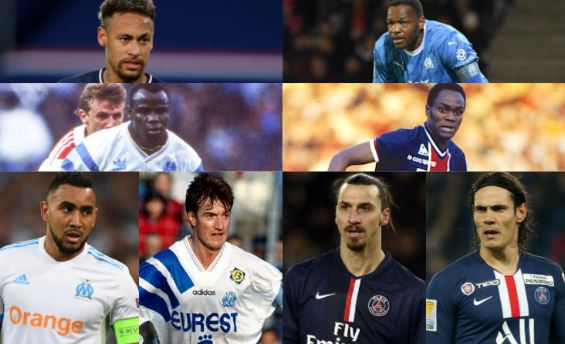
NOTABLE FIGURES:
FRANCOIS M’PELE
One of the first great players in PSG’s history, Francois M’Pele remains all over the club’s record books more than four decades after his retirement. Still ranking high on the all-time goal scoring list, M’Pele also holds PSG’s Coupe de France record with 28 goals. Perhaps most importantly, he scored the two goals that helped PSG come back against Marseille in the first leg of their 1975 Coupe de France semi-final, a matchup M’Pele himself believes really began Le Classique. The Congolese forward is also described as one of the best African players ever.
JEAN-MARC PILORGET
Who knows how long PSG’s current crop of talent/youth/big names will remain with the club, but they’ll have to be there quite a long time if they want to catch Jean-Marc Pilorget. The defender joined PSG in 1975 and remained there for 14 years, appearing in 435 matches for the club (an all-time record). Although he barely averaged more than a goal per year, Pilorget was still a mainstay for PSG’s back line. Pilorget also had a lengthy managerial career, which interestingly included two spells over three years as the coach of Paris FC — formerly a part of PSG itself.
BERNARD TAPIE
Perhaps the most controversial figure in the history of Le Classique never even kicked a ball. Bernard Tapie became Marseille’s president in 1986 and proceeded to build the greatest club soccer team France had ever seen. Tapie’s big name signings brought Marseille five straight league titles and two UEFA Champions League Final appearances (and a victory in 1993). But everything came crashing down due to the bribery scandal, which forced Tapie to resign. During his time with Marseille, Tapie had… well let’s call it an acrimonious relationship with PSG.
DIDIER DESCHAMPS
Arguably the best player in Marseille’s history, Didier Deschamps has won pretty much it all. Known as an intelligent, hard-working defensive midfielder, Deschamps was just 24 when he captained Marseille to their 1993 Champions League Final victory (he also won another with Juventus). Deschamps also served as captain of the French national team during their triumphs at the 1998 FIFA World Cup and Euro 2000. As a manager, Deschamps has led Marseille to its most recent Ligue 1 title in 2009-10 and France to its second World Cup victory in 2018.
JEAN-PIERRE PAPIN
One of the best French players of his era, Jean-Pierre Papin was the attacking force behind Marseille’s dominance in the late 1980’s and early 1990’s. From 1988-1994, Papin was the leading goal scorer for whichever league he played in. Until 1992, that was in France — one year after losing the Champions League Final, Papin moved to A.C. Milan. Unfortunately for him, he then proceeded to lose to his former team in the 1993 Champions League Final. Papin would finally get to be a European champion the following year, with Milan’s win over Barcelona.
BASILE BOLI
Although he spent nearly twice as much time with Auxerre, Basile Boli’s greatest success came with Marseille. A strong and powerful defender, Boli played out of his goddamn mind during the 1993 Champions League Final. Boli helped keep Milan’s attack at bay and scored the game’s only goal. But that wasn’t even the best headed goal he scored that week — just a few days after the final, Boli finished off Marseille’s incredible team goal against PSG. However, Boli’s tenure with Marseille was cut short due to the financial instability following the bribery scandal.
FABIAN BARTHEZ
Fabian Barthez may have the best nickname for any player I’ve ever seen — Le Divin Chauve (The Divine Bald One). Perhaps that’s why he was such a good goalkeeper — his head better resembled a soccer ball than anyone else’s. Barthez was the netminder during Marseille’s great run during the 1990’s, but left due to the fallout of the bribery scandal. Barthez would later return to Marseille for a few years during the twilight of his career. Barthez also starred for the French national team, winning the Yashin Award for best goalkeeper during their 1998 World Cup win.
RONALDINHO
Although he’s more well known for his days with Barcelona, Ronaldinho truly arrived on the soccer scene during his time with PSG. While he often got into disputes with manager Luis Fernandez, who said he was too focused on the nightlife in Paris, Ronaldinho still balled the hell out, particularly during the 2002-03 season. Ronaldinho’s skills and heroics are on particular display during PSG’s two Le Classique league matches, during which he made Marseille his personal bitch. He might’ve stayed with PSG longer if the club provided better support for him.
PAULETA
One of the more underrated players of his era, Pauleta played the best towards the end of his career, five years of which came with PSG. Basically, Pauleta scored a shit ton of goals, a lot of which were exceptional. One of the best goals in the history of Le Classique came from him — Pauleta’s first of two goals in PSG’s first 2-1 win over Marseille in 2004 came on a curling shot at a seemingly impossible angle. Pauleta was also a star for the Portuguese national team, with his 47 goals the most by any player at the time of his retirement (let’s just say it’s been broken).
STEVE MANDANDA
While Marseille hasn’t had much to celebrate during the 2000’s, at least they can say they’ve had Steve Mandanda in goal. One of the better goalkeepers in French history, Mandanda arrived at Marseille in 2007 and (with the exception of one season spent at Crystal Palace) has remained with the club ever since. Four years ago, Mandanda surpassed Roger Scotti to become Marseille’s all-time most capped player — he’s the only player to make 500 or more appearances for the club. Mandanda was also on France’s roster for the 2018 World Cup.
ZLATAN IBRAHIMOVIC
While it would be tough for one club to claim they were Zlatan Ibrahimovic’s main squeeze, PSG might have the best argument. Ibrahimovic joined PSG in 2012 and was the symbol of the new owner’s willingness to spend big bucks to bring in the big talet. During his four years in Paris, Ibrahimovic won Ligue 1 every single year and was the league’s top scorer in all but one of those years. In addition, Ibrahimovic also became the first player to score 150 goals for PSG and retired as the club’s all-time leading scorer. His 11 Le Classique goals are the most ever.
EDINSON CAVANI
Zlatan Ibrahimovic’s 156 goals have since been surpassed by Edinson Cavani, who currently reigns supreme with 200 goals. Part of the slew of major signings by PSG in the 2010’s, Cavani has developed into one of the most dependable strikers in the world. Cavani has been known to come through in big moments, such as when his stoppage time free kick kept PSG’s unbeaten streak against Marseille going in 2017. That year saw Cavani be named Ligue 1 Player of the Year. The Uruguayan has also been part of his country’s resurgence in the past decade.
FLORIAN THAUVIN
Although Florian Thauvin is leaving for Tigres UANL this summer, he will remain one of the best players for Marseille over the past decade. Often in the conversation for the Ligue 1 top scorer and Player of the Year (losing to PSG players in the process), Thauvin did help Marseille finally strike back against their rivals by scoring the only goal during the Battle of Paris. Thauvin was extremely productive during his time with Marseille, finishing in the Top 10 lists when it comes to goals scored and appearances in club history. He also was in France’s 2018 World Cup squad.
DIMITRI PAYET
While Dimitri Payet has been one of the best and most productive players during his two stints with Marseille, he’s also been one of the most controversial. During the pandemic, Marseille were greatly impacted financially. However, Payet (the club’s top earner) refused a pay cut (he later tested positive for COVID-19). Then, his comments on social media making fun of PSG for losing the 2020 Champions League final set the stage for the battle of Paris. In addition, when PSG won the next Le Classique, Payet was the target of taunts from players and PSG itself.
NEYMAR
One of the best players in the world and biggest shitheads out there, Neymar made history by becoming the most expensive player in the world when PSG bought him from Barcelona for $270 million in 2017. His skills are matched only by the likes of Lionel Messi, Cristiano Ronaldo, and maybe like two other people, although controversy always seems to surround him. Neymar is as likely to score a world class strike as he is to fall over from a stiff breeze or taunt/slap another player. Neymar is the only player in Le Classique history to receive multiple red cards.
KYLIAN MBAPPE
When Lionel Messi and Cristiano Ronaldo retire, Kylian Mbappe may take the “best player in the world” throne. The second-most expensive player in the world (bought by Monaco from PSG for $219 million in 2018, Mbappe is already third on PSG’s all-time scoring list and closing in on second. Mbappe was also key to France’s 2018 World Cup win, scoring four goals (one of them in the final). Oh by the way Mbappe is only 23 years old — he was 19 when he scored against Croatia, joining fucking Pele as the only teens to have scored in a World Cup final.
FAN INVOLVEMENT:
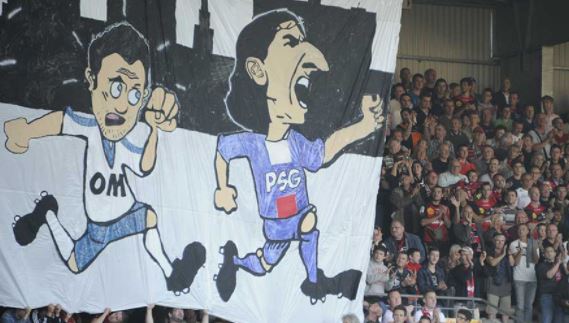
Beyond all of the competition and drama on the field and in the standings, what fuels Le Classique are the differences between the two clubs. Paris is France’s largest (and capital) city and the definitive location in the northern part of the country. Marseille is the second-biggest city in France and is located on France’s beautiful, popular southern coast. In addition to the regional rivalry, Marseille was founded by an aristocrat, while PSG largely relied on a fan-based fundraiser to get going. This history is especially fascinating to look back on due to Marseille’s current financial worries and PSG having a higher GDP than some countries. But whatever the case, PSG and Marseille always seem to be on opposite ends of the spectrum, while close only in overall success and competitive play. This naturally fuels hatred between fan bases.
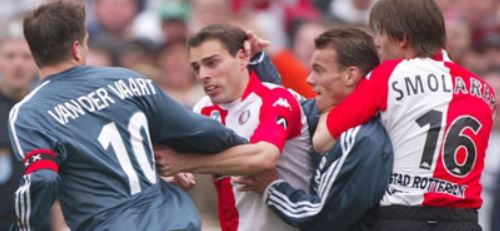
While the French prefer to think they’re nothing like the English, hooliganism has been prevalent in Le Classique. Since the early years of the rivalry, both teams have had their buses attacked by opposing fans (although it’s happened more times to PSG). PSG hooligans have clashed with police and even themselves on multiple occasions. The past few decades have seen PSG flares launched into the Stade Velodrome setting shirts on fire, 146 arrests during a single match, an 18-year-old Marseille fan being paralyzed after being hit by a seat thrown from the PSG section above, a 37-year-old PSG fan lynched by fans from a rival supporters group (which caused the French government to dissolve five PSG supporters’ groups), and Marseille fans ripping no fewer than 137 seats from the Parc des Princes during the first away Le Classique they are allowed to attend in four years. That’s a lot to back into 30 years.
In terms overall atmosphere, Marseille appears to have the edge. The Stade Velodrome has been one of the most intimidating places to play for some time, with fans in the North Curve always popping off with some badass tifos. I did attend a PSG match in 2017 (a 3-0 win over Bayern Munich in the Champions League) and the atmosphere was incredible. But again I’m not used to seeing this shit in person, so I’m trying to remove my bias. That being said, PSG fans have referenced Dragon Ball in their tifos on multiple occasions, so they have my respect. Then again, Tom Brady is a PSG fan…

SUMMARY:
While the dynamic between Olympique de Marseille and Paris Saint-Germain hasn’t always been even (or straight up competitive), when Le Classique is at its best, it has the animosity, star power, atmosphere, and drama to compete with any rivalry out there.
From the country currently sitting on top of the rest of the world, we go to the best country to never win the World Cup. But at one point, this country was at the center of the soccer world, both internationally and domestically. This country changed the way the game was played, and at the heart of a revolution is a rivalry that used to be as popular as any in the world. But while it’s gone out of vogue, the hatred between the two clubs involved has never cooled off.
De Klassieker (Netherlands)
AFC Ajax vs. Feyenoord Rotterdam
“We wanted to kill them.” — Ruud Krol, former Ajax defender
While many (for good reasons) think of the Netherlands as a place full of nothing but tulips, drugs, windmills, and good times, it also contains De Klassieker — a legendary rivalry filled with hatred, violence, history, pride, and two of the best clubs in the history of Europe. AFC Ajax and Feyenoord Rotterdam have been at the top of the world, but like Dutch domestic soccer as a whole have faded into obscurity. But that doesn’t mean their hatred has dampened by a degree.
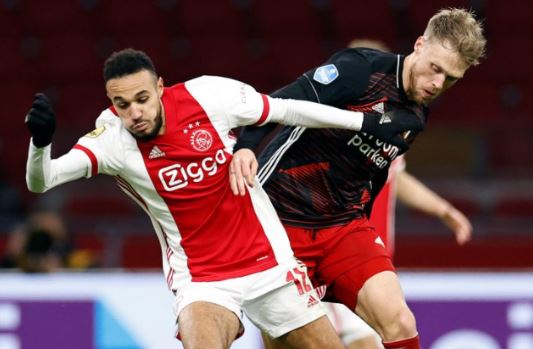
That’s mainly because their rivalry didn’t start with football — it began with the cities these clubs are based in. Amsterdam (Ajax) and Rotterdam (Feyenoord) have been rivals since they first received their city rights in the 13th century. Both cities are completely opposite in terms of attitude, culture, and industry. Amsterdam is seen as a city of artists and dreamers, while Rotterdam is known for being a hard-working labor town. A common saying in Rotterdam is “While Amsterdam dreams, Rotterdam works.” Both clubs have become both the pride of their cities and a reflection of their attitudes. Ajax’s style of play is more fancy and attack-based, while Feyenoord is more gritty and defensive-based.
The two cities have also used the places these clubs play as dick-measuring contests. Ajax’s Olympic stadium had the highest capacity in the Netherlands with 31,600 until 1937, when Feyenoord opened De Kuip with a capacity of 64,000. Ajax responded by adding a second ring to Olympic Stadium later that year. After World War II, Feyenoord expanded De Kuip to 69,000, taking the lead again. De Kuip would eventually be converted to a much more fan-friendly seating plan, but reduced its capacity to around 51,000. A few years later, Ajax opened up the Amsterdam ArenA (not a typo), which has a capacity of around 55,000. No word on when Feyenoord will expand their arena again to edge ahead of Ajax again.
While this rivalry has its roots and is continuously fueled by this city-on-city animosity, enough has happened between Feyenoord and Ajax that these two would hate each other even if they were in random towns instead.
HISTORY:
The most decorated soccer club in the history of the Netherlands was created at the turn of the century on March 18, 1900. Amsterdamsche Football Club Ajax was actually the second incarnation of the short-lived Football Club Ajax, which began and folded in 1894. The club was named after the mythological hero Ajax, a Greek soldier who fought in the Trojan War. The Iliad described Ajax as the greatest of all Greek warriors (next to his cousin, Achilles), who unlike his cousin died by suicide, and this unconquered. Eight years later, the club Wilhelmina was founded in a Rotterdam pub called De Vereeniging, then proceeded to go through a bunch of name and color changes. After being called Hillesluise Football Club and then RVV Celeritas, the club was eventually renamed SC Feijenoord (to reflect the name of the district in Rotterdam they were from) and adopted the red/white shirts and black shorts/socks combo they wear today. While Feijenoord eventually were promoted to the top level of Dutch soccer in 1918, Ajax had been there seven years earlier (and returned after relegation). It was during this time that Ajax was forced to change their kit because it was the same as Sparta of Rotterdam. The vertical red stripe on a white background with white shorts remains their iconic look today.
In between Ajax’s first national championships in 1918 and 1919 and Feijenoord’s first crown in 1924, both clubs met for the first time on October 9, 1921. The seeds of hatred were planted right away, as the match ended up 3-2 in favor of Ajax, but was officially changed to a 2-2 result later due to a protest by Feijenoord over what they claimed was a dubious Ajax goal. Feijenoord finished off the 1920’s with another league title, then saw the rivalry kicked up a notch. For the entire 1930’s Ajax and Feijenoord competed for pretty much every title. While the clubs as a whole fought the aforementioned stadium war, the players brought home several pieces of silverware. Ajax won five league titles while Feijenoord claimed three league crowns and their first two KNVB Cups. Then like everything else the league and rivalry was fucked up by World War II. Rotterdam was hit particularly hard during the German occupation of the Netherlands, which was reflected in Feijenoord’s lack of trophies (Ajax only won one KVNB Cup during that time). Even after the war ended, Rotterdam was so badly impacted by the fighting that it ended up putting a halt to the rivalry.
Back in the day, there was no national Netherlands league — each team had to win their regional competition to play for the national title. This was the only way for Feyenoord and Ajax to play each other. While Ajax pretty much always cleaned up, Feijenoord could never win their area’s competition, meaning the two rivals never played each other from 1947-55. But the eight-year gap did have its benefits for the rivalry. As they rebuilt after the war, the people of Rotterdam got to look at the largely unimpacted city of Amsterdam with jealousy and anger. Even though Ajax had their own tough luck (one league title in that decade), they could at least compete for a crown. Meanwhile, the push for a national professional league was growing. After a charity match for victims of the North Sea flood of 1953 saw the Dutch national team defeat France 2-1, the KNVB (the national football group of the Netherlands) decided to introduce professionalism to the country’s soccer program. That was thanks in no small part to Feijenoord chairman Cor Kieboom, who was also influential in establishing the country’s first ever single national league, the Eredivisie. The first league season took place in 1956-57 and both Ajax and Feijenoord were participants, and have never been relegated since.
The first professional De Klassieker (and the first overall in nearly a decade) was one to remember, especially for Feijenoord fans. The club took out its frustrations thoroughly on Ajax, winning 7-3. But Ajax would have the last laugh, winning the inaugural Eredivisie. They would laugh even harder three years later, when Ajax and Feijenoord finished tied atop the league standings on points. A playoff match was scheduled, with Ajax crushing their rivals 5-1. Feijenoord would get their revenge the following season when, on the road to their first Eredivisie crown, they topped Ajax 9-5 (14 combined goals) in what remains the highest-scoring De Klassieker match ever. While Ajax managed to snag a KNVB Cup that season, the early 1960’s were definitely in Feijenoord’s favor, with the club winning two more league titles and a KNVB Cup as well. But while Feijenoord claimed that last title, two incredibly important people took new roles with Ajax. The 1964-65 season saw a young prospect named Johan Cruyff make his Ajax debut, while after the season Rinus Michels took over as manager. Together, Cruyff and Michels were about to change the soccer world forever.
The concept of “Total Football” is a tactical system in which any player can rotate and take over the role/position of any other player. It’s a fluid system that emphasizes maintaining team structure and means players must be able to play all three positions (except goalkeeper, obviously). Its success relies entirely on the team’s ability to adapt and the players’ intelligence on when to switch. It’s also not an entirely Dutch creation. Austria’s Wunderteam of the 1930’s, River Plate’s famous La Maquina squad of the 1940’s, Hungary’s Golden Team of the 1950’s, Burnley in the 1950’s and 60’s, and Santos in the 1960’s all played a similar style before. But it had been an off-and-on-again fad. Michels believed the system could be revolutionary — it just needed a few tweaks. Michels rebuilt Ajax’s squad to adapt to Total Football and discovered he had already had the missing ingredient — Cruyff. Even though he was young, Cruyff would not only prove to be one of the most prolific players in the game’s history, but one of the most intelligent and adaptable — the perfect on-field general to execute Total Football.
The results were immediate — Ajax won three straight Eredivisie titles and a KNVB cup. They also began to progress much farther in European competition. Things appeared to finally be in their favor when in 1969 they became the first Dutch side to reach the UEFA Champions League Final. However, they were defeated by the mighty A.C. Milan squad 4-1. The following year also saw a Dutch squad reach the final, only it wasn’t Ajax. Feijenoord still had a damn good squad and managed to edge Ajax for the Eredivisie crown in 1969. Then in 1970, they made the run of their lives, which included a come-from-behind aggregate win over Milan in the second round. Matched up against the heavily favored Celtic (champions three years earlier), Feijenoord managed to hold onto a 1-1 scoreline throughout most of regulation. Just three minutes from penalties, Ove Kindvall stunned Celtic with a late goal. The 2-1 line held and Feijenoord became the first team from the Netherlands to be champions of Europe.
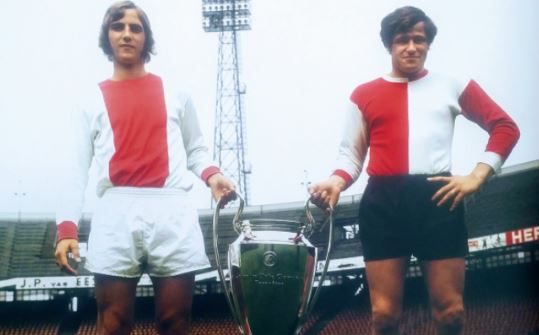
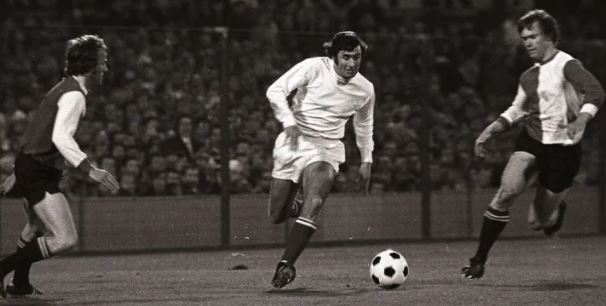
So how did Ajax respond? Basically by saying, “hold my beer.” Michels tinkered with the lineup once more, bringing in Johan Neeskens, who essentially became the Robin to Cruyff’s Batman. With their lineup complete, Ajax (by virtue of winning the Eredivisie the same year Feijenoord won the Champions League) tore through Europe. After taking out Celtic and Atletico Madrid, Ajax redeemed themselves for 1969 and beat Panathinaikos 2-0, earning their first Champions League crown. While Michels left Ajax for Barcelona after the season, Cruyff (with all respect to new manager Stefan Kovacs) was all they needed. Total Football became mainstream in 1972, when Ajax won its third straight Eredivisie title and second straight Champions League crown. The 2-0 final win over Inter Milan was so dominant many claim it to be Total Football’s greatest moment. But Ajax wasn’t done — Ajax’s Total Football squad cemented themselves as legends with a third straight Champions League title (a 1-0 win over Juventus in the final), which by rule meant that Ajax got to keep the trophy. For those keeping score, that’s three straight wins with a combined score of 5-0. What’s interesting is that while Ajax kicked the rest of Europe’s ass, they still had a tough time with Feijenoord, who had the talent and tactical ability to find and exploit weaknesses in Total Football. It was the perfect “iron sharpens iron” example, with matches between the two sides during this time being some of the highest quality soccer ever played.
While Total Football and Dutch soccer as a whole would continue to dominate the world — the Netherlands national team featuring Cruyff and Neeskens and coached by Michels would reach the 1974 FIFA World Cup Final — the club-level domination ended shortly after Ajax’s Champions League hat trick. Cruyff joined Michels at Barcelona after the 1972-73 season, with Neeskens following the following year. Michels returned to Ajax for a brief spell in 1975-76, but without Cruyff the magic was gone. However, the Dutch went out swinging — Feijenoord paired its 1973-74 Eredivisie title with a triumph in the UEFA Europa League (just the third ever edition), taking out Tottenham Hotspur in the final. That would be the last trophy for Feijenoord for a while, as Ajax still had a good enough squad to take the league several times over the next decade. Both clubs also had to contend with something all that success in the 1970’s had brought to De Klassieker — fan violence. The success of both squads and the stakes at play whenever they faced off had raised the passion and intensity to a legendary level. Even with the highest stakes gone (there was still the league to play for), that passion remained, eventually turning into straight up hooliganism that would take over the rivalry in the following decades.
After the 1979-80 season, Wim Jansen, who had played 15 years with Feijenoord (who at this point had been renamed Feyenoord Rotterdam), left to join the Washington Diplomats of the North American Soccer League. When he felt like he wanted to return from the Netherlands, he followed the advice of a teammate — who just happened to be Johan Cruyff — and signed with Ajax. This outraged Feyenoord fans, who showed their displeasure during Jansen’s first game for Ajax — De Klassieker. A Feyenoord fan threw an ice ball at Jansen, hitting him in the eye and forcing him to leave the pitch for treatment. That was small potatoes compared to what happened in 1983. Cruyff, who by that point had rejoined Ajax — wanted to play one more season, despite a decline in form. However, Ajax decided not to offer him a new contract. So a pissed off Cruyff then signed with Feyenoord. This angered both fans — Ajax supporters were furious over Cruyff signing with their rivals, while Feyenoord supporters didn’t like seeing an Ajax legend (and a past-his-prime one at that) wearing their colors. Some fans even hung banners saying “Feyenoord Forever, Cruyff Never.” That set the stage for the most cognitively dissonant De Klassiker ever — a 8-2 thumping of Feyenoord and Cruyff by Ajax (Feyenoord’s worst loss ever to Ajax). However, Cruyff would have the last laugh, winning the league and KNVB Cup with Feyenoord that year and closing his career as a champion.
After several years of decline in the late 1980’s, the 1990’s would see a revival in both clubs thanks to their legends turned traitors. After Cruyff began his managerial career by leading Ajax to the 1987 UEFA Cup Winners’ Cup title, Jansen took over Feyenoord in 1990, winning two Dutch Cups and to the semi-finals of the Cup Winners’ Cup in 1992. But it would be another former Dutch player who would make the biggest impact of the decade. Louis van Gaal took over a troubled squad (some fraud incidents and bad fan behavior had negatively impacted the club) and proceeded to win the 1992 Europa League — to date the only one in Ajax history. Building upon that success, Ajax won three straight Eredivisie titles (and four in five years) during the mid 90’s. Thanks to the return of Frank Rijkaard and the arrivals of Patrick Kluivert and Jari Litmanen, they also made a European resurgence, with Kluivert scoring the 1995 Champions League Final’s only goal with five minutes remaining to lead Ajax to a 1-0 win over Milan. That season saw Ajax go unbeaten in European and league competition, while suffering only one loss (in the KNVB Cup). The one team to beat them? Feyenoord, naturally.
Once things go up, they must come down, as was the case with Ajax in the 1990’s. A loss on penalties to Juventus in the 1996 Champions League final was preceded by the Bosman ruling, a major court case that allowed for more free-flowing player transfers across Europe. This had the effect of several world class players leaving Ajax for greener (AKA richer) pastures. The following year, the hooliganism surrounding De Klassieker reached its lowest point. A pre-planned melee between hooligans of each squad (known as the Battle of Beverwijk) saw Ajax fan Carlo Picornie stabbed to death. As a result, the following two matches between Feyenoord and Ajax were played without away fans. Things weren’t helped by the fact that overall, neither club were at their best (although Ajax still was the dominant force domestically). Still, Feyenoord would provide one more great moment, turning a third-place group finish in the 2001-02 Champions League into a run through the Europa League. Wins over Rangers and Inter were followed by a 3-2 victory over Borussia Dortmund in the Europa League Final, giving Feyenoord the most recent piece of European silverware won by a Dutch club.
That would also be the last thing Feyenoord would win for quite some time. Over the nearly 20 years that have followed since, Feyenoord has only won three KNVB Cups and one league title, the latter being their first in 16 years. Meanwhile, Ajax have been one of the better Dutch sides of that time, winning eight Eredivisie titles (including four straight from 2010-14) and six KNVB Cups. They’ve also had another brief European resurgence, reaching the 2017 Europa League Finals (a 2-0 loss to Manchester United) and the semi-finals of the 2018-19 Champions League, coming within one of the greatest choke jobs in soccer history short of a spot in the final. While things remain tense between Ajax and Feyenoord on the pitch, the violence off it has become more of the story in the 21st century, with away fans being banned from attending for several years during that time. But that hasn’t been the only notable event over the last few years.
MAJOR ON-FIELD MOMENTS:
THE FIRST TIME IN A LONG TIME
Before the establishment of the Eredivisie, Ajax and Feyenoord could only play each other if both won their regional championships. While Ajax held up their end of the bargain, Feyenoord, impacted by Rotterdam’s damage during World War II, could not. Thus, there were no league matches between the two clubs from 1948-55 (only a few friendlies during that time). After both were accepted into the Eredivisie, the first league match in nearly a decade saw Feyenoord take out their frustrations in major fashion, thumping Ajax 7-3. Daan den Bleijker (who also scored Feyenoord’s first professional goal), was the main master of punishment, finding the back of the net four times. Ajax would have the last laugh that year, winning the first Eredivisie.
WORKING 9-5
The defenders and goalkeepers for Feyenoord and Ajax simply didn’t show up on August 28, 1960, when the most batshit crazy De Klassieker took place. Feyenoord scored twice in the first six minutes and (after an Ajax goal in the 13th minute) added two more before 20 minutes were up. Halftime arrived with Feyenoord up 5-2 and somehow the second half featured just as many goals. Feyenoord added three more to go up 8-2 with just under a half hour to play. But Ajax struck back, scoring three goals in a 12-minute span (interrupted by another Feyenoord goal). The final total was 9-5, the highest-scoring match in rivalry history. This game was so insane that it relegated another match four years later — a 9-4 Feyenoord win — to a mere footnote.
THE FIRST INTERTOTO CUP
In addition to the UEFA Champions League, Europa League, and Cup Winners’ Cup, there was another European competition called the Intertoto Cup — played between clubs who couldn’t qualify for any of the other, bigger cups. It was weird and for the vast majority of its life didn’t even have one main winner — rather regional/group winners — before being discontinued in 2008. But in its first year, 1961-62, there was a main winner. As fate would have it, Ajax and Feyenoord would participate and end up facing off in the final. In front of the home crowd in Amsterdam (a somewhat controversial choice for a host), Ajax prevailed in a back-and-forth affair 4-2 thanks to a hat trick by Henk Groot for their first ever piece of European silverware.
A PREVIEW OF DOMINANCE
Although the last De Klassieker match of the 1969-70 season would end in a 3-3 draw, to say there were no winners would be a lie. Two weeks later, Feyenoord would become the first Dutch club to win the Champions League. Ajax would go on to win the Eredivisie and Rinus Michels would put the finishing touches on his Total Football system. Thus, this thriller proved to be the preview for the Dutch dominance that would soon overtake soccer as a whole. Feyenoord got things going early, but Ajax responded with a header from Sjaak Sward. Although Feyenoord went up 3-1 in the 70th minute, Johan Cruyff answered one minute later and Wim Suurbier tacked on the equalizer in the 82nd minute. The fans who got to see it all were also winners.
BATTLE OF THE BEST
Going into the final De Klassieker of the 1971-72 season, Ajax and Feyenoord were fighting for the Eredivisie crown. But they were also battling for something else: the right to call themselves the best club in the world. They were the two most recent European champions and (after Ajax narrowly prevailed 2-1 in Amsterdam earlier) the match in Rotterdam would leave no doubt as to who reigned supreme. At full time, we had a resounding answer: Ajax. Two goals in the first 20 minutes stunned the home crowd. While Hans Posthumus got one back for Feyenoord, Johan Cruyff did what Johan Cruyff does, scoring once before the break and once after it. Piet Keizer finished things off late as Ajax established themselves as the best with a 5-1 victory.
GEEL(S) TURN
While he may not be as notorious as Johan Cruyff of Wim Jansen when it comes to crossing the border between the two clubs, Ruud Geels has his own chapter in De Klassieker. Geels helped Feyenoord win the 1970 Champions League, but five years later was playing for Ajax. Thus the stage for an infamous showdown with his former club was set in 1975. Geels put Ajax up 1-0 just 11 minutes in and was the only goal scorer in the first half. After another Ajax goal in the 63rd minute, Geels then went full heel and full beast mode, scoring two goals in the span of two minutes and four in fewer than 20 minutes. The end result was a 6-0 Ajax win (their largest shutout win over their rivals) with five goals from Geels, nearly half of his De Klassieker total.
LONG-AWAITED CUP FINAL
In the 61 years prior to 1980, Ajax had won eight KNVB Cups and Feyenoord had won four. But somehow these two rivals never played for the title. Ajax were the defending cup winners and had just won their second straight Eredivisie crown, and thus favorites to bring home some more silverware. Things looked good when Frank Arnesen put Ajax up 1-0 early and the visitors got a chance to double their lead from the penalty spot. But Ajax missed their penalty and the home squad leveled things up with Guolaugur Petursson’s own spot kick. Carlo de Leeuw put Feyenoord up with just under 20 minutes to play, while Petursson added another a few minutes later. Feyenoord held on for the 3-1 win, earning their first KNVB Cup in more than a decade.
THE BEATING OF A LEGEND
Even before kickoff before the first De Klassieker of the 1983-84 season, this would’ve been the weirdest match in rivalry history. That’s because Ajax and Dutch soccer icon Johan Cruyff had just signed with Feyenoord that offseason, a decision that pissed many people off across the Netherlands. Then the whistle blew and things got even weirder. Three goals (including one by a young Marco van Basten) gave Ajax a huge lead just 23 minutes in. Feyenoord managed to claw back to a 3-2 halftime deficit. But then Ajax put the hammer down in the second half. Two more goals from van Basten were part of five unanswered from the home side, as Ajax hung Cruyff and Feyenoord (who would win both the league and cup that year) out with a 8-2 win.
JUST ONE LOSS
During the 1994-95 season, Ajax were unquestionably the best soccer team not just in the Netherlands, but across Europe and the world. An unbeaten run to their first Champions League title and an unbeaten league campaign are more than enough proof of that. In fact, Ajax lost just once during the season. It just so happened that one loss is the sole reason their rivals can have some bragging rights that year. Ajax and Feyenoord were matched up in the KNVB Cup quarter-finals. The home squad were up 1-0 with just about ten minutes left and in the driver’s seat for another win. But then Feyenoord leveled things up and, in extra time, won the game thanks to Michael Obiku’s sensational golden goal. Feyenoord would go on to win the Cup.
LONG-AWAITED REVENGE
You might also be surprised to learn that in the 123 years of the KNVB Cup, only twice have Feyenoord and Ajax played in the final. After Feyenoord’s upset win in 1980, Ajax had to wait 30 years for a shot at revenge. That came in 2010, when the two sides met for a two-legged final (due to away fans being banned from De Klassieker matches at the time). Two early goals by Siem de Jong gave Ajax a 2-0 win in the first leg in Amsterdam. Any hopes of a Feyenoord comeback were dashed by an early goal from Luis Suarez in the second leg. Jon Tomasson managed to get the home squad on the board, but two goals from De Jong and another from Suarez saw Ajax win 4-1 (their first victory at De Kuip in four years) and claim the KNVB Cup.
ANY GIVEN SUNDAY
Ajax were fantastic in the 2018-19 season, winning the Eredivisie and KNVP Cup while coming a Lucas Moura hat trick from the Champions League Final. Feyenoord, meanwhile, finished a distant third in the league. All of that makes what happened on the first De Klassieker of 2019 seem all the more insane. Ajax jumped out early thanks to a free kick by Lasse Schone, but Feyenoord fought back. The score was 2-2 when returning star Robin van Persie put Feyenoord in front 3-2 just before halftime. Feyenoord kept their foot on the gas in the second half, with a second goal from van Persie being the first of three scored by the home squad. The 6-2 victory by Feyenoord was by far their biggest (and most shocking) result over their rival in quite a while.
STATISTICS:
HEAD-TO-HEAD RECORD
Ajax: 93
Feyenoord: 60
Draw: 49
LEAGUE CHAMPIONSHIPS
Ajax: 36 (record)
Feyenoord: 16
KNVB CUP
Ajax: 20 (record)
Feyenoord: 13
JOHAN CRUYFF SHIELD
Ajax: 9
Feyenoord: 4
UEFA CHAMPIONS LEAGUE
Ajax: 4
Feyenoord: 1
UEFA EUROPA LEAGUE
Ajax: 1
Feyenoord: 2
UEFA CUP WINNERS’ CUP
Ajax: 1
Feyenoord: 0
UEFA SUPER CUP
Ajax: 2
Feyenoord: 0

NOTABLE FIGURES:
JAAP BARENDREGT
Nearly a full century after his career began, Jaap Barendregt remains atop Feyenoord’s goal scoring record list. With 196 goals (just ahead of his teammate, Kees Pijl), Barendregt was one of Feyenoord’s first truly great players. For 12 years, Barendregt dotted the score sheet while helping Feyenoord to two first division championships and two KNVB Cups. Incredibly, his career with the Netherlands national team was much less prolific — he was only called up once in his entire life. This was largely due to him being second to Deb Bakhuys in the pecking order.
PIET VAN REENEN
If you’re ahead of Johan Cruyff when it comes to offensive statistics, you’ve accomplished a big thing. Enter Piet van Reenen, the top goal scorer in Ajax’s history and the only one with more goals for the club than Cruyff. Perhaps that’s no surprise given van Reenen’s efficiency. Across 240 matches for Ajax, van Reenen found the back of the net 278 times, a rate of 1.15 goals per game. That is truly insane. A player ahead of his time, van Reenen was a crucial member of Ajax’s first dominant squad that ruled over the Netherlands’ soccer for much of the 1930’s.
COEN MOULIJN
One of the most underrated players of his era, Coen Moulijn drew comparisons to the likes of Garrincha from his competitors. Arriving at Feyenoord in 1955, Moulijn was a key part of the club’s offense, knowing exactly when and where to pass the ball. Some of his teammates at Feyenoord compared his individual skill to that of Johan Cruyff, although they might be biased. Regardless, Moulijn stuck around long enough to help Feyeneoord win the 1970 Champions League and retired as the club’s all-time leader in appearances, with 487 across 17 years.
SJAAK SWART
Sjaak Swart’s career almost never had a chance to take off. As a Jewish boy, he and his father had to hide their true identities during the German occupation of the Netherlands, during which 75% of the Dutch Jewish population was killed. Swart managed to survive and ten years later began his legendary tenure at Ajax. Over his 15-year career, Swart scored 228 goals (third most all time), made around 600 appearances (the most all time) and was a key part of Ajax’s three UEFA Champions League wins. Swart was so beloved he earned the nickname “Mr. Ajax.”
COR VAN DER GIJP
Had he spent his whole career with Feyenoord, like Jaap Barendregt and Kees Pijl, Cor van der Gijp would likely be the club’s all-time goal scorer. As it is, he’s sitting comfortably in third with 177 goals during his nine-year tenure. Ajax were van der Gijp’s favorite target, with his 14 goals being second only to Sjaak Swart (18) for the most by one player in De Klassieker matches. That also makes him Feyenoord’s top scorer in the rivalry, with five more goals than the person with the second-most goals of anyone who scored the majority of their tallies with Feyenoord.
HENK GROOT
While most people thought Cees Groot was going to tear it up for Ajax (to be fair he did, scoring 135 goals during his tenure), it was his little brother, Henk “I am” Groot, who ended up being the more legendary striker. Across eight years with Ajax, Henk Groot scored 211 goals, one of only four players to score 200+ goals for Ajax. But those eight years were broken up by a two-year stint with rivals Feyenoord. Groot is the only player to win both the Eredivisie and KNVB Cup with both Ajax and Feyenoord and also score multiple goals for each side in De Klassieker.
HENK SCHOUTEN
Henk Schouten began and ended his career in Rotterdam — but with another club, Excelsior Rotterdam. But in between those stints he played eight years with Feyenoord, during which time he set opponents’ nets on fire. No club felt Schouten’s wrath more than De Volewijckers, against whom he scored nine friggin goals during a Feyenoord win in 1956 (what’s more, a tenth goal was disallowed). Five years later, Schouten turned his attention to Ajax, scoring four of the record 14 during Feyenoord’s 9-5 win. Schouten sits fifth on Feyenoord’s total goal scoring list.
JOHAN CRUYFF
One of the greatest, most intelligent, revolutionary players of all time, Johan Cruyff is also the most important figure in Dutch soccer history. Cruyff was the perfect on-field general to take Total Football to its highest form, with his impact on Ajax and the Netherlands perhaps even greater than his legacy for Barcelona and Spain. While his 270 goals (second-most all time) and three Champions League wins made him a legend with Ajax, Cruyff’s reputation was slightly damaged by his end-of-career move to Feyenoord (and subsequent league and cup double).
WIM JANSEN
Apart from Coen Moulijn, no one has played for Feyenoord more times than Wim Jansen (422 appearances). Jansen came into his own during Feyenoord’s run to the 1970 Champions League title and helped the club win four Eredivisie crowns, a KNVB Cup, an Intercontinental Cup, and the Europa League. So it was all the more shocking when Jansen returned from a brief stint in the U.S. to become a member of Ajax. A Feyenoord fan was so upset he threw an ice ball at Jansen, hitting him in the eye. Still Jansen won one more Eredivisie title with Ajax.
RINUS MICHELS
Before he became a legendary manager, Rinus Michaels was already an Ajax legend, spending his entire 12-year career with the club and ranking in the Top 15 in both matches played and goals scored. But his true greatness came with developing Total Football, which revolutionized the game itself. Michels signed the players, made the changes, and laid the foundations for Ajax’s European dominance in the 1970’s. Considered one of the best managers ever, Michels also led the Netherlands to the 1974 FIFA World Cup Final and 1988 UEFA Euro crown.
OVE KINDVALL
One of the greatest Swedish players of all time, Ove Kindvall played ten of his 15 years as a pro in his home country. That makes what he did during just five years with Feyenoord all the more remarkable. With only five years under his belt, Kindvall sits fourth on Feyenoord’s all-time goal scoring list with 129, an incredible scoring average. No single goal was more important than the one that broke the deadlock with Celtic with just a few minutes remaining during the 1970 Champions League Final. The title-winning goal is the most important in Feyenoord’s history.
JOHAN NEESKENS
If not for Johan Cruyff, Johan Neeskens would likely be considered the best player in Ajax history, the best Dutch player ever, and the best player ever named Johan. Nevertheless, Neeskens still had a legendary career as the Robin to Cruyff’s Batman in the Total Football system. Neeskens was only with Ajax for four years, but was still crucial to their European dominance. One of the first box-to-box midfielders ever, no less than Sjaak Swart claimed Neeskens was worth two men in the midfield who helped pressure opponents into mistakes.
RUUD GEELS
Ruud Geels may have played four of the first six years of his career with Feyenoord, but something must’ve happened during his tenure there. How else do you explain him signing with Ajax after a four-year departure and then absolutely murdering his former club. Geels is tied with Henk Groot for fifth in terms of goals in De Klassieker history — ten of his 11 goals came as a member of Ajax. Nearly half of them were scored in just one match — Ajax’s 6-0 domination in 1975. Geels was the Eredivisie’s top scorer five times, including four in a row from 1974-78.
JARI LITMANEN
Often considered the greatest Finnish soccer player of all time, Jari Litmanen stayed with Ajax a lot longer than some of his teammates after the Bosman ruling. In fact, he stayed put long enough after helping Ajax to the 1995 Champions League crown (and being the top scorer in the Champions League the following season) that he just sneaks inside the Top 10 on Ajax’s top goal scoring list (133). Litmanen is also the most prolific non-Dutch scorer in Ajax history and out of anyone who has played in De Klassieker. His 12 goals are tied for third in rivalry history.
FAN INVOLVEMENT:
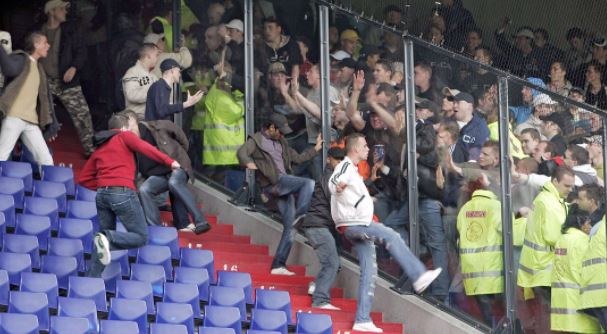
Although the overall quality of De Klassieker and Dutch soccer as a whole has gone down since the 1970’s, the atmosphere and fan violence has trended in the opposite direction. Apparently playing English clubs a lot (particularly Tottenham Hotspur) introduced Dutch fans to the idea of hooliganism, which they’ve taken to like drugs and klogs. Perhaps it was due to the decline in quality that the fans put all their energy into these league and cup competitions — that’s all that will be at stake. Things got progressively more extreme over the following decades, leading up to 1997’s Battle of Beverwijk and the death of Ajax fan Carlo Picornie. As a result, the KNVB banned away fans from the next two Klassiekers.
If you can believe it, things have gotten even worse in the decades since then, with the violence not being reserved to the main teams. In 2004, Ajax hooligans attacked Feyenoord during a match between reserve players. One player (Jorge Acuna) had to be hospitalized with head, neck, and rib injuries, while another (Robin van Persie) had to be rescued. Just a year later, Ajax fans destroyed the train that took them to Rotterdam and were punished by being forced to remain outside. Ajax won 3-2, which enraged Feyenoord supporters, who fought the waiting Ajax fans. In 2009, the mayors of Amsterdam and Rotterdam issued a five-year ban on away fans at De Klassieker matches. But that was extended for another three years for Ajax fans, who threw fireworks onto the field during the 2014 KNVB Cup Final.
In 2015, the Ajax clubhouse was burned down. While the official cause remains unknown, Ajax fans blamed Feyenoord fans and planned a revenge attack (that was stopped by police). The following year, Ajax fans hung an effigy of goalkeeper Kenneth Vermeer (who is black) from the stands after he left Ajax for Feyenoord. In 2019, Ajax and Feyenoord fans got into it during a match… that didn’t even feature those clubs — it was an amateur match between AAV Swift and SC Feyenoord). That same month, Ajax fans threw stones at the Feyenoord team bus and attacked the players’ families. Did I mention this was a U-19 match between the two clubs? There have also been instances of anti-semitic chants against Ajax, who have a long association with Amsterdam’s Jewish community.
SUMMARY:
At its best De Klassieker changes the world, while at its worst the rivalry between AFC Ajax and Feyenoord Rotterdam is filled with fighting and fan violence. But nonetheless this remains one of the most underrated rivalries in all of sports, one that at its peak is better than most.
Keen fans of Dutch soccer will note that I neglected to mention a certain club during this section — PSV Eindhoven. Along with Ajax and Feyenoord, PSV is part of the “Big Three” of Dutch soccer clubs. Combined, they’ve won 73% of all league championships in the Netherlands. Neither three have been relegated from the Eredivisie, either. PSV is also a historic European club, winning more league titles (24 to 15) and overall domestic trophies (44 to 32) than Feyenoord, while also claiming the 1988 Champions League and 1978 Europa League titles. PSV has also been a lot more competitive both in the league and against Ajax in recent years, with matches between the two clubs being overall less predictable than Ajax-Feyenoord. However, the peak of the Ajax-PSV rivalry (or the PSV-Feyenoord rivalry) never came close to the heights of De Klassieker, with most Dutch fans considering Ajax-Feyenoord the greatest and fiercest rivalry in the country — even today.
Now we’re down to Europe’s final spot in the World Cup of Hate, which belongs to the other country that can claim to be the best to never win a World Cup title: Portugal. Like the Netherlands, Portugal’s domestic league has been dominated by a “Big Three,” featuring S.L. Benfica, Sporting CP, and FC Porto — winners of all but two domestic league titles. But unlike the Dutch, the Portuguese aren’t clear when it comes to what they believe to be the biggest rivalry in the country. Because Benfica is the biggest and most successful club and plays in the country’s capital city of Lisbon, the two rivalries that feature the club are considered to be on a slightly higher tier than the Porto-Sporting rivalry (called “Dragoes vs. Leoes”). Like Benfica, Sporting plays in Lisbon, making its rivalry with Benfica an extra-heated intercity affair. But they haven’t been as successful domestically or internationally as Porto, who (while not in the same city as Benfica) play in Porto, the second-largest city which has a rivalry with Lisbon. This is like a much closer version of the Northwest Derby vs. the Manchester Derby/Merseyside Derby. In the end, a well-deserving rivalry will be left out. It was a close call, but ultimately I went with…
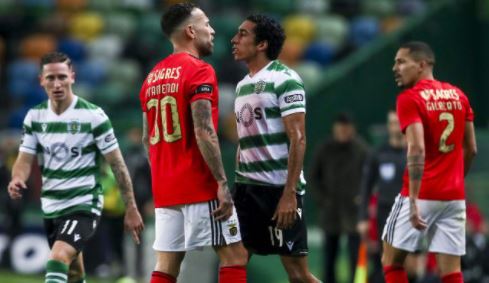
Derby de Lisboa (Portugal)
S.L. Benfica vs. Sporting CP
“I tell people I would rather see a Benfica defeat than a Sporting win.” — Dias Ferreira, attorney/Sporting representative
The Derby de Lisboa is a dramatic, historic, intense, passionate duel that is world class in everything but popularity outside Portugal — like its country’s soccer history, the rivalry between S.L. Benfica and Sporting CP gets overshadowed by many of the bigger names.
While Portuguese clubs have produced some of the best players and teams in European soccer history (and collected an underappreciated amount of silverware along the way), these days outside of a big run by Benfica or Sporting (or Porto) they’re just known as feeder clubs. Sporting have seen the likes of Cristiano Ronaldo, Bruno Fernandes, Eric Dier, Marcos Rojo, and Nani (oh so this is where Manchester United gets everyone) debut on their squad, while Benfica can boast being the beginning of the careers of David Luiz, Ederson, Joao Felix, Ruben Dias, and Bernardo Silva (this is where Manchester City gets everyone). But back in the day, Benfica, Sporting, and Portuguese soccer in general were home to some of the best players in the world (who spent a lot of time with those clubs). This took the derby to an extremely high level. But even though at best these rosters can give us a glimpse at the stars of the future, Benfica and Sporting still put on one hell of a rivalry.
HISTORY:
Benfica’s history begins in 1904, when after a training session members of the Catataus Group and Associacao de Bem united to create Sport Lisboa, a social and cultural soccer club composed solely of Portuguese players. It was at that meeting that the club’s colors (red and white), motto (E pluribus unum), and mascot (eagle) were decided. Sport Lisboa began play in 1905 and did well. But despite that they struggled with poor operating conditions, especially their dirt field. By the time 1906 rolled around, they weren’t even the only notable club in Lisbon. Two years before Benfica’s founding, brothers Horta and Jose Maria Gavazzo decided to create Sport Club de Belas, although that disbanded shortly after. Two years later, the brothers tried again, this time with the help of Jose Alvalade, an aristocrat who used his grandfather’s funds to prop the club — called Camp Grande Football Club — up and provide a ground for them to play (Alvalade’s grandfather’s estate). In 1906, the group was divided over playing sports and organizing picnics (seriously), so Alvalade, Jose Gavazzo, and several others founded a separate entity focusing solely on sports, called Sporting Clube de Portugal.
The shiny new, rich Sporting proved to be attractive to players across Lisbon, including Sport Lisboa. Shortly before the two teams played each other for the first time in 1907, eight players from Sport Lisboa moved to Sporting, prompting accusations of player theft. Sporting won the match 2-1, with one of Sporting’s goals scored by a former Sport Lisboa player. Thus, the rivalry between these two clubs was born. It didn’t get better when four years later (after acquiring Groupo Sport Benfica, renaming themselves Sport Lisboa e Benfica, and incorporating a bicycle wheel into their logo) they were scheduled to play Sporting again. However, Sporting refused to allow Benfica onto their grounds, deeming they were too poor, dirty, and unworthy of playing on their field on a literal estate. The battle lines had officially been drawn — Benfica were the poor club of the people while Sporting were the club of the rich and elite. The Derby de Lisboa was official, although it would be another two decades before they could play regularly.
After playing on-and-off for the next 20 years, both Benfica and Sporting were invited to be part of the first national league in Portugal — the Campeonato de Liga da Primeira Divisao (now called Primeira Liga). The first season in 1934-35 saw the first ever league match between the clubs — a 1-1 draw. While Sporting took the first league win in the Derby de Lisboa — by a 3-1 count — they would finish just behind Porto for the first league title. Benfica then kicked things up a notch, earning six wins over Sporting in their next seven matches and taking the next three league championships. It would take until the 1940’s for Sporting to finally get on the board when it comes to league championships, but then the arms race began. From 1941-55, either Sporting or Benfica would claim all but one league title (the exception being Belenenses in 1946) and a total of 12 Portuguese Cups. That stretch also included a series of memorable results such as the two nine-goal affairs and a 7-2 Benfica win, followed immediately by a 6-1 Sporting win. It also saw the first two Derby de Lisboa Portuguese Cup Finals, both won by Benfica (including a classic 5-4 result in 1952, won with a last-minute goal).
Despite some highlights by Benfica, during that stretch, the vast majority of those titles were won by Sporting, who were entering their golden era. Led by a group of five players — Fernando Peyroteo, Jose Travassos, Albano Pereira, Jesus Correia, and Manuel Vasques — known as “The Five Violins”, Sporting were the class of Portugal for about a decade. Just as their dominance was coming to an end, Sporting were able to qualify for the first ever UEFA Champions League in 1955-56, taking part in the first match in the competition’s history (a 3-3 draw with Partizan). Although Benfica (and Porto) had also qualified for European competition, no Portuguese club had been able to make headway in any competition. By 1960, Sporting and Benfica had clearly established themselves as the best two clubs in Portugal, each winning ten Primeira Liga titles. Although Benfica held the edge in Portuguese Cups, they were considered pretty much dead even in terms of prestige. That was about to change.
Before 1960, no Portuguese club had ever made it past the first round in the Champions League. Then Benfica went on a run. Advancing past the likes of Ujpest and Rapid Wien, Benfica made it all the way to the 1961 Champions League Final, where they met Barcelona, the heavy favorites who had knocked out five-time defending champion Real Madrid and Hamburg en route to the final. But even after falling behind 1-0 early, Benfica rallied back to stun Barcelona 3-2, becoming the first Portuguese club and second ever team (Madrid had won the first five editions of the competition) to be champions of Europe. While Benfica had taken their first step into being among Europe’s elite clubs, they were in the process of taking another step — bringing one of the game’s greatest ever players into their field and getting controversial revenge on Sporting for those player transfers some 50 years prior.
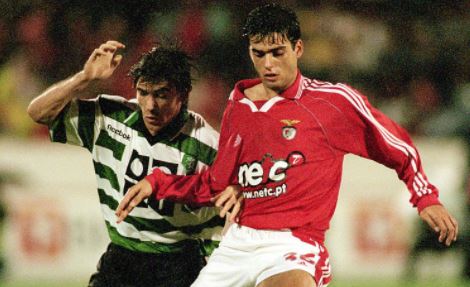
In 1960, Mozambique was still under Portuguese rule, thus Portuguese clubs could have feeder teams in Mozambique. Sporting’s feeder club — Sporting Lourenco Marques — happened to have a teenage phenom on their roster named Eusebio. At the time, Sporting had offered to take Eusebio to Portugal as a junior player, although he wouldn’t get a pay increase. However, Eusebio’s talents had been spotted by former Brazilian player Jose Carlos Bauer, who told his former manager, Bela Guttmann, about the teen’s speed, athleticism, and talent. Guttmann, who just happened to be in charge of Benfica at the time, moved quickly and offered Eusebio a contract with a pay raise, negotiating with the 19-year-old’s mother personally. Sporting found out and went apeshit, disputing the legality of the transfer. But while the move was eventually approved, Eusebio had to hide out in the Algarve for 12 days under the pseudonym Ruth Malosso, out of fear of being kidnapped or injured by Benfica’s rivals. Eusebio’s official debut for Benfica came the day after the club’s Champions League win. Even though it was a loss, the massive hassle and hiding would prove to be well worth it.
By the time Eusebio left Benfica in 1975, he was considered both Benfica’s and Portugal’s greatest ever player, earning the nicknames “Black Pearl” and “O Rei” (“The King). His first season saw Benfica roar right back to the Champions League Final, where Eusebio broke a 3-3 tie with the game’s final two goals, as Benfica topped Madrid 5-3 and claimed its second straight European title. Benfica would go on to reach three more Champions League finals during his tenure (including the following one in 1963), although they lost all three to A.C. Milan, Inter Milan, and Manchester United. Eusebio also led Benfica to 11 Primiera Liga titles and five Portuguese Cups, claiming numerous domestic and continental goal scoring crowns during that span. Remember how Benfica and Sporting were tied with ten league titles each in 1960? By the time Eusebio left Benfica, their league title haul had grown to 21, compared to 14 for Sporting (which was still more than double Porto’s five league crowns).
This wasn’t to say Sporting were completely dicked around during this time. The club also won some European silverware, eliminating the likes of Atalanta, Manchester United, and Lyon before topping MTK Budapest in a replay to claim the 1964 European Cup Winners’ Cup (thanks to Joao Morais’ goal straight from a corner kick). While Benfica did win the (pun intended) lion’s share of league matches, Sporting were able to get some bragging rights in the Portuguese Cup. From 1970-74, Sporting and Benfica met in the cup final four times, each winning twice and Sporting claiming the most lopsided result (a 4-1 victory in 1971). Sporting also prevented Benfica from matching their record of four straight Primeira League titles, winning the league to break three-year streaks by Benfica three straight times (a fourth such streak was stopped by Porto in 1978). Sporting also reached the final of the Cup Winners’ Cup in 1974, losing to 1. FC Magdeburg (the only time an East German club won a European title).
While the vast majority of Portuguese had been dominated by Benfica and Sporting (in that order), Porto had settled into its role as the third-best club in the country. But that began to change in the 1980’s, as Porto’s rise combined with a dive in talent by Sporting led to the two sides switching places. After winning a domestic double in 1982, Sporting would go on by far the longest title drought of its entire tenure. While Benfica continued to do well overall (six titles from 1985-99), Porto emerged as the best Portuguese club of the 1980’s and 1990’s, winning ten titles to surpass Sporting’s total — and to some become Benfica’s new biggest rival. Sporting still had some moments during this era, including a 7-1 win over Benfica in 1986 and reaching the UEFA Europa League semi-final in 1991. Sporting’s title drought would eventually end with the start of the 21st century, winning two out of the first three league crowns of the 2000’s.
But that proved to be a precursor to another lengthy title drought, which wasn’t helped by the sale of Sporting’s answer to Eusebio — Cristiano Ronaldo — to Manchester United and Porto doing so well they introduced Jose Mourinho to the rest of Europe. The past 20 years for Sporting can best be summed up by the 2004-05 season, when they were leading the Primeira Liga late, only to bow out of the title race thanks to a 1-0 loss to Benfica in the penultimate week of the season. That same year, they made it to the Europa League Final, which just happened to be held in their home stadium. However, despite holding a 1-0 halftime lead, Sporting let in three second half goals and lost 3-1 to CSKA Moscow. Benfica, meanwhile, bounced back from a rough stretch in the 2000’s to regain their old form by winning an unprecedented treble for Portuguese soccer. They also made back-to-back Europa League Finals in 2013 and 2014, only to fall both times. Many attribute that to the “Curse of Bela Guttmann” (more on that later). But just when it seemed the fight for silverware was now just a two-club race, Sporting shocked Portugal by winning the Primeira Liga this past season.
MAJOR ON-FIELD MOMENTS:
REVERSAL OF FORTUNES
The 1945-46 season is a statistical anomaly in Portuguese soccer — it’s one of just two Primeira Liga seasons ever not won by Benfica, Sporting, or Porto (Belenenses took the honors). But it also set the tone for two bizarre Derby de Lisboa matches, even by the rivalry’s high standards. The first clash of 1946 saw a remarkable 7-2 destruction of Sporting at the hands of Benfica, who scored four goals in a nine-minute span to turn a close affair into a laugher. Even more remarkably, all nine goals were scored in the second half. The very next league game between the two sides saw another ass whooping, this time by Sporting. While the score was 1-1 just before the half hour mark, Sporting scored five unanswered goals to earn a massive 6-1 win.
SPORTING GET PIPI-D
Arguably the best game in the history of the Derby de Lisboa — and all of Portuguese soccer — took place in the 1952 Portuguese Cup Final, which was the first time Benfica and Sporting had faced off for the cup. Albano and Pipi each scored from the penalty spot early in the first half, which ended with the score at 1-1. Benfica then scored two goals in a minute’s span early in the second half, only for Sporting to even the count at 3-3 with two goals in a four-minute span. After Pipi and Rola each scored their second goal of the game to make things 4-4, neither side could seemingly find the winner. But then in the last minute, Pipi completed his hat trick and won the cup for Benfica at the death. It would be the second of four straight cups for Benfica.
THE FOUR FINALS
Although Benfica dominated the Primeira Liga during the 1960’s and 70’s, Sporting could get back at their rivals through the Portuguese Cup. From 1970-74, the two sides met in four Portuguese Cup Finals, which got better with each passing edition. Benfica struck first with a 3-1 win in 1970, followed by a 4-1 Sporting win the next year. Then in 1972 one of the most dramatic finishes ever saw Eusebio break a 2-2 tie with a goal with just three minutes remaining in extra time, giving Benfica a 3-2 win. Sporting took home the title next year, which was the one odd year without Benfica. But Sporting would just have to wait a year — in the 1974 final, Chico Faria tied the score with two minutes left Marinho scored in extra time to win it 2-1 for Sporting.
FOUR FROM FERNANDES
Sporting fans didn’t have much to celebrate during the late 1980’s and 90’s, as their club went on a lengthy title drought and Benfica and Porto cleaned up the league. But for one day in 1986, Sporting ran wild over the rivals in front of a raucous home crowd. Things looked normal at first, with Sporting holding onto a slim 1-0 lead going into the second half. But then the floodgates opened up and a typhoon of Sporting goals followed. Manuel Fernandes doubled the Sporting lead, while a Wando goal for Benfica was answered by a goal each from Mario Jorge and Ralph Meade. Fernandes then decided to beat a dead horse, scoring three more unanswered goals. Fernandes’ four-goal rampage made it a 7-1 Sporting win, one their fans still fondly remember.
THE DARKEST MOMENT
The 1996 Portuguese Cup Final was supposed to be a celebratory moment, with Benfica and Sporting meeting in their first final in nearly a decade. However, what happened on the field quickly became overshadowed by what was going on around it. After Mauro Airez scored to put Benfica up just nine minutes in, Benfica fan Hugo Inacio shot a flare that hit Rui Mendes, a Sporting fan, in the abdomen. The 36-year-old Mendes would die from his injuries, the first and (as of this writing) only fan death in Derby de Lisboa history. Despite the despair, the match continued, with Benfica winning 3-1. Sadly, this incident has been mocked by Benfica fans since, including one incident that led to Sporting ending its official relationship with Benfica.
IT GOES TO PENALTIES
While no silverware was on the line that night in 2005, the Portuguese Cup Round of 16 clash between Benfica and Sporting was the only time these two sides ever went to penalties. The bulk of the scoring came early, with Benfica’s third minute opener being followed by two goals in three minutes by Sporting, which were followed by a 22nd minute equalizer by Benfica. The score stayed at 2-2 until deep into extra time, when a 110th minute goal by Paito put Sporting ahead. But Benfica would respond with its own heroics, as Simao evened the count at 3-3 with three minutes left to play. Both clubs shot well from the spot, with each of the first 13 penalties finding the back of the net. Miguel Garcia shot the unlucky 14th off the post, as Benfica won.
LUISAO’S LATE HEROICS
The last few weeks of the 2004-05 Primeira Liga season saw the title race go down to the wire. Sporting had been in front a lot, though Benfica was in the lead now. However, a Benfica loss in the third-to-last weekend had put Sporting back in the running — a win over their rivals in the penultimate match of the season would catapult them back on top of the standings. The tension was palpable on the field, with the match remaining goalless until the 84th minute, when Benfica earned a free kick. Luisao did his best Tigger impression, jumping high into the air to head the ball into the net and give Benfica a 1-0 lead. A few minutes later, a red card would send Sporting down to ten men, effectively clinching the victory (and the league) for Benfica.
EIGHT-GOAL SEMI-FINAL
Although Sporting and Benfica have yet to meet in the Portuguese Cup Final since that dark day in 1996, the two sides have provided some memorable clashes in the cup since then. In 2008, the two rivals met in the semi-finals for what would prove to be a wild ride. It seemed like it would be anything but that with less than a half hour left and Benfica up 2-0. But then Sporting came alive, scoring three straight goals to take the lead with ten minutes to play. Benfica managed to tie the game in the 82nd minute and restore some calm, which was completely shattered just two minutes later when Yannick Djalo gave Sporting back the lead. A stoppage time goal by Simon Vukcevic iced the game for Sporting, who pulled off a crazy 5-3 triumph.
A COMEBACK & A CHOKE
The very next time Sporting and Benfica met in the Portuguese Cup would not be in the later stages of the tournament, but rather the Round of 32 of 2013. Once again, things looked pretty normal at halftime, with a first half hat trick from Oscar Cardozo putting Benfica up 3-1. But Sporting fought back in the second half, narrowing the lead to 3-2. With just a couple of stoppage time minutes left, Islam Slimani’s thundering header made it into the back of the net to send the game into extra time. But all of Sporting’s work was undone in the 98th minute, when a throw-in somehow bounced all the way into the box. Luisao got his head to it, with the ball somehow going between Rui Patricio’s legs and past the line. Benfica held on for the 4-3 win.
EXPECT THE UNEXPECTED IN 2015
In 2015, the Derby de Lisboa produced two incredible results in two quite different ways. The first clash of the year was anything but exciting, with both teams scoreless. Then in the 87th minute, Jefferson put Sporting on top, seemingly for good. However, Jardel salvaged a point for Benfica with a goal in the last minute of stoppage time. The 1-1 draw also made it so Sporting had only managed to beat their rivals once in the past 12 games. The next league meeting would be at Benfica, where Sporting hadn’t won in nearly a decade. Naturally, Sporting secured a 3-0 win to break both droughts. The match was over early, with all three Sporting goals being scored within the first 36 minutes. It was a rare win for Sporting at their rival’s home stadium.
A BIG BEATING FOR A SMALL PRIZE
The Portuguese Super Cup, despite its name, is not really that big of a deal — it’s a match between the defending league and cup champions that kicks off the start of the league. But in 2019, the Super Cup provided the backdrop for the biggest ass whooping in the Derby de Lisboa since Sporting’s 7-1 win some three decades prior. Things seemed innocent enough, with Benfica holding a 1-0 lead at hafltime. But as the story usually goes, the real tale is told in the second half. That’s when Benfica scored four goals (including one by Chiquinho in the 90th minute) to rout their rivals 5-0. It was Benfica’s biggest win over Sporting in several decades and by far the most lopsided result in any match between the Lisbon rivals in recent memory.
STATISTICS:
HEAD-TO-HEAD RECORD
Benfica: 137
Sporting: 112
Draw: 67
LEAGUE CHAMPIONSHIPS
Benfica: 38 (record)
Sporting: 19
PORTUGUESE CUP
Benfica: 26 (record)
Sporting: 17
CHAMPIONSHIP OF PORTUGAL
Benfica: 3
Sporting: 4
PORTUGUESE LEAGUE CUP
Benfica: 7 (record)
Sporting: 4
PORTUGUESE SUPER CUP
Benfica: 8
Sporting: 9
UEFA CHAMPIONS LEAGUE
Benfica: 2
Sporting: 0
UEFA CUP WINNERS’ CUP
Benfica: 0
Sporting: 1
NOTABLE FIGURES:
FERNANDO PEYROTEO
Sporting’s first truly great squad was the “Cinco Violinos” unit of the 1940’s. With all due respect to Albano, Jesus Correia, Jose Travassos, and Manuel Vasques, Fernando Peyroteo was the man. In his first year with Sporting, Peyroteo scored 57 goals in just 30 games. That kind of set the tone, as his scoring prowess helped Sporting to five league titles and five cups. Despite retiring at age 31, Peyroteo scored 544 goals (in just 334 games), the club record — nearly doubling second place. His 48 goals are also by far the most in Derby de Lisboa history.
JOSE AGUAS
While Eusebio (rightfully) gets the headlines for starring on Benfica’s golden teams, it was Jose Aguas who held the title of Benfica’s top striker ever before then. Aguas ranks second in club history with 379 goals during his 13-year career with Benfica. A lot of those goals came via header, earning him the nickname “Cabeca de Ouro” (“Golden Head”). Aguas also shone on the biggest stage, scoring Benfica’s first goal in each of their UEFA Champions League wins (even more important considering Benfica were trailing on each occasion when Aguas scored).
MARIO COLUNA
While he found the score sheet far less often then he should’ve, Mario Coluna still remains one of Benfica’s most beloved players ever. Considered one of the most creative and overall best midfielders of his generation, Coluna still managed to find the back of the net 127 times during his 15 years with Benfica. Across 525 matches (fourth most in club history), Coluna earned 19 major titles with Benfica, including ten Primeira Liga titles and two Champions Leagues. Coluna also has one of the most badass nicknames: “O Monstro Sagrado” (The Sacred Monster”).
HILARIO
During Benfica’s rampage across Portugal during the 1960’s and 70’s, Hilario was the leader of Sporting’s push to prevent total domination. During his 15-year career with Sporting, Hilario appeared in 494 career matches, more than any other player. It helped that he was the starting left back for 14 of those seasons, winning seven major trophies during his time. Unfortunately, Hilario missed the biggest game of his career — Sporting’s win over MTK Budapest in the 1964 UEFA Cup Winners’ Cup — due to a serious tibia injury he picked up just three days before.
BELA GUTTMANN
A former Hungarian national team player and Holocaust survivor, Bela Guttmann coached in ten countries in 41 years. His best success came with Benfica, winning back-to-back Champions League titles. But he’s also the subject of something on the same breath as the Curse of the Bambino. After the 1962 triumph, Guttmann asked Benfica’s board for a modest raise. When he was denied, Guttmann left the club allegedly said they wouldn’t be European champs for 100 years. Benfica has since played in eight European finals, losing all of them due to the “curse.”
EUSEBIO
One of the best players of all time and unquestionably the best non-Cristiano Ronaldo player in Portuguese history, Eusebio’s introduction to Benfica alone serves as one of the biggest turning points in the history of the Derby de Lisboa. Once a Sporting prospect, Eusebio would go on to absolutely wreck shit for 14 years with Benfica, helping them win the 1962 Champions League, 11 league titles, and five Portuguese Cups. The greatest player in Benfica history, Eusebio ranks first on the club’s scoring list with 473 goals — 27 of them coming against Sporting.
NENE
As Eusebio got older towards the end of his time with Benfica, another one-named legend entered the lineup. Tamagnini Manuel Gomes Batista — known as Nene — debuted in 1968 and spent 18 years with the club, ending up as the third-highest goal scorer in Benfica’s history (behind only Eusebio and Jose Aguas) with 359 goals, more than 130 above fourth place. But Nene does hold another prestigious record — no one has appeared more times in a Benfica uniform then him (575 appearances). During that time, Nene won 11 league titles with Benfica.
MANUEL FERNANDES
Perhaps the best player in Sporting’s recent history, Manuel Fernandes made his 12 years with the club count. Fernandes ranks high when it comes to both appearances (fourth with 441) and goals scored (second with 386) in Sporting history. Perhaps no more did Fernandes endear himself to Sporting fans than during the famous 1986 7-1 ass whooping of Benfica, in which he scored four goals. Fernandes managed to win two league and cup crowns with Sporting during his time there. In December, Sporting named Gate 7 of their stadiumm in Fernandes’ honor.
JOAO PINTO
One of the more talented and controversial players of his era, Joao Pinto caused headlines wherever he went in Portugal. No more did this happen than in 2000, when the eight-year Benfica veteran and club captain had a falling out with the club’s president, who released him from his contract. After balling out in UEFA Euro 2000, Pinto decided to sign with Sporting, sparking outrage from all Benfica fans (not helped by him leading Sporting a league title). Pinto was also known for red cards, attacking other players and even a referee and firefighter.
LUISAO
The modern day talisman for Benfica, Luisao’s 15-year career with the club finally ended in 2018. During his time, Luisao left quite an impact, appearing in 538 matches — tied for second-most in Benfica’s history. Luisao does hold club records when it comes to the most international matches (127), major titles won (20), and longest-tenured captaincy (414 matches). That stretch of matches includes plenty of time keeping Sporting in the ground, such as his header that sealed the 2005 Primeira Liga title and his goal that somehow got through the next man up.
RUI PATRICIO
While that goal in 2013 was definitely was one of Rui Patricio’s lowest points, it was a rare mistake scattered across a legendary career. The most capped goalkeeper in Portuguese national team history made his Sporting debut at just 18 years old. Over the next 12 years, Patricio remained as solid as a rock, backstopping Sporting to five trophies — including five Portuguese Cups. With 467 appearances, Patricio ranks only behind Hilario in Sporting history. In fact, Patricio may have stuck around long enough to pass him, if not for… Sporting fans.
FAN INVOLVEMENT:
Given Portugal’s complicated history with other countries (both through conquest and war), decades of authoritarian rule (which ended in 1974), and general proximity to Spain (whose intense soccer rivalries have an expected level of fan violence), it’s shocking that there are rarely any instances of major fighting happening between soccer fans. This is true for the Derby de Lisboa, although you shouldn’t take the lack of hooliganism to mean a decrease in intensity. Whether at the Estadio da Luz (Benfica) or Estadio Jose Alvalade (Sporting) — which by the way are less than two miles apart — derby matches are guaranteed to be surrounded by an incredibly loud, colorful, amazing atmosphere. These are two of the three most popular clubs in the country — although the original class divide between these two clubs is largely gone, Benfica is still seen as the club of the people, while Sporting is that of the elite.
While generally matches are pretty safe to attend (unless you’re purposely being a dick), there have been some rather notable exceptions. There was of course the 1996 death of Sporting fan Rui Mendes via flare, which has cruelly been mocked by Benfica fans through whistling (like the sound of a rocket) and banners. In 2004, Geovanni scored a late winner for Benfica at Estadio Jose Alvalade, which caused some of the home Sporting fans to storm the pitch in anger. Following another 1-0 defeat — this time at Estadio da Luz — in 2011, Sporting fans set fire to a section of the stadium (fortunately the flames were contained). In 2018, a late error by Rui Patricio led to a 2-1 defeat, allowing Benfica to leap Sporting for second in the standings (and forcing them out of Champions League qualification). So at Sporting’s next training session, a group of 50 Sporting fans damaged the club’s facilities and attacked several people, including Patricio, manager Jorge Jesus, and other players Bas Dost and William Carvalho. Not surprisingly, Patricio, Jesus, and Carvalho left Sporting soon after, with Dost following in 2019.
SUMMARY:
While the Derby de Lisboa has certainly lost its edge when it comes to the competition of silverware, a sea of passion, hatred, intensity, drama, and entertainment always forms when S.L. Benfica and Sporting CP share the field. Despite several factors that could’ve killed it, the rivalry between Lisbon’s two top teams remains as fresh and bitter as ever.
Even though these last three rivalries certainly deserved their sports in the World Cup of Hate, there are several others worthy of debate. Of course, Benfica’s rivalry with Porto, O Classico, nearly made it over the Derby de Lisboa. Looking across Europe, rivalries such as Ireland’s Dublin Derby between Bohemians and Shamrock Rovers (which got its own COPA90 video), Austria’s Wiener Derby (lol) between Austria Wien and Rapid Wien (ditto), and Belgium’s three-way war between Anderlecht, Club Brugge, and Standard Liege spring to mind. I didn’t even include anything from the Nordic countries, which despite their calm and friendly reputation can get nasty when it comes to soccer. Just ask fans of Denmark’s Copenhagen Derby (Brondby vs. Copenhagen), Norway’s Battle of Oslo (Lyn vs. Valerenga), Sweden’s Tvillingderbt (AIK vs. Djurgardens), or Finland’s Stadin Derby (HIFK vs. HJK). Despite Switzerland’s famed neutrality, there is nothing neutral about the Zurich Derby between FC Zurich and Grasshopper, the only inter-city rivalry in the entire country. However, while all of these rivalries are great in their own right, they fall just a bit short of making the final cut.
With that, we finally — FINALLY — close the book on Europe’s contributions to the tournament. While have half of the final field for the World Cup of Hate, there’s still plenty of bitter battles left to go. Up next, we take a short trip to where civilization began. But if you think Africa will be any sort of downgrade from what we’ve seen so far, you’ve got another thing coming.
COMING UP IN PART 7: The most successful soccer club in the world, tragedy during a centennial celebration, and revolution.
 Ruben's Writings
Leave a comment