AFRICA (5)
Soccer isn’t necessarily the first thing you think of when someone brings up Africa. But the cradle of civilization had a soccer scene that is both historic and impactful, both inside the continent and beyond its borders. Some of the game’s greatest players were born in Africa, such as George Weah (Liberia), Didier Drogba (Ivory Coast), Samuel Eto’o (Cameroon), Eusebio (Mozambique), and Roger Milla (Cameroon). Other major names include Yaya Toure (Ivory Coast), Riyad Mahrez (Algeria), Michael Essien (Ghana), Wildried Zaha (Ivory Coast), Sadio Mane (Senegal), and Mohamed Salah (Egypt). But while individual African player names may be well known, the domestic scene rarely gets a shoutout, sometimes for fair reasons. But Africa has plenty of talent and truly great squads, each with its own unique history.
From the northern Arab desert lands to the lush, green, safari-packed middle to the popular southern coast, Africa has as diverse of a landscape as you’ll ever see. The difference between some of these countries on the same continent is simply incredible. But one of the things that links the continent together is a love of soccer — look at all of the goddamn vuvuzelas that rang out during the 2010 FIFA World Cup. With that love comes hate — hate for your favorite club’s arch rivals. I don’t know why I thought I’d be scraping the bottom of the barrel for rivalries good enough to qualify for the World Cup of Hate. After even a cursory glance, it’s clear there will be several rivalries who would make it on other continents that can’t match the high bar set by the greatest hatred celebrations. The world’s second-largest and second-most populated continent is made up of a whopping 54 countries, with only five getting to see their great rivalries make the final cut. Some choices were close, although a few were clear winners. For example…
Cairo Derby (Egypt)
Al Ahly SC vs. Zamalek SC
“World Cup games are much easier than Cairo Derbies; in the World Cup the players obey the referee’s decision which is obviously not the case in the Derby.” — Gamal El-Ghandour, former Egyptian referee
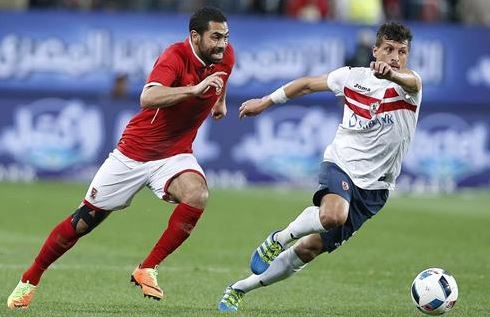
When Al Ahly SC and Zamalek SC face off, Egypt (and a good part of Africa) stops — another chapter in the long, violent, dramatic, chaotic, controversial, tragic, revolutionary, hate-fueled, legendary rivalry that means much more than soccer is about to be written.
Only five clubs in the history of soccer have won more than 100 major trophies (Barcelona and Real Madrid are only a few years from joining this list). Rangers and Celtic are second and fifth, respectively, with Nacional and Penarol sandwiched between them in third and fourth. But on top of all of them stands Al Ahly, who will likely be the first club to crack the 120 mark next year. Zamalek may be a decent amount behind, but their trophy collection is far more impressive than most others on the continent. In fact, the Confederation of African Football (CAF) named Al Ahly and Zamalek as the first and second-best African clubs, respectively, of the 20th century. Purely from a sporting standpoint, the Cairo clubs have a perfect basis for a great rivalry. But the Cairo Derby represents so much more than soccer. The history of Egypt is woven into these clubs, with their history, values, and symbolism elevating them to being two of the biggest institutions in the entire country. It’s often said that Egyptian soccer and Al Ahly and Zamalek are the same. Put the two together and you have something truly extraordinary.
HISTORY:
At the start of the 20th century, Egypt was under the control of the United Kingdom. But a growing sense of nationalism was becoming more apparent in Egyptians, especially after the Denshawai incident in 1906. It was at this time of fury and desire to fight the British that Omar Lotfi — president of the Students Club (a prominent Egyptian nationalist political club) — came up with the idea of starting a sports club just for Egyptians. At the time, every sports club was almost exclusively foreign, with only the elite class of Egyptians being allowed to participate. On April 24th, 1907, Lotfi and a group of middle class men met to establish such a club. Because the British government would be against such an all-Egyptian establishment, the group recruited Alfred Mitchell-Innes, a consultant of the Ministry of Finance, to finance the club and make sure they had land to operate. The name Al Ahly (meaning The National) was chosen, due to the nationalistic ideals of the club. Mitchell-Innes resigned in 1908, with Al Ahly becoming the first all-Egyptian run sports club. Interestingly, they didn’t even intend to play soccer. But the students who became part of the club loved soccer so much they formed a team in 1911.
Little did Al Ahly know, that same year saw the establishment of their worst enemy. While the British were the ones in control, France and Belgium had a significant presence as well. Even so, the British still almost exclusively maintained every sports club. So the Belgians and French (who played a prominent role in modernizing Egypt) decided to form a club of their own, led by George Merzbach Bey, who decided on the name Qasr El Nile (The Nile Palace). Unlike Al Ahly, Qasr El Nile had the mindset of becoming the best sports club in the country immediately. In addition, the club was mixed, with all nationalities welcome to join (although the roster was primarily made up of Belgian, French, and Egyptian players). In fact, the club would later rename itself El Mokhtalat (which means “mixed). What helped such a club become legitimate in such a British-controlled country was that Bey had close ties within the palace of Khedive Abbas II and was the private lawyer of both Baron Edouard Empain and the Cairo Tramways Company, establishing El Mokhtalat’s ties with the elite immediately. A few years later though, the Egyptian side of the club would take full control, after a revolution following a lengthy absence of the board of directors. Even though El Mokhtalat were now fully Egyptian, they were still frowned upon by Al Ahly due to their elitist ties, which they weren’t afraid to flaunt.
With the opposing parameters set and official competition underway (Al Ahly won the first derby 1-0 in 1917), all these two sides needed was something to happen on the field to truly ignite the rivalry. That something was a man — Hussein Hegazi. Considered the father of Egyptian soccer, Hegazi was the best player his country had seen by a mile. In fact, Hegazi was the first African player to compete in England, playing with Dulwich Hamlet and Fulham. But in the mid 1910’s he decided to move back home and start his own team. Shortly after, he agreed to sign for Al Ahly, instantly transforming the club into the best in Egypt. However, a few years later Hegazi did the unthinkable and moved to El Mokhtalat, where he was part of the first ever Egypt Cup-winning side (the club had also become the first Egyptian side ever to win a trophy by claiming the Sultan Hussein Cup in 1921 and 1922). Two years later, Hegazi moved back to Al Ahly because El Mokhtalat’s new headquarters didn’t have a place to play billiards or bridge (seriously). A few years after that, Hegazi made yet another move back to El Mokhtalat, after Al Ahly sanctioned him for refusing a silver medal after a cup final loss. While El Mokhtalat’s roster was depleted, Hegazi recruited a group of students to form a squad. They first match — against Al Ahly no less — was a 1-0 win, resulting in the club earning the nickname “Madraset El Fann Wil Handasa” (“School of Arts and Engineering”).
By this time, a soccer league had been set up in Cairo, with Al Ahly and El Mokhtalat playing regularly now. But they would often face off much more than the league had scheduled for them — in a pattern that continues today, the two clubs often face each other late in tournament play (largely in finals). Al Ahly claimed their first Egypt Cup in 1924 and by the time El Mokhtalat won another, Al Ahly had won five more. Al Ahly had also taken several Cairo League titles and Sultan Hussein Cups (including the last ever one in 1938). At the start of the 1940’s El Mokhtalat had begun to battle back, thoroughly dominating the Cairo League and winning the 1941 Egypt Cup. King Farouk, the ruler of Egypt, enjoyed their play so much he bestowed the royal title onto the club, which was renamed Farouk in his honor. Two years later, Farouk and Al Ahly were set to face off in the Egypt Cup Final (a rematch of the previous year, which Al Ahly won). But players from both sides were suspended by the Egyptian FA for playing some matches in Palestine. Thus, the title was shared for the first and only time. The following year, Al Ahly, still reeling from the suspensions, lost the cup final 6-0 to Farouk, a mark that remains a Cairo Derby record. Al Ahly disputes this, as the FA president was also the head of Farouk.
In 1948, the first ever national soccer league in Egypt — the Egyptian Premier League — was born, with Al Ahly going on a goddamn tear, winning the first nine completed seasons. They also kept doing well in the Egypt Cup, although their run was broken by Farouk in 1952. That year would prove to be quite a pivotal one in Egypt’s history, as a military coup dethroned King Farouk and made Egypt an independent republic. Everything royal family-related had to go, which meant a change for Farouk, who took a new name based on their surrounding area: Zamalek. Around this time, Al Ahly named Gamal Abdel Nasser — the leader of the coup and the future long-time president of Egypt — its honorary president (keep in mind, King Farouk had been Zamalek’s honorary president). This kind of shit made these two clubs more than just, well, clubs. Under Abdel Nasser, all political life in Egypt was essentially over, with him ruling with an iron fist. Needing an outlet to channel their emotions, Egyptians turned to sports and subsequently Al Ahly and Zamalek, who basically became the political parties of Egypt. Even if they’re not a fan of either side, every Egyptian has a preference over who they want to win.
In 1955, that level of fanaticism and belief that no Egyptian can be truly neutral when it comes to Zamalek vs. Al Ahly led to the start of a practice of flying in foreign referees to officiate the Cairo Derby, especially during cup matches. This was becoming especially important as Zamalek were starting to fight back against Al Ahly’s dominance. Zamalek won the majority of the Egypt Cups played during the 1950’s, including the 1958 edition shared by the clubs after a 0-0 final was followed by a 2-2 replay. Two years later, Zamalek won its first Egyptian Premier League title, denying Al Ahly the chance to take ten in a row. Al Ahly did win the next two titles, but then proceeded to go on by far the longest title drought in its history, although that’s not entirely their fault. Egypt (then known as the United Arab Republic) was going through some stuff, having been crippled militarily, politically, and geographically by Israel during the Six-Day War, which led to the suspension of all sports for the next several years. In 1970, President Nasser (Al Ahly’s honorary president) died and was replaced by Anwar Sadat. When play finally resumed for the 1971-72 season, violence broke out after a Cairo Derby match, leaving two people dead. That caused the entire rest of the season to be suspended. While the following season was completed, the next one had to be abandoned due to the Yom Kippur War.
By the time things had relatively stabilized, both Al Ahly and Zamalek had their eyes on a new competition: the African Cup of Champions (now known as the CAF Champions League). In 1969, Ismaily SC became the first Egyptian side to be continental champion. While Al Ahly and Zamalek would go back to dominating the domestic competition — the former snapping their 13-year title by winning seven of eight league titles from 1975-82 — both clubs had their eyes on achieving African glory. In 1981, Al Ahly reached the semi-finals, but had to withdraw after President Sadat was assassinated. But the following year, the club finally made their stride, defeating Asante Kotoko 4-1 over two legs to become first time Champions League winners. The tides would soon turn, as Asante Kotoko prevailed in a rematch in next year’s final, before Zamalek got on the scoreboard, taking out Shooting Stars 3-0 to win the 1984 Champions League. The 1980’s would continue to see a focus on continental competition, with the Egyptian Cup even being canceled due to CAF commitments by Zamalek and Al Ahly. Those efforts would be rewarded, as Zamalek and Al Ahly would be rewarded with their second continental titles in 1986 and 1987, respectively. Al Ahly also put together their legendary African Cup Winners’ Cup run during this era, winning three straight titles from 1984-86.
The team of the 1990’s is a hotly contested subject, as while Al Ahly won the lion’s share of the Egyptian Premier League and Egypt Cup titles, they failed to win the Champions League (or even reach the final). Meanwhile, Zamalek put together arguably its best squad ever, reaching three Champions League Finals from 1993-96, winning in 1993 and 1996 (not to mention becoming the first Egyptian club to win the CAF Super Cup in 1994 and 1997). Things somehow got even more competitive during the 2000’s, which saw Al Ahly take down Real Madrid during a 2001 friendly, the fourth time they had defeated the defending UEFA Champions League-winning club (after Benfica in 1963, Bayern Munich in 1977, and Steaua Bucuresti in 1986). Al Ahly then went on their own continental tear, winning four Champions League titles during the decade (including three from 2005-08) and four CAF Super Cups. That run included 2005, a calendar year in which Al Ahly didn’t lose a single game in any competition it entered. Zamalek didn’t go without silverware of their own, winning the 2002 Champions League (and subsequent Super Cup). Zamalek also became the first Egyptian club to qualify for the FIFA Club World Cup, doing so in 2000 (although that tournament was canceled). By the time the 2010’s rolled around, Al Ahly and Zamalek weren’t just the two best clubs in Egypt, they were unquestionably the best in Africa as well. This in turn raised the stakes of each Cairo Derby, with fans (who had by this point established their own ultras groups) reaching feverish, often violent passion. But soon, nothing would ever be the same.
Under President Hosni Mubarak, Egypt had seen an increase in police brutality. While resistance started out as non-violent, clashes between protesters and police led to the Revolution of 2011, which saw Mubarak’s removal (and replacement by Mohamed Morsi, whose rule led to even more protests and a coup d’etat in 2013 [just read this for more info]). Soccer fans used matches to voice their resistance to the government and unleash their pent up aggression at being oppressed by their government. It was amid these circumstances that Al Ahly played a 2012 league match on the road against Al Masry at Port Said Stadium. Al-Masry fans were simply out of control, invading the pitch after every goal their team scored. After the final whistle blew in a 3-1 Al Masry win, the home fans (many armed with stones and knives) stormed the pitch again, this time going after the Al Ahly players, who managed to escape into the locker room. The fans then turned their attention to the visiting Al Ahly supporters, who tried to escape, only to find the stadium gate closed. As police did nothing, Al Masry fans stabbed, clubbed, crushed, and threw Al Ahly fans off the stands. In total, 72 Al Ahly fans, one Al Masry fan, and a police officer died, with more than 500 others being injured. The Port Said Stadium Riot led to the immediate suspension of league play (which was postponed another year due to the coup d’etat) and the ban of all fans from matches in Egypt.
In the aftermath of the tragedy, Al Ahly somehow had the fortitude to win not just the 2012 Champions League, but the one after that (and reach back-to-back finals in 2017-18). Zamalek would get close, but come up just short in 2016. The two clubs have pretty much split the domestic honors, with Al Ahly winning all but two league titles since 2014 and Zamalek claiming all but two Egypt Cups since 2013. As for the fan ban, it would last for several years, being lifted then reinstated after the death of 20 Zamalek fans outside their stadium. But just a few years ago, crowds were finally regularly allowed back at matches (with strict entrance guidelines and no ultras included). The rivalry was still as hot as ever, with Zamalek going as far as forfeiting a match against Al Ahly in 2020 in protest (days after beating them in the Egyptian Super Cup). That year also saw the biggest match in the history of the rivalry (and Egypt) when both Al Ahly and Zamalek reached the 2020 Champions League Final, which happened to be in Cairo. However, what would normally be an all-time electric atmosphere was muted by no fans being allowed to attend due to the COVID-19 Pandemic. In the most important Cairo Derby ever, Al Ahly prevailed 2-1 thanks to an 86th minute goal by Mohamed Magdy. The next year, Al Ahly defeated the Kaizer Chiefs to become the first African club to win ten Champions League titles (then nearly won an 11th in 2022, losing the somewhat controversial final to Wydad AC). Al Ahly would get revenge this past season, defeating Wydad to earn that 11th crown.
MAJOR ON-FIELD MOMENTS:
MADRASET EL FANN WIL HANDASA
When Hussein Hegazi refused to accept a silver medal, he violated Al Ahly’s ethics (something they take pride in) and was promptly released from the squad. Enraged, he rejoined Zamalek, but was shocked to find the soccer team all but abandoned. Undaunted, Hegazi recruited a bunch of students from a local university and formed a makeshift squad. Their first game, of course, happened to be against Al Ahly. Shockingly, it was the student squad that emerged with a 1-0 win against the club famously founded by a group of students. In honor of Hegazi (who studied engineering while playing overseas) the Zamalek squad was given the nickname Madraset El Fann Wil Handasa, which literally translates to “School of Arts and Engineering.”
CUP CONTROVERSY
The 1943 Egypt Cup Final wasn’t played (the title was shared between Al Ahly and Zamalek due to players participating in matches in Palestine against the Egyptian FA’s wishes). The majority of those suspended players were from Al Ahly, who allowed them to tour under the name “Cairo Stars.” What made the suspensions extra controversial was the fact that the head of the FA also happened to be the president of Zamalek. One year later, Al Ahly was still reeling from those suspensions and fielded a weaker side against Zamalek. As a result, Zamalek stormed through Al Ahly to win the 1944 Egypt Cup 6-0 — tied for the all-time record score in Cairo Derby history. To this day, Al Ahly refuse to acknowledge what happened as fair and just.
RIOT AFTER EQUALIZER
The hooliganism of the Cairo Derby arguably reached its peak in 1966. Al Ahly held a lead, but Zamalek would equalize on a disputed goal. Al Ahly fans were so enraged that the referee decided to straight up call the game. That surprisingly did not quell the heated atmosphere, as fans began to riot. Members of the Egyptian army were eventually called in to get things under control. That didn’t happen, as fans stormed the streets of Cairo and took their outrage on the rest of the city, forcing the soldiers to take action. In total, at least 300 people were injured, while an unknown amount of people were killed. Naturally, this would be the last Cairo Derby for several years, as the Six-Day War broke out and caused Egypt to suspend all sports activity.
15-MINUTE RALLY
Of all the times Al Ahly and Zamalek have faced off for silverware, the 1978 Egypt Cup Final ranks as one of the most memorable encounters. Al Ahly hadn’t won the cup in 12 years, but came out strong to open the scoring in the 25th minute. Zamalek, the reigning cup champs, equalized just before halftime and took the lead thanks to a splendid run by Ali Khali. The title seemed like it would be staying with Zamalek with the score at 2-1 with just 15 minutes left. But Al Ahly manager Nandor Hidegkuti made a pair of key subs, who scored two of his club’s three goals to close out the match. The comeback ended in a 4-2 win for Al Ahly, who finally got the Egypt Cup back. Zamalek would get it back next year, before Al Ahly won four straight cups.
A GOAL AND TITLE TAKEN AWAY
The 1981-82 Egyptian Premier League race came down to the final weeks, with the title likely being decided by a late showdown between Al Ahly and Zamalek, with the latter needing a win to catch the former on top of the standings. The match was scoreless with fewer than ten minutes left to play, when Hassan Shehata gave Zamalek the break they needed with a goal. But referee Mohamed Hossem El Din blew his whistle — assistant ref Abdelraouf Abdelaziz had ruled Shehata to be offside. However, replays showed that Shehata was clearly onside and the goal should have counted. The match ended 0-0 and Al Ahly would go on to win the title. To this day, Zamalek and their fans claim the league crown was stolen from them with that blown call.
BATTLE OF AFRICAN CHAMPS
While the 2020 CAF Champions League was the first time Al Ahly and Zamalek had played in a continental final, it wasn’t the first time the two rivals had faced off for an African trophy. In 1993, Zamalek claimed the Champions League title, while Al Ahly won the African Cup Winners’ Cup. That set them up for a faceoff in the 1994 CAF Super Cup, the only one that has been a Cairo Derby. It was also one of the few times Zamalek and Al Ahly have ever played each other outside of Egypt (this game was held in Johannesburg, South Africa). The match itself was largely a snoozer, until it wasn’t. Ayman Mansour launched a rocket out of nowhere in the 86th minute to break a scoreless draw and give Zamalek a 1-0 victory and their first Super Cup.
RETURN OF THE HASSANS
Twin brothers Hossam and Ibrahim Hassan are two of the greatest players in Egyptian history. Hossam is Egypt’s all-time leading goal scorer and Ibrahim played in over 100 games for his country. Both spent a large part of their careers with Al Ahly, becoming club legends. However, the turn of the millennium saw both Hassans depart the Cario club for another Cario club… which happened to be Zamalek. The move was seen as a betrayal for Al Ahly fans, which was made all the more apparent during the first Cairo Derby with the brothers now with Zamalek. Two goals from Hossam gave Zamalek a 3-1 win, with both brothers going on to win the CAF Champions League with their new club. Both Hassan brothers remain hated by Al Ahly fans.
ZAMALEK’S NIGHTMARE
Across more than 100 years of competition, only eight times has a match between Al Ahly and Zamalek been decided by four goals or more. Only one of those matches took place after 1944. In 2002, Zamalek would win the Egypt Cup, Egyptian Super Cup, and CAF Champions League. But for one day, the future champions of Africa were Al Ahly’s whipping boy. Al Ahly jumped ahead early and never looked back, with Khaled Bebo scoring a hat trick to lead the attack. Hossam Hassan prevented total failure for Zamalek, but the final score of 6-1 in Al Ahly’s favor still stung worse than most defeats. One of those goals came with the commentary “Bibo we Beshir… Bibo wel goal,” which has become a memorable meme within Egyptian pop culture.
SLUGFEST FOR THE CUP
In terms of what happened on the field, many consider the 2007 Egypt Cup Final to be the greatest match in the history of the Cairo Derby. Seven days after securing the league title, Al Ahly were looking to achieve the domestic double, but it was Zamalek who opened the scoring. After a goalless first half, Zamalek broke the deadlock early in the second, although Emad Meteab would equalize with a thunderous goal. Zamalek jumped ahead again, until Al Ahly leveled the score in the 84th minute. The match went to extra time tied at 2-2, with Gamal Hazma putting Zamalek ahead once again with a spectacular goal. However, Ahmed Sedik made two almost identical crosses to Osama Honsy, whose two goals gave Al Ahly a 4-3 win.
DRAMATIC DRAW AT THE DEATH
One of the most random great Cairo Derby matches took place during the 2010 season. Zamalek hadn’t earned a win over their rivals in three years, with fans becoming excited when their club opened the scoring just two minutes into the match. Al Ahly managed to tie the game shortly after, as well as after Zamalek had pulled ahead again. After the 2-2 first half, both sides pushed for the go-ahead goal, which Zamalek found with just over ten minutes remaining in the match. That score held until stoppage time, when Al Ahly pounced on a failed clearance by Zamalek. The goalkeeper made the initial save, but Mohamed Barakat got the rebound and shot it into the net, capping one of the wildest derby matches to be a dramatic 3-3 draw.
TAKING A STAND
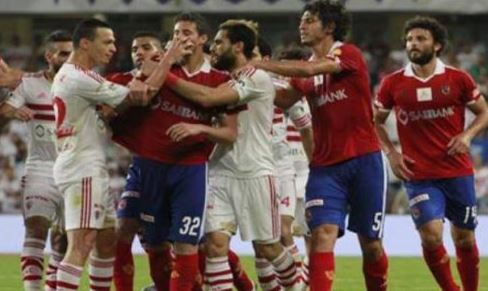
Sometimes, when you talk shit, you get hit. Such was the case in two memorably Cairo Derby matches in 2015. The first was turning into an ordinary 2-0 victory for Ah Ahly when Ramadan Sobhi decided to stand on the ball during play, taunting Zamalek. Hazam Emam didn’t take kindly to that, kicking out at Sobhi well after he passed the ball off end earning a red card. Just a few months later, the two sides met again in the Egyptian Super Cup. Guess what happened again? Sobhi repeated his trick, although for not as long as before. Still, Zamalek was pissed off, with players on both sides getting into a shoving match. Sobhi apologized for being a dick after Al Ahly’s 3-2 win, although the image of him standing on the ball is iconic for Al Ahly fans.
THE NO-SHOW
The 2020 Egyptian Super Cup saw a goalless Cairo Derby draw and a 4-3 Zamalek win on penalties. But the match was marred by a brawl between the two sides, resulting in sanctions for players involved. Zamalek took particular issue with the discipline, threatening to refuse to participate in their next match, which also happened to be against Al Ahly. On match day, a report came out that Zamalek would instead send a squad entirely made up of youth players to face Al Ahly. When no Zamalek squad was on the field at game time, there were rumors the players had gotten caught in traffic. In the end, the match was declared a forfeit after Zamalek completely failed to show up at all, marking a bizarre ending to a match that never even began.
THE MOST IMPORTANT DERBY EVER
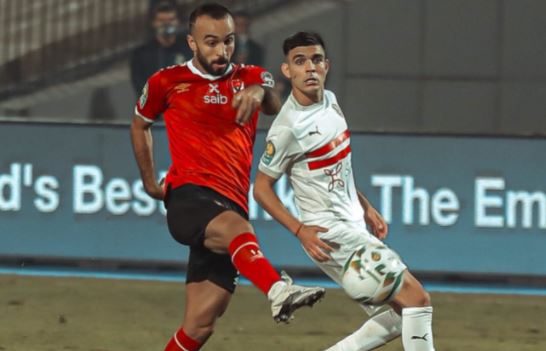
Imagine Barcelona and Real Madrid facing off in the UEFA Champions League Final. That’s the sheer scale and importance of the stakes going into the 2020 CAF Champions League Final between Al Ahly and Zamalek. It’s the first and only time the Cairo Derby took place in the final of an international competition (and the Champions League final was a one-legged affair). Unfortunately, even though it was held in Cairo, no fans were allowed to watch in person due to the COVID-19 Pandemic. Al Ahly got on the board just five minutes in, before Zamalek pulled even just after the half hour mark. With just a few minutes remaining, Mohamed Magdy scored an incredible volley goal to give Al Ahly a 2-1 victory, earning their ninth continental crown.
STATISTICS:
HEAD-TO-HEAD RECORD
Al Ahly: 108
Zamalek: 59
Draw: 80
LEAGUE CHAMPIONSHIPS (EGYPT PREMIER LEAGUE)
Al Ahly: 43 (record)
Zamalek: 14
LEAGUE CHAMPIONSHIPS (CAIRO LEAGUE)
Al Ahly: 17 (record)
Zamalek: 13
EGYPT CUP
Al Ahly: 38 (record)
Zamalek: 28
EGYPT SUPER CUP
Al Ahly: 13 (record)
Zamalek: 4
CAF CHAMPIONS LEAGUE
Al Ahly: 11 (record)
Zamalek: 5
CAF CONFEDERATION CUP
Al Ahly: 1
Zamalek: 1
CAF SUPER CUP
Al Ahly: 8 (record)
Zamalek: 4
AFRICAN CUP WINNERS’ CUP
Al Ahly: 4 (record)
Zamalek: 1
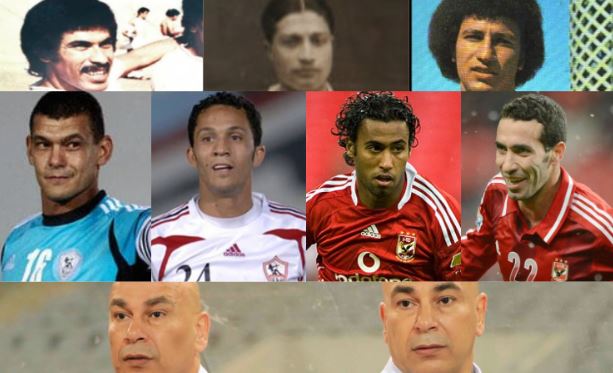
NOTABLE FIGURES:
HUSSEIN HEGAZI
The father of Egyptian soccer and the first African man to ever play in England, Hussein Hegazi also was the spark that ignited the Cairo Derby. First a star with Al Ahly, then Zamalek, then Al Ahly again, it was his second move to Zamalek that sparked the most controversy. In his first match back with Zamalek, Hegazi and a squad composed of students managed to defeat Al Ahly 1-0, earning the club the nickname Madraset El Fann Wil Handasa (“School of Arts and Engineering”) due to Hegazi’s own studies in engineering at university while playing in England.
MAHMOUD MOKHTAR EL TETSH
It takes a special player to be honored with having part of a club’s grounds named after them. That’s certainly the case for Mahmoud Mokhtar El Tetsh, a longtime Al Ahly star and the man whose name is on the club’s current training ground. Tetsh was part of Al Ahly’s main example of its commitment to ethics in 1928. Tetsh was selected for Egypt’s Summer Olympics squad, but the tournament would be held while Tetsh was supposed to take his college exams. Tetsch’s exam was later sent to the Egyptian embassy in Amsterdam so he could graduate and play.
MAHMOUD EL KHATIB
The iconic Al Ahly player during their first run through Africa in the 1980’s, Mahmoud El Khatib is regarded as one of the greatest African soccer players of all time. A ten-time Egyptian Premier League winner, five-time Egypt Cup champ and five-time continental title holder (two CAF Champions Leagues and three Cup Winners’ Cups), Khatib remains atop Al Ahly’s all-time goal scorer list with 157 balls put in the back of the net. Not content with just playing, Khatib took over as Al Ahly’s president in 2017 and has overseen the club’s recent continental conquest.
HASSAN SHEHATA
Zamalek’s answer to Mahmoud El Khatib, Hassan Shehata was one of the club’s most iconic players during their first continental run. Even without his prolific goal scoring ability, Shehata would’ve been an icon simply for his afro and thick mustache alone. But for as great a player he was, Shehata is better well known for his coaching ability. With smaller, greyer hair, Shehata led Egypt to three straight African Cup of Nations titles in 2006, 2008, and 2010. Shehata is one of two managers to win the competition three times and the only one to do it consecutively.
HOSSAM/IBRAHIM HASSAN
Ibrahim Hassan was one of the best Egyptian players of his era who won a shit ton of trophies and made over 100 appearances for the national team. It just so happened that his twin brother, Hossam, is Egypt’s all-time leading goal scorer (83), in the Top 10 for most international caps in men’s soccer history (176), and second to only Mahmoud El Khatib when it comes to goals scored for Al Ahly (142). The twins played together for most of their careers — which after their controversial move to Zamalek branded them as traitors to the fans of their former club.
ABDEL-WAHED EL-SAYED
Only one man has played more than 350 games for Zamalek. The same can be said for 400 games… as well as 500 games. Abdel-Wahed El-Sayed is Zamalek’s iron man, appearing in net a sensational 504 times over the course of his 17-year run with the club. With El-Sayed in goal, Zamalek won their most recent slew of continental titles. In fact, he was named the best keeper of the 2002 CAF Champions League, which Zamalek won. After retiring in 2015, El-Sayed was able to apply his skills a little longer, taking part in competitions with Egypt’s beach soccer team.
ABDEL HALIM ALI
When it comes to pure offense, Abdel Halim Ali may be Zamalek’s best ever player. The striker certainly has the resume for the argument, holding Zamalek’s all-time goal scoring record (138) and being second to only Abdel-Wahed El-Sayed in terms of games played for the club. Ali also holds club records for scoring in the league, as well as in both African and Arabian competitions. Ali’s scoring ability was key during Zamalek’s continental run during the early 2000’s, winning the Champions League, Super Cup, and Cup Winners’ Cup, among other bits of silverware.
WAEL GOMAA
Although his team had just lost the 2001 Egypt Cup Final against Al Ahly, Wael Gomaa had impressed his opponents so much with his performance that they signed him shortly after. With Al Ahly, Gomaa became pretty much the best Egyptian defender (certainly the best center back) ever and one of the best ever to come from Africa. But it wasn’t just his incredible defense or him looking like the most unfuckwithable player alive that endeared him to the Al Ahly faithful. Gomaa had a particular talent for headers and being able to score from all kinds of set pieces.
SHIKABALA
Although he had played with Zamalek since he was just eight years old, Mahmoud Adbelrazek Hassan Fadlala (known as Shikabala) was signing with Al Ahly when he came back from a spell with PAOK in Greece. However, Zamalek officials were able to convince him to reconsider and sign with them instead. That turned out to be a good thing, as Shikabala spent the better of the next 13 years becoming a Zamalek legend. It also helped that during the 100th Cairo Derby, Shikabala lifted his shoes at Al Ahly supporters, who had been chanting profanities at him.
HOSSAM ASHOUR
Of all the stars Al Ahly has seen during the past two decades, none has shone as brightly as Hossam Ashour. Making his senior debut at just 17 years old and later becoming the youngest captain in club history, Ashour’s 17 years at Al Ahly saw him win 36 domestic and continental titles, more than any other player to wear the red shirt. Ashour is also the only player ever to appear in more than 500 matches for Al Ahly, earning 512 caps. One of Ashour’s last games with the club was the ultimate Cairo Derby win — the 2020 CAF Champions League Final.
MOHAMED ABOUTRIKA
Although he was already one of the best players in the Egyptian Premier League, it was after he moved to Al Ahly that Mohamed Aboutrika elevated his status to the best in Africa. In his ten years with Al Ahly, Aboutrika was nominated for several African Player of the Year awards and won many pieces of silverware. He ranks third on Al Ahly’s scoring list with 126 goals and is also known for his work with the Egypt’s national team. However, retirement has been anything but happy — in 2017 he was put on Egypt’s terror list for his ties to the Muslim Brotherhood.
MOHAMED MAGDY
Mohamed Magdy may be only 26 years old and have the vast majority of his career still ahead of him, but he gets a spot among these legends for one reason: scoring the most important goal in the history of the Cairo Derby. With Al Ahly and Zamalek tied 1-1 with four minutes left in the most important derby match ever (the 2020 CAF Champions League Final), Magdy intercepted a clearance by the Zamalek defense, bounced the ball off his chest, and smashed a volley into the back of the net. It was a superb goal and already one of the most iconic in Egyptian history.
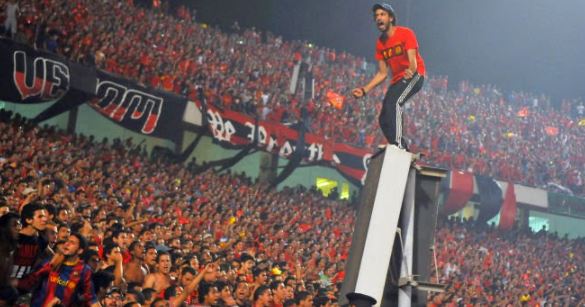
FAN INVOLVEMENT:
For pretty much their entire existence, Al Ahly and Zamalek have been more than just soccer teams. Both clubs (particularly Al Ahly) have become symbols of the Egyptian people. Both were founded as a way to fight back against British rule — during the 1919 revolution, students involved in Al Ahly sang, “We don’t care if we go to prison, nor do we care about the governorate. We’re used to living on bread, and sleeping with no blankets.” during matches and in the streets. Even when Egypt did get independence, the country was largely a one-party system, meaning the citizens rarely had a say outside riots. So supporting either Al Ahly or Zamalek (who became pretty much political parties themselves) became a way to make their voices heard and express themselves. This led to Egypt being home to some of the most incredible scenes and atmospheres in African soccer, especially when the ultras emerged.
However, this increase in passion and intensity led to violence, with multiple instances of hooliganism to report. Then the Port Said Stadium disaster (which many believe was politically motivated) happened, all but killing fan attendance at Egyptian soccer matches. Even when things began to return to normal, the Zamalek fan disaster was another two steps back, regardless of who was to blame for the tragedy. Ever so slowly, fans have been allowed back at matches, although the ultras groups have since disbanded. Then, right when we were set for the biggest Cairo Derby ever, the pandemic forced the match to be played behind closed doors. With everything in flux and Egypt still not on the best footing politically, it’s unclear just how the fan impact on the Cairo Derby will change, for better or worse. Still, even without fans in the stadium, matches between Zamalek and Al Ahly bring the country to a standstill.
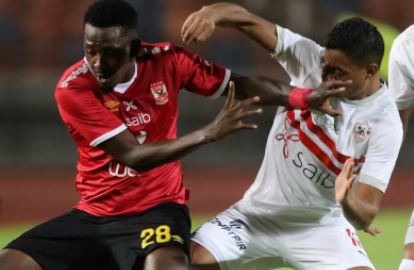
SUMMARY:
The Cairo Derby is often considered the biggest and fiercest in all of Africa, and for good reason. The rivalry between Al Ahly and Zamalek has seen and been defined by national pride, independence, revolution, war, drama, violence, hatred, and general insanity. It is a genuine contender to win the entire World Cup of Hate.
While many consider the Cairo Derby to be the top rivalry in the continent, that doesn’t mean that decision is unanimous. In fact, we just have to hop to the other side of North Africa to find another rivalry full of inner-city hatred and fights for continental supremacy.
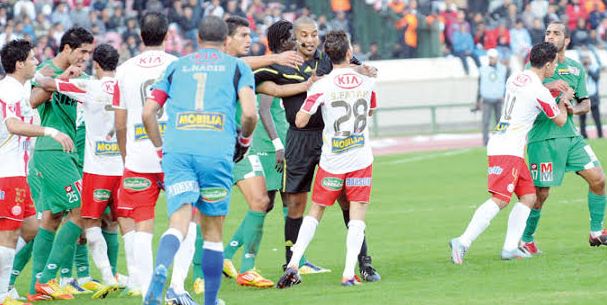
Casablanca Derby (Morocco)
Raja CA vs. Wydad AC
“In the past, some fans of these teams also engaged in unruly behavior. The U.S. Mission is recommending that its personnel avoid the area.” — Alert from the U.S. Embassy and Consulate in Morocco informing Americans to avoid the Casablanca Derby
While not as old as some of the other rivalries on this list, the Casablanca Derby has packed plenty of hatred, intensity, passion, success, controversy, violence, and drama to compete with all the rest. As crazy as things get on the field, the rivalry between Raja Club Athletic and Wydad Athletic Club is sometimes overshadowed by the fans — that’s not a bad thing here.
The Casablanca Derby is absolutely fantastic — it’s also incredibly weird. It has everything you’d expect in a fierce inner-city derby — a city divided, with controversial results fueling intense passion and fighting before, during, and after matches. It’s also one of the most even derbies in this entire experiment, so much so that there have been 26 more draws between the two clubs than wins for the winningest side (which only has four more wins than their rivals). In fact, the number of draws (67) is getting close to the number of combined wins (78) for each club. There has also only been one match between the two sides that has been decided by more than three goals. In addition, even though they are two of the top three clubs when it comes to Moroccan league titles (along with ASFAR), they have never faced each other in the final of the domestic cup competition. What’s more, all of these interesting aspects are obscured by the fact that both Raja and Wydad’s ultras create arguably the best tifos in the history of soccer. Don’t worry, plenty of examples will be provided later.
Before we go any further, I must confess a possible implicit bias when covering this rivalry. I’m not a supporter of either club, but I am a former visitor to Morocco, with my stay ending in Casablanca. All of the good feelings related to the fun, adventure, and exploration I’d had in the country beforehand were flushed away when, on my last day in Casablanca, I began to suffer from Shigella, a cousin of E. coli which is like diarrhea on steroids. The first sleepless night was spent with it coming out both ends, while for the next week it was coming out the back end at a rate of about once an hour. I couldn’t eat, I could barely sleep, and the rest of my trip (spent in Barcelona, no less) was tainted. It was a bacteria so nasty that I needed antibiotics to get rid of it and I got a call from the county department of public health asking how the fuck I had gotten that sick. What I’m trying to say is I don’t have the best memories of Morocco, specifically Casablanca. My goal is to complete the rest of this rivalry profile without making a shitty, undeserved dig at the area or reference to my unfortunate, numerous bowel movements.
HISTORY:
The origins of these two rivals predate the existence of Morocco as an independent country. With the French in control, access to the swimming pools that surrounded the port of Casablanca was only given to those who were affiliated with sports clubs, which at the time were all controlled by foreigners. Some Moroccan people were able to enjoy the pools by registering their affiliation with a random club, but officials soon began to get suspicious. It got to the point where the Moroccans using those pools actually had to create a club to make their trips authentic. So in 1937 they did, although they couldn’t figure out a name. That is until one of the founders of the club, Mohamed Benjelloun, arrived. He was late to the meeting because he had just watched a film starring renowned Arab singer Umm Kulthum, Weddad (also known as Wydad), which translated to “love.” Inspired, the founders agreed to name the first Moroccan club Wydad, with their colors being red. While they initially started out by just playing water polo, the club eventually established a soccer division as well in 1939. After rising through the ranks to the top division in the 1940’s, Wydad won four straight titles of what was the equivalent of the national title from 1948-51, as well as another in 1955. It was around this time that Wydad’s greatest opponent was fighting for a future of its own.
Two major things related to Casablanca were birthed in the 1940’s. First, 1942 saw the release of the iconic Humphrey Bogart film Casablanca. Second, in 1949, shortly after a manifesto demanding Moroccan self-governance was humiliatingly denied by the French government, a group of pro-independence activists (including members of a theater troupe) decided to create a soccer club run and filled out by Moroccans. They chose the name Raja (which translates to “hope”) and the mascot of an eagle, which they say was able to soar over opposition despite constraints. While it took the appointment of Benabadji Hadji (who while being Moroccan was of French-Algerian heritage) as president to officially found the club, Raja quickly took off as a club of the people. They also made headlines for one of their main goals during their founding — being a team of artists. Since 1949, Raja has focused on playing “The Beautiful Game,” in contrast to Wydad’s traditional organized, efficient, physical style. Raja’s play worked well enough, with the club advancing up the ranks to be just shy of the first division in 1955. But then all sports in the country were suspended for a pretty important reason.
In 1955, opposition to the exile of Sultan Mohammed V had finally boiled over the point where France had to allow the sultan to return, then begin negotiations to leave Morocco themselves. In March 1956, Morocco finally gained its independence, with sports being reinstated later that year. Whereas the original formula had been regionally focused (with the winners playing for the national title), the Royal Moroccan Football Federation established the Botola — the first ever nationwide Moroccan soccer league. Both Wydad and Raja were part of the first season, having won their qualifying games. For the first time, the two Casablanca clubs were in the same division and thus could play each other, which was convenient because the recently-opened Stade Mohamed V had just been appointed as the home for both clubs. Raja took the first ever Casablanca Derby 1-0, but Wydad (winners of the final pre-independence national title) took the rematch 3-0 and went on to win the first ever Botola that year. Wydad would finish runner-up of the next two leagues (as well as the first two Moroccan Throne Cups), with another Casablanca club — Etoile de Casablance — getting on the league title board before Raja, which would have to wait for a while (but not without controversy).
The 1959-60 Botola season ended in a three-way tie between Raja, FAR Rabat, and KAC Kenitra on points. Raja had the advantage when it came to goal differential, which is the typical tiebreaker and the current tiebreaker for the Botola. However, the Moroccan federation decided to have a round-robin tournament between the top three teams to determine the champion. Raja was understandably pissed and refused to participate, with Kenitra defeating Rabat in the now-one game playoff for the league title. While Raja would’ve likely won the original round-robin, their decision to withdraw meant they would have to wait quite a while to be champs, although they earned a lot of fans in the process. One other major off-field moment that happened, thanks to one of the leaders of the Moroccan independence movement. Sultan Mohammed V gave his endorsement for Wydad, establishing the popular view of the club as one for the middle class and above. This was somewhat unfair, as both Raja and Wydad had been formed with the idea of giving Moroccans a footing against the national French rule. Nevertheless, a major dividing line had been drawn between the two sides.
While ASFAR was the dominant team during the first full decade of Moroccan soccer, the Casablanca clubs were beginning to emerge, particularly Wydad. Two more Botola titles were won in 1966 (with Raja finishing second) and 1969, followed by Wydad’s first Throne Cup in 1970. Raja followed that up with Throne Cups in 1974 and 1977, the former being the first piece of silverware in club history. But even though Raja had finally broken its decades-long trophy drought, that time period definitely belonged to Wydad. Three straight league titles from 1976-78 by Wydad (the second team to ever win three in a row) and three more Throne Cups in four years from 1978-81 made them the big club in Morocco of the 1970’s and 80’s. They also got to take their first steps into continental soccer, although they didn’t have the greatest success. Even though Raja won their second Throne Cup in 1982, they were far back of their fellow Casablanca club. Wydad won their 12th league title in 1986, while Raja hadn’t won any, with the Throne Cup total being in Wydad’s favor as well. But things would soon change.
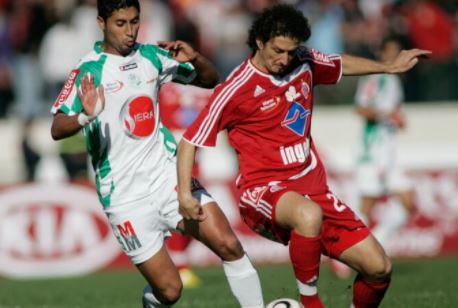
After years of coming up short and ridicule from their rivals, Raja finally won their first national title in 1988. But even with the Botola in their bag, Raja wasn’t satisfied. In their first ever CAF Champions League, Raja went on a run to reach the final against Algeria’s MC Oran. After a 1-0 in in the first leg in Casablanca, Raja lost 1-0 in the second leg but managed to get the match to penalties despite being sent down to ten men. Oran missed their last two penalties, while Raja was perfect from the spot to win the 1989 CAF Champions League Final, becoming the second Moroccan club (after ASFAR) to claim continental supremacy. But even though Raja managed to get an edge in the rivalry, Wydad would soon strike back, winning three league titles from 1990-93. The one year they didn’t win the Moroccan championship, Wydad evened the count with Raja when it came to African championships. Two late goals in the first leg of the 1992 Champions League Final against Al-Hilal were enough to give Wydad their first continental crown. However, just when Wydad thought they had full control, Raja entered the greatest period in the club’s 50-year history.
Raja was about to dominate the rest of the 1990’s, but it was another Casablanca club that was the main factor in that run. Founded in 1904, Olympique de Casablanca was one of the oldest soccer clubs in Morocco. They hadn’t won much, but started to get really good towards the start of the 90’s. Olympique won two Throne Cups (one of which coming at Raja’s expense), three straight Arab Cup Winners’ Cups, and the 1994 Botola, their first in club history. They finished as runner-up in 1995, but behind the scenes things were going from bad to worse. After the 1995 season, the club’s owners, the ONA Group, pulled out, leaving Olympique financially fucked. But instead of going out with a whimper, Olympique reached a deal with Raja to absorb Olympique’s assets, meaning two of the best clubs in Morocco were merging.
Given that Raja had merged with a club that had just denied Wydad of another title, more fuel was added to the fire that was a brewing Casablanca derby. So perhaps it’s no surprise that Raja would win the next six Botola titles, as well as seven of nine (no not that Seven of Nine). That domestic dominance (which included a Throne Cup win) also translated to continental success. In the 1997 Champions League Final, Raja overcame a 1-0 loss to Obausi Goldfields in Ghana to win the second leg 1-0 at home and force penalties, winning 5-4 to claim their second African championship. Just two years later, it was penalties once again for Raja, this time against Esperance de Tunis (after advancing past the likes of Al Ahly and Hearts of Oak). For the third time in their history, Raja won the Champions League Final on penalties (after two scoreless draws).
Raja’s run came to an end in 2002, during which time they lost 1-0 to Zamalek in their fourth Champions League Final (although they did win another Throne Cup). But the run also produced one more memorable moment — in 1996, Raja beat Wydad 5-1 in the most lopsided Casablanca Derby ever and the only one decided by more than three goals. This isn’t to say Wydad was completely shut out during this time. In fact, Wydad nearly doubled Raja’s Throne Cup total across that period. Wydad also asked and was approved by the Moroccan FA to add the five national titles won before independence to their Botola total. They are so far the only Moroccan club to ask for pre-independence titles to be atted to their total, a fact that gives the comparison between Raja and Wydad a bit of an asterisk.
Ever since the turn of the millennium, a revitalized Raja and an always competitive Wydad have been the two best clubs in Morocco. The Casablanca Derby often goes a long way in deciding the title, with each club winning five Botolas since the mid-2000’s (although Raja has been the only one of the two to win more Throne Cups. Both have also achieved success internationally. Both have done well in the CAF Cup/Super Cup, while Wydad evened the continental total with Raja, winning a Champions League title in 2017 and 2022 — both against Al Ahly (losing to Esperance in 2019 as well). Raja also made some noise during the 2013 FIFA Club World Cup (hosted by Morocco), making it all the way to the final, where they lost a surprisingly competitive match with Bayern Munich. The competitiveness (often resulting in draws) has also led to increased insanity in the crowd and fan violence, which has often overshadowed the derby results on the field, for better or worse.
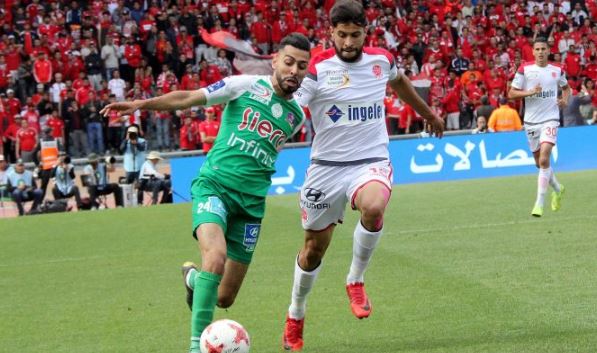
MAJOR ON-FIELD MOMENTS:
THE ULTIMATE FAN SHITHOUSERY
With all of the notoriety surrounding fans of Raja and Wydad on derby day, one fan base set the tone early in their history. The 1966 Botola race came down to the wire, with Raja needing to beat Wydad (who only needed a draw) to seal the title. Raja went up 2-1 and looked to be in control of the match. So what did Wydad fans do? They invaded the pitch en masse, forcing the match to be abandoned. But this wasn’t done out of anger — there wasn’t a 2-0 forfeit rule in place at the time, so the game was replayed. Neither club scored in the replay (this would be the first of five straight scoreless draws between the two), with Wydad winning the title. Thanks to the ultimate fan interference, Raja would have to wait two more decades to claim the Botola.
PROTESTING A PENALTY
The 1978 season was the top of one of Wydad’s best eras. The year would see them win their third straight Botola crown and the first of three Throne Cups in four years. But one notable highlight of the season was an unusual derby victory over their rivals. With about ten minutes left in the game and Wydad clinging to a 1-0 lead, Raja’s goalkeeper was called for a foul in the box. Because it was a clear goal scoring opportunity, he was also given a red card, sending Raja down to ten men. Raja was so upset about the decision that captain Mohamed Fakhir ordered his team to leave the field. While Wydad waited to take the penalty, Raja would never return, with the match being called — with the 1-0 score being official — before the final whistle.
FANTASTIC FIVE
Raja took over Moroccan soccer in 1996. That year, the club won the first of their record six straight Botola crowns and earned their spot in the 1997 CAF Champions League, which they would win. But perhaps even sweeter for Raja was the fact that they earned the biggest win in the history of the Casablanca Derby. The two rivals were matched up in the quarter-finals of the Throne Cup and Raja went straight to work, dominating the action and going right through Wydad’s defense. While Wydad managed to stop the bleeding with a late consolation goal, it was Raja who reigned supreme with a 5-1 win, the largest margin to date between the two clubs. The image of Salaheddine Bassir holding up the score on his fingers is an iconic one.
CENTENNIAL CELEBRATION TURNS TRAGIC
2001 was a memorable year for the Casablanca Derby, but for the wrong reasons. The first match between the two clubs was originally a 3-0 Wydad win. However, Raja protested that Wydad sub Abdelhaq Ait was inelligible to play. The Moroccan FA changed the result to a Raja win as a result. The next match wasn’t only a Throne Cup semi-final, but also the 100th Casablanca Derby. It was a big match, but no one cares about the score. That’s because early in the match, Wydad’s Youssef Bekhouja collapsed on the field due to a heart attack. He was carried off and Wydad won the match 1-0, but afterwards is was learned that Bekhouja had died. In spite of the tragedy, Wydad went on to win the Throne Cup in Bekhouja’s honor.
SO MANY PENALTIES
Two years after their tragic 100th matchup, Wydad and Raja once again met in the semi-finals of the Throne Cup. This one would also be memorable — for the right reasons. After full time it seemed like another 1-1 draw, but the real drama was to come in the penalty shootout. While the ball only hit the back of the net twice during regulation, it did so a staggering 23 times on penalties. It’s unclear exactly how many penalties were taken that night (if you can find video of this match, you’re a better internet sleuth than I am), but the final was 12-11 — past the point where goalkeepers would be required to take kicks. The slimmest of edges went to Wydad, who would ultimately come up short against ASFAR in the final (a result that was repeated in 2004).
TITLE WON AT THE DEATH
Another late season Casablanca Derby, another classic result between these two rivals. This one came towards the end of the 2006 Botola, with Wydad ahead in the standings and only a Raja win able to keep the title race alive. Things looked good early for Raja, when a penalty call led to a goal by Abdellatif Jrindou (who by the way is Raja’s most successful player ever, with 16 major trophies to his name with the club). Raja kept its 1-0 lead (and the title race) alive until the final minutes of extra time. Five minutes into stoppage time, Raja failed to clear the ball, which eventually found Hicham Louissi. The defender launched a thunderbolt from just outside the box, tying the game at 1-1, clinching the title, sending the Wydad faithful into pure delirium.
ONE FOUR ALL
In 2019 — 66 years after the first Casablanca Derby — Raja and Wydad met for the first time in continental competition. The two were matched in the Round of 16 of the Arab Club Champions Cup. Raja was the home team in the first leg, which (shockingly) was a 1-1 draw. But it was the second leg that drew headlines. Played in front of an insane crowd who put on a legendary tifo battle, the match was only 1-0 in favor of Wydad at halftime. Raja scored early in the second half, but Wydad then scored three straight. After a Raja goal and penalty (the second Panenka of the match) made it 4-3, a dramatic finish was in store. Deep into stoppage time, Ben Malango headed it in to complete the comeback and a 4-4 draw, with Raja advancing on away goals.
STATISTICS:
HEAD-TO-HEAD RECORD
Raja: 43
Wydad: 40
Draw: 69
LEAGUE CHAMPIONSHIPS
Raja: 12
Wydad: 22* (record)
THRONE CUP
Raja: 8
Wydad: 9
CAF CHAMPIONS LEAGUE
Raja: 3
Wydad: 3
CAF CONFEDERATION CUP
Raja: 2
Wydad: 0
AFRICAN CUP WINNERS’ CUP
Raja: 0
Wydad: 1
CAF SUPER CUP
Raja: 2
Wydad: 1
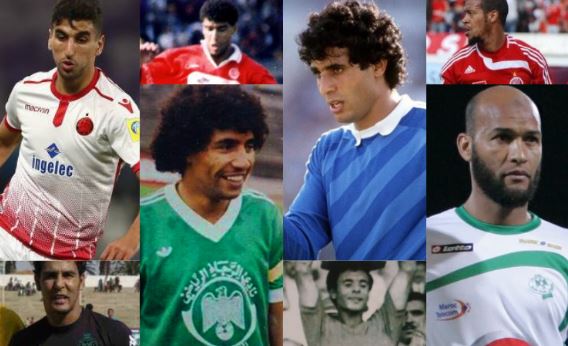
NOTABLE FIGURES:
SAID GHANDI
A holder of one of the best names to search if you’re looking for quotes by Mahatma Gandhi, Said Ghandi holds a distinct honor — the highest-scoring player in Raja history (148 goals). Ghandi was one of Raja’s first big stars, lighting up the back of the net during his 15-year career with the club. Unfortunately, his tenure of 1964-79 coincided with a period where Raja didn’t exactly win a lot of trophies. However, when Raja did finally break through with those two Throne Cup titles in the late 1970’s, it was Ghandi who lifted the trophies up as club captain.
ABDELMAJID DOLMY
Nicknames such as “Maallem” (“Maestro”), “I’oustade” (“The Teacher”), and “I’mitale” (“The Example”) aren’t just handed out to every player. It takes a special kind of talent — for example Abdelmajid Dolmy. Dolmy is considered one of the best African players ever, which landed him offers from clubs like Bayern Munich and Inter Milan. However, Dolmy opted to stay with Raja, making over 600 appearances (a club record) and earning icon status. Dolmy — who never got a red card in his entire career — served as an technical adviser to Raja until his death in 2017.
FAKHREDDINE RAJHI
Fakhreddine Rajhi is Wydad — just look at the record book. A club record 569 appearances (nearly 200 more than second place) in his nearly 20 years with Wydad. During that time, Rajhi scored 298 goals, with no other player coming close. Rajhi helped Wydad claim three straight Botola titles from 1976-78 and three of four from 1990-93. In addition, Wydad won five Throne Cups and pretty much everything else domestically and continentally thanks to Rajhi’s presence in the attack. Naturally, Rajhi also twice served as manager for Wydad after retiring as a player.
BADOU ZAKI
While he was only with Wydad for eight years, Badou Zaki still ranks third with 344 appearances in club history. But Zaki’s mark wasn’t just made for Wydad — although he helped lead the club to several trophies. Zaki was Morocco’s goalkeeper during the 1986 FIFA World Cup, putting on legendary performances to keep his country in the tournament. Zaki earned a contract with Real Mallorca for his efforts, along with a constant spot in the discussion for best African goalkeeper ever. After retiring, Zaki managed several clubs, including Wydad (in four different tenures).
AZIZ BOUDERBALA
While he had a name like one the most iconic Mario Partymini-games ever, Aziz Bouderbala was actually known for having a fragile physique. Somehow, he managed to appear in 274 matches for Wydad (fifth all time), during which time he frequently found the back of the net thanks to his incredible speed and dribbling ability. Bouderbala’s Wydad career actually was divided by 11 years in which he played for five different clubs in Switzerland, France, and Portugal. But it was with Wydad that Bouderbala achieved the best success of his career.
MUSTAPHA CHADLI
An absolute chad in net, Mustapha Chadli arrived as a young goalkeeper during Olympique de Casablanca’s merger with Raja in 1995. For the next ten years, Chadli would mind Raja’s net, racking up every trophy there is to win in Africa along with more than 500 appearances for the club. Chadli officially earned legend status during the 1999 Champions League Final, when he not only saved the penalty that sent Raja down to ten men, but came up with several saves to send the game to penalties and saved the winning penalty to earn Raja the continental victory.
HICHAM LOUISSI
With 374 appearances, Hicham Louissi is the second-most capped player in Wydad history and the most-capped player of the 21st century. Louissi made his Wydad debut in 2001 and for the next 11 years was one of the best defenders in Morocco, although he did have some skill on the offensive side of the ball. No more was this evident than in 2006, when Wydad were trailing Raja in stoppage time, with the title on the line. Louissi collected the ball just outside Raja’s box and send a rocket into the opposite corner of the net, claiming the Botola in dramatic fashion.
ABDELLATIF JRINDOU
In addition to being tied with Redouane El Haimer as the most successful player in Raja history, Abdellatif Jrindou is the most successful player in Moroccan soccer history, winner of 19 major trophies. One of the transfers from Olympique de Casablanca in 1995, Jrindou became one of the emblematic captains in Raja history, known for being a wise player with a calm demeanor and an ability to do well in the clutch (although he did get a red card in the 1999 Champions League Final). Jrindou has also participated in the second-most Casablanca Derbies ever.
MOHAMED OULHAJ
So who ranks higher on the Casablanca Derby cap list than Adbellatif Jrindou? That would be Mohamed Oulhaj, who played in 21 clashes between Raja and Wydad (and is the only player to take part in 20 or more matches). A Raja lifer, Oulhaj stepped onto the field 355 times during his 12-year tenure of defensive prowess for the club. Although he was largely a defender, Oulhaj scored Raja’s first goal in the 2013 FIFA Club World Cup and was key to the club’s run to the final. During his career, Oulhaj was rarely injured and a constant presence in Raja’s backfield.
MOUHCINE IAJOUR
Of all the players to cross the Casablanca Derby divide, perhaps none gives fans mixed feelings like Mouhcine Iajour. Originally starting out with Raja, Iajour returned after three years overseas and signed with Wydad, with several notable goals being scored against Raja. But in 2012, Iajour shocked everyone and returned to Raja. Perhaps even more shocking was his form in the 2013 FIFA Club World Cup, becoming the first African player to lead the tournament in goals. Iajour left Raja again in 2014, but returned three years later for another two-year stint.
WALID EL KARTI
While he still has a bit to go to catch those ahead of him on Wydad’s most capped players list, Walid El Karti is the club’s current iron man, with 278 matches played since he joined in 2013. Although he’s just now entering his prime, El Karti has still been able to produce some memorable moments during his tenure so far. None was greater than the second leg of the 2017 Champions League Final, during which El Karti scored the title-winning goal against Al Ahly. El Karti has won almost everything with Wydad, except for the elusive Throne Cup.
FAN INVOLVEMENT:
When it comes to the Casablanca Derby, fans of both sides are known for two things. The first is violence. Moroccans are some of the most passionate soccer fans in all of Africa, with that passion often coming out in unfortunate ways (see the 1978 match in which intentional fan interference helped a title change hands). In 2007, a clash between the two sets of fans left 17-year-old Wydad fan Hamza Eddali dead, the most recent fatality in derby history. But things don’t have to get fatal to get dangerous. One derby saw a taxi smashed to pieces by one set of fans because they had seen him drop off a rival supporter. In 2010, after a 1-0 Raja win, several acts of hooliganism took place causing mass damages, many injuries, and around 100 arrests. Post-match scenes are frequently the most dangerous time in Casablanca on derby days.
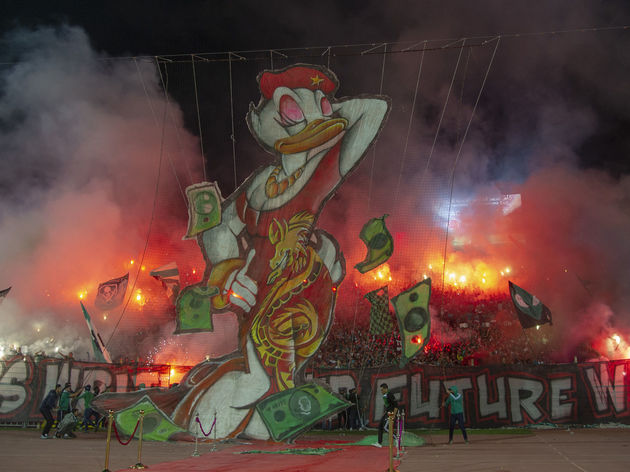
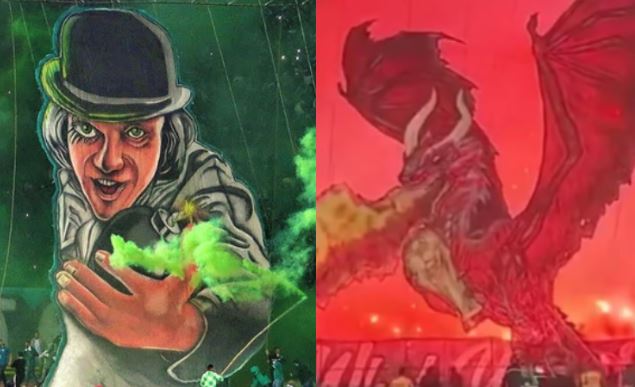
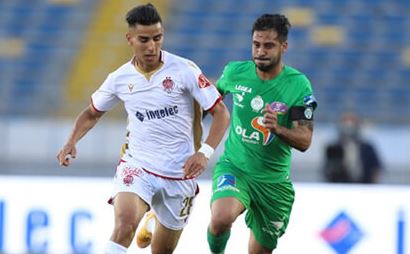
But during the match, another side of that passion comes forward. The second thing these fans are known for is creating incredible atmospheres. The ultra groups for both clubs — Green Boys/Ultra Eagles (Raja) and Winners (Wydad) are renowned worldwide for their work before and during matches, singing the entire match and lighting so many flares the stadium often looks like it’s on fire. But the piece de resistance is without a doubt the tifos. Whether they be holding up placcards to spell/shape things or hoisting up giant images of everything from firefighters, a king, club icons, references to Casablanca (of course) and A Clockwork Orange, and even a fucking dragon, both the red and green sides make colorful, iconic backgrounds. The 2019 4-4 derby was great because of the action on the field, but lifted to legendary because of the dynamic, multi-tifo and smoke/fire-filled scenes around it. Let’s just hope there are plenty of toilets in the stadium for the inevitable shitting that will — GODDAMN IT I ALMOST MADE IT THROUGH!!!
SUMMARY:
The Casablanca Derby is unique among the World Cup of Hate contenders due to its draw-heavy focus, lack of cup final matches, and relative youth. But take a look at any match between Raja CA and Wydad AC and you’ll quickly find an explosive rivalry filled with enough passion, drama, hatred, and success to compare with any in the world.
You might’ve noticed that one other Moroccan club is dotted throughout this Casablanca Derby profile — Association Sportive des FAR (ASFAR). Located in the capital city of Rabat, ASFAR is one of the three most successful clubs in the country, along with Wydad and Raja. ASFAR was the dominant club in the early history of Moroccan soccer and still manages to get trophies. Their 12 Botola wins are tied with Raja for second-most all time, while their 11 Throne Cups are more than any other club. ASFAR was also the first Moroccan club to win the CAF Champions League, doing so in 1985. This success has naturally created heated rivalries with both Raja and Wydad (particularly the former), with those matches referred to as the Moroccan Clasico. However, both in terms of spectacle and success, the Casablanca Derby just edges ASFAR out in my eyes, especially since Wydad and Raja have the whole same-city thing going.
The third and final rivalry for this section also comes from North Africa. According to both the CAF’s member association ranking and general consensus, the three best leagues in the continent are based in the northern part of the continent. If it’s no surprise that the countries that host two of those leagues (Egypt and Morocco) also host the two rivalries we’ve already discussed, then it’s also not shocking that number three is third on our list.
Tunis Derby (Tunisia)
ES Tunis vs. Club Africain
“Football in Tunisia is regularly plagued by violence especially when the country’s top clubs clash.” — Agence France-Presse article
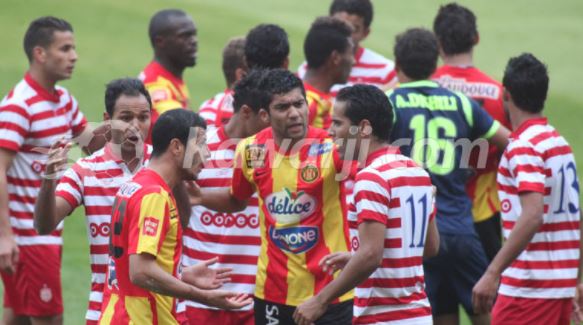
Class warfare has led to the explosion of passion, hatred, and violence that is the Tunis Derby. Gatherings between Esperance Sportive de Tunis and Club Africain bring Tunisia, its capital city, and a whole lot of North Africa to a standstill.
Wait a minute — a rivalry between the two most popular clubs in the capital of a North African country that used to belong to France until gaining independence in the 1950’s, which has seen plenty of on and off-field violence to go with its insane tifo display? Didn’t we just do this? Yes, the Tunis Derby has plenty of similarities with the Casablanca Derby. But there are also plenty of differences. For example, a team has more wins over their rival than draws! That’s a start! Let’s go through some others.
HISTORY:
Both clubs date back to the French control of the region and specifically to the medina of the capital city of Tunis — considered a strategic military location. In 1919, friends Mohamed Zouaoui and Hedi Kallel decided to form a soccer club, one that could be seen as an active resistance to French colonization. They did have to appeal to Louis Montassier, a member of the French administration, for permission to run the club. Once approved, they named their club Esperance after the coffeehouse they used to meet (Cafe de L’Esperance). Their original colors were green and white, but the following year a high school student recruit named Chedly Zouiten provided a set of jerseys with vertical red and yellow stripes, now an iconic part of the club’s image. 1920 also saw the founding of Club Africain. Like Esperance, they were founded in a gate of the medina — Bab Jedid, which still houses their headquarters today.
It was also around this time that Tunisia was starting to get a soccer league going. The sport had been played competitively since 1907, but in 1921 the Tunisian League of Football sought to organize a true national champion. Various regional competitions were held, with the winners playing to decide the country-wide crown. While Esperance and Africain didn’t start at the same level, they finally met in 1924, with Africain taking the first match 3-0 and Esperance returning the favor 3-0 soon after. For the next few decades, the clubs would meet regularly for stretches (the majority won by Esperance) then go a few years without playing due to being in different divisions. During that time, both clubs began to attract certain followings. Esperance became a club supported by the general population, while Africain’s supporters were higher class. Interestingly, neither club did exceptionally well when it came to trophies, with Africain only winning the national title twice and Esperance once (along with one Tunisian Cup) before 1955. But things would soon change after that all-important year.
The 1950’s were a time of independence in North Africa, with Tunisia being no exception. After a year of civil disturbances and negotiations, Tunisia gained its independence from France. Among the many things to do was create a national soccer league, with both Africain and Esperance being invited to participate in the first year of the Tunisian Ligue Professionnelle 1 (this is the last time I write that all out). It seemed like as soon as the French rule was lifted, both Africain and Esperance instantly improved (like the mood of their country). Africain reached the final of the first Tunisian Cup post-independence, while Esperance won the second. That era also saw a stretch where Esperance finished in the Top 2 in the league for five straight years, winning it twice. Africain would get their post-independence title in 1964, which kicked off a lengthy stretch where both clubs were at the top of their game.

From 1967-83, Africain didn’t finish below third in the league, collecting five titles and a shit ton of second place finishes (earning a reputation at that point) along the way. But it was in the Tunisian Cup where Africain really made its name, winning four straight from 1967-70 and six of seven from 1967-73. Another in 1976 made it eight Tunisian Cups in 12 years, making Africain the great domestic cup club of the time. This isn’t to say Esperance wasn’t doing anything during that stretch — four league titles and two Tunisian Cups aren’t anything to sneeze at. Esperance could’ve actually matched Africain in terms of titles won during that era if not for an incredible turn of events in 1971. Following a narrow loss to Club Sportif Sfaxien in the Tunisian Cup Final, fans of Esperance violently rioted in the stadium. They caused so much damage, the Tunisian FA decided to sanction Esperance in league play. Keep in mind, Esperance was one week away from being crowned champions. Instead, they were dropped from the standings altogether. Fittingly, African finished second as a result.
After the bizarre 1983-84 season saw neither club finish in the Top 3 in the league (the most recent time this has happened), both clubs continued their two-man fight to finish atop the league standings. Only three times in the next 12 years was the league won by a club other than Africain and Esperance. Several Tunisian Cups (mostly won by Esperance) followed as well. But this era was also known as the fight for African supremacy. Both clubs began making noise in continental competition, with their efforts paying off in the early 1990’s. Fittingly for its name, Africain got things started in 1991, rolling over SC Villa 6-2 in the first leg and drawing in the second leg in Uganda to become the first Tunisian club to win the CAF Champions League. Three years later, Esperance earned a scoreless draw in Cairo, then beat defending champs Zamalek 3-1 in Tunis to claim their first Champions League title. At the end of the 1997 season, these two rivals were dead even in their battle to be the best Tunisian club. Esperance barely held a lead over Africain when it came to league titles (13 to 11) and were even in Tunisian Cups (nine each) and Champions League crowns (one each).
Two and a half decades later, Esperance has left their rivals in the dirt. Starting with the 1997-98 season, Esperance went straight up gangster on the league, winning seven straight titles. They haven’t really stopped winning since and are currently on a five-year title streak. They’ve won nine times as many league titles as Africain over the past 25 years, which is fucking insane. While Africain has managed to stay competitive when it comes to Tunisian Cups, they have yet to even reach another Champions League final. Hell, fellow Tunisian club Etoile du Sahel even made three (winning one). As for Esperance, they’ve made seven more finals, winning three (2011, 2018, and 2019) and become the fourth-winningest club in Champions League history. The last two are notable for a remarkable comeback in the second leg against Al Ahly (2018) and a rematch of 2011 against Wydad AC ending after Wydad abandoned the second leg in protest (2019). What’s more, they’ve significantly increased their win total in comparison to Africain, who went on a nine-year drought without a win in the Tunis Derby from 1998-2007. So what the hell happened? There were a lot of things, but a mismanagement of funds/transfers by Africain and Esperance taking advantage of their success/fortune by keeping the best local talent are two huge factors.
MAJOR ON-FIELD MOMENTS:
NOTHING BETWEEN THEM
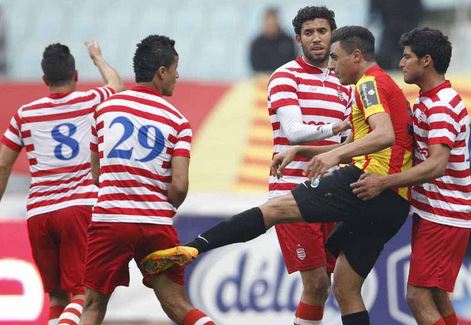
The 1976 Tunisian Cup wasn’t the first to feature a Tunis Derby final, but it is one of the most memorable. Unbeknownst to anyone, it also marked the end of an era and the beginning of another. Africain had recently won five cups in seven years, while Esperance would go on to win two of the next three. But as for the one in 1976, both clubs hardly had anything to separate them. An early goal by Esperance was answered by a penalty by Africain, with the match ending 1-1. Thus, a replay was needed, with the rematch not exactly providing much to write about with a scoreless draw. Penalties were needed, with Esperance proving much worse from the spot. Esperance only made one kick, while Africain made three to claim another cup win.
THE RARE WHOOPING
Much like the Casablanca Derby, the Tunis Derby has only seen two matches decided by more than three goals. Given the statistical dominance of Esperance, it may be surprising that it’s Africain who can boast being on the victorious end of a record result. The first meeting of the 1984-85 season began with a quick Africain goal, followed by a lengthy series of attacks by Esperance. However, Africain weathered the storm and provided one of their own, piling on four more goals before Esperance got one back to stave off the ultimate humiliation. But the final score was still 5-1 in favor of Africain, replacing the 5-2 Africain win in 1978 as the most lopsided between the two. Esperance would shake off that huge defeat to win the league title.
FOUR GOALS & RED CARDS
There was one other match between these two clubs that ended with a four-goal margin of victory, but it didn’t happen without some controversy. In 1994, Esperance got things started early, scoring in the 11th minute. Things would pretty much operate the same through the rest of the match, although Africain didn’t respond with goals — rather, with red cards. A goal by Tarek Thabet in the 65th minute made it 4-0 Esperance. However, an Africain player kicked out at an Esperance player right after the goal, forcing the referee to issue a red card. That was the fourth against Africain that day, sending the club down to seven men. But instead of continuing the slaughter, the referee mercifully decided to end the match with about 20 minutes left to play.
FINAL DRAMA
Of all the times Esperance and Africain have met in the Tunisian Cup Final, two stand out. In 1999, Things seemed like they were headed for a 1-0 Esperance win. However, Africain was granted a penalty in the last minute of the game, which (once converted) sent the match to extra time. With time ticking, penalties looked large. But with three minutes left in extra time, Esperance took the lead back, winning 2-1 thanks to the late drama. Extra time was also needed in 2006, after a back-and-forth affair. Africain twice fought back from Esperance leads to force penalties. Each of the first nine kicks were successful — unfortunately for Africain, they were kicking tenth. The attempt sailed over the crossbar, as Esperance held on for the victory.
ENDING THE NINE-YEAR DROUGHT
Going into their first clash with Esperance in 2007, Africain were in the middle of a historic Tunis Derby drought. Their last win over their rivals had come in 1998 — nine years earlier. During that time, Esperance had become the dominant force in Tunisian soccer, both in the league and cup competition. Only five times during this stretch had Africain even forced a draw, with Esperance taking the two aforementioned Tunisian Cup Final matches in the meantime. Things looked like they would end in another draw, with both clubs scoreless with just minutes remaining. But then an excellent cross found the foot of Moussa Pokong, who volleyed the ball into the net to send the crowd into delirium. The 89th minute goal was enough to finally get African their victory.
STATISTICS:
HEAD-TO-HEAD RECORD
Esperance: 65
Africain: 42
Draw: 54
LEAGUE CHAMPIONSHIPS
Esperance: 32 (record)
Africain: 13
TUNISIAN CUP
Esperance: 15 (record)
Africain: 13
TUNISIAN SUPER CUP
Esperance: 6 (record)
Africain: 3
CAF CHAMPIONS LEAGUE
Esperance: 4
Africain: 1
CAF SUPER CUP
Esperance: 1
Africain: 0
AFRICAN CUP WINNERS’ CUP
Esperance: 1
Africain: 0

NOTABLE FIGURES:
SADOK SASSI
Known as “Attouga,” Sadok Sassi is the greatest player in Africain history and probably the most prolific Tunisian player ever. A constant fixture between the pipes for both club and country, Sassi spent more than 20 years with Africain, appearing in 416 matches, by far the club record. More than 40 years after his retirement, Sassi remains a monument for Tunisian soccer, considered a world class goalkeeper not just in Africa — but the world. Sassi was instrumental in helping Tunisia reach the 1978 FIFA World Cup, where they scored an iconic win over Mexico.
HASSEN BAYOU
In the lengthy history of the Tunis Derby, no one has scored more goals than Hassen Bayou. While the fact that he only scored nine goals is somewhat shocking, he still managed to need fewer than ten goals to make himself a terror to Esperance, being considered the club’s “bete noire.” In fact, in 1976, Bayou only scored twice — both against Esperance. The following year, Bayor scored a hat trick in the Tunis Derby in a 5-2 win. But it wasn’t just against Esperance that Bayou found the net — his 76 goals rank just outside the Top 5 Africain all-time goal scorers.
TARAK DHIAB
One of the most iconic and celebrated players in Tunisian soccer history (and not just for his Vote for Pedro mustache), Tarak Dhiab is the only Tunisian player to win the African Golden Ball and was voted the best Tunisian player of the 20th century. Dhiab’s prolific goal scoring left him with 127 goals from Esperance, the most in club history. It helped that Dhiab also played in 427 matches, also a record for Esperance. His 107 league goals are the third-most in Tunisian league history, while his 29 appearances are the most of anyone ever in the Tunis Derby.
TAREK THABET
An Esperance legend (and not just because of his excellent mustache), Tarek Thabet was a rock for the club during his tenure. Thabet spent his entire 15-year career with Esperance, making nearly 350 appearances and scoring 27 goals (honestly not a bad rate for a defender). That decade-and-a-half career saw Thabet guide Esperance to pretty much every single piece of silverware he could possibly win — both domestically (nine goddamn league titles and three Tunisian Cups) and internationally (helping Esperance claim its first ever Champions League).
HEDI BAYARI
During his 15-year pro career (the vast majority spent with Africain), Hedi Bayari rewrote scoring record books wherever he went. By the time he retired, no one had scored as many goals for Africain as Bayari, with his 127 goals remaining the club record. Bayari is also the only player to win the Tunisian league scoring title on three separate occasions. That’s probably part of why Bayari ranks ahead of everyone else when it comes to goals scored in the national league (117). Ironically, Bayari considered Tarak Dhiab (Esperance’s top scorer) one of his idols.
MONCEF KHOUINI
According to this Wikipedia page, “Ghaddar” is the demon described as a female dog/goat who hunts men and mutilates their genitalia. I say this because everything I looked at for Moncef Khouini had his nickname as “Ghaddar.” Anyway, Khouini was one of Africain’s most prolific and consistent players ever. Across a decade suiting up for the club, Khouini appeared in 270 matches (just outside the Top 5 in Africain history) and scored 115 goals (second only to Hedi Bayari). Khouini’s brother, Hamadi, also had a distinguished career — as an ambassador.
OUSSAMA DARRAGI
Oussama Darragi had everything ready to be an Esperance legend. Bursting onto the scene in the early 2010’s, Darragi was named best Tunisian league player, helped Esperance win the 2011 Champions League, and earned the 2012 Arabic Golden Ball, along with the club’s captain’s band. So when Darragi returned to Tunis after two years elsewhere, it was a shock that he signed with Africain. Unfortunately for Darragi (yet to the delight of Esperance fans), he has yet to replicate any of the success he had while playing for the other major Tunis club.
TAHA YASSINE KHENISSI
Arguably the best player currently on Esperance’s roster, Taha Yassine Khenissi has a name similar to a certain popular Game of Thrones character. Perhaps it’s no surprise that he’s set the club and league on fire since then. Several times, Khenissi has been Esperance’s top goal scorer for the domestic league, including the years where the club won their two most recent Champions League titles. In fact, Khenissi was the leading goal scorer in the 2017 Champions League. He also scored the winning goal in the 2016 Tunisian Cup, at the expense of Africain.
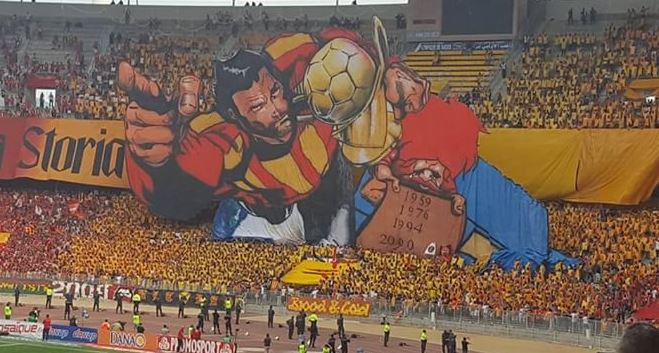
FAN INVOLVEMENT:
If the battle between fans of the two Casablanca Derby sides is like Muhammad Ali vs. Joe Frazier, then the Tunis Derby fan battle is at the very least Micky Ward vs. Arturo Gatti. Everything I’ve waxed poetic about between the Moroccan fan bases can be found here in Tunisia. There’s the hectic fan violence, with clashes between supporters and police being even more common than goals scored. Then there are the amazing tifos, with both sets of ultras in the opposite stands putting on a goddamn show. Basically copy/paste what I wrote there to here and replace Morocco with Tunisia.
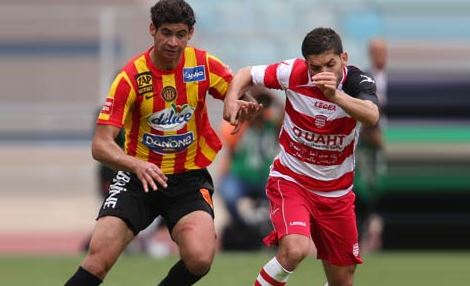
SUMMARY:
The Tunis Derby and its combattants — Esperance Sportive de Tunis and Club Africain — often get overlooked when it comes to the great African soccer rivalries, particularly in the northern part of the continent. But it has everything you’d want in a great rivalry and deserves its spot in the World Cup of Hate.
With that, we bid farewell to North Africa, home to the most popular clubs and rivalries in the continent. But there are still two spots remaining for the continent, and plenty of worthy contenders. Even given what’s been discussed in this part, some of the wildest parts of African soccer hatred still have yet to be revealed.
COMING UP IN PART 8: Tribal warfare, putting a night with your wife up for grabs, and seeing one of your greatest players create your greatest enemy.
 Ruben's Writings
Leave a comment