Two spots are left when it comes to African representation at the World Cup of Hate. While the previous three have been filled with plenty of hate, drama, and passion, there’s an argument that these last two have aspects the others don’t — and that makes them better. They’re both insane in their own way. While the other three have been in the north, we immediately head to the exact opposite end of the continent for the next rivalry.
Soweto Derby (South Africa)
Orlando Pirates F.C. vs. Kaizer Chiefs F.C.
“It goes from the townships to the players and creates a fantastic atmosphere. In some families, there is a lot of division on the day, people sleep without eating and go to bed very sad; that’s how deep and rife the rivalry is between the two teams.” — Lucas Radebe, former Chiefs defender
The unquestioned best rivalry in all of South Africa (both the country and region), the Soweto Derby is a fiesta full of hate, passion, drama, and prestige that has a surprising amount of tragedy and animosity packed into its comparatively short history. The divide between the Orlando Pirates and Kaiser Chiefs splits the capital city in two, although derby days bring everyone back together in one of the most unique atmospheres in all of soccer.
For a lot of these rivalries, it’s tough to pinpoint exactly when the hatred began. For the most part, it developed just because the two sides competed a lot or were in close proximity to each other, with the hatred brewing over time. That’s not the case in the Soweto neighborhood of Johannesburg, where we can pinpoint not just one moment, but one man responsible for creating the region’s biggest soccer rivalry. These days, the Soweto Derby has taken on an air similar to the Derby della Madonnina — constrained hate surrounded by respect, passion, colorful atmosphere, and (mostly) friendly competition. But it wasn’t always that way.
HISTORY:
Soccer didn’t reach South Africa until a few decades into the 20th century. By the time 1937 rolled around, children of migrant workers in the East Orlando neighborhood of Johannesburg’s Soweto township had been gathering to play informal games. They decided to form their own official group, called the Orlando Boys Club. In 1940, the club’s first president, Buthuel Mokgosinyane, bought the club’s black and white kit with his own funds. They began play in the Johannesburg Bantu Association’s Saturday League, gaining promotion to Division One in 1944. It was around that time that one of the players, Andrew Bassie, suggested the team name “Pirates,” inspired by both the club’s colors (like the Jolly Roger) and the 1940 Errol Flynn movie The Sea Hawk. The Orlando Pirates likely would’ve been part of the country’s first professional soccer league — the National Football League (yep) — had it not been for a rule: only clubs with exclusively or vast majority white players were allowed (due to the whole apartheid thing). But the club kept active in the South African Soccer League (the league for black teams) until 1971, when the National Professional Soccer League was created. However, the Pirates were no longer the only Soweto club in town by then.
By the time Kaizer Motaung left the Pirates, he was arguably the best ever player in South African soccer. Having made his Orlando debut at age 16, Motaung had impressed with his speed, power, and dribbling ability, along with his hard work. By the time he had turned 24, Motaung was dominating South African soccer, earning the nickname “Chincha Guluva” (“the man with the quick feet”). In 1968, Motaung was recruited to participate in trials for the recently formed North American Soccer League, specifically held by the Atlanta Chiefs (remember way back in Part 2 when I told you to remember that team name — here’s your reward). Motaung was signed by the Chiefs and scored two goals in his debut, which came against Manchester City no less. Motaung’s skill translated to America, winning the NASL Rookie of the Year award and leading Atlanta to the league championship. After another successful year in 1969, Motaung had established himself as a true star in the soccer world. However, he was about to have an even bigger impact in his home country.
After the 1969 season, Motaung went home to Johannesburg, where things weren’t going well for the Pirates. Orlando had been dealing with internal problems so great that the manager and three players were kicked off the club. Motaung, who had wished to return to the Pirates in the future, tried to resolve the impasse, but was unsuccessful. Now looking for a team to play for during the NASL offseason, Moutaung decided to organize his own team, forming Kaizer XI. The club played several friendlies with a stacked roster made up of former Pirates. The positive response led to Motaung considering setting up his own competitive club. Having just been part of the establishment of another team, Motaung used that experience to set up an expansion club in South Africa. Taking the name of his NASL Club, Motaung officially created the Kaizer Chiefs in 1970. They would be competing in the NPSL and sharing Soweto with Motaung’s old Orlando squad. From the moment the Chiefs were formed, the Soweto Derby began.
While the Chiefs were a mix of big names and rookies and the Pirates were a disorganized shell of itself, both clubs immediately became the best in the NPSL. The first ever Soweto Derby also put the rivalry on the map, with the Chiefs staging a wild comeback from down 3-0 to win 4-3. But Orlando would have its revenge, winning the first NPSL championship over their rivals by a single point. With wounds from the split still fresh and security forces largely not giving too much of a shit about black-on-black crime (apartheid, remember?), the opposing fans got right to work with the violence. One of the first ever derbies — the 1972 Champion of Champions Final — was overshadowed by skirmishes between supporters, with police needing to bring dogs onto the field to chase fans away. Later that year, a fan was stabbed to death, while referee Norman Burtenshaw was hit in the head by a can of beer. This pretty much set the tone, with intense fan violence stealing the show from what was honestly pretty good soccer being played.
As for the product on the field, both clubs immediately started to win. Orlando’s 1971 NPSL title was followed by another two years later, along with two MTN 8 (a tournament of the Top 8 league finishers) crowns. By the time the Pirates had claimed three straight Nedbank Cups (their domestic cup) from 1973-75, the Chiefs had finally won their first league title, to go with their own Nedbank Cup. In fact, all but one of the first seven NPSL seasons were won by either the Pirates or Chiefs, with Orlando having a 4-2 edge. In 1978, the NPSL merged with the NFL to form the country’s first “non-racial” soccer league. While Orlando got some trophies during this era, the 1980’s clearly belonged to the Chiefs, who won three of the next seven NPSL titles to go along with several cup competition wins, including the club’s first Telkom Knockout crown. By this time, the Chiefs and Pirates were two of the top (if not the top two) supported clubs in the country, which would be crucial for several reasons over the next several years.
In January 1985, a testimonial match was held for Ace Ntsoelengoe (a former Chiefs star) and Jomo Sono (a former Pirates star). According to the deal, 10% of revenue from the event had to go to various administrative bodies, including the South African FA. A complaint filed by Kaizer Motaung himself was vetoed by the FA. Coincidentally, the president of the FA, George Thabe, was also the head of the NPSL. Several clubs questioned his potential conflict of interest, especially the Chiefs. 15 of the 16 NPSL clubs petitioned for Thabe to resign as NPSL president, but Thabe remained and told the clubs to resign from the league. So, they did, with those clubs creating the National Soccer League, securing a sponsor, and establishing anti-apartheid principles. In order to maximize the commercial opportunity for the clubs and make sure the league’s finances were evenly distributed, both the Chiefs and Pirates acted as “big brothers” for the rest of the clubs, helping secure a good contract for the new league. This would be the first of a series of events uniting the two clubs, although the ones that followed wouldn’t have nearly as happy of an outcome.
As both Soweto clubs (mainly the Chiefs) kept performing well in the new league and in the various club contests, their supporters continued to become more violent. Things tragically culminated during a preseason friendly in 1991 at Oppenheimer Stadium in the city of Orkney. Although the stadium had a capacity of 23,000, an estimated 30,000 fans were packed in, with opposing fans not separated. After a controversial goal by the Chiefs was upheld, upset Pirates fans began to throw items at Chiefs fans. That led to a stampede of panicking fans trying to get away, but running into riot-control fences. The Orkney Disaster resulted in 42 deaths, making it the worst sporting incident in South African history at the time. After the match, both teams realized that things had gone too far and ahead of the next derby — which also looked to be overcrowded — decided to play a friendlier game, with fewer rough tackles. Somehow, the toned-down intensity on the field managed to work, with few incidents being reported. This is often cited as the point where the Soweto Derby changed to a more family-friendly atmosphere.
The mid-1990’s overall was a huge period of change for South Africa, with a new government overseen by new President Nelson Mandela creating a new constitution, new flag and national identity, and new race relations, signaling the end of apartheid. Change was also evident in soccer, with the remaining clubs in the NPSL agreeing to a deal with the NSL to form a new system — the Premier Soccer League. The NSL (now known as the DStv Premiership) remained the top flight league, while the NPSL (now the National First Division) became the second-highest league. But that wasn’t the only major change. For the vast majority of the Soweto Derby’s history, the Chiefs had been the top club in terms of league titles and overall silverware. However, Orlando had finally emerged from its drought, winning one of the last NSL titles in 1994. That qualified them for the 1995 CAF Champions League, where the club proceeded to go on an iconic run all the way to the final against ASEC Mimosas. After a 2-2 first leg draw in Johannesburg, a late goal by Jerry Sikhosana proved to be the decisive strike in the second leg in the Ivory Coast. With the victory, the Pirates became the first South African club (and the first from a country entirely in the Southern Hemisphere) to be continental champions.
The Soweto Derby would twice play a crucial role in the country — one at the end of the last millennium and once at the start of the current one. In 1999, violence was growing in the KwaZulu-Natal province ahead of the general elections. Feeling a need to unite the country, the Pirates and Chiefs created the Vodacom Challenge — a tournament where the two rivals would play against two invited clubs from across Africa. The exhibition was meant to bring the whole country together to cheer on the two iconic South African clubs against foreign competition. Incredibly, that worked as well, with various national leaders showing unity at the event and soothing tensions altogether. Fans would be united in 2001, albeit for a much different reason. That year, the Soweto Derby was held in Johannesburg’s massive Ellis Park Stadium. Even so, there were still several reports of overcrowding. At one point in the match, the Pirates scored to even the game. Fans who had been trying to get in scrambled to see what happened, causing security guards to fire tear gas. This made things worse, with fans being crushed in the chaos. The official death toll was 43, with the Ellis Park Stadium Disaster surpassing the Orkney Disaster as the worst at a sporting event in the country’s history. The Chiefs were particularly impacted, with their season of winning four trophies in four months marred by the tragedy.
One other factor has changed the Soweto Derby in the new era — an unprecedented adversary. Both the Chiefs and Pirates have won four league titles in the PSL era, good enough for second among all teams. Far above them, however, are the Mamelodi Sundowns, with 11. The Sundowns have unquestionably been the best South African team since the late 1990’s, raking in league, cup, and continental titles, earning their own Champions League title in 2016. Mamelodi has since stolen the spotlight from the other two clubs, like a more extreme version of Juventus winning over AC Milan and Inter Milan across the past decade (if the whole 2003, 2007, and 2010 seasons didn’t happen). However, this hasn’t meant the Pirates and Chiefs haven’t been able to find their own success. Both clubs have also done well domestically, with the Pirates reaching another Champions League Final in 2013 (a loss to Al Ahly). In 2021, the Chiefs made their first final against, of course, Al Ahly. Like their rivals did eight years earlier, the Chiefs fell to the Egyptian giants.
MAJOR ON-FIELD MOMENTS:
LITERALLY THE FIRST MATCH
Right from the get-go, the Soweto Derby has produced epic matches. Take for example the first ever league match between the Pirates and Chiefs. It was all Orlando early on, with goals from Johnny Kekane, Hubert Leroke, and Alfred Jacobs giving them a 3-0 lead over their new rivals. But the Chiefs immediately showed their never-say-die attitude, with Herman Blaschke and Petros Nzimande scoring just before halftime to make it 3-2. With the momentum fully in their favor, the Chiefs equalized through another goal by Nzimade. Then, with just three minutes remaining, player/coach Thomas Johnson scored a spectacular scissor kick goal to win the game 4-3 for the Chiefs. A dramatic comeback in a seven-goal match raised the bar high.
EXTRA TIME BEATDOWN
The very next year, the shenanigans between the two clubs continued. This time, the Chiefs and Pirates met in the Champion of Champions Final (the one where police dogs had to stop a pitch invasion). Well, that was because of what happened on the field. The Chiefs trailed 2-0 at the break and had lost Ace Ntsoelengoe to injury. But then a penalty gave the Chiefs a lifeline, which they converted into two more goals before time ran out. Orlando didn’t lie down, forcing the game into extra time tied at 3-3. However, any further resistance put forth by the Pirates was for naught, as the Chiefs scored four goals in extra time, which by itself is insane. The final count of 7-3 remains tied for the record largest margin of victory in Soweto Derby history.
TOO DARK TO END
The now-defunct Telekom Charity Cup has been the source of some of the most legendary Soweto Derby moments. A perfect example was the classic quarter-final clash of 1984. This time, it was the Chiefs who seemed poised for victory, leading 2-0 going into injury time. But that extra time began with a Pirates penalty, which was converted. Then, Nick Seshweni somehow found the back of the net to tie the game at 2-2. In extra time, Orlando stormed ahead thanks to Mandla Sithole, only for the Chiefs to equalize two minutes before the end with a Teenage Dladla goal. Tied at 3-3, the match should’ve gone to penalties. However, the referee decided it was too dark and suspended the match. Two months later, the Chiefs won the replay 2-0.
UNEXPECTED DOMINATION
In 1990, the Pirates were not in good shape. The club had nearly been relegated a few years earlier and had generally been unimpressive for a while. Thus, no one was expecting a result when the league-contending Chiefs strolled into town. Naturally, the Pirates proceeded to record their biggest ever Soweto Derby win that day. Orlando was up 3-0 before halftime thanks to Mandla Sithole, Ernest Makhanya, and Teboho Moloi. The Chiefs stoked the flames of hope with a goal just before the hour mark, but Ron Andley put a stop to that with two more goals for the Pirates in the final 20 minutes. The end result — a 5-1 Orlando win — is tied for the largest margin of victory between the two rivals and helped kickstart the Pirates’ revival of the 90’s.
IT’S JERRY’S WORLD
There hasn’t been a hat trick in the Soweto Derby in 25 years — a Nedbank Cup semi-final clash. The Pirates had just lost 3-0 to Real Rovers in the league, with the Chiefs going on to crush the Rovers 5-0. This left many predicting a big Chiefs win. However, Orlando had been without Jerry Sikhosana due to suspension. His presence would prove to be a major impact in the coming clash. Sikhosana helped Orlando take a 2-0 lead at halftime, before adding a third just after the break by finishing a cross from Helman Mkhalele. The Chiefs would try to answer with a goal, but Mkhalele put the nail in the coffin and gave Orlando a 4-1 victory. Incredibly, Sikhosana himself doesn’t consider this hat trick to be his greatest ever moment in the derby.
PLENTY OF PENALTIES
Both the Pirates and Chiefs took the long road to get to the 1997 Telkom Charity Cup Final. The Chiefs beat the Mamelodi Sundowns 4-3 in penalties, while the Pirates topped the Moroka Swallows 6-5, also on penalties. So naturally, after a back-and-forth showdown ended with both sides tied at 3-3, the Pirates and Chiefs went to penalties once again. What followed was a legendary shootout that began with both goalkeepers taking spot kicks (and missing) during the first five attempts. With the penalty count at 9-9, Orlando’s goalkeeper, Willy Okpara, redeemed himself and made a crucial stop. The Pirates converted the ensuing penalty and claimed a dramatic victory — 10-9 on penalties — that was far too insane for a preseason charity match.
DRAW IN DURBAN
With South Africa set to host the 2010 FIFA World Cup, officials with the South African FA set up a sort of roadshow to showcase their best soccer aspects, from teams to players to stadiums. That’s why in 2007, the Soweto Derby went on the road to Durban — some 350 miles southeast of Johannesburg. What was an unusual setting for this classic rivalry naturally produced a moment that set Soweto Derby history. Just 19 seconds into the match, Mabhuti Khenyeza found the back of the net for the fastest goal ever between the two sides. The packed venue saw plenty more goals — two from Excellent Walaza gave the Pirates a 2-1 lead in the second half. However, the Chiefs would rebound and even the score, ending the contest in a 2-2 draw.
A LIVELY BRAWL
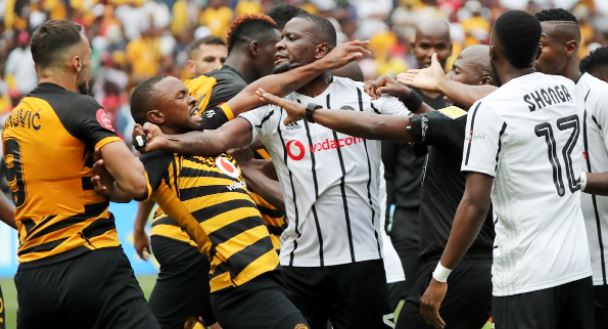
Unfortunately, the Soweto Derby has seen a recent streak of dull contests, usually low-scoring one-goal games or draws. The incredible crowds have largely been the selling point. However, in 2013 some of the players decided to take a page out of Slap Shot‘s book by alleviating the boredom with some good old fashioned fighting. About an hour into what would be a 1-1 draw, Andile Jale retaliated for being brought down hard a few minutes before. Suddenly, half a dozen players from both sides started throwing hands. Incredibly, despite seeing a literal melee break out right in front of him, the referee declined to show anyone a card — rather, he gave both captains a stern lecture before resuming play. I guess he must’ve been a 1970’s hockey fan.
SOWETO SUPER BOWL
This one is more of a marketing thing than a real derby moment, but I still like it because it brings the World Cup of Hate back to its origin — Super Bowl LV. One week before the Tampa Bay Buccaneers kicked the shit out of the Kansas City Chiefs, South Africa’s Buccaneers (Orlando) faced their version of the Chiefs in… the Chiefs. The league decided to embrace the American holiday by marketing the Soweto Derby as the “Soweto Super Bowl” in a series of (American) football-inspired matchposters. This sort of made the Soweto Derby go viral for a bit on the internet. The Pirates followed their American counterparts by beating the Chiefs 2-1 in a match that saw the Chiefs miss chances like Kansas City’s offensive line missed assignments.
DO IT YUSUF
Anytime a non-European league gets highlighted by the (admittedly corrupt) governing body of the sport, it’s pretty cool. That happened late in 2022, when Orlando and Kaizer met in a low-scoring derby. Both teams were locked in defensively and seemed it would take something truly special to break the deadlock. Enter Yusuf Maart, a former Pirates player now suiting up for the Chiefs. In the 73rd minute, Maart pounced on the ball after a Pirates turnover near midfield. Maart took a drible, saw Siyabonga Mpontshane off his line, and launched a bomb that found the back of the net. Not only was the stunning goal the only one of the match (a 1-0 Chiefs win), but FIFA later reposted the video of the goal as a possible candidate for the Puskas Award.
STATISTICS:
HEAD-TO-HEAD RECORD
Pirates: 25
Chiefs: 28
Draw: 32
LEAGUE CHAMPIONSHIPS
Pirates: 9
Chiefs: 13
NEDBANK CUP
Pirates: 8
Chiefs: 13 (record)
TELKOM KNOCKOUT
Pirates: 1
Chiefs: 13 (record)
MTN 8
Pirates: 10
Chiefs: 15 (record)
CAF CHAMPIONS LEAGUE
Pirates: 1
Chiefs: 0
CAF SUPER CUP
Pirates: 1
Chiefs: 0
AFRICAN CUP WINNERS’ CUP
Pirates: 0
Chiefs: 1
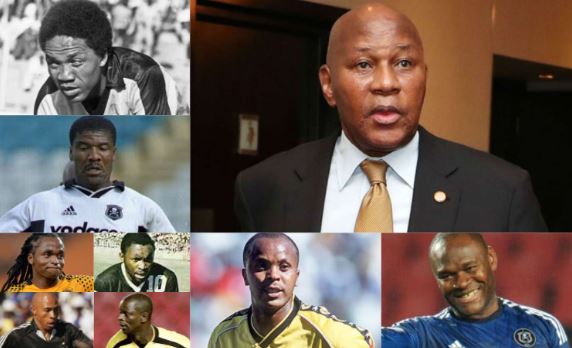
NOTABLE FIGURES:
KAIZER MOTAUNG
Not many people can say they’ve created one of the most iconic rivalries in the history of both their sport and country. Then there’s Kaizer Motaung, for whom we owe the existence of the Soweto Derby. An Orlando star growing up, Motaung achieved fame and glory in the U.S. with the Atlanta Chiefs before returning to Johannesburg. There, he found the Pirates in disarray, so he decided to create Kaiser XI to play friendlies. However, Motaung liked his new team so much that he decided to officially register them as the Kaizer Chiefs. The rest, as they say, is history.
PATRICK NTSOELENGOE
One of the greatest players in South African history, Patrick “Ace” Ntsoelengoe got his shot when his amateur club scrimmaged against Kaizer XI. Impressed, Kaizer Motaung invited the 17-year-old Ntsoelengoe to join the club, where he remained for the next 17 years (apart from a few stints in the North American Soccer League and Canadian Soccer League. Ntsoelengoe also holds the record for most career Soweto Derby goals with 19, nearly twice as many as second place. Many say Ntsoelengoe is one of the best unknown players of his or any era.
JOMO SONO
Born Ephraim Matsilele Sono, a fan dubbed this Pirates great “Jomo” (“burning spear”) due to similar leadership qualities as then-president of Kenya Jomo Kenyatta. Jomo Sono’s career began as a stand-in when an Orlando regular missed time. It ended more than a decade later, with Sono entrenched as a Pirates legend known for his dribbling and passing. Also nicknamed the “Black Prince of South African Soccer,” Sono went on to play with Pele on the New York Cosmos, then purchase the Highlands Park soccer club and rename them the Jomo Cosmos.
MARKS MAPONYANE
Marks Maponyane did a lot during his ten-year spell for the Chiefs. He scored 85 goals — more than anyone else in club history. He won the South African Footballer of the Year award three times, the only one to do so. In total, Maponyane did more than most to be remembered as a Chiefs legend. However, one year after leaving the Chiefs he returned to Soweto — this time as a member of the Pirates. Maponyane scored another 40 goals across four years and helped Orlando break its league title drought and win the 1995 CAF Champions League crown.
DOCTOR KHUMALO
In 1985, Theophilus Doctorson “Doctor” Khumalo transferred from the Moroka Swallows’ youth team to that of the Chiefs. In 1987, Khumalo made his senior team debut. Across the next 17 years, with the exception of a couple of stints overseas (including the Columbus Crew), he would roam the Chiefs’ midfield and set club records. The most important one was longevity, as his 497 appearances stand above anyone else in Chiefs history. During that time, Khumalo helped the club win several league and cup titles in the 1990’s, being named player of the year.
WILLY OKPARA
The Nigerian-born Willy Okpara played in more matches for Orlando than any foreign player in club history. He also played more than anyone South African player. Okpara’s 375 caps are a Pirates record, with his tenure in Orlando spanning 16 years. Okpara guarded the Pirates’ goal for the vast majority of his tenure, which included the club’s run to the 1995 Champions League Final (and victory). Even after his playing career ended, Okpara continues to be a presence in the Pirates organization — he’s served as goalkeeper coach for Orlando for several years.
JERRY SIKHOSANA
Although he allegedly grew up as a Chiefs fan, Jerry Sikhosana instead made history on the other side of the Soweto Derby. In two tenures across an eight-year span. Sikhosana left his mark on the derby, holding the most recent hat trick between the two sides. His goal scoring prowess also helped Orlando to their 1995 continental triumph. Sikhosana also has arguably the best nickname I’ve ever seen for a soccer player — “Legs of Thunder.” It allegedly comes from a champion racehorse on a South African TV series, but Wikipedia is my only source.
BENEDICT VILAKAZI
Despite being only 5’2″ tall, Benedict Vilakazi made an impact on both the Pirates and South African soccer as a whole. A strong, physical presence in spite of his size, Vilakazi earned the nickname “Little Napoleon” due to his leadership skills. He also sits atop Orlando’s all-time goal scoring mark, finding the back of the net 52 times. Off the field however, Vilakazi made news in a much darker note — accused of statutory rape of a juvenile. Vilakazi was eventually acquitted after he alleged the sex was consensual — the scandal blocked a potential transfer as well.
SIPHIWE TSHABALALA
One of the best Chiefs players in the recent era, Siphiwe Tshabalala doesn’t just have a fun last name to say — he has some serious goal scoring skill. During his 11 years and nearly 300 caps with the Chiefs, Tshabalala found the back of the net 48 times. But his biggest moments have come with South Africa’s national team. Tshabalala famously scored the first goal of the 2010 FIFA World Cup — an absolute rocket against Mexico. Tshabalala currently ranks third on South Africa’s appearance list and his country never lost a match in which he was able to score.
FAN INVOLVEMENT:
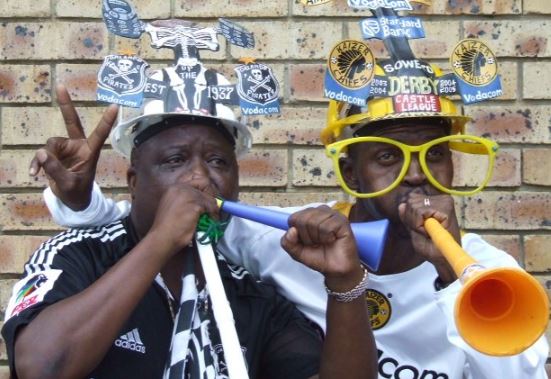
The tale of fan involvement in the Soweto Derby is twofold. First, you have the violence and death. The first three decades of the rivalry were packed with intense atmospheres and more than their fair share of fan violence. Some of that would spill out onto the field (like with the 1972 incident). Fans had to be separated in the stadium because they simply could not stand sitting next to a rival supporter. Things eventually resulted in the two disasters that caused crushing among fans(although the second one could be partially blamed on police ineptitude). It took efforts from the clubs themselves — both by playing less intensely and arranging special matches to show unity — to quell the tension. Slowly but surely, things have turned from the Derby della Capitale to the Derby della Madonnina.
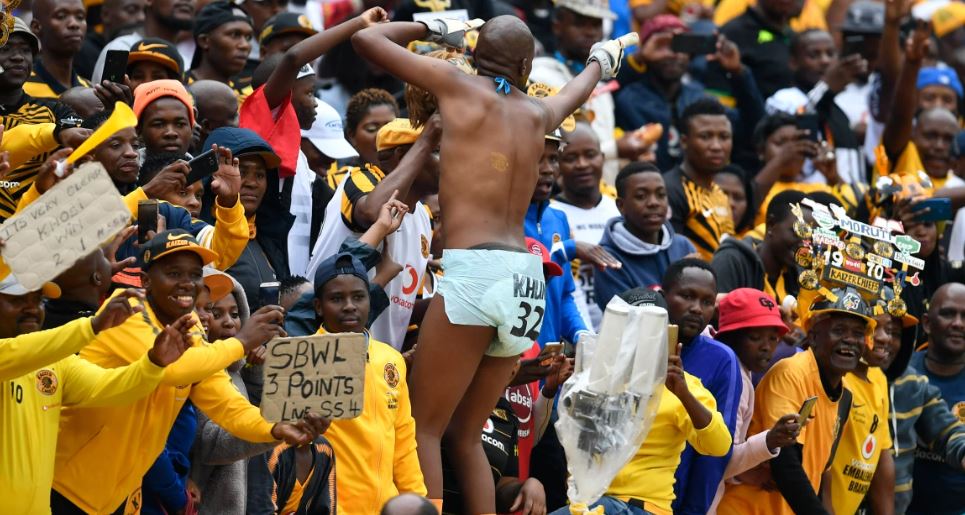
If you go to a Soweto Derby today, you’ll find both fans interacting in a way that resembles brothers giving each other shit but still having each other’s back. You’ll also find an atmosphere unique to soccer in general. While the Soweto Derby has your typical stands packed with tens of thousands of fans clad in jerseys, scarves, face paint, and other outlandish gear. It also has fans shouting traditional chants in Zulu, Xhosa, and Afrikaans, as well as people trying to sacrifice animals, burn certain embers, and doing everything they can to literally hex the opposition. Oh yeah, and being South Africa there are also a shit ton of vuvuzelas. It’s also just a generally raucous atmosphere, one that’s on my bucket list.
SUMMARY:
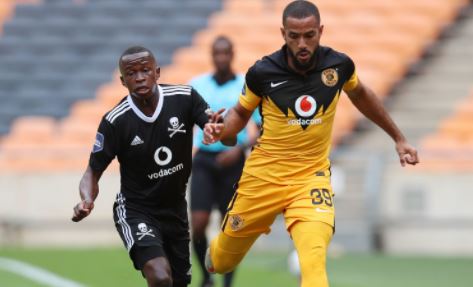
The Soweto Derby was formed by a club legend deciding to spawn a rival team. In the decades that have followed, matches between Orlando Pirates F.C. and Kaizer Chiefs F.C. have produced incredible drama, passion, and intensity and helped grow a unique, incredible, vocal, colorful, historic rivalry to legendary heights.
There’s only one more spot left open for Africa in the World Cup of Hate — filling it was one of the toughest decisions I’ve made during this entire experiment. While I originally thought I would have to work hard to find five rivalries worthy of moving on, it was quite the opposite. There are a ton of rivalries I could spend time writing about. But two others really stood out for me. Sadly, only one could be selected.
Kariakoo Derby (Tanzania)
Young Africans S.C. vs. Simba S.C.
“Simba and Yanga divide the country into two. It divides families.” — Michael Mwebe, soccer consultant based in Dar es Salaam
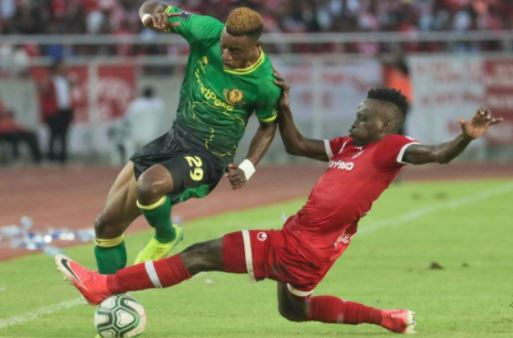
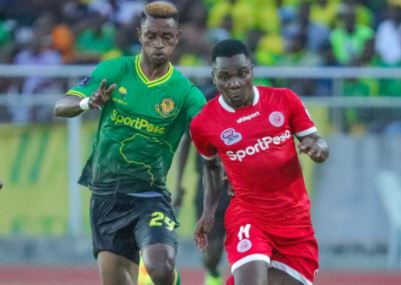
Dar es Salaam — the largest city in East Africa — plays host to the Kariakoo Derby, a colorful, passionate, intense, dramatic, controversy-filled rivalry with roots that go back decades before the founding of Tanzania itself. Matches between Young Africans S.C. and Simba S.C. don’t just stop the country — they put the entire region on hold.
The ward of Kariakoo in the city of Dar es Salaam is known for two things — its sprawling market and a major soccer derby that can compete with the best in the continent. Compared to the other four rivalries we’ve focused on in this continent, this one contains the players and league overall at the bottom of the tier list. Neither Simba nor Young Africans (also known as Yanga) have managed to do much in continental competition, unless it’s divided by region. Even so, don’t take this hatred lightly — attending a match between these two clubs should be on every hardcore soccer fan’s bucket list.
HISTORY:
Much like many of Africa’s famous rivalries, the Kariakoo Derby dates back to the struggle for independence. In 1935, the country — then known as Tanganyika — was under European control, with its social activities largely controlled by its overlords. Not a lot of natives had a shot of participating, which brewed resentment among the natives. Eventually, a group of people in Dar es Salaam had enough and decided to form their own club to compete in a league full of “non-African” clubs. Although their roots can be traced as far back as the 1910’s, the recognized history of New Young began with this decision in 1935. The name was later switched to Dar es Salaam Young Africans SC, which itself was eventually changed to Young Africans Sports Club. Given their name, the club became a calling card for those looking to challenge the establishment and represent their native country.
However, things didn’t exactly get off to a smooth start. The first season did not go well, with its members squabbling over poor performance and results. The divide only grew in 1936, a year with even poorer results. Finally, at the end of the season, one side had enough and decided to leave the club entirely. That group — largely consisting of Arabs — decided to form their own club. Taking inspiration from Queen Elizabeth — who in 1936 had ascended when her husband, King George VI, became king (their daughter, Elizabeth II, would take over the throne in 1952) — they named their club Queens F.C. The club later changed their name to Eagles, then to (of all names) Sunderland, then finally to Simba, which is Swahili for “lion” (The Lion King really got creative with its character names). Regardless of the name, the split instantly created a prominent rivalry in the country, one that has only grown ever since.
Both clubs would play on and off again, with neither side gaining a particular advantage in these early matches. However, perhaps the most significant impact each side had early was that they drew the dividing lines when it came to the rivalry. Yanga became known as more of a people’s club with fans in the lower class, while Simba was known as the representative for the Arabic population and higher classes. Given the melting pot that Dar es Salaam is, various tribes and neighboring countries also took their sides in this great debate. The reason for the latter being involved could also be due to the derby’s political importance. Both clubs were involved in the fight for independence, which eventually came in the 1960’s. British rule officially ended in 1961, with Tanganyika becoming a democratic republic a year later. Then, the Zanzibar Revolution saw a new government installed, with the country of Zanzibar merging with Tanganyika. Combining the two names, Tanzania was born.
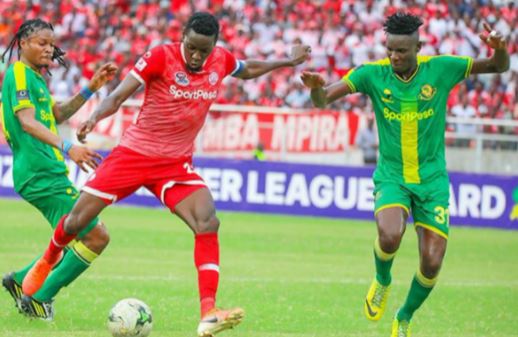
With the birth of a new country came the creation of a new national soccer league — the Tanzanian Premier League. Both Simba and Yanga were selected to be part of the first season and have never stopped competing for titles since. Simba won the first championship in 1965 and repeated the following year before Yanga won five in a row from 1968-72. Simba later went on its own five-year title run from 1976-80, setting the tone for what the league would ultimately become year after year — a battle between the two Dar es Salaam clubs for domestic bragging rights. Both Simba and Yanga have combined to win roughly 75% of all Tanzanian Premier League titles, including every year since 2014. The league trophy has also never left the Dar es Salaam region in general in the new millennium. Both clubs have combined to win the last six championships, splitting them down the middle. Interestingly, the Tanzania FA Cup has seen a lot more parity, with each club only winning a handful of cups.
With the league pretty much taken care of and the cup largely a crapshoot, the highlight of the season for both clubs has been the Kariakoo Derby, with extensive media coverage in the days leading up to the match that would make El Clasico coverage seem tame by comparison. This overcompetitiveness has produced plenty of controversy, with last-minute penalties and dramatic goals. It’s also produced an overall even record when it comes to statistics, with Yanga barely edging out Simba in terms of wins and being even when it comes to draws. While the vast majority of derbies are close, Simba holds the all-time record with a 6-0 win over Yanga in 1977, to go with a 5-0 win in 2012. While they have never advanced far in the competition, Simba also holds the CAF Champions League record for largest comeback, surviving a 4-0 home defeat to the Mufulira Wanderers to record a 5-0 win in Zambia to advance 5-4 in 1979.
This past year saw one of the most controversial moments in the history of the Kariakoo Derby, with little of it taking place on the field. In May, it looked like things were set for a normal derby day. However, on the day of the derby, the Tanzanian FA suddenly decided to move kickoff time ahead by two hours. The reason for this is unclear — rumors swirled that it was because of fear of a lack of fan control. Either way, the change of time was a shock to both clubs, especially Yanga, who outright refused to play. The club left the stadium and Simba, of course, tried to brand their rivals as scared. Fans were understandably pissed about the derby being canceled at the last minute for seemingly bullshit reasons. Officials from both the league and FA spent days arguing with both clubs, with the matter getting to the point where the Tanzanian government got involved. Finally, it was agreed that the clubs would meet again at a later date, in spite of the pandemic and general chaos.
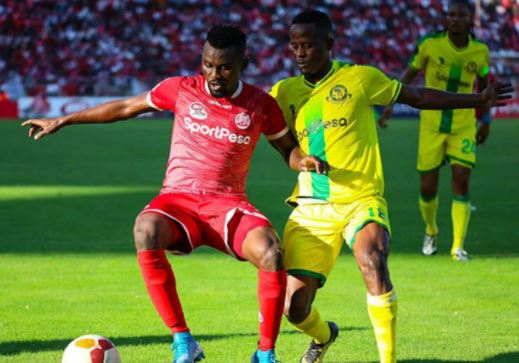
MAJOR ON-FIELD MOMENTS:
AFRAID OF ANOTHER ASS-WHOOPING
The 1968-69 season was one of the most memorable years in the history of the Kariakoo Derby, for interesting reasons. With only a few years of league matches between them and their rivals, Yanga had proven to be better than Simba, as evident by the first match of the schedule. Yanga absolutely destroyed Simba 5-0 — to this date their largest margin of victory over their eternal enemies. Both Maulidi Dilunga and Salehe Zimbew scored twice, while Kitwana added another close to the final whistle. The return leg was expected to be another beatdown, so much so that Simba straight up refused to show up. They forfeited that match, meaning three free points for Simba and such an act of cowardice that it remains a derby hallmark to this day.
A HISTORIC HAT TRICK GETS TO SIX
Across all the decades of battles between Simba and Yanga, only once has a player scored three goals in a single match. The only man to record a Kariakoo Derby hat trick was fittingly nicknamed “King” — Abdallah Kibadeni became a Simba legend with his performance against Yanga in 1977. Kibadeni scored in the tenth and 42nd minutes before topping things off in the 89th minute. But that last goal didn’t just complete Kibadeni’s hat trick — it also capped what remains to this day the single biggest ass-whooping in derby history. In between Kibadeni’s first and third goals, Jumanne Hassan Masimenti scored twice and Selemani Sanga found the back of the net as well. The result was a 6-0 win for Simba, a legendary demolition of their rivals.
FROM LOCKED IN TO A LAUGHER
The Kariakoo Derby was incredibly competitive during the late 2000’s and early 2010’s. From 2009-2013, Yanga and Simba traded league titles, with neither team truly getting an edge. That’s why what happened at the end of the 2012 season stands out as a shocker. Simba was about to win the league and were looking to put a bow on their season. They did that and then some, putting their rivals on blast. Emmanuel Okwi got Simba on the board in the first minute, although it took more than 50 more for the next goal. But then the dam broke, as Felix Sunzu, Jima Kaseja, Patrick Mafisango, and Okwi again found the back of the net. The end result was a 5-0 ass-whopping, one of the largest margins of victory between the two sides.
THE LIONS’ PRIDE
Arguably the best match in the history of the Kariakoo Derby took place around eight years ago. For the majority of the action, it didn’t look like it would be anything but a decisive Yanga victory. Mrisho Ngassa put Yanga up early before Hamis Kiiza added another to make it 2-0 at halftime. Kiiza once again found the back of the net shortly after the restart to up the lead to 3-0. But that goal seemed to spark something within Simba, who answered rather quickly. Less than ten minutes after going down 3-0, Simba were suddenly trailing by just one goal thanks to strikes from Betram Mwombeki and George Owino. Yanga held off the charge until the final minutes, when Gilbert Kaze managed to squeak in the equalizer, securing the remarkable 3-3 draw.
SHOCKING CUP BEATDOWN
Defeating your rivals in the league cup competition? Amazing. Beating the shit out of them en route to winning the whole tournament? Where do we sign up? Simba got to experience this joyous moment just last year. Facing off against Yanga in the Tanzania FA Cup semi-finals, Simba got on the board in the 21st minute thanks to Gerson Fraga. A one-goal halftime margin was quickly tripled with goals by Clatous Chama and Luis Miquissone in the 50th and 52nd minutes. While Yanga managed to get on the board 20 minutes before the end of the game, Muzamiru Yassin piled on with another score, making it a 4-1 final. The victory and eventual cup win also capped a year that saw Simba claim the Community Shield and the league title.
THE RESCHEDULED DERBY
Rarely has there been such an incident of administrative bullshit and spite as the days before what was supposed to be the most recent Kariakoo Derby. The May 2021 game was about to be played as normal when, on derby day, officials suddenly and without warning moved the kickoff time up by two hours. Citing unsafe physical and mental obstacles to its players, Yanga straight up refused to play, walking out of the stadium. After some initial prodding by Simba, both clubs couldn’t come to an agreement on a makeup day for several days. However, the match did eventually happen in July. Simba, in position to clinch the league title, had to put their celebrations on hold as Yanga secured a 1-0 win to deny their rivals and get a bit of justice.
STATISTICS:
HEAD-TO-HEAD RECORD
Africans: 38
Simba: 32
Draw: 39
LEAGUE CHAMPIONSHIPS
Africans: 28 (record)
Simba: 22
TANZANIA FA CUP
Africans: 5
Simba: 7
FAT CUP
Africans: 3
Simba: 4
COMMUNITY SHIELD
Africans: 7
Simba: 9 (record)
CECAFA CLUB CHAMPIONSHIP
Africans: 5
Simba: 6 (record)
NOTABLE FIGURES:
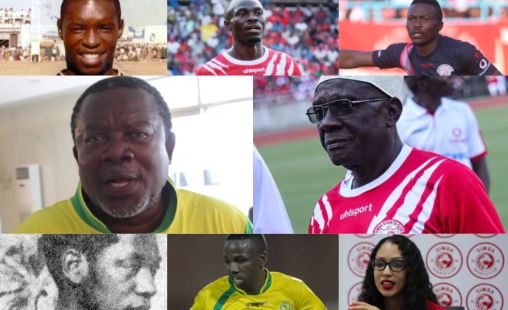
ABDALLAH KIBADENI
Without what he did on one night in 1977, Abdallah Kibadeni would’ve still been an icon for Simba. But throw in that magical night and Kibadeni becomes an all-time great. Of all the players to have suited up for Simba and Yanga over the years, Kibadeni is the only one to have recorded a hat trick in the Kariakoo derby. But his last goal of the game — which came in the 89th minute — didn’t just cement Kibadeni’s legendary rivalry status. It made the final count 6-0, which remains the most one-sided result of any match ever played between the two rival sides.
MAULID DILUNGA
One of the most accomplished — if not the most — Tanzanian soccer players ever produced, Maulid Dilunga played for his country for more than a decade. He’s also on the slightly growing list of players to have played for both Yanga and Simba, although his time with Yanga is greater and vastly more prolific. Although Dilunga was one of the best African players of his generation, he was nicknamed “Eusebio” after the Mozambique/Portuguese legend, which if nothing else at least is a testament to just how highly people thought of his skills. The Black Pearl was no joke.
SUNDAY MANARA
Arguably the greatest winger Yanga has ever fielded, Sunday Manara didn’t just make history for his club and country, but for his people overseas. Manara mainly made a name for himself overseas, playing at one point for Heracles Almeno of the Eredivisie. Known for making calculated passes and runs, Manara earned the nickname “computer,” even though at the time computers weren’t nearly as popular. Interestingly, the Yanga legend Manara has a son, Haji, who is a prominent executive with Simba and is one of the largest sports figures with albinism.
MOHAMMED HUSSEIN
Nicknamed “Mmachinga,” Mohammed Hussein joined Yanga in 1993 and proceeded to dominate the league. By the time he decided to hang up his cleats, Hussein had become the all-time Tanzanian Premier League scoring leader with 152 goals and set the all-time single season scoring record with 26 goals across 1995-96. During that time, Yanga won 12 titles, including eight league championships. Hussein continues to support his old club to this day, working as an assistant coach for various Yanga youth teams, specifically the U17 and U20 groups.
MRISHO NGASA
One of the greatest players in Tanzanian soccer history, Mrisho Ngasa joined Yanga in 2010 in what was at the time the biggest transfer in the country. He’s since spent three different stints with the club (as well as one with Simba). Ngasa also had trials with West Ham United and the Seattle Sounders, although he decided to stay at home. Maybe that’s why he’s so superb for the national team. One of only two players with more than 100 appearances for Tanzania, Ngasa is the current all-time scorer, putting the ball in the net 25 times for his country.
EMMANUEL OKWI
Emmanuel Okwi has one of the more unique histories of any player in Kariakoo Derby history. Okwi first broke out onto the scene with Simba, scoring in the first minute of the club’s 6-0 rout of Yanga. A move to Tunisia was reversed because his new club failed to fully pay Simba, but Okwi managed to swing a deal to move to Yanga of all clubs. But after a year, Okwi went back to Simba, citing a breach of contract in another payment controversy. Okwi would terrorize his old club, scoring more than 50 goals in his final spells with Simba (and 70 total for the club).
AISHI MANULA
Arguably the best goalkeeper in Tanzania (the current starter for the national team at just 26 years old) and definitely the best netminder in the Tanzanian Premier League, Aishi Manula is the future of the sport in the country and a huge reason why Simba has won the past four Tanzanian Premier League titles. Constantly rated as one of the best players in the league — if not the best — Manula’s acrobatic saves have kept Simba in many competitions, especially continental ventures. Some recent large upsets in Africa by Simba have been because of him.
BARBARA GONZALEZ
Being a female executive in the sports world takes bravery and thick skin, due to the sexist assholes in and around the business. It takes massive guts to be a female CEO for one of the most popular sports teams in Africa. But then Barbara Gonzalez is no ordinary woman. The 31-year-old is the current CEO of Simba and is apparently killing it so far. Interestingly, she took over after her predecessor, Senzo Mbatha, left to take the same position with Yanga. No matter which side of the rivalry you’re on, success for Gonzalez could be huge for women in Africa.
FAN INVOLVEMENT:
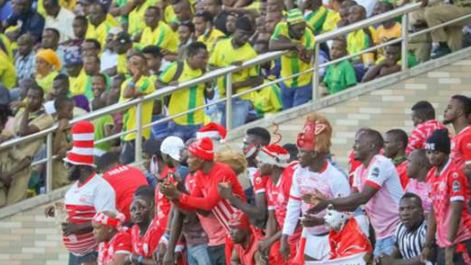
Like any proper soccer rivalry, the Kariakoo Derby has seen its fair share of violence and intensity between the two sets of fans. But what sets the Yanga-Simba dynamic apart is just how much it takes over not just Dar es Salaam or Tanzania, but the entirety of East Africa. This rivalry extends far beyond borders, with the whole region fixated on the match. Throw in the passion in the stadium and the colorful green/yellow and red/white shirts, scarves, flags, and other items in the stands and streets — you have a pretty spectacular view. In fact, Simba’s secretary general confirmed that his wife isn’t allowed to wear green or yellow and their house is decorated in red and white. The passion each of these sides have for their teams and against their rivals has also gone viral, for… interesting reasons. Recently, one man made headlines for walking 15 days in order to reach Dar es Salaam in time to watch the derby. But that pales in comparison to the legend of 2017, when two rival fans wrote up and signed a contract, betting that whoever’s team won that day got to spend a night with the other’s wife (Simba won 2-1). While the matter was eventually settled financially, a night with wives is apparently a common stake for the rivalry, according to club officials.
SUMMARY:
Passion, hatred, and drama exude from every pore of the Kariakoo Derby, which brings all of East Africa to a stop every time Young Africans S.C. and Simba S.C. add another chapter to their colorful rivalry.
Thus, the five rivalry slots for Africa in the World Cup of Hate have been filled. But that doesn’t mean those five were without tough competition. That other rivalry that barely missed out (and would’ve been a shoe-in had I been able to send six of them from Africa) was the Mashemeji Derby (also known as the Nairobi Derby) between A.F.C. Leopards and Gor Mahia F.C. It’s the oldest rivalry in Kenya and has roots that literally date back to rival tribes hating each other. Its history is filled with violence, hooliganism, and fan riots, which would typically give it a spot on the list. However, not only has the rivalry been fairly one-sided for a while, but a large part of Kenyan soccer fans are also following the Kariakoo Derby. Not a lot of Tanzanians have a stake in the Mashemeji Derby. While a good choice, for those reasons it fell just short.
There are a few other African soccer rivalries worth mentioning before we go. Ghana’s two best clubs — Asante Kotoko and Hearts of Oak — make up the Derby of Ghana, which often brings the country to a standstill. In the Ivory Coast, ASEC Mimosas and Africa Sports contest the Ivorian Derby, which has become more relevant with the success of Ivorian players in major European leagues. Back in North Africa, the Derby of Algeria between MC Algiers and USM Algiers never fails to please the crowds, while Egypt has another great rivalry in the Canal Derby between Ismaily SC and Al-Masry SC.
From the cradle of civilization, we now head to the largest and most populous continent on Earth — Asia. While not necessarily known for its soccer, there are plenty of hidden gems of hatred to be found from shore to shore. Let’s go digging.
COMING UP IN PART 9: The Asian Old Firm, a shit ton of penalties, a riot caused by a punch and a late goal, and an old rivalry given new life in the new millennium.
 Ruben's Writings
Leave a comment