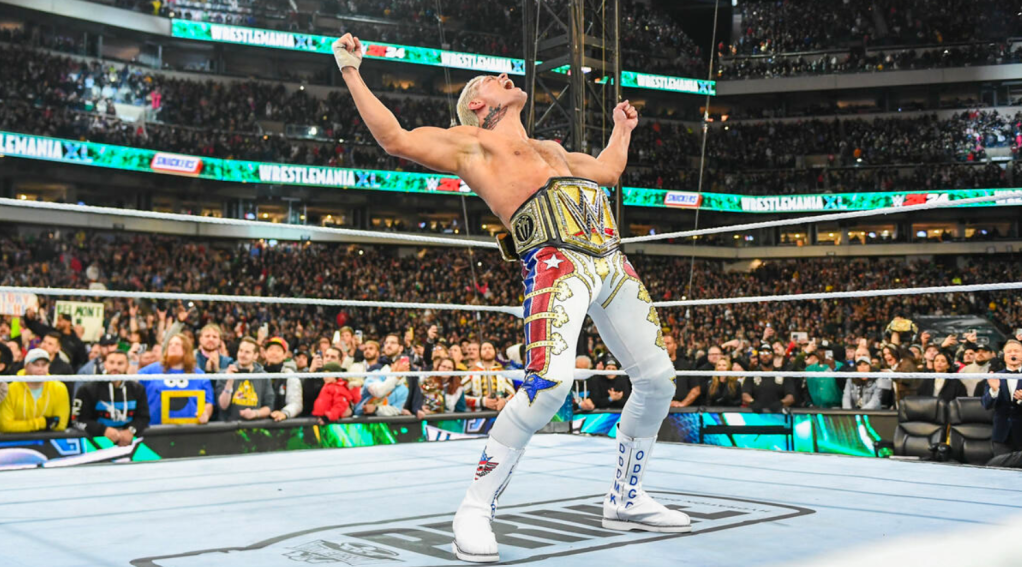
As I creep up in years, I’m discovering that the term “with age comes wisdom” is not exactly true (though that may be just me being a dumbass). However, it does allow for a better perspective on things. One such thing I’ve been thinking about is football, specifically how football sucks.
Now when I say football sucks, I don’t mean that football is bad. It’s objectively a fun sport to play and watch. Obviously I still enjoy football, or else I wouldn’t be writing this newsletter. What I do mean is that football sucks because it doesn’t like me. I’ve been a football fan for more than 20 years. During that time, my favorite team has made the playoffs twice, won zero playoff games, and sparked countless facepalm reactions for doing stupid shit. Meanwhile, I’ve seen Tom Brady win more than a handful of titles and an arch-rival team win the Super Bowl four times, with the final three thrusting one of those rivals into the national spotlight. I literally cannot watch anything football-related without an ad featuring a member of the Kansas City Chiefs playing during a commercial break. Throw in the fact that the newest title was won in Allegiant Stadium and football has pretty much done nothing but provide me with pain. Even the one time I won the Epic League, the world literally shut down a few months later.
It’s not just football that’s giving me the middle finger. As you all know, the Sacramento Kings’ once-promising season gradually deflated as it went on, finishing with countless blown leads and choke jobs, with an absolute flop in the Play-In round being the cherry on top (at least we beat the Warriors). Speaking of choking away playoff position, just check out what the Philadelphia Flyers pulled off this year. The worst part: they’re the better of my two favorite hockey teams, with the other being the San Jose Sharks (the worst team in the league). The Boston Red Sox got off to a pleasant start, only to lose Trevor Story for the season. The Sacramento River Cats are now tied in with the bullshit A’s saga (more on that later), while I’m banned from attending Sacramento Republic FC matches this season due to how last year ended.
However, there are two good things that are not only important to me, but are also happy and are keeping me sane.
GOOD THING NO. 1: Cody Rhodes is finally WWE Champion.
One year after WWE decided to keep the belt on Roman Reigns and prevented me from seeing Rhodes’ coronation in person at Wrestlemania 39, the company finally pulled the trigger on the new face of the company. In the main event of an incredible Wrestlemania 40, Rhodes (with the help of Seth Rollins, Jey Uso, John Cena, and The Undertaker) got his revenge against Reigns (as well as The Rock, Solo Sikoa, and Jimmy Uso) by pinning the Tribal Chief to become the new WWE Undisputed Universal Champion. It was an overbooked clusterfuck that also may have been the greatest Wrestlemania main event ever. It paid off more than a decade of storytelling in the most satisfying way. When Charles Robinson’s hand hit the mat for a third time with Reigns’ shoulders still pinned to the canvas, the wrestling world had one of the loudest, most cathartic reactions to anything in history.
Being a newer wrestling fan and not growing up watching these kinds of shows, I’ve been experiencing a lot of “firsts” over the past two years. This was my first Wrestlemania moment, when I knew what I was watching would be remembered forever. It was also the first time my favorite wrestler won the world championship, which makes catching Raw and Smackdown highlights feel pretty good. Cody has gone through one of the most emotional, unique journeys in wrestling history. It’s so happy and satisfying to see the company that reduced him to essentially a jobber wearing face paint and a leather suit (before straight up releasing him) now making him the face of the entire brand and giving him the most prestigious championship in all of wrestling. This is the freshest the industry has felt since I became a fan and I’m pumped to see what happens next. While I’m happy Cody can call himself champion, I’m not going to be pissed if he doesn’t get a super long run like Reigns did. But at least please let him still be champ when Smackdown returns to the Golden 1 Center on September 20. I’d very much like to see him in person as champion. Just look at this poster for Backlash. Holy shit — I know I’ll never buy a replica title belt, but goddamn does that look good, especially with the side plates.
If you look in the background of that first photo, you can see Tom Grossi, one of my favorite NFL YouTubers (and the one I’ve actually met) who was in attendance for both nights of Wrestlemania 40. I, too, would’ve liked to be there. In fact, it was my intention, having felt slighted by being denied the pleasure of seeing Rhodes win the title in person last year. However, something came up and ultimately I had to choose between that something and Wrestlemania 40. That something did involve me traveling, however, and much like Rhodes did with his victory in Philly, it allowed me to finish the story.
GOOD THING NO. 2: I went to Antarctica.
Yeah. I still can’t believe it, either.
Across several newsletters, I’ve mentioned my goal of stepping foot on every continent. After returning from Australia last year, I knew the end of that quest was near, with just South America and Antarctica left. Given the amount of money I’d have to save, the slim chances of finding a good deal on a cruise (the only option to travel to Antarctica), the slim time limit for such a trip (November-March, due to the ice being thin enough to sail through), and the overall necessities required to go to the bottom of the world, I figured that I would have to wait over a year until November of 2024 at the earliest. But there was a small chance of squeezing something in the season before.
Guess what — in February, I managed to find a deal that was not cheap but still affordable, for the last window of the travel season. Usually, these kinds of trips are booked more than a year in advance. I booked mine not even a month and a half before departure. I then rushed to book the last-minute flights and lodging I would need to even get to the boat. It was also the second-cheapest option (a three-person cabin) on the shortest overall Antarctica trip being offered by the cheapest overall reputable company I could find (no super luxurious amenities), which was having a 25% off special for the trip. It still cost nearly $6,000 — more than double what I’ve spent on each of my previous international trips combined. Throw in the required travel insurance, buying enough warm clothes to not freeze to death, and getting to the spot in South America where we’d be sailing from, and I’d wager that I spent more than ten grand, all things considered.
Worth. Every. Fucking. Penny.
I decided to take a few days to enjoy South America before heading down south. The first two of those days were spent in Santiago, Chile. Despite losing a decent chunk of time catching up on sleep (I can’t sleep on planes to save my life), I still managed to have a good time. I walked around the Downtown area a lot (unintentionally making my way through an entirely female International Women’s Day protest in the process), checking out the Gran Torre Costarena (the tallest building in South America), San Cristobal Hill, Santa Lucia Hill, and La Moneda Palace. I also ate at a pizza and beer restaurant (literally called Pizza & Beer) that was Argentina-themed, with a mural of Lionel Messi and Diego Maradona on the wall.
I intended to arrive in Ushuaia (the town at the bottom of the country where we’d be sailing from) three days before departure. However, my flight from Santiago to Buenos Aires was delayed by five hours, meaning I missed the second leg flight to Ushuaia and had to spend an unexpected night in Buenos Aires. After managing to secure another flight to Ushuaia the following day, I arrived at the southernmost city in the world. Knowing for years that this was the most convenient way to get to Antarctica, I had been researching and looking at Google images of Ushuaia for years. To finally be there, seeing the incredible landscape of Tierra Del Fuego, was surreal. I spent the next two days walking around the city, checking out Tierra Del Fuego National Park (the most beautiful non-Antarctica place I’ve ever been), and enjoying some quality South American beer, including Cerveza Cristal. I also officially checked in with the tour company, G Adventures, and got everything set up for the voyage. The following afternoon, March 13, I boarded the bus that took us to the port and stepped onto the ship. As I joined the rest of the passengers on the top deck to look at the double rainbow in the distance, the ship left port and began its journey through the Beagle Channel and towards the last great wilderness on Earth.
Over the next two days, the ship made its way through the Drake Passage, considered by many to be the most dangerous water in the world. Fortunately, we got extremely good luck and only experienced minor turbulence. In the afternoon of the second day, we finally saw land (well, ice) and knew we had actually made it to the Antarctic Peninsula. There was only one way to celebrate — by jumping into the Southern Ocean. I was among the passengers who took part in the polar plunge, doing a cannonball as I jumped into the literal freezing water (the water temperature was 32 degrees, so fuck anyone who gives me shit for yelling in a slightly high-pitched voice in that video). The next day, we put on our parkas, got into smaller speedboats (called zodiacs), and sped to shore at Port Charcot on Booth Island. It was there, surrounded by a shit ton of ice and gentoo penguins, that I took my first steps onto the rocky beach, finally accomplishing my nearly decade-long goal of stepping foot on every single continent. In that instant, all of the stress of travel, fear that something would go wrong and I wouldn’t make it, and general anxiety began to melt away. No matter what happened next, going 7/7 could not be taken away from me. I truly began to let myself enjoy this once-in-a-lifetime experience.
I also may have done Cody Rhodes’ “Whoa!” celebration while on Antarctica.
I could go through the many great experiences I had over the four total days we spent at the world’s most southern continent. However, this opening section is long enough and doing so would turn this newsletter into something as long as the World Cup of Hate. But allow me to lay out some highlights: seeing a “Sharks vs. Jets” esque showdown between a pod of humpback whales and a pod of orcas, being told “you came to the wrong neighborhood, motherfucker” by a trio of gentoo penguins, getting so close to a leopard seal that it bit the zodiac I was in, capturing the moment a huge chunk of ice broke off a glacier and fell into the water, just being around the metric fuck ton of penguins that call Antarctica home, having like six humpbacks feast on krill within feet of our zodiacs for like 20 minutes, seeing the incredible cliffs and caves of Spert Island in a snowstorm, sailing over an active volcano and getting to check out ruins of man-made buildings on Deception Island, and sneaking a Heiniken onto President Head so I could say that I’ve drunk a beer on all seven continents as well. In addition, I never let myself get used to being in Antarctica, so I could appreciate constantly being around these incredible displays of ice and rock, some of the most beautiful nature I’d ever seen.
What also made the trip so memorable was the fact that I didn’t experience all of those things alone. While I did travel by myself, I was far from the only youngish solo traveler on board. My two cabin mates (one from Germany, the other from India) were around my age and spoke fluent English. Along with a guy around our age from England who we adopted as the fourth member of our cabin, the four of us spent a lot of time together throughout the trip. We ate together, got on the same zodiac and walked through Antarctica together, and drank a lot of alcohol and played a lot of darts in the bar at night (I drank more alcohol on that boat than I did in the calendar year of 2023). It wasn’t just a sausage fest, though — we became friends with a lot of other people and filled out our general group of like nine/ten people with women. We also ended up going to a brewery and nightclub when we got back to Ushuaia and didn’t get back on board until 4 a.m. (we had to wake up at 6 a.m. to start disembarking). Getting to go through all of that with people like me and having the bonds of friendship weave their way through these experiences put about a thousand cherries on top of the sundae. We made a WhatsApp group afterwards and are tentatively planning to reunite on a trip in the fall. The girls ended up deciding on the destination, which, of all places, I shit you not, is Morocco. We’ll see if that ends up happening.
But in the end, even though I know how much hyperbole I’m about to spill, this was the trip of a lifetime. I can’t remember the last time I was that happy. Like, I start to cry every time I remember how happy I was on that boat. If I never end up making it back to Antarctica, I’m content with the experience I already went through. No matter what words I write or pictures I show, I can’t properly describe how incredible it was to be there. If you’re able, you all have to go at some point in your lives.
So, after going 7/7 on continents, what happens next? Well, I’m not giving up on traveling. Not only do I still have 27 states and 11 (for now) MLB ballparks to visit, but there are so many other countries I want to visit and quite a few I want to revisit. Even if I don’t go to Morocco, I want to take another international trip this year. Also, accomplishing one of my life’s greatest goals was pretty fucking cool. I want more of that feeling, so I’m even more motivated to accomplish some of my other big goals. Hopefully I’ll have a positive update on at least one of those goals by the end of the year.
One small annoyance about the trip was that there’s no internet in Antarctica and the only way I could connect was by buying expensive wifi onboard the ship. My time onboard coincided with the start of NFL free agency, so there were A LOT of moves I had to catch up on when I got back to shore. I’m probably still not 100% filled in, so at least I have an excuse for the following draft projections being completely terrible.
MOCK DRAFT
1. BEARS: Caleb Williams (QB, USC) — With all the uncertainty surrounding this draft, I waited as long as possible before finishing my mock draft. But no matter how long I wanted, there was only one choice for the top pick, especially after Chicago shipped Justin Fields to Pittsburgh.
2. COMMANDERS: Jayden Daniels (QB, LSU) — You have no idea how badly I want Daniels to go to the Raiders. But ultimately I think no one offers Washington a big enough ransom to trade, with them taking the one QB they’ve seemingly pissed off during the evaluation process.
3. PATRIOTS: Drake Maye (QB, UNC) — Although it seems New England would be more willing to trade down, the more desirable prospect will have already been taken. So, they go for the newest white QB prospect to try and replace Tom Brady, three years after their last attempt.
4. CARDINALS: Marvin Harrison Jr. (WR, USC) — While Arizona could definitely trade down and certainly has plenty of holes to fill, at some point they have to fill those holes. Phrasing? Possibly. Anyway, the top pass catcher in the draft should be a big help to Kyle Murray.
5. CHARGERS: Malik Nabers (WR, LSU) — Given that Keenan Allen and Mike Williams are no longer on the roster and Quentin Johnson didn’t exactly have the best rookie year, Los Angeles needs to upgrade its WR corps quickly, or else Justin Herbert might actually kill someone.
6. GIANTS: Rome Odunze (WR, Washington) — Many people are predicting New York will also take a QB here. But I think it’s slightly too quick to move on from Daniel Jones, especially after losing Saquon Barkley. If he still can’t do it with a top WR prospect, then kick him to the curb.
7. TITANS: Joe Alt (OT, Notre Dame) — The best lineman in the draft finally goes off the board. After taking Peter Skoronski last year and adding Calvin Ridley and Tony Pollard in the offseason, Tennessee is doing all they can to give Will Levis a chance to not die in the backfield each snap.
8. FALCONS: Laiatu Latu (DE, UCLA) — After years of taking offensive skill position players early in the draft, Atlanta finally addresses the defense. The final Pac-12 DPOY has some concerns over his neck, but it’s not like this franchise has had any bad luck lately or anything.
9. BEARS: Olumuyiwa Fashanu (OT, Penn State) — While WR depth is important to help out their new first overall pick QB, making sure he doesn’t get killed should also be a top priority for Chicago, which adds a potential long-term blindside blocker while Panthers fans openly weep.
10. JETS: Brock Bowers (TE, Georgia) — New York could further beef up its offensive line and make sure Aaron Rodgers lasts more than four snaps this season. But they could also give him the best TE prospect in the draft and round out an incredibly solid group of skill players.
11. VIKINGS: J.J. McCarthy (QB, Michigan) — Minnesota needs a Kirk Cousins replacement and Sam Darnold isn’t it. Sometimes, success and intangibles do make for a successful prospect, while landing in a place with Justin Jefferson and Aaron Jones won’t exactly hurt development.
12. BRONCOS: Bo Nix (QB, Oregon) — I am terrified by what Denver could do with this pick, so allow me to fantasize about them adding to a QB room consisting of Zach Wilson, Ben DiNucci, and Jarrett Stidham in the funniest way possible. Hopefully this doesn’t bite me in the ass.
13. RAIDERS: Taliese Fuaga (OT, Oregon State) — Normally, I’d rig this so Las Vegas ends up with the dream scenario. But this time I’m going with what I actually think will happen: all of the best QB prospects are gone and the Silver & Black look elsewhere. Jinxes are a thing, right?
14. SAINTS: JC Latham (OT, Alabama) — It feels weird that we’re nearly halfway through the first round and this is the first Alabama player taken. Times are changing, huh? Anyway, New Orleans should probably make sure Derek Carr doesn’t get abused in the pocket this year.
15. COLTS: Quinyon Mitchell (CB, Toledo) — With C.J. Stroud getting a new, huge weapon and Trevor Lawrence being the only member of the 2021 QB class who doesn’t suck, Indianapolis should probably upgrade its passing defense. The top CB prospect in the draft should help.
16. SEAHAWKS: Dallas Turner (EDGE, Alabama) — Seattle’s new HC made his bones as the DC of the Rams and got to unleash Aaron Donald on opposing offenses. While this pick won’t exactly put up Donald’s production by himself, pairing him with Leonard Williams also works.
17. JAGUARS: Terrion Arnold (CB, Alabama) — Ah, the “Crimson Tide” is certainly flowing now, huh? Anyway, take what I said about the Colts, swap Trevor Lawrence with Anthony Richardson, and repeat it here for Jacksonville. Adding a strong QB definitely won’t be a bad play here.
18. BENGALS: Byron Murphy II (DT, Texas) — Cincinnati certainly could try to patch up its oft-maligned offensive line. However, the defense has been an underrated factor in their recent surge, so taking the best player available (who just happens to play defense) is a smart play.
19. RAMS: Jared Verse (EDGE, Florida State) — Holy shit, Los Angeles is actually picking in the 1st round? Not since they selected Jared Goff first overall in 2016 have they drafted this early. They need to replace another 1st round pick in Aaron Donald, so they go defense here.
20. STEELERS: Troy Fautanu (OT, Washington) — Pittsburgh invested heavily at QB this offseason, adding both Russell Wilson and Justin Fields. Why not continue that investment by adding one of the better offensive line prospects in the draft (who’s surprisingly still available)?
21. DOLPHINS: Jer’Zhan Newton (DL, Illinois) — While Miami could easily go for an offensive lineman here, I think the amount of top prospects already gone (combined with the fact that Christian Wilkins left for Las Vegas) may have them looking at the defensive side of the line.
22. EAGLES: Amarius Mims (OT, Georgia) — Not only does this help Philadelphia in its goal of becoming Georgia North, but this is an investment in the future. With 34-year-old Lane Johnson potentially following Jason Kelce into retirement soon, getting his replacement would be smart.
23. VIKINGS: Cooper DeJean (CB, Iowa) — With their QB needs taken care of, Minnesota addresses its defensive. While the line is also a concern, so is the backfield. With a prospect like this still available, it’s tough to imagine them passing up on bolstering Brian Flores’ unit.
24. COWBOYS: Graham Barton (OT, Duke) — After redefining what it means to go “all in” in the offseason, Dallas does the one thing they do well and draft linemen. This pick (more of a guard) allows Tyler Smith to replace Tyron Smith and provides an option in case Zach Martin leaves.
25. PACKERS: Tyler Guyton (OT, Oklahoma) — This pick definitely won’t be a WR, but maybe what it will be can be just as predictable. With the recent losses of David Bakhtiari and Jon Runyan, Green Bay can beef up its offensive line and help Jordan Love develop further.
26. BUCCANEERS: Chop Robinson (DE, Penn State) — There are several different ways Tampa Bay could go here, but beefing up the defense line never hurts. This choice may be a combination of need, scheme, and overall athletic talent that could work incredibly well together.
27. CARDINALS: Kool-Aid McKinstry (CB, Alabama) — While Arizona added Sean Murphy-Bunting in free agency, they still need help at CB. Not only is this a good pick based on position, but they could do some clever advertising with their color “red” and a guy named “Kool-Aid.”
28. BILLS: Brian Thomas Jr. (WR, LSU) — If Buffalo doesn’t take a WR here, Josh Allen may just put himself out of his misery by jumping through ten beer-soaked, flaming tables. They might trade up to get this pick, but something tells me they’ll be able to hold steady and stay put.
29. RAIDERS: Michael Penix Jr. (QB, Washington) — The only other time I predicted Las Vegas trading up in the draft, they took the guy I wanted them to make a move for (Tre’von Moehrig) in the 2nd round. For the love of everything holy let the same thing happen this year.
30. RAVENS: Jordan Morgan (OT, Arizona) — Apart from center, Baltimore’s offensive line is kind of in shambles. Taking the best prospect available at this point would be the smart move, especially with Ronnie Stanley’s injury history calling for his successor to be ready and waiting.
31. 49ERS: Darius Robinson (EDGE, Missouri) — After years of it being a huge part of their recent success, San Francisco’s defensive line took some hits in the offseason. With not much else to target in the draft, it’s probably best to add depth for when the inevitable injury happens.
32. CHIEFS: Xavier Worthy (WR, Texas) — Quite frankly, it doesn’t matter who’s taken here. Whoever it is will either turn into a future HOFer or be a scrub who still makes an incredible play during the Super Bowl, allowing Kansas City to win another title. Football fucking depresses me.
MONTHLY RAIDERS RANT
I want this to be a new era for the Raiders, I really do. But I can’t shake the feeling that this is the same old “one step forward, two steps back” I’m used to seeing with this team.
Here’s one undisputed fact that they got correct: keeping Antonio Pierce as head coach. In spite of the offense failing to score more often than me in a bar full of heterosexual women, Pierce completely turned the aura and attitude of the franchise around through a rock solid defense and intense swagger (Las Vegas is the last team to beat the Kansas City Chiefs, after all). Plus, the roster would have rioted had Pierce not been given the big. I’m excited to see what Pierce can do as he develops during his first time being given the keys to a franchise.
I’d be more excited if pretty much every other off-field decision didn’t make me pause and exclaim “wait, what?.” First among those decisions was Tom Telesco as GM. Telesco did some good during his decade plus in charge of the Chargers, but San Diego/Los Angeles hasn’t exactly been known as a high achiever during that time. Plus, Telesco was fired after the Chargers got absolutely shit-canned 63-21… by the Raiders. Maybe he realized, if you can’t beat them, join them? While I’m glad we kept Patrick Graham, I’m also confused at the choice of Luke Getsy as OC. Didn’t he get canned after two abysmal seasons of offense by the Bears? For the Raiders’ sake, they’d better hope Justin Fields truly was the problem in Chicago.
Speaking of Fields, he was one of the many QBs rumored to be heading to the Raiders. Interestingly, one of the few QBs who wasn’t was the one they ended up signing: Gardner Minshew. Minshew played well in replacing an injured Anthony Richardson last season, but he’s clearly not the future in Las Vegas. Neither is Aidan O’Connell, which pretty much means the Raiders have to go for a QB in the draft. Whether that happens early or later, it has to happen and it has to be nailed. With the departure of Josh Jacobs and overall questions that remain around the offensive line, picking the right signal caller is crucial. Christian Wilkins will help the defense a lot and finally give Maxx Crosby some fucking help, but the unit can’t drag this team to the playoffs. The offense actually has to do something.
So, who will it be at QB, and when will they go? That’s the big question surrounding the Raiders. Unfortunately, that’s also the big question surrounding like eight other teams, pretty all of which are in a better draft position than Las Vegas. That means in order to get any of the so-called Top 3 prospects (Caleb Williams, Drake Maye, Jayden Daniels), the Raiders will have to make a big trade up by at least ten picks. Given that the Chicago Bears gave away Fields, they’re locked into Williams, meaning only Maye and Daniels are realistically available. Of those two, I want the one that’s been somehow the most linked to the Raiders: Daniels. I think he’s immensely talented and can be an immediate impact player if something happens to Minshew. The problem is that I don’t think the Raiders are willing to make that kind of trade, which would be the second major trade in just a few years (after Davante Adams). That means the Raiders will likely be trying for one of the “Next 3” prospects — J.J. McCarthy, Michael Penix Jr., and Bo Nix. I want nothing to do with Nix and while I think McCarthy can succeed, I don’t think the Raiders can provide that kind of environment for him. That leaves Penix Jr., who I’ve seen mocked everywhere from the Top 10 to the 2nd round. Of all of the QB prospects, I actually like Daniels and Penix Jr. the most (so congrats to Maye and Nix on making the HOF). Whether or not either manages to still be on the board by the time the Raiders are up is up for debate.
There’s a lot at stake tonight, including the potential future of the Raiders. No pressure, guys!
In my research for this section (and in my desire to see Daniels on the Raiders), I was curious as to how many Heisman Trophy winners (like Daniels) had played for the Raiders. As fate would have it, exactly ten former Heisman Trophy winners have suited up for the Silver and Black, making this a perfect pool to draw from.
TOP 10 BEST HEISMAN TROPHY WINNERS TO PLAY FOR THE RAIDERS
Well, I say “perfect,” but technically…
HONORABLE MENTION: ANDRE WARE
Andre Ware made history in 1989, becoming the first black QB to win the Heisman, after tearing it up for Houston. Lions head coach Wayne Fontes reportedly ignored the advice of his team’s scouting director and took Ware with the 7th overall pick in 1990. However, Fontes rarely played Ware, who left Detroit after the 1993 season. The Raiders signed Ware in 1994, but cut him before the start of the regular season. Ware’s career would only last a few more years, mostly spent in Canada, before he retired after playing five games for the Berlin Thunder in 1999.
HONORABLE MENTION: RASHAAN SALAAM
The son of former Cincinnati Bengals TB Teddy Washington, Rashaan Salaam followed his father to the NFL after winning the Heisman in 1994. The former Colorado RB was taken with the 21st overall pick by the Bears. While he rushed for over 1,000 yards in his rookie year, he also lost nine fumbles. Injuries and marijuana use meant Salaam was out of Chicago after three years. He bounced several leagues around for a while, playing in a few preseason games with the Raiders in 1999, before retiring years later. Sadly, Salaam took his own life in 2016.
10. MATT LEINART
Even considering the achievements of recent Heisman winners, Matt Leinart put together one of the greatest collegiate careers of any QB. A two-time AP national champion, one-time BCS champion (he was one Vince Young away from adding one more to each tally), 2004 Heisman winner, two-time Heisman finalist, and winner of several other awards, Leinart ripped defenses to shreds with his arm at USC, which has retired his No. 11. However, much like Young, his success at the NFL level was nowhere near as great. Selected 10th overall by the Cardinals in 2006, Leinart never really got going, spending most of his time in Arizona as Kurt Warner’s backup. Eventually, Leinart joined the Raiders in 2012 — he played in two games in Oakland, completing just 16 passes and throwing an INT. Leinart has been open about not taking his pro career as seriously as he should have and is enjoying a bit of a renaissance as an analyst for Big Noon Kickoff on Fox Sports 1 (and appearing in a shit ton of Wendy’s commercials).
9. CARSON PALMER
Before there was Matt Leinart, Carson Palmer was killing it at USC, winning the Heisman in 2002. Palmer ranks ahead of Leinart only because he started at QB for the Raiders, providing a bit more value. I say a bit because Palmer’s legacy with the Raiders is the major setback the franchise suffered after trading for him. After eight successful but snakebitten seasons in Cincinnati, the top overall pick in 2003 demanded to be traded. When the Bengals refused his request, Palmer retired. Fortunately for Cincinnati, a desperate team would make an offer for Palmer’s rights. Unfortunately for me, that team was the Raiders, who saw a promising 2011 season slipping after Jason Campbell’s season-ending injury. In the gap left behind by Al Davis’ passing, head coach Hue Jackson (who had helped recruit Palmer to USC) sent Palmer to Oakland for a 1st round pick and a conditional 2nd. Palmer didn’t exactly light it up in Oakland, who traded Palmer to the Cardinals in 2013. Of course, Palmer played much better in Arizona.
8. MARCUS MARIOTA
In 2014, Marcus Mariota made plenty of history, becoming the first Oregon player (and first Hawaiian-born player) to win the Heisman and leading his team to the first ever CFP title game. With massive expectations as the 2nd overall pick in 2015, Mariota had an underrated (if not spectacular) career as the Titans’ starter, putting up solid numbers and leading an incredible comeback in the 2017 playoffs. However, Mariota was plagued by injuries and a lot of the Titans’ success was placed on Derrick Henry. In 2019, Ryan Tannehill led the Titans to the AFC title game after replacing Mariota as starter. Mariota’s first team post-Tennessee was the Raiders, serving as Derek Carr’s backup for two seasons (there were often calls for him to start over Carr). Now in Washington, D.C., Mariota should probably be ranked one spot lower on this list, given that he never even started a game in Las Vegas. However, Mariota did not negatively impact the franchise (and I would take him over post-injury Carson Palmer any day).
7. DESMOND HOWARD
After winning the Heisman in 1991 (and famously doing the Heisman pose that season), Desmond Howard had an NFL career that can best be described as not living up to lofty expectations that weren’t his fault. Howard was picked 4th overall in 1992 by Washington, who traded up to get him (thinking that Green Bay had its eye on him). The pick was surprising, given that the defending champs already had the likes of Art Monk, Gary Clark, and Ricky Sanders. While he was a stellar punt returner and decent WR, Howard was unprotected in the 1995 expansion draft, being taken by Jacksonville Jaguars. A year later, Howard made it to Green Bay after all, helping the Packers win the title with an MVP performance in Super Bowl XXXI. Unfortunately for the Raiders, a past-his-prime Al Davis threw a shitload of money at Howard as a result. Although he was great on special teams, Howard only had six catches in two years in Oakland. He now works as a professional Michigan fan on College Gameday.
6. BO JACKSON
It physically pains me to put Bo Jackson this far down on this list. Jackson is one of the greatest athletes to ever live and he should be competing for the top spot. However, a career cut short due to injury robbed us of a potentially HOF run. Still, there is a universe in which Jackson doesn’t even play football. After winning the Heisman with Auburn in 1985, Jackson was the apple of Tampa Bay’s eye. The Buccaneers took Jackson with the first overall pick in 1986, only for Jackson to spur them due to a non-NCAA approved visit to their facilities that cost him his final college baseball season. After playing for the Kansas City Royals (and going back in the draft pool for 1987), Jackson was surprisingly selected by the Raiders in the 7th round. With Los Angeles being cool with him playing baseball and football, Jackson ran the living hell out of the ball during four partial seasons with the Silver & Black. Sadly, Jackson dislocated his hip in what would be his final football game, ending his career and turning him into a major “what if?”.
5. BILLY CANNON
The only person on this list to win the Heisman before the Raiders existed, Billy Cannon led LSU to a national title in 1958, then won the trophy in 1959 thanks in part to his famous Halloween run. In 1960, Cannon was selected first overall in both the NFL draft and the first ever AFL draft, resulting in a contract dispute that ended up in court. The judge ruled in favor of the AFL, which was a big help to the league’s legitimacy. In his first two pro seasons, Cannon led the Oilers to back-to-back AFL titles, was named the title game MVP both times, and led the league in rushing and all-purpose yards in 1961. After four years in Houston, Cannon was traded to Oakland, where he was moved to the TE position. Cannon was a major deep threat for the Raiders, as he helped them win the 1967 AFL title and reach Super Bowl II. Cannon retired after the 1970 season, ending a career that was impactful on pro football as a whole. He was LSU’s only Hesiman winner until Joe Burrow in 2019, one year after Cannon passed away.
4. JIM PLUNKETT
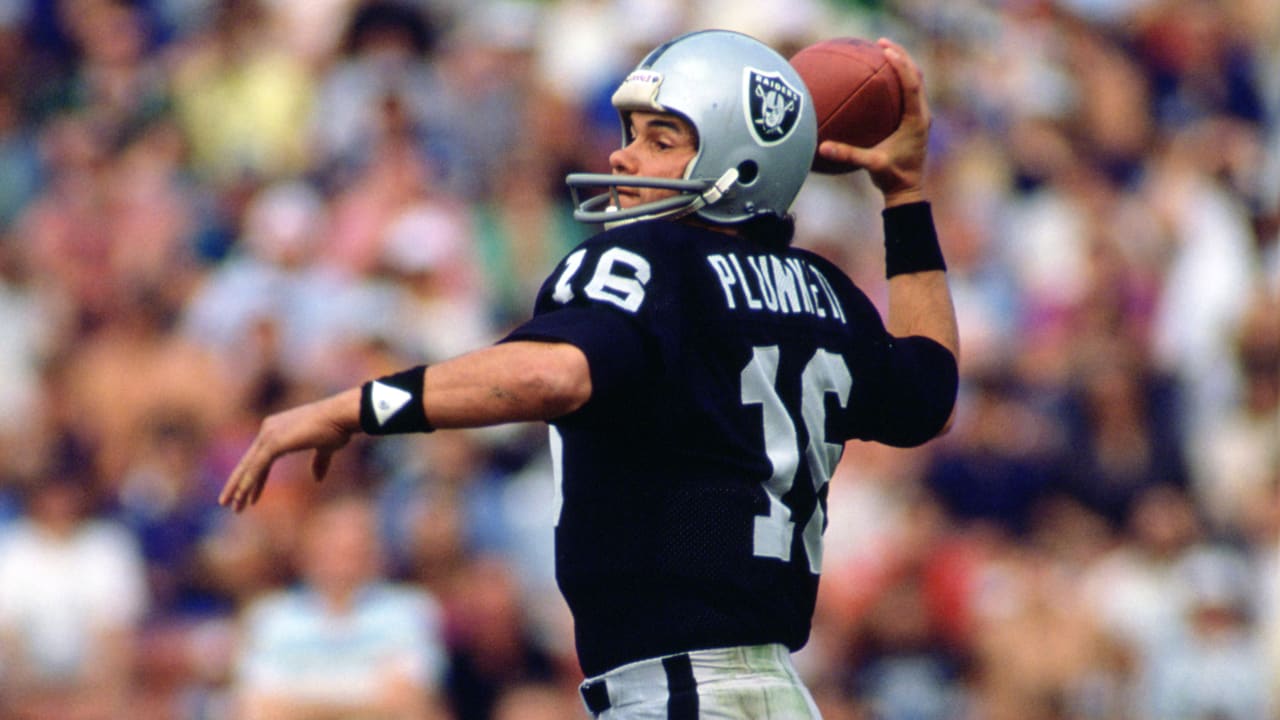
The first Latino player to win the Heisman, Jim Plunkett ripped the now-deceased Pac-8 to shreds while at Stanford in 1970, practically forcing the Patriots to pick him first overall in the 1971 draft. However, despite a solid start to his career, the first Hispanic top pick in NFL history largely failed to live up to astronomic expectations in New England. After an injury ended his 1975 campaign early, Plunkett was traded to San Francisco for a bevy of picks. After two mediocre seasons, the 49ers released him during the 1978 preseason. With his career on his last legs, Plunkett joined the Raiders, serving as a backup for two seasons. But then fate struck — Dan Pastorini fractured his leg early in 1980. Plunkett stepped in and went 9-2 as a starter, then led Oakland to a victory in Super Bowl XV, with the Raiders becoming the first wild card team to win the title in NFL history. Plunkett remained with the Raiders for the rest of his career, steering the team to a win in Super Bowl XVIII and putting together a borderline HOF tenure.
3. MARCUS ALLEN
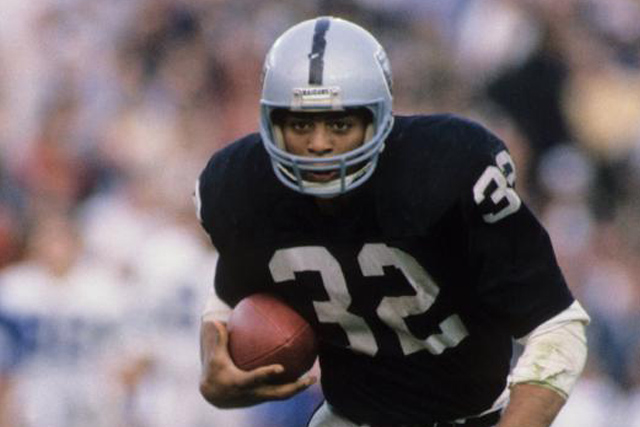
Apart from Roger Staubach, the Raiders can claim three of the only four players to win the Heisman and Super Bowl MVP: Desmond Howard, Jim Plunkett, and Marcus Allen. Recruited to USC as a FS, Allen was converted to RB and backed up eventual Heisman winner Charlie White. Once White left, Allen followed him up by winning the Heisman in 1981. Somehow, Allen wasn’t the first RB selected in the 1982 draft. That was good news for the Raiders, who took him 10th overall. Playing in the same city where he went to college, Allen absolutely killed it in Los Angeles, becoming one of the greatest RBs in NFL history and arguably the best to ever suit up for the Silver & Black. Allen would help the Raiders win Super Bowl XVIII (being named the game’s MVP) and then win the NFL MVP in 1985. There are two reasons that Allen isn’t in the top spot. First, his Raiders legacy was tainted by his time with the Kansas City Chiefs (due to his beef with Al Daivs). Second, the other two players were also really, really fucking good.
2. CHARLES WOODSON
There have now been more than 25 college football seasons since Charles Woodson became the first and only defensive player to win the Heisman. After putting together one of the greatest individual seasons at Michigan in 1997, Woodson was drafted by Oakland with the 4th overall pick in 1998. Woodson hit the ground running, being named to the Pro Bowl and winning DROY. That would be just the start of what would be a legendary career that would end with four first-team and second-team All-Pro nods each, nine Pro Bowl appearances, two years as the NFL’s INT leader, and a spot on the NFL 2000’s All-Decade team. Sadly for Raiders fans, arguably the peak of his career was spent with the Green Bay — as a Packer, Woodson was named the NFL’s DPOY in 2009 and won Super Bowl XLV. However, Woodson’s heart and soul was forever part of the Silver & Black. Despite being nearly 40, Woodson returned to Oakland to play the final three years of his career. Woodson was elected to the HOF in 2021 and Dad and I were there to see it.
1. TIM BROWN
While there were several worthy contenders for the top spot on this list, Tim Brown, the Raiders’ all-time leader in every single receiving category and Jimmy’s favorite Raider ever, more than deserves to get the nod. Interestingly, Brown went to Woodrow Wilson HS in Dallas, which was where 1938 Heisman winner Davey O’Brien attended. Nearly 50 years later, Brown set several records at Notre Dame en route to winning the 1987 Heisman, making Wilson the first HS to produce two Heisman winners. Brown was taken by the Raiders with the 6th overall pick in the 1988 draft and spent all but the last year of his 17-year, HOF career with the Silver & Black. During that career, Brown posted nine straight 1,000-yard seasons from 1993-2001 while also leading the league as a punt returner. In 2002, Brown became the Raiders’ all-time leader in games played — he would finish with 240, a mark only surpassed by Sebastian Janikowski. In 2023, Brown got to have his picture taken with Ruben Dominguez while visiting FOX40.
TRIPLE-A MAJOR LEAGUE BASEBALL
Speaking of sports teams, Las Vegas, and plenty of questions…
I fucking hate this — while I’m not exactly in position to A’s fans how to feel about their team, I’d be fucking pissed if I were them.
The gradual decline of the Oakland A’s has been fueled by an owner who refuses to spend any kind of money to drastically improve the on-field product or off-field conditions (source: I have long supported the San Jose Earthquakes, also owned by John Fisher). At the expense of the fans, the city of Oakland, and even the players (who sometimes played so well they delayed that inevitable decline), Fisher and the organization turned their backs on the city for years, and when times got tough tanked their value to it would appear that the fans and city gave up on them, rather than the other way around. Fisher and MLB saw what Las Vegas did with the Golden Knights and Raiders and wanted some of that, so much so that the A’s blatantly refused to negotiate in good faith and the MLB turned a blind eye to the problem. They were going to force the issue no matter what was right. Sure, the city couldn’t make a game-sealing offer due to the various problems it’s been dealing with, but maybe those cities shouldn’t have to raise a metric shit ton of public funding to build a stadium for billionaires (that’s a larger story). Despite pretty much everyone and every media outlet blasting the move (which is sadly rare when it comes to relocation), it was approved in the ultimate “1% over 99%” call I’ve ever seen. The Las Vegas ballpark won’t even be ready until 2028 at the earliest, the team’s lease at their home in Oakland expires several years before then, and it’s not even guaranteed that the stadium will be ready in time (there are still many legal battles to fight, with no solution on the horizon).
Being around many A’s fans throughout my life, I can attest that few fan bases are more passionate and loyal than them. Seeing them get fucked over for years by the team they love has been sickening, not to mention this latest development officially seeing Oakland go from a three-team major league city to zero in less than a decade. It’s as if MLB is blissfully unaware that Oakland and San Francisco are two different cities and fans from one won’t automatically root for teams from the other just because of proximity (Rob Manfred literally suggested A’s fans root for the Giants if they’re upset about the move).
All of that was bad enough. Then my city got involved.
I will forever love Sacramento and be proud of my hometown. But goddamn does this city have such a little brother complex, especially when it comes to sports. We’re treated like the little brother when it comes to sports, with only the Kings as our major league team. The Kings are constantly overshadowed by our more successful rivals to the west and south, while Sacramento can’t even host a fucking All-Star game due to not having enough hotels. We can’t even attract or at least keep a major investor to bring MLS to the city (fuck you, Ron Burkle). We’re so desperate to be seen by the rest of the sports world that we willingly jumped into (arguably) the biggest clusterfuck of a relocation saga in American sports history and gave Fisher and the A’s a lifeline, agreeing to let them play in West Sacramento until the Vegas ballpark is ready.
It’d be one thing if Sacramento had somehow negotiated to have the A’s permanently move to the Capitol City. It would still be shitty, but overall pretty much the least shitty option. But we didn’t even get that. Instead, we’re essentially being treated as a rebound, the nice girl with a great personality that the guy entertains until the hot girl he’s really interested in breaks up with her boyfriend. We’re essentially getting Vegas’ sloppy seconds before they even become sloppy seconds. I know city leaders have said this is all about showing that Sacramento can be home to another major league team, but what exactly will we be showing? A gutted roster of largely Triple-A caliber players playing in a Triple-A ballpark that will be Frankensteiend to try to house a respectable amount of fans? What good is a showcase if we can’t showcase our best? Hell, even if the A’s turn into monsters and win the World Series in the next three years, there will be no visual indicator of Sacramento’s part in it — the team will just be known as “The Athletics” and won’t feature the name “Sacramento” in their logo, uniform, or branding.
I also know that Vivek Ranadive is essentially trying to play 3D chess by moving the A’s to Sacramento (I know it’s technically West Sacramento, but still), waiting for the Las Vegas deal to fall through, and having the A’s just stay here permanently. That train of thought ignores the sheer stubbornness Fisher and MLB have displayed with getting things to where they are now. They’ve already come this far — one way or another, MLB is coming to Vegas. Even if Vivek’s plan comes to fruition, what do we have left? We’re stuck with a mediocre team owned by a penny-pinching piece of shit who more than likely still has his eye on Vegas, meaning we can’t let our guard down out of fear that Fisher will bolt as soon as he can.
Remember the last time Sacramento sports dealt with a piece of shit owner with ties to Las Vegas who wanted to move his team to a new city? Anaheim? Virginia Beach? Seattle? It’s been over a decade since I genuinely thought my favorite sports franchise was about to be ripped from my hands and be sent to the Pacific Northwest. I remember wondering how Seattle sports fans could possibly be on board with taking the Kings away from Sacramento, not too long after Oklahoma City took the Sonics away from them. Now I wonder how Sacramento sports fans (and officials who were involved in the effort to keep the Kings) can be excited about taking a team from another city (albeit temporarily).
Despite all of what I’ve said above, I’m probably going to be in one of the seats at Sutter Health Park when the Boston Red Sox come to town next year. The novelty of seeing my favorite team play in my hometown is just too much to pass up. But I won’t have a good conscience about it.
Think about it, fucking Major League Baseball is coming to Sacramento. This is a game-changing, city-shattering kind of event we haven’t seen since 1985. For the first time ever, Sacramento will be home to multiple major league teams. This should be a time of excitement and joy. But I just can’t help but feel the opposite emotions. I’m sorry, A’s fans. I really am.
Think back to about a decade ago, in the wake of Republic FC winning the USL title and MLS commissioner Don Garber saying it’s not a matter of if, but when Sacramento gets an expansion team. Now imagine telling yourself that Sacramento would get a MLB team before an MLS team. Sports is fucking crazy. It’s like telling a wrestling fan around that time that Stardust would end the celebrated 1,316-day world title reign of a heel Roman Reigns, after starting the WWE’s biggest competition since WCW. Yeah I’m still talking about it fucking deal with it WOO!!!
STATS OF THE MONTH
With a logjam of deserving players already eligible for the HOF (Jared Allen, Antonio Gates [seriously how the fuck did he not get in this year?], Torry Holt, Reggie Wayne) and others like Luke Kuechly, Marshal Yanda, Marshawn Lynch, and Adam Vinatieri being eligible for the next class, the Class of 2025 will be the first location for a series of debates regarding a handfull of players at the most important position in the game.
Eli Manning will also be eligible for HOF induction next year, with his 2004 draft mates Ben Roethlisberger and Philip Rivers joining him the following year. Of those three, I believe only Roethlisberger is a surefire lock — he’s got the numbers, consistent winning, and accolades worthy of a HOFer, no matter how much of an asshole he is in real life. As for the other two, Manning and Rivers represent either side of the coin when it comes to deciding HOF worthiness. Rivers is arguably the best QB never to make a Super Bowl, putting up monster stats (despite some inconsistency) and being one of the best QBs in football despite never quite managing to have postseason success. On the other hand, Manning has decent but not exactly HOF-worthy stats (mostly due to longevity) but does have two Super Bowl rings which came thanks to two incredible throws he made and were against the NFL GOAT. Do I think they’re worthy of the HOF? Honestly, no, but I could be more likely talked into Rivers’ candidacy. However, I think both will make it eventually, Manning due to his rings and popularity, Rivers after perhaps a groundswell of support. But unlike Roethlisberger, they’re not locks.
Now then, let me tell you why I think Matt Ryan (who just announced his retirement) deserves to be in the HOF more than either Rivers or Manning.
First, let’s look at the stats. Comparing all three, the only categories Manning surpasses Ryan and Rivers are in Super Bowl wins and Super Bowl MVPs, and he’s notably behind the other two in pretty much every other category. When it comes to passing, Rivers and Ryan have shockingly similar stats, though Rivers has a bit of an edge in the majority of categories. Part of that is due to Rivers throwing it more and Ryan being more efficient. Interestingly, Ryan clearly stands out when it comes to his legs, being by far the superior rushing QB. Given that Ryan was never really known for running, that makes Manning and Rivers look really bad in comparison. Fun fact, each of these three QBs rank in the Top 10 all-time in career passing yardage leaders, with Rivers at No. 6, Ryan at No. 7, and Manning at No. 10 (although Matt Stafford will likely take his spot this year). It’s the same thing with career passing TDs, with Rivers at 6, Ryan at 9, and Manning at 10 (and Stafford at 11). Only Rivers (9) and Ryan (10) are in the Top 10 when it comes to wins, while none are in the Top 10 of career TD/INT ratios, though only one (Ryan) is in the Top 25, above the likes of Joe Montana, Dan Marino, and Kurt Warner (though behind the likes of Derek Carr, Carson Wentz, Jacoby Brissett, and Tyrod Taylor, so I don’t even know).
Of course, individual stats don’t tell the whole story. For example, there’s the opposite side of the ball. A QB can put up all the points he wants, but if his defense doesn’t stop the other guy, he can’t win the game. Looking at this chart, Rivers actually had the benefit of defense, with the Chargers/Colts finishing in the Top 10 in terms of points per drive allowed five times during his career. Manning got carried by the Giants’ defense in the playoffs, but oddly had better defense in the years where he didn’t win it all (and four times overall in his career). By contrast, Ryan had a Top 10 defense just twice in his Falcons/Colts career, with his unit ranking 28th out of 32 the year they went to the Super Bowl.
Let’s look at the situations each of these QBs were thrown into. Manning had to deal with the New York media, but also enjoyed the benefits of being in the largest media market, with a largely competent organization. The Giants had made the playoffs just two years before Manning was drafted (and had made the super Bowl two years before that). With a solid if not spectacular squad, Manning and the Giants made the playoffs in four of his first five years, totalling three one-and-dones and a Super Bowl title. But in the final decade of his career, Manning only made the playoffs twice more (winning the Super Bowl again, taking out Ryan in the process) and had a handful of winning seasons. Meanwhile, the Chargers aren’t exactly what I would call “competent,” but they were loaded with talent, including at QB with Rivers and Drew Brees. When he got handed the reins, Rivers and the Chargers won the AFC West four years in a row, but only won three total playoff games. After that, he only made the playoffs twice with the Chargers (winning a playoff game each time) and once with the Colts and only had one 10+ win year.
Then we have Ryan, who got to go to the Falcons, one of the historically worst franchises in NFL history. Before Ryan joined, Atlanta had never in its 40-year history had back-to-back seasons with a winning record. What’s more, Ryan joined the Falcons in 2008. What happened in 2007? Michael Vick got arrested on federal dogfighting charges, Atlanta went 4-12, and Bobby Petrino made his most famous bitch move. Things weren’t exactly peachy in the Peach State. Naturally, Ryan proceeded to lead the Falcons to FIVE STRAIGHT winning seasons (just one with fewer than ten wins) and an NFC title game appearance in his first five years. After a few years of underwhelming results, where Manning and Rivers settled into large mediocrity, Ryan instead had the best season of his career, winning MVP (the only one of the trio to do so) and leading the Falcons to the Super Bowl. Another ten-win season (another back-to-back instance where none had come before or have come since) and playoff berth followed, before Ryan’s career began to decline. Also, unlike Manning and Rivers (whose teams made the playoffs fairly quickly after they drafted their successors), Ryan is not only the most recent QB to lead the Falcons to the playoffs, but also to a winning record. I don’t think that’s going to change this year.
Of course, when we talk about the playoffs (especially when trying to defend Ryan’s legacy), one game comes to mind: Super Bowl LI. It’s undoubtedly the most famous choke job in sports history, with Ryan being the face of the team that choked. However, that stench sticks on him despite Ryan not even being in the Top 10 reasons the Falcons blew the lead (way below the likes of Dan Quinn, Kyle Shanahan, Devonta Freeman, Tom Brady, Julian Edelman, and the entire Falcons defense outside of Robert Alford). What’s more, we all know this, yet still Ryan gets shit for it, adding fuel to the fire of Ryan not being clutch. Not only would the Falcons not have made the Super Bowl without his effort, but he’s the reason they went up 28-3 in the first place. Then there’s the fact that Ryan has 38 4th quarter comebacks (4th in NFL history) and on the road was absolutely lethal on the road, despite the Falcons being labeled a dome team.
All told, Ryan came into the league by joining one of the league’s most pathetic franchises going through arguably the worst period in its history. He then proceeded to consistently win and put up fantastic stats (Top 10 all-time pretty much everywhere), while taking the franchise to unheard of heights and coming within millimeters of ultimate glory (and it not being his fault that they lost). That’s a HOF QB in my book. He also gave us one of the greatest sound bites in sports history.
Now, the main arguments against Ryan will be the aforementioned 28-3 (and being ringless) and not being seen as great as his contemporaries. When it comes to the first part, I believe the likes of Tom Brady and Pat Mahomes have incorrectly altered our perception of what it means to be a great player. The way Brady dominated winning Super Bowls and the way Mahomes is currently doing so makes every QB who doesn’t win more than one title look like a scrub, the same way Michael Jordan did with his NBA contemporaries. The point is, you can be a HOF QB without winning a Super Bowl. Rings can definitely help your case (see Manning), but a lack of them shouldn’t hurt your case as much (see Ryan and Rivers). Currently, there are about 20 QBs who have played in the Super Bowl era. More than a few of them never won the big game, and many who did don’t have the kind of historic stats to stand on without their rings. Ryan did enough to be among the best of his contemporaries, often outshining them in multiple stats or accolades, while having been thrown into the worst, least supported position among them all.
Pro Football Reference has what they call a “Hall of Fame Monitor” — a metric designed to estimate a player’s chances of making the HOF. It uses a combination of value ratings, statistics, and accolades to get a total score. When it comes to QBs, including those already in the HOF, there are only 11 QBs who currently have a HOFm score better than the average HOF QB (which is 108). The next best QB on the list? Matt Ryan, with 106.05, which is better than Roethlisberger, Rivers, and Manning.
Say it with me: Matt Ryan is a HOF QB.
There are also a bunch of stats I could probably dig up surrounding the various signings/trades that have happened this offseason. However, for reasons that include me being a bit distracted during free agency, I don’t give enough of a shit to do it. But there are some things I had to address, including…
The first major change is the one that’s the most immediately impactful. Kickoffs have been completely revamped, with the NFL taking inspiration from what the XFL (now UFL) had done. The new rules (which are better explained here) change everything from where players line up to who can move before the kick to what players can do and what it means when the ball lands in which specific area of the field. While I’m worried these rules will take a while for everyone to get used to, if they can do it in the minor leagues, they can do it in the NFL. Onside kicks are also restricted to the 4th quarter, which outside of Super Bowl XLIV isn’t that big of a change.
The other notable change comes in the banning of so-called “hip-drop tackles,” which occur when a defender “grabs the runner with both hands or wraps the runner with both arms” and “unweights himself by swiveling and dropping his hips and/or lower body, landing on and trapping the runner’s leg(s) at or below the knee.” Yeah, I’m sure the distinction between those kinds of tackles and “clean” tackles will always be clear and won’t lead to any controversial calls. If the NFL actually makes a rule that helps the defense (and the officials actually enforce them), it’ll be quite a cold day in Hell. Other new rules impact the amount of coaches challenges, major fouls during a change of possession, QBs being down by contact or out of bounds, the clock expiring before the snap, emergency QBs, and even the trade deadline (don’t you fuckers even start).
As I mentioned earlier, my main concern with these rules centers around the time it will take for everyone to get used to them. But as it turns out, this isn’t the first time the NFL has issued several new rules that have significantly changed certain aspects of play in the same off-season. In at least one of those instances, we certainly got used to those quickly.
#THROWBACKTHURSDAY
ON THIS DAY IN NFL HISTORY:
On April 25, 1974, the NFL officially introduced a sweeping new series of rule changes aimed at making football more exciting. By that, of course, I mean help the offensive side of the ball, because apparently defensive games just can’t be entertaining. Anyway, two years before, the league moved the hash marks to their present day location, which was closer to the center of the field. While this helped boost the running game and made FGs easier, the change actually benefited defenses when it came to the passing game. Contrary to popular belief, the idea that the NFL viewed the passing game as more entertaining is not a modern concept. So, the league went back to the drawing board to figure out how to help get the passing game going. Not helping matters was the introduction of a new professional football league, the first since the NFL-AFL merger: the World Football League. The league promised to do two things: expand the game by introducing it to a worldwide stage and have rules that were friendlier to the offense than the NFL’s. So after the conclusion of the 1973 season (which saw O.J. Simpson become the NFL’s first ever 2,000-yard rusher and the Miami Dolphins win Super Bowl VIII on the back of their elite rushing offense), the league’s competition committee (which included Al Davis) gathered to come up with potential rule changes to make things more exciting. What they came up with was the most drastic series of changes since the 1933 season (which saw, among other things, the legalization of the forward pass behind the line of scrimmage and the addition of hash marks).
Of these new rules, three of them stand out the most. The first was the introduction of a 15-minute sudden death overtime period to all regular season games. Before this, any games tied at the end of the 4th quarter would end in a tie. Ties would still be a thing, but only if the OT period was scoreless. The introduction of the fifth quarter was a way to cut down on ties, which as all soccer fans can tell you have no place in sports. The second saw kickoffs moved from the 40-yard line to the 35-yard line, with the goal to increase the amount of exciting kickoff returns and reduce the amount of boring touchbacks. The third and most visually noticeable change centered on goal posts, which were moved from the front of each end zone to the back. The aim of the move was to reduce the number of games being decided on FGs and increase their difficulty, forcing teams to try and go for more TDs. The goal posts had been in the back of the end zone before. However, during the aforementioned sweeping changes in 1933, they were moved to the goal line as a way to increase the number of FGs and decrease the number of tie games. But things like the forward pass had caused that change to need to be reversed. In addition, putting the goal posts out of the playing surface would hopefully cut down on injuries by removing an unintended obstacle that players had run into during the action.
While those three rules generally stole the headlines, there were several other new rules that would be equally (if not more) impactful. Before 1974, a missed FG would result in the other team getting the ball at the 20-yard line. However, now it would be at the original line of scrimmage or the 20, whichever was furthest from the goal line. In addition, members of the kicking team could no longer run downfield until the ball was kicked. Then came the more passing-focused rule changes. Those included removing the ability to cut down WRs with a block below the knees and cutting down holding penalties from 15 yards to ten. WRs could also be only hit once by a defensive player when more than three yards from the line of scrimmage. All of these changes eliminated certain defensive tactics like the bump-and-run and roll blocks, which had been used to stifle passing attacks. Plus, offenses would be able to move the ball better even after being penalized. Not everything was geared towards the offense — the last rule change eliminated the crackback block, preventing WRs from returning to the line of scrimmage and blocking a defender below the waist (this was a result of Chuck Howley being lost for the 1972 season after being hit by Charlie Taylor). However, the vast majority of the changes were meant to increase point production and passing offenses. Now, the league would wait to see if they would work.
That wait was nearly much longer than expected, as the NFL players went on strike before the season, seeking to end the so-called “Rozelle Rule” limiting free agency, among other demands. Teams used scab players and all-rookie squads for the preseason until the strike was resolved a month and a half later (a new CBA wasn’t reached until 1977). But once the regular season began, the new rules began having the desired effect. Rushing yards dipped, while passing yards had a notable spike. However, 1974 saw the first of several Super Bowl wins by the Pittsburgh Steelers (a run-heavy, defensive team) and the running game picked up again in later years. It took another rule change in 1978 (extending the illegal contact rule to five yards downfield) for the first great spike in passing yards. None of this would be seen by the World Football League, which would fold midway through its second season in 1975. As for the three major changes in 1974, it’s interesting to look back at them 50 years later. When it comes to the kicking game, goal posts have remained at the back of the end zone and kickoffs are at the 35-yard line today. However, from 1994-2010, kickoffs were pushed back five further yards to the 30-yard line. But while that produced more kickoff returns, it also caused a lot more injuries (particularly concussions) due to the high-impact nature of those plays. In other words, it worked too well, with the return to the 1974 kickoff spot being made in the interest of player safety. As for ties, OT has definitely worked. From 1920-73, there were 256 tied games. Since 1974, there have only been 29, even with the reduction of the OT period to ten minutes and the “sudden death” factor being changed for FGs. Funny enough, the first NFL game to go to OT ended in a tie, after a scoreless extra frame. That game involved the Steelers, who would go on to win the Super Bowl. To this day, Pittsburgh is the only team to win the Super Bowl after recording a tie in the OT era.
OTHER NOTABLE HAPPENINGS:
— 2019: The Arizona Cardinals select Kyler Murray first overall, one year after selecting Josh Rosen tenth overall. Among the major players taken are Nick Bosa, Devin White, Daniel Jones, Josh Allen, T.J. Hockenson, Brian Burns, Josh Jacobs, Deebo Samuel, A.J. Brown, D.K. Metcalf, Diontae Johnson, Maxx Crosby, Hunter Renfrow, and A.J. Cole (just ignore Clelin Ferrell).
— 2013: The Kansas City Chiefs select Eric Fisher first overall, starting a trend that sees the first six picks taken (including Lane Johnson and Ezekiel Ansah) on the offensive or defensive line. Other notable names picked this year include Xavier Rhodes, DeAndre Hopkins, Travis Kelce, Zach Ertz, Geno Smith, Le’Veon Bell, and Kyle Juszczyk (also, Adam Thielen went undrafted).
— 2009: The Detroit Lions select their QB GOAT in Matt Stafford first overall, while the New York Jets trade up to take Mark Sanchez fifth overall. While Stafford has the best odds of his draft classmates to make the HOF, other notable names include Clay Matthews, Alex Mack, Malcolm Jenkins, Michael Crabtree, Percy Harvin, LeSean McCoy, Michael Oher, and Pat McAfee.
— 1993: The New England Patriots select their QB of the future, Drew Bledsoe, first overall, while the Seattle Seahawks whiff by taking Rick Mirer next. This year’s class features five HOFers — Willie Roaf, Jerome Bettis, Michael Strahan, Will Shields, and John Lynch. Other notable picks include Garrison Hearst, Robert Smith, Lorenzo Neal, Mark Brunell, and Trent Green.
PAT TILLMAN: 20 YEARS LATER
While today isn’t the exact 20th anniversary of Pat Tillman’s death (Monday was), that doesn’t mean it isn’t worth talking about. Back when it happened, the majority of us were in 6th grade and couldn’t understand the significance of what happened or comprehend the literal politics of the aftermath. I feel I would be doing a disservice to you by not filling you in or at least acknowledging the somber occasion. This was also before we were more well-rounded fans and didn’t really know anything about the Arizona Cardinals, so none of us really knew who Tillman was before he died. Hell, once I finished my research for this section, I think the scope of what I knew beforehand might total 10% of what actually happened, or at least what we know.
For example, did you know Tillman was from here in Northern California? Born in Fremont, Tillman was the eldest of three sons and didn’t focus on football until his sophomore year of high school. But once he did, he proved he was a fantastic LB, starring for Leland High School in San Jose and earning a football scholarship to Arizona State. Despite being undersized at LB, Tillman continued to thrive on the field, helping the Sun Devils go unbeaten in the regular season and make the Rose Bowl in 1996, then being named Pac-10 DPOY in 1997.
Due to his size, Tillman dropped to the later rounds of the 1998 NFL draft, but was eventually scooped up by the Cardinals with the 226th overall pick, instantly becoming a fan favorite thanks to his time at Arizona State. Tillman moved to the backfield and became a FS and started ten of 16 games in his rookie year. For the next three seasons, Tillman became a solid contributor to the Cardinals defense, tallying a total of 340 tackles, 2.5 sacks, three INTs, 15 pass deflections, and three fumble recoveries. Despite Arizona being terrible, Tillman was recognized by at least one major publication as one of the best defenders of the league, though he never received any official honors from the NFL. At some point during his career, the St. Louis Rams offered Tillman a five-year, $9M deal. But he declined out of loyalty to the Cardinals. Loyalty was one of Tillman’s key traits, also proven by the fact that he married his high school sweetheart.
As it turned out, that loyalty also extended to his country. Following the 2001 season, moved by the 9/11 terrorist attacks, Tillman declined a three-year, $3.6M contract from the Cardinals to spend the prime of his athletic life enlisted in the U.S. Army. Along with his brother, Kevin, Tillman completed basic training in September of 2002. After completing the Ranger Assessment & Selection Program, the two were assigned to the 2nd Ranger Battalion in Fort Lewis, WA. The Tillmans were deployed to Iraq as part of Operation Iraqi Freedom, ironically being part of a standby backup team in the April 2003 rescue of Pfc. Jessica Lynch (which had its own grand misrepresentation to the public). Afterwards, they returned to the U.S. to complete Ranger School in Fort Benning, GA. They were subsequently deployed to Afghanistan and posted at FOB Salerno in the province of Khost, near the border with Pakistan.
It was there that, on April 22, 2004, a series of confounding actions led to tragedy… and a cover-up that would seem unfathomable if it didn’t actually happen.
Over the objections of the men and their leaders on the ground, base commanders decided to send Tillman’s platoon of about 40 soldiers on a two-part mission through a narrow canyon that was susceptible to ambush. Split into two halves, the first group soldiers (which included Tillman and an allied Afghan militiaman named Sayed Farhad) would make their way through the canyon and arrive at a village by dusk, then search it for enemy fighters and weapons the following day. The second group (which included Kevin) would follow just behind via a different route to transport a disabled Humvee. However, the first convoy (which made it to their destination) didn’t know that the second convoy ended up diverting to their same path.
As they were slowly moving along, the second convoy was ambushed. The first group heard what happened and rushed to help, with Tillman, Farhad, and another soldier rushing to a position on the ridge. As the second convoy emerged from the canyon, they spotted the trio. But due to the light (they were looking into the setting sun) they couldn’t properly make out Farhad. Thinking he was an enemy, they fired at the group. Tillman shouted and threw a smoke grenade to signal them to stop, but he and Farhad were shot and killed by friendly fire. Tillman and Farhad were just 27 years old. Although many members of the platoon knew what happened, they were told to not discuss it or even tell Kevin (who was in the back and didn’t see how his brother had died).
With Tillman already a nationwide figure due to the fact that he was an NFL player who became a soldier after 9/11, it would look pretty bad if the Army’s poster boy was killed by his fellow American soldiers. So, the Army lied about what happened, initially claiming that Tillman was killed in an apparent ambush. In fact, that was what Brig. General Stanley McChrystal said in his account of what happened in his approval of Tillman being posthumously awarded a Silver Star (as well as a Purple Heart and the rank of Corporal). However, the next day, McChrystal sent a confidential memo advising others (including then-President George W. Bush) against using similar language to describe what happened, alluding to the fact that Tillman might have actually been killed by friendly fire. (Side note: days later, McChrystal was promoted to Maj. General and would end up as a four-star general when his career was all said and done). All of this took place just days before a nationally-televised funeral for Tillman was held. In hindsight, the event was full of fake details and characterizations of Tillman. One of Tillman’s friends was told the fake account of events and included them in his eulogy, while speakers like Maria Shriver and Sen. John McCain talked about Tillman with religious overtones, despite the fact that Tillman was an atheist (which was somberly rejected by Tillman’s other brother, Richard) and had, prior to his death, called the invasion and occupation of Iraq “fucking illegal.”
Then the investigations began. Without going into the immense specifics of exactly how the U.S. military fucked up by covering up a preventable accident involving their most notable soldier in order to continue their propoganda machine, a series of investigations, congressional hearings, articles, and books led to the discovery of most of the truth. First, those in charge of the operation that got Tillman (and Farhad) killed were found to have committed “gross negligence.” Then, in the immediate aftermath of the deadly friendly fire, it was discovered that members of Tillman’s unit burned his body armor, uniform, and notebook (that allegedly included his thoughts on Afghanistan) in order to hide what happened (to this day, the whereabouts of Tillman’s other diary are unknown). It was also revealed that Tillman’s family only found out his real cause of death until several weeks after the funeral, despite the military fully knowing what happened before the service. It was even found that Army attorneys send each other congratulatory emails for keeping federal investigators at bay during their investigation. Tillman’s fellow soldiers, nine officers, and four generals were reportedly punished, though the extent of their discipline (as well as whether or not everyone who had a role got their just dues) has never been fully revealed.
In the two decades since Tillman’s death, a foundation was established in his honor by his friends and family, while countless streets, fields, scholarships, and other facilities bear his name and other tributes to him have been made. Both Arizona State and the Arizona Cardinals retired Tillman’s number (42 and 40, respectively), while during Week 2 of the 2004 NFL season (the day of the Cardinals’ home opener) all teams wore a decal in honor of Tillman. Although Arizona kept the decal for the rest of the season, Denver Broncos QB (and Tillman’s former teammate with the Cardinals) Jake Plummer’s request to also wear the decal all season was denied due to the NFL saying it wouldn’t be uniform with the rest of his team (because the NFL, much like the military, has also cared more about appearance than substance).
While that’s just one chapter of the NFL’s own complicated relationship with the military (see the tradition of pre-game flyovers, the camo-themed gear and “Salute to Service,” and Colin Kaepernick), the greater portrayal of Tillman in the national consciousness may have painted him as some sort of right-wing idealist, a good ole religious football boy who gave up his career to serve his country because ‘Murica. Perhaps it’s due to the military’s cover-up and the eagerness of certain members of the government to sweep some aspects of Tillman’s personality under the rug actually being successful. Whatever the reason, as we mark one of the darkest moments in NFL and U.S. military history this week, let’s remember who Tillman was — a good, grounded, loyal, talented man who made a noble sacrifice and was taken far too soon in a tragic accident.
That was sad. Let’s move on to something funny.
RUBEN’S RANKINGS
TOP 10 MOST PAINFUL COWBOYS PLAYOFF LOSSES SINCE 1995
Oh come on, I had to, especially with the NFC Championship Game drought about to reach 30 years. Deal with it, Richard. If you want an apology for shitting on the Dallas Cowboys, you can find it… all in, my ass.
HONORABLE MENTION: TIME RUNS OUT FOR THE TRIPLETS
The end of the 20th century was also the end of the Cowboys’ dynasty. 1999 was the final season of the Triplets on Dallas’ roster, with a Week 5 injury ultimately ending Michael Irvin’s career. The Cowboys weren’t the same afterwards, going from a 3-0 start to an 8-8 finish. But, Dallas somehow squeaked into the playoffs on a tiebreaker and faced the Vikings, who they had lost to in Week 9. Minnesota basically repeated that result, defeating Dallas 27-10 in the Wild Card round. This would be both Troy Aikman and Emmitt Smith’s final career playoff game.
HONORABLE MENTION: BETWEEN TWO ERAS
From 2000-2005, Dallas made the playoffs just once. That was in 2003, when the Cowboys were caught between two eras, with Emmitt Smith leaving the team and rookies Tony Romo and Jason Witten on the roster. But in a testament to Bill Parcells’ coaching ability, the Quincy Carter-led Cowboys managed to snag a Wild Card spot with a 10-6 record. They would face the Panthers, with their roles from their 1996 playoff clash (more on that in a minute) basically reversed. Carolina stomped Dallas 29-10 en route to an appearance in Super Bowl XXXVIII.
HONORABLE MENTION: OLD RIVALRY RENEWED
Until the Packers and 49ers broke it this year, the Cowboys and Rams had met in the playoffs the most times out of any two NFL teams. The last such time came in the 2018 season, when a young Dallas squad — led by Dak Prescott, Ezekiel Elliott, and a recently-traded-for Amari Cooper — marched into Los Angeles after taking out the Seattle Seahawks in the Wild Card round. But despite a late rally by Dallas, the Rams were largely in control for this Divisional round clash, holding on for a 30-22 victory en route to an appearance in Super Bowl LIII.
10. STEP FORWARD, STEP BACK
The fact that a 31-point ass-whooping only barely makes the Top 10 of a “most painful playoff loss” list is a pretty good description of the past two-plus decades of Cowboys football. That being said, the margin of defeat in the Divisional round is the only reason this game makes the final cut. 2009 was just the second time that Dallas won the NFC East, routing the rival Eagles in Week 17 to do so. To make things even better, the Cowboys would thrash Philadelphia again the following week in the Wild Card round to record the franchise’s first playoff victory since 1996. Throw in the fact that the Cowboys’ next opponent, the Minnesota Vikings, were among the best teams in the NFL thanks to a resurgent Brett Favre, and Dallas was playing with house money at this point. Sure, the 34-3 demolition by the Vikings didn’t exactly feel good. But with the first postseason win in over a decade secured, Dallas really couldn’t complain, as the roster seemed ready for success. The Cowboys wouldn’t have another winning season for five years.
9. CENTER OF ATTENTION
This entry may seem low on the list, but honestly, the only reason it goes beyond the typical “LOL Cowboys” mark is the final play. Looking at last season objectively, Dallas actually managed to win a playoff game, easily taking out the Tampa Bay Buccaneers and retiring Tom Brady in the Wild Card round. Although the Cowboys finished 12-5, they had to go on the road thanks to the 14-3 Philadelphia Eagles. The NFC was also top heavy, with the 13-4 San Francisco 49ers being Dallas’ Divisional round opponent. Even then, despite playing sloppy football, the Cowboys still had a chance, down just one score with six seconds left. But yeah, that final play was pretty fucking funny. For some reason, RB Ezekiel Elliott was lined up at C, being flattened 0.5 seconds after the snap and the Cowboys being stopped far from the end zone. The fact that the 19-12 loss was Elliott’s final game in Dallas only adds insult to injury. This game’s legacy is also boosted by what happened the year before (more on that later).
8. DEFENDING CHAMPS DETHRONED
Although the Cowboys entered the 1996 season as defending Super Bowl champs, things were far from sunny in Dallas. Michael Irvin was suspended for the first five games and (along with Erik Williams) would be accused of sexual assault, Skip Bayless’ scathing account of the prior season stirred up controversy, and Leon Lett was suspended for the final three games. But, the Cowboys still managed to finish 10-6 and thrashed the Minnesota Vikings in the Wild Card round. The Divisional round would see Dallas face the Carolina Panthers, who would be playing in their first ever playoff game in just their second season. Despite Carolina having a better record (and home field advantage), Dallas was favored going into the game. However, injuries to Irvin and Deion Sanders hampered the Cowboys, who couldn’t get out of first gear. In a game that turned into a battle of FGs, it was Carolina who picked off Troy Aikman on each of Dallas’ final two possessions en route to a 26-17 victory, ending the Cowboys’ most recent title reign.
7. A CARDINAL SIN
After being dethroned by the Carolina Panthers in 1996, the Cowboys took a huge step back in 1997, resulting in head coach Barry Switzer’s resignation. Chan Gailey took over and seemed to put things back in order in 1998, as Dallas bounced back to finish 10-6 and atop the NFC East. While championship expectations were low, pretty much everyone expected the Cowboys to make it out of the Wild Card round. Dallas would be hosting the Arizona Cardinals, who they had beaten twice in the regular season. To make things even better, the Cardinals hadn’t won a playoff game since 1947, when the franchise was located in Chicago. So naturally, Arizona dominated Dallas, with the Cardinals sacking Troy Aikman four times and picking him off three times. Jake Plummer threw for two TDs as Arizona won 20-7, securing its first playoff victory in over half a century. Maybe this game is what led to Emmitt Smith signing with the Cardinals a few years later. Meanwhile, Dallas would not win the NFC East again for nearly a decade.
6. A GIANT UPSET
That next divisional title came in 2007, a year the Cowboys began their new tradition of regular season domination followed by postseason pants-shitting. Under new head coach Wade Phillips and offensive coordinator Jason Garrett, Dallas finished tied for the best record in the NFC and earned the top seed in the conference, sending an NFL-record 13 players to the Pro Bowl. Their 13-3 record included two wins over the New York Giants, who managed to make the playoffs and would be Dallas’ Divisional round opponent. But like the Arizona Cardinals proved nearly a decade earlier, it’s tough to beat a team three times in a season. The Cowboys didn’t heed that warning, with Tony Romo famously taking a trip to Cabo with then-girlfriend Jessica Simpson during the Wild Card round. Naturally, the Giants punched the Cowboys in the mouth, with Romo’s last-minute INT sealing a 21-17 upset loss and ending Dallas’ most promising season in the 21st century. It didn’t help that New York would go on to win Super Bowl XLII weeks later.
5. COOKING UP HEARTBREAK
Man, the Top 5 entries on this list were incredibly difficult to separate, which goes to show you just how hot Hell has been for Cowboys fans. That’s how a last-second Divisional round loss as the NFC’s top seed only finishes at No. 5. To be fair, Dallas did not expect to be in position for such an upset in 2016, especially after Tony Romo suffered a serious preseason injury. Rookie Dak Prescott (who Dallas only selected because they couldn’t trade up to draft Paxton Lynch) was thrust into the starting role as a result. But in a stunning result, Prescott and fellow rookie Ezekiel Elliott led the Cowboys to a 13-3 record. In the Divisional round, the Cowboys hosted the Packers, who jumped out to a 21-3 lead. But Dallas fought back, tying the game twice in the 4th quarter, including with less than a minute left. However, that was too much time for Aaron Rodgers, who connected with Jared Cook on an incredible pass. A last-second FG gave Green Bay a 34-31 win and ended Dallas’ incredible season in heartbreaking fashion.
4. SLIDING INTO THE OFFSEASON
After a season-ending injury to Dak Prescott hampered Mike McCarthy’s first season as head coach in Dallas, the following year saw the Cowboys bounce back with a vengeance. In 2021, Dallas led the league (and set a franchise record) with 530 points scored, with CeeDee Lamb taking the leap into the upper echelon of WRs. The defense — led by rookie Micah Parsons — was also rounding into form. All told, the Cowboys finished 12-5 and won the NFC east, but had to play in the Wild Card round, where they would host the rival 49ers. San Francisco was a bit banged up going into the game, but the defense was still dominant enough to largely shut down the Cowboys’ historic offense. But with the 49ers up 23-7 in the 4th quarter, Dallas made a late rally, cutting the deficit to 23-17. After some stupidity on the 49ers’ last drive, the Cowboys got the ball back, with Prescott running for a 1st down as time was running out. However, he didn’t slide in time, with the clock expiring before Dallas could spike the ball and run another play.
3. DEZ DIDN’T CATCH IT
In 2014, the Cowboys did three things they hadn’t done in five years: have a winning record, win the NFC East, and win a playoff game. Plus, they weren’t upset in the postseason — their loss in the Divisional round came on the road. So why is this so high on the list? Come on, you know why. Trailing 26-21 with less than five minutes remaining, Dallas faced a 4th and 2 from Green Bay’s 32-yard line. Tony Romo went deep to Dez Bryant, who caught the ball, then moved it in his arms to get past Sam Shields and dove near the goal line, with the ball coming out. It was ruled a catch, but then-Packers coach Mike McCarthy challenged the ruling, with the officials overturning the call and ruling the pass incomplete. Dallas never got the ball back, as Green Bay moved on. The Cowboys objectively got screwed (even the NFL admitted it years later), but few outside of Dallas were pissed for two reasons — it happened against the Cowboys and Dallas had beaten the Detroit Lions the week before thanks to a different controversial call.
2. TROUBLE WITH THE SNAP
This is Genesis. All of the modern memes, playoff failure, and “LOL Cowboys” can be traced back to this moment. But early in the 2006 season, it didn’t seem like Dallas would even get a chance at even making the postseason. However, a change at QB — replacing Drew Bledsoe with Tony Romo — changed the Cowboys’ fortunes for the next decade. With their future franchise QB at the helm, Dallas went on a run to make the playoffs, though their momentum was stalled with a 1-3 finish to the regular season. In the Wild Card round, the Cowboys faced the defending NFC champion Seahawks. The game was a back-and-forth battle that saw Seattle take a one point lead with just under five minutes remaining. Romo led Dallas down the field and, with 1:19 left, was set to hold the ball for the Cowboys’ 19-yard FG attempt. That kick never came, as Romo bobbled the snap, then tried to run into the end zone, but was tackled short. Seattle took over and would win the game, which was also the last of Bill Parcells’ HOF coaching career.
1. NO LOVE LOST
Call it recency bias, but look at the factors. After back-to-back humiliating final plays against the San Francisco 49ers, the Cowboys once again had a tremendous regular season, winning 12 games and the NFC East. In the Wild Card round, the Green Bay Packers (harbingers of their previous demises) would have to go to Dallas, where the Cowboys had won 16 straight games. The Packers were also the No. 7 seed, which had yet to win a game since being implemented. Plus, Jordan Love would be starting his first playoff game. Not only did Green Bay win, they kicked the living shit out of Dallas, dominating in all facets of the game and creating a new batch of memes and enough embarrassing stats for me to have a new round at Trivia Night. The score was 48-16 at one point, with the 48-32 final score not being indicative of the thoroughness of the ass-whooping. With the Cowboys changing little going into the offseason, surely another iconic, painful playoff defeat will be avoided next season, right? Right…
ONE LAST THING
Sometimes, no matter how much you care about something, you just happen to fall out of love, to drift away or grow apart. Sometimes, you reconnect or find your way back in unusual ways.
Of all the sports I love and have loved, the one that has the most lopsided ratio of love to least talked about in these newsletters is Mixed Martial Arts, or MMA. That doesn’t make too much sence, given that at one point MMA was my second-favorite sport, only trailing soccer. I got the push I needed to decide on media as a career thanks to my experience covering MMA. My favorite professional athlete ever competed in MMA. I spent a significant portion of my teens and early 20’s with my head deep in the MMA world. However, for the better part of the past decade, my interest in the sport (primarily the UFC, the largest MMA organization) has waned, for a number of reasons. I may go into further detail about all of this during a future newsletter, but for the purpose of this section just know that I used to be practically obsessed with MMA to the point where I could name every main event result of every UFC card ever, yet probably can’t name all of the current UFC champions.
So imagine my surprise when Gee of all people texted me, asking if I was interested in watching UFC 300 at the theatre in Delta Shores earlier this month. Also, imagine the surprise when I said yes relatively quickly. While I didn’t even know who was fighting on the main card, this was a milestone event in a sport I guess I still cared about. Plus, god forbid I socialize with friends. Even so, I would be doing something new: watching a sporting event in a movie theatre.
After enjoying some sushi and beer (and buying a bunch of popcorn), Gee and I stepped into the theatre as the event began. While there were a few throwbacks for the milestone occasion, I still noticed quite a few differences in the broadcast and overall production since the last time I had watched an event (which I believe was UFC 229 back in 2018). But as I dealt with a weird mix of nostalgia and future shock, an even weirder feeling crept up as I watched the first two fighters make their way to the Octagon. The entrances, which I once got hyped by alone, seemed boring. Maybe I had gotten used to the splendor and showmanship of pro wrestling, but I was feeling underwhelmed. After all, I had gotten used to entrances like Cody Rhodes’ at Wrestlemania XL — that’s right three times, just like the three Cross Rhodes he hit to win the title WOOOOOOOOOOOOOOOOOOOOOOOOOOOOOOOOOOOOOOOOO!!!!
Even though I was grateful to realize that I still enjoyed actual fighting more than fake competition, I got worried that fighting just might not feel the same anymore. Thankfully, it turned out that the first fight on the main card sucked. As soon as Charles Oliveira and Arman Tsarukyan (each with a sizable portion of the theatre cheering in their favor) got going, fireworks went off and the two put together an excellent, back-and-forth war that had everyone on the edge of their seats. Then came five rounds of war between Justin Gaethje and Max Holloway, which ended with one of the coldest finishes I’ve ever seen. With just ten seconds left in the fight and already up on the scorecards, Halloway stood in the center of the Octagon and pointed to the ground, urging Gaethje to stand and bang. Seconds later, Halloway sent Gaethje on the lightless walk with a highlight reel KO. It had been a long time since I last screamed at the end of a fight, but goddamn did I let out a good one when that last punch landed.
The good vibes kept going with a historic matchup between Zhang Weili and Yan Xiaonan — the first ever UFC title fight between two Chinese competitors. I was surprised to see Sacramento MMA legend Urijah Faber in Yan’s corner, and even more surprised to learn she trains with Team Alpha Male. Although Yan put up a spirited effort, Weili walked away with her belt after a full five rounds. Then came the main event: Alex Pereira vs. Jamahal Hill for the Light Heavyweight title. If the ending to Halloway-Gaethje was one of the coldest things I’d ever seen, this fight may have seen an even chillier finish. About three minutes into the fight, Hill kicked Pereira in the mid-section, though he may have caught him high in the groin area as well. As the referee walked over to call for a break, Pereira (while keeping his eyes on Hill) held out his hand to stop the referee in his tracks. I had never seen that before and was shocked; then my jaw hit the floor when Pereira knocked Hill out less than ten seconds later to bring a thunderous ending to what critics called one of the best UFC cards in a while.
So what now? Am I back on the UFC/MMA train? Not quite — I still have my gripes with the modern day version of the sport and I definitely don’t have a “guy” to keep me hooked (the last one last fought in 2017). But I’m definitely looking at tickets to get on that train. Circumstances both with myself and the UFC are different than before, so it may be a while before I seriously consider getting deeper into fandom again. But at the very least I got some good memories.
However, in doing research and fact-checking this segment, I made a terrible discovery, one that has left me cursed with knowledge. As we’ve gotten into our 30’s, we’ve been dealing with the inner debate about whether or not we’re considered “young” anymore (except for Dad, obviously). Well, I have an answer, at least for me. But mine may also have a direct impact on your own. Simply put, I have less than a year before I cannot consider myself young anymore.
What did I discover to make me think this? Well, in my line of work, sometimes I have to do what’s called a “deep tease” — advertise a story or segment either much later in my show or even in another show entirely. How’s this for a deep tease? I will reveal my discovery during next year’s draft newsletter, which will be sent out after that mark has been passed.
You’ve all been warned. Enjoy your youth while you still have it.
Ruben Dominguez
Commissioner, Epic League of Epic Epicness
2019 Champion, Epic League of Epic Epicness
 Ruben's Writings
Leave a comment