How the hell is it nearly May already? It seems like it was just a few weeks ago that I was driving home from the elder Ewings’ place with my hard-won trophy in hand. Blink and you miss it — suddenly the trophy’s been sitting by my TV for nearly four months and it’s time to get the gears of the 2025 season in motion with the NFL draft.
So, what exactly have I been up to since the end of the season? Work has become an absolute clusterfuck, perhaps to a greater point than any other since I’ve been there. At least I got to spend the Super Bowl doing a show while laughing my ass off as the Philadelphia Eagles gave me the greatest hate watch experience of my sports fandom. My car problems finally ended back in January and things have been sailing smoothly ever since (I really hope I didn’t jinx anything). My list of people I hate now includes John Cena (in kayfabe) and Travis Scott (kayfabe and real life). My in-person curse has seemingly vanished when it comes to the Sacramento Kings, yet apparently still lives with Sacramento Republic FC. I have yet to visit Sutter Health Park since the A’s came to town, but given that the Boston Red Sox are coming in September it’s only a matter of time. The ballpark counter did increase — it’s now at 22, after I spent a few days in Houston earlier this month, discovered the delicious cult following of Buc-ees, and met a swan named George. Here’s a quick review of my home of the Astros.
DAIKIN PARK: While it would have already gotten high praise just for having a working train inside, Daikin Park deserves kudos for many more reasons. Although I wouldn’t quite put it among the best of the best, the home of the Houston Astros does damn near everything solid at worst and fantastic at best. The facility itself is beautiful, the atmosphere is underrated, the team store might be the best I’ve seen yet, the view is lovely, and of course the food is tremendous (and there are plenty of trash cans to dispose of your waste). Just be sure to park west of I-69.
Obviously, the biggest story of my 2025 has been the health of Dad. It’s been about two months since Dad underwent a nearly ten-hour surgery to remove his cancerous kidney, which left him in the hospital for a week and a ten-inch scar across his stomach. The only cancer remaining is in his lung, and he found out yesterday that the radiation sessions are being ended early, due to the tumor being too small that they didn’t need the full dosage to kill it. Up next is immunotherapy and getting a permanent solution to his kidneys figured out. The most important thing is that Dad’s still here and he’s receiving excellent care. He’s also received incredible support, which includes all of you. I can’t thank you guys enough for reaching out and helping out, even if it was just to offer a text of encouragement. We’re far from being out of the woods, but we’re doing okay.
Dad and I are far from the only ones in the league who have made news this spring. Arik revealed that he and Patty are expecting their first child! Once their little one enters the world, it will mark a major shift in the composition of the league — exactly half of the league members (Dad, Emilio, Nick, Ewing, Aly, Arik) will be parents. Given that the rest of us (especially me — I will die alone) aren’t even married yet, and it may be a while before the parents become the majority and we enter a whole new era.
Speaking of parents, we can’t even call Emilio’s daughter a baby anymore, which makes us all feel old. Ryder and Dominic are growing up as we speak. For the non-married folks, Kyle spent a decent chunk of time in Europe, where he went to a Champions League game and prevented me from being the only one in the league to have visited Andorra. Jimmy proved that he actually does know something by winning Trivia Night 2 (more on that later). Chriss may have missed Jon Moxley visiting his work, but at least he had fun at Raw earlier this month. Riaz appears to have fully recovered from his chaotic stomach issues and has somehow not had his Tesla get vandalized. Richard is on the verge of watching his soccer team win the Premier League (though only one trophy seems kind of like an underachievement). However, Richard has still yet to fulfill his last place punishment of a beer mile — we’re all waiting for you!
But that is in the future. The first step in figuring out who will finish in last place this year begins in just a few hours at Lambeau Field. In fact, you can watch FOX40’s live reports from Green Bay at 4:15, 5:15, and 6:15 p.m. I’m producing the latter two, so just watch those, please.
MOCK DRAFT
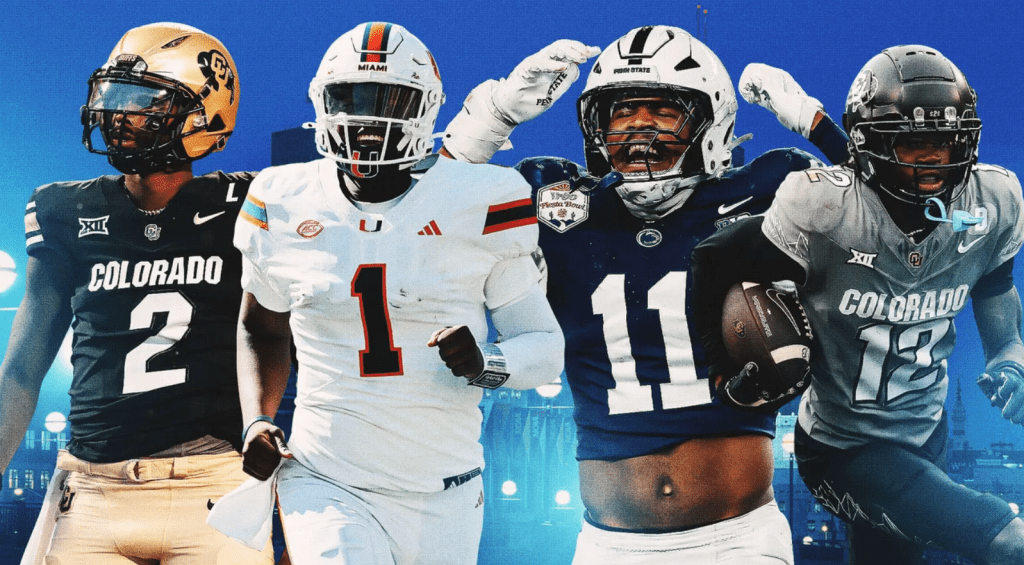
1. TITANS: Cam Ward (QB, Miami) — Even with all the uncertainty surrounding the draft, one certainty remains: if there’s a top QB prospect available, he’ll probably go No. 1. That’s the case here, with Tennessee hopefully landing their longtime signal caller with the first overall pick.
2. BROWNS: Travis Hunter (WR/DB, Colorado) — Surely, Cleveland cannot fuck this up, right? With the team ahead of them going for need, the best overall prospect in the entire draft falls right in their lap. They need help at every position, so why not take the guy who can play multiple?
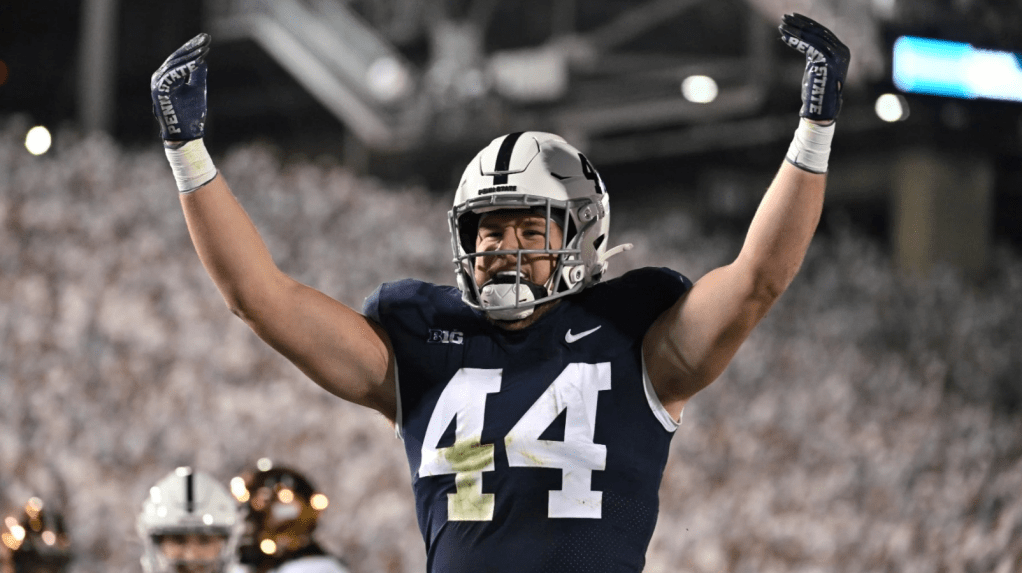
3. GIANTS: Abdul Carter (EDGE, Penn State) — The Top 3 players seemed set in stone. Then New York decided to add two polar opposites to their QB room, meaning taking another thrower wouldn’t make sense. Therefore, taking the best player available would be the best move here.
4. PATRIOTS: Will Campbell (OT, LSU) — New England may have finally found their Tom Brady replacement. Now comes the tall task of not getting him killed on every single snap. Drafting arguably the best offensive lineman in the entire draft would be a big step towards that goal.
5. JAGUARS: Mason Graham (DL, Michigan) — When Jacksonville is actually competitive, it’s usually because of its strong defense. This pick (arguably the best player left at this point) would beef up that defense and help make up for more potentially bad play from Trevor Lawrence.
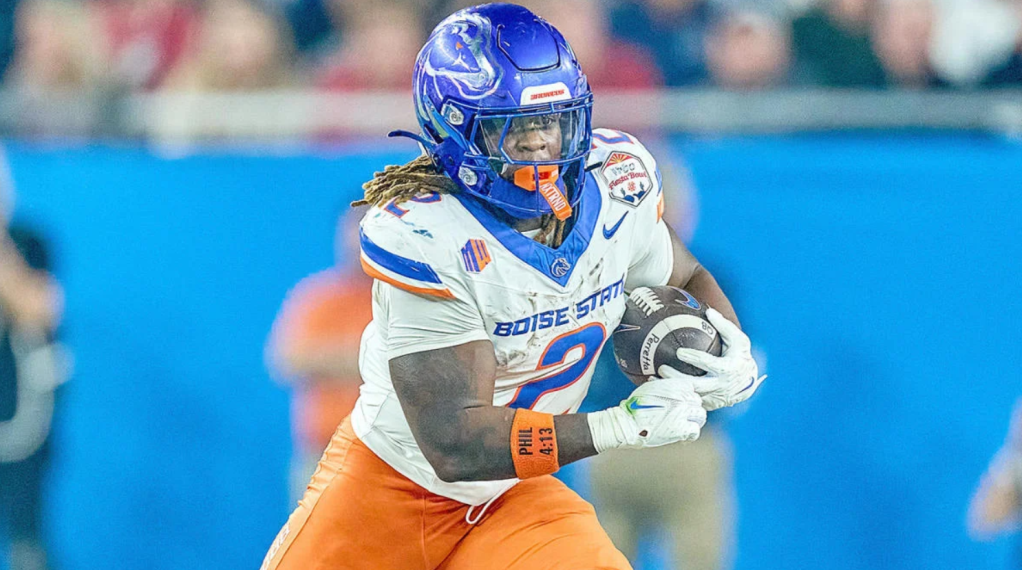
6. RAIDERS: Ashton Jeanty (RB, Boise State) — Las Vegas was utter dogshit in the running game last season. They have the opportunity to draft the best RB prospect since Adrian Peterson. Pete Carroll surely can’t pass up on an obvious chance to pick a RB again, right?
7. JETS: Armand Membou (OT, Missouri) — Despite switching from a pocket passer to a mobile QB, New York still needs to address issues on the offensive line. Having one of the Top 2 prospects when it comes to that position seems like good luck (for once) for this cursed franchise.
8. PANTHERS: Jalon Walker (LB, Georgia) — There might actually be a future for Bryce Young in Carolina. Now it’s time to take care of the other side of the ball, which still has plenty of holes. A versatile draft pick like this can go a long way towards addressing those large weaknesses.
9. SAINTS: Shedeur Sanders (QB, Colorado) — It’s unclear where the slide started, but it appears to be in full swing right now. That being said, the potential season-long absence of Derek Carr has forced New Orleans to look to the future early, with a Top 2 QB prospect still available.
10. BEARS: Tyler Warren (TE, Penn State) — Chicago has invested heavily in its offense lately, so why not add to that with a potentially elite TE? This pick can double as a security blanket for Caleb Williams and a fun, shiny new toy for Ben Joenson to use in his offensive schemes.
11. 49ERS: James Pearce Jr. (EDGE, Tennessee) — After a disappointing 2024 campaign, San Francisco will be looking to make a big statement next season. With Robert Saleh returning as defensive coordinator, why not give him a big new weapon to help retool that beloved unit.
12. COWBOYS: Tetairoa McMillan (WR, Arizona) — Dallas desperately needs another option at WR to take some of the pressure off CeeDee Lamb. While there’s some debate as to who the best non-Heisman winning option is, a pass catcher definitely needs to come off the board here.
13. DOLPHINS: Will Johnson (CB, Michigan) — With the recent news of apparent trade talks regarding Jalen Ramsey, Miami is suddenly in desperate need of help in the defensive backfield. Fortunately for them, the best prospect at that position is still available, so they pounce on him.
14. COLTS: Colston Loveland (TE, Michigan) — Everyone and their mother has Indianapolis taking a TE here. They’re incredibly thin at the position and Anthony Richardson needs every weapon he can get his hands on. Though the best prospect is gone, the need for one remains.
15. FALCONS: Mykel Williams (EDGE, Georgia) — Atlanta needs a big boost to their pass rush and hasn’t really had a star on the defensive line for more than a decade. Drafting enormous defenders from Georgia has worked out for most teams, so why try to overthink things here?
16. CARDINALS: Jahdae Barron (CB, Texas) — While the top-ranked CB prospect is gone at this point, Arizona (which needs help all over the defensive side of the ball) could do a lot worse than the Jim Thorpe Award winner and the second-highest graded DB according to PFF.
17. BENGALS: Mike Green (EDGE, Marshall) — Given that Cincinnati has an entire nation’s GDP dedicated to its offense, any defensive improvement will have to come from the draft. To that end, they could do worse than the player who had more sacks than anyone in the FBS.
18. SEAHAWKS: Kelvin Banks Jr. (OT, Texas) — Seattle may have swapped Geno Smith for Sam Darnold, but their main offensive issue remains a porous offensive line. Fortunately for them, a prospect mocked as high as ten picks above them elsewhere falls to them here.

19. BUCCANEERS: Nick Emmanwori (S, South Carolina) — Tampa Bay needs help pretty much everywhere on defense. While Vita Vea could use a friend on the line, perhaps the best defensive prospect remaining is in the secondary, and is worth taking to address that area.
20. BRONCOS: Omarion Hampton (RB, North Carolina) — After making me eat my words and finding a potential franchise QB last season, it’s time for Denver to surround him with weapons. That includes a strong running game, with the second-best prospect still available right here.
21. STEELERS: Jalen Milroe (QB, Alabama) — Fate (and Aaron Rodgers being the most indecisive man on the planet) has seemingly forced Pittsburgh’s hand here. They have to take a signal caller here, or else risk having a QB room worse than last season’s Raiders (shudder).
22. CHARGERS: Matthew Golden (WR, Texas) — Los Angeles goes back into the WR pool to try to snag another weapon for Justin Herbert to miss in the playoffs. Jim Harbaugh could take another prospect here, but given that kid’s from Ohio State, Harbaugh would look elsewhere.
23. PACKERS: Emeka Egbuka (WR, Ohio State) — That loss is Green Bay’s gain, as for the first time in seemingly an eternity, they pick a WR in the 1st round. Surely this is the year, right? If they somehow pass on another top talent, fans should get their season ticket money back.
24. VIKINGS: Malaki Starks (S, Georgia) — The eternal Harrison Smith may still be suiting up, but he can’t play forever. Minnesota would be smart to draft a future leader in the secondary who Smith could mentor, especially one who can do everything a defensive back needs to do.
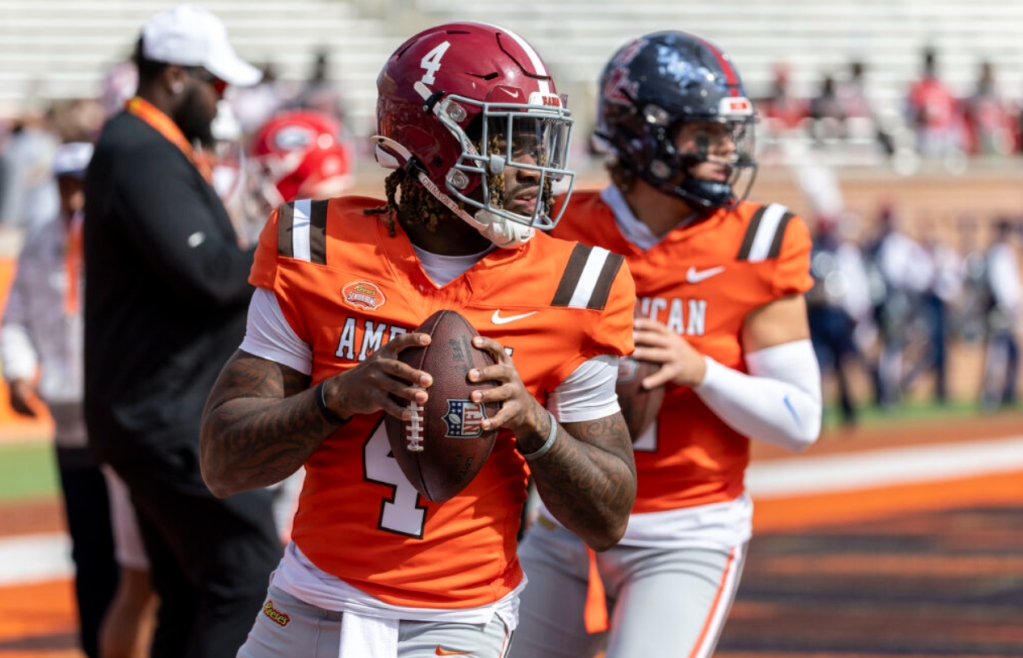
25. TEXANS: Grey Zabel (OL, North Dakota State) — Houston is looking to take a big step into true title contention this season. But that can’t happen if C.J. Stroud dies behind their offensive line. Drafting a prospect who can play several positions well will help keep their QB upright.
26. RAMS: Jaxson Dart (QB, Ole Miss) — Los Angeles is a young and exciting team, with one notable exception: QB. While Matthew Stafford still has a year or two left in him, it could be wise to look to the future and see if they can find Jordan Love 2.0 — their signal caller in waiting.
27. RAVENS: Shemar Stewart (EDGE, Texas A&M) — It seems bizarre to have Baltimore’s glaring weakness be its defense, but here we are. So why not solve this problem with one of the most athletic pass rushers in combine history? Him vs. Derrick Henry at practice could be fun.
28. LIONS: Derrick Harmon (DL, Oregon) — Aidan Hutchinson’s season-ending injury last year exposed a bit of a weakness in Detroit’s defense: line depth. The FBS leader in pressures from DT alignment would help generate more heat on opposing QBs, especially with Hutchinson back.
29. COMMANDERS: Donovan Ezeiruaku (EDGE, Boston College) — Washington made a massive leap last year thanks to its offense, but was limited by its defense — particularly along the line. Getting the reigning ACC Defensive Player of the Year would be a step towards fixing that.
30. BILLS: Maxwell Hairston (CB, Kentucky) — The first thing Buffalo should do with this pick is not trade it to Kansas City. The second thing they should do is address the lack of depth at DB that haunted them in the playoffs. The fastest player at the combine isn’t a bad choice here.
31. CHIEFS: Josh Simmons (OT, Ohio State) — This prospect would’ve likely been off the board had it not been for a season-ending knee injury. Of course, this means Kansas City can swoop in and draft this steal of a prospect who will develop into a franchise star because god is dead.
32. EAGLES: Walter Nolen (DL, Ole Miss) — Congratulations — you are the latest massive, versatile athlete of a human being to be added to the relentless juggernaut that is Philadelphia’s defensive line! Hell, it’s a strategy that’s clearly paid off for the champions, so why stop now?
MONTHLY RAIDERS RANT
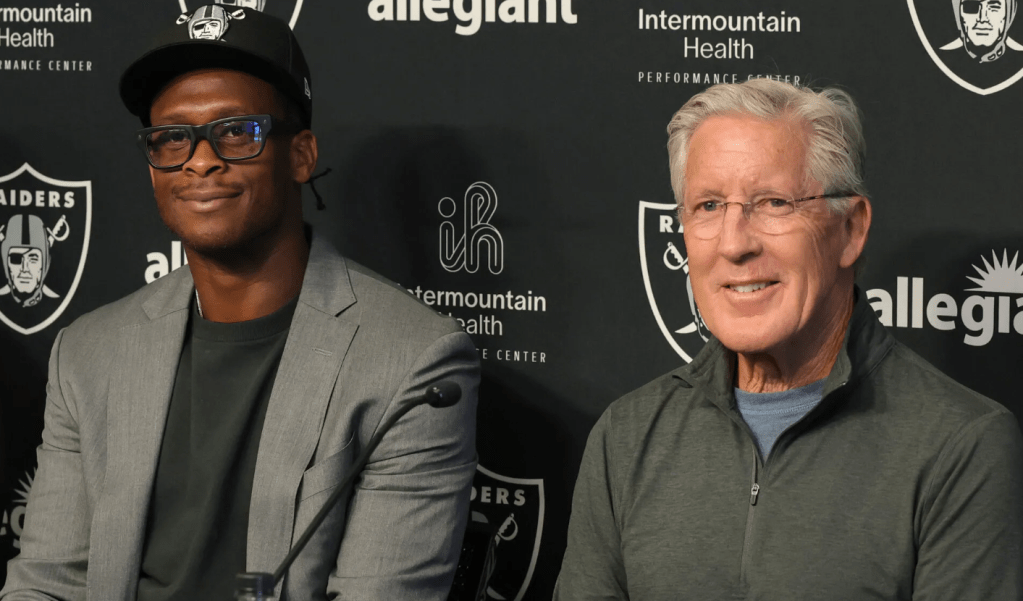
Well, this was unexpected.
Apparently, Mark Davis still lives ten years in the past, except this time instead of trying to be the West Coast Patriots, we’re the Southern Seahawks now.
I’m being a bit facetious, but when I called for the Raiders to go after a young assistant if they did in fact move on from Antonio Pierce, I didn’t expect them to instead hire the man who will become the oldest coach in NFL history when Las Vegas takes the field Week 1. Pete Carroll was absolutely not on my radar, but this doesn’t mean I’m upset about it — far from it, in fact. Not only does Carroll tick the oddly specific Pacific-Raiders connection in my brain, but he’s an absolutely solid hire. Carroll’s resume — a Super Bowl and CFB National champion, years of wise experience and respected coaching, and someone players absolutely love — speaks for itself. What’s more, Carroll is the kind of coach the Raiders need, after several years of uncertainty, inexperience, and Josh McDaniels. At worst, Carroll gives us a competent, reliable leader and someone who players will want to fight for. I say all this as someone who, for the past 20ish years, has largely rooted against Carroll at USC and then in Seattle.
But perhaps even weirder was that Carroll wasn’t the only former Seahawk to fly to Sin City. The Raiders solved their QB situation by poaching Carroll’s former signal caller, Geno Smith. I had not even considered that Seattle would be looking to move on from Smith. In fact, my radical proposal would’ve seen J.J. McCarthy sent to the Raiders as the Minnesota Vikings went with Sam Darnold. But it was Darnold instead who left for Seattle, with the Seahawks shipping Smith to Las Vegas. It was back-to-back shocks, made even more impactful because I found out about both moves while at work, sitting next to my Seahawks fan anchor.
It’s both a testament to the shrewdness of this move — and the putrid history of the Raiders over the past two decades — that Smith is arguably (depending on how you feel about 2016 Derek Carr) the best QB the franchise has had since Rich Gannon. That’s assuming we get the Smith that underwent a career renaissance in Seattle, and not the Smith that was thrown into the fire without any help in New York. As the Raiders currently stand as an organization, I’d like to think we’re closer to Seattle than either Big Apple franchise. But that could end up being decided by how Smith performs. Fortunately for him, he’ll have the coach that oversaw his comeback by his side once again.
Smith is not an elite QB, nor is he on the tier below or maybe even the tier below that. But he is a hell of a lot better than anyone the Raiders have had recently. Smith can get a bit inaccurate and sackable when the pressure mounts, but a lot of that was due to Seattle’s porous offensive line. Now, the Raiders’ line isn’t exactly the Great Wall of China. But at best it’s about the same, with several other factors changed that could mean an improvement. That includes the environment inside Allegiant Stadium. Smith has actually had better statistics throwing indoors than outside, the latter being where Seattle plays. Still, Smith led the Seahawks to the postseason two years ago and nearly did so again last year. Are the Raiders a better team now then the Seahawks were then? I don’t think so, but that doesn’t mean they can’t be soon. That starts in the draft.
With Smith on the roster, the Raiders no longer have to focus on a QB for the next two or three years. While I would’ve liked someone like Cam Ward on the roster, the next QB class is much better on paper. Smith’s presence allows Las Vegas to wait until then to take a QB, and then allow that prospect to sit for a year or two until he’s ready to take over and Smith’s deal ends. Meanwhile, Smith has at least two solid weapons: the greatest rookie TE in history in Brock Bowers (not to mention Michael Mayer) and the eternally underrated Jakobi Meyers. This means that when it comes to this year’s draft, the Raiders can go one of three ways with the sixth overall pick. They can take the best WR available and give Smith a shiny new target to throw to. They can also draft the next best lineman to build up some protection for Smith.
But I prefer they go for either of those positions starting in the 2nd round. When it comes to the sixth overall pick, there’s another massive hole to fill: RB. Last year, the Raiders were literally the worst rushing team in the NFL, greatly missing the presence of Josh Jacobs. A good running game always serves as a great compliment to the passing attack, taking pressure off while providing another option out of the backfield. As it stands, the best RB prospect since Adrian Peterson is in this draft, and the Raiders are in prime position to get him.
Ashton Jeanty was the other half of my radical proposal and the only one that can still happen. It’s not just because of that I want to see Jeanty in Silver & Black. There’s a RB revolution happening across the NFL and the Raiders can get in on it through a guy who put up one of the best rushing seasons in college football history. Jeanty is elite at avoiding contact, yet also would’ve led the nation in rushing had they only counted his yards after contact. That is fucking absurd and makes Jeany a can’t miss prospect. Hell, just reading this (especially the last part) makes me want to order a Raiders Jeanty jersey now. The Raiders cannot — no, must not — fuck this up. Naturally, they’ll draft Jalen Milroe or someone instead.
With or without Jeanty (please for the love of god let it be “with”), the Raiders are in an interesting position going into the 2025 season. While I certainly think the Raiders have already notably improved, Las Vegas is in the Thunderdome. Every other team in the AFC West made the playoffs last year and one of them remains the perennial Super Bowl favorite until they aren’t. Every coach in the division has won a championship at either the professional or collegiate level. To make the playoffs, the Raiders will have to take care of business and beat at least one if not two or three of those teams. However, more now than perhaps any other time over the past few years, I feel like the Raiders have a shot if things break as they should.
Man, I hate optimism — it makes me nervous.
#THROWBACKTHURSDAY
ON THIS DAY IN NFL HISTORY:
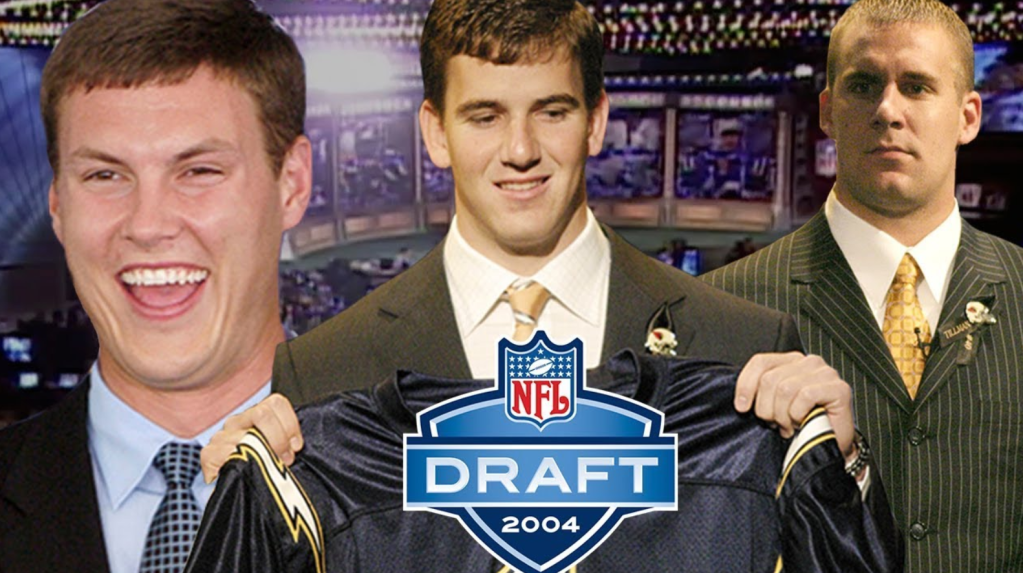
On April 24, 2004, an absolutely stacked NFL draft class found their new homes, with one of them having a bit more of a say in where he went than the rest. The Class of 2004 is one of the few that can compare with the 1983 draft class, highlighted by John Elway, Jim Kelly, and Dan Marino. Like the 1983 edition, the 2004 class was led by a QB who didn’t want to go to the team who held the top pick. That would be Eli Manning, who had won the Maxwell Award and had finished 3rd in Heisman Trophy voting in his senior year at Ole Miss. However, his father, former NFL QB Archie Manning (who had essentially wasted his career on terrible New Orleans Saints teams) had his concerns about who his youngest son would be playing for. The San Diego Chargers held the top overall pick, having gone 4-12 behind inconsistent QB play from Doug Flutie and their late 1st round pick from 2001, Drew Brees. But it was the Chargers’ 1st round pick from three years earlier, Ryan Leaf, who famously flamed out of the NFL due to a number of personal and professional issues. Archie Manning had spoken with Leaf’s father about his son’s experience in San Diego, and was told that the team did not help Leaf with those problems. Eli’s agent also represented Brees, as well as head coach Marty Schottenheimer and RB LaDainian Tomlinson, so the Mannings had a good idea of what to expect in San Diego. That all raised enough red flags for both Archie and Eli to declare that the youngest Manning would not play for the Chargers if they drafted him. It was a mirror to Elway refusing to play for the Baltimore Colts before the 1983 draft, made even more apparent by the fact that much like the Colts did with Elway, the Chargers drafted Manning first overall anyway (with the Mannings looking like they wanted to murder everyone in the building).
However, also like with Elway, Manning would not remain with the team who drafted him for long. Less than an hour after seeming like he was forced to hold up a Chargers jersey, Manning was much more happily holding up the uniform of a different team: the Giants, who were also looking for a QB. San Diego and New York had reached a deal to swap 1st round picks (the Giants held No. 4 overall), with a 2004 3rd round pick and a 2005 1st and 5th round pick also going to the Chargers. That 4th overall pick had already been used to select NC State QB Philip Rivers, which was somewhat of a surprise (more on that in a minute). While Rivers was now thrust into San Diego’s future, a lengthy holdout by their 1st round pick led the Chargers to go with Brees (who had a good training camp) in 2004. Brees led San Diego to the playoffs and was named CPOY, with his improvement continuing through the 2005 season. Although San Diego offered Brees (who had torn his labrum in the final game of the season) a five-year, $50M deal, Brees eventually signed with the Saints, where he would win a Super Bowl and go down as one of the greatest QBs of all-time. Although the loss of such a player would doom most teams, Rivers turned out to not exactly be a slouch. The Chargers went 14-2 in Rivers’ first season in charge and would remain a contender in both the AFC West and conference as a whole during Rivers’ 16 seasons in San Diego (and later Los Angeles), during which time he became arguably the best ever QB to never play in a Super Bowl (he also played one year with the now-Indianapolis Colts). As for the one who kicked all of this off, Manning would sit behind former MVP (and future HOFer) Kurt Warner for a good chunk of 2004 before taking over as starter. While Manning would be a good QB in New York for 16 years, he was never seen among the league’s best. Crucially however, Manning’s legacy would be cemented by leading the Giants to two unexpected Super Bowl titles, both over Tom Brady’s New England Patriots.
Comparisons with the 1983 draft are also common because, like the edition 21 years prior, the 2004 draft was headlined by three QBs. As mentioned earlier, it was somewhat of a surprise that Rivers was taken No. 4 overall. That’s because Miami (Ohio) QB Ben Roethlisberger was seen by most pre-draft analysts as the second-best option behind Manning. That might not have been the case in previous years, but ESPN’s recent deal with the MAC to broadcast games on Tuesdays and Wednesdays allowed a nationwide audience to see Roethlisberger’s Redhawks, who went 13-1, beat Louisville in the GMAC Bowl, and finished ranked No. 10 in the AP Poll. While he was projected to go to New York 4th overall, Roethlisberger instead dropped out of the Top 10, but would go no further. That almost didn’t happen, as the Pittsburgh Steelers, who held the 11th pick, were apparently set on taking Arkansas OG Shawn Andrews. However, seeing that Roethlisberger was still available, Steelers owner Dan Rooney overrode both head coach Bill Cowher and director of football operations Kevin Colbert to take the team’s new QB. Going back to 1983 one more time, Pittsburgh had passed on Pitt QB Dan Marino in favor of Texas Tech DT Gabriel Rivera. 21 years later, Rooney didn’t want to make the same mistake twice. Roethlisberger was intended to sit the entire season behind Tommy Maddox and Charlie Batch, but a preseason injury to Batch and a Week 2 injury to Maddox forced him into action early. Roethlisberger proceeded to go 13-0 as a starter (setting an NFL rookie record), win OROY, and lead the Steelers to the AFC Championship Game. Roethlisberger would go on to win two Super Bowls (and reach a third) with Pittsburgh, retiring in 2022 after 18 seasons with the Steelers. While Roethlisberger had the better stats (and longer career) and is generally considered the best of the three QBs at the top of the 2004 draft, he, Manning, and Rivers combined for four Super Bowl titles, 124,000+ passing yards, 1,200+ TDs, 18 Pro Bowl nods, and about 50 seasons of (relatively) excellent QB play for their franchises.
While the 2004 draft class will forever be headlined by the QB trio of Manning, Rivers, and Roethlisberger, there was plenty of talent across the board. Arguably the best overall player in the class — and one of the greatest WRs ever — was Larry Fitzgerald, who went No. 3 overall and spent his entire 17-year career with the Arizona Cardinals. The picks after Rivers were surrounded by tragedy and controversy, with Sean Taylor (Washington), Kellen Winslow II (Browns), Roy Williams (Lions), and DeAngelo Hall (Falcons) being taken next. The rest of the 1st round was littered with Pro Bowlers, such as Jonathan Vilma (Jets), Will Smith (Saints), Vince Wilfork (Patriots), Steven Jackson (Rams), and Jason Babin (Texans). Interestingly, there was another QB taken in the 1st round, although the Bills didn’t get nearly as great of a return on J.P. Losman as the other three. The 2nd round was highlighted by the Giants taking a future cornerstone of their Super Bowl-winning teams’ offensive line in Chris Snee, as well as the Colts drafting future DPOY Bob Sanders, who still amazed despite numerous injuries. Names like Darnell Dockett (Cardinals), Chris Cooley (Washington), Matt Schaub (Falcons), Michael Turner (Chargers), Andy Lee (49ers), and Peyton Manning’s eternal backup Jim Sorgi (Colts) went in the middle and late rounds. But the draft’s ultimate steal came in the 4th round, where the Chiefs selected future HOFer Jared Allen 126th overall. There were also some strong players who went undrafted, such as future HOFer Jason Peters, Wes Welker, Willie Parker, and Don Muhlback (arguably the greatest long snapper of all-time). So, who among this list of talent did the Oakland Raiders end up with? Those who made the 2004 roster: Jake Grove, Stuart Schweigert, Carlos Francis, Courtney Anderson, and (sigh) Robert Gallery, one of the biggest draft busts in NFL history, selected 2nd overall. People wonder why Raiders fans drink.
OTHER NOTABLE HAPPENINGS:
— 1994: The Cincinnati Bengals select Ohio State DT Dan Wilkinson 1st overall, missing out on future HOFers Bryant Young (who went to the San Francisco 49ers 7th overall) and Marshall Faulk (2nd overall to the Indianapolis Colts). Three other future HOFers (Isaac Bruce, Kevin Mawae, and Larry Allen) are selected in the second round, while another future HOFer, Kurt Warner, famously goes undrafted. Other notable players drafted include Willie McGinest, Trent Dilfer, Sam Adams, Charlie Garner, Heath Shuler, Gus Frerotte, and Rodney Harrison
— 1988: The Atlanta Falcons select Auburn LB Aundray Bryce 1st overall. Two future HOF WRs, Tim Brown (6th overall to the Los Angeles Raiders) and Michael Irvin (11th overall to the Dallas Cowboys), as well as HOF OG Randall McDaniel (19th overall to the Minnesota Vikings) are selected in the first round. Two other future HOFers (Thurman Thomas and Dermontti Dawson) are selected in the second. Other notable players drafted include Sterling Sharpe, Bennie (and Brian) Blades, Craig Heyward, Chris Spielman, Eric Allen, Ickey Woods, and Bill Romanowski
— 1978: About a week ahead of the NFL Draft, the Houston Oilers acquire the No. 1 overall pick from the Tampa Bay Buccaneers in exchange for TE Jimmy Giles, the Oilers’ 1st and 2nd round picks, and two 1979 draft picks (a 3rd rounder and a 5th rounder). With the top pick in 1978, Houston would select Texas RB and future HOFer Earl Campbell. Tampa Bay would turn their picks into Doug Williams, Brett Moritz, Reginald Lewis, and Chuck Fusina. Of note: Williams and Fusina were QBs, while Lewis was drafted four picks ahead of future HOFer Joe Montana
RUBEN’S RANKINGS
TOP 10 GREATEST FORMER SACRAMENTO SPORTS TEAMS
A couple of months ago, I got an email at work that included the longest word I’ve ever seen in a press release: demisemiseptcentennial. That means “175th anniversary,” which Sacramento was celebrating. I went to the internet to confirm, and indeed Sacramento County turned 175 years old back on February 18th. In 1850, Sacramento had a population of just over 9,000 and was one of the original 27 counties in California, which will also celebrate 175 years of statehood later this year (and might be a good theme when that time comes around).
175 years is a long goddamn time, and a lot of history that took place during all those years has sadly been forgotten. Take, for example, sports. When it comes to professional sports in Sacramento, the Kings are the longest tenured franchise in the city, followed by the River Cats, Republic, and the utter clusterfuck that is the A’s (for the next few years, anyway). But as it turns out, Sacramento has a rich and incredibly diverse sports history, with many pro teams that once called Sacramento home, only to either move away or fade out of existence. Some you already know, but I’m willing to bet there are a lot more you don’t.
So let’s take a look back through Sacramento history at the greatest teams to have called the Capitol City home, but no longer exist. Because “greatness” is subjective, I’ll be basing these rankings on a combination of things like longevity, success, prestige, popularity of the sport, and how high up on the food chain. For example, a AAA baseball team will be looked at on a higher level than a semi-pro roller derby outfit.
I tried my best to look through the archives and find every team I could, but there are some that I probably missed. For example, there are several small/regional football leagues that included teams from the city, such as the Sacramento Nuggets, Sacramento Condors, River City Buffalos, and Capital City Cobras. I needed to at least mention the latter, because Dad used to play for them. Dad also used to be an assistant coach on a pro women’s volleyball team called the Sacramento Stars, which he said included several members of Pacific’s 1985-86 back-to-back NCAA championship teams. However, there’s barely any sources online to even confirm that team existed. Granted, I could just ask Dad about them, given that he coached for them and everything. But I think it’s funnier if I just ignore him and leave the Stars off the final list.
HONORABLE MENTION: SACRAMENTO BUCCANEERS/CAPITOLS
The first of several football teams we’ll talk about in this list, the Sacramento Buccaneers (later renamed Capitols) were born in 1967 as part of the Continental Football League. Although the team only lasted three years, it had more than its fair share of controversy. A pay dispute two months into the 1967 season nearly led to the players quitting, and did result in the head coach and four assistants leaving. Terrible in their first season, the Capitols improved to make the playoffs in 1969, but got their asses kicked and later folded, along with the rest of the COFL.
HONORABLE MENTION: SACRAMENTO ATTACK
In 1992, the Arena Football League reached a deal to start a new team in Los Angeles. But the deal fell through, with the franchise being relocated to the Capitol City. The incredibly-named Sacramento Attack played in ARCO Arena for one season, overseen by head coach and CFL/CFB HOFer Joe Kapp. The Attack went just 4-6 but made the playoffs, losing to the eventual Arena Bowl champion Detroit Drive. In the offseason, the Attack left Sacramento for South Florida, becoming the Miami Hooters (yes, seriously) and then the Florida Bobcats.
HONORABLE MENTION: SACRAMENTO PRIDE/SURGE
These two are lumped together because they’re both soccer teams. The Sacramento Pride was a former member of the Women’s Premier Soccer League that never made the playoffs despite fielding two USWNT members (including Megan Rapinoe) and wasn’t even the best WPSL team in the region (that would be the California Storm). The Sacramento Surge (who I almost worked for) was a team in the Major Arena Soccer League for several years who won nothing. They aren’t even the best ever sports team called the Sacramento Surge (more on them later).
HONORABLE MENTION: SACRAMENTO EXPRESS
The Sacramento Express were born in 2016, finished last place in the only season of PRO Rugby, and then ceased to exist. But here’s the real story: I named this team. When the team was announced, they held an online contest for people to submit names. I submitted the name “Express,” along with my name and email. While they clearly liked my idea, I never received the recognition of being the one to come up with the winning name. As you can tell, I’m still pissed about this nearly a decade later and will not rest until I get the credit I so obviously deserve.
HONORABLE MENTION: SACRAMENTO HEATWAVE
As the Sacramento Kings began their descent into basketball hell in 2006, the California Heatwave of the semi-pro ABA moved to the Capitol City. Over the next several years, the Sacramento Heatwave played mediocre basketball at Cosumnes River College, as well as Natomas and Folsom H.S. Not once did they make the playoffs and eventually the team left the region, moving to Madera in 2013. The Heatwave would fold a year later having accomplished nothing, yet somehow probably played better basketball than the Kings did during that era.
HONORABLE MENTION: SACRAMENTO XSV
Did you know that Sacramento has a professional paintball team (or that pro paintball exists)? That team is called Sacramento DMG, but it’s not the only pro paintball squad in the city’s history. XSV (pronounced “excessive”) Paintball is based in Modesto, and until 2015 had a pro squad called Sacramento XSV. Apparently, that squad was pretty good, having won multiple national tournaments. However, because pro paintball records are shockingly not easily accessible or verifiable, I can’t place XSV any higher than the Honorable Mention list.

10. SACRAMENTO RIVER RATS
The 1990’s were an interesting time. For example, Roller Hockey International had a cable deal with ESPN2, which showcased the league’s nearly 20 clubs across the U.S. and Canada. In 1994, one of those teams — the Connecticut Coasters — relocated to the Capitol City and became the Sacramento River Rats. Originally playing at ARCO Arena, the River Rats moved to an experimental outdoor venue at Cal Expo in 1997. It didn’t really work out, with the heat causing various problems (including a buckled playing surface and power outages). In fact, the River Rats’ only win in their first ten games in the 1997 season was by forfeit due to their opponents refusing to take the court. Partially owned by Larry King (not that one — the ex-husband of Billie Jean King), the Sacramento had only one winning season before RHI halted operations 1998, and then returned in 1999 without the River Rats. RHI ended up folding later that year, officially relegating the River Rats to history as a brief minor league curiosity.
9. SACRAMENTO REBELS
The Sacramento Rebels were a semi-pro ice hockey team born in 1975 that played in two leagues before folding in 1980. But despite their fleeting existence, they gave us one of the most insane stories of victory I’ve ever heard. The Rebels were playing in the 1976 final of the California Western Hockey League, tied 1-1 in the series against the Stockton Colts but trailing 4-3 in the decisive Game 3. However, Stockton player/coach Norm Johnson got angry over a call and threw his stick at a referee before attacking him. Another player assaulted another referee, igniting a ten-minute melee involving both teams that saw fans throwing bottles onto the ice and the sheriff’s office being called in to calm things down. Because it was Stockton that started the mini riot, the Rebels were declared the winner of the game (and thus, the league championship) via forfeit. The Rebels would win another championship two years later (though it must be said the league had been whittled down to two teams at that point) before folding.
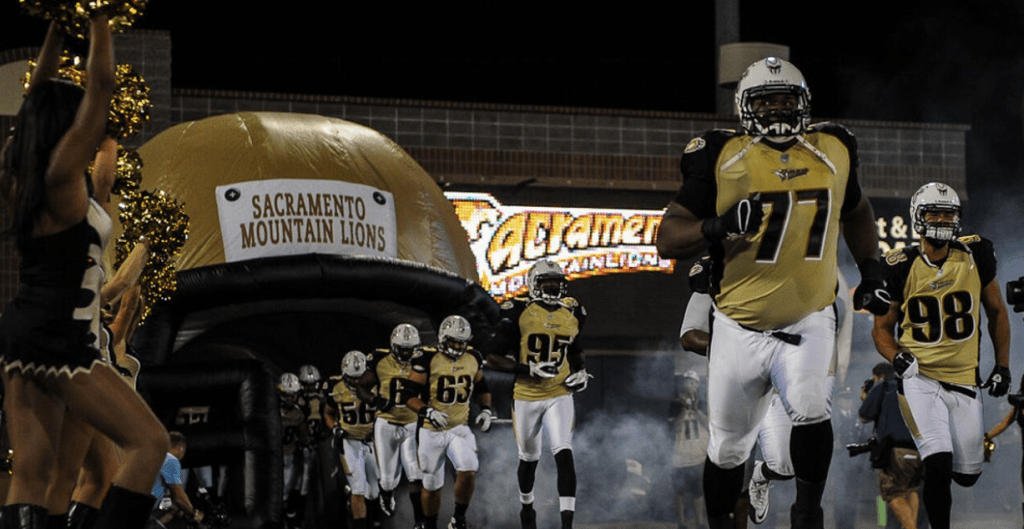
8. SACRAMENTO MOUNTAIN LIONS
Remember the United Football League — the 2000’s/2010’s league that sort of tried to compete with the NFL? It only existed for a few years, but Sacramento was involved. Not at first, though — the California Redwoods initially played in the Bay Area before moving to Sacramento and being renamed the Mountain Lions. Making their home at Hornet Stadium and later Raley Field, the Mountain Lions were coached and (general) managed by Dennis Green for the majority of their existence, which did not include a winning season. Among some of the notable players to don the Sacramento Mountain Lions colors: Daunte Culpepper, Josh Johnson, and McLeod Bethel-Thompson. The franchise folded in 2012 and was owned by Paul Pelosi (husband of former House Speaker Nancy Pelosi), with minority owners including George Zimmer, the founder of Men’s Wearhouse and the guy who famously said, “You’re going to like the way you look. I guarantee it.” Oh, and Mike McDaniel was the Mountain Lions’ RBs coach for a year.

7. SACRAMENTO GOLD MINERS
Did you know that for a few years in the 1990’s, the Canadian Football League had American teams? Did you also know that the first of these teams was the Sacramento Gold Miners, a direct descendant from another team on this list. Using roughly the same staff/personnel, venue, and color scheme from their successful predecessors, the Gold Miners played two seasons in the CFL, setting a few league records for American and expansion teams. Though they failed to make the playoffs (notably coming up short in 1994 thanks in part to a botched last second call), the Gold Miners were far from terrible and actually had a good defense. However, off-field problems began to mount, with the cost of travel adding up (their closest opponent was nearly 900 miles away in 1993) and Hornet Stadium seen as vastly inferior to the other CFL venues (like what Sutter Health Park is to MLB). Ultimately, a lack of a suitable stadium and various other issues led to the Gold Miners moving to San Antonio before folding in 1995.
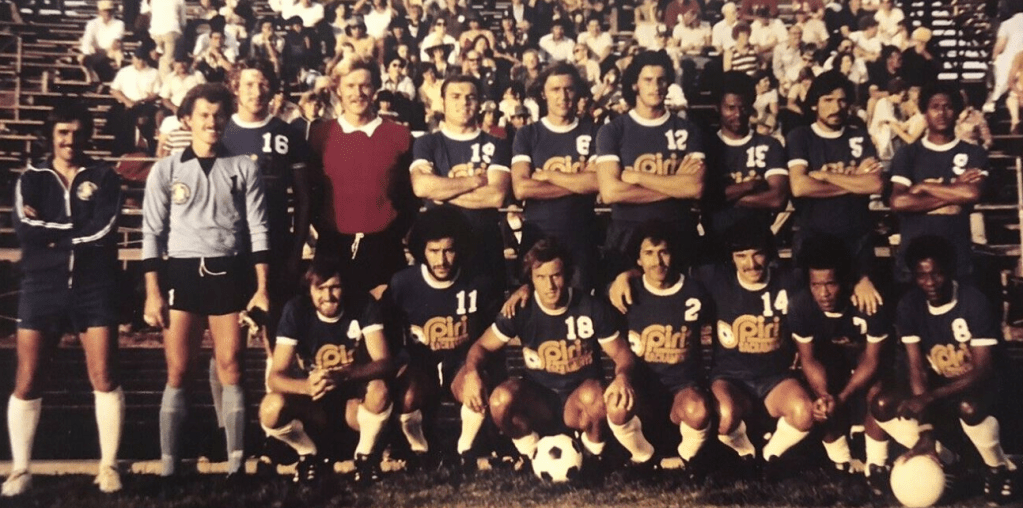
6. SACRAMENTO GOLD/SPIRITS
Unlike the Sacramento Gold of the NPSL that I used to work for (and still exist), the Sacramento Gold (later renamed Spirits) of the second edition of the American Soccer League could claim professional status. Although the ASL was seen as second-tier — especially while the NASL was in its heyday — it still grew to be a national league with a prominent following (though over-expansion would be a key contributor to the league’s folding in 1983). While the Gold failed to make the playoffs in its inaugural year of 1976, Sacramento would be a force for the rest of its tenure, reaching the ASL Final in three of its final four seasons, which were played at Hughes Stadium. In 1979, the Gold survived an OT thriller against the Los Angeles Skyhawks before upsetting the heavily favored California Sunshine in the Western Division Final. In the ASL Final, a late goal by Ian Filby was enough to give Sacramento a 1-0 win over the Columbus Magic and the league title. Sadly, the franchise would fold after the following season.
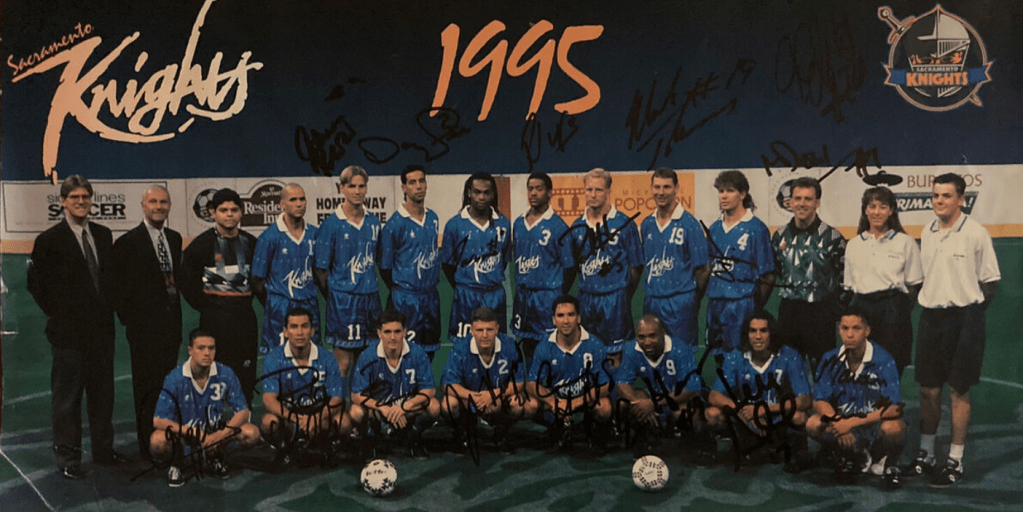
5. SACRAMENTO KNIGHTS
ARCO Arena has hosted a championship team, but not just the one you’re thinking about (more on that later). For nearly a decade, the Sacramento Knights were one of the best indoor soccer teams in the planet, playing in the Continental Indoor Soccer League before moving to the World Indoor Soccer League. The Knights made the championship in both leagues, winning the WISL title in 1999. Unfortunately, the Knights folded when the WISL merged with Major Indoor Soccer League in 2001. The Knights are one of the few teams on this list whose games I attended. I remember whoever scored a goal got to kick a ball into the stands for fans to keep — I think Dad still has the one he caught from a game when I was like six or something. Those games were fun and the Knights were genuinely good, or maybe it’s just the name. A few years later, the Sacramento Knights name was revived for the short-lived outdoor team that won the 2006 NPSL championship. For all you Didion kids, Mrs. Chambers’ son was on the roster.
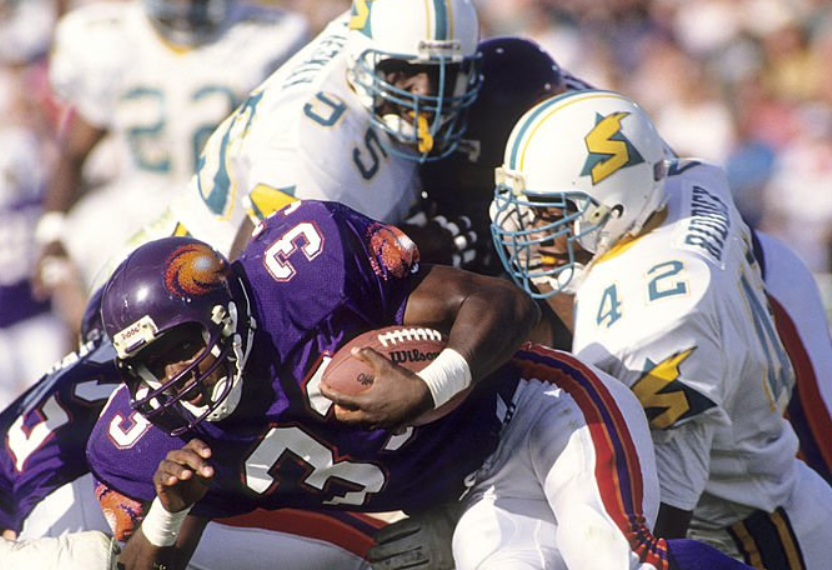
4. SACRAMENTO SURGE
Remember a few paragraphs ago when I told you the Sacramento Gold Miners were basically the reincarnated form of another successful football team? That would be the Sacramento Surge. One of the founding members of the World League of American Football (which would later become NFL Europe), the Surge was founded in 1991 and initially played at Hughes Stadium. That year was a disappointment, but Sacramento was the only American team to have a winning record against a European team (the Frankfurt Galaxy). In 1992, the Surge moved to Hornet Stadium and became a force. With the likes of Jim Haslett and Jack Youngblood on their staff and players like future WWE HOFer Bill Goldberg (seriously) on their roster, the Surge went 8-2 in the regular season, edged out the Barcelona Dragons in the semifinal before topping the Orlando Thunder in the World Bowl. The WLAF ceased its American presence after the season, but many Surge players/staff were kept on for the Gold Miners in the CFL move.
3. SACRAMENTO CAPITALS
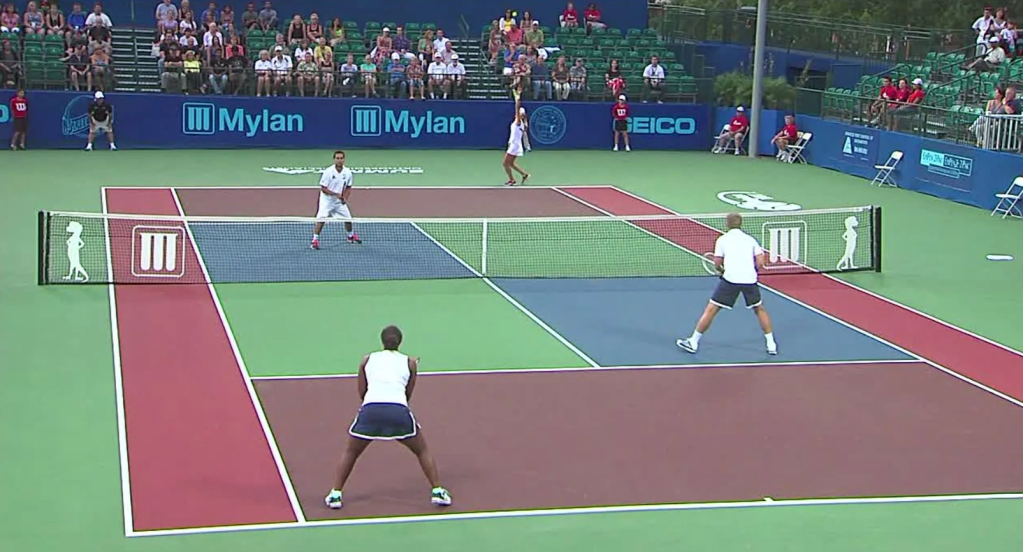
Behold, the most successful professional sports franchise in Sacramento history. A former mainstay of World TeamTennis, the Sacramento Capitals made their home at various places across the region — including ARCO Arena, the Roseville Galleria, Gold River Raquet Club, and Sunrise Mall — from 1988-2013. In their quarter-century in the Capitol City, the Capitals won six WTT championships, including four in a row from 1997-2000. In fact, Sacramento remains tied (with the Washington Kastles) for the most titles in WWT history (the league folded in 2021) and still has the most combined championships and runner-up finishes (ten). Sadly, the Capitals were relocated to Las Vegas in 2014, and then shut down weeks later after team owner Deepal Wannakuwatte was arrested for running a ponzi scheme. WTT briefly returned to the region when the Texas Wild relocated to Citrus Heights and became the California Dream. But the Dream lasted just one season and never got closed to living up to the Capitals’ legacy in team tennis.
2. SACRAMENTO SOLONS
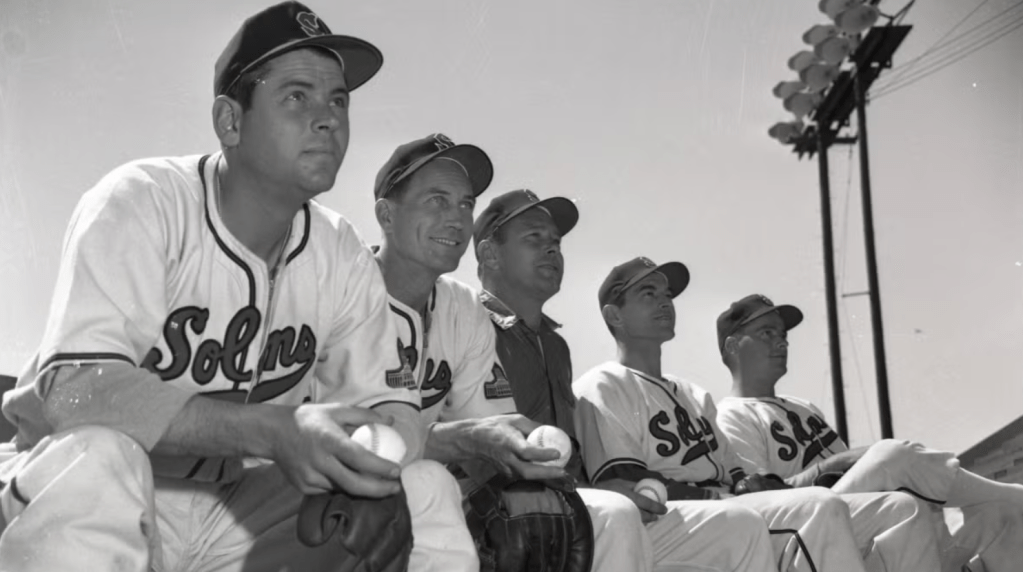
Behold, the longest tenured professional sports franchise in Sacramento history. Debuting in 1883 and on-and-off again representing the Capitol City for more than 70 years until 1976, the Sacramento Solons (their most common name of more than like a dozen) were one of the top West Coast baseball clubs for the first half of the 20th century, when MLB had yet to reach east of the Mississippi River. The Solons have a tremendous history (more of which you can read about here), winning back-to-back Pacific Coast League championships in 1938-39 as well as the 1942 PCL regular season pennant. The franchise made its home mostly at Edmonds Field, which was located on the site that is now the Target on Riverside Blvd. Throughout their tenure, the Solons were the minor league affiliates of the Brooklyn Dodgers, St. Louis Cardinals, Chicago White Sox, Milwaukee Brewers/Braves, and Texas Rangers. While the River Cats are the current PCL representatives for Sacramento, they occasionally pay tribute to the Solons.
1. SACRAMENTO MONARCHS
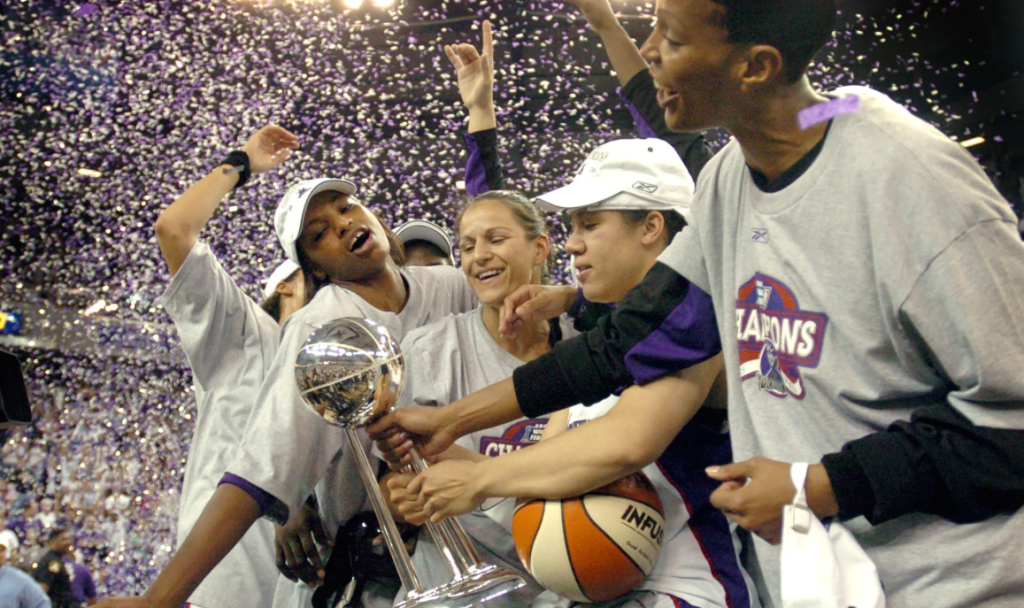
When I first thought of the idea for this list, there was one team I wrote down for the top spot. They didn’t move, and for good reason. The Sacramento Monarchs are the undisputed defunct team GOATs for Sacramento, entertaining crowds at ARCO Arena for more than a decade, reaching back-to-back WNBA Finals, and winning the 2005 WNBA Championship. With an all-time roster that features All-Stars, HOFers, and other basketball greats like Yolonda Griffith, Ticha Penicheiro, Ruthie Bolton, Rebekkah Brunson, Bridgette Gordon, and Kara Lawson, the Monarchs more than held up their own of the great 2000’s peak of Sacramento basketball. Sadly, the very thing that caused the decline ended up dooming the Monarchs, who got caught up in the Maloof fuckery that nearly cost Sacramento the Kings. Now, in arguably the most popular era for womens’ basketball, instead of watching the Monarchs thrive, we have to rely on memories while the fucking Bay Area gets to cheer for the Valkyries. Again, fuck the Maloofs.
LADS (& LASS), WE’RE OLD
Last year, I made a terrible discovery while putting together the 2024 NFL Draft Newsletter. I promised to reveal what it was one year later. To paraphrase that piece of shit John Cena (Cody Rhodes will get that title back, you son of a bitch), that time is now.
The specific part of last year’s draft newsletter I was working on concerned UFC 300 — the first mixed martial arts event I had watched in at least six years. If you had told me I would get anywhere close to missing out on that much MMA back then, I would’ve called you crazy. That’s because for the previous decade of my life, MMA had arguably surpassed football as my second-favorite sport, and a close second to soccer at that. As I’ll discuss more during the forthcoming retrospective, MMA has had a surprisingly large impact on me, including the very path my life has carved out. That’s not hyperbolic — I probably wouldn’t be at FOX40 or a TV producer or media member without MMA and the direction of my education might’ve been different had I not gotten into what at the time was a niche sport.
Although it may seem impossible given that there’s a UFC event happening seemingly every weekend, seemingly every neighborhood has a jiu-jitsu school, and MMA coverage is all over channels like ESPN, there was a time where the sport was fighting to exist in the United States. After all, even the idea of “mixed” martial arts is fairly brand new and lacks the history and tradition of various specific martial arts, let alone other sports like baseball and football. Hell, I’m older than the UFC itself, with the first event (held to try to finally answer which fighting style is superior) held on November 12, 1993. At UFC 1, there were just three rules — no biting, no eye-gouging, and no nut shots. There were also no uniform gear, gloves, weight classes, judges, or time limit (or doping regulations).
While the novelty and spectacle of that event (as well as the next few others) drew decent numbers, the sport quickly found itself having to adapt. Although the blood, violence, and “no rules/no holds barred” aspect of the UFC appealed to many people (including the infamous “Just Bleed” Guy), many others were put off or outright offended by what they were seeing. Among the most famous detractors were the late Senator John McCain (who likened MMA to “human cockfighting”) and New York Governor George Pataki, while most states’ athletic commissions refused to sanction UFC events. As a result, the UFC started implementing rules and regulations. Aspects like rounds, decisions, gloves, uniforms (athletic shorts or spandex), weight classes, championships, and sponsorships were implemented, as were bans on doping and certain moves. Despite their efforts to become legitimate, the UFC (and MMA as a whole) faced several financial pitfalls, nearly going out of business several times. Even after the UFC was bought by Zuffa, LLC (which included current president/CEO Dana White) and got a stronger financial backing, the sport still severely struggled with popularity, despite creating stars like Tito Ortiz and Ken Shamrock. Back then, MMA was on the level of popularity as sports like bull riding, monster truck driving, and arena football.
Knowing its trajectory had to change, the UFC took a gamble that, if it didn’t work, had the potential to cause everything to go under. They put together a reality TV show called The Ultimate Fighter, which would see a group of middleweight and light heavyweight fighters compete against each other for a six-figure UFC contract, while living together in the same Las Vegas house. The fighters would be coached by then-light heavyweight champion Randy Couture and No. 1 contender Chuck Liddell, who would fight each other one week after the live season finale. The problem: damn near every network rejected the idea, with only Spike TV agreeing to broadcast the show (and only after the UFC agreed to pay the $10M production costs itself). Already $10M in the hole and needing a damn miracle at this point, the UFC were banking on recapturing some of that gritty old school feel while introducing MMA to millions of people and saving the future of the sport at the same time.
Turns out, that’s exactly what happened. I should know — I was one of the people who heard about this new show where these crazy guys beat the shit out of each other in this sport called MMA. I tuned in about halfway through the season and was instantly captivated by MMA (it helped that I was on my way to getting a black belt in kenpo at the time). I was also intrigued by the colorful chracters — rather, fucking insane people — that made up the cast, including the wild and reckless Chris Leben, uber athletic asshole Josh Koscheck, and mercurial and possibly psychotic Diego Sanchez (who ended up winning the middleweight tournament and briefly became my favorite fighter). I was one of the people who had never seen an MMA event but nevertheless tuned into Spike TV for the live finale of The Ultimate Fighter, which would prove to be arguably the most important night in the sport’s history.
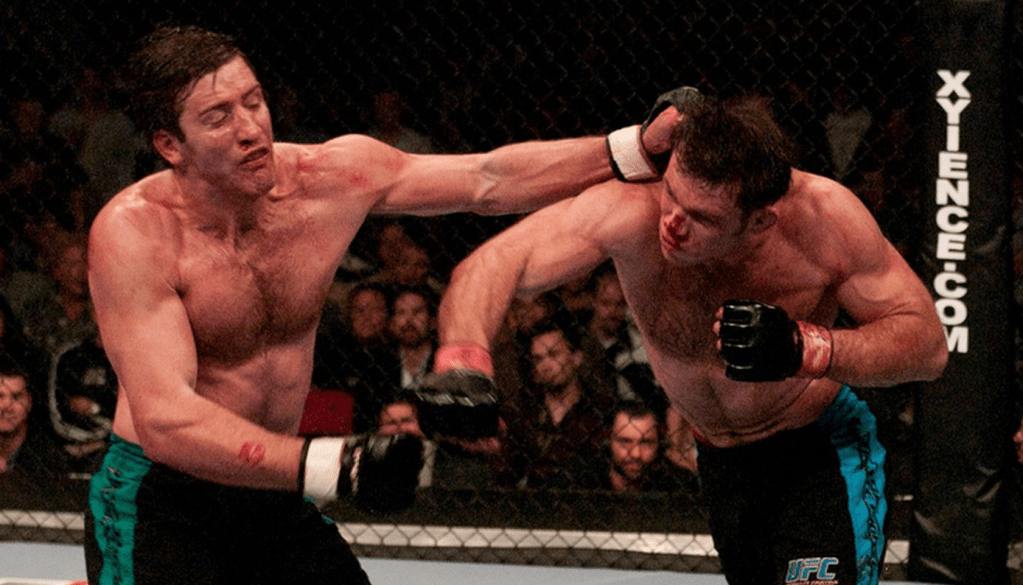
In the finals of the light heavyweight tournament, Forrest Griffin and the late Stephan Bonnar put on perhaps the greatest fight the UFC has ever seen, constantly and relentlessly punching each other in the face like Rock ‘Em Sock ‘Em Robots. The two not only showcased the skill and athleticism of both fighters, but the bleeding heart and toughness at the core of MMA. Ratings went up throughout the course of the 15-minute fight, meaning people were literally calling their friends and telling them that they had to tune in and see this spectacle as it happened. From that night on, myself and millions of other people became MMA fans, and the sport would never be the same. The UFC would eventually grow into the worldwide behemoth it is now and MMA as a whole has never been more popular, all thanks to what’s known as the “TUF boom.”

It’s in this watershed moment that we finally get to that horrific discovery. That event — The Ultimate Fighter 1 Finale — which turned me into an MMA fan and inadvertently changed the very course of my life forever, took place on April 9, 2005 — more than 20 years ago.
I wasn’t even a teenager when I watched Griffin and Bonnar slug it out. Now, I’m knocking on the door of 33 and my MMA fandom has officially lasted longer than two decades. Upon realizing the distance between now and then (and pushing this back a year to make it an even 20 years), whatever strength left in my knees rapidly eroded, the number of gray hairs on my head tripled, my back became crooked and bent, and I gained the ability to know when it’s going to rain based on a feeling in my bones.
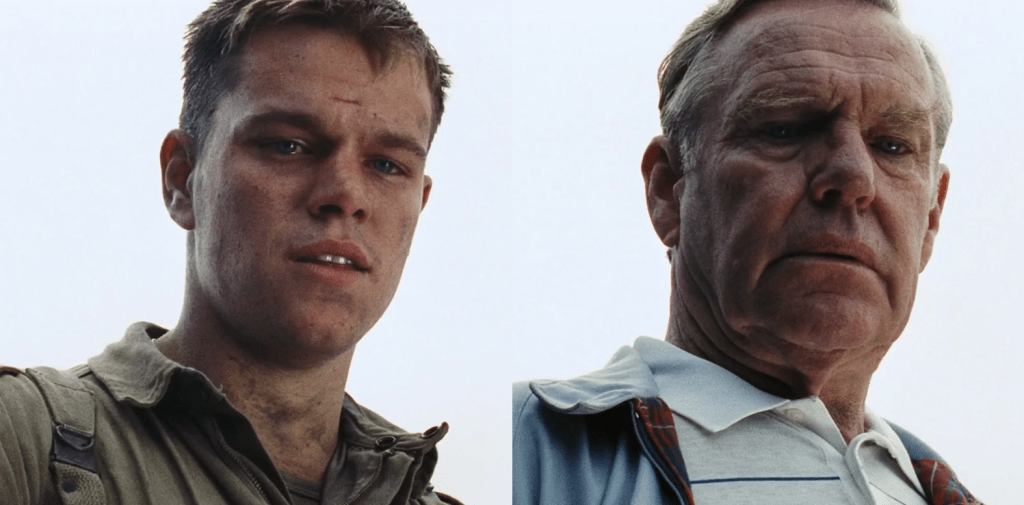
As I crumble into dust and become the embodiment of that gif from Saving Private Ryan, I strangely feel like I shouldn’t feel surprised it’s been so long. After all, as I’ve alluded to, a huge portion of my life came after that event. Hell, just a week later, Dad and I were watching UFC 52, which would see Liddell cement his status as the UFC’s first mainstream star by knocking Couture out in the first round. But more important was the first fight of the night — the very first MMA fight I would watch on a PPV card. Competing in that bout (and emerging victorious) was a Canadian welterweight fighter named Georges St-Pierre. About a year and a half later, St-Pierre would defeat Matt Hughes by second round TKO to win his first welterweight championship. That event, UFC 65, took place at ARCO Arena here in Sacramento. About 25 feet away from the octagon when St-Pierre won the title was then-Sacramento Kings forward Kenny Thomas, as well as a 14-year-old freshman sports editor for the newspaper at Kennedy HS who somehow (thanks in no small part to his father) had gotten credentialed to cover the event live and report on the impact of this growing sport of MMA on the youth. Afterwards, that kid got to interview St-Pierre, who on the greatest night of his life couldn’t have been kinder and more accommodating to a media novice if he tried. Not only would St-Pierre become and remain that kid’s favorite MMA fighter (as well as his favorite overall athlete), but the overall experience of covering a live sporting event would inspire him to work towards a career in sports media (and media as a whole). The kid would eventually cover a second UFC event at ARCO (UFC 73), as well as the NCAA Tournament, one of the greatest women’s college basketball teams of all-time (and the greatest women’s college coach ever), a major collegiate conference move, one of the most improbable playoff runs in minor league hockey history, and countless other events en route to becoming editor-in-chief of both his high school and college newspapers and (currently) a senior producer at a TV station in a Top 20 U.S. media market.
That kid was me. I’m not sure if I laid that on thick enough for you.
It’s also worth noting that during the UFC 65 post-fight press conference, I was the only reporter who asked St-Pierre about his next opponent, Matt Serra (who had won the welterweight tournament of season 4 of The Ultimate Fighter, with the gimmick being the winners getting a title shot). My question would become awfully poignant when St-Pierre and Serra fought at UFC 69, but there will be no further discussion of that night and anyone who brings it up will face an automatic ban from the Epic League.
UFC 52 would also be the first of dozens of UFC PPV events that my parents (namely Dad) would buy. Once a month, when the next card arrived, we would shut the living room down for several hours and watch as the best MMA fighters beat the shit out of each other. While there was a core of people at every watch party — including myself, Dad, Jake Coyle (the only friend from Kennedy who also knew what MMA was), and eventually Ewing — these UFC parties grew to be legendary gatherings where sometimes more than a dozen people crammed into my living room, stuffed their faces full of food and drinks, and cheered on various fighters. UFC nights became melting pots for people from my various friends groups to meet and interact. In the days before social media, sometimes this would be the only time certain people ever saw each other. At least 50% of the Epic League’s all-time membership have attended at least one UFC party. These nights gave birth to so many memorable moments, from belting out Matt Hughes’ walkout song (“A Country Boy Can Survive,” by Hank Williams Jr.), to the entire couch minus Taylor Jopson going apeshit when Chris Weidman knocked Anderson Silva out, to the entire crowd (who had been relegated to my parents’ bedroom due to Gabby having a birthday party downstairs) feeling more American than ever when Dan Henderson sent Michael Bisping to the shadow realm, to Jake and I going to war when St-Pierre fought B.J. Penn, to slapping the couch on beat to Rich Franklin’s walkout song (“For Those About to Rock [We Salute You],” by AC/DC), to Ewing making an ass out of himself while laughing at Matt Hamill’s pre-fight speech (not knowing he talked that way because he’s deaf), to everyone getting emphatically pissed off at me because I mentioned Twilight so my then-girlfriend (attending her first UFC) and another female attendee had something to talk about, only for them to not shut the fuck up about sparkly vampires for the entire night. UFC nights had a notable impact on the very group dynamic of our fantasy football league today.
Even when I wasn’t watching the UFC from the comfort of my home, I constantly followed MMA. I had an encyclopedic knowledge of every UFC event — I could literally name every fight on the card, complete with results. I remember Dad and I heading to my uncle Adam’s house while on a family trip to Mt. Shasta to watch St-Pierre win the title back from Serra. On the same day we watched the U.S. face England in the 2010 FIFA World Cup and caught a matinee showing of Wicked at the Orpheum Theatre, my family and I rushed home from San Francisco just in time to catch UFC 115. During a soccer tournament in Las Vegas, Dad and I tracked down the location of the gym where they shoot The Ultimate Fighter, not knowing they were currently filming the latest season — I managed to get a picture with Liddell before Dad and I hightailed it out of there as camera crews and producers made their way outside. I also got into other MMA organizations, such as PRIDE FC (which had the best theme in sports history — yes, even better than “Roundball Rock”), Strikeforce, Elite XC, and WEC, an event for the latter of which I saw live in Sacramento. Being a good local MMA fan, I seriously contemplated signing up for Urijah Faber’s Ultimate Fitness and mainted a soft spot for Nick and Nate Diaz. I also dressed the part, with a non-insignificant part of my high school and college wardrobe including cringy Tapout clothing and other MMA t-shirts with indiscernible writing on them (I sincerely hope all pictures of me wearing them have been erased from existence).
Even as I started growing up and got into and out of college, I continued to follow the sport. I remember tracking the results of St-Pierre’s title defense against Johny Hendricks while at Ewing’s Chi Rho Psi party/Redlands’ SCIAC championship victory celebration (which was the first time I ever got drunk). Tyler Gee was so hyped for Conor McGregor vs. Jose Aldo that he convinced us to buy UFC 194. My first post-Emilio roommate and I eagerly watched the stream of UFC 217 together, as St-Pierre made his incredible comeback after four years away and won the middleweight title. That same roommate and I would later travel to Las Vegas together for my 26th birthday weekend, watching UFC 226 in person and seeing Daniel Cormier become a two-division champion. Less than four months later, Dad’s living room was once again filled as a group of us watched UFC 229 and the absolute chaos that unfolded after Khabib Nurmagomedov took down McGregor (and inspired that week’s newsletter theme).
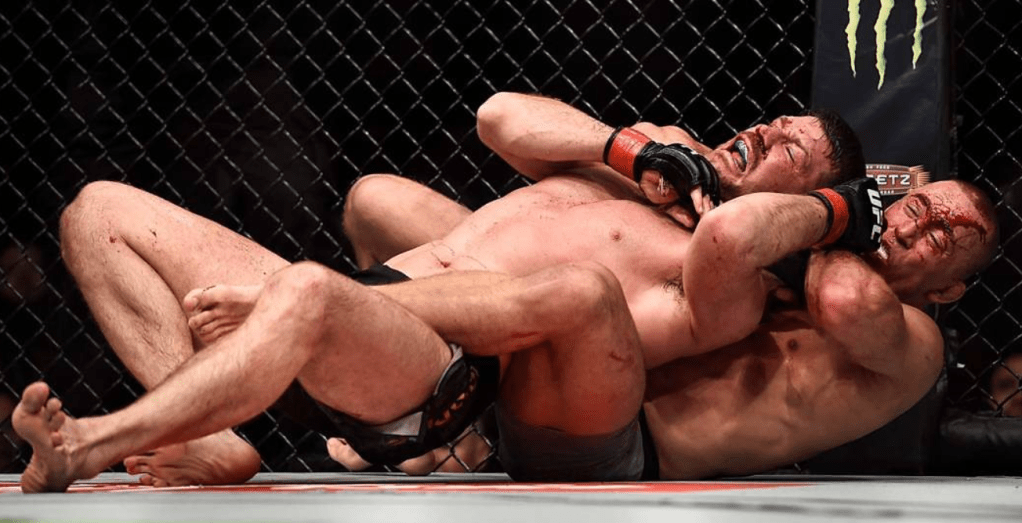
Little did anyone know, myself included, that this would be the last UFC event (apart from UFC 300, which I mentioned in last year’s draft newsletter) I would watch live to this day. More than 2,000 days had passed between those events, which would have been unthinkable years earlier. Hell, I’m sure there was a much longer span of time where I watched every UFC event live.
So the question must be asked: what the hell happened? How did the UFC/MMA go from an integral part of my life to a complete afterthought?
I’ve asked myself that ever since I made that discovery a year ago. Even though I’ve had all that time to think, as I’m writing this now, I’m not completely sure. I can tell you that it’s not just one thing. There were a number of factors, each more depressing than the last.
First off, life went on and I changed. I won’t say that I “grew up,” because that implies that MMA is a sport for children and that I am a mature adult (both untrue). But not too long after I got out of college, my parents split up. Dad (the only other MMA fan in the family) could no longer afford every PPV — far from it, in fact. Combined with my lack of financial prowess, this meant that we really couldn’t afford to follow the UFC regularly anymore (more on that payment system later). Ever since I moved out and have my own place, I haven’t had cable, meaning I don’t have regular access to the cards on ESPN. Over time, all of this has meant that I’ve had to do more work to even follow the sport, compared to other, mainstream sports. Although I’m now making enough to be able to afford a PPV or two on my own, I don’t for two reasons. Because of the way life goes, it takes a considerable effort for the former UFC group (some of which have moved far away) to get together for anything, let alone a UFC PPV. Many of them only watched when we hosted events, so they’ve fallen off the sport even harder than I have done. Without this group though, it’s not as fun — I’m not gonna spend that much money on a show for myself. Then, there’s the simple fact that I really don’t want to give the UFC my money anymore.
Much like myself, the UFC and MMA as a while have changed greatly since the heyday. Sports in general go through different eras. For example, I remember when Aaron Rodgers was drafted. Now, if he chooses to return for another season, he’ll be the last of the QB generation that included the likes of Peyton Manning, Tom Brady, and Drew Brees (who we grew up watching) remaining in the NFL. Getting back to MMA, my true heyday was a combination of the end of the Chuck Liddell/Randy Couture/Matt Hughes/Tito Ortiz era, the entire Georges St-Pierre/Anderson Silva/B.J. Penn/Brock Lesnar/Jose Aldo era, and most of the Jon Jones/Conor McGregor/Ronda Rousey/Demetrious Johnson/Khabib Nurmagomedov era. Towards the end of it all, I had seen pretty much every one of the fighters I had grown up watching retire (including my beloved GSP). No one had really captured my attention after that and I wasn’t a big fan of the major stars of the time, so my personal connection had eroded.
During that time, the UFC and MMA had changed greatly as well. When I started watching, the UFC only had four weight classes (it would re-introduce the lightweight division shortly after), meaning it was easier for me to keep track of everyone and get into certain fighters. Now, it has eight men’s divisions and three women’s divisions, each with a larger roster than the divisions of the past. Part of that is because when I started watching, organizations like PRIDE, WEC, Strikeforce, and more were also prominent. However, with the possible exception of Bellator (not really, to be honest), even the best of today’s other MMA organizations are at best AA compared to the UFC. As the UFC has grown, it has been more easily able to absorb the best talent from competitors (or straight up other competitors as a while).
With this inflated roster has come a need for much more events to showcase everyone. When I first started watching, the UFC had one, maybe two PPV events a month. The scarcity, combined with the UFC’s desperation to prove itself, meant that every card had to be as stacked as possible, with most of them having at least one championship fight at minimum. Every event seemed special. That’s not the case anymore. Now, between the PPVs, UFC Fight Nights, UFC on ESPN cards, and other events, there’s a UFC event pretty much every single weekend. While you’d think that more UFC would be a good thing, the growing roster has not translated to more stacked cards. Many of the cards are now regularly headlined by non-title fights, with most not even featuring a No. 1 contender fight. I remember thinking that things were different when I’d tune into a UFC event, look at a matchup graphic, and not know who any of the people involved were. That was unthinkable back in the day.
At the risk of sounding like a “hipster” (I really hate that word) when it comes to MMA, when I first started watching, the UFC was way more niche. That bred a lot of uniqueness, from the Tapout and otherwise awful kind merchandise that only the worst person you know wears, to the sponsors like condomdepot.com, to the fighters with beer bellies, tribal tattoos, mohawks, or all of the above. Unless you lived in that era of MMA, I can’t properly describe it to you. Of course, many fans from that era look back on it with rose-tinted glasses and many aspects of that era have thankfully gone the way of the dodo (as much as we loved Mike Goldberg, the current commentary is miles better). But that era had plenty of good, and while we all wanted the UFC and MMA to grow and become respected and mainstream, we didn’t realize what would be stripped away to make it happen. Much like a popular, delicious local restaurant that loses its charm and a bit of quality every time it opens a new location and becomes more of a corporate chain, much of the old school aspect that made MMA appealing to those who originally tuned in has gone. The UFC has become a diluted version of what it once was. While some of that may have been a necessity to growing as popular as it is today, most of those changes didn’t have to strip away at its soul, or expose the solenessness of those behind it.
For example, back in 2014, the UFC signed a deal with Reebok to make the company the sole provider of its apparel. Before that, while there were regulations on what could be worn in the ring, it was largely up to the fighters to decide what to wear and how they looked, including the colorful getups they would wear as they walked to the octagon. Only Reebok/UFC-branded equipment could be worn instead. This also severely limited the sponsors fighters could wear on their equipment or on the backdrops their corners would carry to the cage and display. All of this meant that a significant part of fighters’ income had disappeared, with only their already low (for the most part) show and win checks unaffected. To try to compensate for this, the UFC implemented a tiered payment system via money from the contract, which was reportedly worth $70M. When the Reebok deal came to an end, not even $40M had been paid out. All of this might have been justified had the Reebok gear actually looked good. But… no. It did not. It was generic and boring and did little to differentiate the fighters.

Part of that aforementioned unique energy surrounding the UFC back in the day came from the fighters themselves, a diverse, colorful crop of characters who combined made the UFC one hell of a mix of spectacle and violence. The emphasis on individuality made for an incredible collective. A huge chunk of that was taken away from the Reebok deal. Although the UFC’s apparel is now made by Venum and actually looks a hell of a lot better, the sponsorship restrictions and other limitations remain. Don’t get me wrong — plenty of the old MMA aesthetic was outdated even when it was new and I’m glad that it’s gone. Still, the gear/sponsorship situations are symbolic of the shift from a focus on the fighters themselves to a focus on the UFC as a brand. But perhaps nothing is more symbolic of that than the low fighter salary compared to other professional sports.
Fighters aren’t the only ones feeling the financial strain. Despite the incredible growth of the UFC over the past two decades and damn near every week seeing a new card, it’s arguably more difficult than ever to watch the UFC. Let’s break it down. In order to watch the UFC on ESPN’s family of networks (where the vast majority of events are broadcast), you need an ESPN+ subscription. While there are some deals for first-time subscribers, generally it costs a minimum of $11.99 per month (and as much as $26.99 per month depending on the bundle) or $119.99 per year. Then you have to buy the PPVs themselves, which cost $79.99 each (compared to about $40-55 during the heyday). Given that there were 14 UFC PPVs in 2024, that adds up to about $1,120 just on PPVs. Throw in the $120 for the annual pass, and it cost fans at least $1,240 to watch the UFC in 2024. Throw in $9.99 per month (or $95.99 per year) for UFC Fight Pass for those who want to watch exclusive prelim fights and old cards, and you’re looking at nearly $1,350 per year — minimum — to watch every UFC event. By my estimation, that’s about a 200% increase from the heyday. This may shock you, but the UFC has a piracy problem, with many people choosing to sail the seas of illegal streaming in order to not fork over a month’s pay to be a UFC fan.
Don’t get me wrong, inflation and rising costs are a problem across all sports. Hell, just look at the constant issues surrounding NFL Sunday Ticket or NBA League Pass, or ever-rising ticket prices. But UFC fans can’t even offset the cost of watching events at home by going to these cards in person. UFC cards happen around the world, with the only regular location being Las Vegas (not exactly a cheap weekend getaway).
As I’ve gotten older, I’ve gotten wiser to some of the more questionable actions the UFC has done. I’ve never been a blind follower of any sport and I knew that some things were wrong right away. But other things took me a little longer, or took me longer to realize just how messed up they were. A lot of that has to do with the (for lack of a better word) “carny” side of MMA that was necessary at the beginning in order to draw eyeballs. Hell, the entire premise of UFC 1 was carny in nature. Shooting fighters up the card for reasons beside their own fighting ability is nothing new, and a decent chunk of the heyday was spent rooting against Brock Lesnar during his bizarre UFC tenure. Ronda Rousey was legit, but praising her as the best thing since sliced bread led to everyone turning on her and celebrating when Holly Holm knocked her out. Then there’s arguably the biggest star MMA has ever produced: Conor McGregor. While genuinely skilled and a proven champion in two divisions, the way the UFC bent over backwards for him, holding up multiple divisions and screwing several fighters over, was inexcusable as it was happening and even more so now. In addition, the UFC has shied away from every controversy McGregor did outside of the octagon (even using video of him throwing a dolly at a bus during a hype video) and even refused to condemn him after being convicted of rape last year.
A lot of that public glazing came from two key figures in the UFC who I met back at UFC 73: Mike Goldberg’s partner in crime, Joe Rogan. Far removed from the Fear Factor host turned UFC color commentator, Rogan is a much different beast these days, with his own sort of media empire built on the back of illegal substances and conspiracy theories. The fact that, after all of this time, Rogan is still with the UFC is kind of incredible. Then you have the aforementioned conspiracy theory bullshit and overall extremely questionable reputation Rogan’s podcast has garnered. If Rogan had been affiliated with any other sport, Rogan would have either been told to cut the shit or had his ties severed altogether. The fact that he’s not is more telling about the UFC’s carny nature than most other things.
Then we have the head honcho: UFC President/CEO Dana White, who was gracious enough to take the time to speak with a high school sophomore-aged Ruben at UFC 73. Perhaps no person has done more to advance the UFC than White, who’s been in charge since UFC 30 in 2001. Most if not all of the positive steps the UFC has taken in its growth and relevancy have White’s fingerprints all of them. He has also done charitable work and helped out people in ways we’ll never know. Having said that, success has either changed White or merely revealed the real character underneath.
White’s ruthlessness in making sure the UFC is the undisputed top MMA organization in the world mirrors a man he had spent a decent chunk of life feuding with — former WWE chief Vince McMahon — during his takeover of the wrestling territories. While it’s not a crime to try to make sure your organization is the best in your business, the way White and the UFC have gone about it has been… questionable to say the least. Competition not only allows for more opportunities for people, but prevents monopoly and all of the negatives that come with it. The UFC’s major monopoly on MMA gives them and White all the power, meaning a largely unchecked reign. Anytime anyone has dared question White or do something the UFC doesn’t like (for whatever reason), they get the ax. Perhaps the biggest example was the temporary ban on MMA journalist Ariel Helwani. But even though Helwani was reinstated, the UFC has crafted a press conference room where if you’re not immediately and completely positive towards the UFC and its fighters, White will call you a fucking goof and refuse to answer any negative question.
This attitude also applies to fighters who dare accept anything besides the low pay that everyone but the top of the card gets. White has stomped out every attempt by fighters to form a union and anyone who asks him about it is essentially excommunicated. UFC legend Randy Couture was famously involved in several disputes with White over contracts, pay, and what he perceived as a lack of respect for fighters. Despite being arguably the most dominant champion in UFC history, Demetrious Johnson was never marketed to his potential for various reasons and, once he lost his championship, White essentially traded him to ONE Championship. Then there’s Francis Ngannou, former UFC Heavyweight Champion and lineal MMA heavyweight champion. Despite having the belt and being one of the most popular fighters on the planet (and an overall good dude and incredibly marketable athlete), the UFC could not come to terms with him on a new contract and stripped him of the title. Ngannou reportedly asked for such controversial things like health insurance, fighters to have sponsorships (and make more money), and a fighter advocate to be there during contract negotiations, all of which the UFC denied. Ever since Ngannou’s departure, White has gone out of his way to shit on everything Ngannou does and decry his character, claiming all he cared about was money.
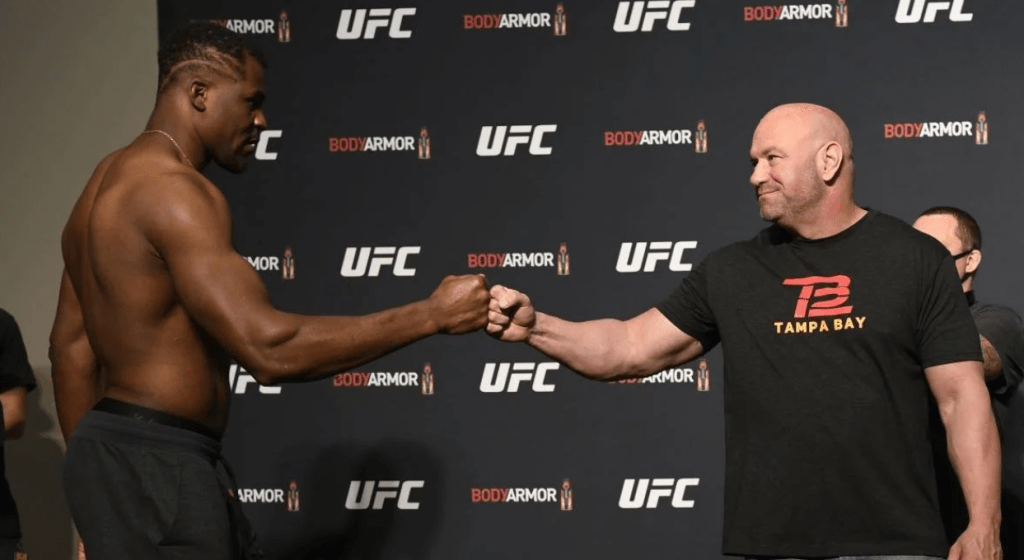
Compare that attitude to the way White treated McGregor, as well as Ngannous successor and current heavyweight champ Jon Jones. Objectively one of the greatest fighters of all-time and a man whose only loss was by disqualification due to throwing a kind of elbow that’s now legal, Jones is nonetheless arguably the most divisive fighter in UFC history. A lot of that is due to his controversies outside of the cage, which have led to him being stripped of championships a combined three times. Those issues include multiple DUI/DWIs, a hit-and-run involving a pregnant woman and marijuana, a domestic violence arrest and battery incident involving a cocktail waitress, and threatening to kill a drug testing agent. The latter was especially damning given that Jones has tested positive for banned performance-enhancing substances several times. But despite outside incidents that would result in a ban from most other sports and steroid issues that would tarnish most other athletic careers, Jones has not only remained with the UFC, but essentially been able to dictate when and where he fights. UFC 151 was essentially canceled because Jones refused to fight the replacement for his injured challenger and currently refused to fight interim heavyweight champion Tom Aspinall to unify the titles (the interim title was introduced because of inactivity by Jones). White not only allows this, but actively praises Jones as the greatest fighter of all-time (despite Georges St-Pierre existing) and profanely denounces anyone who questions that assertion.
Perhaps the reason for White’s emphatic defense of Jones is because they are kindred spirits, in that they are both gigantic pieces of shit. White has become more authoritarian over time, compromising his values and blaspheming anyone who claims he’s done anything wrong. A lot of that self-defense comes laced with sailor levels of profanity, directed at everyone from journalists to fighters to even fans. White may be taking inspiration from (or even inspiring) President Trump, for whom White has been a major political advocate, even speaking at the RNC in Trump’s favor. White has also cozied up to the likes of Andrew Tate and refused to condemn sexist and homophobic comments made by former middleweight champ Sean Strickland. Even White’s late mother has nothing good to say about him, claiming in a 2011 interview that he mistreats women, abuses drugs and steroids, sleeps with ring card girls and other women, and other damning statements. That interview came back into light two years ago, when video of White slapping his wife during a heated argument was released. While White has apologized for the incident, he has yet to face any ramifications for his actions. Imagine Roger Goodell being caught on camera hitting his wife, refusing to condemn homophobic and sexist comments by a player, or called fans “fucking idiots.” Goodell and pretty much every commissioner would be forced to resign that day. But White has somehow been allowed to remain in charge, and even without everything else, I don’t want my money to go into his pockets.
As I mentioned earlier, White has become more and more similar to former WWE head honcho Vince McMahon, who (at least until 2023) seemed immovable from power no matter what controversies came his way. While fans of both try to distance themselves from the other, MMA and pro wrestling have a lot in common and have faced similar issues, a fact made even more ironic that the UFC and WWE have been owned by the same company (TKO Group Holdings, Inc.) for the past two years. In fact, many people who know me will read all of the above and immediately question why I have fallen out of love with MMA and the UFC and fallen in love with pro wrestling and watch WWE, whose long list of controversies would make even White seem like a boy scout in comparison. To those people, I would say that while pro wrestling and MMA mirror each other in a lot of ways, mirror images are technically the inverse of each other. Despite being financially healthy, the UFC and MMA as a whole are not exactly in the best of places and have, in my opinion, been downgraded since I started watching. Conversely, I grew up during the Attitude Era and didn’t get into wrestling, which was probably a good thing given the overall decline in the product over the next two decades. I started watching in 2022, right before McMahon left and the WWE drastically improved creatively and behind-the-scenes. I’m also not blind to the downsides and controversies of WWE and pro wrestling, both in the past or present. A lot of the same issues are on both sides — be it the cost of being a fan, getting bang for your buck, and seemingly leaning towards the MAGA crowd (hell, McMahon’s ex-wife was recently appointed Secretary of Education). Still, I would argue that right now, when I happen to be a fan, the pro wrestling industry is the healthiest it’s ever been, in all aspects. I certainly can’t say that about the UFC and MMA.
So, as I approach the 6,000th word in this section alone and look back on 20 years of MMA fandom, what’s next? I can’t say that I will stop following the sport altogether, if only because ten years ago, I couldn’t imagine not following it. The dynamics of sports can change drastically — just look at pro wrestling. I may have a close friend or family member (or even a child, if lightning strikes 1,000 times and a woman agrees to marry me and bear my children) that gets into MMA and I get caught up in the windfall. Sadly, I think part of life is not being as passionate about certain things as you once were, and perhaps for MMA that was inevitable. It’s pretty much the one sport (besides hockey) that I’m into now but never participated in as a kid (kenpo doesn’t count), so that childhood bond isn’t there. Even so, many lessons learned from my MMA fandom are still with me today, and perhaps no other sport has had a greater impact on my life. For that, it will always hold a place in my heart, and I must thank MMA and the UFC for all it’s done. Maybe in another 20 years I’ll be telling my kids about UFC 65, St-Pierre, and all of the craziness of those nights gathered around my parents’ living room, letting all of the worries of our teenage world melt away as we enjoyed some good old fashioned fighting with good friends. It’s like the old UFC motto: as real as it gets.
ONE LAST THING

January 27, 2024: Arik wins the inaugural Trivia Night with a clever Tony Romo guess.
January 25, 2025: Jimmy holds on to win Trivia Night 2 thanks to a dominant performance in the “Teammates on Different Teams” category.
January 24, 2026: Trivia Night 3 will be held, and will feature the most unique (and difficult) contest in Trivia Night history.
But January is a long time away, and a few of you have been asking for something to keep us busy, while focusing on a different bit of sports knowledge. Therefore, I’m here to announce that the first ever Trivia Night: Baseball Edition will take place tentatively on June 21. Let me know if you will be able to make it. I put a surprising amount of effort into these things, and I don’t want to go through all of it if attendance will be sparse. But I kind of get it if you guys are scared that you’ll get schooled by the trivia master. Prove me wrong.
Ruben Dominguez
Commissioner, Epic League of Epic Epicness
2019 & 2024 Champion, Epic League of Epic Epicness
 Ruben's Writings
Leave a comment