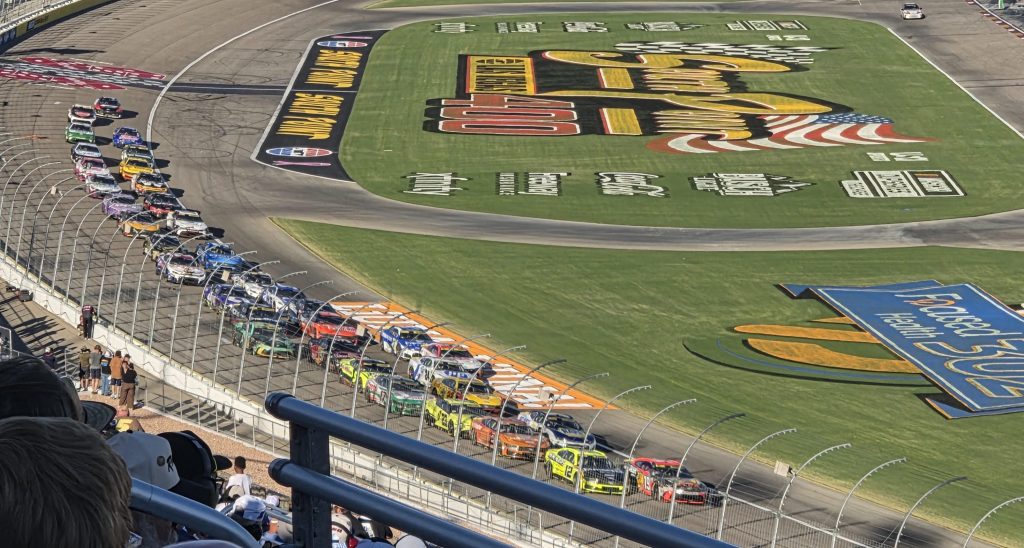
I may not be leaving the country (or even the West Coast) for the rest of the year, but that doesn’t mean I’m done traveling. In fact, I’m currently in between two trips. I just got back from my trip to Las Vegas, where I finally did the damn thing and saw a NASCAR race in person. I’ll get to that later, but for now I want to talk about what I saw the day before the race. That’s when Cal took on UNLV at Allegiant Stadium, and boy howdy the game was being a Cal fan in a nutshell. In fact…
RUBEN’S RANKINGS
TOP 10 WORST/DUMBEST THINGS ABOUT THE CAL-UNLV GAME
Consider this a scouting report for this weekend. Also this really isn’t a pure ranking of these moments. They’re just mostly in chronological order. It’s a stylistic thing.
HONORABLE MENTION: RED IN ALLEGIANT
UNLV’s colors are red, so it makes sense that there was a lot of red in the crowd. There were also a lot of traveling Cal fans, which for me should have been good. But seeing the mass of red in the home of the Silver & Black, coupled with the reminder of the once great home field advantage now lost, gave me an unfortunate preview of what would happen the following day.
10. STRUCK DOWN EARLY
Kingston Lopa is not only Cal’s best player, but he also leads the entire FBS in INTs this season. So, you’d rightfully figure that he’s an important part of the Golden Bears defense. Then you’d also naturally realize that Lopa getting injured on the very first defensive play of the game for Cal and being knocked out for the rest of the afternoon would not be a good thing for their chances. Oh, and did I mention that play was the first after Cal turned the ball over on downs?
9. A GLIMPSE OF WHAT COULD’VE BEEN
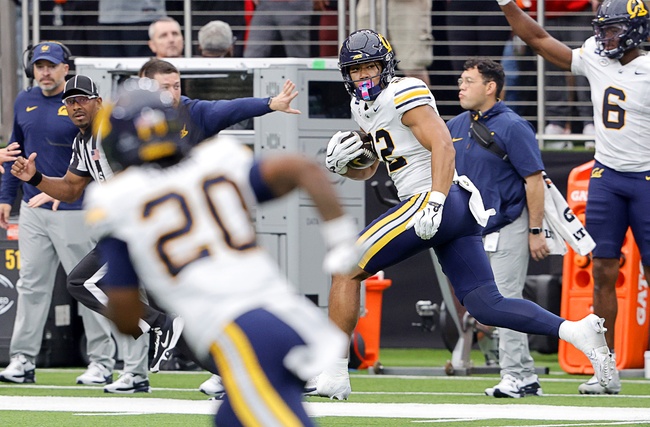
If Cal had gotten killed, then the loss wouldn’t have hurt as much. But what Cal is best at is getting your hopes up before letting you down. For example, on Cal’s second possession, Taimane Purcell caught a pass, broke a tackle, and went 91 yards for a TD. It was electric — and it happened right down the sideline where I was sitting. It seemed like this would surely spring the Golden Bears’ dormant offense. Instead, Cal didn’t score again until the second half.
8. TARGETING, PART 1
On the literal next play following Cal’s long TD — the kickoff, mind you — Cal’s already shaky secondary took another huge hit when Cam Sidney was ejected due to targeting. To be honest, I didn’t really see much in it, but I suppose it technically follows the letter of the law, not the spirit. But while Cal wouldn’t be immediately punished for it, as the defense still forced a punt, the next drive for UNLV would see the Rebels tie the game 7-7 with a 70-yard TD strike. So it began.
7. LOW QUALITY FOOTBALL
On UNLV’s next possession, Cal managed to partially block the punt, which went out of bounds at the Rebels’ 33-yard-line. Set up with excellent field position, two plays later Jaron-Keawe Sagapolutele threw an INT. Three plays later, UNLV threw an INT of their own right in the end zone. Oh, and during this sequence Cal’s WRs dropped like two passes that were placed perfectly right in their hands. Just stupid, stupid football all around, and not a bite to enjoy.
6. RUNNING WILD
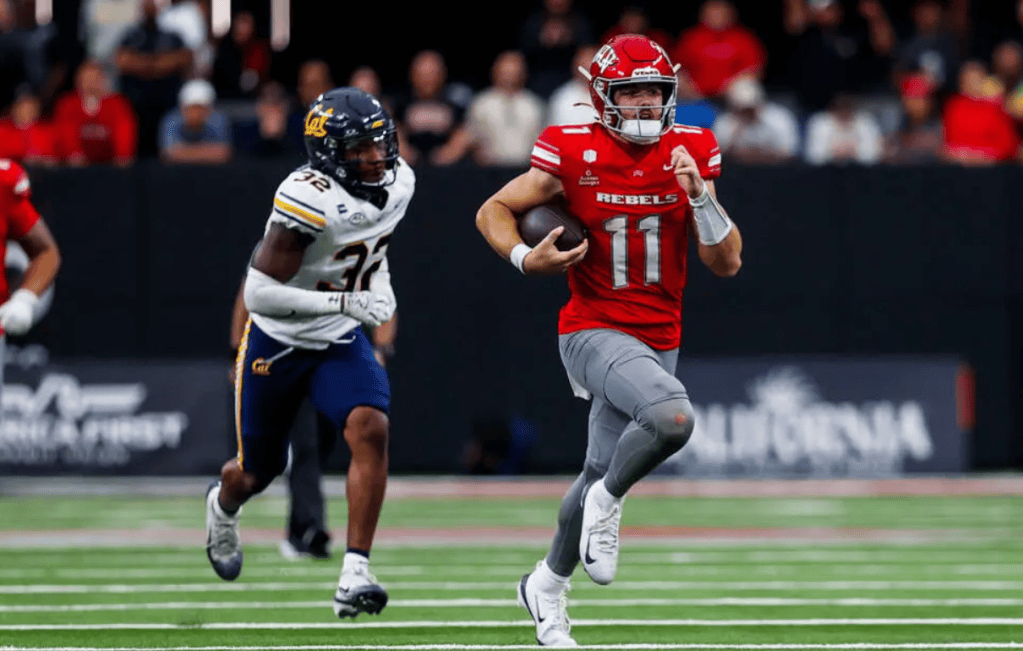
That UNLV INT was thrown by a TE on a trick play. On the ensuing drive, the Rebels’ actual QB, Jackson Arnold, proceeded to take matters into his own hands, literally, by scampering for a 55-yard rushing TD to put UNLV up 14-7. Then, after Cal missed a FG, UNLV added one of their own to make it a double-digit lead. After another Cal punt, it took just two plays for the Rebels to go 65 yards and score another TD, going up 24-7, which would be the score at halftime.
[NUMBER REDACTED OUT OF RESPECT FOR JAYDEN DANIELS] ADDING INJURY TO INSULT
With less than a minute to go before the end of the first half, Cal could’ve taken a knee and gone into the locker room to lick their wounds. Instead, they decided to try to move the ball downfield. What happened instead was that Jaron-Keawe Sagapolutele suffered a concussion and missed the rest of the game, forcing backup Jackson Brousseau into action. Cal’s two best players were now out injured, and the Golden Bears were down by three scores at halftime.
4. YOU’VE RAISED MY HOPES…
When Cal opened the second half with a successful onside kick, you knew some bullshit was about to go down. Though they turned the ball over on downs, Cal would eventually get on the board in the 3rd quarter with a 53-yard TD (and two-point conversion). After UNLV fumbled the ensuing kickoff, Cal tacked on a FG to make it 24-18. Then, in the 4th quarter, Cal would score another TD to take a remarkable 25-24 lead. Comeback complete! Nothing can stop them…
3. …AND DASHED THEM QUITE EXPERTLY, SIR. BRAVO!
On UNLV’s next offensive snap of the ball, another Cal DB — Daniel Harris — was ejected due to targeting. Unlike the previous one, this foul was obviously and the dismissal was just. Still, it left an already depleted defense even emptier, which UNLV quickly took advantage of. Marching down the field, UNLV retook the lead with another TD pass, while a two-point conversion from Jackson Arnold pushed the lead to 32-25, leaving Cal to try to attempt another comeback.
2. OOH, YOU ALMOST HAD IT
That comeback seemingly happened on the very next play of the game, when Niles Davis took the ensuing kickoff and ran it down the sidelines all the way to the end zone. Out of nowhere, it looked like Cal had responded in kind and was an extra point from tying the game. But then the officials looked at the replay and found Davis had stepped out of bounds near midfield. TD taken off the board. Oh, and Cal would end up turning the ball over on downs on the drive.
1. TOO LITTLE, TOO LATE
After that, it was academic. UNLV made it a two-score game with another TD run by Jackson Arnold. To their credit, the Golden Bears didn’t go down without a fight, as Jackson Brousseau led a TD drive with just under 30 seconds left to play. However, not only did Cal not convert the two-point try (I will never understand the logic behind this), but they failed to convert the onside kick attempt as well. UNLV knelt down once and Cal went home with a 39-31 defeat.
To recap: Cal lost to a Mountain West team while letting the opposing QB play like Fire God Josh Allen, losing their starting QB and best defender to injury, and having two DBs get ejected due to targeting. The Golden Bears are now 2-3 and return home to face a Virginia Tech team pissed off that their unbeaten start was barely ruined by referee fuckery. Cal is going to get annihilated, which I guess is good because I’m going to get annihilated as well. After all, this weekend is Chriss’ bachelor party, and at least I can celebrate without worrying about Cal…
… wait, what do you mean we have tickets to the Cal-Virginia Tech game? Oh god damn it…
Anyway, while I still have some functioning braincells, I guess I should talk a bit more about Las Vegas before I head out to Berkeley. Oh, and I should probably talk about fantasy football a bit.
RECAP OF LAST WEEK
CAN YOU HEAR THE DRUMS? (3-1) DEF. FOOTBALLDAMUS (3-1)
130.32 – 99.50
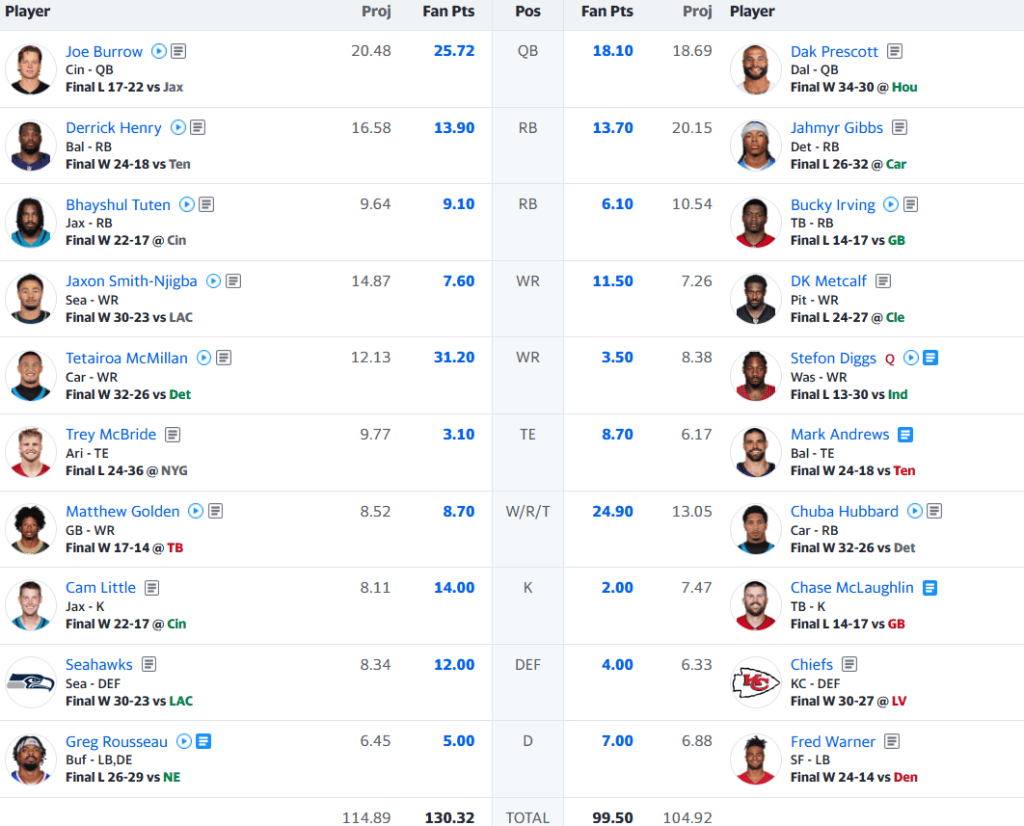
Well well well, was Yahoo!’s projection actually correct for once? Can You Hear The Drums? has proven to be the best team of the young season, scoring 60 points more than the second-best team. It seems like at least one of my players goes ape every week, and this past weekend it was Tetairoa McMillan (31 points) who took the mantle. Now, you might think this would have me in a smug or at least happy mood. But no — instead, I am fucking terrified. Every single time I have been in first or had the best team, I’ve lost in the playoffs — often early. Just look at last year and 2022. I’m setting myself up for failure and I hate it. Meanwhile, Footballdamus has been one of the surprises of the season and ultimately was the final remaining unbeaten squad. This past weekend’s effort was solid enough, with Chuba Hubbard (24 points) being the clear highlight.. However, it wasn’t enough for Riaz to get the win, though settling for third place in the current standings isn’t too bad. As for me, I may be in a better position, but I’m feeling much worse.
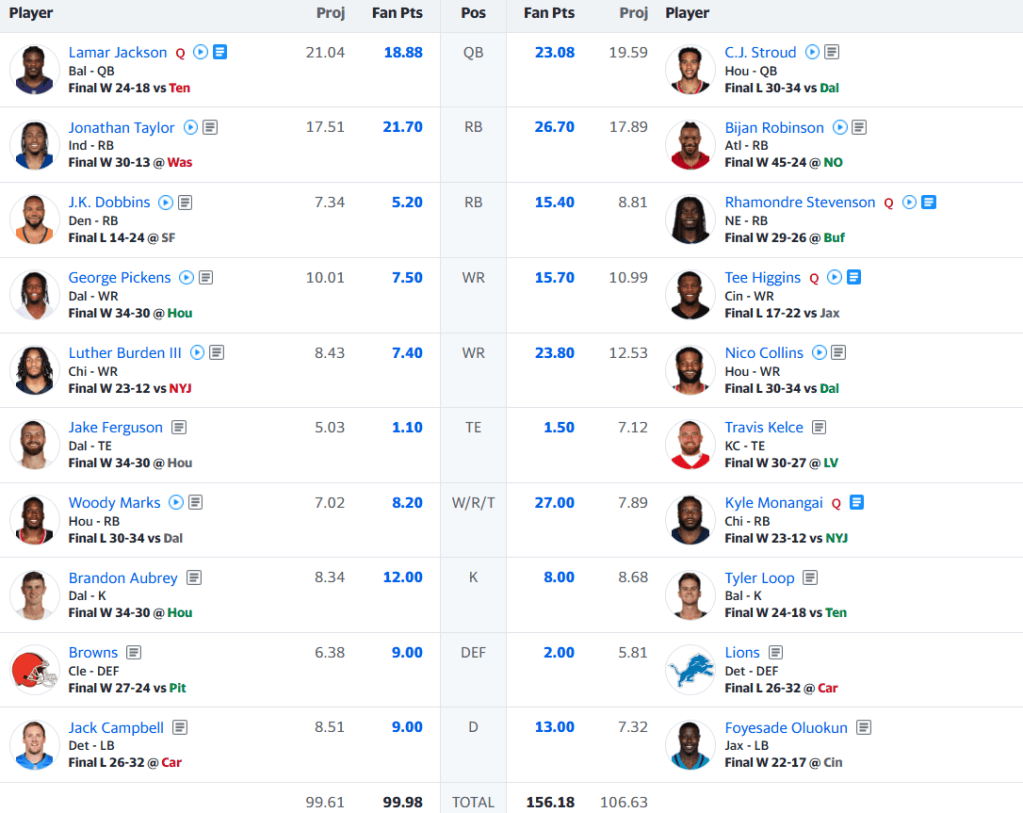
FLOCK AROUND AND FIND OUT (3-1) DEF. THE KRISPY KRITTERS (1-3)
156.18 – 100.98
I also would’ve had to pick a drink for the third time in four weeks if Ewing didn’t slap his roster onto the table and say what’s up. While that might’ve worked for Aly (they did just have a second child after all), ironically it was Richard who felt the brunt of that this past weekend. The Krispy Kritters played well, with Jonathan Taylor (21 points) leading the charge. But much like Lamar Jackson (18 points) and his ankle, injuries led to a decrease in production. Not that it would have mattered anyway. Much like Jackson against the Titans, the result was guaranteed due to Flock Around and Find Out’s points explosion. Kyle Monangai (27 points), Nico Collins (23 points), and C.J. Stroud (23 points) all killed it for Ewing, while Bijan Robinson (26 points) and his Monday night destruction of the Falcons supplied a whole lot of icing on top of the cake that was the overall highest scoring week of the season so far. It’s nearly 100 points more than the stinker Ewing put up when he had to drink after Week 2. I bet this feels a lot better.
BIG BEEFY BOY BATTALION (3-1) DEF. MOM AGAINST THE MACHINE (1-3)
123.02 – 105.32
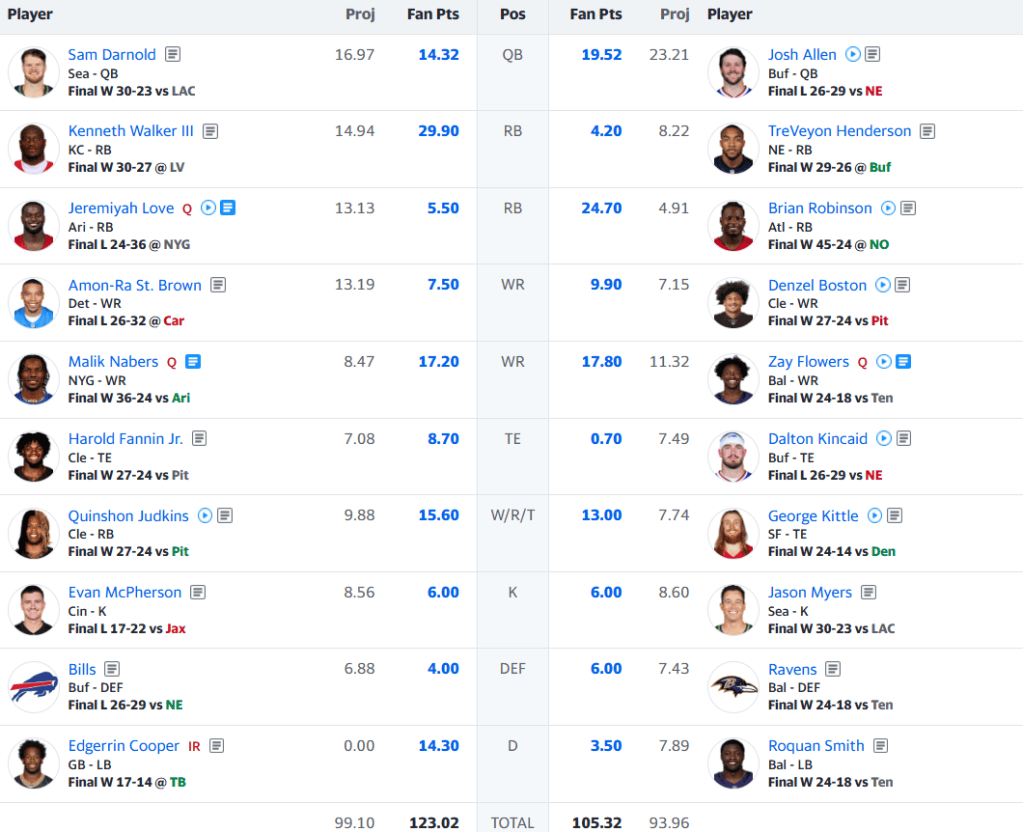
You know, for a team which literally didn’t draft a defense, Big Beefy Boy Battalion somehow has the second-fewest points scored against them so far. That’s despite Mom Against the Machine putting up a strong effort and feeling a bit hard done in not getting the win. That’s despite Aly being one of two Ewings to get a spectacular performance from a Falcons RB named B. Robinson (Brian Robinson [24 points]). However, as per usual, how far Aly goes is also how far Josh Allen (19 points) goes. While Allen was decent, he was far from his Fire God potential. That dip in quality — which also resulted in Dalton Kincaid putting up a goose egg — was likely the difference in the matchup. Buffalo’s subpar performance also meant the Bills defense had a worse day, which (along with a mediocre day from Sam Darnold [14 points]) impacted Kyle’s own performance. But Kenneth Walker (29 points) (goddamn it) was more than enough to make up the difference, putting him among the upper echelon of teams a quarter of the way finished.
CABOMETYX (3-1) DEF. CHEST IN MY HOLE (2-2)
111.58 – 102.92
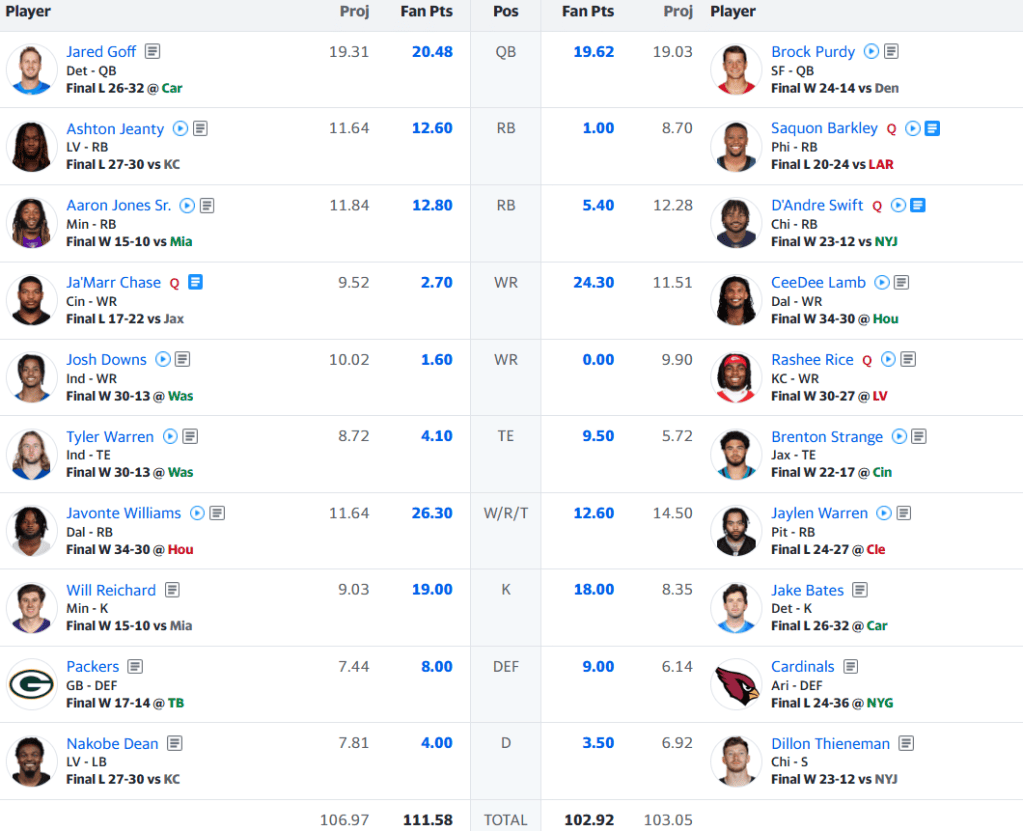
I just realized while writing this that both of these teams’ names are a refence to a medical condition. Cabometyx is Dad’s cancer medication, while Chest in my Hole is the mangled phrase Chriss uttered while suffering from an immense hangover (and on medication for a severe back injury). Fittingly, it was injuries that played the deciding factor in this matchup. Saquon Barkley left just a handful of snaps into the game, while Rashee Rice’s ankle snapped before he had even scored a point. Unfortunately for Chriss, both of those players were in his lineup. Still, he put up a respectable points total thanks to CeeDee Lamb (24 points) and Jake Bates (18 points). However, it was not enough to overcome those injuries and catch Dad. Javonte Williams (26 points) and Will Reichard (19 points) were the leaders for Dad’s offense, while it took a late surge from Jared Goff (20 points) at the end of Sunday night to secure him the victory. Dad somehow stays near the top of the standings, while for Chriss, it’s more of the same terrible luck.
THE INJURED RESERVES (2-2) DEF. SUBSTATION TRUTHER (1-3)
89.98 – 85.92
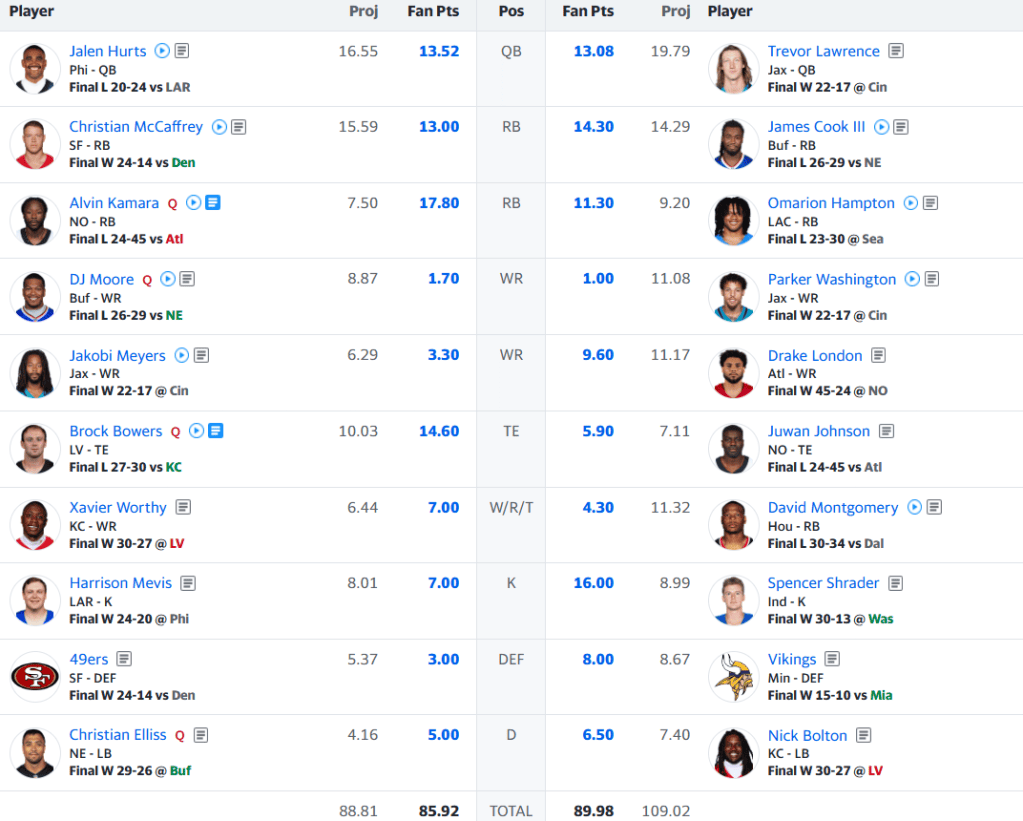
Are you kidding me, Arik? One week after handing me my only loss of the season — by fewer than two points, no less — by being the highest scorer of the week, you can’t even hit 90 points. And the Injured Reserves somehow still win? Ridiculous. I mean, come on. I BOUGHT A KPOP CD FOR YOUR SISTER-IN-LAW WHILE IN SEOUL AND THIS IS HOW YOU REPAY ME?!? Only four of Arik’s players finished with double-digits, while his highest scorer — Spencer Shrader (16 points) — was the only one to surpass 15 points. How in the world did Arik possibly win? Oh, that’s right, he played Nick. Substation Truther may have scored fewer points this year than the 49ers have had injuries due to the aforementioned substation. Still, Nick had a shot at the win, with my almost jinx nearly giving Alvin Kamara (17 points) enough to make the comeback. Yet it wasn’t enough, as Nick is instead an early contender for last place — a far cry from where he ended up last season. But at least Nick, somehow, isn’t the last winless team in the league.
BIJAN MUSTARD (2-2) DEF. SPIDER 2 Y BANANA (0-4)
116.04 – 93.76
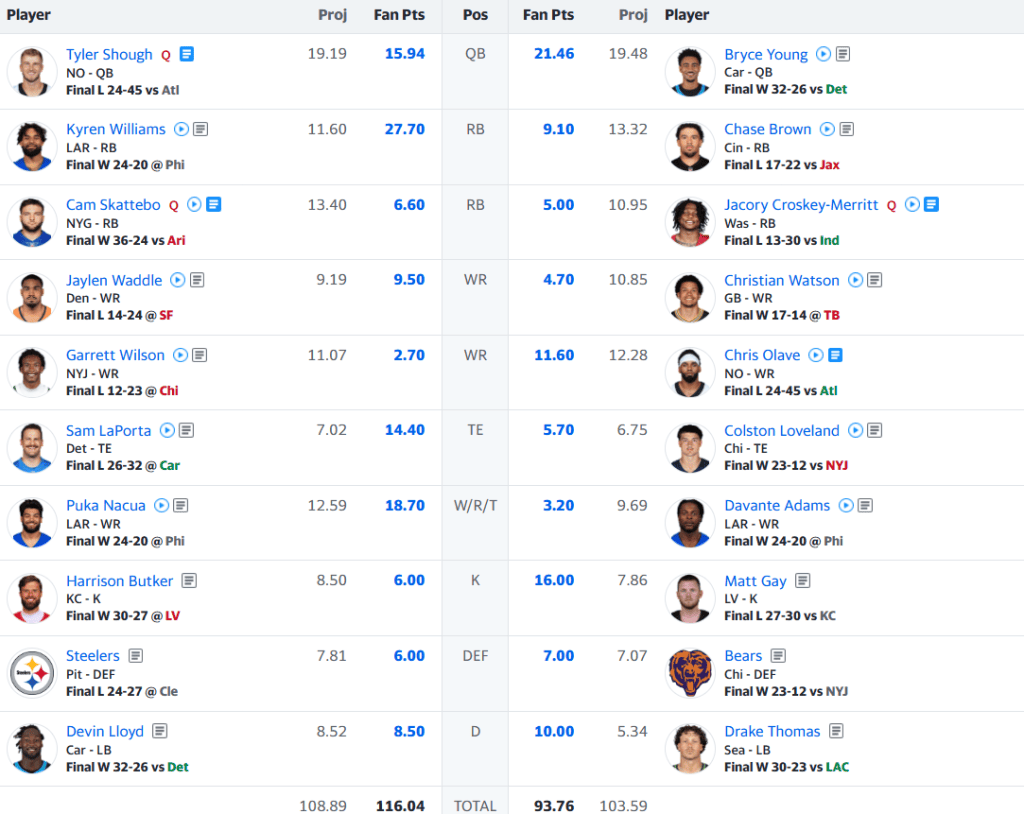
That honor goes to Spider 2 Y Banana, which means we’re officially on “First to Worst” watch. Little has gone right for Jimmy this season, from losing De’Von Achane for the season to being without DeVonta Smith this past weekend to his general stars — Chase Brown, Davante Adams, Colston Loveland — failing to make a major and consistent impact. Oddly enough, perhaps the biggest question mark for Jimmy going into the season — Bryce Young (21 points) has been arguably his best performer. However, Young’s efforts weren’t nearly enough to take down Bijan Mustard. Kyren Williams (27 points) did nearly a third of the job himself, while Puka Nacua (18 points) and Sam LaPorta (14 points) were also key contributors. Ironically, Jimmy and Emilio were involved in a trade that sent Loveland and LaPorta to opposite teams. The end result? A nearly 20-point swing. Reversing the decision wouldn’t have been enough to switch the end result, but it’s funny to think about and emblematic of the poor season Jimmy’s been enduring.
STANDINGS
LEAGUE STANDINGS:
- Can You Hear The Drums? (3-1)
- Flock Around and Find Out (3-1)
- Footballdamus (3-1)
- Big Beefy Boy Battalion (3-1)
- Cabometyx (3-1)
- Bijan Mustard (2-2)
- Chest in my Hole (2-2)
- The Injured Reserves (2-2)
- Mom Against the Machine (1-3)
- The Krispy Kritters (1-3)
- Substation Truther (1-3)
- Spider 2 Y Banana (0-4)
BATTLE FOR THE BOBBLEHEAD:
- Can You Hear The Drums? (512.30)
- Flock Around and Find Out (452.96)
- Bijan Mustard (439.42)
- Footballdamus (437.00)
- Chest in my Hole (433.48)
- Big Beefy Boy Battalion (432.12)
- Cabometyx (425.84)
- The Injured Reserves (416.92)
- Mom Against the Machine (388.96)
- The Krispy Kritters (374.28)
- Spider 2 Y Banana (370.84)
- Substation Truther (318.52)
DRINK PUNISHMENT TRACKER:
- Ruben (138.86) –> Richard (76.36) [Hand Brewed Beer Deez Nuts Brown Ale]
- Ruben (122.68) –> Ewing (60.34) [Podere Paganico Rosso Di Montalcino]
- Arik (121.78) –> Jimmy (71.94) [Voodoo Ranger Tropic Force]
- Ewing (156.18) –> Nick (85.92) [A light beer of Nick’s choosing]*
* Nick’s choice — which he had to shotgun — wasn’t made before the publication of this newsletter
BEST & WORST
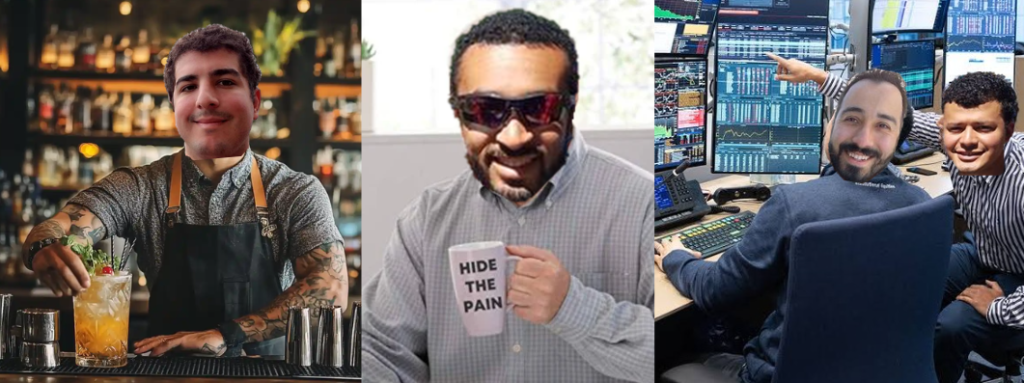
UNEXPECTED PERFORMANCE
BEST: We’ve got a few choices for this section. First there’s Ewing setting the bar with a season-best 156-point eruption this past weekend. But in terms of the season as a whole, who had Riaz actually living up to the first pick hype and being one of the better teams in the league? Speaking of, shoutout to Emilio, who may sit at 2-2 but actually has the third-most points scored so far.
WORST: Jimmy and Nick, what the hell is going on with you guys? You two literally battled for a championship last year. Now, you’re fighting to not finish last. So far, Nick’s winning that battle, albeit barely. Nick has by far the fewest points, but did win by beating Jimmy, who is not only winless but has the second-fewest points. We may be in a first and second to worst scenario.
TRANSACTION
BEST: This will be sort of a two-parter, but Dad’s decision to not only add Will Reichard but drop the Rams defense (technically worse than the Packers defense) was key to his win this past weekend. Also, shoutout to Riaz for adding Roman Wilson (but leaving his 14 points on the bench) and Richard for swapping the Texans defense for the Browns (likely better in the future).
WORST: I mentioned this above, but why would you make a trade with the team you’re about to play, knowing it could potentially come back to bite you in the ass? That was nearly the case with Jimmy, who sent Sam LaPorta to Emilio for Colston Loveland and Jordan Addison. LaPorta ended up nine points better than Loveland, nearly swinging the matchup result altogether.
LINEUP DECISION
BEST: Usually most fantasy football analysts don’t cover Ks. But as a former special teamer in my brief Pop Warner career, I appreciate the kicking game. So when I see Dad start Will Reichard over Tyler Bass, despite the scoring difference in their teams, and him be rewarded with an 11-point swing (good enough for the win), I’m going to point it out and give him credit.
WORST: This could also fall into the bad luck category, but I have something special for that. Still, Chriss losing by less than ten points while getting nothing from Rashee Rice due to injury and having a double-digit day from Jameson Williams wasted on his bench. Again, injuries are out of anyone’s control. But Williams over Rice is a reasonable enough decision to qualify here.
LUCK
BEST: Two winners here, for two different reasons. First is Ewing, who is in second place in part due to having by far the fewest points scored against him (to be fair he also has the second-most points scored). Then we have Arik, who won last week despite scoring the second-fewest points and scored the most points the week before, meaning I’m no longer unbeaten. Speaking of…
WORST: You may be wondering how I could justify putting myself in the bad luck section. Well, my only loss (as the second-highest scorer) came because I played the highest scoring team. Oh, and I have the second-most points against in the league. What’s that, Chriss also lost because of an injured Saquon Barkley? I suppose that is bad luck as well. It’s a two-fer.
STAT OF THE MONTH
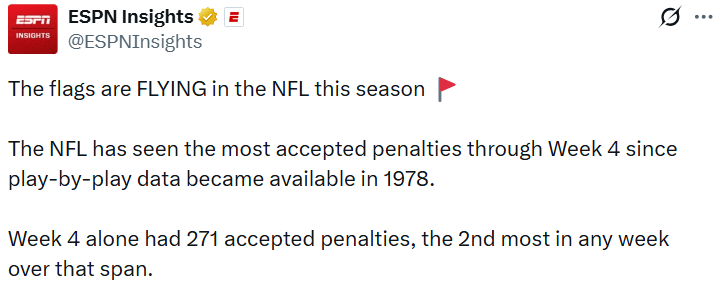
NFL: I wonder why people have been complaining about the quality of football this season? Is there some area we can focus on for improvement?
Referees: We’re throwing a record amount of flags while being upset that referees are being held somewhat accountable for yelling at players and telling them “fuck you.”
NFL: I know! More commercials featuring Sydney Sweeney and gambling sites. Oh, and beer. We definitely need to continue the long tradition of partnering with beer companies to sell and advertise beer everywhere. But wait, let’s make sure Kyle Juszyczyk and Jake Ferguson get fined for even looking like they’re chugging a beer. That’ll show them!
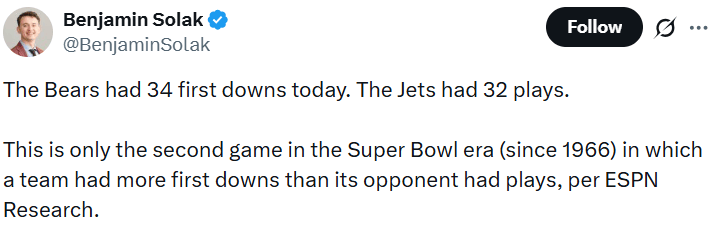
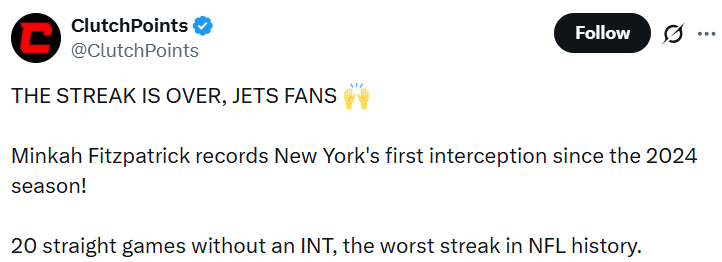
Well, at least the Jets already won this year, and broke their streak!
MONTHLY RAIDERS RANT
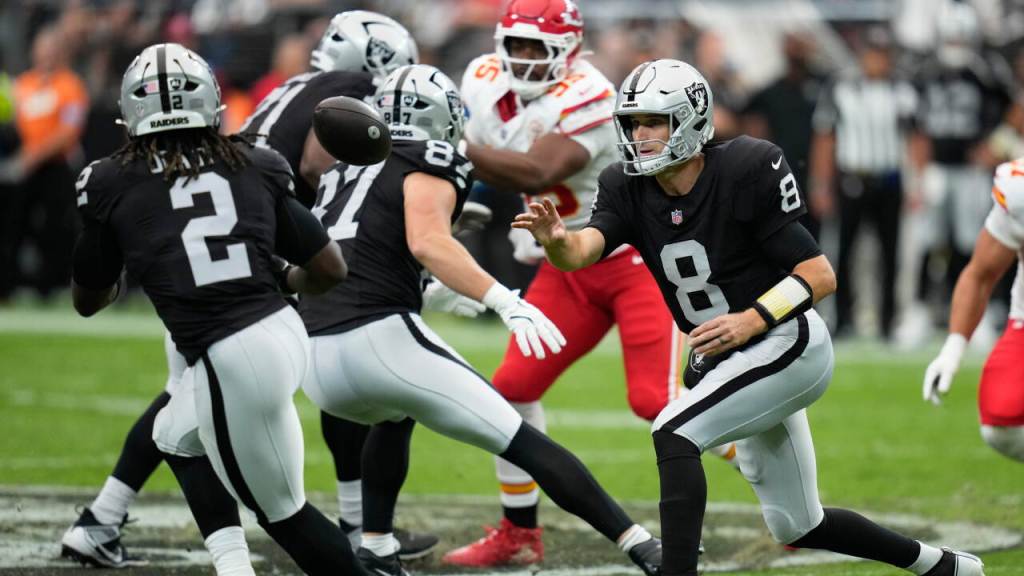
I really hate losing to the goddamn Chiefs. Granted, it was extremely close and could have gone either way. But a loss is a loss, and sadly I must take the blame for this one. I was in Las Vegas after all, and even Allegiant Stadium. Granted, I was in Vegas for the race and at the Death Star for the Cal-UNLV game, but still. My mere presence was probably enough to sway things. After all, look what happened when Pat Mahomes was my QB last season.
Anyway, I’m not going to say much here. Not because there isn’t much to say, but because the Raiders have been shockingly good so far and I don’t want to either jinx it or get my own hope up through that dreaded word: optimism. Just know there will be an extra group of drunk Raiders fans cheering on the Silver & Black from Berkeley this weekend.
#THROWBACKTHURSDAY
ON THIS DAY IN NFL HISTORY:
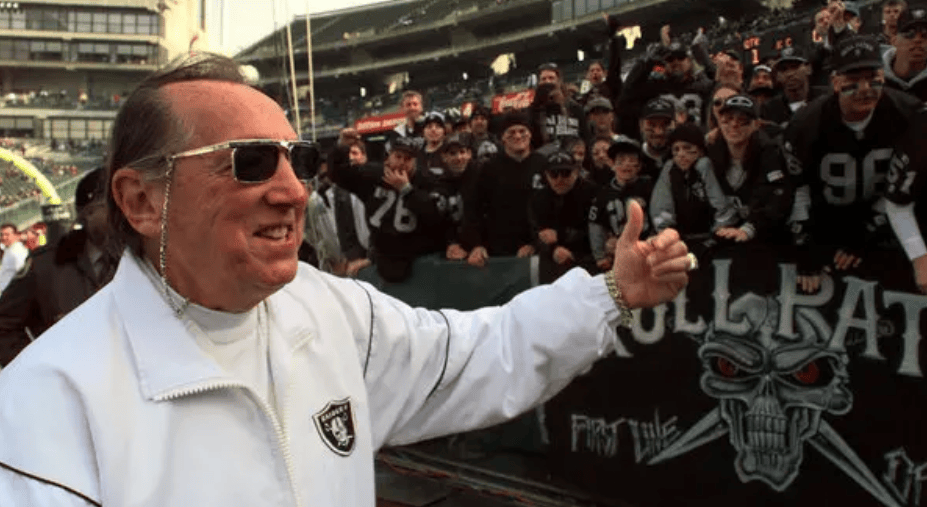
On October 8, 2011, the NFL lost an icon and Raider Nation lost its leader. Just one day before the Raiders were set to face the Houston Texans in a Week 5 road matchup, Al Davis — longtime team owner and face of the franchise — passed away at 2:45 a.m. in his suite at the Hilton Hotel Oakland Airport. Davis, who had turned 82 that summer, had battled a number of health issues and had undergone a procedure on his throat days earlier. He had also battled Merkel-cell carcinoma, a rare type of skin cancer, and had undergone heart surgery back in 1996. Ultimately, Davis’ cause of death was determined by the Alameda County coroner to be an abnormal heart rhythm, congestive heart failure, and heart muscle disease. Davis’ death sent a chain reaction through the NFL, with mass condolences and tributes being made. But besides melancholy, feelings surrounding Davis’ legacy were complicated to say the least.
Despite never playing football at even the high school varsity level, Davis got into coaching football at Adelphi University in New York, where he was in charge of the offensive line. He bounced around over the next decade and worked his way up the pecking order to become the receivers coach for the Los Angeles Chargers. In 1963, Davis headed up to the Bay Area, taking the head coach position for the Oakland Raiders at just 34 years old. Inspired by Army’s football uniforms (he had served himself), Davis was influential in the Raiders adopting their now-iconic Silver & Black scheme shortly after he arrived. It was his first and far from the only act of influence on the franchise. After three years, Davis briefly left the Raiders to become AFL commissioner. However, he wasn’t there long, as the AFL and NFL agreed to merge after a few seasons. Davis rejoined the team later that year and once again became the face of the franchise, this time as part-owner. He would eventually take full control of the Raiders and would remain the owner and driving force behind every team decision until his death.
A controversial figure, Davis was truly one-of-a-kind. A throwback and a trailblazer, Davis was also a maverick, with his slicked back hair, dark glasses, track suits, and Brooklyn accent combining for one hell of an image. Davis zigged while the rest of the NFL zagged, embracing the unconventional by signing players who were fast or tall or strong but had been overlooked due to their rough demeanor or other issues. It was part of Davis’ efforts to turn the Raiders into the bullies of the NFL, echoed by his famous mottos of “Just Win, Baby” and “Commitment to Excellence.” It worked — during the 1970’s and 80’s, the Raiders were one of the winningest franchises not just in the NFL, but all of sports. Three Super Bowls in eight seasons — filled with some of the most memorable moments in NFL history and rosters lined with the most colorful characters you’d ever see — transformed the Raiders into one of the most iconic franchises and brands in the sports world. As the face of the franchise, Davis was there for every moment, and his work as a pioneer at the start of football’s modern era cemented him as an icon. In the wake of his passing, those accomplishments — as well as Davis’ progressive stances when it came to things like racial issues and women in sports — were rightfully celebrated.
However, in his quest to take the Raiders to the top of the NFL, Davis made a few enemies, chief among them then-NFL commissioner Pete Rozelle. Part of that hatred stemmed from Davis’ controversial decision to move the Raiders to Los Angeles, a move he would reverse a decade later. Davis’ antics, eccentricities, and odd decision-making were enjoyable quirks as long as the Raiders won. But following their appearance in Super Bowl XXXVII, the Raiders pretty much forgot how to do that. The Raiders became one of the worst teams in football in no small part due to Davis’ decision-making, with advanced analytics being largely ignored in favor of his eye for talent. That eye had become blind in his older age, as countless poor draft, coach, and other roster-related decisions made the Raiders a laughingstock on the field. His stubborn refusal to relinquish control was ridiculed, as was his appearance. Given this happened towards the end of his life, it largely overshadowed much of the work he had done in the decades prior. Still, for as controversial of a figure as he was, Davis was still the face of the Raiders. His passing rocked the franchise to its core, but there was still a game to play.
The day after Davis’ passing, the Raiders traveled to Houston and — sporting a decal reading “AD” on the back of their helmets — stepped onto the field against a tough Texans team which would eventually make the playoffs for the first time in franchise history. In a back-and-forth game that ironically saw good plays by some of Davis’ more maligned draft picks (including Darrius Heyward-Bey), Oakland led Houston late in the 4th quarter. On the final play of the game, with the Texans just five yards from paydirt, Michael Huff intercepted Matt Schaub in the endzone to seal a 25-20 Raiders win. It was later discovered that amid the last-second chaos, the Raiders only had ten men on defense during the final play. Many have since proclaimed that Davis was the 11th man in spirit. Mark Davis — Al’s son and, along with his mother, Carol, the new owner of the Raiders — and head coach Hue Jackson were incredibly emotional after the final whistle, openly weeping as the Raiders embraced on the field and the fans and other members of Raider Nation allowed their emotions to flow out.
The 15 years that have followed Al Davis’ death, his legacy has grown even more, with some of his sins made less egregious by how the team has done on and off the field. Apart from one bright year in 2016 and another chaotic campaign in 2021, the Raiders have failed to make the playoffs and remain a bottom-tier 21st century NFL franchise. But the biggest change has come in their home, with the Raiders moving to Las Vegas in 2020. The Raiders’ Silver & Black mystique and home field advantage (which remained even in Al Davis’ later years), were seemingly lost in the relocation, with away fans consistently outnumbering Raiders fans in the crowd. For this reason and others, Mark Davis has come under fire for not living up to his father’s admittedly immense legacy, though hopefully the team is at the start of a positive turnaround. But one thing Mark Davis has done well is keep his father’s legacy alive. In addition to the helmet decals (which remain to this day), the Al Davis memorial torch was erected at the Oakland Coliseum, lit by a former Raiders great before every game. That torch has since been moved to the Raiders’ Vegas HQ, with a new, much larger LED torch (the largest 3D-printed object in the world) becoming the centerpiece of Allegiant Stadium. Every game, as the torch is “lit” and the Raiders take the field, one can imagine Davis looking down at the franchise he helped surge to the football mountaintop, hoping they can get back there once again. At the very least, he hopes they can follow his most famous motto: just win, baby.
OTHER NOTABLE HAPPENINGS:
— 2018: Brock Holt hits for the only cycle in MLB postseason history as the Boston Red Sox demolish the new york yankees 16-1 in Game 3 of the ALDS. It’s not NFL, but fuck the yankees
— 2018: Drew Brees breaks Peyton Manning’s all-time career NFL passing yards record in a 43-19 victory over Washington. Tom Brady would eventually break Brees’ record in 2021
— 1995: Dan Marino breaks Fran Tarkenton’s all-time career NFL passing completions record in a 27-24 OT loss against the Indianapolis Colts. This record is currently held by Brady as well
— 1933: Cliff Battles rushes for 215 yards and a TD in a 21-20 win over the New York Giants, becoming the first player to exceed 200 rushing yards in a single NFL game
A DRIVE THROUGH HISTORY, PART 2
In addition to making NASCAR the season-long theme, I’m also providing a peek behind the curtain as to why I have developed a curious fascination with NASCAR. In revealing so, I’m also going to take a multi-part look back at NASCAR history, trying to both educate you all on a sport you may not be familiar with and share some genuinely incredible sports stories. For example: the greatest season in NASCAR history, which was capped off by one of the greatest races in the sport’s history.
NASCAR was handed the break of all breaks with the 1979 Daytona 500, and they spent the next decade taking full advantage of it. The 1980’s saw NASCAR morph from a Southern-specific sport to a national entity, growing more popular and colorful as it entertained the masses. The decade saw Darrell Waltrip go from hot shot to legend, a tire war that nearly tore the garage apart, drivers break the 200 mph barrier for the first time, a brutal battle for the title in 1984 that saw Terry Labonte get his first and only championship, and Bobby Allison’s horrific crash that led to the rise of restrictor plate racing (more on that next time). In fact, the only reason the 80’s can’t be universally seen as the best decade in NASCAR history is that the 90’s exist. No one could have imagined that the best would be yet to come, or that at the center of it all would be a restaurant chain named after a double entendre for breasts.
To this day, 1992 is thought of as arguably the greatest season of all-time, featuring one of the best (if not the best) championship battle ever, which came down to the season-ending race, which remains on the shortlist for most iconic and greatest race in NASCAR history. Oh, and it was also the season that introduced the Generation 4 car, which would be used for the next 15 years — among the most popular in NASCAR history. It was a season full of ups and downs, incredible achievement and disappointment, perseverance and skill, upsets and dominations, twists and turns, culminating in a kind of showdown that will never happen again. As you probably figured out, that final race will be the main focus of this entry. But we have a hell of a lot of background to get through. To start, we have to go back to the previous entry and the driver of the 1970’s, who was still hanging around in 1992.
Richard Petty may not be universally considered the greatest driver in NASCAR history (one driver we’ll talk about later has a hell of a case himself), but he’s got the stats to back up any of his supporter’s claims. As mentioned last time, Petty’s total of seven championships has only been matched, not surpassed, while his seven Daytona 500 wins are more than double any driver besides Yarborough (who managed to get four before he retired). But so many of his other Cup Series records are so staggering, it seems impossible that they will ever be broken. Those records include most wins (200 — nearly double second place), consecutive wins (ten — and he’s also second with six), wins on one season (27 — more than half of the 47 races in 1967), starts (1,184 — nearly 300 more than second), and poles (123 — only David Pearson is within an arm’s length). But even with all of this greatness, there was still one big question surrounding Petty: how long would he keep racing?
That record 200th win came in 1984 Firecracker 400 — a race that honestly deserves its own deep dive and was preceded by victory 198 in extraordinarily controversial fashion. However, Petty had spent the next seven seasons without a single trip to victory lane. Despite the drought, Petty insisted he still loved to race and would do so until he didn’t. But going into 1992, the soon-to-be 55-year-old Petty decided that he would race one more season before hanging it up for good. The announcement also included a “fan appreciation tour” reveal, with Petty appearing at fan events for autograph signings and other displays to give his supporters a chance to say goodbye. Before a race had even been held, the upcoming retirement of “The King” gave the 1992 season a backdrop unlike any other. Anticipation was great — and then they started racing. While Petty wouldn’t contend for an eighth title, the championship battle that would unfold centered on three drivers, each with their own unique stories to tell. Let’s go in alphabetical order (by last name).
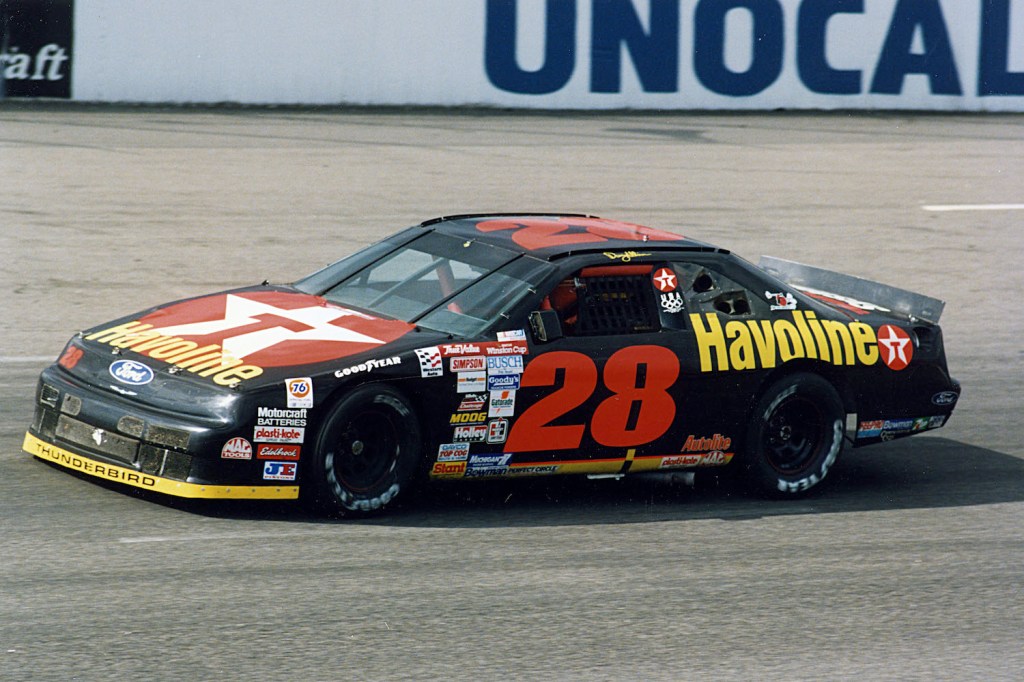
Davey Allison — son of former champion Bobby Allison and the latest member of the Alabama Gang to hit NASCAR — had plenty of unfulfilled promise going into the 1992 season. Rocking the No. 28 Texaco/Havoline car, Allison clearly had the pedigree to be a great driver, but hadn’t yet put it together. Then 1991 happened, with Allison winning the pole for the Daytona 500, finishing with a career-high five wins, and ending up 3rd in the Winston Cup Series standings. Allison had gone from prodigy to true title contender, with everyone projecting him among the favorites to win it all in 1992. Not only would Allison go on to prove those predictions true, but he would also show such amazing skill, toughness, and resilience that he would become a legend in his own right. It also didn’t hurt that Allison had the help of future legendary crew chief Larry McReynolds and was one of the most well-liked drivers in the field.
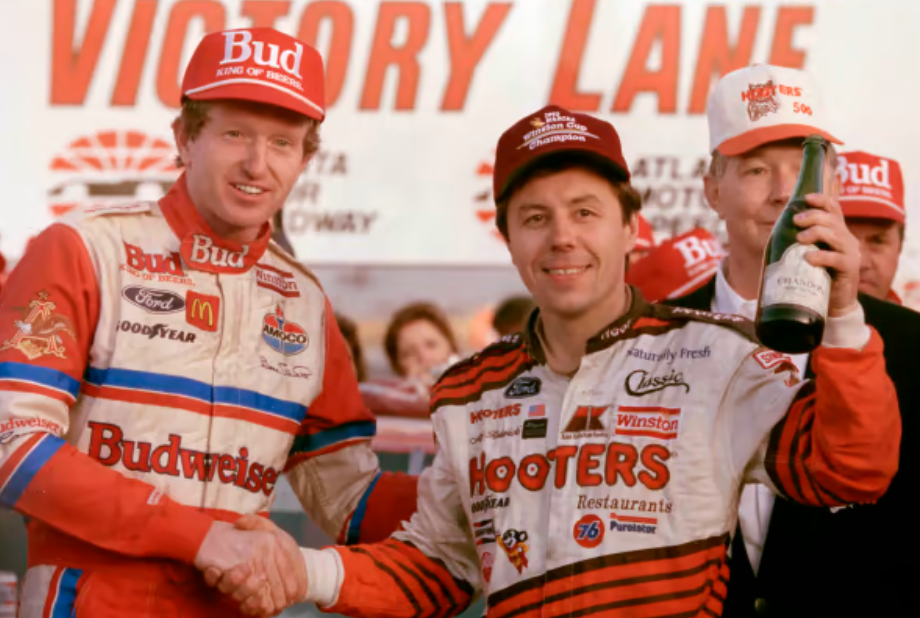
Bill Elliott wasn’t just more popular than Allison, he was the most popular driver in NASCAR, a fact supported by him winning the Most Popular Driver award a record 16 times. But Elliott wasn’t just well-liked — he was incredibly fast. In fact, in 1987 he set the all-time record for fastest qualifying speed in NASCAR history at 212.809 mph. Elliott was arguably the king of superspeedways, winning a record 11 such races (including the Daytona 500) in 1985. Due to the high payouts from those wins, he earned the nickname “Million Dollar Bill,” which went alongside “Awesome Bill from Dawsonville” (a nod to his hometown in Georgia). Already with one Winston Cup Series title from 1988, Elliott went into 1992 as arguably the favorite to win it all. That’s because in the offseason, he left his longtime home of Melling Raceway to join legendary owner Junior Johnson as the driver of the No. 11 Budweiser car. The fastest driver joining arguably the best team created a potential juggernaut. But every Goliath needs a David.
Alan Kulwicki was actually offered the No. 11 car by Johnson going into the 1990 season, but turned him down. The decision was surprising, but it went along with Kulwicki’s approach to NASCAR. Seen as a sort of outsider not just because he was from Wisconsin, Kulwicki operated as an owner/driver for most of his NASCAR career. Described as both a genius and a control freak, Kulwicki went through crew members like candy but got results, winning Rookie of the Year honors in 1986 and remaining a solid driver as the 90’s came along. After the 1990 season, Kulwicki needed a new sponsor for his No. 7 car and was set to sign with Maxwell House Coffee, only for Johnson to swoop in and steal the sponsor for his second car out of revenge for Kulwicki turning him down a year earlier. Still without a sponsor early in the season, Kulwicki caught a break in the form of Hooters, whose driver, Mark Stahl, failed to qualify for the race in Atlanta (where the company was based from). With Hooters wanting to be represented at its home track and Kulwicki in need of a sponsor, the two sides reached a deal, which continued into the 1992 season. Still, Kulwicki wasn’t thought of as a title threat, as his previous best finish was 8th. That would change as the soon-to-be-legendary season began.
Of course, the schedule began with the Daytona 500, which saw both of Johnson’s racers — Elliott and Sterling Marlin — in the front row. However, both would finish outside the Top 25 by being involved in a wreck that knocked 14 cars from the race. Kulwicki would end up with a strong fourth place finish, but it would be Allison who — just four years after his father won the Great American Race — added his own name to history by crossing the finish line first, becoming the first points leader of the season. Fun fact: this race also saw the debut of Pro Football HOF coach Joe Gibbs (three weeks after winning Super Bowl XXVI) as a NASCAR team owner. While his car didn’t win, there would be a lot more victories in his future.
Speaking of a lot of victories, that’s what was in store for Elliott, as the No. 11 car morphed into the juggernaut everyone thought it could be. The next four checkered flags would all be won by Elliott, as he became one of just eight drivers to this day to win four NASCAR Cup Series races in a row. Incredibly, four straight victories wasn’t enough to grab the points lead, as Allison showed remarkable consistency, with a second place finish in the second race being followed by three straight fourth place spots, giving him five straight Top 5s to start the season. Both of their luck would run out in the following week at Bristol, as Elliott limped to a 20th place finish while Allison crashed out in 28th spot after a big wreck. That opened the door for Kulwicki, who — just three weeks after finishing second to Elliott at Richmond by just 18 inches — scored just the fourth win of his Cup Series career. The win bumped Kulwicki up to fifth in the standings, though he was still far back from Allison and Elliott and not seen as a true contender.
That wreck by Allison did much more than mangle his car. Allison, who was already dealing with the loss of his grandfather just days earlier, suffered a bruised shoulder, a costochondral separation (when a rib detaches from the sternum), and two knocked vertebrae. While 99% of NASCAR drivers would sit out at least a week to heal up, Allison insisted on driving the very next race, though he was in too much pain to practice or qualify and the No. 28 team had a fill-in driver on standby. To everyone’s amazement, Allison not only ran the whole race (while wearing a flak jacket and using an electrode-shock apparatus to help ease the pain), but actually won it to increase his points lead. It would be deja vu all over again over the next two weeks, as Allison wrecked out again at Martinsville (reinjuring his ribs in the process), only to grit it out and score his third win of the season the following race at Talladega, narrowly holding off Elliott to take the checkered flag. Going into the All-Star Race, Allison held a 67-point lead over Elliott, with Kulwicki fourth in the standings 118 points behind Allison.
The All-Star Race, much like other All-Star competitions in sports, does not count in the standings, as no points are awarded. However, the collection of race winners from 1991 and so far in 1992 (as well as previous Cup Series winners) did have a $500,000 prize. In addition, this was the first edition of the All-Star race to be run at night, making it more of a spectacle. Now, given the fact that this race doesn’t give out points, his current injuries, and the fact that he had won the previous year’s race in dominating fashion (winning the pole and leading every lap), you’d think Allison would elect to skip the race to heal or at least take it easy. Nope. Sitting in third on the final lap, Allison took advantage of a battle between Kyle Petty and a driver to be revealed later, which saw that driver (who had been previously leading) spin out. As Petty took a second to gather his car, Allison stormed full-throttle to edge Petty at the line and win his second straight All-Star Race.
But just a split second after crossing the finish line, Allison and Petty’s cars came together again, sending the No. 28 spinning wildly into the wall before coming to rest in the infield. As the car was hauled to victory lane, Allison (who was briefly knocked unconscious and had to be freed using the Jaws of Life) was rushed to the hospital, where it was revealed he had suffered a broken collarbone, bruises to more than half of his body, and a severe concussion. In fact, at the hospital, Allison couldn’t remember how the race ended and asked McReynolds several times to tell him. Despite these new injuries upon his old injuries, Allison somehow willed himself back into his car when the regular season resumed the following week. While he didn’t win, Allison did manage to finish fourth, increasing his points lead to 111 over Elliott (and 132 over Kulwicki in fourth place).
The next two races were mostly forgettable for the trio, with only Elliott managing a Top 10 finish in either race (fifth at Sonoma). But that second race was the first in NASCAR history to take place following the loss of Bill France Sr. The founder of NASCAR and largest non-driver figure in stock car racing had passed away earlier in the day, and the winner of that race in Sonoma, Ernie Irvan, dedicated his win to France. The following week would be much better for the contenders, with Allison finishing fifth and Elliott nearly winning it before settling for third. But it would be Kulwicki who took the checkered flag, moving into third place in the standings. Allison did get some breathing room back with a dominant performance and win at Michigan the following week, though a third place finish from Kulwicki closed the gap between him and Elliott. After a one-of-a-kind test where nine Cup Series teams (including Elliott and Allison) were invited to test the feasibility of stock cars at the famed Indianapolis Motor Speedway (paving the way for the first Brickyard 400 two years later), the field returned to Daytona to mark the halfway point of the season. A Top 5 finish by Elliott helped cut into the lead, though a Top 10 finish by Allison still put him 46 points ahead of Elliott, who in turn was 88 points in front of Kulwicki.
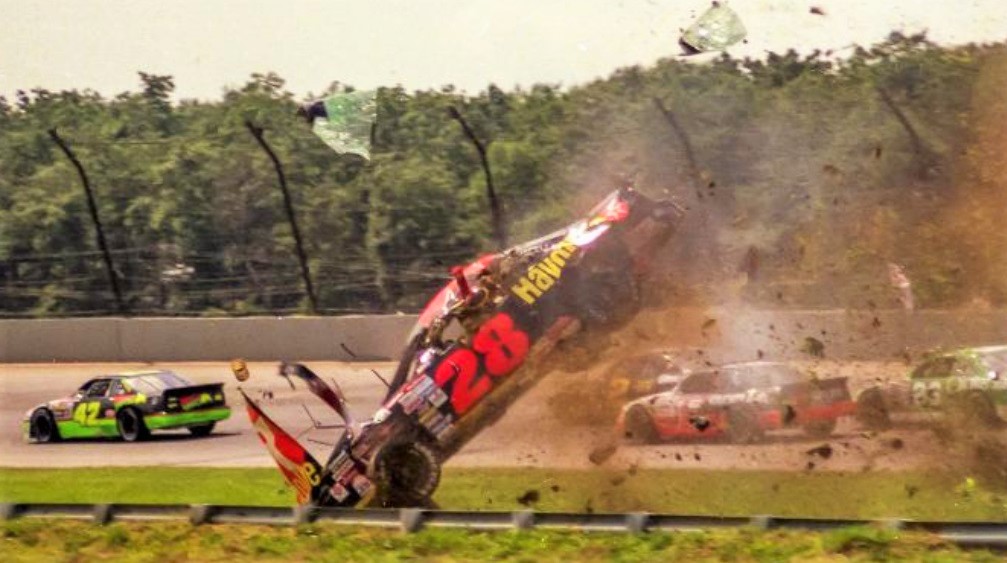
The very next race threatened to completely flip the script of the season. Allison, who had set a new Pocono Raceway track record while qualifying, had dominated the first 140 laps before a broken air wrench during a pit stop put him in seventh. As he worked to move up the field, he and Waltrip tangled while fighting for position. The collision sent Allison flying into the air, with the No. 28 car flipping 11 times in a frightening crash, eventually landing upside down in the infield. Allison’s fourth major injury crash of the year was arguably his worst, as he suffered a broken forearm, dislocated wrist, skull fracture, and severe concussion. To add insult to injury, Elliott now had the points lead for the first time all season. However, to the bewilderment (or, perhaps not) of everyone, Allison — sporting a sling and bloodshot eyes — had the determination to get back in the car the following week at Talladega. Though he only lasted a handful of laps, his replacement driver, Bobby Hillin Jr., managed a third place finish, good enough to regain the lead from Elliott by just one point.
A rain-shortened finish at Watkins Glen the next week would give Elliott the lead back, though Allison would be ready to drive the full race the following week at Michigan. Unfortunately, physical pain would not be the only agony he would endure. Three days before the race, Allison’s younger brother, Clifford, was killed in a crash during practice for the Busch Grand National. As the racing world mourned for the Allisons, Clifford’s brother managed a courageous fifth place finish. Another note: this race would not only see the oldest winner in Cup Series history (more on him later), but also the last victory for Oldsmobile in NASCAR. The following two races — which would result in the final two wins of Waltrip’s legendary career — saw each of the three contenders put up strong results, though Elliott had regained the points lead and was up 119 points over Allison and 161 points over Kulwicki. In that second race, Allison had been in the lead, but due to a crewmember misinterpreting a weather radar he made a pit stop instead of staying out. Allison only made it to fifth by the time the race was called due to rain.
While none of the three finished in the Top 10 the following week at Richmond, Elliot’s lead grew even more as he completed a 16-race streak of Top 15 finishes, while Allison and Kulwicki had been far less consistent. Things would only get worse for the latter the next week at Dover. Despite winning the pole, Kulwicki crashed out in 34th place, while Elliott finished second (extending his Top 15 streak to 17 races but narrowly being beaten by Ricky Rudd due to a pit stop strategy error) and Allison finished fourth. With just six races to go, it seemed like the title fight had been reduced to a two-horse race, as Kulwicki was now in fourth place and 278 points behind Elliott (who had a 154-point lead over Allison) with just six races remaining. In fact, Kulwicki himself said as much after his race ended, telling the media that the crash “probably pretty much ruined our chances at a championship this year” and vowing to be back in 1993.
But to quote Yogi Berra for the second time in this entry, it ain’t over til it’s over. The next week at Martinsville, Kulwicki finished fifth, while some late trouble led Allison to finish 16th and engine issues led to Elliott finishing 30th, snapping his Top 15 streak in notable fashion. That finish began a new, much worse streak, as the next week at North Wilkesboro (Johnson’s home track) saw Elliott finish 26th, while Allison ran 11th and Kulwicki 12th. Then, at Charlotte, more mechanical trouble saw Elliott finish 30th, though Johnson entering a third car (which was parked after Elliott’s problems began) gave him some points. However, Kulwicki managed to finish second despite his car being stuck in fourth gear for the final part of the race. Elliott’s once triple-digit lead had shrunk dramatically to just 39 points over Allison (who finished 19th due to brake trouble) and 47 points over Kulwicki with three races to go. In fact, for the first time in Cup Series history, the Top 5 drivers were all within 100 points of each other this late in the season.
Elliott seemingly got things back in order at Rockingham, finishing fourth while Allison ended in tenth and Kulwicki in 12th. With just two weeks to go, Elliott — 70 points ahead of Allison — just needed a pair of consistent races to clinch his second Cup Series crown. However, the penultimate race at Phoenix could not have gone worse. Elliott battled mechanical issues all day, with Johnson being so irate that at one point he went onto pit road to try to cool the No. 11’s engine himself. But it was to no avail, as Elliott finished a dismal 31st. What’s more, Allison broke his own streak by winning his first race in 14 tries, while Kulwicki ended in 4th place. Astoundingly, Elliott not only had blown what once seemed to be an insurmountable points lead, he was now third in the standings, 40 points behind Allison, who was 30 points in front of a now-second place Kulwicki. Thus, the stage was finally set for the season finale, the 1992 Hooters 500 from Atlanta, where Kulwicki had secured a season-saving sponsorship the prior year. Before the race Kulwicki asked for and received permission to make a special modification to his No. 7 Ford Thunderbird, scratching out the T to make it the “Underbird,” a symbol of his season-long underdog status.
While the three-way title fight would’ve been more than enough to make any race special on its own, it was only part of the equation going into the Hooters 500. That’s because the title fight was actually a six-way battle. Due to the sheer chaos and inconsistency of the Top 3 all season, three other drivers were mathematically alive and had a shot (albeit a long one) at winning the championship. The longest shot belonged to Mark Martin, 113 points behind Allison. Martin had been (in somewhat controversial fashion) runner-up in 1990 and was tied for the 1992 lead with 17 Top 10 finishes (11 of them in the Top 5). Then there was Harry Gant, who — at 52 years old — had become the oldest driver to win a Cup Series race (that race in Michigan from earlier) and was 97 points away from being the oldest champion in NASCAR history. Just one point behind Gant was Kyle Petty, who was tied with Martin in Top 10 finishes and looking to follow his father and grandfather by becoming the first ever third-generation NASCAR champion.
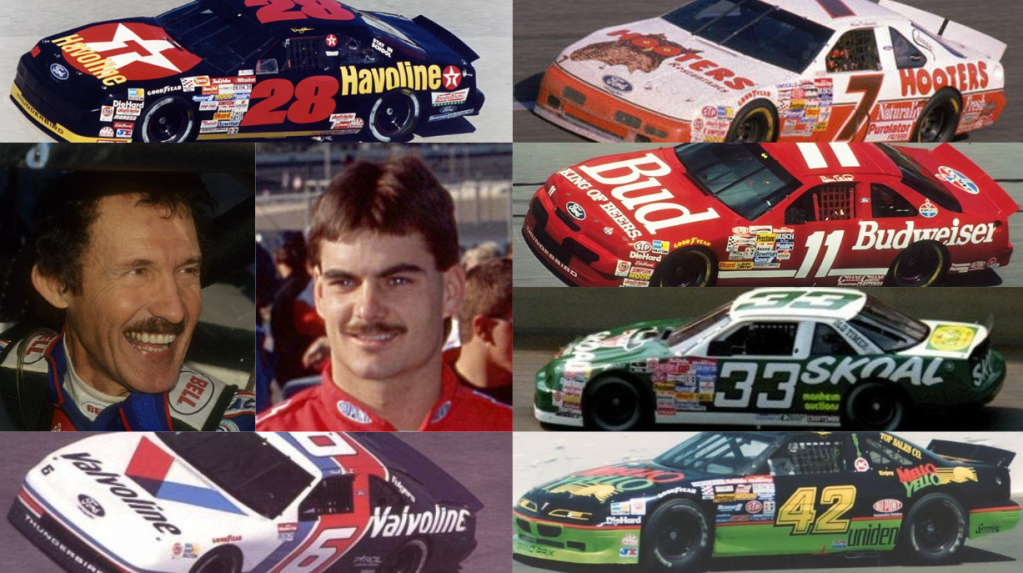
Speaking of Petty’s father, the Fan Appreciation Tour was in its final leg, with the Hooters 500 set to be the final race of Richard Petty’s legendary career (there was some drama over whether or not he would even qualify, but he made it). But as one iconic career ended, another was just beginning. Hendrick Motorsports — a smallish team less than a decade old — decided to enter their newest driver in the race. That driver — a 20-year-old rookie from Vallejo driving a striking rainbow-colored No. 24 car — managed to qualify, and as such would be making his Cup Series debut in Atlanta. That driver’s name was Jeff Gordon, and this race would be the only time he and Petty would share the same asphalt, which was only part of the collection of talent on display in Atlanta. The field for the 1992 Hooters 500 would combine for a whopping 27 Cup Series championships and 790 race wins, tallies never before or since seen on one track. Now, you may look at those numbers and wonder how they add up. After all, there are some titles unaccounted for. But there’s been one driver I’ve neglected to talk about until now, one who everyone had as the title favorite going into the 1992 season.
After winning his first Winston Cup Series title in 1980, Dale Earnhardt’s career took a bit of a downturn. His team was sold halfway through the 1981 season and he fell out with the new owner, spending the next few years foiling away with subpar rides. In 1984, Earnhardt joined Richard Childress Racing, taking over the No. 3 car. It took a couple of years, but Earnhardt got more silverware by winning back-to-back championships in 1986-87. It was also during this time that Earnhardt transformed into “The Intimidator,” with his relentless and offensive driving style winning over many fans while making just as many enemies. In 1988, the No. 3 car got a new sponsor and changed to a black scheme, becoming one of the most iconic designs in auto racing history. Earnhardt was clearly the top driver as the 90’s began and he only maintained that dominance by winning another set of back-to-back crowns in 1990-91. Going into the 1992 season, Earnhardt once again had a shot at becoming just the second driver to win three straight titles (after Cale Yarborough) and cement himself as arguably the greatest driver in NASCAR history. Instead, 1992 was a miserable year for Earnhardt, who entered the final race outside of the Top 10 in points after just tallying just one win all season (as well as being the driver who spun out after the clash with Kyle Petty at the end of the All-Star Race).
After an entire year of little to no impact on the championship, Earnhardt would leave his mark on the title fight after all. He started in third position, behind the pole sitter Rick Mast and rowmate Brett Bodine. The two apparently weren’t going fast enough for Earnhardt, who, on just the second lap, got into the back of Mast, who collided with Bodine. As Earnhardt went around to take the lead, Mast and Bodine hit the wall and bounced back into the center of the track. Most of the title contenders were able to not get caught in the wreckage, but Allison was rear-ended by Hut Stricklin while braking to avoid a car. While Allison’s car suffered left rear damage, the tire wasn’t punctured and he was able to stay onto the track, allowing repairs to take place during his first pit stop and dodging a bullet early in the race.
As Earnhardt and Irvan traded the lead, most of the championship contenders spent the early portion of the race settled in or around the Top 10. In fact, by lap 90, four of them — Allison, Elliott, Kulwicki, and Martin — had each earned five bonus points for leading at least one lap, while Gant wasn’t far behind. However, Kulwicki would get thrown a curveball in the form of his transmission breaking while he tried to exit a pit stop (he would need his crew to push him out). Having dealt with a similar issue several weeks ago at Charlotte, Kulwicki knew what he had to do: keep the car in fifth gear for the rest of the race or risk the broken pieces moving around and resulting in engine failure. But Kulwicki wasn’t the only title contender dealing with mechanical issues. Kyle Petty had developed terminal engine trouble and would live at the back of the pack for most of the race, effectively eliminating his already slim chances at the crown. Still, that would be nothing compared to the problem his father was about to deal with.
On lap 95, Ken Schrader and Dick Trickle (who inspired the name of Tom Cruise’s character in Days of Thunder) got tangled up in the frontstretch, spinning wildly and collecting the likes of Waltrip, Wally Dallenbach Jr., and Rick Bickle. Bickle’s car would end up right in the path of none other than Richard Petty, with the front of the No. 43 being torn apart and the oil cooler being broken. Oil was thrown on the car’s engine, resulting in it igniting and Petty’s car rolling into the infield in flames. As ESPN switched to the in-car camera, Petty could be heard on the broadcast telling rescue crews to “bring the fucking fire extinguisher.” Fortunately, Petty was not injured. However, the chances of him returning to his final race appeared doubtful.
As the race entered triple-digit laps, Allison remained atop the standings, with Kulwicki second and Elliott third. But Allison was about to face another curveball, as following the oldest driver in the field’s issues, the youngest driver was about to make an unfortunate impact. Gordon and his team, which included future legendary crew chief Ray Evernham (who had been with Kulwicki just the prior year), were far from the pit stop masters they would become. During a pit stop, a crew member would accidentally leave a roll of duct tape on Gordon’s trunk lid. As Gordon took off, the tape rolled onto the track, where it would eventually strike the front of the No. 28, damaging its front air dam. Allison would be forced to pit himself to make repairs and would battle handling issues for the rest of the day. Gordon would end up crashing out on lap 164.
With the race now in its second half, half of the title contenders had effectively been eliminated. While Kyle Petty’s engine woes continued, Martin — who had been running well all day — suffered engine failure and was forced to bow out. Meanwhile, Gant had been fading mechanically and physically, and would eventually finish multiple laps down. Only Allison, Elliott, and Kulwicki had a realistic shot at that point, with the latter two needing to make up ground. The two would try to gain as many points as possible by not only battling for the lead and maximum points from the top position, but also for the five-point bonus for leading the most laps on the day. But Allison held all the cards, needing to finish just sixth or better to clinch the title. Despite his mechanical issues, that’s exactly where he was entering lap 254, with only about 20% of the race left. That’s when he would be hit with one final curveball.
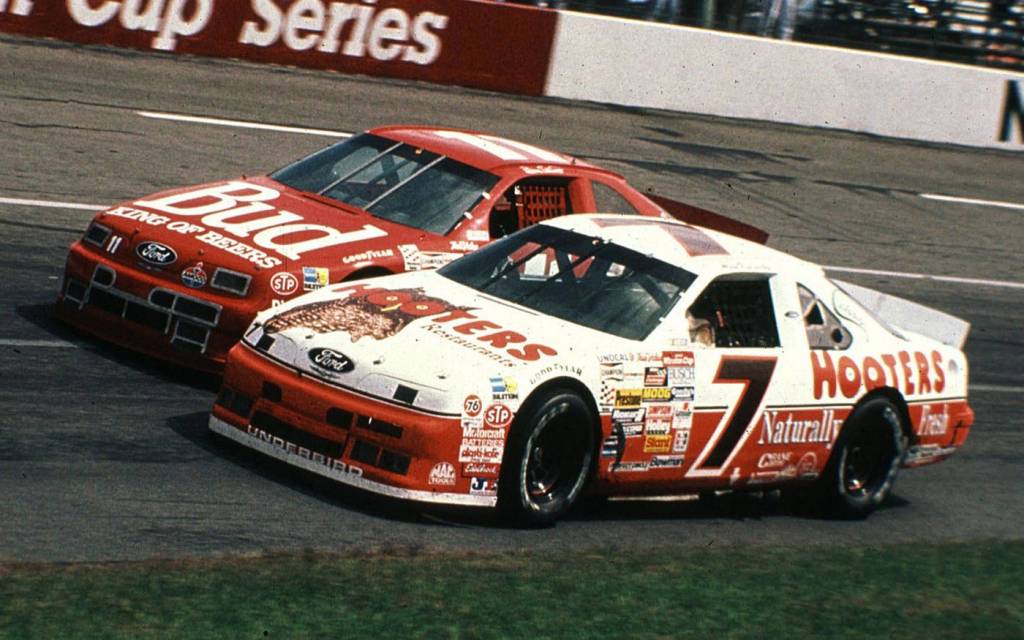
On lap 254, Irvan (who had been dealing with major mechanical issues) lost control of his car coming out of turn four. He turned to avoid hitting Labonte, but swerved back up the track and towards the wall. Rusty Wallace managed to avoid Irvan, but Allison wasn’t so lucky, t-boning Irvan and causing both cars to spin out near the start/finish line. The No. 28 had suffered a broken tire rod and steering column and had to be towed into the garage. While Allison’s crew were eventually able to get his mangled car back on the track just in case catastrophe befell Elliott and Kulwicki, his championship hopes were dashed. After a year of “checkers or wreckers” racing, Allison would finish third in the standings. All of that grit, tenacity, toughness, courage, and perseverance shown by Allison by battling through the immense physical and personal pain throughout the season would ultimately not be enough to be rewarded with a championship. Now, the title fight had become a two-man sprint to the finish.
At this point, Elliott and Kulwicki were so close in the points battle that a tie was mathematically possible, with Elliott having the tiebreaker advantage due to having more wins on the season. With every point mattering, those five bonus points for leading the most laps were especially crucial. Kulwicki had the edge in that count as the race entered lap 300 and was out in front by several seconds. But, he needed to make one more pit stop before the finish. Doing the math, Kulwicki’s crew realized he needed to lead 103 laps — not pitting until lap 310 — to clinch at least a share of the most laps led. However, he needed to conserve fuel, forcing him to slow up and allowing a second-place Elliott to make up the distance and catch him. Still, Kulwicki managed to hold Elliott off until lap 310, getting him those five points before heading to the pits.
That being said, if Elliott was able to lead the rest of the race, he would tie Kulwicki with 103 laps led and get five bonus points of his own. While Elliott still needed to pit himself, he was so far ahead of the rest of the field that he could afford to do so and maintain the lead. On lap 314, Elliott went in and made a quick pit stop, but as he left pit road his team realized he was only in second place. Elliott’s crew chief, Tim Brewer, had failed to account for Labonte, who had remained out and on the lead lap. In the time it took for Elliott to catch Labonte, the latter would lead one lap, meaning the most Elliott could get was 102 and the five potential bonus points were gone. Johnson was so enraged at the mistake that he fired Brewer after the race.
Despite the crucial error, Elliott’s championship hopes weren’t quite dashed yet. He had stormed back into the lead and was poised to get the most points based on final position. Kulwicki had worked back to second place and, should he remain in that spot at the end of the race, would finish ten points ahead of Elliott. However, during his lap 310 pit stop, Kulwicki only took a certain amount of fuel, and his crew chief, Paul Andrews, wasn’t sure if it was enough to get him to the finish line. While he admitted he could’ve done the math by weighing the fuel can next to a full can, Andrews decided he didn’t want to know and would let fate play out. If Kulwicki had enough fuel, the title was all but his. If he didn’t and was passed by both Geoff Bodine (running third) and Jimmy Spencer (fourth), Kulwicki and Elliott would be tied on points, with Elliott winning the title on the tiebreaker. Any other passes would mean Elliott would win outright.
Elliott would do all he could, leading the rest of the laps and taking the checkered flag to nab his fifth win of the season. But to his dismay, coming out of turn four was Kulwicki, who had not only managed to conserve enough fuel to make it to the end, but had also managed to maintain his second place position. As Kulwicki crossed the finish line, he officially clinched his first career Cup Series championship, finishing ten points ahead of Elliott and 63 ahead of Allison. To this day, it remains the third-closest points finish in Cup Series history. Kulwicki winning the title despite being so far behind with six races left and never leading in the points until after the final race was the cherry on top of one of the most unlikely championship seasons in NASCAR history. After taking his customary reverse lap (referred to as a “Polish victory lap”), Kulwicki pulled the Underbird into victory lane. But before he got out to celebrate, he pulled out a comb and made sure his hair was fine. He hadn’t secured all of his sponsors for 1993 and wanted to look as good as possible. Not lost among the celebrations was one more car doing one last lap, as Richard Petty’s crew had in fact been able to get The King back onto the track, allowing him to go out under his own power. Petty finished his final laps and said goodbye to the NASCAR world, providing one more emotional moment to an already unforgettable day.
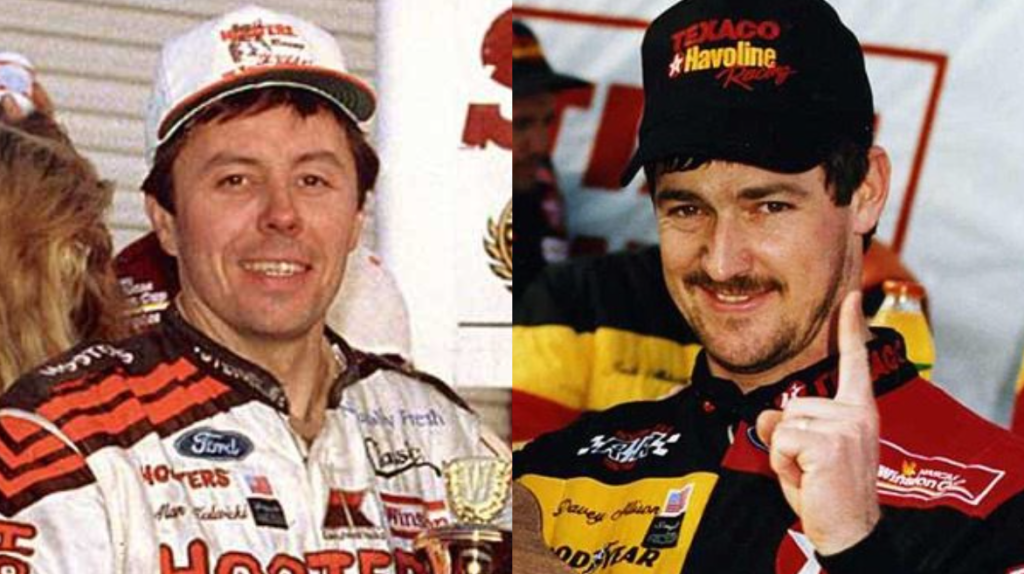
After such an incredible 1992 season, NASCAR and its fans were hoping for another exciting edition in 1993. On paper, it looked promising. Kulwicki hoped to defend his title, while Allison and Elliott looked to redeem themselves after getting so close to the crown in 1992. Martin had established himself as a contender, while Gant and Petty hoped to prove their 1992 seasons weren’t flukes. The field was also filled with former champions like Waltrip, Labonte, and Wallace, while future champion Dale Jarrett would win the 1993 Daytona 500. Plus, there was that Earnhardt fellow, looking to add to his collection of five Cup Series titles. There was also that Gordon kid — let’s see how the kid does in his first full-time season. But the season would instead be remembered in a somber tone, which began to sit in after just five races.
On April 1, 1993, Kulwicki — sitting ninth in the standings — was among a group aboard a small plane that was flying into Blountville, Tennessee from Knoxville. Kulwicki had just done a promotional event for Hooters and was heading to the company’s headquarters on a corporate flight to discuss various items. As the plane approached Tri-Cities Regional Airport, the pilot (according to investigators) failed to use the plane’s anti-ice system to clear ice from the engine inlet system. This resulted in the plane slowing and crashing just before the final approach. The 38-year-old Kulwicki — as well as the pilot and two others on board — were killed in the impact. Kulwicki’s funeral was attended by NASCAR president Bill France Jr. and several drivers, and Kulwicki’s race car transporter (donning a black wreath) was driven along the track before the ensuing race in his honor. The loss of the defending champion would hang over the Cup Series over the next few months, until it was joined by another tragedy.
On July 12, 1993, Allison — sitting fifth in the standings — and fellow Alabama Gang member Red Farmer were flying via helicopter to Talladega Speedway to watch family friend Neil Bonnett and his son, David, test a car ahead of David’s Busch Series debut. As Allison tried to land in a fenced-in area, a collective socket failed, causing the helicopter to go nose up before suddenly crashing. Neil Bonnett was able to free Farmer, who would make a full recovery, but was unable to get to Allison until paramedics arrived. The 32-year-old Allison suffered a critical head injury and was pronounced dead at a hospital the following morning. Allison’s funeral was attended by several drivers, as well as then-Alabama Governor Jim Folsom Jr. and members of the band Aerosmith. Journalist Paul Finebaum compared the statewide mourning to the passing of legendary college football coach Paul “Bear” Bryant ten years earlier. After winning the ensuing race at Pocono, Earnhardt carried a flag bearing Allison’s number out of his window.
A similar tribute would be held after the final race of the season, when Earnhardt and Wallace drove Polish Victory Laps waving Kulwicki and Allison’s flags, respectively. It was a sign of just how big of a double gut punch their losses were, and their impact on the overall season. Less than a year after being two-thirds of arguably the greatest championship battle in NASCAR history, the reigning title holder and a phenom poised to earn one for himself someday — both in their 30’s and still in their primes — had been taken away far too soon. Lost in all of this was the shocking falloff of the third member of the 1992 title fight, as Elliott and Johnson never got close to another championship. Elliott would win just one more race with Johnson before leaving and (unsuccessfully) trying to win another title as an owner/driver, though had a lengthy career, with his last race in Cup Series taking place in 2012.
Beyond the personal and emotional toll, perhaps the biggest impact of the losses of Kulwicki and Allison could be felt on the Cup Series going forward. While Earnhardt was on top of the standings for pretty much all of 1993, both Kulwicki and Allison were still in the hunt when they died. Earnhardt would go on to win the 1993 Cup Series title before adding another in 1994 to tie Richard Petty’s record of seven championships. Then, it was Gordon’s time to shine, as the young phenom finally reached his potential by winning his first title in 1995 (the first of many for Hendrick), two more in 1997-98, and a fourth in 2001. While Earnhardt had already achieved greatness and Gordon was destined for his own, how many of those Cup Series titles from 1993-2001 could have been won or at least challenged for by Kulwicki or Allison? The latter wouldn’t have even turned 40 by the start of the 2001 season. Fans and experts can only speculate, with so much potential and possible glory taken away by two cruel twists of fate.
Still, Kulwicki and Allison’s legacies should not be tied to their deaths. Instead, they’re each tied to the incredible fight they had in 1992. Kulwicki is remembered as the black sheep genius who did it his way and made it work in spite of the odds. Allison is remembered as a seemingly indestructible force whose talent was outshone only by his determination. Together, along with Elliott — whose own legacy as one of the fastest drivers of all-time and one of the sport’s most popular figures remains intact — they raised stock car racing to a whole new level, putting forth a year-long championship battle that will last in history forever. All three of them had a major role in arguably the greatest season, title fight, and race in NASCAR history, which all remain perhaps the biggest highlights of NASCAR’s greatest ever decade. Fortunately for NASCAR fans, the decade was far from owner, and even more highlights were just around the corner.
THIS WEEK’S MATCHUPS
CAN YOU HEAR THE DRUMS? (3-1) VS. CABOMETYX (3-1)
What do we have here? A Dominguez Bowl? With both participants 3-1? And it’s (as of this writing) the closest projected matchup of the week? Yep, this is the kind of game where I either dominate or heartbreakingly lose. Can You Hear The Drums? has been the best team so far this season, and the offense looks primed to continue its tear. Then again, seemingly every one of my opponents gets a boost, and Cabometyx looks to be no exception. Dad doesn’t need a reason to inflate his fantasy football ego, and I really hope I’m not the one giving it to him.
FLOCK AROUND AND FIND OUT (3-1) VS. SPIDER 2 Y BANANA (0-4)
Jimmy has not exactly had a good start to the season, with Spider 2 Y Banana being the second-lowest scorer so far. The addition of Quinshon Judkins via trade should help things, but what Jimmy really needs is an easy opponent. Who is he playing this weekend? Flock Around and Find Out, the second-highest scoring team so far this season. Ewing’s roster looks like their own scoring streak will continue as well, even with the start of bye weeks dragging down their potential. Still, Jimmy can’t afford to dig too much of a hole if he wants to keep his title.
BIG BEEFY BOY BATTALION (3-1) VS. CHEST IN MY HOLE (2-2)
In a matchup where both of their QBs (Sam Darnold and Brock Purdy) are playing against each other, a hated rivalry could decide a potentially important battle between Big Beefy Boy Battalion and Chest in my Hole. To no one’s surprise, Kyle’s been making plenty of moves both on the waiver wire and via trade. Chriss has largely been leaving things up to chance, which given his luck has been up and down to say the least. We’ll see if Kyle’s lineup tinkering will end up messing with early success, or if it won’t matter and Chriss’ luck continues to plummet.
FOOTBALLDAMUS (3-1) VS. SUBSTATION TRUTHER (1-3)
You could argue that Footballdamus and Substation Truther have been two of the biggest surprises in the league so far. Riaz maybe not as much, given the fact that he had the first overall pick. Nick however has gone from Epic Bowl finalist to last place contender. This season hasn’t exactly gone to plan and — looking at the matchups Nick’s roster is facing — it doesn’t look like Nick will be losing the title of lowest-scoring team this weekend. Riaz could crap the bed, but look at his own roster’s matchups, it’s unlikely. Then again, fantasy football is weird.
BIJAN MUSTARD (2-2) VS. THE INJURED RESERVES (2-2)
Both Bijan Mustard and the Injured Reserves can take a big early step towards a potential playoff berth with a win this week, and by the way things are looking this matchup won’t be decided until Monday night. The Bills are facing the Rams, and both Arik (Matthew Stafford and James Cook) and Emilio (Kyren Williams and Puka Nacua) have a lot at stake there. There are a couple of other games that could also decide it, with the Broncos and Jaguars being highlights. But you never know with the luck of fantasy football, especially so early this season.
MOM AGAINST THE MACHINE (1-3) VS. THE KRISPY KRITTERS (1-3)
Speaking of the Monday night matchup, Josh Allen will be in action, meaning that Mom Against the Machine will likely know their fate then. After all, as Allen’s fate goes, so does Aly’s. But her QB isn’t the only one who could decide this matchup. The biggest question that could determine whether or not the Krispy Kritters win is the health of Lamar Jackson. If he plays, Richard has a better shot. If not, he’ll have to start Bo Nix. Then again, the Broncos are playing the Chargers, so they’ll probably pull something out of their ass and carry Nix to a productive performance.
ONE LAST THING
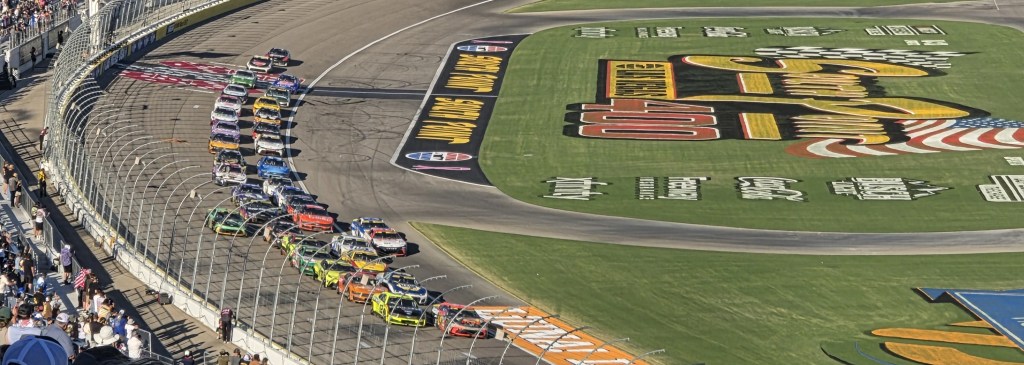
After suggesting the idea several times only to fall on deaf ears, after initially planning to just travel to wine country only to end up in Sin City, after experiencing many things I thought I would only to encounter so many more surprises, it has finally happened. I have finally attended a NASCAR race in person: the 2026 South Point 400 from Las Vegas Motor Speedway. Let me tell you all about it.
I flew into Las Vegas this past Saturday, the day before the race. It was a bust sports weekend in Sin City, with UNLV hosting Cal in football (a game I also attended), the Raiders playing the Chiefs, and the general vibe of the Golden Knights beginning their season. There were also several stores stocked with Formula 1 merchandise ahead of the Las Vegas Grand Prix next month. Even so, among the sea of Silver & Black, blue and yellow, red and white, gold and black, and F1 manufacturers colors, there were quite a few people wandering throughout the city sporting their favorite NASCAR driver’s merchandise. Inside the MGM Grand was a display model of the No. 33 BetMGM car driven by Austin Hill. Las Vegas native, NASCAR Hall of Famer, and former Cup Series champion Kurt Busch ran out with the Rebels onto the field against the Golden Bears. Both were signs of NASCAR remaining in popular culture, but also of the somewhat somber mood race fans were feeling going into the weekend.
Back in May, Kyle Busch — Kurt’s younger brother, a two-time Cup Series champion, and one of the greatest/most iconic drivers of his generation — passed away at age 41 due to hemorrhagic shock and disseminated intravascular coagulation. Busch’s death sent shockwaves throughout the NASCAR world, with many fans still unable to truly accept his passing nearly five months later. Tributes have poured in since he died, with events taking place at seemingly every track. This past weekend was the first to see NASCAR back in Vegas since Kyle Busch’s death, and the weekend was naturally also full of remembrances, dedications, and other ceremonies honoring the Vegas native. There would be more on race day, and I would even take part in a couple.
I awoke early Sunday morning, the consequence of one of my pre-race decisions that would play a huge role in how the day unfolded. Essentially, there were three ways to get to the track, which is at the far northeast corner of Las Vegas. The first, of course, is to drive. But rental car prices are insane and I didn’t want to deal with the post-race traffic mess. The second was to use ridesharing, but I felt it wouldn’t solve the traffic problem. So I opted for option 3: a shuttle service. Turns out, NASCAR partners with select hotels to offer shuttles to take fans to and from the track. One of those hotels was Treasure Island, not too far from where I was staying at the Rio (yes, I was being a cheap ass). Not wanting to deal with the hassle and figuring that the price (around $100) was equivalent to or less than anything rental car related, I signed up.
Sporting a Dale Earnhardt shirt that read “Real men wear black and silver” as well as a Laughing Clown Malt Liquor No. 26 car hat from Talladega Nights (which Dad had bought for me literally 20 years ago), I stepped out of the Rio and into my Uber ride just after 8 a.m. My driver’s name was Banjo, which I took to be a good sign. Banjo dropped me off at Treasure Island around 8:30, and there was already a decent crowd of NASCAR fans gathered outside. I entered through the revolving door and saw a line of more NASCAR fans in trouble. I figured I should stand in line, so I did. Turns out, this was the line to check in for the shuttles. I got to the front, told them my name, and received a blue wristband that was tied a little too tightly around my left wrist. I walked back outside and joined the group of fans clad in Ryan Blaney, Chase Elliott, Kyle Larson, Joey Logano, and (of course) Busch gear. While everyone seemed friendly, me being notably younger and darker than them — not to mention being by myself — powered my shyness switch. Also, about half of the crowd was smoking. So, I decided to keep to myself and simply people watch/listen.
This continued as we boarded our buses at 9 a.m. and drove off along Interstate 15. I was the only one without someone sitting next to them, which was honestly kind of nice. The entire ride took about half an hour, the morning light starting to make the desert shine. As I watched the buildings give way to desert and dunes, I listened to one couple (who were actually from Sacramento and Fairfield) speak with another (who lived in Canada) about all things racing. Eventually, after passing Nellis Air Force Base and several industrial warehouses, we arrived at Las Vegas Motor Speedway. After winding through the parking area for a surprising amount of time, we pulled up to the main entrance and — after being told the shuttles would leave 45 minutes after the checkered flag — we stepped off onto the pavement.
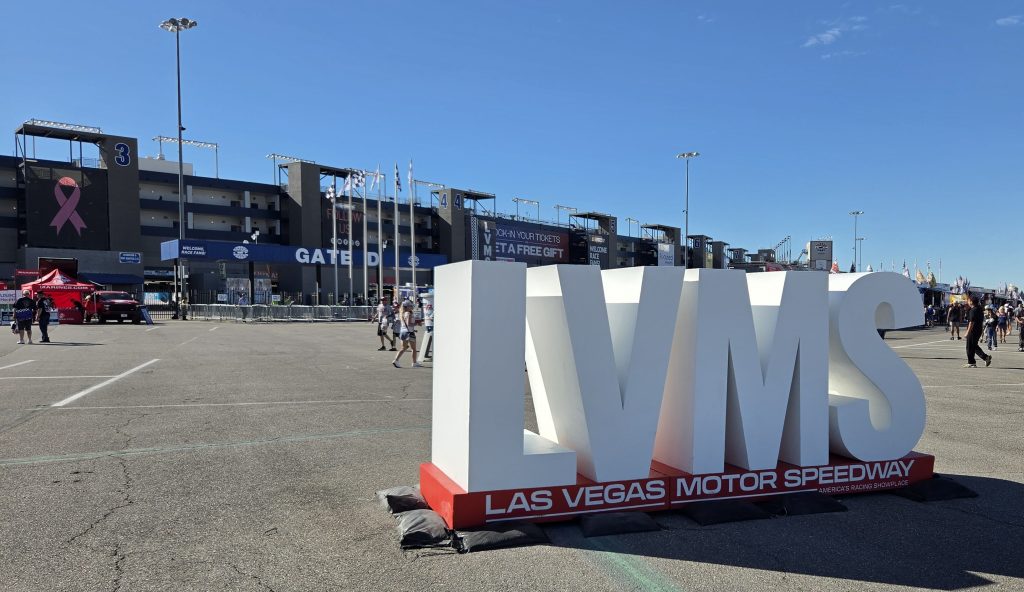
If you’ve never been to an auto racing circuit, in particular one from a top division, you might not have a sense of just how large it is. For example, Allegiant Stadium sits on 62 acres of land. The entire Las Vegas Motor Speedway complex is at least 1,000 acres, and you can fit roughly 25 football fields in the infield of the one-and-a-half mile track alone. The latter, of course, doesn’t even count the bleachers and parking and all of that stuff. NASCAR races are also known to take advantage of the infield by allowing fans to park their RVs and trailers and spend practically the entire race weekend in the eye of the storm. I have heard that some infield scenes – particularly those at Talladega – can be legendary. While Las Vegas isn’t quite on that level, the infield is home to the Neon Garage, where fans can watch work being done on the cars. Those seats are not exactly cheap, and quite frankly I just wanted to get into the venue. But as it turns out, I would be spending a good chunk of time outside the speedway itself.
It’s a couple of hundred yards from where you enter the main grounds to where you enter the speedway structure, and all of that space was occupied by what I can best describe as a redneck carnival. There was a mini “Welcome to Las Vegas” sign flanked by both an Elvis impersonator and someone dressed up as Optimus Prime. There was a red-headed cowboy on a unicycle. There was a stage where local bands played terrible covers of popular rock and country songs. Miss Nevada showed up at one point. There were so many activities and places to check out that it was kind of mind-bottling. Cracker Barrel had a large place for people to sit, while Budweiser had a section of its own, complete with a bar and the freaking Clydesdale horses themselves. There was a mini racing place and a section where fans could pose with and take pictures inside replica Cup Series cars. Kyle Busch’s 2019 Cup Series winning No. 18 M&M’s car was on display. This being a place where hardcore NASCAR fans gather, there were also some stands I tried to avoid, such as the Turning Point USA trailer and the booth selling engraved shotguns.
The colorful scene was made even more so by the tens of thousands of people making their way across the blacktop. When I said earlier that I was one of the darker people in attendance, I’m not sure I was correct. That’s because while at minimum 95% of the crowd was white, most of them had tans of someone who’d spent a lifetime in the sun. But while their colors were almost uniformly tan, their attire was a collective rainbow. Countless t-shirts of racecar drivers past and present, some with the car and driver’s name on them, others looking like the car liveries themselves. Many of the couples there were repping the same driver, though many more weren’t. There were people sporting racer jackets, which given something I’ll talk about soon was kind of insane. There were people dressed up in checkered flag gear, people dressed up in Raiders (and 49ers) gear, and people dressed up in not much at all quite frankly. You want to know the funniest thing? All of them – at least the ones I did actually speak with – were nice. I did not have one negative interaction with another person the entire time I was there.
Of course, the majority of the space on the blacktop was taken up by places where fans could get all of those shirts and jackets and hats and everything in between. By my count, there were a little over a dozen trailers specifically for driver merchandise. Every single driver from every single team had some kind of merchandise on sale, from hats and shirts to flags and signs to beer cozies and diecast versions of their cars. The variety and volume was nearly unmatched, and fans stood in line to get their gear. Most teams share a merch trailer with others, though some teams and even drivers – like Larson and Elliott – have their own. That was helpful for me, because Jimmy (who would thrive in this environment, by the way) had asked me to get a couple of Larson hats for him and his father. I had to morally balance everything out by buying a small Tyler Reddick diecast car, along with a generic one for the race, as well as some earplugs and a bottle of “redneck sunscreen.” I’m not trying to be rude; that’s what it was actually called.
Merch was not the only thing these trailers were offering. Hanging on most of the trailers were whiteboards displaying times when drivers would arrive and sign autographs for fans. Some of them had a qualifier of buying a certain amount of merch. Others just had people line up. I personally saw (and took pictures of) Elliott, Ryan Preece, Daniel Suarez, Chase Briscoe, Shane van Gisbergen, Ross Chastain, Austin Dillon, and Alex Bowman at their trailers, while I also saw listed times for Hill and Conor Zilisch. Drivers were also showing up to the stage for casual one-on-one interviews. I got to see the end of Carson Hocevar’s interview and the start of Michael McDowell’s, while I just missed William Byron. Drivers were also taking part in various sponsor-related activities throughout the morning. They were also pretty casual about it, as Briscoe and his handler walked right in front of me on their way to his merch trailer. All told, about half of the field at least was out on the blacktop at some point signing autographs and interacting with fans.
This, to me, is one of NASCAR’s biggest strengths. I have never been to a sporting event where the actual league and teams involved catered to fans as much as this NASCAR race. While not everything was free (far from it in some cases), it was cheaper than what I’ve seen at other sports and way more worth your money. If I lived near a track (or if Sonoma Raceway wasn’t a road course) I could totally see myself coming out there each year and enjoying what they have to offer. There was so much for fans to do that if I were a hardcore fan, I could easily spend several hours there. However, that claim (and the fact that I’m not a hardcore fan) leads into the first of two major problems I had.
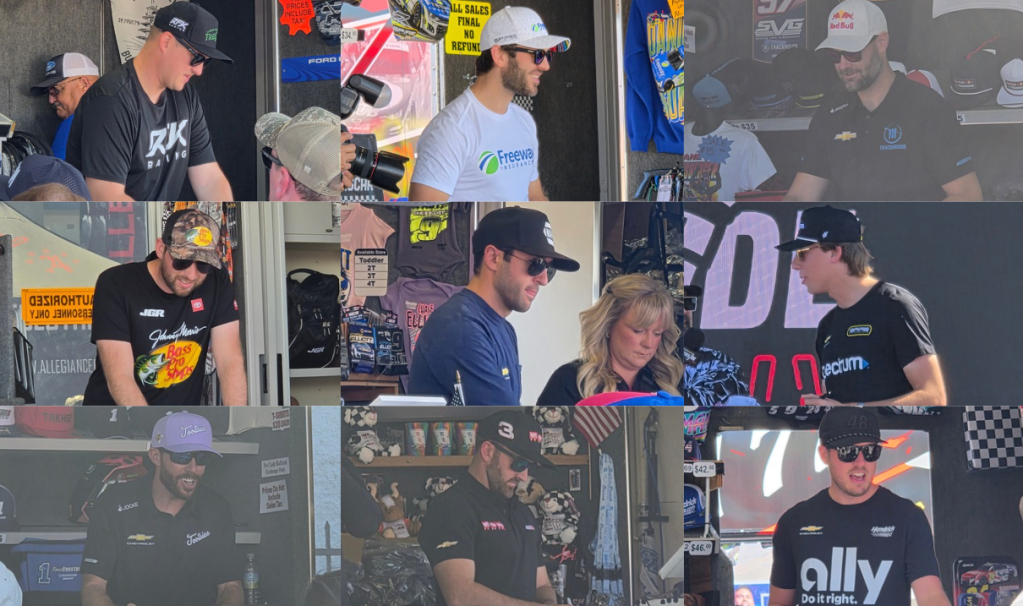
The thing about signing up for the speedway shuttle was that I didn’t control the time it left the hotel or the track. When it came to the former, we left at 9 a.m., which given the half-hour drive meant we arrived at the track at 9:30. Given that the race started at 2:30 p.m., this meant I had five hours to kill, in an unfamiliar place where I was by myself. Of course, the activities listed above were great for killing time, just not five hours’ worth. If I was more into NASCAR or was with someone else, I might’ve had an easier time killing that time. But even then, five hours is a long time. I ended up actually entering the speedway and having my ticket scanned (meaning I couldn’t leave until after the race) at 11:30, still with three hours to go. For as much as the outside portion offered, there was another factor that not only influenced my decision to head in early, but made the overall time killing experience much more difficult.
Simply put, the heat wave you experienced this past weekend wasn’t just felt in California. It was hot as balls in Las Vegas. Now, you may be wondering what I was expecting, given the fact that Las Vegas is in the desert. Well, the average temperature in Vegas for October is about 82 degrees. It was about 97 degrees on race day — 15 higher than what we reasonably could have expected. It was also probably even hotter on the blacktop, which given the overall lack of shade meant that I had already applied two layers of sunscreen and was sweating my ass off. Now, at first I thought I was just a newbie not used to NASCAR weather. But as I entered the speedway I saw row after row of benches along the wall, in the shade, filled with people trying to cool down and kill time. If even these seasoned veterans were camping out in the shade, why shouldn’t I?
So that’s what I did… for the next hour and a half. That’s right, I spent 90 minutes of my time at my first NASCAR race sitting on a metal bench on the far right side below the main grandstand keeping track of NFL and fantasy football scores. To add the miserably cherry on top of this experience, I went in with the goal of trying to conserve my phone battery as much as I could, so that wasn’t exactly going to plan. Now, was all of this NASCAR’s fault? Of course not. They had also done what they could to provide fans with relief from the heat, including having large containers of water available for fans to pour out. Some had even brought towels, drenching them with the free water to wear on their heads and necks (a strategy I will steal next time). Still, there was only so much that could be done on what turned out to be the hottest race day of the 2026 NASCAR season (just my luck, right?). It’s an unfortunate but nonetheless impactful part of my time at this race, and ignoring it would simply be dishonest.
Eventually, my ass got sore enough and my stomach got empty enough to force me to stand up and get something to eat. For this, there were plenty of options to choose from. In addition to the food and drink stalls inside the speedway, there were dozens of food trucks on the outside. Think of the variety available at the State Fair, minus all of the crazy concoctions the State Fair is known for. While I was trying to decide what to eat — aiming for something cool of course — I saw a sign for a birria grilled cheese and couldn’t resist. Somehow, this turned out to be somewhat of a mistake, as the sandwich ended up stuck to the paper at the bottom of the tray thanks to the melted cheese. It was also too hot and too large for me to reasonably get it unstuck. So, I had to eat the sandwich from the top down — top bread slice, meat, cheese/bottom bread slice in that order. Again, not NASCAR’s fault. Just seemed like the sort of thing that only happens to me.
One thing I wanted to consume but didn’t was alcohol. This wasn’t because the speedway didn’t serve any — far from it, as there were many places offering beer and cocktails and boozy slushies. The problem was that it was so hot and I was so inexperienced with these races that I didn’t want to risk alcohol making things even worse. I ended up pounding at least ten water/Powerade bottles throughout the day instead. Still, I was sweating my ass off, and fans were simply spending their time slumped over against the walls instead of enjoying the pre-race concert and festivities happening on the track. To kill a bit of time, I was going to sit down against a wall behind a chunk of the grandstand. That’s when I saw a folded up chair that had been tucked behind a staircase. Not sure if I was seeing a mirage or not, I walked over, unfolded the seat, and actually had a comfortable place to sit for about half an hour. Turns out, I wasn’t supposed to be sitting there, but the ushers were cool about it as long as I folded it up and put it back when I got up (which I did).
I did eventually get up with about half an hour left before the green flag. Sitting in the Richard Petty terrace (to the left of the grandstand) just over halfway up, I had a great view of the entire track, as well as the desert area (I could barely see the Las Vegas skyline). The problem, of course, was that I had absolutely no shade in this sweltering heat. Now, I had managed to snag a couple of refilled bottles of water, but those were starting to go even before the race began. Still, I was able to be distracted by the spectacle in front of me. While I couldn’t see much of the driver introductions, I was still able to see all of the cars in person for the first time. That novelty, as well as a light breeze that had started to blow in, was enough to get me to stop complaining about the heat for a while. Finally, as actor Brendan Hunt (Coach Beard from Ted Lasso) gave the command “drivers, start your engines!” the show roared to life. After completing a couple of warm-up laps, the pace car drove onto pit road and the race finally began.
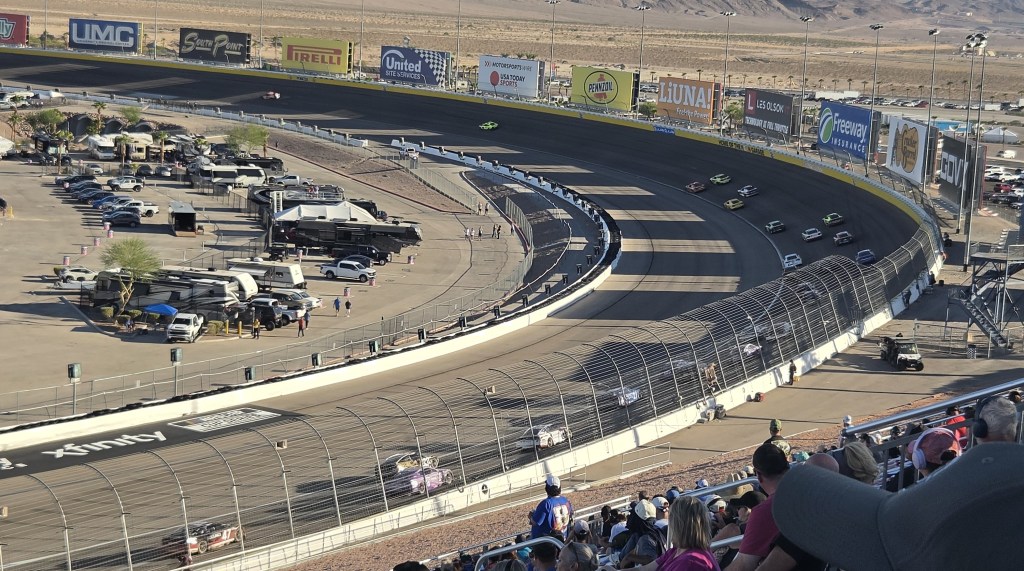
If you’ve never been to a motor race in person, nothing can properly prepare you for the noise. As the field sped across the start line and the drivers put the pedal to the metal, the roar they gave off sent a tingle up my spine and lit a fire in my gut. It was as close to manufactured thunder as you could get. It was what I imagine a freight train from hell sounds like. Those three dozen cars had combined to form a snarling, roaring beast made up of multicolored metal. The sensation of seeing it all unfold in front of me for the first time instantly replaced the heat and boredom of time killing as my strongest memory of the day, and we were only a lap or two into the race. Then it got louder, as the cars had finally reached their average speed of more than 147 mph. Even as high up as I was, it was getting pretty loud. I held out for about 25 laps, but eventually I gave in and put my earplugs in (I may be stupid, but not dumb).
It’s difficult to describe the appeal of seeing a race like this in person without sounding like a 7-year-old excitedly saying how cool it is to see colorful cars go fast. But honestly, yeah, that’s pretty much it. The whole argument of “they just turn left the whole time” is completely invalidated just by going to a race, because watching these cars go around in a circle is actually pretty fun. Because of this, I will now argue that racing (at least oval racing) is on par with hockey as the best sports to watch in person instead of on TV (especially with the current state of NASCAR’s TV coverage).
That being said, there was a significant portion of the race (after they started pitting) where I legitimately couldn’t follow along with who was leading. To be fair, this was more of a lack of ball knowledge on my part versus anything wrong with the system. Plus, NASCAR does offer headphones where you can listen into the race broadcast in real time to know exactly what’s happening. I just failed to pick one up, so that’s on me. Also to be fair, the speedway announcer was doing a good job of updating the crowd as best as he could, while the giant pole showing the leaderboard took some time to be updated. Either way, just sit back and watch the cars go fast and you’ll have a lovely time.
When it comes to the race itself, I wasn’t sure what to expect. Las Vegas Motor Speedway is a mile-and-a-half track, which is basically middle of the pack for a NASCAR circuit in terms of length and expected chaos. Some races go largely without a hitch, even if NASCAR throws the arbitrary caution for debris or something. The prior week at Kansas was like that. But the week before that at Bristol had seen Blaney and Hocevar get into a fistfight after the race, while the week before that at Gateway had seen a whopping 18 cautions and two red flag stoppages. As it turned out, Vegas was a lot quieter with that, with only four cautions for 21 of the 267 laps. Still, there was plenty of drama, as Larson — the current points leader — had early trouble and went a lap down. Denny Hamlin — second in points — was poised to take advantage, only to spin out with four laps left in Stage 1 and be unable to recover for the rest of the day.
The end of Stage 1 was also the point where I had to take a break myself. The heat had become too much and I needed a refill on both the water and redneck sunscreen. After taking the elevator down from my seat (it was either that or take the stairs, which… no), I managed to secure those refills. I was also able to get a better perspective on just how loud the engines were, because even being blocked off by the grandstand, the noise was still nearly enough to require ear plugs as well. I spent about half of Stage 2 down in the concession area before heading back up rehydrated and re-sunscreened. But shortly after I returned to my seat, I noticed that it wasn’t as hot anymore. Then I realized the sun had finally drifted down to where it was behind the Petty terrace, which meant that I was actually sitting in some honest to goodness shade for once. Now finally at the optimal temperature to watch a race, I sat back and took in the final stage, which provided some excitement.
After Hamlin’s spinout, a power steering issue for Christopher Bell, and a speeding penalty by Ty Gibbs, the dominant foursome of the Joe Gibbs racing drivers had been reduced to one: Briscoe. However, he seemingly hogged all of that dominance, leading the pack at the end of both Stage 1 and Stage 2 and seemingly taking control of the final stage for good. But as the laps ticked down, Briscoe would receive a challenge from Bubba Wallace, who ran him down right to his bumper. Then Larson somehow came back from the dead and challenged both of them, only to be joined by a late charging Reddick. Wallace did drop out towards the end, but the final dozen laps or so were a three-way fight between Briscoe, Larson, and Reddick. It came down to the final turn of the final lap, when Larson — having pushed his car too hard — crashed into the wall, then took out Reddick, who didn’t see him. Reddick was flung across the infield grass and into pit road, but still managed to cross the finish line third. Larson was able to hold on for second, but it was Briscoe who after his brush with me earlier on the blacktop capped a dominant day with the victory.
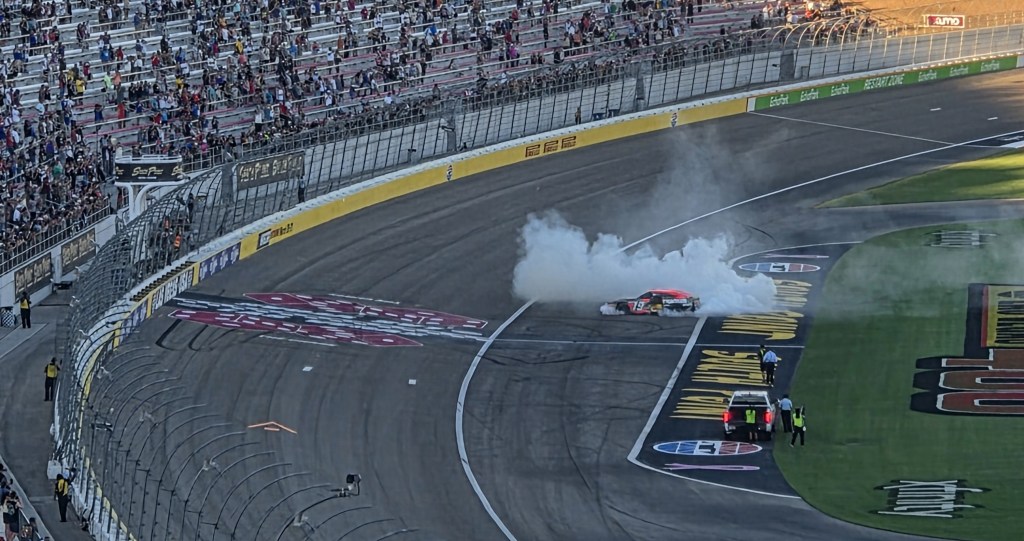
After watching Briscoe complete his victory burnout and post-race interview, I decided to head back down, drain some of the many fluids I had consumed, and walk back to the parking lot. On my way, I stopped at the merch haulers to see if I could snag a diecast of Briscoe’s car, but the line was long and I didn’t want to risk it. Now out of the shade and getting hot again, I was thankful to be placed in one of the first shuttles back to the hotel. The problem was that — in addition to having a seatmate this time — this shuttle’s air conditioning wasn’t working properly, which meant I was being sauteed during the drive home. A half-hour of cooking later, we finally arrived back at Treasure Island. After going inside to enjoy working A/C and buy an ice cream, I got a ride back to the Rio, went up to my hotel room, and took a long, cold shower.
So, after all of that, how would I rate my first NASCAR experience? Well, much like the current state of stock car racing, it was a mixed bag. Putting my criticisms of modern NASCAR — stages, the performance of the car, the points format — aside, the actual racing itself was fun. Pretty much every expert I read about afterwards said that outside from the last few laps, the race was pretty average. I wasn’t expecting a legendary race or anything, and it may be my lack of ball knowledge speaking, but if that’s the average race then I would be thoroughly entertained at most races. Of course, the heat and length of time I had to kill were negatives, but the former was something mostly strictly limited to Las Vegas, while the latter was something in my control. Unless it’s at a venue like Daytona or Talladega or not horrible outside or indoors even, I would opt to rent a car (or just drive from home in the case of Sonoma) next time.
That being said, I don’t think NASCAR or really racing in general will be something I tick off like I did with the MLB ballparks. This doesn’t mean that I don’t want to see races as at as many tracks as I can. But, I was determined to cross off every ballpark no matter if I went with friends, family, or no one else. When it comes to racing, I felt like I would’ve enjoyed it much more and would enjoy future races more with other people. I’m not as big of a NASCAR/racing fan as I am a baseball fan and don’t see my fandom growing to the point where I would be able to enjoy myself at a race like I would at a baseball game. Interestingly, I feel like those who I would most likely see at a baseball game — Nick, Kyle, (especially) Jimmy, Arik — would also have the best time at a NASCAR race.
But overall, the 2026 South Point 400 was a good experience and I definitely don’t regret going on this little mini trip to Las Vegas. I do, however, regret whatever decision I made to start supporting Cal football, given their performance against UNLV on Saturday. Well, let’s take a look at who the Golden Bears will be playing this weekend when we’re there. (checks notes) Virginia Tech, previously unbeaten and pissed off after losing in extremely controversial fashion to Pitt last weekend. Well, looks like Cal will be getting as badly smashed as we will. Speaking of, I’d better get packed for Berkeley. Who knows how many brain cells we’ll have left after this.
Ruben Dominguez
Commissioner, Epic League of Epic Epicness
2019 & 2024 Champion, Epic League of Epic Epicness


Leave a comment